
Quick summary
Gymshark is the benchmark for activewear ecommerce: their Shopify Plus store handles launch-day traffic at scale while the community layer — ambassador pages, athlete content, fit reviews with body data — does the conversion work. Sweaty Betty earns its premium price with genuine product depth, explaining fabric technology by name with specific performance claims rather than vague marketing copy. Tala stands out for material transparency done properly, with recycled content percentages and certifications listed on every PDP — the kind of detail that actually beats greenwashing scepticism. Adanola shows that a clean, minimalist DTC store can punch above its weight when the product photography and social proof integration are tight.
Activewear is one of the most competitive categories in UK ecommerce. Performance claims need to be credible, fit needs to be clear before purchase, and the brand community is often as important as the product itself. The stores that convert best in this category understand all three of those things. Here are ten that have built their Shopify presence around them.
1. Gymshark
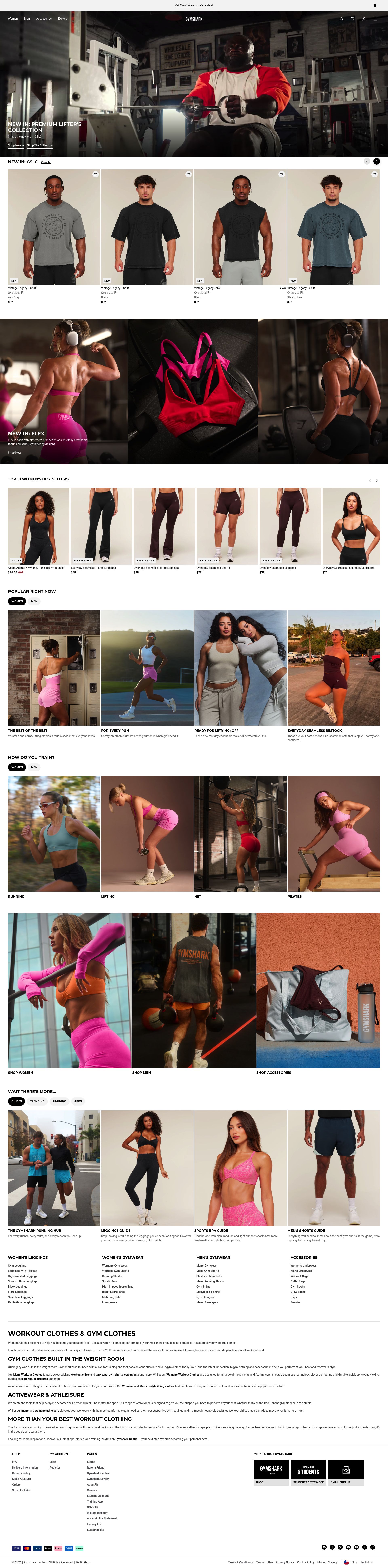
Gymshark is the defining case study in UK activewear ecommerce. Their Shopify Plus store processes thousands of orders per minute on launch days, and the infrastructure shows in how the store handles traffic without degrading the customer experience. Product pages feature lifestyle and performance photography, customer fit reviews with height and weight data, and size recommendation tools. The community layer, woven throughout via athlete ambassador pages and training content, transforms the store into more than a catalogue.
2. Sweaty Betty
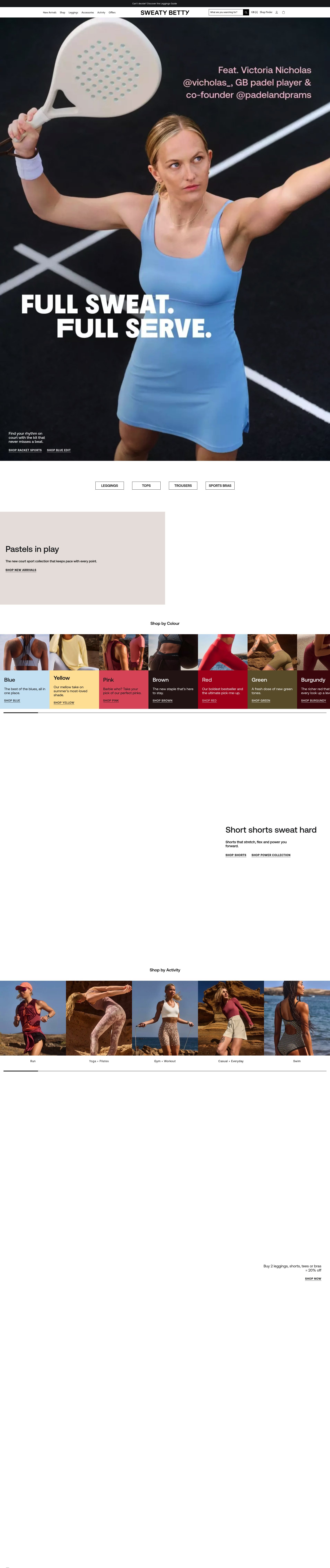
Sweaty Betty earns its premium price point through product page depth: fabric technology is explained clearly (Power, Bum Sculpt, Eco), with specific claims about performance backed up by fabric specs. Their "wear it for" labelling on collection pages helps customers navigate by activity rather than just product type, which mirrors how people actually think when they are looking for gym leggings versus hiking trousers. Returns and fit confidence is reinforced through a persistent free returns banner.
3. Tala
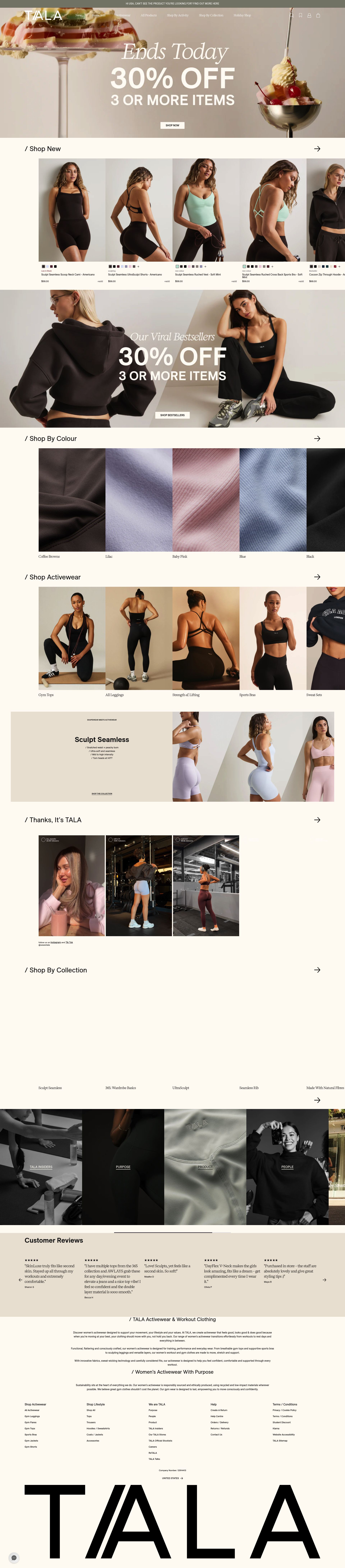
Tala's product pages are built around material transparency: every item lists the fabric composition, the certifications it holds, and the percentage of recycled content. That specificity is a direct response to greenwashing scepticism in the activewear market, and it works: the information is detailed enough to be credible rather than vague. Founder Grace Beverley's presence in brand content and imagery gives the store a personal quality that larger brands find difficult to replicate.
4. Bo+Tee
Bo+Tee's store is built for discovery: new colourways and coordinating sets are surfaced prominently, and their "Shop the Set" functionality makes it easy to add matching pieces without navigating back to the collection. Their size guide includes squat-test notes and fabric stretch percentage, which are exactly the details that reduce hesitation when buying gym leggings online. Their social proof integration shows verified purchase reviews with real gym context.
5. Castore
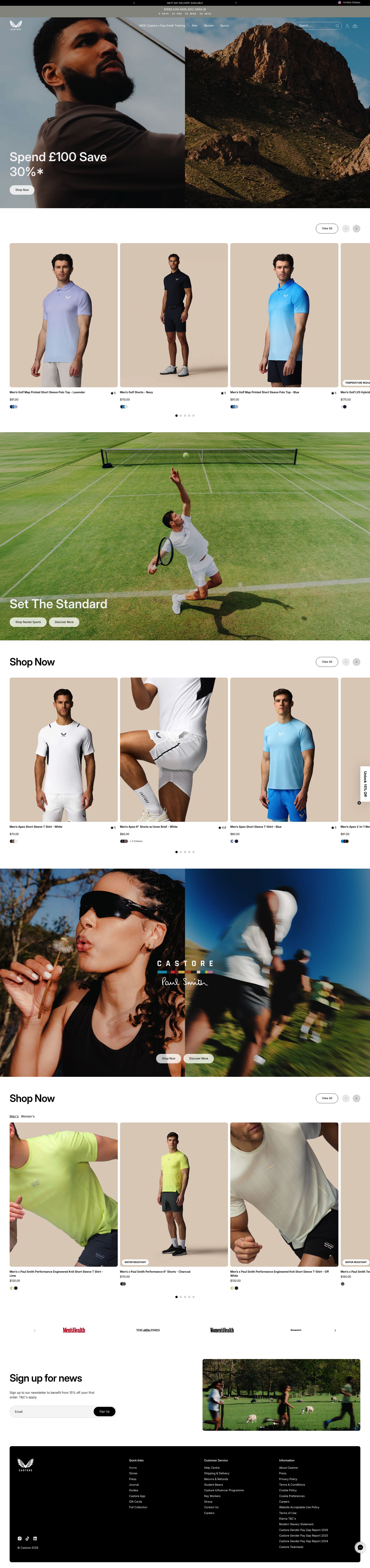
Castore's positioning as a serious technical sportswear brand is carried through every page of their store: the team and club partnerships (Premier League, Formula 1) are referenced in PDPs where relevant, adding credibility to their performance claims. Their product photography emphasises construction details, stitching, and fabric finish rather than just lifestyle shots. The navigation is structured by sport, which is the right choice for a brand with a broad performance catalogue.
6. Le Col
Le Col serves a niche but high-value customer: serious cyclists who make considered, high-ticket purchases. Their store reflects that with detailed product pages that include aerodynamic test data, temperature range guidance, and professional team provenance. The custom kit configurator is a strong conversion tool for club and team orders. Le Col uses athlete editorial content throughout to communicate credibility at a level that resonates with a customer who researches before buying.
7. Alo Yoga
Alo's Shopify Plus store has expanded well beyond yoga apparel into skincare and supplements, and the cross-category navigation handles this breadth without confusion. Their product photography blurs the line between studio and street, positioning Alo as a lifestyle brand rather than purely a gym wear label. Outfit looks and editorial content are served alongside product grids on collection pages, which gives the store the feel of a magazine with a built-in shop.
8. Adanola
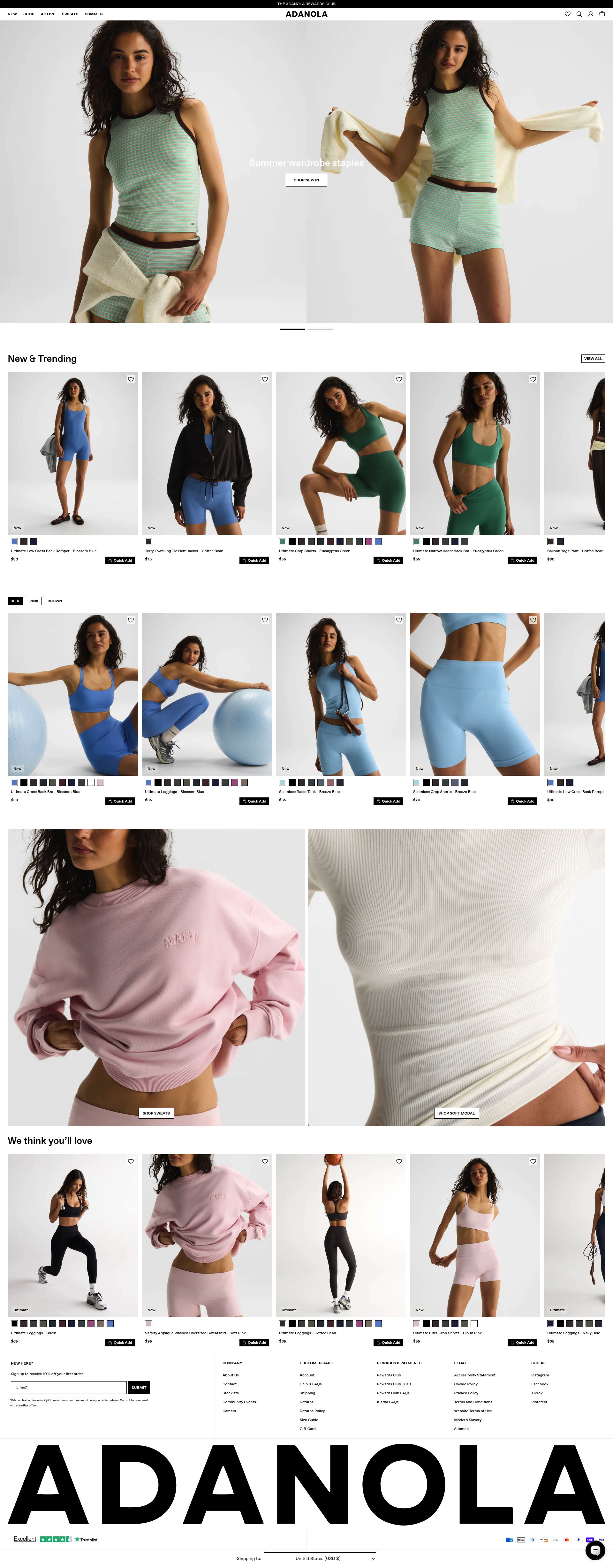
Adanola's store is a strong example of minimalist DTC done well: a clean layout, a consistent neutral colour palette, and product photography that lets the silhouettes speak. Their homepage spotlights new drops and bestsellers in a way that creates momentum without being cluttered. Instagram-sourced customer imagery is integrated into collection pages, which adds social proof in a format that feels native to the brand's Instagram-first growth story.
9. AYBL
AYBL's strength is accessibility: clear pricing, frequent new drops, and a store structure that makes it easy for a first-time visitor to understand the range immediately. Their community content featuring real customers in real gym settings builds trust at a price point where buyers are weighing up multiple brands. Bundle and multi-buy offers are surfaced naturally within collection pages rather than only on dedicated sale pages, which lifts average order value across the full catalogue.
10. Start Fitness
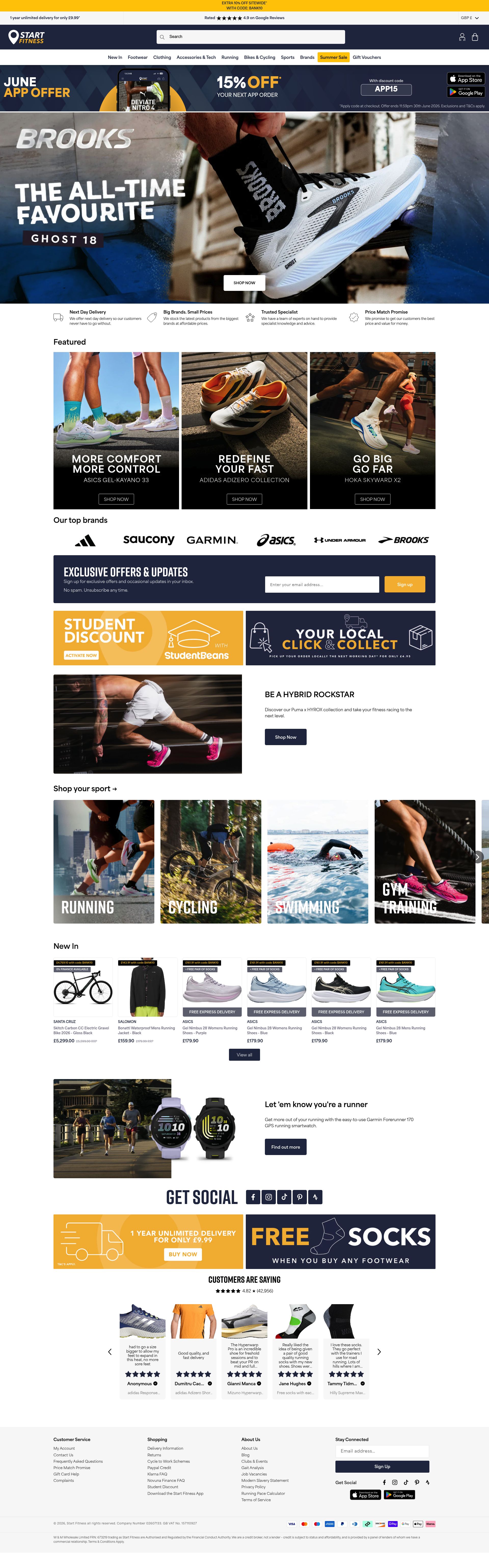
Start Fitness handles a broad multi-brand catalogue well: strong faceted filtering by brand, sport, surface type, and price keeps the customer oriented in a large product set. Their running shoe PDPs include gait analysis guides and use-case recommendations (road, trail, track) that help a less-informed buyer make a confident decision. Click-and-collect and next-day delivery messaging is prominent throughout, which matters for a customer buying performance kit for an upcoming event.
Frequently asked questions
Which activewear brands use Shopify?
Gymshark, Sweaty Betty, Tala, Bo+Tee, Castore, Le Col, Alo Yoga, Adanola, and AYBL all run on Shopify or Shopify Plus. Start Fitness also uses Shopify to manage a large multi-brand catalogue with faceted filtering. Shopify Plus is the dominant platform choice for scaling activewear brands because of its headless flexibility and launch-day traffic handling.
What makes a high-converting activewear product page?
The brands that convert best in activewear do three things consistently: they explain fabric technology with specific claims rather than vague descriptors, they include fit context (height, weight, size worn) in customer reviews, and they address squat-test and stretch concerns directly in the size guide or PDP copy. Reducing fit uncertainty is the single biggest lever for activewear conversion.
How do activewear Shopify stores handle size and fit confidence?
The best stores pair size guides with squat-test notes, fabric stretch percentages, and real customer reviews filtered by body measurements. Bo+Tee and Gymshark both surface height and weight data in their verified reviews, which lets shoppers find someone with a similar build and use their size as a reference, far more useful than a standard size chart.
Is Shopify Plus worth it for an activewear brand doing launch drops?
Yes, if your launches create genuine demand spikes. Gymshark is the clearest example: their Shopify Plus infrastructure handles thousands of orders per minute on drop days without checkout degradation. Standard Shopify plans can struggle under concentrated traffic peaks. If your brand runs hype-driven drops rather than steady-state sales, Plus is worth the investment before the drop, not after.
How do sustainable activewear brands communicate credibility on Shopify?
The brands doing it well, Tala in particular, list specific, verifiable data on every PDP: recycled content percentage, certification names (OEKO-TEX, GRS), and fabric composition. Vague sustainability claims like "eco-friendly" have no credibility with informed buyers. The threshold for trust in this category is specificity: if you cannot name the certification or the percentage, the claim does not convert.
Related reading
- Best running Shopify stores
- Best cycling Shopify stores
- Best yoga Shopify stores
- Best swimwear Shopify stores
- Shopify for sports and fitness brands: full guide
If your store is not converting at the level these brands achieve, the gap is usually design and UX. See our Shopify design service or get in touch to talk through what is possible.