

Quick summary
Nextbase is the standout pick: a UK manufacturer selling direct with comparison tables and full accessory upsells that no third-party retailer can match. Autoglym is the strongest example of heritage brand storytelling, with science-backed product pages and bundle groupings that lift average order value. Opie Oils sets the benchmark for technical credibility in a complex category, using viscosity filters and approval data to close sales that competitors lose through vague product copy. Demon Tweeks leads on depth of content for enthusiasts, turning 50 years of motorsport expertise into a conversion tool.
Selling car accessories online is a competitive business. Customers compare prices across multiple tabs, expect fast delivery, and want product detail they can trust before they buy. The stores that win do more than list parts: they answer technical questions up front, build confidence through strong imagery and reviews, and make reordering frictionless. Here are ten of the best car accessories retailers in the UK, and what their ecommerce approach can teach you.
1. Thule UK
Thule is a Swedish premium brand making car racks, roof boxes, bike carriers, and outdoor accessories with a reputation for quality built over 80 years. The UK DTC store handles a product range that requires careful compatibility guidance: vehicle-specific filtering is central to the experience, with registration-number lookup ensuring customers find the right fit before they reach checkout. That fitment confidence is the primary conversion lever in a category where the wrong product means a return. For Shopify merchants selling vehicle-specific accessories, Thule is a clear reference for how to make compatibility a sales tool rather than a barrier.
2. Demon Tweeks
With more than 50 years in the motorsport and performance market, Demon Tweeks has earned genuine authority in a niche where trust matters enormously. Their store covers performance tyres, car styling, motorsport clothing, and sim racing, and they lean hard into their heritage: expert advice content, clear fitment guides, and product specifications written for enthusiasts rather than casual buyers. That depth of product information does a lot of the selling work before a customer reaches the checkout.
3. Opie Oils
Opie Oils is a UK specialist in engine oils, lubricants, and car care products with over 40 years in the trade. The DTC store handles a technically demanding product category with genuine expertise: oil grade, viscosity, and manufacturer approval filters help buyers find the right product for their specific vehicle and application. The product page content goes beyond description to explain compatibility and application, which is exactly what a buyer changing their own oil needs before committing. For automotive DTC merchants, Opie Oils is a strong reference for translating technical expertise into purchase confidence.
4. GSF Car Parts
GSF Car Parts positions itself as the no-nonsense online option for UK motorists, with free UK delivery and a solid range of accessories including dash cams and tech products alongside mechanical parts. Their product pages are functional and direct: specification tables, fitment notes, and stock availability without unnecessary clutter. For a merchant in this space, GSF is a good example of how a clean, information-first store can convert buyers who already know what they want.
5. CTEK UK
CTEK is a Swedish battery management brand producing smart battery chargers, maintainers, and conditioners for cars, motorcycles, and leisure vehicles. The UK DTC store makes a technical product category feel approachable: clear compatibility guides, use-case navigation (everyday driver, classic car, motorcycle), and plain-language product descriptions help non-technical buyers find the right charger confidently. Product pages explain what each charge mode does and why it matters, which turns a purchase that could feel complex into a straightforward decision.
6. CarParts4Less
CarParts4Less keeps the value proposition simple: a wide range of car and van parts with free delivery over £30 and recognisable brands at competitive prices. Their homepage and category pages lead with offers and bestsellers, which keeps cost-conscious buyers engaged from the first click. Clear delivery messaging and a straightforward returns policy reduce the hesitation that often kills conversion on considered purchases like car parts.
7. Richbrook
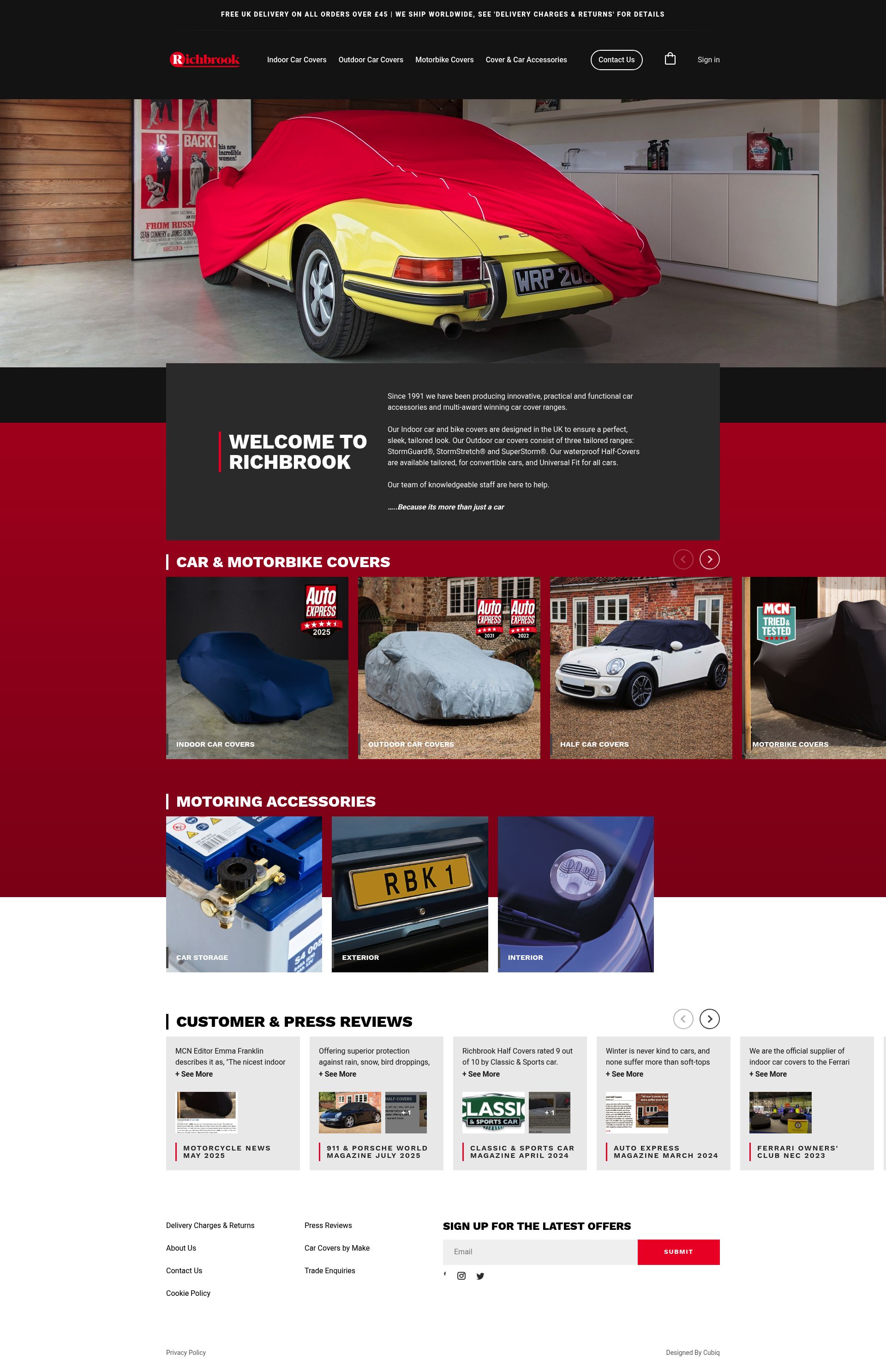
Richbrook has operated as a UK specialist in premium car accessories and covers since 1991, selling direct to consumers with a form-follows-function design ethos. Where most car accessories retailers compete on range and price, Richbrook competes on quality and specificity: their car cover range in particular is presented with detailed fitment data, material specifications, and use-case guidance that justifies higher price points. For Shopify merchants selling premium automotive products, Richbrook shows how editorial-style product presentation can support premium pricing.
8. Nextbase

Nextbase is the UK manufacturer and market leader in dash cams, and their official online store does exactly what a direct-to-consumer manufacturer store should: showcase the full product range, communicate the technology clearly, and upsell accessories and spare parts. Comparison tables across the dash cam range make model selection straightforward, and the brand story is woven through every page. Selling direct allows Nextbase to control the narrative around product features in a way that third-party retailers simply cannot match.
9. Autoglym
Autoglym has been making world-leading car care products in the UK since 1965, and their online store carries that heritage confidently. Product pages go beyond ingredient lists to explain the science behind each formula, which builds trust with detail-oriented buyers who want to understand what they are putting on their car. Starter bundles and routine-based product groupings make cross-selling natural rather than pushy, and the result is a higher average order value than a single-product checkout path would produce.
10. Streetwize Accessories
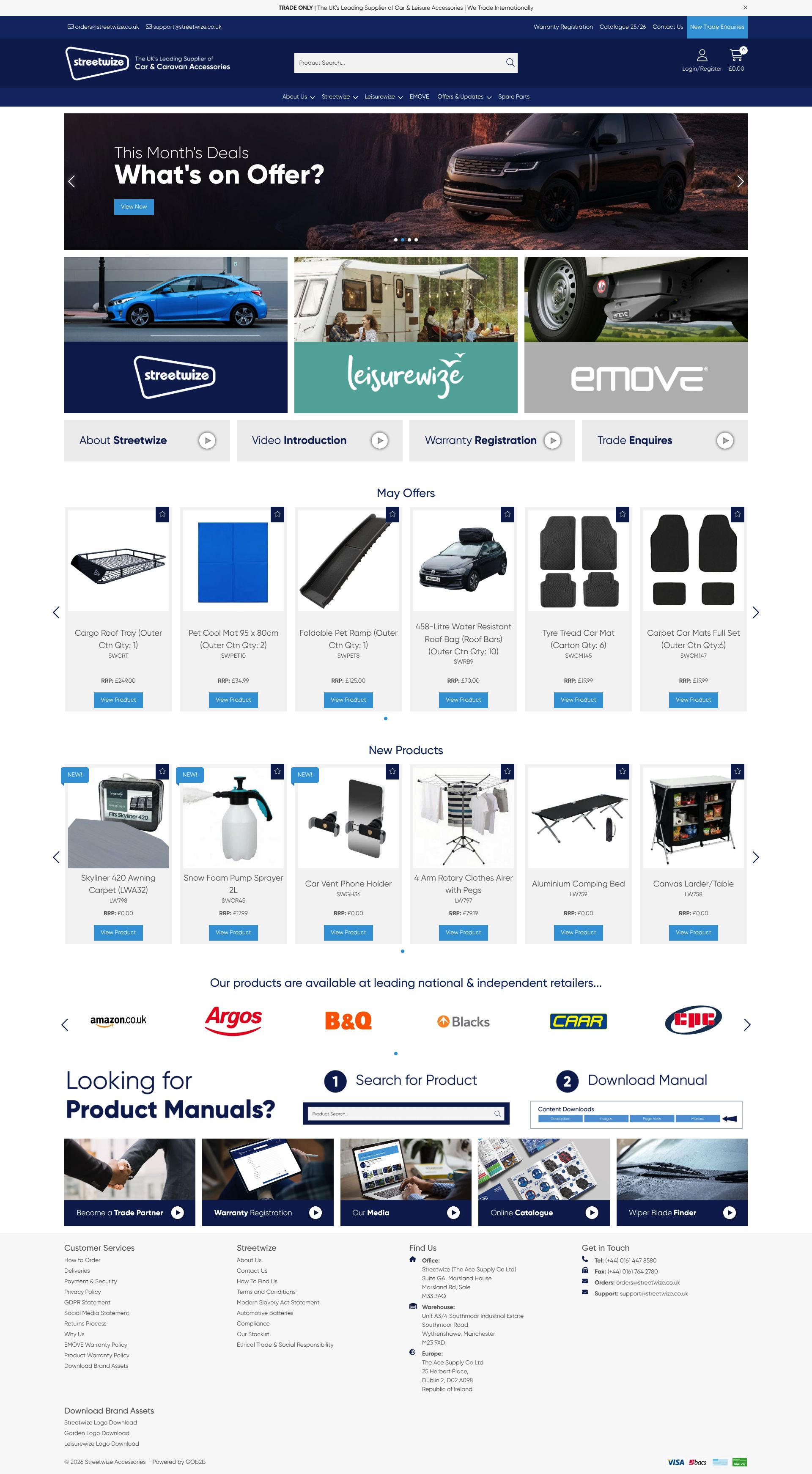
Streetwize Accessories has been supplying UK trade and retail markets with car and leisure accessories for decades, and their online store reflects a broad catalogue covering interior accessories, travel products, and motoring essentials. Their category structure is well-organised for a wide range, and volume pricing and trade account options signal clearly that they serve both B2C and B2B buyers. For merchants selling accessory-type products at accessible price points, Streetwize demonstrates how to present a large, varied range without overwhelming the customer.
The common thread across all ten of these stores is that product information does the heavy lifting. Vehicle fitment tools, specification tables, expert guides, and clear delivery and returns policies convert browsers into buyers in a category where purchase anxiety is high.
If you are looking to launch or grow a Shopify store in the automotive accessories space, our Shopify agency for automotive brands builds high-converting Shopify stores for specialist retailers. Get in touch to talk about what your store needs.
Frequently asked questions
Which Shopify stores are best for car accessories in the UK?
Nextbase, Autoglym, and Opie Oils are consistently the strongest performers. Nextbase controls the full brand narrative as a direct manufacturer. Autoglym converts through science-led product copy and cross-sell bundles. Opie Oils wins on technical depth, with oil grade and approval filters that remove purchase anxiety in a complicated category.
How do car accessories Shopify stores handle vehicle fitment?
The best stores use registration-number lookup or make/model/year filters to confirm compatibility before the customer reaches checkout. Thule UK is the clearest UK example of this done well: fitment confidence removes the primary objection in a category where the wrong product means a return. Without fitment tools, conversion rates in vehicle-specific accessories are materially lower.
Do car accessories stores benefit from selling direct on Shopify versus marketplaces like Amazon?
Yes, significantly. Selling direct on Shopify allows brands to control product education, upsells, and the post-purchase relationship. Nextbase is the best example: their comparison tables and accessory cross-sells on their own store generate revenue streams that Amazon listings cannot replicate. Marketplaces commoditise products on price alone; a Shopify store lets you sell on expertise and trust.
What conversion tactics work best for online car accessories stores?
Three things drive conversion in this category: fitment tools that confirm compatibility, detailed technical product pages that answer questions before the customer can ask them, and clear delivery and returns policies that reduce hesitation. Opie Oils and CTEK UK both demonstrate that explaining the 'why' behind a product recommendation outperforms a simple product listing.
Is the car accessories market competitive enough to launch a new Shopify store in 2026?
Yes, but success depends on niching down. Broad-range stores like CarParts4Less and GSF Car Parts compete on price and range at a scale that is difficult to replicate. The opportunity for a new store is in a specific category with high technical complexity where product expertise becomes the differentiator. Specialist stores serving a defined audience consistently outperform generalist competitors on margin and customer loyalty.