

Quick summary
Patch Plants leads the list for turning brand voice into UX, with informal plant names and care guides baked into every product page. Sarah Raven is the strongest editorial-commerce hybrid, using Perch Hill trials and course bookings to build long-term loyalty rather than one-off sales. Thompson & Morgan stands out for its enormous seed catalogue, made navigable through smart filtering and exclusive varieties you cannot find in a supermarket garden centre. Crocus rounds out the top tier with the highest Trustpilot score in the sector and category architecture that handles 5,000+ SKUs without losing the shopper.
Selling plants online is genuinely difficult. Customers cannot check leaf health or smell the compost, so the store has to do the reassurance work that a garden centre visit would normally handle. These 10 UK garden and plant Shopify stores tackle that challenge well, using photography, content and UX to make buying plants online feel straightforward and trustworthy.
1. Patch Plants
Patch Plants built its reputation on making plant ownership feel accessible rather than intimidating, and the website reinforces that at every step. Plants are named informally (Jim the Cactus, Boris the... you get the idea), care guides are built into every product page, and the checkout journey is clean and fast. It is one of the clearest examples of brand voice influencing UX in British ecommerce.
2. Bloombox Club
Bloombox Club positions plants as a wellbeing product rather than a home accessory, and the site leans fully into that angle. The subscription model is explained simply and the plant quiz is a well-executed personalisation tool that reduces decision fatigue. With over 200,000 plants delivered, the social proof is prominent and credible.
3. Crocus
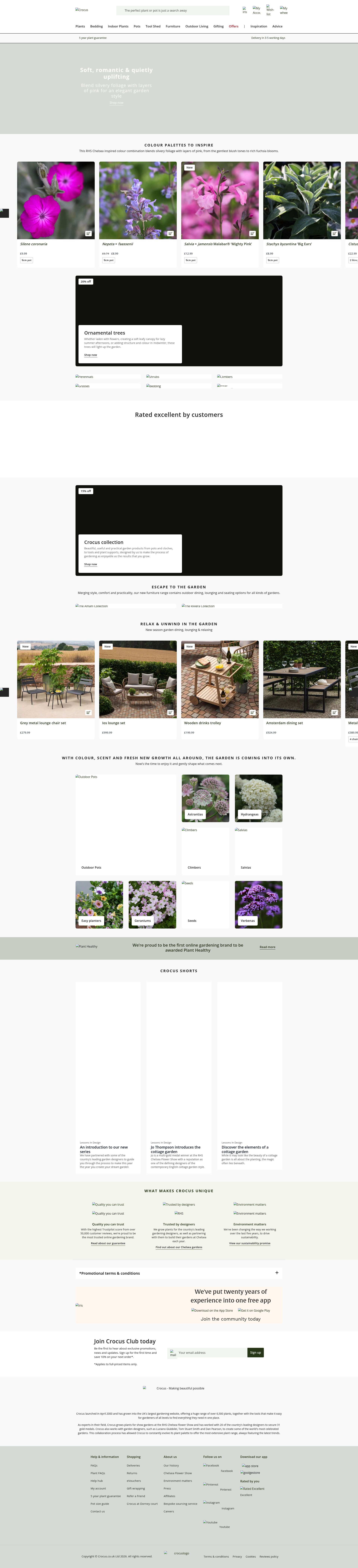
Crocus is the UK's largest gardening website and the navigation reflects that scale without becoming overwhelming. The site handles a catalogue of roughly 5,000 plants plus tools, furniture and accessories through sensible category architecture and strong filtering. Its Trustpilot score is the highest in the sector, and that credibility is displayed prominently throughout the buying journey.
4. Gardening Express
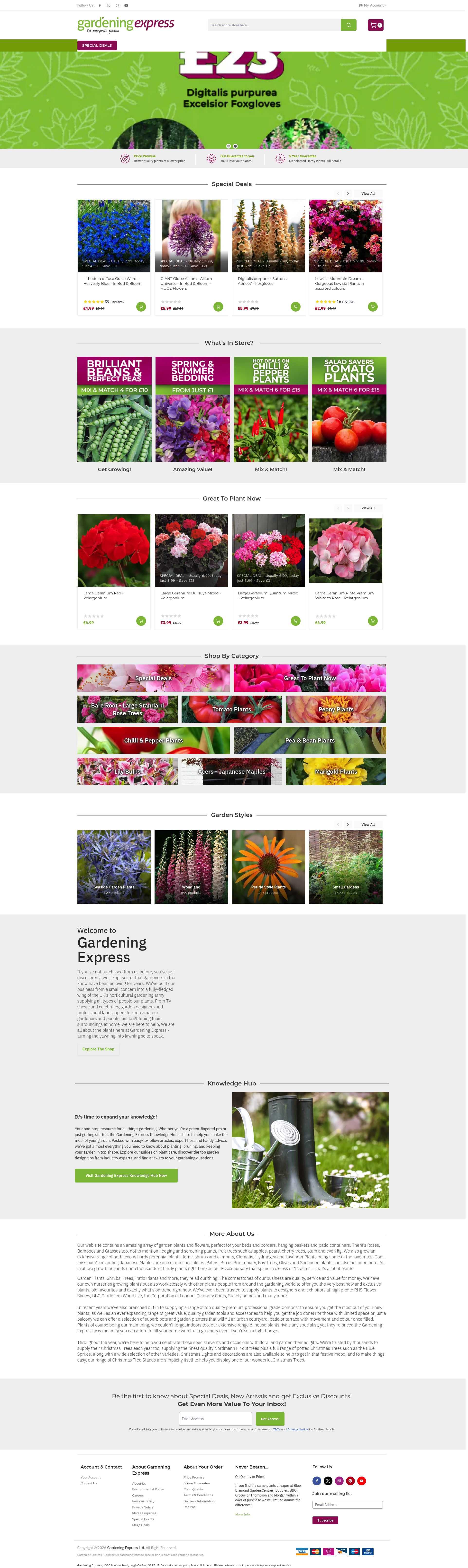
Gardening Express has built significant authority through its association with the RHS Flower Shows and BBC Gardeners World Live, and the site makes good use of those credentials. Product pages are detailed with planting conditions, growth rates and companion planting suggestions, which serves both novice and experienced gardeners well.
5. Primrose
Primrose operates as a full-service online garden centre, covering plants, water features, garden furniture and outdoor accessories. The breadth of the catalogue is handled well through clear top-level navigation and a search function that returns relevant results quickly. The editorial blog content supports SEO and acts as a useful buying guide for seasonal shoppers.
6. Thompson & Morgan
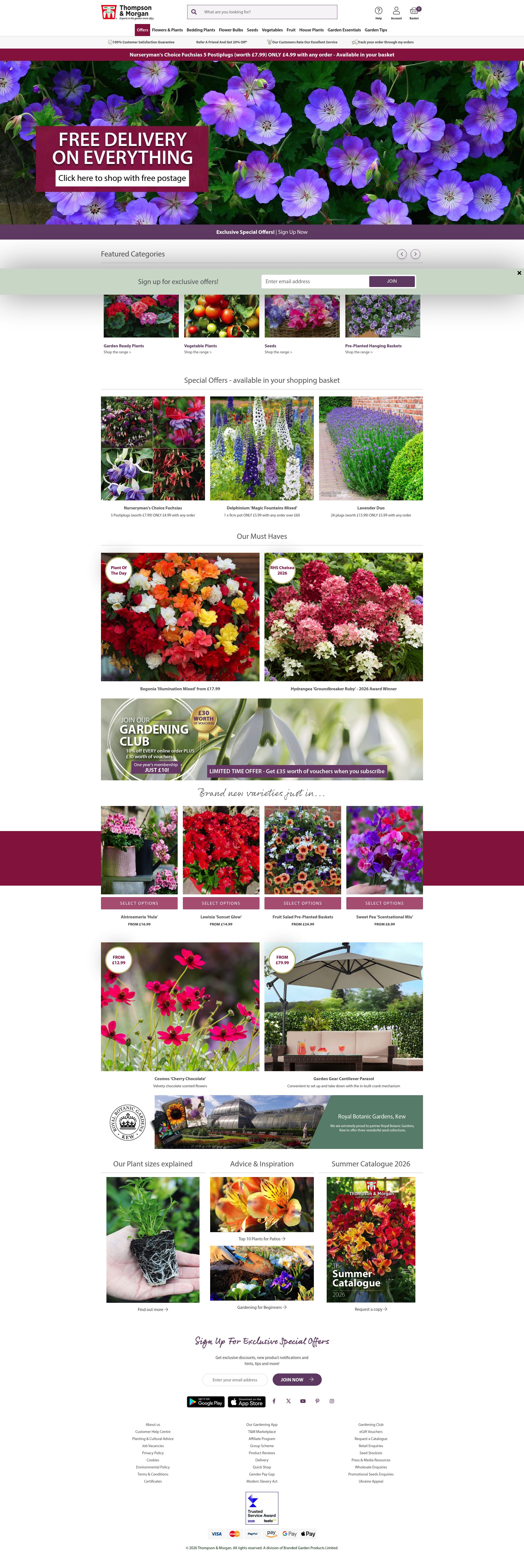
Thompson & Morgan has been supplying seeds and plants by post since 1855, and the site balances that heritage with a modern shopping experience. The seed catalogue is enormous, but filtering by vegetable, flower, season and difficulty makes it navigable. Their "Exclusive Varieties" section creates genuine differentiation from supermarket garden centres and builds repeat purchase behaviour.
7. Sarah Raven
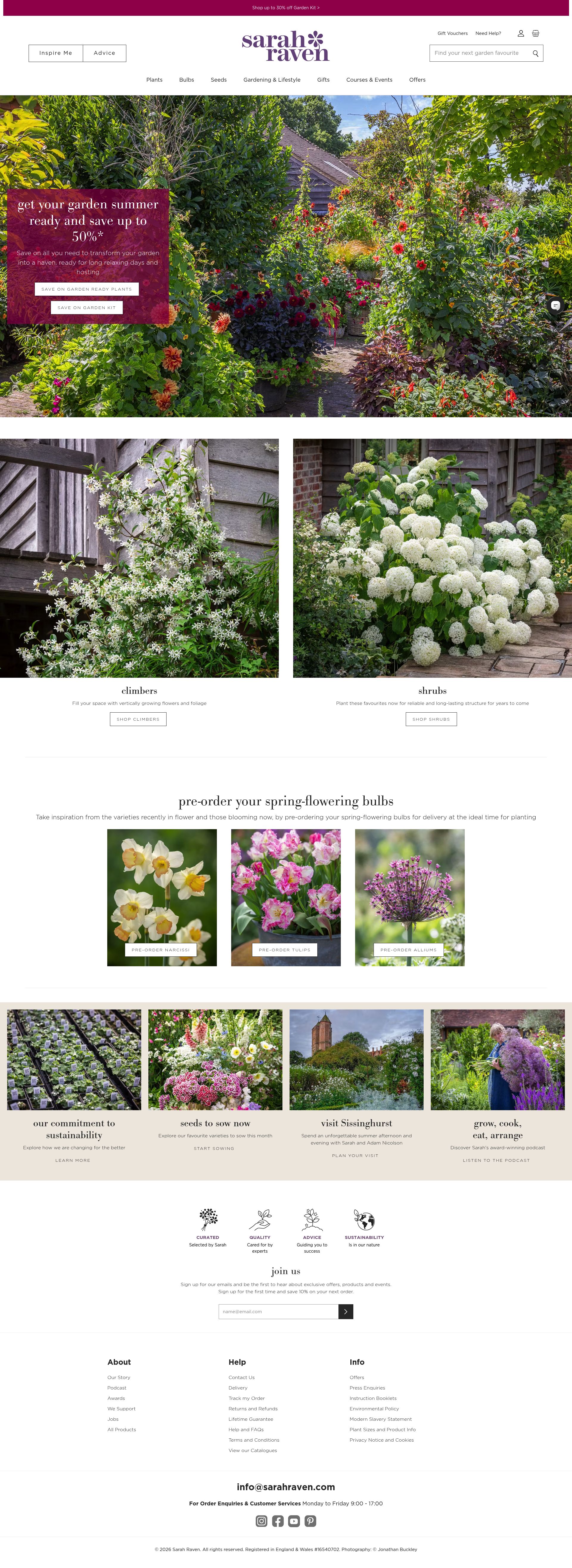
Sarah Raven's site feels more like a gardening editorial brand than a shop, and that is deliberate. The products are trialled at Perch Hill in Sussex and the copy reflects that hands-on knowledge throughout. Course bookings, a well-organised blog and seasonal collections sit alongside the shop in a way that builds long-term customer relationships rather than one-off transactions.
8. Hortology
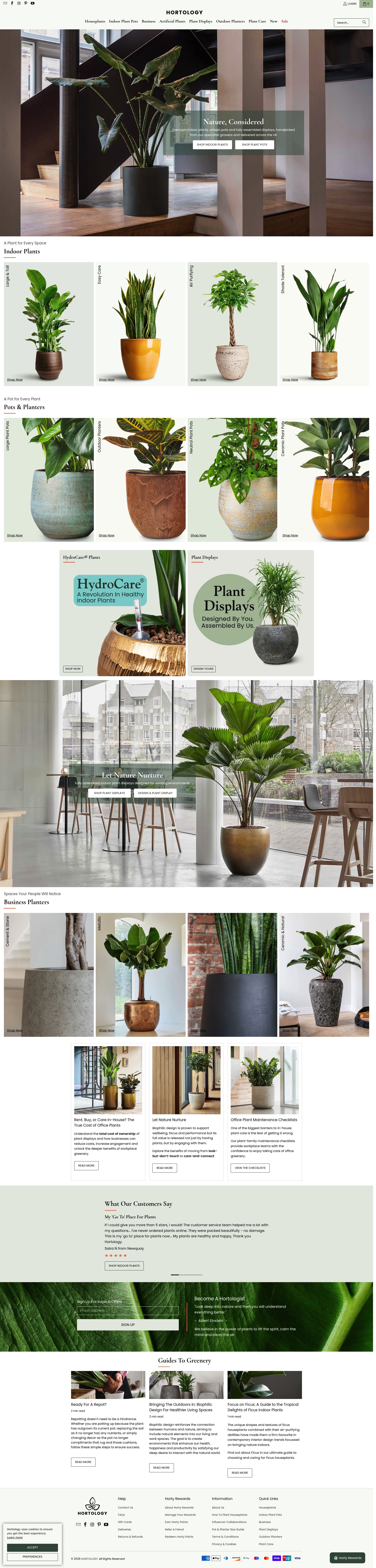
Hortology serves a more design-conscious audience, pairing high-quality houseplants with designer pots and planters. The site's photography is clean and interior-styled, which appeals to the interior designers and landscapers who make up a significant part of their customer base. The "Room Inspiration" content is a conversion tool that upsells pot and plant bundles naturally.
9. Plants4Presents
Plants4Presents has operated from its own nursery for over 22 years, and the site leans into that provenance to build trust. The gift-focused positioning is clear from the homepage, with gift card options and occasion-based navigation making it easy for buyers who are shopping for someone else. Free delivery over £50 is well signposted throughout.
10. Lazy Flora
Lazy Flora's subscription model is aimed squarely at people who love plants but lack the time or confidence to choose them. The site explains the subscription clearly, highlights the eco-friendly credentials (peat-free soil, sustainable packaging) and uses a quiz to match customers to plants that suit their space and lifestyle. It is a focused, well-executed niche DTC proposition.
Whether you sell seeds, houseplants or full garden design services, the right Shopify store can turn a seasonal shopper into a loyal customer. If you are ready to build or improve your ecommerce presence, explore our Shopify design services or get in touch to discuss your project.
Frequently asked questions
Which garden brands use Shopify in the UK?
Several of the UK's leading garden and plant retailers run on Shopify or Shopify Plus, including Patch Plants, Bloombox Club, Hortology, Lazy Flora, and Plants4Presents. Larger catalogue sites like Crocus and Thompson & Morgan also use Shopify to manage extensive SKU ranges with strong filtering and seasonal collections.
What makes a plant or garden Shopify store convert well?
The highest-converting garden stores combine detailed product information (growth conditions, care difficulty, companion planting) with strong visual photography and clear delivery reassurance. Reducing purchase anxiety is critical when customers cannot inspect the plant in person, so care guides embedded on product pages and prominent Trustpilot reviews do significant conversion work.
Is Shopify good for selling plants and live goods online?
Yes, Shopify handles live goods well when paired with the right apps and delivery integrations. The main considerations are delivery date selection (so customers can ensure they are home to receive fragile stock), click-and-collect options, and subscription billing for box schemes. Apps like Bold Subscriptions or Recharge cover the subscription layer, while Royal Mail and DPD integrations handle dispatch.
How do garden Shopify stores handle subscriptions?
Subscription-first stores like Bloombox Club and Lazy Flora use a quiz-led onboarding flow to match customers to a plan before presenting pricing, which improves conversion compared to leading with the subscription options directly. The quiz reduces decision fatigue and increases perceived personalisation, two factors that consistently lift subscription sign-up rates in the DTC plant sector.
What Shopify apps do garden stores typically use?
Common app stacks for garden and plant stores include Recharge or Bold Subscriptions for plant box schemes, Klaviyo for seasonal email flows tied to planting calendars, Judge.me or Trustpilot for review collection, and a delivery date picker app to manage customer expectations for live goods. Larger catalogue stores like Thompson & Morgan rely heavily on Shopify's native search and filtering, sometimes extended with apps like Searchpie or Boost Commerce.