

Quick summary
Fortnum & Mason sets the benchmark with occasion-led navigation, a corporate account portal, and product photography that justifies £500 hampers without a word of copy. Hamper.com is the strongest pick for conversion mechanics: a live delivery date calculator and per-item swap personalisation that directly address the two biggest gifting checkout hesitations. Harry & David leads on recurring revenue, with gift club subscriptions built into Shopify that turn a single transaction into six months of brand touchpoints. GiftTree is the best reference for combining B2B bulk ordering with a consumer gift club catalogue on one Shopify Plus store.
Gift hampers and luxury gift boxes are one of the most commercially resilient niches in ecommerce. Average order values sit well above the UK ecommerce median, seasonal demand is predictable enough to plan inventory around, and corporate gifting adds a B2B revenue channel that most DTC stores never fully exploit. The best operators in this category have also figured out something that applies far beyond hampers: customers spending £80 to £300 on a gift for someone else need to feel confident before they convert, and that confidence comes from presentation, curation, and checkout clarity, not from discounting.
These ten Shopify stores show what excellent gifting ecommerce looks like in 2026. Some are UK brands, some are international. All of them are worth studying if you are running any store where the customer is buying for someone other than themselves.
1. Fortnum & Mason
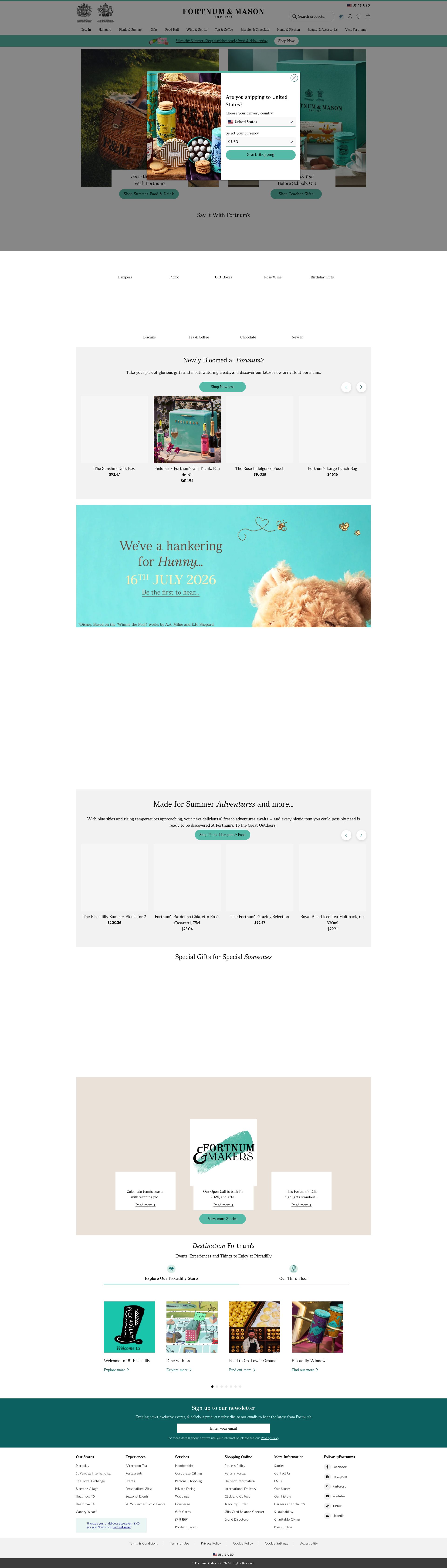
Fortnum & Mason is the benchmark for luxury gifting in the UK and their Shopify Plus store handles a product range of extraordinary breadth without ever feeling chaotic. Hampers, loose leaf teas, confectionery, wine, cheese, and homeware all sit within a single catalogue, but the navigation architecture keeps it coherent: gift finder tools, occasion-based collections (birthdays, anniversaries, Christmas, corporate), and a price range filter that respects the fact that a customer might be looking for a £30 gift or a £500 one. The store never forces them to wade through irrelevant options to find the right tier.
Product photography is exceptional, which matters in a category where the physical quality of the packaging is a core part of the product. Every hamper listing includes multiple angles of the open box, showing the arrangement of contents and the quality of the presentation. That visual detail is doing commercial work: it justifies the price point and reduces the hesitation that comes from buying something you cannot inspect in person. The corporate account functionality, including bulk ordering with personalised messaging at scale, makes Fortnum's one of the few gifting brands that has genuinely built a B2B channel on Shopify rather than treating corporate orders as an afterthought.
2. Hamper.com
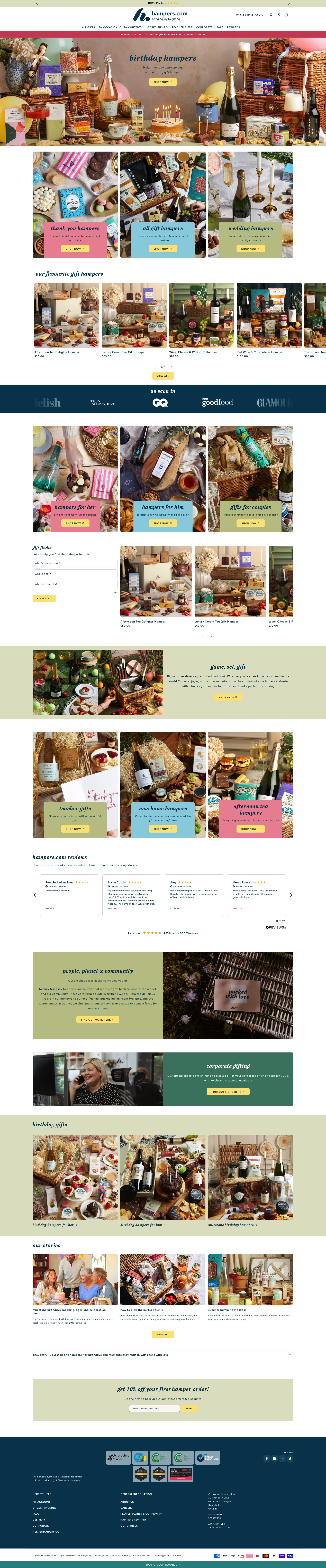
Hamper.com is the UK's largest specialist hamper retailer and their Shopify store is a case study in how to manage a large gifting catalogue without losing the customer in the options. Over 400 hampers organised by occasion, recipient, price, and dietary requirement: the filtering logic is granular enough to help a buyer find a gluten-free birthday hamper under £60 in three clicks or fewer. That navigation efficiency is a direct conversion lever in a category where decision fatigue is a real drop-off cause.
The personalisation infrastructure is well built. Customers can add handwritten message cards, choose delivery dates, and in many cases swap individual items within a hamper for alternatives, which turns a pre-built product into something that feels considered rather than generic. That customisation option is one of the most commercially significant things a gifting brand can offer on Shopify, because it addresses the single biggest concern a gift buyer has: will this feel personal? Free next-day delivery on orders above a clearly displayed threshold, and a live delivery date calculator on each product page, remove two of the most common checkout hesitations in the gifting category.
3. The Hamper Emporium
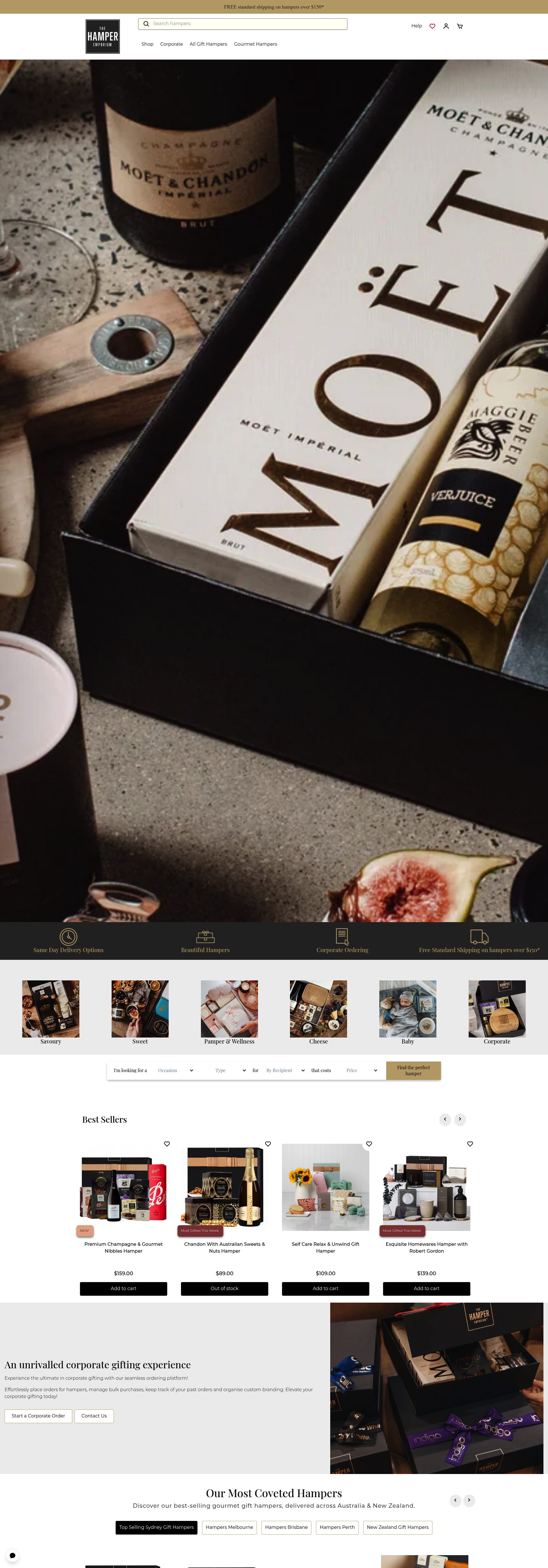
The Hamper Emporium is an Australian luxury gifting brand whose Shopify Plus store has built a reputation for the quality of its box construction as much as its contents. The wicker hamper baskets and keepsake boxes are photographed as hero products in their own right, which is the right call: when a customer is spending AU$200 or more on a gift, the container is as important as what is inside it. Product pages include detailed content lists with individual brand callouts, which adds credibility and lets the recipient know exactly what they are opening.
The store handles the complexity of gifting logistics well. A prominent delivery date selector on the product page, tiered express and standard shipping options with clear pricing, and a gift note field that appears in the cart rather than buried in checkout all reduce the friction points that cause gifting customers to abandon. The corporate gifting portal is a separate onboarding flow with volume pricing and a dedicated account manager contact, which is the right structure for B2B gifting: corporate buyers have different needs from individual gift senders and a mixed checkout experience serves neither well.
4. GiftTree
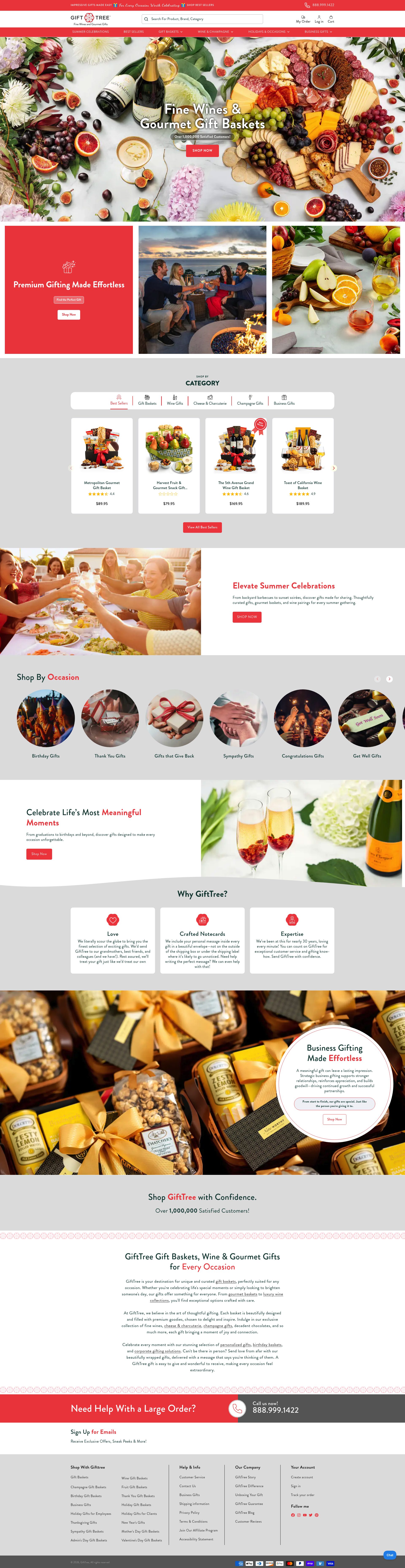
GiftTree is a US-based luxury gifting brand that has been operating online since 1997 and whose Shopify Plus store reflects decades of refinement in gifting ecommerce. The product range spans wine baskets, gourmet food towers, spa gift sets, and branded corporate boxes, all photographed to a consistent high standard that makes the catalogue feel curated rather than assembled. The gift finder is a genuine tool rather than a decorative element: filtering by occasion, price, recipient, and product type narrows a catalogue of thousands of SKUs to a manageable shortlist efficiently.
The subscription gifting mechanic is an underappreciated part of the GiftTree model. Monthly gift clubs for wine, cheese, chocolate, and flower delivery convert what is usually a single transaction into a recurring revenue relationship, and the Shopify recurring billing infrastructure handles the mechanics without custom development. The B2B corporate gifting section includes a bulk ordering tool with logo imprinting options, quantity breaks, and an account setup flow that separates corporate buyers from consumer traffic early in the session. For any gifting brand thinking about how to build B2B alongside DTC, this is a model worth examining closely.
5. Baskits
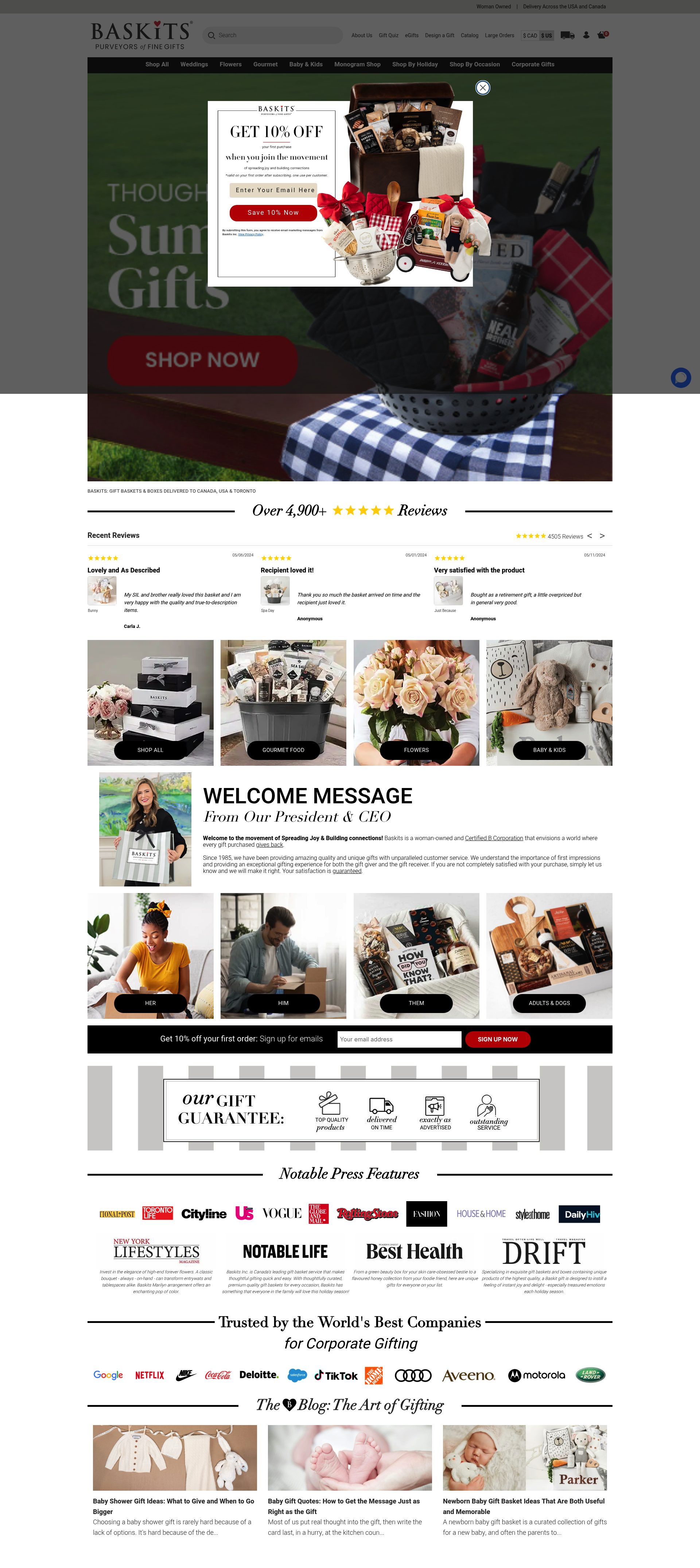
Baskits is a Canadian luxury gift basket brand whose Shopify store has one of the strongest visual identities in the gifting category. The brand photography leads with lifestyle imagery rather than flat product shots, which positions the hampers as experiences rather than commodity products. A £120 gift basket photographed in a sun-lit kitchen with fresh flowers nearby converts differently from the same basket on a white background, and Baskits have invested in the photography to make that distinction count.
The product customisation options are extensive: corporate branding, personalised ribbons, custom content swaps, and occasion-specific packaging variants. The Shopify store surfaces these options cleanly through variant selectors rather than a custom configurator, which keeps the checkout flow fast even for a heavily customised product. Seasonal collections, including Valentine's Day, Mother's Day, and Christmas ranges, are given dedicated landing pages with editorial content that doubles as SEO infrastructure. That combination of commercial planning and content investment is how gifting brands build year-round organic traffic rather than spiking at Q4 and going quiet the rest of the year.
6. Moonpig Business
Moonpig's B2B gifting arm operates on Shopify and targets the corporate gifting market directly, which makes it a useful reference for any gifting brand thinking about that channel. The proposition is clear from the moment you land: branded gift boxes at volume with personalised messaging, account management, and flexible delivery. The onboarding flow for corporate accounts collects budget, headcount, and occasion information before presenting relevant product options, which is exactly the right UX approach for high-value B2B gifting where a generic catalogue browse wastes the buyer's time.
The Shopify implementation handles bulk ordering with quantity breaks and a purchase order payment option, which is a requirement for corporate buyers whose procurement processes run through invoicing rather than card payment. Personalisation at scale is the core technical challenge in corporate gifting and Moonpig Business handles it through a branded gift builder that lets companies upload logos, set message templates, and preview the finished product before committing to an order. For any Shopify merchant exploring the corporate gifting channel, this is the clearest example of how to structure that offering without turning your consumer checkout into a hybrid that works for neither audience.
7. Lily's Kitchen Gift Store
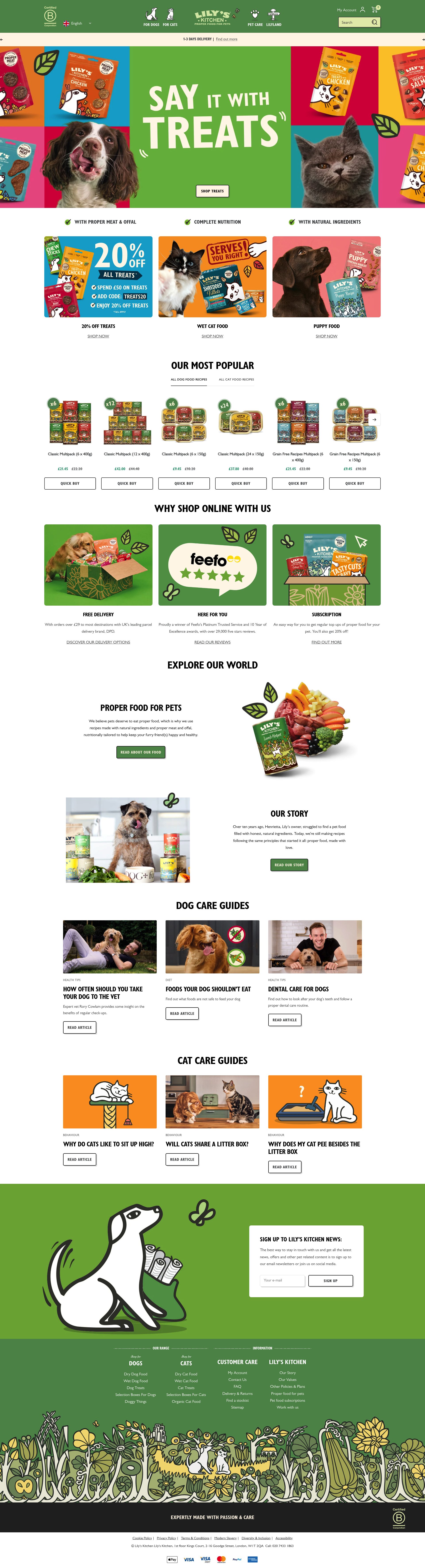
Lily's Kitchen is a UK premium pet food brand whose gifting range on Shopify demonstrates how a non-traditional gifting brand can build a serious gifting vertical on top of a product-led business. Pet hampers, gift boxes, and subscription boxes for dogs and cats sit within a Shopify Plus store that handles both the regular food subscription business and the gifting range without the two experiences conflicting. The gift product pages are distinct from the subscription pages in tone and layout, which is important: a customer buying a birthday hamper for a friend's dog has different intent from a subscriber re-ordering food, and the store design reflects that.
Product photography leans into the emotional dimension of pet gifting, which is the right move: pet owners are buying these hampers because they love their animals and want to give them something special, and the copy and imagery lean into that motivation directly. The personalisation options, including the ability to add the pet's name to the box, convert that emotional motivation into a higher-value product variant. The gifting range is available for next-day delivery with a clear cut-off time displayed on every product page, which is the single most important delivery UX element for a category driven by forgotten birthdays and last-minute occasions.
8. Not On The High Street (Gifts)
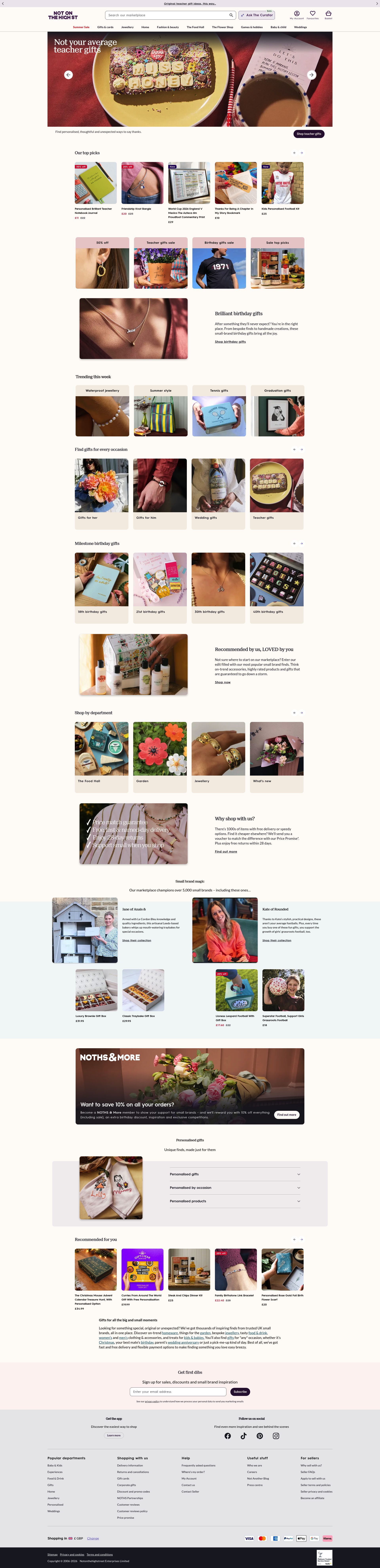
Not On The High Street operates a marketplace model on Shopify and hosts thousands of independent UK makers selling personalised gifts, gift boxes, and hampers. The platform's gifting category is one of the strongest in UK ecommerce: deep personalisation options, maker stories that add provenance to every product, and a gift experience engine that lets buyers build custom gift sets from multiple sellers in a single checkout. That cross-seller basket mechanic is unusual and commercially significant: it increases average order value by combining products that a single brand could not offer independently.
The occasion-based landing pages are particularly well executed. A Mother's Day gift guide is not just a filtered product list but an editorial page with gift ideas at different price points, recipient personas, and maker spotlights. That content investment builds organic search traffic for gift-related queries year-round, which reduces dependence on seasonal paid spend. The Shopify checkout handles the complexity of multi-seller orders, split fulfillment, and personalisation instructions cleanly, which is a non-trivial technical implementation for a marketplace at this scale.
9. Prezzybox
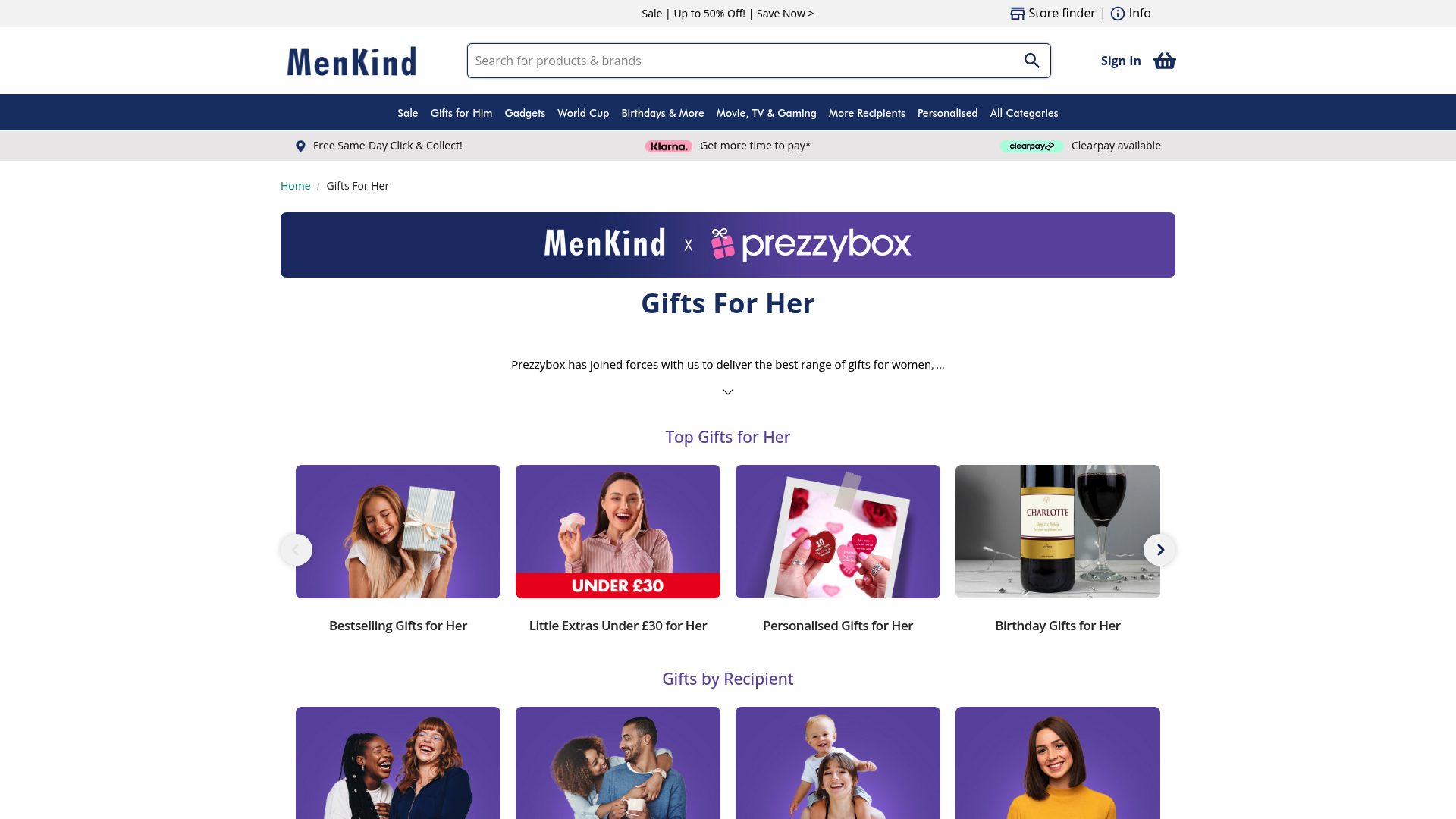
Prezzybox is a UK gifting retailer whose Shopify store covers the full price spectrum from under-£15 novelty gifts to premium hampers and experience days. The breadth of range creates navigation challenges that Prezzybox solve with a strong occasion-led information architecture: the top-level navigation is built around who you are buying for (him, her, couples, kids, pets) rather than product category, which matches how gifting customers actually think when they arrive on the site. That buyer-intent-first navigation is a conversion-rate lever that product-category navigation consistently underperforms.
The gift finder quiz is well implemented: a short sequence of questions about recipient, occasion, and budget returns a curated shortlist of ten to fifteen products rather than a full catalogue dump. That filtering mechanism is particularly important for a range of thousands of SKUs, where unguided browsing creates decision paralysis rather than purchase decisions. The Prezzybox loyalty points scheme, which credits points on every purchase redeemable against future orders, drives repeat purchase in a category where customers typically return for multiple gifting occasions across the year. The Shopify integration handles points accrual and redemption within the standard checkout without requiring a custom payment gateway modification.
10. Harry & David
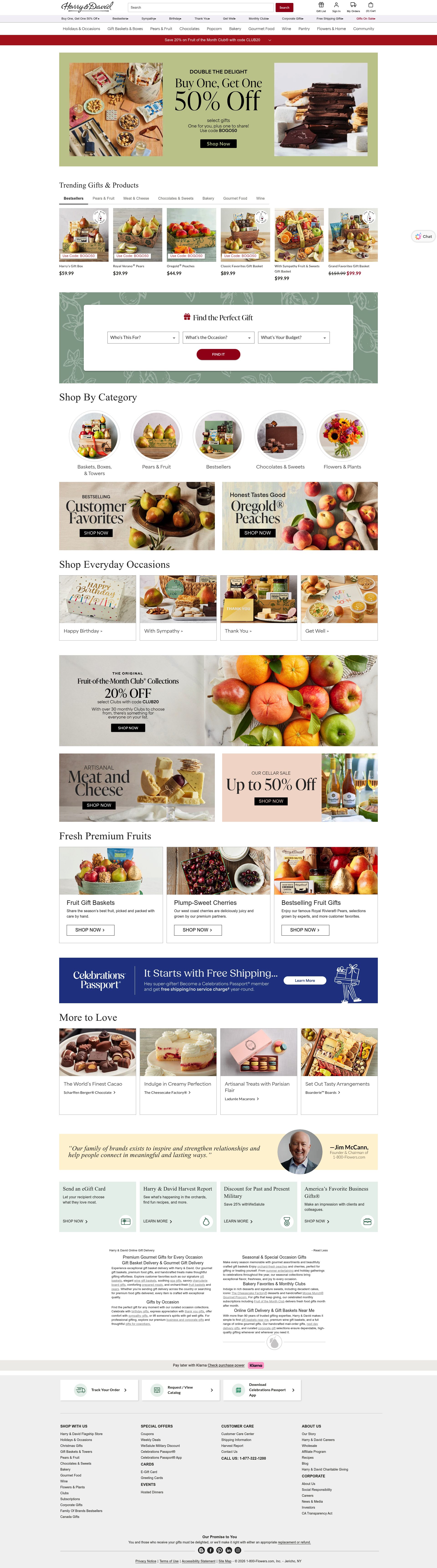
Harry & David is a US luxury food gifting brand with over 80 years of heritage, most famous for its Royal Riviera pears, and their Shopify Plus store handles a gifting catalogue that spans fruit baskets, wine and cheese boxes, chocolate towers, and seasonal gift clubs. The brand's heritage is used carefully throughout the store: the founding story is present on product pages where provenance justifies a premium price, but it does not overwhelm a store that is built around efficient gifting decisions rather than nostalgic storytelling.
The club and subscription range is one of the most developed in the gifting category. The Fruit of the Month Club, Wine of the Month Club, and Cheese of the Month Club are all built on Shopify's subscription infrastructure and configured as gifting products, so a buyer can purchase a three-month, six-month, or twelve-month club membership as a gift with a future start date. That gift subscription mechanic is one of the highest-value products in any gifting catalogue: a single transaction converts into recurring fulfilments, the recipient gets multiple positive brand touchpoints, and the AOV on the gifting SKU is significantly higher than a single-box purchase. For any gifting brand on Shopify that has not yet built a gift subscription product, Harry & David is the template.
Comparison Table
| Brand | Niche Focus | Price Point | Shopify Standout |
|---|---|---|---|
| Fortnum & Mason | Luxury food and hampers | £30–£500+ | Gift finder, corporate accounts, content-rich product pages |
| Hamper.com | Broad gifting, UK-focused | £25–£250 | Delivery date calculator, item swap personalisation |
| The Hamper Emporium | Luxury keepsake boxes | AU$80–AU$500+ | Packaging as product, corporate gifting portal |
| GiftTree | Gourmet baskets and gift clubs | $50–$300 | Gift club subscriptions, B2B bulk ordering tool |
| Baskits | Lifestyle-led gift baskets | CA$60–CA$400 | Seasonal editorial pages, corporate branding options |
| Moonpig Business | Corporate gifting at scale | Varies by volume | Branded gift builder, PO payment, bulk personalisation |
| Lily's Kitchen | Premium pet gifting | £20–£80 | Pet name personalisation, next-day gifting with cut-off |
| Not On The High Street | Personalised gifts marketplace | £10–£200+ | Cross-seller basket, maker provenance, editorial gift guides |
| Prezzybox | Full-spectrum gifting | £10–£150 | Occasion-led navigation, gift finder quiz, loyalty scheme |
| Harry & David | Luxury food gifts and clubs | $50–$350 | Gift subscription mechanic, multi-month club memberships |
What These Stores Get Right
The best gifting and hamper stores on Shopify share a set of commercial decisions that are directly replicable for any merchant in the category.
- Occasion-led navigation beats product-category navigation. Customers buying gifts think in terms of who and when, not what. Stores that structure their menus around recipient and occasion reduce clicks to purchase and improve conversion across the board.
- Delivery date transparency is a checkout conversion lever. A customer buying a birthday gift on 8 July needs to know whether it will arrive before the 12th before they add to cart, not after they enter their payment details. Displaying delivery date options at the product page level, not just in checkout, reduces abandonment at the final stage.
- Personalisation options increase average order value. Adding a gift message, swapping an item, choosing a ribbon colour, or printing a recipient's name on the box are all paid upgrades in disguise. The best stores make these options prominent and easy to use without turning the product page into a configuration form.
- Corporate gifting requires a separate flow. B2B gifting buyers have different needs: volume pricing, purchase order payment, logo branding, and account management. Mixing corporate and consumer traffic in the same checkout produces a poor experience for both. The stores that have built dedicated B2B onboarding flows unlock a revenue channel that pure-DTC operators leave on the table.
- Subscription gifting converts single transactions into recurring revenue. Gift clubs and monthly delivery subscriptions are not just product types: they are a retention and LTV strategy. A customer who buys a six-month cheese club as a gift becomes a brand ambassador for six months. Harry & David, GiftTree, and Master of Malt have all built significant recurring revenue on this mechanic, and it is available to any gifting brand on Shopify without custom development.
If your gifting or hamper brand is ready to build a stronger direct channel, improve checkout conversion, or launch a corporate gifting programme, our Shopify design and development service is built around exactly these commercial outcomes. Get in touch to talk through what your store needs.
Frequently asked questions
Do gift hamper brands actually use Shopify?
Yes. Many of the UK and US leading gifting brands run on Shopify Plus, including Fortnum & Mason, Hamper.com, and Harry & David. Shopify handles the complexity of gifting well: delivery date selectors, gift message fields, item-level personalisation, and subscription gift clubs are all achievable without custom development.
How do the best hamper Shopify stores handle personalisation?
The strongest implementations surface personalisation options at the product page level, not buried in checkout. Options like handwritten message cards, item swaps, recipient name printing, and corporate logo branding are presented as variant selectors or add-ons that increase average order value rather than complicate the UX.
What is the best Shopify store for corporate gift hampers?
Fortnum & Mason and Moonpig Business are the clearest references. Both operate dedicated B2B onboarding flows separate from their consumer checkout, with volume pricing, purchase order payment options, and branded gift builder tools. Mixing corporate and consumer traffic in the same checkout underserves both audiences.
How do gifting brands on Shopify build recurring revenue?
Gift clubs and subscription hampers are the primary mechanic. Harry & David, GiftTree, and Lily's Kitchen all use Shopify's subscription billing to sell multi-month club memberships as gifting products, with a future start date set at purchase. A six-month cheese or wine club purchased as a gift generates multiple fulfilments from a single transaction and significantly higher AOV than a one-off hamper.
What navigation structure converts best for hamper and gifting stores?
Occasion-led and recipient-led navigation consistently outperforms product-category navigation in the gifting niche. Customers buying gifts think in terms of who they are buying for and when, not what product type they want. Top-level menus organised around 'for him', 'for her', 'birthday', 'corporate', and 'Christmas' reduce clicks to purchase and lower drop-off at the browse stage.