
Quick summary
Strathberry leads the list with its global-ready DTC execution and aspirational editorial photography that converts across markets. Aspinal of London is the strongest pick for personalisation-led conversion, with monogramming woven into the buying journey and a premium UX to match. The Cambridge Satchel Company proves how interactive customisation drives AOV on a single hero product. DeMellier London stands out for purpose-led brand storytelling done without gimmicks, keeping the focus on product quality and charitable impact throughout.
Handbags sit at the intersection of fashion, craft, and identity. Customers are investing in something they will carry every day, and they make that decision largely on how a brand presents itself online. These 10 Shopify stores demonstrate what it looks like when product, storytelling, and ecommerce execution all work together.
1. Strathberry
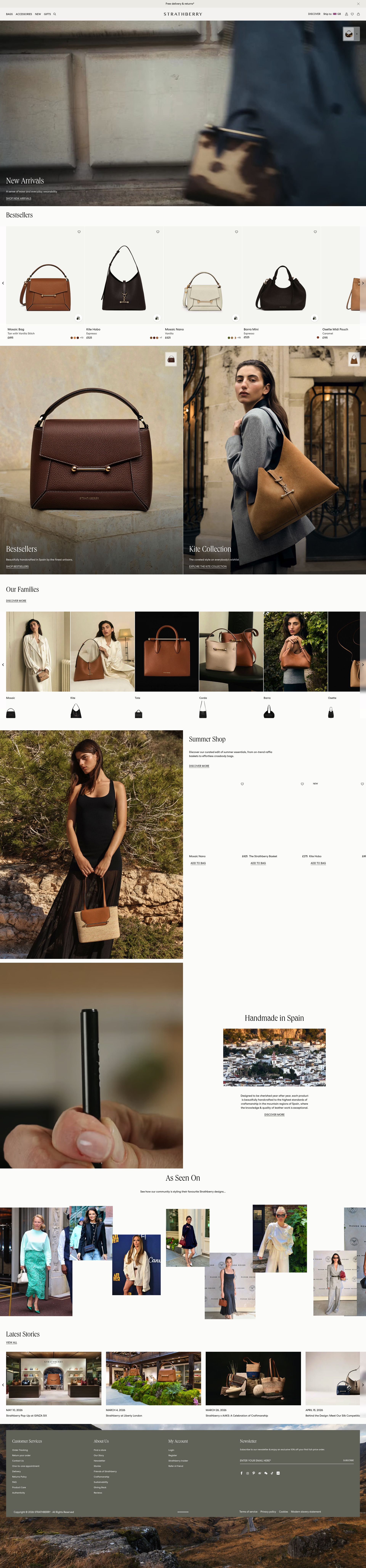
Edinburgh-based Strathberry designs its bags in Scotland and has them handcrafted in Spain. The brand gained global attention after Meghan Markle was photographed carrying its products, and its Shopify store is built for an international audience: aspirational photography, strong editorial content, and a checkout experience that converts across currencies and regions.
2. Mulberry
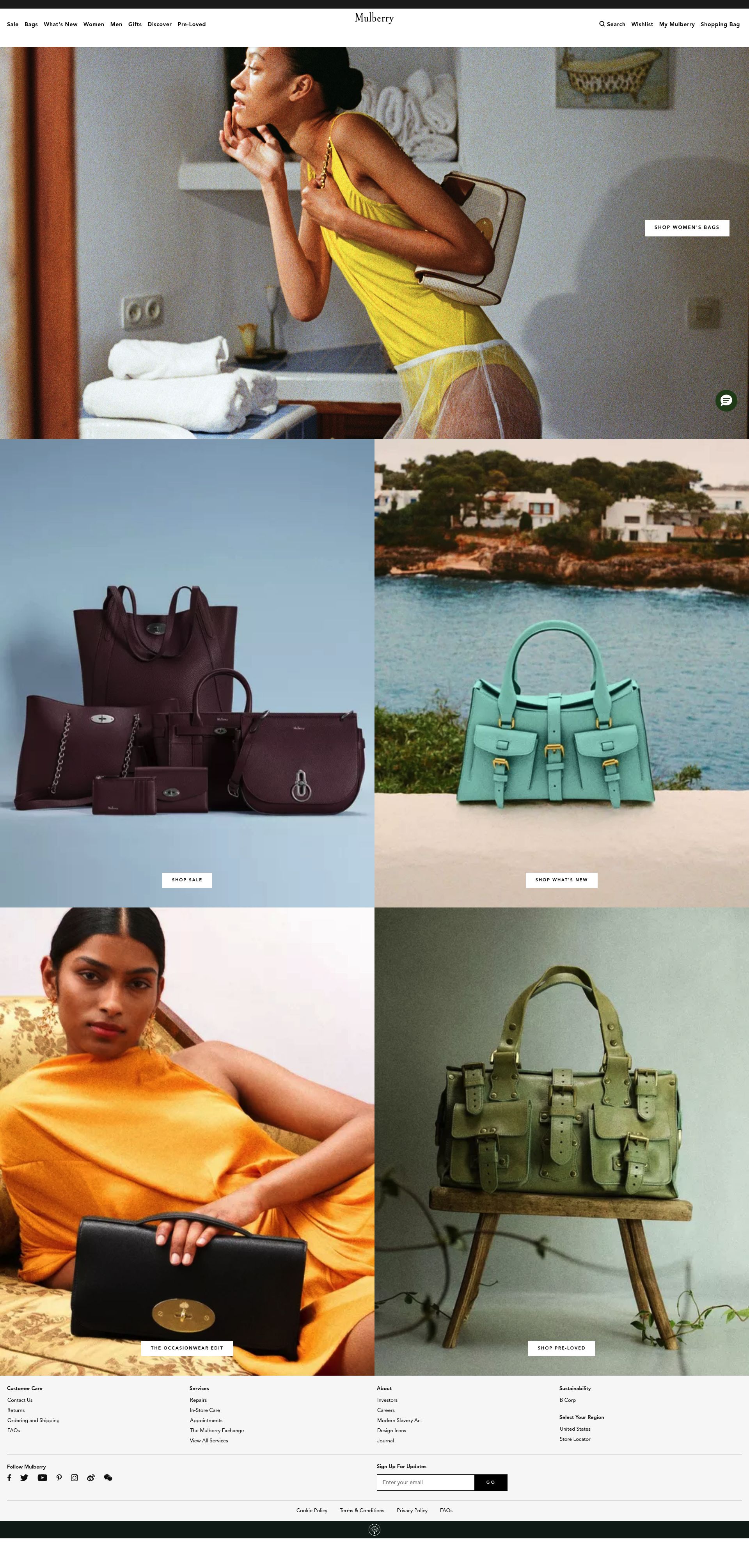
Mulberry is one of Britain's most iconic luxury brands, founded in Somerset in 1971. The Shopify store handles a large product catalogue, including its famous Alexa and Bayswater bags, with a level of craft in the photography and page design that mirrors the quality of the products. The balance between heritage storytelling and a modern, functional UX is well managed.
3. Aspinal of London
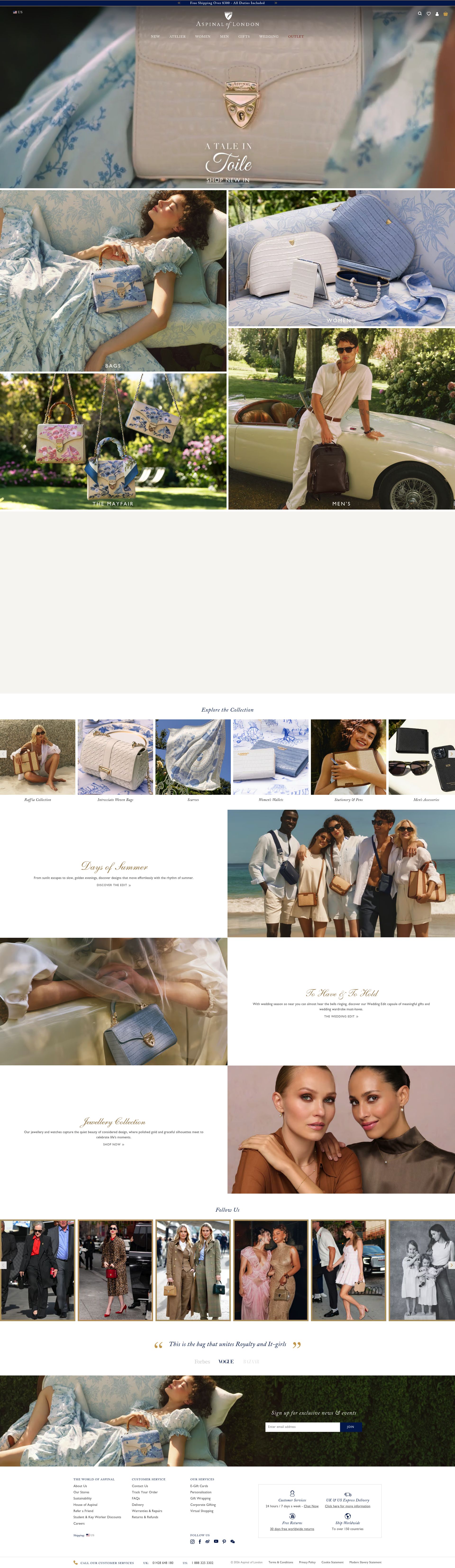
Aspinal of London has been making structured leather bags and accessories since 2002, with a customer base that includes royalty. The Shopify store reflects that premium positioning through restrained design, excellent product imagery, and personalisation options (monogramming) that create a strong reason to buy direct. Gifting and travel accessories pages are particularly well structured.
4. Radley London
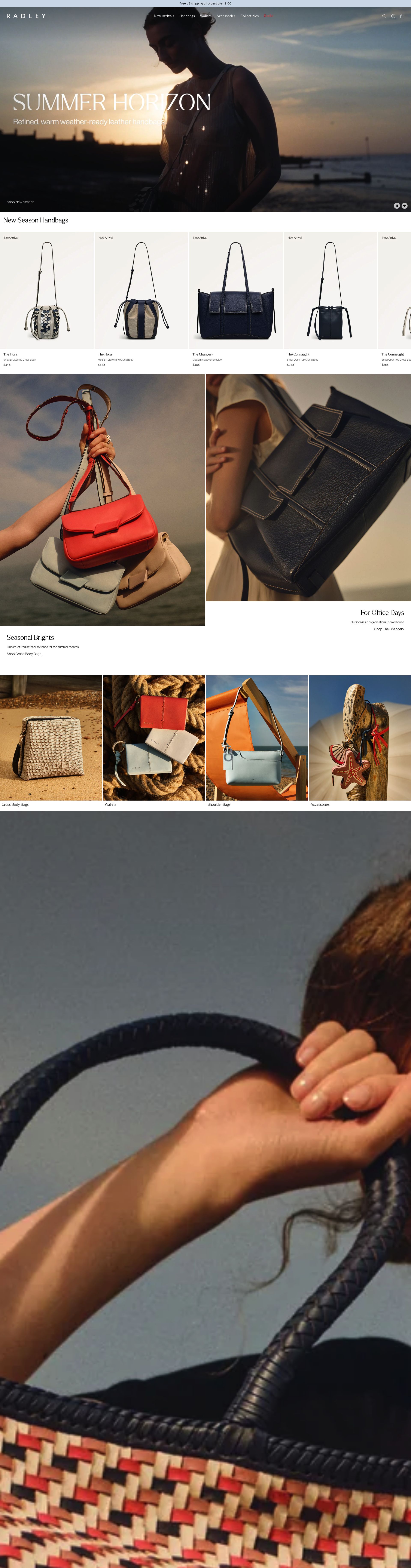
Radley has built one of the UK's most recognisable handbag brands since 1998, with its Scottie dog motif appearing on bags across every price point. The Shopify DTC store handles a broad, loyal customer base with clear category navigation, gift-finding tools, and strong seasonal collections. Radley shows how a mid-market British brand can operate at scale without losing personality.
5. The Cambridge Satchel Company
Founded in 2008 from a kitchen table, The Cambridge Satchel Company became a global story. Its iconic leather satchels, handmade in the UK, are sold almost entirely DTC. The Shopify store is built around personalisation: customers can customise colours, add monograms, and configure their satchel in detail before buying. That interactive experience drives both conversion and average order value.
6. DeMellier London
DeMellier is an award-winning British handbag brand designed in London and handcrafted in Spain. Totes and crossbodies are the focus, with each purchase linked to a charitable cause, which is prominently featured throughout the store. The Shopify site is clean, editorial, and highly confident, and the brand's DTC positioning means the story comes through without retail noise around it.
7. Smythson
Smythson has been making luxury leather goods and stationery since 1887. The Shopify store reflects 130-plus years of quiet British authority: product pages are precise, photography is controlled and elegant, and the range of bags, holdalls, and travel accessories is presented without clutter. The gift-giving and personalisation sections are strong commercial drivers.
8. Tusting
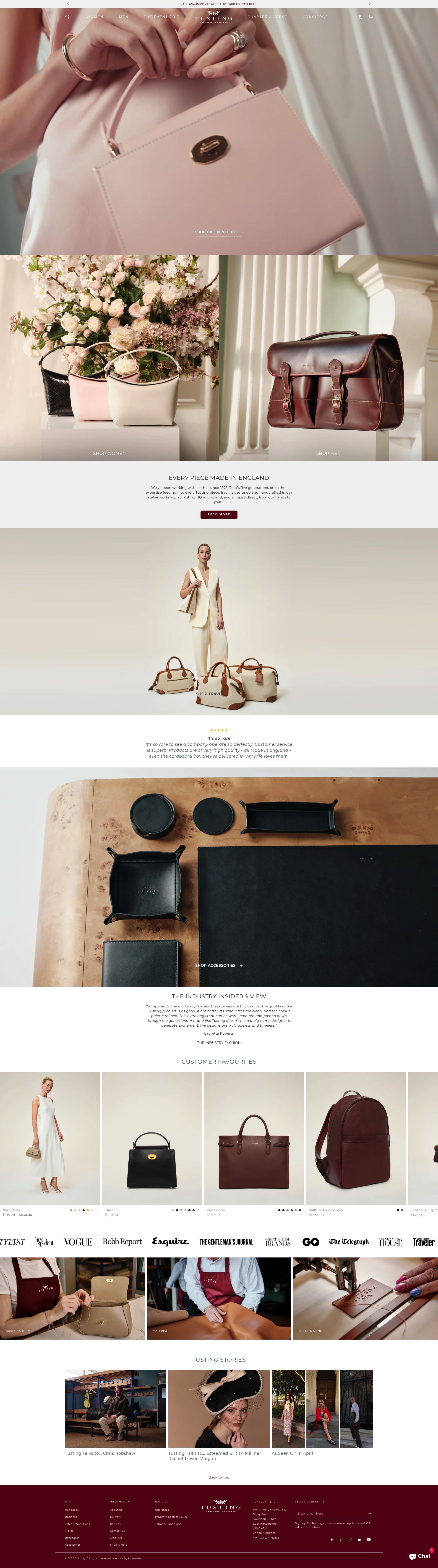
Tusting is an English heritage brand with its own tannery, producing leather bags built to last decades. The Shopify store leans heavily into that provenance: where the leather comes from, how the bags are constructed, and what they look like after years of use. It is one of the better examples of using craft storytelling to justify a premium price point in a DTC context.
9. Bally
Bally is a Swiss luxury brand with a strong UK following. Its Shopify-powered UK store handles leather handbags, totes, and accessories for a customer who knows the brand but is choosing between buying here or through a retailer. The site earns that direct purchase through sharp editorial photography, straightforward navigation, and a clear sense of the brand's aesthetic identity.
10. Anya Hindmarch
Anya Hindmarch is one of Britain's most inventive luxury accessories designers, known for bags that carry genuine wit alongside serious craft. The Shopify store reflects that personality: it is playful without being frivolous, and the product pages communicate both the conceptual idea behind each piece and its practical quality. A strong example of how a distinctive brand voice translates into ecommerce.
If you sell bags and want a Shopify store that does your products justice, explore our Shopify design service or get in touch to talk about what your store needs.
Frequently asked questions
Do luxury handbag brands actually use Shopify?
Yes, and more than you might expect. Brands like Strathberry, Aspinal of London, The Cambridge Satchel Company, Tusting, and DeMellier all run on Shopify or Shopify Plus. Shopify Plus handles multi-currency, high traffic, and custom checkout flows well enough for seven and eight-figure fashion brands.
What makes a handbag Shopify store convert well?
The biggest conversion drivers in this niche are product photography quality, personalisation options (monogramming, custom colours), and clear storytelling around provenance and craft. Customers spending £300+ on a bag need to feel the product before they buy, which means lifestyle imagery, detail shots, and a brand story that justifies the price point.
How important is personalisation for handbag ecommerce?
Very important, especially at mid-to-premium price points. Aspinal of London and The Cambridge Satchel Company both use monogramming and customisation as core conversion tools, not upsells. Personalised products reduce return rates, increase AOV, and give customers a reason to buy direct rather than through a retailer.
What Shopify apps do handbag stores typically use?
Common tools in this niche include product customisation apps (for monogramming and colour selection), Klaviyo for post-purchase email flows, Yotpo or Okendo for reviews, and Bold or ReCharge if they offer care kits or accessories on subscription. Multi-currency is almost always handled via Shopify Markets at this scale.
How do British handbag brands compete with fast fashion on Shopify?
They do not compete on price and they should not try to. The brands on this list win by leading with craft, provenance, and brand identity. Tusting shows its tannery, Strathberry shows its Edinburgh roots, and Smythson leads with 130-plus years of heritage. That storytelling is the DTC moat — it is what retailers cannot replicate.