

Quick summary
ROAM Luggage is the standout pick for anyone wanting fully customisable hardshell luggage, with a live configurator that lets buyers choose every colour and finish before ordering. Horizn Studios leads on product page detail, with a modular feature breakdown and 360-degree viewer that communicates interior organisation better than any flat photography. July is the strongest choice for colour-led DTC luggage, with smart size guidance that cuts returns from buyers who guess wrong. Briggs & Riley offers the most credible warranty in the category: a lifetime guarantee that covers airline damage, surfaced directly on every PDP.
Luggage is a high-consideration purchase. Buyers are committing to something they expect to last years, they cannot feel the material before buying, and the product category is crowded with budget options and inflated legacy brands. The Shopify stores that win here do not just have good product photography: they build trust through specificity, reduce friction at the point of decision, and use post-purchase experience to earn repeat buys on a naturally long repurchase cycle.
1. Horizn Studios
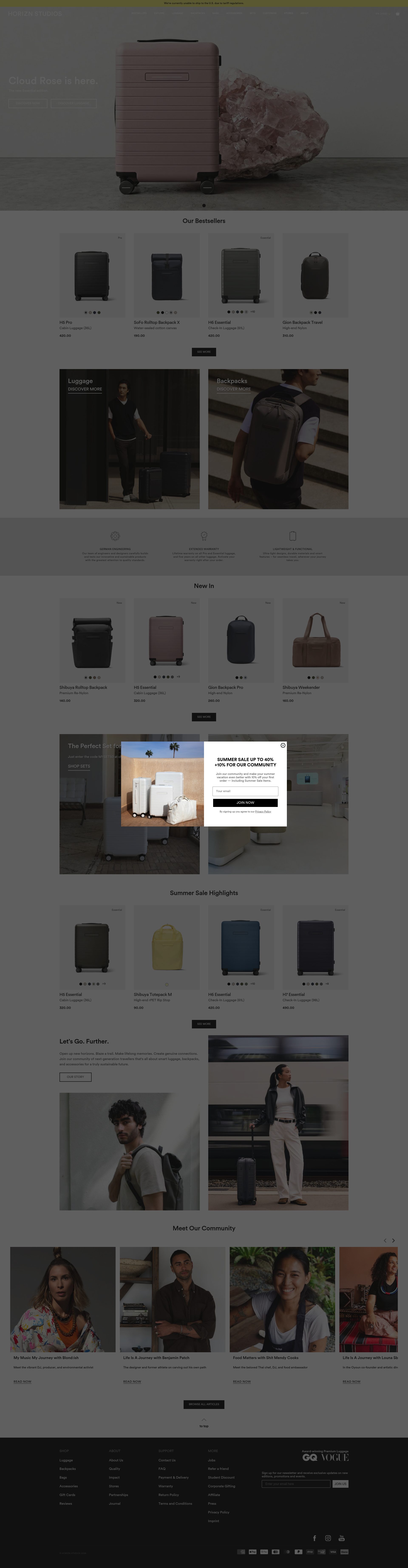
Horizn Studios built one of the most polished DTC luggage stores on Shopify Plus. Their product pages lead with a modular breakdown of features, each with an icon, a short label, and an expandable explanation. That structure lets a scan-reader get the key points in five seconds while giving a detail-oriented buyer everything they need without scrolling through walls of text. The 360-degree product viewer is genuinely useful here: luggage has interior organisation features that flat photography cannot communicate clearly.
Their lifetime warranty claim is front and centre on the PDP, not buried in a footer FAQ. For a product where durability is the primary concern, surfacing that guarantee prominently is a direct answer to the buyer's biggest hesitation. The store also integrates real customer travel photography across collection pages, which does the work of communicating scale and real-world use without requiring the buyer to imagine it themselves.
2. July

July's Shopify store leads with colour. Their luggage comes in a wide palette and the store is built around making colour selection tactile: swatches are large, the product image updates instantly on selection, and a "popular" label on specific colours creates social proof at the variant level. That is a small UX decision with a measurable impact on conversion, because it reassures a buyer that their choice is a validated one.
July's product pages also handle the size decision well, which is the second-biggest source of hesitation in luggage buying after durability. They show cubic litre capacity alongside days of travel as a real-world guide, with a clothes packing illustration for each size. The carry-on PDP breaks down exactly what it fits versus what exceeds airline limits, which cuts post-purchase complaints and reduces returns from buyers who guessed wrong.
3. Monos
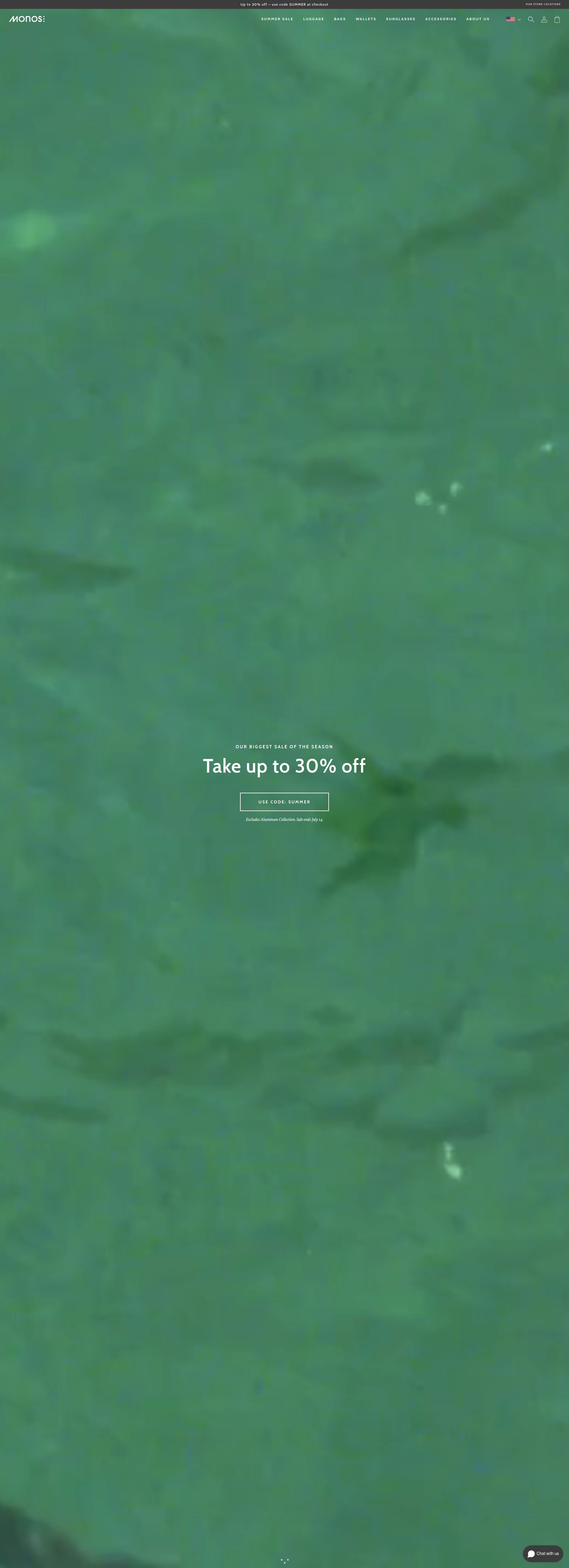
Monos positions itself around considered design and sustainability, and both are carried through the store consistently. Their product pages include the weight of each piece explicitly, which matters to frequent flyers who manage airline weight allowances closely. The material breakdown goes beyond "polycarbonate shell" to explain why that material was chosen, what the flex rating means, and how it compares to alternatives. That level of detail converts the informed buyer and educates the less-informed one.
Their gifting flow is a strong commercial feature. Luggage is a common high-value gift and Monos surfaces a dedicated gift guide by occasion and recipient in their navigation. The ability to add a personalised tag in checkout, with a preview rendering, makes the gift use case feel complete. That is a conversion feature that most luggage stores overlook entirely.
4. Bamford Travel
Bamford sits at the luxury end of the luggage market and their Shopify store reflects that positioning without resorting to generic luxury clichés. The product pages are editorial in tone: each piece has a story about the materials and provenance, written with specificity about the tannery or manufacturer. That kind of content does not just build brand trust, it creates a product page that is genuinely differentiated from every competitor using the same stock feature copy.
Their navigation is deliberately narrow. A small curated range is presented without overwhelming category structure, which is the right choice for a brand where breadth would undermine the positioning. The store uses large-format imagery throughout, with a focus on texture and detail that communicates material quality in a way that a standard product grid cannot.
5. Antler

Antler is one of the oldest British luggage brands and their Shopify Plus store has been built to carry that heritage without feeling dated. Their collection pages are well-structured by use case: business travel, family travel, and weekend trips each surface different products rather than dumping the full catalogue into a single grid. That kind of intent-based navigation reduces the decision load for a buyer who arrives knowing what they need but not which product to choose.
Their durability messaging is handled through video content embedded into PDPs: the polycarbonate shell being compressed, the wheel system being stress-tested, the zip cycling through hundreds of open-close movements. That format turns a spec claim into a demonstration, which is far more convincing for a product where durability is the core purchase justification. The "lifetime guarantee" is displayed as a badge directly below the add-to-cart button, keeping it in the conversion zone.
6. Nortvi
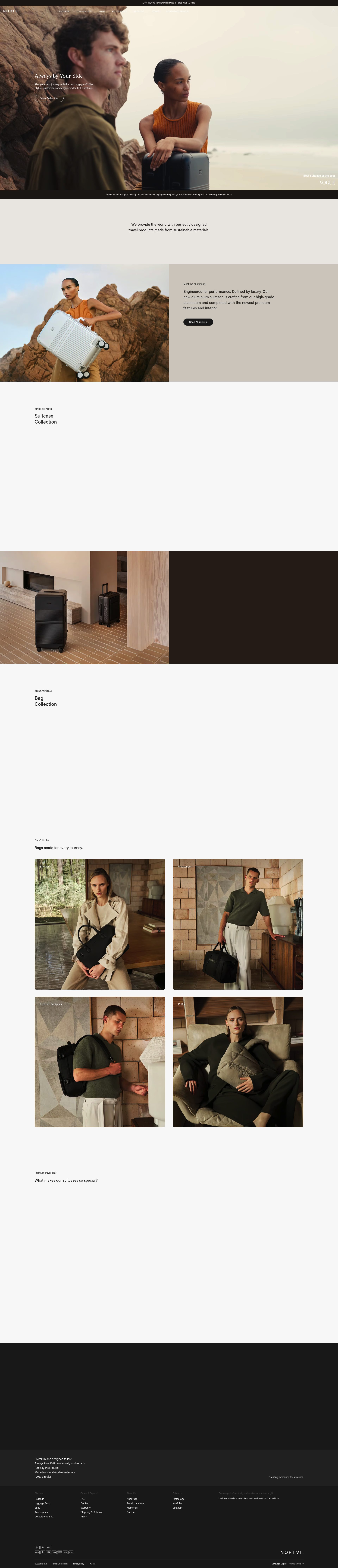
Nortvi is a Dutch DTC brand with a Shopify store built around material storytelling. Their trolleys use a waxed canvas exterior, which is unusual in a category dominated by polycarbonate and aluminium, and the store leans fully into that differentiator. Every material used in the bag is named and sourced on the product page: the canvas grade, the leather quality for handles and straps, and the YKK zip specification. That specificity signals quality without requiring the buyer to take a generic "premium materials" claim on faith.
The product page structure places the material breakdown above the feature list, which is a deliberate hierarchy decision. For a brand where the material is the primary differentiator, leading with that rather than standard luggage features is the right call. Their Instagram-integrated customer content shows the bags ageing well over time, which reinforces the durability argument in a category where patina matters.
7. Troubadour
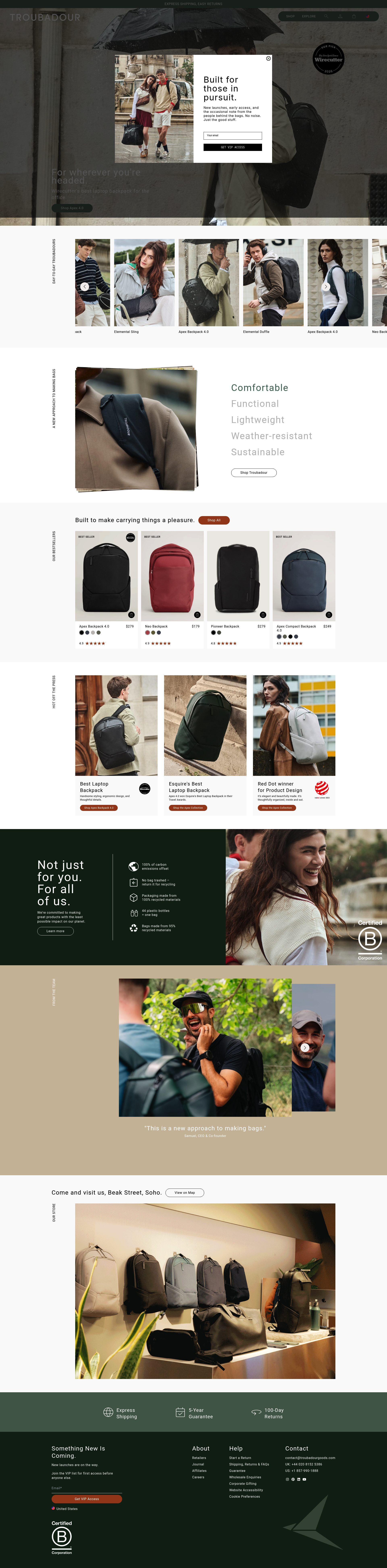
Troubadour makes travel bags rather than hardshell luggage, but their Shopify store is an excellent example of how to sell high-ticket bag products in a sceptical market. Their product pages are built around use-case specificity: each bag has a dedicated "how to pack it" section that names real scenarios (two-day work trip, weekend with a suit) and shows the interior organised around those scenarios. That content answers the buyer's question "will this actually work for me?" more effectively than a dimension list.
Their lifetime repair service is surfaced prominently and explained in practical terms: what is covered, how to claim, what the turnaround time is. That moves the guarantee from a marketing claim to a tangible service proposition. For a bag that costs over £300, the durability assurance is a significant part of the purchase decision and Troubadour treats it that way.
8. ROAM Luggage
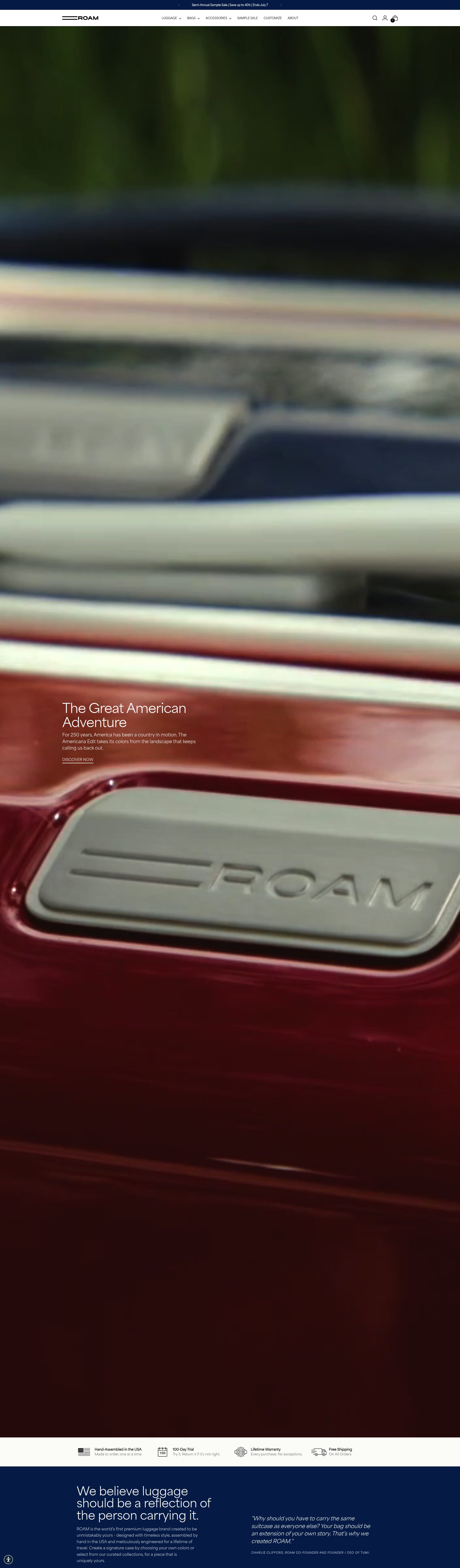
ROAM has built their entire store around a single differentiating feature: fully customisable luggage. Their Shopify Plus configurator allows buyers to choose shell colour, wheel colour, zipper colour, lining colour, and personalised tags, with a live product preview updating as each selection is made. That kind of configurator is technically demanding and ROAM executes it without the lag or confusion that typically makes custom tools frustrating to use.
The commercial logic is strong. Customisation raises average order value, reduces returns (buyers are less likely to return something they designed themselves), and creates a social sharing moment at purchase and delivery. The store surfaces the customisation tool as the primary CTA on the homepage rather than sending buyers to a standard collection page, which is the correct merchandising decision given that it is the brand's strongest differentiator.
9. Steamline Luggage
Steamline occupies a very specific niche: vintage-inspired, fashion-forward luggage in a palette of striking colours and prints. Their Shopify store is built around visual impact rather than functional specification, which is the right call for a product where the aesthetic is the primary purchase driver. Collection pages lead with large product imagery grouped by colour family, which makes browsing feel closer to a fashion site than a luggage retailer.
Their editorial content is well-integrated: style guides and travel-themed blog content sit alongside product pages in a way that keeps buyers engaged with the brand rather than bouncing after one look. The store also handles the gifting use case well: curated gift sets and a prominent "gift wrap" option in checkout serve a customer base that buys Steamline for occasions as much as for travel utility.
10. Briggs & Riley
Briggs & Riley is an American brand with a strong UK following among frequent business travellers, and their Shopify store handles a broad product range with good clarity. Their "Simple as that" guarantee, which covers all damage including airline damage for the lifetime of the bag, is one of the strongest warranty propositions in luggage. The store communicates it directly and specifically rather than burying the details in terms and conditions.
Their PDPs for business bags include an interior organisation diagram that labels every pocket and compartment by function: laptop sleeve size, tablet pocket, pen loops, boarding pass pocket. That kind of functional detail answers the questions a business traveller actually has before committing to a bag at this price point. The store also segments clearly by travel type (business, casual, international) in the top navigation, which reduces the effort required to find the right product.
If you sell luggage or travel accessories and your Shopify store is not converting at the level these brands achieve, the gap is almost always in product page detail, trust signals, and navigation design. See our Shopify design service or get in touch to talk through what your store needs.
Frequently asked questions
What makes a luggage Shopify store convert well?
The biggest conversion levers in luggage are trust signals and size clarity. Buyers cannot touch the product, so a lifetime warranty surfaced on the PDP, real material detail (not just "premium polycarbonate"), and a practical size guide showing days of travel and what fits convert far better than generic product photography alone.
Which luggage Shopify store has the best product page design?
Horizn Studios sets the benchmark. Their PDPs use a modular feature breakdown with icons and expandable copy, a 360-degree viewer for interior organisation, and a prominently placed lifetime warranty — all of which address the specific doubts a luggage buyer has before committing.
Do any luggage brands offer custom or personalised luggage on Shopify?
ROAM Luggage has the best customisation experience in the category. Their Shopify Plus configurator lets buyers pick shell colour, wheel colour, zipper colour, lining, and personalised tags, with a live product preview that updates instantly. It is technically clean and genuinely fast, which is rare for configurator tools.
What is the best luggage brand for frequent business travellers?
Briggs & Riley is the strongest pick for business travel. Their "Simple as that" guarantee covers all damage including airline damage for the lifetime of the bag, and their PDPs for business bags include labelled interior diagrams that name every pocket and compartment by function — exactly the detail a frequent flyer needs before spending over £400.
Which luggage Shopify stores are best for gifting?
Monos and Steamline both handle gifting well. Monos has a dedicated gift guide by occasion and recipient, plus a personalised tag option with a checkout preview. Steamline leans on curated gift sets and a prominent gift wrap option in checkout, which suits their fashion-forward customer base buying for occasions rather than purely for travel.