
Quick summary
Lyre's is the strongest all-round operation in the category, with occasion-based routing, variety packs as the recommended first purchase, and a bundle structure that converts browsers into brand loyalists. Lucky Saint outperforms on subscription mechanics, using flexible cadence and on-trade credibility to make the DTC case for non-alcoholic lager. French Bloom is the definitive gifting play, with premium packaging and built-in corporate bulk options that push average order value well above category norms. JUKES is the pick for sophisticated wine-alternative positioning, using a sommelier-style product format that builds buyer confidence without requiring a taste test.
The UK no-and-low alcohol market is now worth over £350 million and growing at a steady 9% per year, with Gen Z and millennial drinkers driving the change. Non-alcoholic spirits, wines and beers have moved out of the dry January novelty aisle and into year-round staples on shelves and weekly shops. The challenge for any non-alcoholic brand selling on Shopify is that the buyer is taking a flavour risk on a category that has historically disappointed. The stores below are worth studying because each one solves that flavour-risk problem differently while building the repeat purchase and gifting revenue that this category lives or dies on.
1. Lyre's
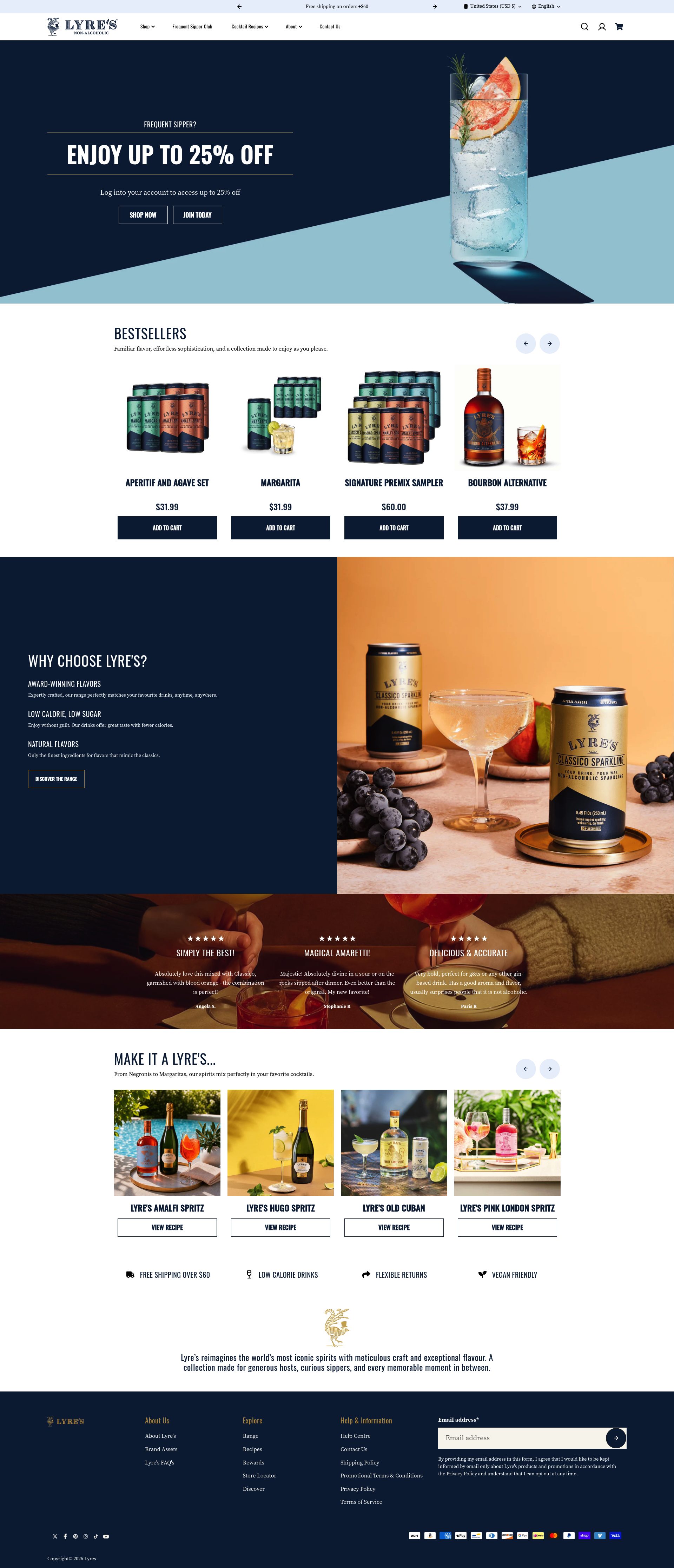
Lyre's offers one of the broadest non-alcoholic spirits ranges on Shopify, with alternatives to gin, rum, vermouth, whisky, amaretto and more. The store handles this breadth well through a homepage that routes buyers by occasion (the perfect non-alcoholic G&T, the espresso martini, the highball), which is the right commercial choice for a category where buyers think in cocktails rather than spirits. The "build your bar" feature lets buyers assemble a starter set with a clear cocktail outcome attached, which is more useful than a generic best-sellers grid.
The bundle merchandising is one of the strongest in the category. Variety packs are positioned as the recommended first purchase because flavour is the biggest unknown, and the per-bottle price drops meaningfully as the bundle grows. This is the right incentive structure for the category: get the buyer into the brand with a low-risk taste test, then convert them to favourites once they know what they like. Subscription is offered but de-emphasised, because non-alcoholic spirits behave more like a wine purchase (occasional, considered) than a daily consumable.
2. Caleño
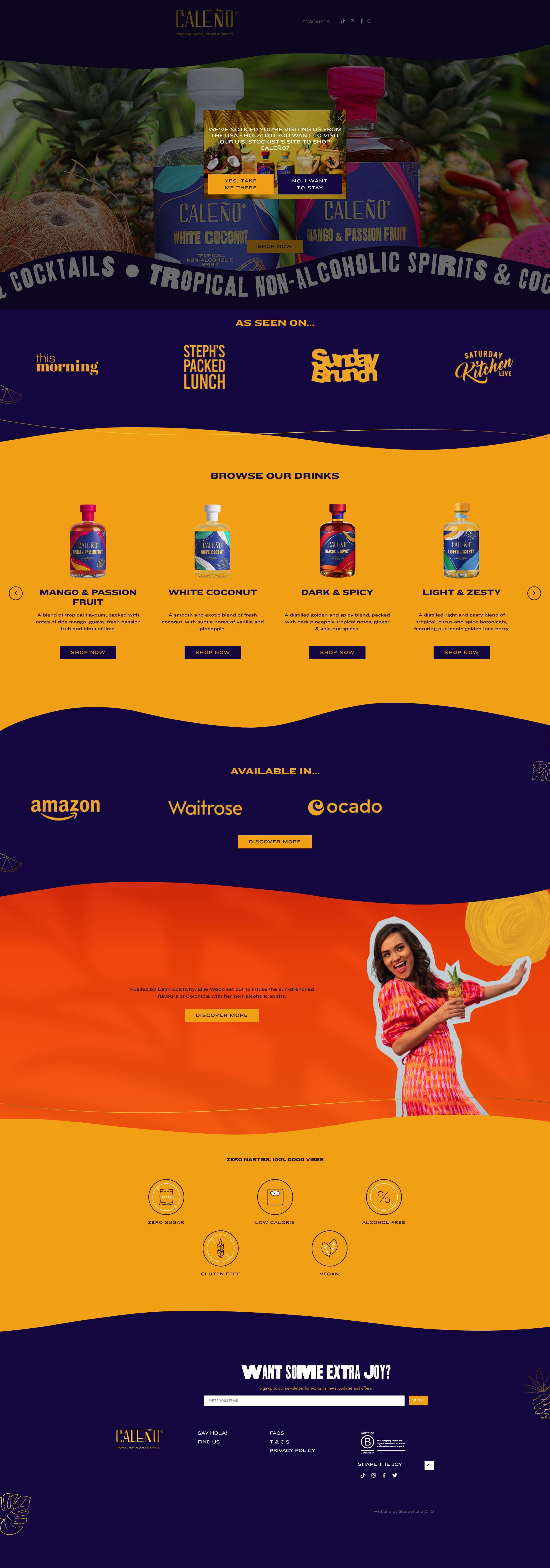
Caleño is a UK non-alcoholic spirits brand with a clear positioning around tropical, botanical flavours rather than a direct gin replica. This is a smart commercial choice because it sidesteps the "non-alcoholic gin tastes worse than gin" comparison and creates its own category space. The Shopify store leans into this with photography, cocktail recipes and serve suggestions that all reinforce a fresh, fruit-forward sensory promise rather than a substitute narrative.
The store handles the "what does it taste like" objection well. A flavour wheel on every product page describes the profile in plain language, paired with three signature serves and a "best with" recommendation. This kind of structured tasting information is more effective than generic flavour copy and reduces the cognitive load of an unfamiliar product. Subscription is offered with a clear monthly cadence and the option to swap between Caleño's three core spirits between deliveries, which addresses the flavour-fatigue problem that monthly drinks subscriptions almost always face.
3. CleanCo

CleanCo, founded by Spencer Matthews, is one of the most commercially aggressive non-alcoholic spirits brands on UK Shopify. The store leverages founder recognition without overdoing it, with Spencer's story integrated into the brand origin page and supporting content rather than dominating the homepage. The product range is built around direct alternatives to gin, rum and tequila, which is the opposite of Caleño's category-creation strategy but is the right move for a brand positioned around mainstream cocktail occasions.
The store's commercial mechanics are particularly mature for a brand at this stage. Cocktail-led merchandising routes buyers from the homepage through to specific serves (the Clean G&T, the Clean Mojito, the Clean Margarita), each with the product naturally positioned as the answer. This kind of recipe-led conversion is more effective than product-led merchandising for non-alcoholic spirits because the buyer is not buying a bottle, they are buying a drinking occasion. Bundle pricing is well-judged, and the gifting positioning around birthdays, dry January and Christmas is built into the merchandising calendar.
4. Pentire
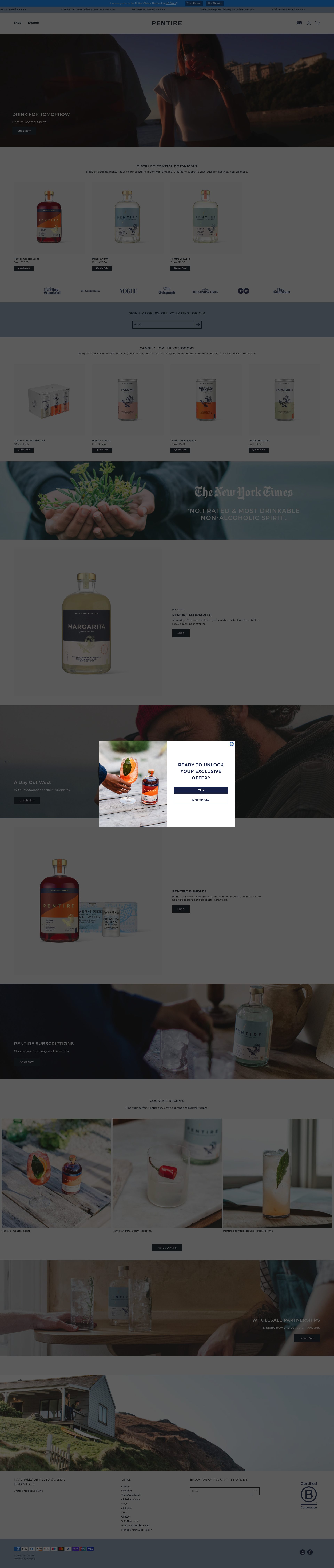
Pentire is a Cornish non-alcoholic botanical brand that has built one of the most distinctive Shopify stores in the category. The product is positioned around place and provenance, with hero photography that evokes the Cornish coastline and copy that ties the botanicals to the landscape. This is a sustainable commercial advantage because it is not easily copied: most non-alcoholic spirits are positioned around occasion or substitute claims, and a place-based identity creates a defensible point of view.
The store does an unusually good job of merchandising the product as a gift. Pentire bottles photograph well, the cylindrical pot adds gift-worthy visual weight, and the store offers gift wrapping, personalised messages and scheduled delivery for occasions. This kind of gift infrastructure is rare in non-alcoholic spirits and significantly broadens the addressable market beyond the personal-consumption buyer. Bundle merchandising around the gift use case is built well, and the per-bottle price is justified by the premium positioning rather than discounted.
5. Mother Root

Mother Root sells a single hero product: a ginger-based non-alcoholic apéritif. This range discipline is rare in DTC and pays off in commercial focus: the store does not need to handle range complexity, the marketing message stays consistent, and the per-product investment is much higher. The product page is built around a single serve recommendation (Mother Root and tonic over ice) with secondary cocktail suggestions, which gives the buyer an immediate idea of how to consume the product without forcing them into a complex decision.
The bundle merchandising is built around case sizes rather than product variety, because variety is not the offering. Six-bottle, twelve-bottle and gift bundles are positioned for different buyer intents (try, stock up, gift), with the single-bottle price held at a premium that protects the product economics. The store's editorial content focuses on flavour, occasion and origin rather than the health or alcohol-replacement angle, which keeps the brand positioned as a quality drink first and a non-alcoholic alternative second.
6. JUKES
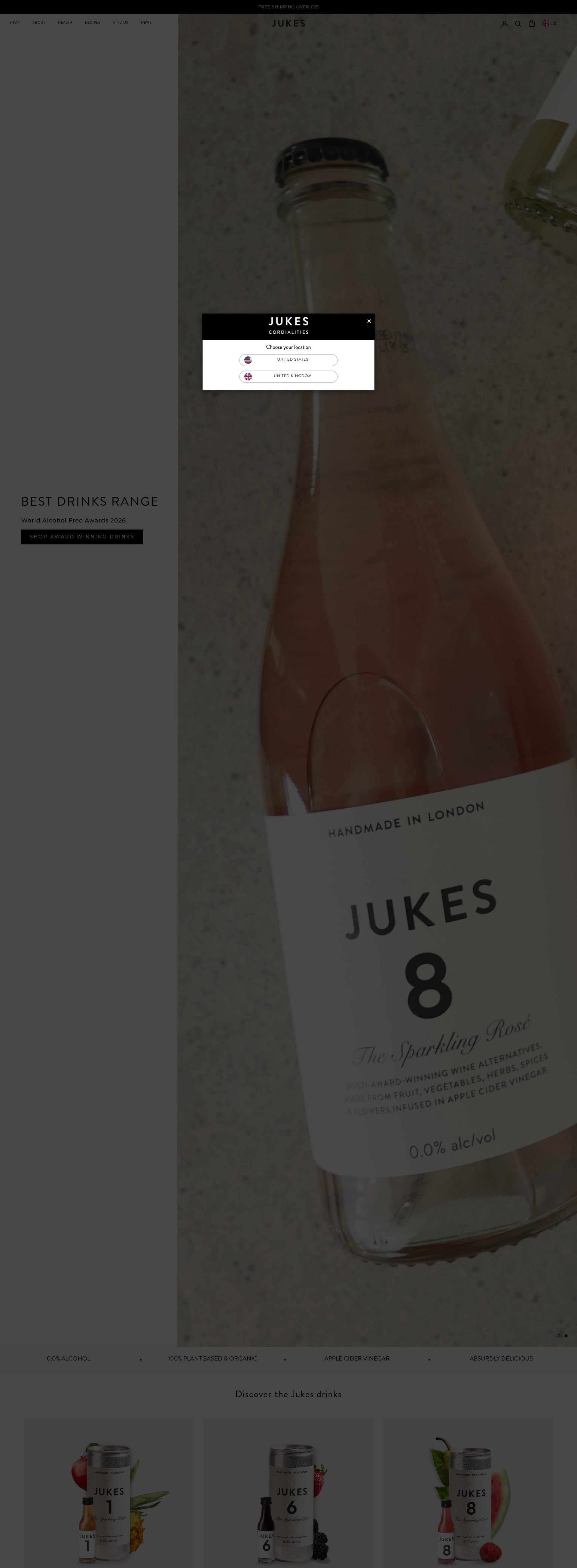
JUKES sells non-alcoholic wine alternatives in a numbered range that mimics the structure of a wine list, with each bottle pairing to specific food and occasion. The Shopify store reflects this sophistication: the homepage is structured more like a wine merchant than a drinks DTC brand, with serving temperature, food pairing and tasting notes treated with the same care a sommelier would apply to a wine recommendation. This positioning is the brand's central commercial advantage and the store reinforces it consistently.
The product page format is the strongest in the non-alcoholic wine category. Each bottle is presented with the flavour notes, food pairings and serving suggestions formatted as you would expect from a wine list, which gives the buyer the confidence to choose without having to taste first. Bundle merchandising includes "JUKES Six" and "JUKES Twelve" mixed cases that introduce the buyer to the full range, with a clear per-bottle saving. Subscription is positioned as a regular wine-style purchase rather than a habit-building wellness ritual, which fits the brand's positioning and the buyer's mental model.
7. Crossip
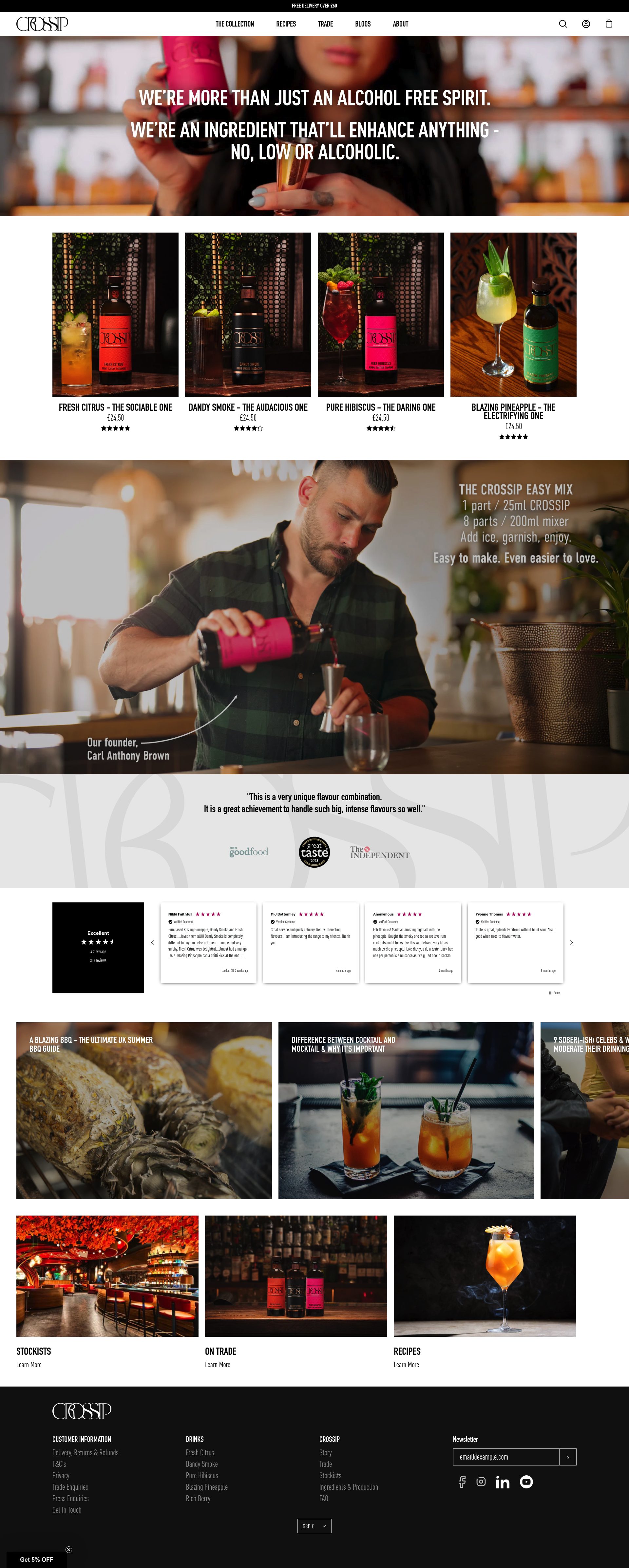
Crossip sells non-alcoholic cocktail bases designed to be mixed with tonic, soda or fruit juice to create finished drinks. The product is more concentrated and more flexible than a typical non-alcoholic spirit, and the Shopify store handles the explanation of this format well. Product pages lead with serve suggestions (rather than the bottle on a white background) which is the right commercial choice for a product that is unfamiliar in its form factor.
The store handles a difficult merchandising challenge. Buyers do not know what a non-alcoholic cocktail base is, so the store needs to explain the product before it can sell it. Crossip does this efficiently through short embedded video that shows the product in use, paired with a flavour wheel and three signature recipes per SKU. The bundle merchandising includes a mixed case that demonstrates the full flavour range, which is the right entry point for a brand whose differentiator is range rather than single-product depth.
8. Lucky Saint
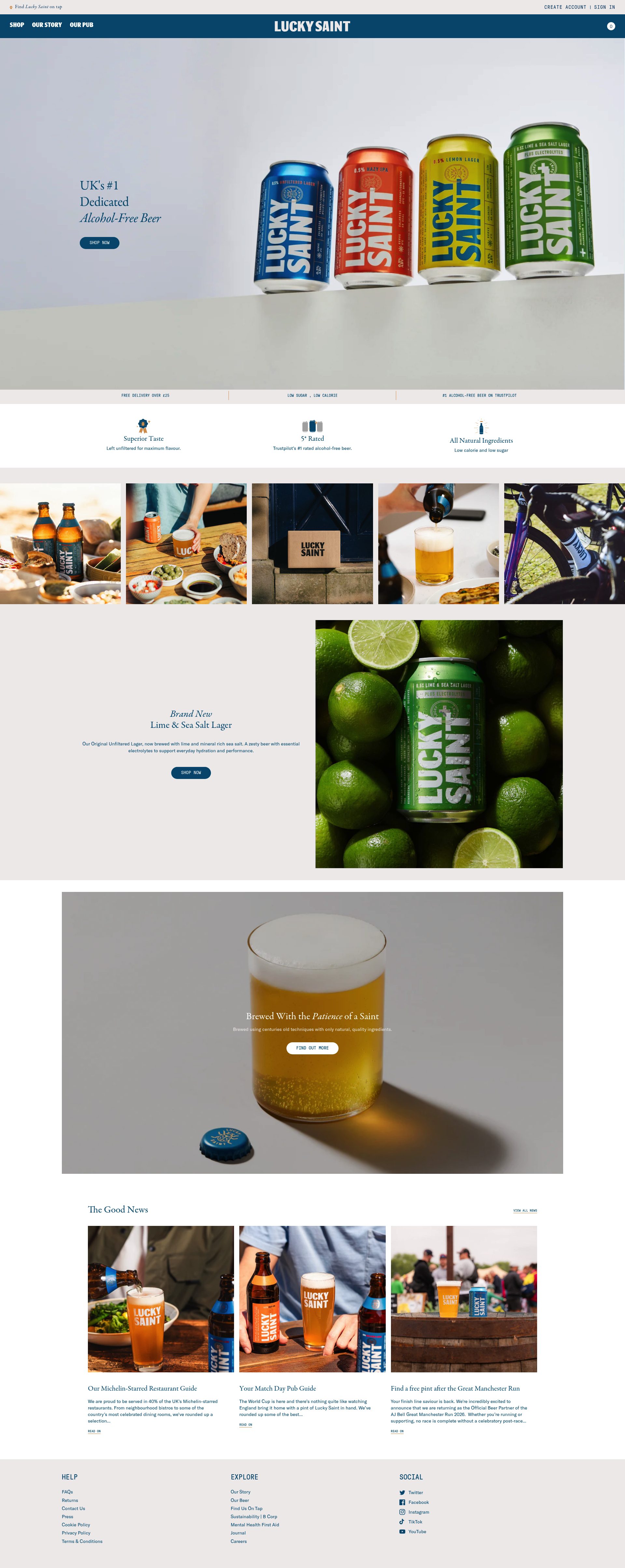
Lucky Saint sells non-alcoholic lager and Hefeweizen and runs a Shopify store that is unusually mature for a young brand. The store leverages the brand's strong on-trade presence (pubs and restaurants) to build credibility for the DTC channel, with the message that what you drink at home is the same as what you drink at the pub. This is a more honest brand promise than most competitors offer and the buyer responds to it.
The bundle merchandising is built around case sizes rather than variety, because the brand sells a small number of SKUs. Twelve and twenty-four packs are positioned for stocking up rather than gifting, with the per-bottle price dropping meaningfully at the larger pack size. Subscription is offered with a flexible cadence, which is the right model for a non-alcoholic beer brand where consumption rate varies week to week. The store's editorial content covers the brewing process, ingredient sourcing and the founder's story without falling into the marketing trap of leaning too hard on the non-alcoholic angle.
9. Big Drop
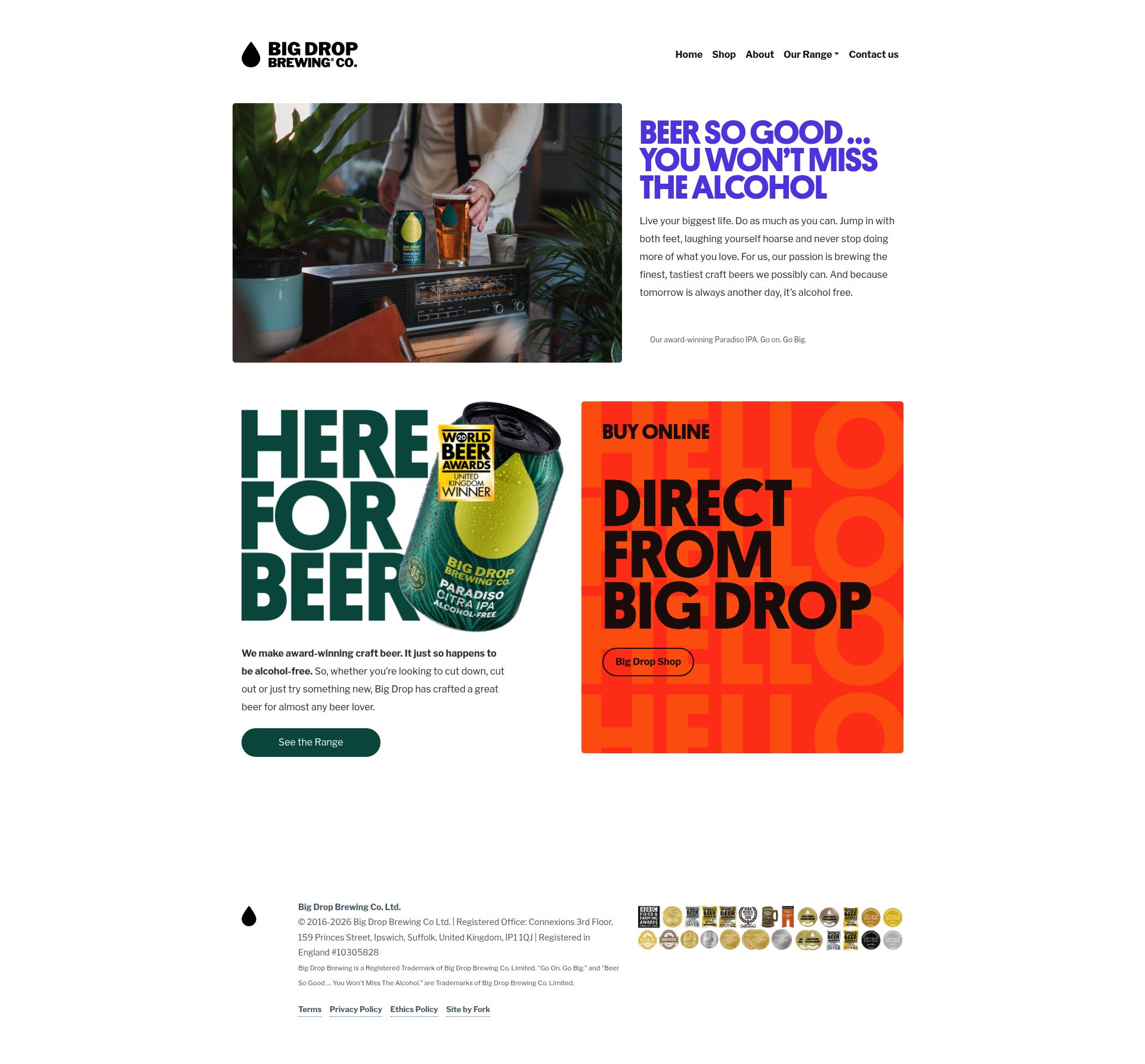
Big Drop Brewing Co is an alcohol-free craft beer brand with a Shopify store that mirrors the merchandising logic of a craft beer subscription rather than a non-alcoholic drinks specialist. The product range covers pale ale, stout, IPA, lager and seasonal specials, and the homepage is structured around style rather than the alcohol-free claim. This is the right commercial choice: the brand sells to craft beer drinkers who happen to want a non-alcoholic option, not to non-alcoholic buyers who happen to want beer.
The store's variety pack is well-merchandised as the recommended first purchase. The pricing rewards the larger pack sizes, the mixed case shows off the range, and the store includes a brewing notes card with each delivery, which raises the perceived value above the bottle price. Bundle merchandising for the Christmas, summer and dry January periods is rotated through the year, which captures seasonal demand without requiring constant homepage redesign. The store's awards and craft beer credentials are surfaced consistently as proof points.
10. French Bloom
French Bloom is a non-alcoholic sparkling wine brand that has built its Shopify store around the premium gifting and celebration occasions that traditional sparkling wine owns. The bottle, the colour palette and the photography all signal champagne-adjacent positioning, which is the central commercial advantage of the brand. Most non-alcoholic sparkling competitors look like soft drinks, and French Bloom deliberately does not.
The store handles the gift use case better than almost any competitor in the category. Gift packaging, scheduled delivery, personalised messaging and corporate bulk options are all built into the standard product page experience, not buried in a separate "gifts" section. This expands the addressable market significantly beyond the personal-consumption buyer and produces a higher average order value through gift bundling. Subscription is offered but is a secondary mechanic to the primary gifting and celebration use case, which fits the brand's positioning and the buyer's purchase rhythm.
What these stores have in common
The non-alcoholic drinks category has matured quickly, and the ten stores above share a few patterns worth studying.
Every store leads with serve, not product. Cocktail recipes, food pairings and signature serves are front and centre on the homepage and product page. This is the right commercial framing for a category where the buyer is not buying a bottle, they are buying a drinking occasion. Stores that lead with the bottle on a white background lose to stores that lead with the finished drink in a glass on a table next to food.
Variety packs and starter bundles are universally the recommended first purchase. The category has a built-in flavour-risk problem: buyers cannot taste before purchasing, and the buyer has often been disappointed by non-alcoholic drinks in the past. A variety pack reduces the per-bottle risk and gives the brand a chance to convert the buyer to favourites once they know what they like. Stores that try to sell a single bottle as the first purchase have a markedly lower first-purchase conversion rate than those that lead with a sampler.
Premium pricing is defended through provenance, sourcing and craft rather than discounted. Non-alcoholic drinks are often priced at parity or above their alcoholic equivalents, and brands that defend this on quality rather than caving to discount pressure tend to maintain margin and brand position much better. Pentire, Mother Root, French Bloom and JUKES all do this well. The stores that discount heavily in this category are eroding margin and signalling to the buyer that the premium positioning is not justified.
Finally, the better stores in this list have stopped leaning on the "non-alcoholic" claim as the primary brand message. The category has matured past the point where being non-alcoholic is itself a selling point. Buyers now compare non-alcoholic drinks to each other on flavour, occasion and brand, not to alcoholic alternatives. The stores that have made this shift in messaging (Mother Root, JUKES, Lucky Saint) are positioning themselves for the next phase of the category, which will be defined by buyers who choose non-alcoholic drinks because they prefer them, not because they are abstaining.
If your drinks or beverage brand is ready to improve conversion or rebuild its Shopify store, our Shopify design service is built around exactly these kinds of commercial outcomes. Get in touch to talk through what your store needs.
Frequently asked questions
Which non-alcoholic drink Shopify stores have the best subscription model?
Lucky Saint and Caleño are the strongest on subscription mechanics. Lucky Saint offers flexible cadence that accounts for variable weekly consumption, while Caleño lets subscribers swap between their three core spirits each month, which directly tackles the flavour-fatigue problem that kills most drinks subscriptions.
How do the best non-alcoholic drink brands handle the flavour-risk problem on Shopify?
Every top store in the category leads with variety packs or starter bundles as the recommended first purchase rather than a single bottle. This reduces per-bottle risk, gives the brand a chance to convert buyers to favourites once they know what they like, and produces a higher first-purchase conversion rate than single-bottle entry points.
Are non-alcoholic drinks priced the same as alcoholic equivalents on Shopify?
Often yes, and in some cases higher. Pentire, JUKES, Mother Root and French Bloom all hold prices at premium or parity with their alcoholic equivalents and defend this on provenance, craft and ingredient quality rather than discounting. Brands that cave to discount pressure in this category erode margin and undermine the positioning that justifies the price.
What makes French Bloom the standout non-alcoholic sparkling wine store?
French Bloom wins on gifting infrastructure. Gift packaging, personalised messaging, scheduled delivery and corporate bulk options are all built into the standard product page rather than buried in a separate gifts section. This expands the addressable market significantly and consistently produces higher average order values than competitors whose gifting experience is an afterthought.
Which non-alcoholic drink Shopify stores are best for a brand looking for merchandising inspiration?
Lyre's for occasion-based routing and bundle structure, JUKES for food-pairing and wine-list-style product pages, Crossip for explaining an unfamiliar product format through embedded video and serve suggestions, and Mother Root for demonstrating the commercial discipline of a focused single-hero-product range.