
Quick summary
Finisterre stands out as the benchmark: B Corp certified, fully transparent material sourcing, and a sustainability story tied to a real community rather than a marketing brief. Rapanui goes furthest on supply chain transparency with per-product trace pages showing the full journey from raw material to finished garment. Lucy & Yak leads on brand personality, proving sustainable fashion can have genuine community energy without sacrificing product clarity. OMNES is the strongest pick for price-conscious shoppers, directly challenging the assumption that ethical clothing has to cost more.
Sustainable fashion shoppers are some of the most informed buyers in ecommerce. They research supply chains, check certification claims, and see through vague "eco-friendly" copy immediately. The stores that earn their trust do so through specificity: named certifications, exact materials, transparent pricing, and clear stories about where and how garments are made.
1. Finisterre
Finisterre was the first outdoor brand to achieve B Corp certification in the UK, and the site communicates that achievement in context rather than as a badge to be buried in a footer. Material transparency appears on every product page, with specific recycled fibre percentages and supplier names. The brand's connection to surfing and the sea gives the sustainability story a coherent emotional anchor that goes beyond compliance.
2. Lucy & Yak
Lucy & Yak has grown from a small independent brand into one of the UK's most loved sustainable clothing businesses, and the site reflects that community energy. The personality comes through in the copy, photography, and brand voice without compromising the clarity of the product experience. Organic cotton and recycled fabric credentials are listed per product, and the brand's above-minimum-wage factory policy is explained with specifics, not generalities.
3. Thought Clothing
Thought Clothing's site is one of the cleaner examples of sustainable fashion ecommerce. The natural material palette of the clothing range carries through into the site's visual design: warm tones, organic textures, unhurried photography. Each material type (bamboo, organic cotton, TENCEL) has an explanatory section that educates without patronising, and product pages reference these clearly without making the shopping experience feel like a lecture.
4. OMNES
OMNES has tackled the common assumption that sustainable fashion is expensive, and the site's pricing and messaging make that positioning clear from the first visit. Climate Positive certification is displayed with a brief explanation of what it actually means, which is more useful than the blank badge display most brands use. The product photography is confident and fashion-forward, positioning the brand alongside fast fashion competitors on aesthetic terms while beating them on ethics.
5. Community Clothing
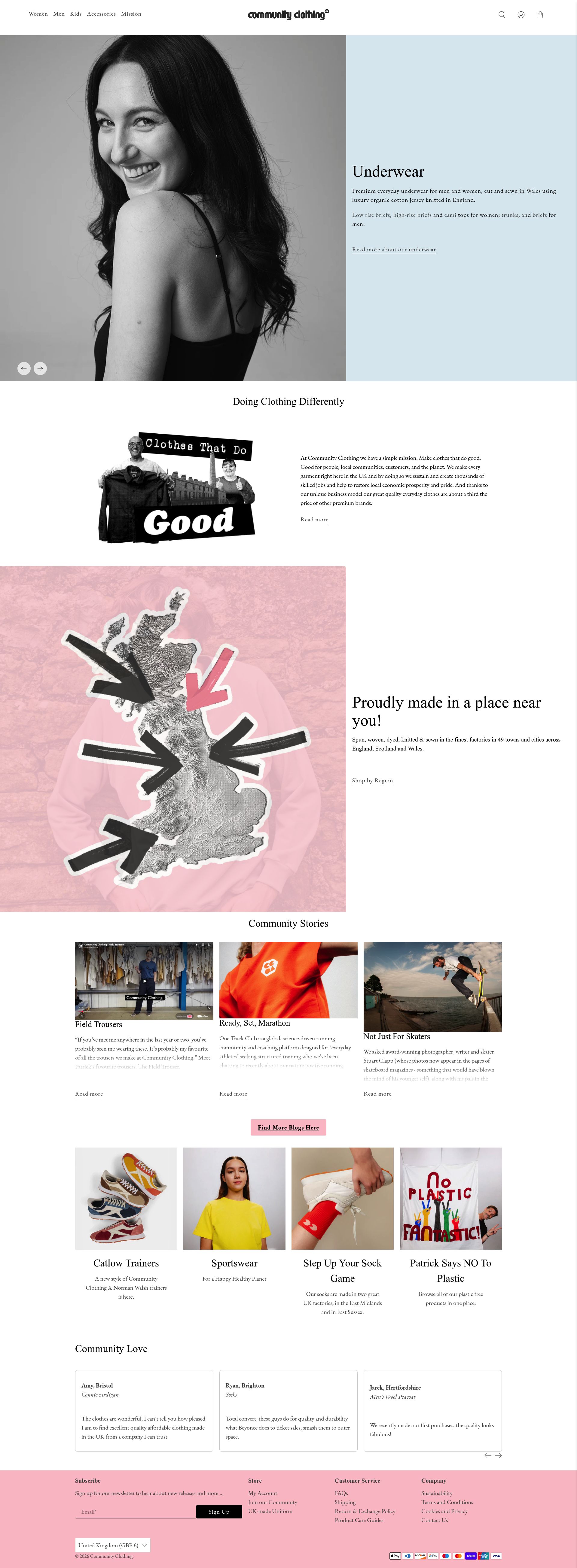
Community Clothing's entire value proposition is built on UK manufacturing, and the site communicates that with conviction. Factory locations, skills employed, and the economic argument for buying British are all present in the experience without making the site feel like a manifesto rather than a shop. The product range is focused and essentials-led, and the pricing model — which explains why British-made can be affordable — is explained clearly on product pages.
6. Beaumont Organic
Beaumont Organic is a British womenswear brand making organic cotton clothing in ethical factories, with material certification and supplier transparency built into every product page. The UK DTC store keeps the range focused, clean, and easy to navigate — which is itself a sustainability statement in a market full of over-merchandised, sale-heavy sites. Each piece links to its GOTS certification, and the brand's carbon reduction targets are presented with measurable commitments rather than aspirational language.
7. Rapanui

Rapanui, based on the Isle of Wight, has built one of the most transparent supply chains in UK fashion, and the site makes that transparency a genuine selling point. Each product links to a trace page showing the full supply chain from raw material to finished garment. Solar-powered factory credentials and the take-back recycling scheme are explained with enough detail to feel credible. The site's TShirtOS configurator also makes it a destination for custom sustainable basics.
8. Baukjen
Baukjen's site balances a premium womenswear aesthetic with detailed sustainability credentials. Lower-impact material choices are listed per product with the reasoning behind each one, and the brand's supply chain transparency report is linked from relevant product pages rather than hidden in a corporate section. The photography and art direction are consistent with London womenswear brands at a similar price point, which removes the visual compromise that still affects some sustainable fashion sites.
9. People Tree
People Tree is a Fair Trade fashion pioneer, and the site carries 30 years of ethical credibility. Producer stories, Fair Trade certification details, and artisan profiles appear throughout the shopping experience, connecting buyers to the people who made their clothes in a way that few brands manage at scale. The product range covers womenswear and menswear, and the breadth is handled without losing the considered, values-led character that defines the brand.
10. Komodo
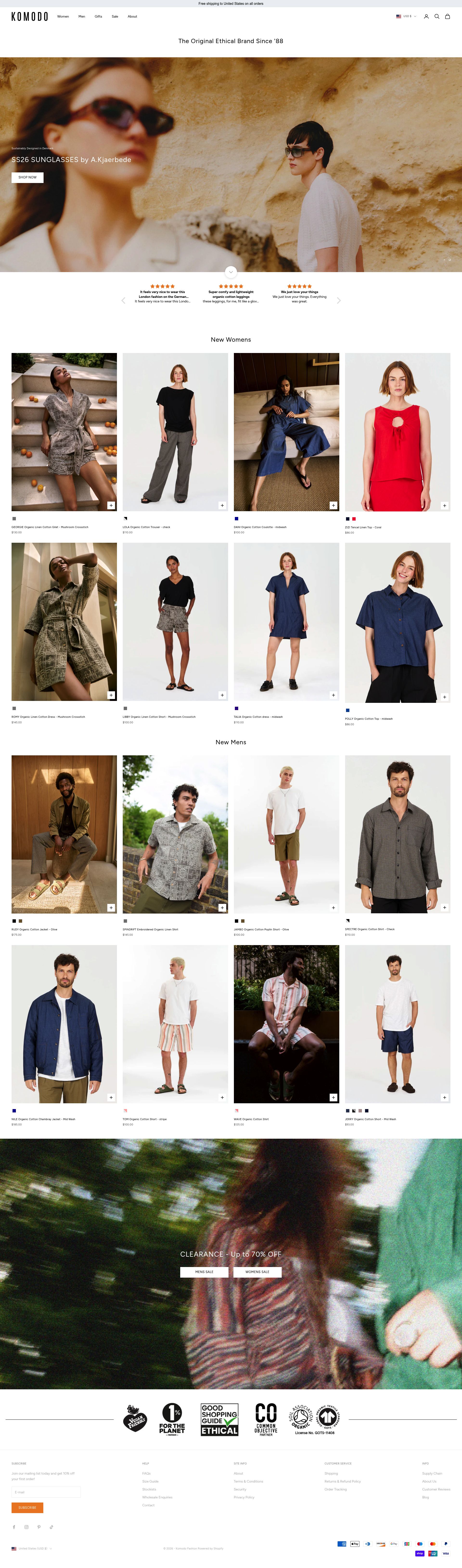
Komodo has been making sustainable fashion since 1988, and the site reflects a brand that knows exactly who it is. Organic, recycled, and natural materials are specified per product, and the brand's longevity in the space is used as a credibility signal rather than left implicit. The product photography has a relaxed, editorial quality that suits the brand's aesthetic and attracts a customer who cares about how clothes look as much as how they're made.
These stores prove that sustainability and strong commercial design are not in conflict. The brands that communicate their ethics with specificity and embed that communication naturally within the product experience consistently outperform those that treat sustainability as a marketing add-on.
For help building a Shopify store that tells your brand story without sacrificing the buying experience, explore our Shopify design service or get in touch.
Frequently asked questions
Which Shopify stores are best for sustainable fashion in the UK?
Finisterre, Rapanui, and Lucy & Yak are the strongest all-round picks. Finisterre leads on B Corp credentials and material transparency. Rapanui goes furthest with per-product supply chain trace pages. Lucy & Yak combines clear ethical sourcing with a brand personality that has built a genuinely loyal customer base.
Are sustainable fashion brands more expensive on Shopify?
Not necessarily. OMNES is built around the argument that ethical fashion does not have to cost more, and its pricing sits comfortably alongside mainstream fast fashion. Community Clothing makes a similar case for UK-manufactured essentials, explaining clearly on product pages why British-made can be affordable at scale.
How do sustainable Shopify stores communicate certifications without it feeling like a lecture?
The best ones integrate credentials into the product page rather than relegating them to a separate ethics section. Rapanui links each product to a trace page. Thought Clothing explains each material type in a short educational block without interrupting the purchase flow. The principle is: give shoppers the specifics, but keep it contextual.
What makes a sustainable fashion Shopify store convert well?
Specificity converts better than vague eco claims. Stores that name certifications (GOTS, B Corp, Fair Trade), specify exact material percentages, and explain supply chain decisions outperform those that rely on broad sustainability language. Shoppers in this niche are sceptical by default — they respond to verifiable claims, not marketing language.
Can a small sustainable fashion brand compete on Shopify against larger retailers?
Yes, and the niche actively rewards it. Shoppers in sustainable fashion are specifically looking for independent brands with real stories, not scale. Beaumont Organic and Komodo both demonstrate that a focused, well-curated range with transparent credentials outperforms a broad catalogue from an anonymous seller.