
Quick summary
Bird & Blend Tea Co leads on brand identity and community-driven product pages, with customer reviews doing real conversion work. JING Tea is the strongest luxury pick, with origin videos and teaware cross-sells that lift AOV and justify a premium price point. Postcard Teas stands apart through radical transparency: every product names the individual farmer who made it, which is a trust signal no competitor matches. Twinings proves that restructuring navigation by occasion and health benefit, not redesigning aesthetics, is what actually moves mobile conversion.
Tea is one of the most competitive categories in UK food and drink ecommerce. Heritage brands with centuries of equity compete with modern DTC startups that understand social commerce and subscription mechanics. The stores that win online are not necessarily the ones with the best tea: they are the ones that communicate quality clearly, merchandise gifting effectively, and make it easy for customers to find their next favourite blend. These ten stores are doing it right.
1. Twinings
Twinings migrated to Shopify Plus with over 700 products and rebuilt its store around the realisation that customers visit to learn as much as to buy. The navigation reorganisation, by tea type, occasion, and health benefit, cut the cognitive load for a buyer facing one of the widest ranges in UK tea retail. Mobile conversion increased 200% following launch. It is one of the clearest examples of how reorganising the buying journey, rather than redesigning visual aesthetics, drives the commercial outcome.
2. Taylors of Harrogate
Taylors of Harrogate built its Shopify Plus DTC operation around a specific insight: customers buying direct want access to products they cannot find in supermarkets. The store leads with its premium and discovery ranges rather than its core Yorkshire Tea lines, which are widely stocked elsewhere. This positions DTC as a discovery channel rather than a convenience one, which attracts higher-intent buyers and supports a stronger average order value than a simple brand site would achieve.
3. JING Tea
JING positions itself as a luxury tea brand and the Shopify store delivers on that positioning at every touchpoint. Product pages include origin videos and detailed tasting notes. The teaware range is merchandised alongside the tea, which lifts average order value and reinforces the brand's authority as a complete tea experience rather than just a product supplier.
4. Teapigs
Teapigs built its DTC Shopify presence on strong brand personality and clear sustainability credentials. The biodegradable temple bag format is explained prominently because it is a genuine product differentiator that justifies the price premium over supermarket alternatives. The store's tone of voice is consistent from homepage to checkout, which builds brand confidence.
5. Postcard Teas
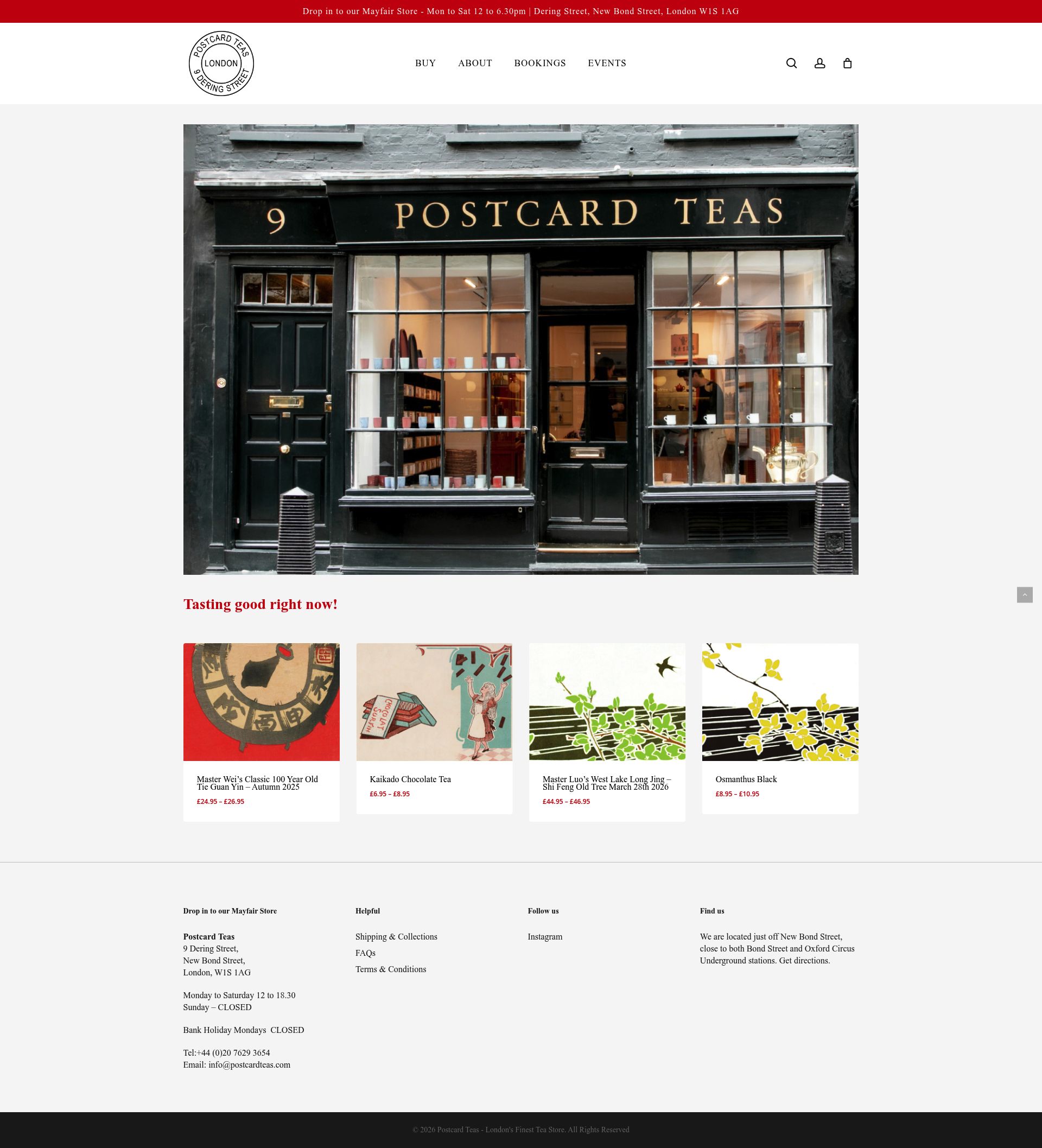
Postcard Teas does something almost no other UK tea brand does: every product carries the name and location of the person who made it. This radical transparency is the centrepiece of the store's product pages and it creates a level of trust and story that luxury buyers respond to. The store functions as much as a gallery as a shop.
6. Rare Tea Company
Rare Tea Company's store leads with sustainability and ethical sourcing credentials, backed by specific details about farmer relationships and supply chain practices rather than generic claims. This approach earns the premium positioning and is increasingly what converts health-conscious and ethically-minded buyers who are actively sceptical of greenwashing.
7. Comins Tea
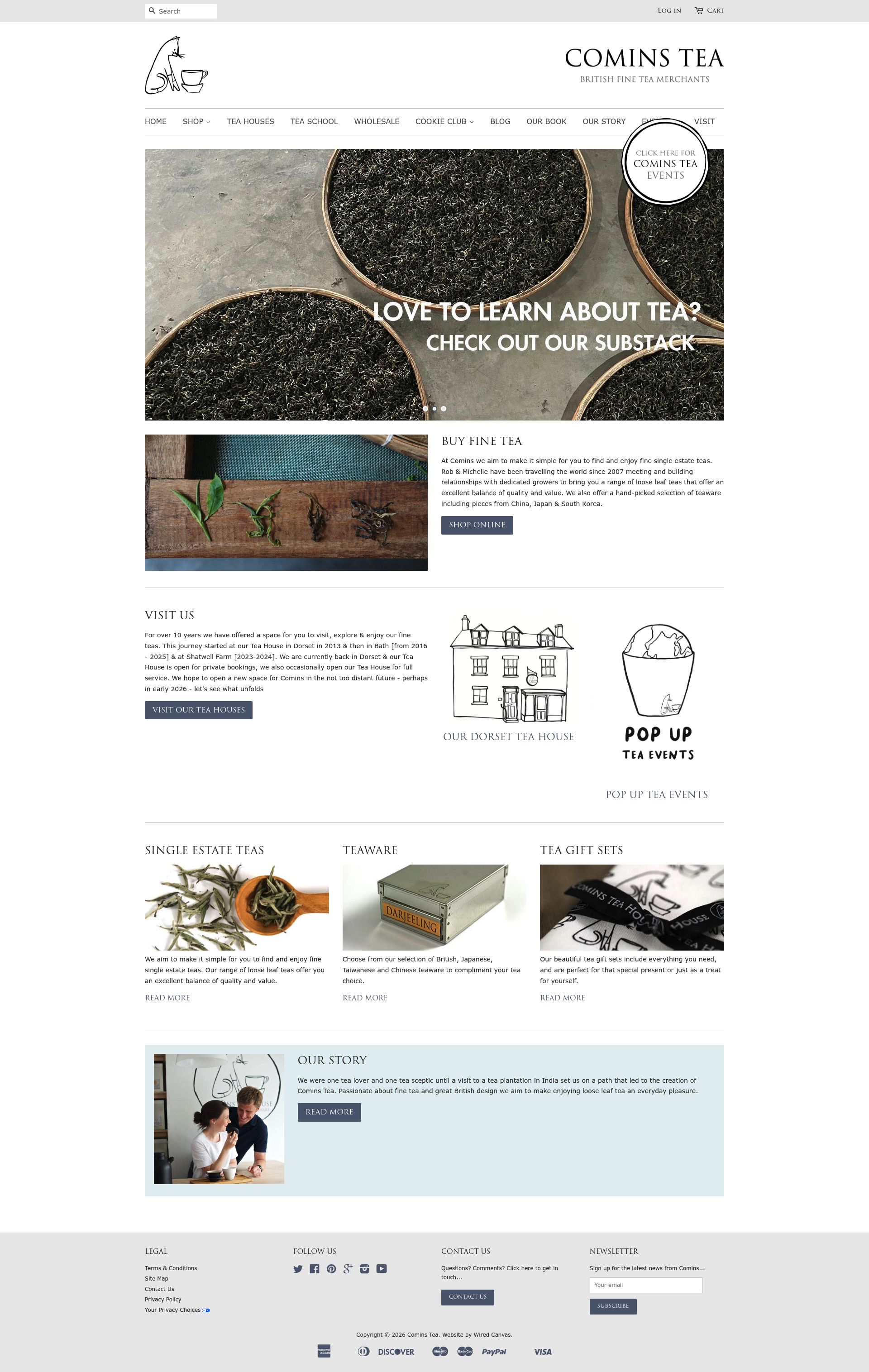
Comins blends a physical tea room experience with a clean Shopify store that showcases personally sourced single estate teas. The handmade British teaware range is displayed alongside the tea with clear cross-sell paths, and the editorial content, sourcing diaries and tea tasting guides, creates organic search visibility that drives cold traffic.
8. Suki Tea
Suki's Belfast-based store uses bold visual merchandising with whole leaf teas displayed in glass jars to communicate freshness and quality at a glance. The product photography is shot to show the actual leaf rather than just packaging, which is a small but effective trust signal for buyers who know what good whole leaf tea looks like.
9. Bird & Blend Tea Co
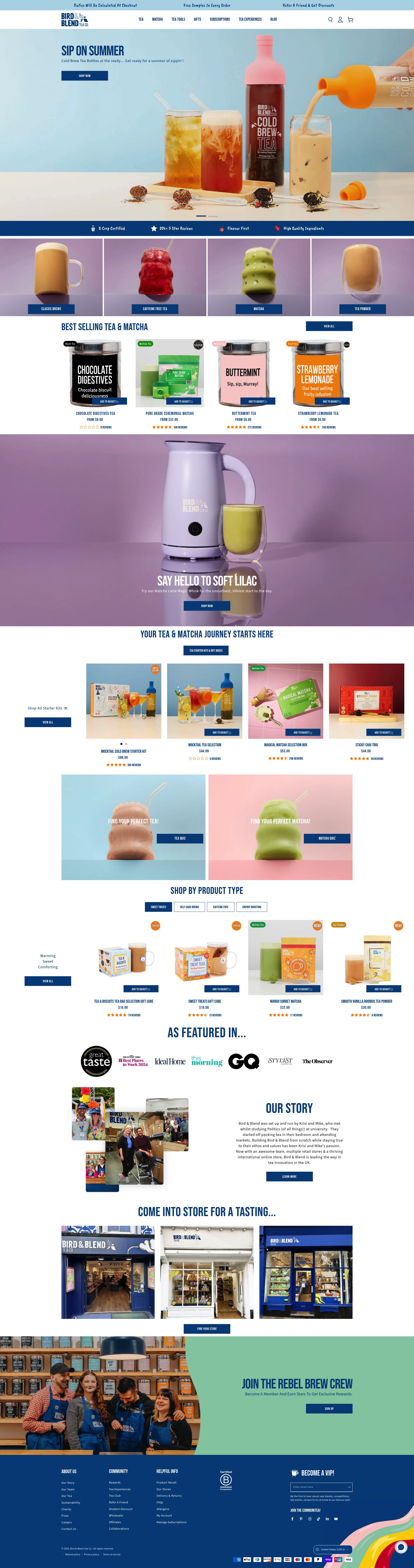
Bird & Blend has one of the strongest brand identities in UK tea ecommerce. The Shopify store leans into creative, bold flavour combinations with imaginative naming and vivid product photography. The community element, customer reviews that describe flavour experiences in detail, is surfaced throughout the product pages and does heavy conversion lifting.
10. T2 Tea
T2 Tea's Shopify store handles one of the more demanding ecommerce briefs in the category: a vast range of loose leaf teas, teaware, and gift sets presented to buyers who range from complete beginners to experienced enthusiasts. The store solves this with strong visual merchandising, colour-coded by flavour profile, and occasion-based navigation that routes gift buyers directly to high-value bundles. The teaware and tea pairing approach lifts average order value and gives the brand a clear premium positioning across a competitive market.
If you're running a food, drink, or gifting brand on Shopify and want to improve conversion, AOV, or subscription retention, our Shopify design service is built around those outcomes. Get in touch to start the conversation.
Frequently asked questions
Which tea brand has the best Shopify store in the UK?
Bird & Blend Tea Co and JING Tea are the two standouts for different reasons. Bird & Blend leads on brand identity and community, with bold product photography and customer reviews that describe actual flavour experiences. JING is the benchmark for luxury tea ecommerce, with origin videos, detailed tasting notes, and teaware cross-sells that turn a single tea purchase into a higher-value basket.
Do UK tea brands actually sell well on Shopify?
Yes, and Shopify Plus is the dominant platform in this category. Twinings rebuilt their store on Shopify Plus and reported a 200% increase in mobile conversion after restructuring navigation around tea type, occasion, and health benefit. The subscription and gifting mechanics in Shopify work particularly well for tea, where repeat purchase rates are high and gifting accounts for a significant share of annual revenue.
What makes a tea Shopify store convert well?
The highest-converting tea stores solve the same problem: helping buyers navigate a large and often unfamiliar range to find what suits them. Occasion-based navigation (gifts, wellness, morning blends) outperforms product-category navigation for new visitors. Product pages that explain the leaf, origin, and flavour profile in plain language reduce decision friction. Teaware cross-sells and subscription prompts at checkout are the two highest-leverage AOV levers in this category.
How do premium tea brands justify higher prices online?
The stores that do this well are specific, not vague. Postcard Teas names the individual farmer on every product page. Rare Tea Company explains supply chain practices with concrete details rather than generic sustainability copy. JING uses origin videos to show where the tea is grown. The pattern is the same: premium pricing needs verifiable proof, not branding claims, and the Shopify product page is where that proof has to land.
Is selling tea on Shopify profitable for small brands?
Tea has strong unit economics for DTC: high margins, lightweight shipping, and a repeat purchase cycle that makes subscriptions viable. Smaller brands like Comins Tea and Suki Tea have built profitable Shopify stores by focusing on a clearly differentiated product (single estate, whole leaf) and content that generates organic search traffic. The risk is discoverability against established brands with large ad budgets, which is why content, SEO, and gifting partnerships matter more at smaller scale.