

Quick summary
Neom Organics is the standout for intent-first navigation, mapping their entire store to wellbeing outcomes rather than product types so sleep-seekers and stress-sufferers find the right product in seconds. TRIP has cracked mainstream wellness positioning better than any CBD brand on Shopify, with a variety pack architecture that solves first-purchase decision paralysis and an honest subscription model that doesn't bury the cancel link. Puresport leads on credibility infrastructure, putting lab reports, concentration breakdowns, and educational content at the same navigation level as the shop itself. Bamford sets the benchmark for luxury wellness UX: restrained, whitespace-heavy, and built to feel like a spa rather than an ecommerce site.
Wellness is one of the fastest-growing categories on Shopify, and also one of the most demanding to sell well. Mental health supplements, sleep aids, aromatherapy, and mindfulness tools all carry an implicit promise: buy this and feel better. That promise requires trust, and trust requires a store that does more than display a product. The brands below have figured out how to sell wellness online without coming across as pseudoscientific, overpriced, or hollow. They invest in education, ingredient transparency, sensory design, and a checkout experience that does not undo the calm they spent their homepage building. These ten stores are the benchmark.
1. Neom Organics

Neom is one of the strongest examples of sensory brand translation in UK ecommerce. Their products, candles, oils, bath soaks, and pillow sprays, are built around specific wellbeing outcomes: sleep, energy, stress relief, happiness. The Shopify store maps the navigation to those outcomes rather than product type, so a customer who arrives searching for help with sleep can follow a clear path without needing to know which fragrance category they want. That intent-first architecture is rare and converts well: customers self-select into the right product range rather than bouncing from an unfamiliar category page.
Product pages layer efficacy claims with ingredient sourcing detail. Every scent combination has a named purpose, and the copy explains the mechanism, chamomile for sleep, eucalyptus for energy, without tipping into health claim territory that would attract regulatory attention. Gifting is central to the business model and the store handles it well: curated gift sets with explicit wellbeing themes, premium gift wrapping options surfaced in the cart, and a dedicated gifting navigation section that persists across the site.
2. Calm (Calm.com)
Calm built their brand as a digital app, but their physical product line, sleep supplements, gummies, and relaxation kits, is sold through a Shopify store that extends the app's visual identity with precision. The dark navy and cloud-gradient palette carries directly from the app into the product photography and page backgrounds, giving existing subscribers the immediate signal that this is the same brand. That cross-channel consistency reduces the credibility gap that many app-to-physical product expansions suffer.
The PDP structure for their sleep supplements leads with outcomes, how quickly you fall asleep, how rested you feel, before moving to ingredients. Customer reviews are pulled into the PDPs with specific filtering by outcome, which means a customer comparing the gummies with a competitor can find reviews from people who used the product for the same reason they are considering it. That specificity in social proof is more persuasive than a star rating. Subscription is the primary purchase model and the savings differential between one-time and subscribe-and-save is made explicit at the product level, not just in a promotional banner.
3. This Works

This Works is a UK sleep and skin brand that built its reputation on the Sleep Plus Pillow Spray and has expanded into a broader wellness range. Their Shopify store handles the dual audience, those who arrived via the hero product and those discovering the brand through skincare, without the navigation becoming schizophrenic. The product pages for their sleep range are structured around clinical evidence: independent sleep studies, the percentage of customers who report improvement within a specific timeframe, and ingredient-level sourcing. That evidence-first approach is the right strategy for a category where sceptical buyers need to be persuaded rather than seduced.
The pillow spray's bestseller status is used strategically throughout the store. It anchors the homepage, appears in the "starter kit" bundle logic, and is cross-sold from every adjacent sleep product page. That kind of halo product architecture is something Shopify merchants in the wellness space often underuse: if you have one product that converts significantly better than the rest of your range, it should be working as a trust bridge to pull customers into the wider catalogue, not just sitting on a category page.
4. Scentered

Scentered sells aromatherapy balms organised around specific emotional states: focus, sleep, escape, de-stress, love, happy. The store's entire architecture is built on this mood-based taxonomy, which means the navigation is written in the customer's language rather than the brand's. A customer who knows they need help with focus can find the product in seconds. A customer who just feels off and wants something to help can browse by mood without needing to know what aromatherapy even is. That accessibility, without dumbing down the science, is the store's main UX achievement.
Their product photography uses props that reinforce the emotional context of each balm: a writing desk and notebook for focus, soft linen and low light for sleep. The imagery is consistent enough to feel like a deliberate system rather than a shoot-by-shoot decision. Scentered also handles the travel wellness angle well, with a "carry your calm" positioning that makes the compact balm format feel like a considered travel choice rather than a size compromise.
5. Alo Yoga
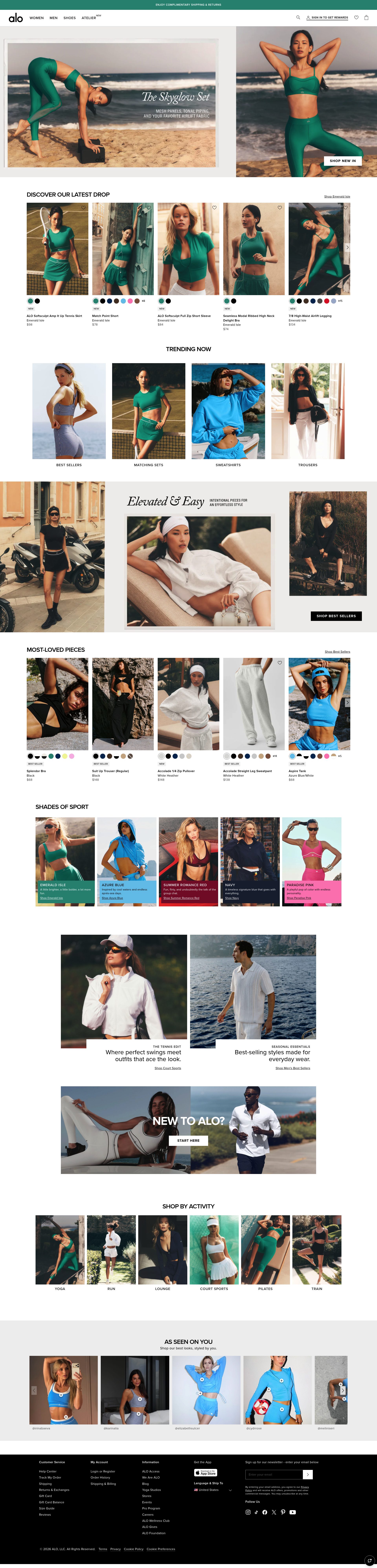
Alo Yoga's Shopify store handles a large multi-category wellness and activewear catalogue with editorial quality that most brands of similar scale cannot sustain. Their Mindful Movement content, guided meditation videos, yoga flows, and breathwork sessions, is embedded into the store experience rather than siloed on a separate blog. Product pages for their wellness range link to relevant practices, so a customer buying a meditation cushion is offered the guided sit that goes with it. That integration of product and content reduces the gap between purchase and use, which matters in wellness because the product only delivers its value if the customer actually uses it.
The photography standard across the full catalogue is maintained with consistency, which is technically demanding on Shopify at their product volume. Collection pages use lifestyle imagery with a clear filter system that does not sacrifice the editorial feel for the utility of browsing a large range. Their community and studio ecosystem is referenced throughout the store without turning PDPs into promotional material.
6. Bamford
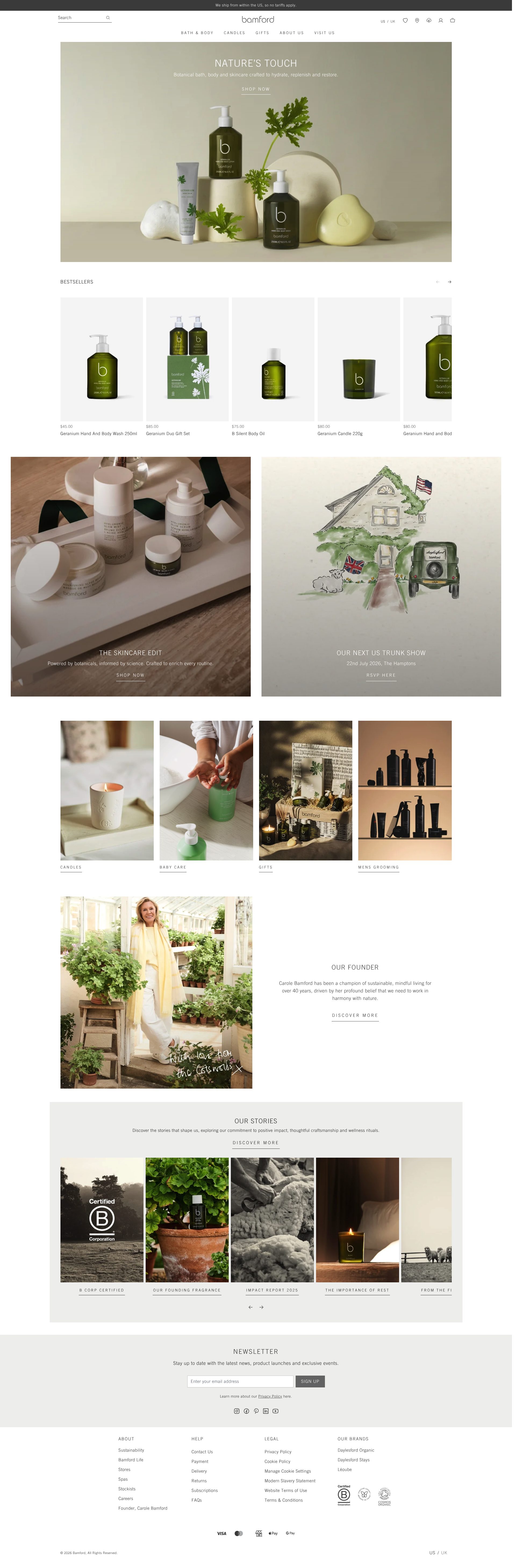
Bamford is a luxury wellness brand from the Daylesford family, selling organic skincare, sleep products, and home wellness items through a Shopify Plus store that matches the premium positioning with precision. The store's visual language is quieter than almost any other wellness brand online: white space is used aggressively, photography is restrained and natural-light-led, and product copy avoids the breathless efficacy claims that undermine trust at this price point. The effect is a store that feels like a high-end spa reception rather than an ecommerce site, which is exactly what the customer at this end of the market expects.
Their sleep range, which includes pillow mists, bath oils, and sleep supplements, is presented with a slow, considered UX that mirrors the ritual the products are designed to support. Checkout is fast and minimal. Subscription is available for repeat-purchase products like supplements without being pushed aggressively. The gifting architecture is strong: curated boxes with provenance notes, personalisation available on selected items, and packaging photography that makes the unboxing visible before purchase.
7. Feather and Down
Feather and Down is a UK sleep wellness brand best known for their pillow spray and bath and shower products, and their Shopify store is a clean example of how to build a focused, single-niche wellness store without it feeling thin. The product range is deliberately narrow, every product is related to improving sleep quality, which means the store does not need complex navigation. Collection pages are short and browsable, and the bestseller hierarchy is obvious without being repetitive.
The PDPs lead with the sleep benefit and then explain the mechanism: which ingredients do what, in what concentration, and why that formulation was chosen over alternatives. That transparency without overwhelming detail is the right calibration for a mainstream wellness audience that is curious but not scientifically trained. Customer reviews are filtered by product use case, and the brand actively requests review content that mentions sleep quality improvements rather than just product scent or texture.
8. Balance Me
Balance Me is a British natural wellness and skincare brand with a strong mental wellness positioning, particularly around stress-related skin conditions and mood-supporting aromatherapy. Their Shopify store handles the overlap between skincare and wellbeing better than most brands in either category. The navigation acknowledges that a customer with stress-related skin problems is a wellness customer, not just a skincare customer, and the product recommendations reflect that.
Their "Wellbeing Edit" section functions as a curated gateway into the store for customers who arrive from mental health content rather than a search for a specific product. That editorial entry point is built directly into the Shopify navigation, not just a blog post, which means it captures organic traffic from wellbeing queries and converts it into product discovery. Ingredient pages explain the provenance of key actives, rosehip oil, CBD, valerian, at the level of detail that the natural wellness consumer expects before committing to a repeat purchase.
9. Puresport

Puresport sells CBD wellness products, including sleep tinctures, recovery supplements, and stress support blends, through a Shopify store that leads with education rather than product. Their "Learn" section is integrated into the main navigation at the same level as "Shop", which signals that the brand's position on the credibility spectrum is closer to a health brand than a lifestyle product. That is the right call for a CBD brand where scepticism is the primary objection and where the regulatory environment requires careful communication.
The PDPs for their tinctures include lab reports, concentration breakdowns, and usage guides without cluttering the above-the-fold layout. The educational content is accessible via expandable sections that do not disrupt the primary purchase flow. Subscription is the core business model and the subscription mechanics are clearly explained, including how to pause, skip, or cancel, which removes the hesitation that aggressive subscription offers typically generate. Their third-party testing credentials are displayed prominently enough to function as a trust signal, not buried in a FAQ.
10. TRIP
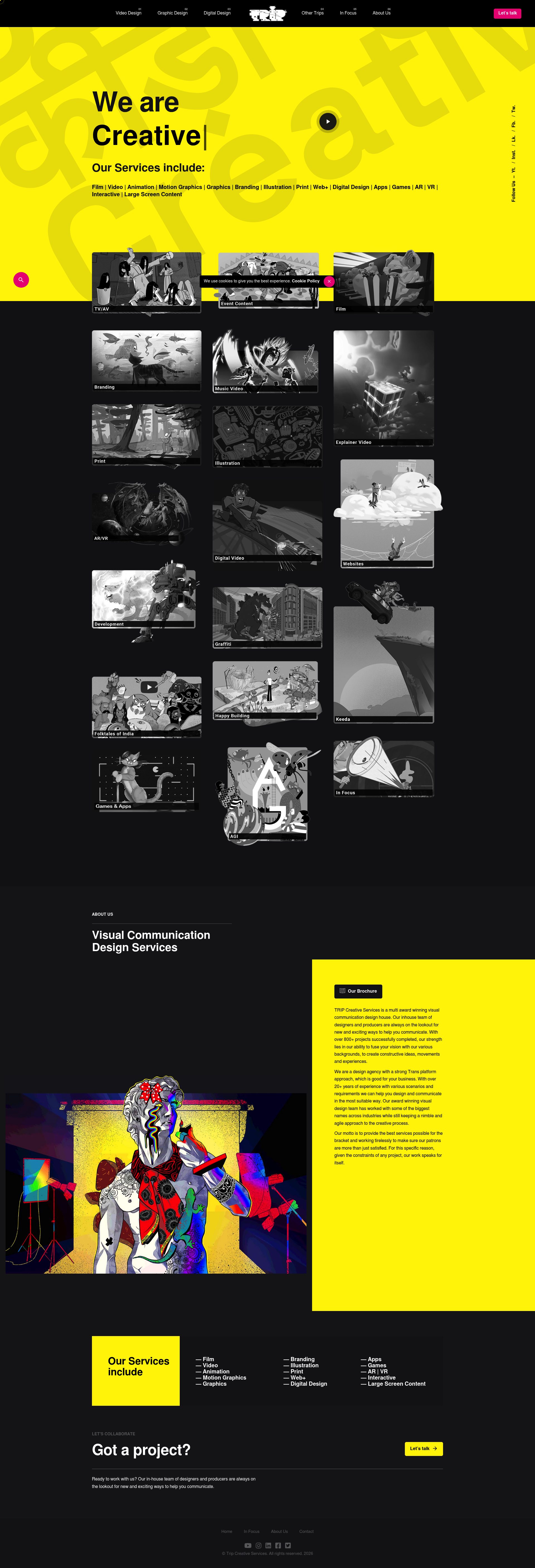
TRIP sells CBD drinks and wellness supplements and their Shopify store is one of the strongest examples of a wellness brand that has cracked mainstream positioning without diluting its credentials. The visual identity, pastel photography, clean typography, and restrained copy, communicates calm without being clinical, which is the precise calibration required for a product that is trying to move CBD from the health food shop into the mainstream grocery shopper's basket. Their retail distribution through major UK supermarkets is referenced in the store's copy without being used as a crutch: the DTC store offers flavour variety packs, subscription savings, and product combinations that the supermarket shelf cannot.
The store handles the multi-SKU complexity of a drinks brand, multiple flavours and CBD concentrations across several product formats, with a collection page that filters efficiently and a variety pack architecture that solves the decision paralysis of choosing a first flavour. The subscription logic is generous: the savings are visible, the flexibility is spelled out, and the cancel-anytime policy is not hidden in small print. TRIP's social proof strategy also stands out: their user-generated content feed, drawing from Instagram, is integrated into the homepage and collection pages in a way that shows the product being used in the contexts the brand claims to target, commuting, unwinding, midday stress, rather than just in product photography.
Comparison Table
| Brand | Niche Focus | Price Point | Shopify Standout |
|---|---|---|---|
| Neom Organics | Aromatherapy and sleep | Mid-premium | Intent-first navigation by wellbeing outcome |
| Calm | Sleep supplements and relaxation | Mid | App-to-physical brand consistency, outcome-filtered reviews |
| This Works | Sleep and skin | Mid | Clinical evidence on PDPs, bestseller halo architecture |
| Scentered | Mood-based aromatherapy balms | Mid | Mood-taxonomy navigation, contextual product photography |
| Alo Yoga | Wellness and activewear | Mid-premium | Practice content embedded into PDPs |
| Bamford | Luxury sleep and organic wellness | Premium | Minimal UX matching the ritual, no aggressive subscription push |
| Feather and Down | Sleep wellness | Mid | Focused single-niche store, use-case-filtered reviews |
| Balance Me | Stress skin and aromatherapy | Mid | Wellbeing Edit as a navigation-level entry point |
| Puresport | CBD wellness and sleep | Mid | Education in main navigation, transparent lab reports |
| TRIP | CBD drinks and supplements | Mid | Mainstream wellness positioning, variety pack logic |
What These Stores Get Right
- Navigation is built around the customer's problem, not the product catalogue. Neom, Scentered, and Balance Me all structure their main navigation around the wellbeing outcome the customer is seeking, sleep, stress, focus, rather than by product type. In a category where customers often do not know what product format they want, this architecture dramatically reduces browse abandonment.
- Credibility is earned through transparency, not claimed through copy. The stores that convert well in mental health and sleep do not simply assert that their products work. They show lab reports, cite independent studies, name ingredient concentrations, and filter social proof by use case. The customer at this end of the wellness market is informed and sceptical. The stores that treat them as such outperform those that lean on lifestyle imagery and hope.
- Subscription is offered honestly. Every successful wellness brand on this list offers subscription pricing, and every one of them makes the pause-skip-cancel mechanics visible before the customer commits. The wellness category has a churn problem because repeat use is required for the product to work. The brands that solve this earn long-term revenue. The brands that hide cancellation terms lose customers after one cycle and damage their reputation.
- Education is part of the store, not adjacent to it. Puresport puts learning at the same navigation level as shopping. This Works puts clinical evidence on the PDP. Calm connects supplement reviews to app users. In a category where the product's mechanism of action is often unfamiliar or contested, education reduces the credibility gap that stops a sceptical customer from adding to cart.
- The store's visual tone matches the emotional promise. These are not high-energy, urgency-driven ecommerce experiences. They are quiet, spacious, and deliberate. The best wellness stores communicate calm through their UX before the customer has read a word of copy: generous whitespace, unhurried typography, photography that shows products in the contexts where they will actually be used. If your wellness store feels like a flash-sale site, the design is undermining the product before it even loads.
Frequently asked questions
Which wellness Shopify stores are worth studying for UX inspiration?
Neom Organics, Bamford, and TRIP are the strongest references. Neom's intent-first navigation, Bamford's spa-like whitespace, and TRIP's variety pack logic for managing multi-SKU complexity each solve a different UX problem that wellness merchants commonly face.
How do wellness brands handle subscription on Shopify without high churn?
The stores with the lowest churn rates make pause, skip, and cancel mechanics visible before the customer subscribes, not buried in a FAQ after purchase. Puresport and TRIP both display subscription flexibility upfront. Hiding cancellation terms damages trust in a category where the customer needs to trust you to repeat-purchase.
What Shopify apps do wellness brands typically use for education and trust?
The strongest wellness stores integrate education through native Shopify content rather than relying on a single app. Expandable ingredient sections, embedded lab reports, and use-case-filtered reviews are typically built with a combination of a theme's native metafields, Yotpo or Okendo for reviews, and custom sections for trust credentials. The key is putting education on the PDP, not just the blog.
How should a wellness Shopify store handle health claim restrictions?
The brands on this list stay on the right side of UK ASA and MHRA rules by framing copy around experiences and ingredients rather than medical outcomes. "Chamomile to support a calm, restful night" rather than "clinically proven to treat insomnia." Puresport's approach, leading with lab transparency and third-party testing, is the safest and most credible model for supplement brands.
Is it better to organise a wellness store by product type or by benefit?
By benefit, consistently. Neom, Scentered, and Balance Me all structure navigation around wellbeing outcomes, sleep, stress, focus, energy, rather than by product category. Customers in this space often do not know which product format they want; they know what problem they have. Navigation built around the customer's problem reduces browse abandonment and improves conversion.
Related reading
- Best supplements Shopify stores
- Best yoga Shopify stores
- Best CBD Shopify stores
- Best sleep Shopify stores
If your wellness store is not converting at the level these brands achieve, the gap is usually trust architecture and educational depth on the PDP. See our Shopify design service or get in touch to talk through what is possible.