
Quick summary
Building a recognisable Shopify brand requires a clear positioning statement, consistent visual identity applied across the store, packaging and emails, a defined tone of voice, and a post-purchase experience that gives customers a reason to return. Brands that do this consistently command higher prices and sustain lower acquisition costs over time.
Most Shopify stores look like most other Shopify stores. Same theme layouts, same supplier product descriptions, same generic "about us" copy. When everything looks the same, the only differentiator left is price, and competing on price is a race you cannot win long-term against larger, better-capitalised competitors.
Brand is what separates stores that grow sustainably from stores that are always chasing the next acquisition campaign. It is not just a logo or a colour palette. It is the reason someone chooses you, trusts you, and comes back.
What does "brand" actually mean for a Shopify merchant?
Brand is the sum of how people feel about your business. It includes what you look like, how you sound, what you stand for, and what the actual experience of buying from you is like. Every touchpoint either strengthens or weakens it.
For Shopify merchants, brand matters in two immediate, practical ways.
First, it determines whether a first-time visitor trusts you enough to buy. A generic-looking store with no clear identity loses that trust test against a more established competitor, even when the products are objectively better. Research by Edelman found that 81% of consumers say they need to trust a brand before they will buy from it.
Second, it determines whether customers come back. Bain and Company found that increasing customer retention by 5% increases profits by 25 to 95%. Brand is the primary driver of retention because it gives customers a reason to return that is not just price.
How do you define your brand positioning?
Positioning is the answer to one question: why should someone buy from you instead of anyone else?
Most merchants cannot answer this cleanly. They say things like "great quality and value" or "excellent customer service," which is what every competitor says. Clear positioning means owning a specific space that a specific customer recognises as theirs.
Work through these questions honestly:
- Who is your ideal customer specifically? Not "women aged 25 to 45" but "women in their early 30s who run regularly and are frustrated by activewear that falls apart after three months."
- What do they care most about? Price, quality, ethical sourcing, convenience, speed, community, status?
- Where do your competitors consistently fall short? Even small gaps in a competitive market are worth owning.
- What can you credibly claim? Do not position around sustainability if your supply chain does not support it. Customers find out.
Once you have clear answers, write a one or two sentence positioning statement. Use it to evaluate every brand decision going forward: does this product fit our positioning, does this campaign speak to our customer, does this email sound like us?
How do you build a visual identity that works across your store?
Visual identity is not just a logo. It is a system: logo, colour palette, typography, photography style, and the way those elements are applied consistently across your Shopify store, emails, social media, and packaging.
Colour palette
Choose two to three primary colours and apply them consistently everywhere. Colour is one of the most powerful brand recognition tools available. Shoppers who visit your store, then see your Instagram, then receive your email should feel a consistent visual connection without consciously thinking about it.
Choose colours that signal the right things for your market. Deep greens and earth tones signal sustainability and naturalness. Bold primary colours signal energy and youth. Muted pastels signal premium calm. Navy and white signal reliability. Do not choose colours based on personal preference alone: choose what is right for your positioning.
Typography
Use two typefaces: one for headings with personality, one for body text that prioritises readability. More than two creates visual noise. Google Fonts has hundreds of professional-quality options at no cost. Use your chosen fonts consistently across your Shopify theme, email templates, and any social graphics.
Photography style
Product photography is where most small brands underinvest, and it is visible. Inconsistent photography, mixing white-background shots with lifestyle images, mixing warm and cool lighting tones, mixing sharp and blurry styles, makes a store look amateur even when the products are excellent.
Define a photography style guide: consistent background, consistent lighting direction, consistent level of styling and cropping. Brief every photographer against it. Your product images are the most important visual asset on your store and the hardest thing to fix cheaply once they are inconsistent.
How do you develop a consistent brand voice?
Brand voice is how you sound in every piece of written content: product descriptions, email subject lines, social posts, customer service replies. It should feel consistent and recognisably yours across every channel.
Define your voice in three or four adjectives. For example: direct, warm, knowledgeable, a little dry. Then write out what that means in practice. "We are direct. We do not pad product descriptions with buzzwords. We say what the product is, what it does, and who it is for. No waffle."
Write a one-page style guide covering:
- Tone (formal vs casual)
- How you address customers (you, your, first name?)
- Words and phrases to use and avoid
- How you handle complaints in writing
Brief anyone who writes for your store, including customer service staff, against this guide. Consistency of voice is what makes a brand feel like a person rather than a policy document.
How does brand affect conversion on your product pages?
Your product page is where brand meets conversion. A strong brand that does not sell is useless. Strong selling copy with weak branding builds no long-term equity. Both need to work together.
Branded product pages that convert:
- Open with a description that speaks to the customer's problem or desire, not just technical specifications
- Use photography that fits your defined brand style
- Show social proof (reviews, UGC) that reinforces your brand claims with real customer voices
- Are laid out and written consistently across the whole catalogue so the store feels coherent
Generic product descriptions copied from a supplier or written by a content mill without a brand voice do two things badly: they fail to persuade and they fail to differentiate.
How does the post-purchase experience build or destroy brand?
Most merchants put all their brand investment into attracting new customers and almost nothing into what happens after the purchase. That is the wrong priority. The post-purchase experience is where brand loyalty is either built or permanently lost.
Consider every touchpoint after someone buys:
Order confirmation email. This is your highest-opened email, consistently above 90% open rate. Use it to reinforce the brand: apply your tone and colours, and add something useful or human, not just a dry transaction summary.
Shipping confirmation. Another high open-rate email. Be human here. A brief, personal message from the founder or team outperforms a generic dispatch template on trust and recall.
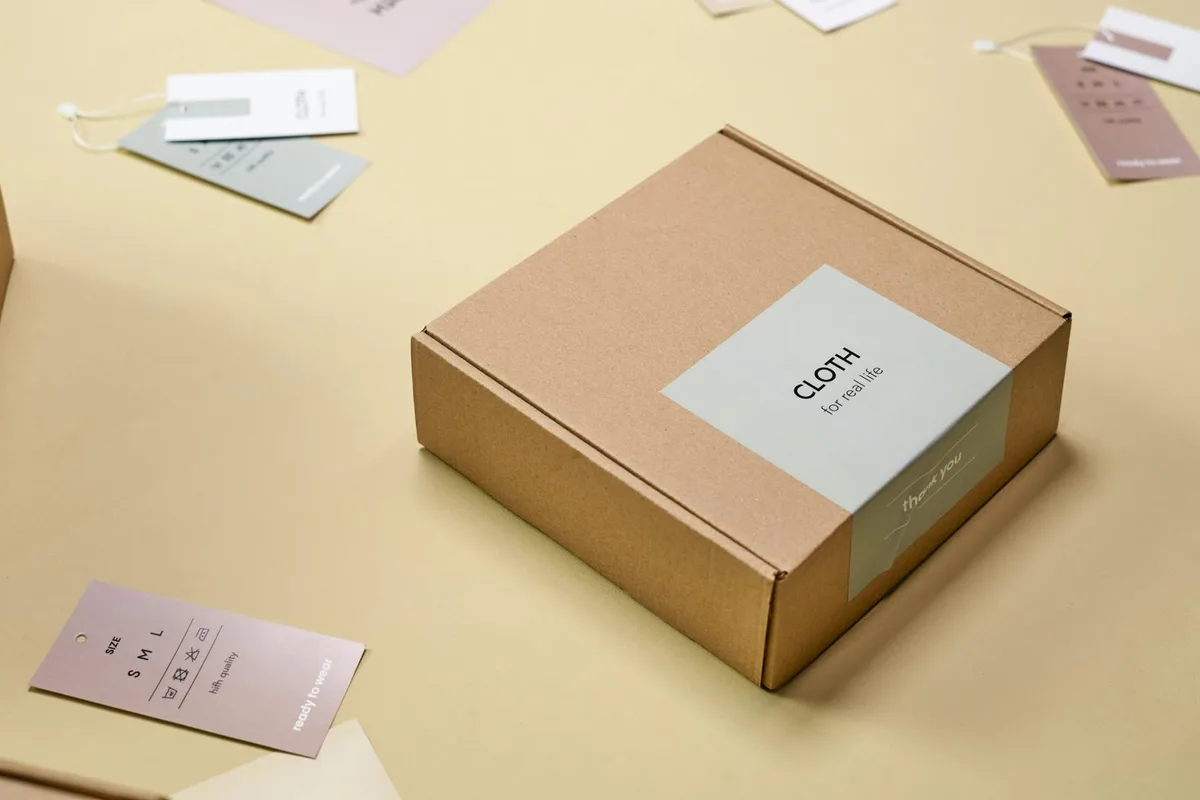
Packaging. Unboxing is a brand moment. Tissue paper in your brand colour, a handwritten note, or a small unexpected extra costs very little and generates genuine goodwill and social sharing.
Post-purchase email sequence. Send a review request at the right timing for your product type. Follow up with product care information, recommendations, or content that supports using what they bought. The sequence should sound like your brand, not like an automated marketing tool.
What role does content play in building a Shopify brand?
Content is how brands build authority and familiarity over time. A blog, a newsletter, or a strong social presence gives your audience something of value that is not a sales message. Repeated exposure to useful, on-brand content builds the trust and recognition that converts browsers into buyers and buyers into loyal customers.
The most effective content types for Shopify brands:
- How-to content related to using your products well
- Expertise content that positions you as genuinely knowledgeable in your niche
- Behind-the-scenes content that makes your brand feel human and real
- Customer stories that show real people benefiting from your products
You do not need to be on every platform. Pick one or two where your target audience actually spends time and show up consistently. Inconsistent content on four channels is far less effective than consistent content on two.
How does brand consistency affect your Shopify SEO?
Brand strength and SEO are directly connected. Branded search (people searching for your store by name) is a strong positive signal to Google that you are a recognised, trusted entity. The more people search for you directly, the stronger your domain authority and organic rankings become over time.
Strong brands also earn backlinks more naturally. Journalists, bloggers, and creators reference brands they know and trust. An anonymous store with no identity rarely earns organic backlinks. A recognisable brand with a clear story and genuine community does.
How do you create brand guidelines a small team can actually use?
Brand guidelines do not need to be a 60-page PDF. For most Shopify merchants, a single page covering the essentials is more useful than a detailed document no one reads.
| Element | What to document |
|---|---|
| Logo | Primary version, acceptable variations, minimum size, clear space rules |
| Colour palette | Hex codes, RGB values, primary and secondary colours |
| Typography | Heading font name and weight, body font name and weight |
| Photography | Background, lighting direction, level of styling, examples of on-brand and off-brand images |
| Voice | Three or four adjectives, one example product description, one example customer service reply |
| Do not do list | Specific things that are off-brand: fonts, tones, imagery styles to avoid |
Share this with anyone who creates content for your brand. Review and update it once a year.
Key actions to take now
- Write a one-sentence positioning statement: "We help [specific customer] who want [specific outcome] by [specific differentiator]." Use it to evaluate every brand decision.
- Audit your store, emails, and social media for visual consistency. Do they look like they belong to the same brand?
- Define your brand voice in four adjectives. Write one example product description and one example customer service reply in that voice.
- Review your post-purchase email sequence. Does it sound like your brand? Does it add value beyond confirming the transaction?
- Audit your product photography for consistency. If it is mixed, a photography session with a clear brief is the highest-impact visual investment you can make.
- Create a one-page brand guidelines document and share it with anyone who writes or designs for your store.
Frequently Asked Questions
Do I need to hire a branding agency to build a strong Shopify brand? Not necessarily. Many successful Shopify brands have been built with a clear positioning, well-chosen typefaces, consistent photography, and a defined tone of voice. The investment that matters most is in thinking clearly about who you are and who you are for. An agency can speed that process up, but it cannot substitute for the thinking.
How long does it take to build a recognisable brand? Brand recognition builds through repeated exposure over time. Most merchants who invest consistently in brand see meaningful improvements in retention and word-of-mouth within 12 to 18 months. The more important question is whether you are building brand equity at all with every purchase interaction.
Can I rebrand if my current store has no clear identity? Yes, and for many established stores it is worth doing. A rebrand does not mean shutting down and starting over. It can mean updating your visual identity, rewriting product descriptions in a consistent voice, and improving your post-purchase experience. Start with positioning: get that right, then let it guide the visual and verbal decisions that follow.
How do I compete with bigger brands that have larger marketing budgets? By being more specific. Large brands must appeal broadly. You can own a niche completely. The narrower and more precise your positioning, the stronger your brand becomes within that niche, and the more you attract exactly the right customers rather than trying to appeal to everyone with no particular reason to choose you.