
Quick summary
A Shopify size guide that reduces returns gives body measurements in centimetres and inches, maps measurements to actual garment measurements (not generic S/M/L), includes a how-to-measure section with a diagram, and is accessible directly from the product page variant selector. Kiwi Size Chart and Alpaca's Size Guide app make this implementation straightforward.
Returns cost UK apparel merchants an average of £20 per item when you factor in reverse logistics, processing, restocking, and the occasional item that cannot be resold. For a store with a 25% return rate and any kind of volume, that is a material drag on margin. Research by Fit Analytics found that 64% of fashion returns are attributed to poor fit or sizing issues. That is not a fulfilment problem. That is a content problem.
The fix is not complicated. Better size guides, placed in the right location, written with the right information, reduce returns measurably. They also increase conversion: customers who find sizing information they trust are significantly more likely to complete a purchase than those left to guess.
Why Do Customers Return Items Because of Sizing?
The root cause is almost always a gap between what the customer expected and what they received. This gap exists for several reasons:
- Inconsistent sizing across your range. A customer who knows they are a size 12 in your tops buys a size 12 skirt and finds it does not fit the same way.
- Measurements not provided. The product page says "Size M" but does not tell the customer what that means in centimetres or inches.
- No context for fit. "Relaxed fit" means different things to different customers. Without model stats or specific guidance, customers cannot judge whether the garment will sit how they expect.
- No guidance on how to measure. A customer who measures their chest but not their natural waist will mis-size themselves consistently.
A size guide that addresses all four of these issues eliminates most sizing-driven returns.
What Should a Good Size Guide Actually Include?
There are three layers to a useful size guide: body measurements, garment measurements, and fit context.
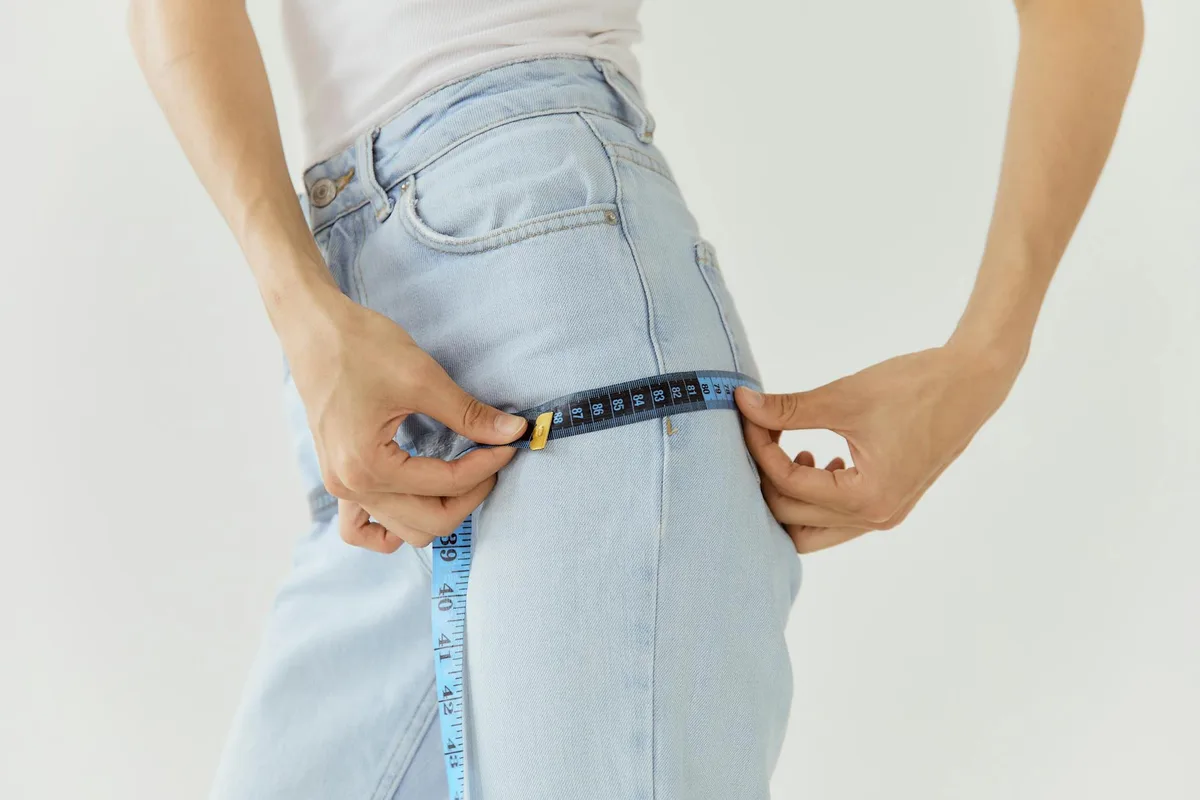
Body measurements tell customers how to measure themselves and map those measurements to your sizing. At minimum, include: chest, waist, hips, inseam (for trousers), and foot length (for footwear). Provide both centimetres and inches. Include a visual diagram showing where each measurement is taken.
Garment measurements tell customers exactly what a specific garment measures when laid flat. This is especially important for customers who already own a similar garment from another brand and want to compare. Provide chest width, body length, and sleeve length for tops. Waist, hip, and inseam for bottoms.
Fit context includes model stats and photography guidance. Stating "Our model is 5'9" and wears a size 10" gives customers a reference point they can actually use. If you have multiple models across your photography, list their measurements in the size guide.
| Size Guide Element | Reduces Returns? | Increases Conversion? |
|---|---|---|
| Body measurement chart | Yes | Yes |
| Garment flat measurements | Yes | Moderate |
| Model stats on product photography | Yes | Yes |
| How-to-measure diagram | Yes | Moderate |
| Fit guidance (relaxed, slim, oversized) | Yes | Yes |
| Customer review sizing notes | Moderate | Yes |
Where Should the Size Guide Live on the Product Page?
The size guide needs to be visible without disrupting the purchase flow. The best placement is a text link or icon adjacent to the size selector, opening a modal overlay when clicked.
Do not link to a separate page. A separate size guide page requires the customer to leave the product page, find the right size, remember it, navigate back, and then make their selection. That journey loses customers. A modal keeps everything in one place.
The link text should be direct: "Size guide" or "Find my size" outperforms generic labels like "Sizing info". If your theme does not natively support a size guide modal, this is straightforward to add with an app.
Some merchants also add a condensed sizing note directly on the product page: "This style runs small. We recommend sizing up." This inline note, based on actual return data and customer feedback, is one of the highest-leverage additions you can make. A single sentence addressing a known fit quirk can cut returns on that product by a significant margin.
Which Apps Handle Size Guides on Shopify?
Two apps are worth knowing:
Kiwi Size Chart and Recommender (free plan available, paid from $6.99/month) is the most popular dedicated size guide app on the Shopify App Store. It lets you create product-specific size charts with measurement tables, attach them to individual products or collections, and display them as a modal popup. The recommender feature asks customers a few questions (height, weight, fit preference) and suggests the right size, which is particularly useful for brands selling to new customers without an established size reference.
Size Matters (from $9.99/month) takes a similar approach but focuses more heavily on garment-level measurements rather than body-to-size conversion. It is a good fit for stores where garment measurements are the primary way customers shop (workwear, protective clothing, technical apparel).
For stores not wanting to add another app, most modern Shopify themes (Dawn, Sense, Craft) include a size guide section that can be built natively using a metaobject or a page reference. This requires a small amount of setup but avoids ongoing app costs.
How Customer Reviews Supplement Sizing Information
Product reviews are a significant sizing resource, and most merchants underuse them. Customers frequently leave comments like "I'm usually a medium but sized up to a large" or "runs true to size, great fit on a size 14". This information is valuable to prospective buyers.
Three ways to extract more value from this content:
- Add a sizing field to your review form. Apps like Okendo and Yotpo allow you to add custom fields. Adding "What size did you purchase?" and "How did it fit?" creates structured sizing data at scale.
- Surface aggregate sizing data on the product page. If 70% of reviewers say the item runs small, that is a signal worth displaying. Okendo does this automatically.
- Train your support team to tag sizing-related support tickets. If the same sizing issue appears repeatedly, update the size guide and add an inline note to the product page.
AR Try-On and Video: Where Do These Fit?
Augmented reality try-on tools (Snapchat's shopping lens, Wanna Kicks for footwear, various Shopify app integrations) reduce returns in specific categories. Footwear, eyewear, and accessories see the strongest return-rate reductions from AR. Clothing is harder because fit depends on body shape, not just scale.
If you sell footwear or eyewear and have not explored AR try-on, it is worth a trial. For most apparel merchants, however, well-executed static size guides and good model photography will deliver more return-rate reduction per pound spent than AR implementation.
Video try-ons (a short video showing the garment on multiple body types) sit between static photography and AR in terms of information richness and production cost. A 30-second try-on video embedded on a product page showing the garment on two or three different body types can meaningfully reduce sizing uncertainty for customers who are not represented by standard model photography.
Measuring the Impact of Better Size Guides
Before you change anything, establish a baseline:
- Current return rate overall, and by product category
- Reason codes from your returns process (you need "wrong size/poor fit" isolated from "changed mind" and "product not as described")
- Which specific products have the highest size-related return rates
After implementing improved size guides, wait at least 60 days before assessing impact. Return rates lag behind purchase dates. Comparing like-for-like months (accounting for seasonal variation) gives the clearest signal.
A realistic target: a well-implemented size guide programme reduces sizing-driven returns by 20 to 40%. For a store with a 25% return rate where 60% of returns are sizing-related, that translates to a 3 to 6 percentage point reduction in overall return rate. At scale, this is a significant margin improvement.
Key Actions to Take Now
- Audit your current size guides. Do they include body measurements, garment measurements, and model stats? If not, start with your highest-return-rate products.
- Move your size guide to a modal triggered from the size selector on the product page. Remove any links to standalone size guide pages.
- Install Kiwi Size Chart if your theme does not natively support size guide modals. Start with the free plan.
- Add inline fit notes ("This style runs small, size up") to any product with a known sizing issue. Pull this from return reason data and customer reviews.
- Set up a sizing field in your review form using Okendo or Yotpo. Start collecting structured sizing feedback.
- Establish your baseline return rate by reason code before making changes, so you can measure impact accurately.
- Revisit size guide content quarterly. If a new product category is generating disproportionate sizing returns, that is a content gap to close.
Frequently Asked Questions
Do size guides actually reduce returns, or do customers just ignore them? Customers who are genuinely unsure about sizing actively seek out size guides. Baymard Institute research shows that 28% of online shoppers abandon a purchase specifically because they cannot determine their correct size. A visible, useful size guide directly addresses this. Returns from customers who ignored the size guide are a separate problem, usually solved through clearer presentation rather than more content.
Should I use vanity sizing (UK 8, 10, 12) or measurements (cm/inches)? Both. Vanity sizing gives customers a familiar reference point. Measurements give customers a reliable truth. Present them together: a table that maps UK size to body measurements and garment measurements covers both bases.
How do I handle sizing for products where I only have one size (OSFM)? One-size products still need garment measurements. A one-size wrap top that measures 60cm flat across the chest fits very differently to one that measures 80cm. Provide flat measurements and a clear statement of the size range the item accommodates.
Will improving my size guide affect my conversion rate as well as my return rate? Yes. Customers who find trusted sizing information convert at a higher rate than those left uncertain. A study by True Fit found that shoppers who engage with fit tools convert at up to 2.5 times the rate of those who do not. Return rate and conversion rate improvements are complementary goals.