

Quick summary
Osprey leads the category with use-case-driven navigation, a prominent lifetime guarantee, and a fit-guide tool that reduces returns without customer service overhead. Millican is the strongest UK DTC pick, with editorial-first product pages and specific, concrete answers to the objections that kill backpack sales. Wandrd is the standout for camera bag DTC, using per-use-case landing pages and embedded video to demonstrate product versatility in a way static photography cannot. Aer sets the benchmark for everyday carry, with carry-on dimension callouts above the fold and best-in-class compartment photography that communicates usable volume far better than raw litre specs.
Backpacks are a considered purchase. Buyers research carry capacity, organisational layout, material durability, and fit system before they commit — and the stores that convert best in this category know that the product page has to do a lot of work. These ten Shopify and Shopify Plus stores have each built their ecommerce presence around making that research process straightforward, credible, and friction-free.
1. Osprey
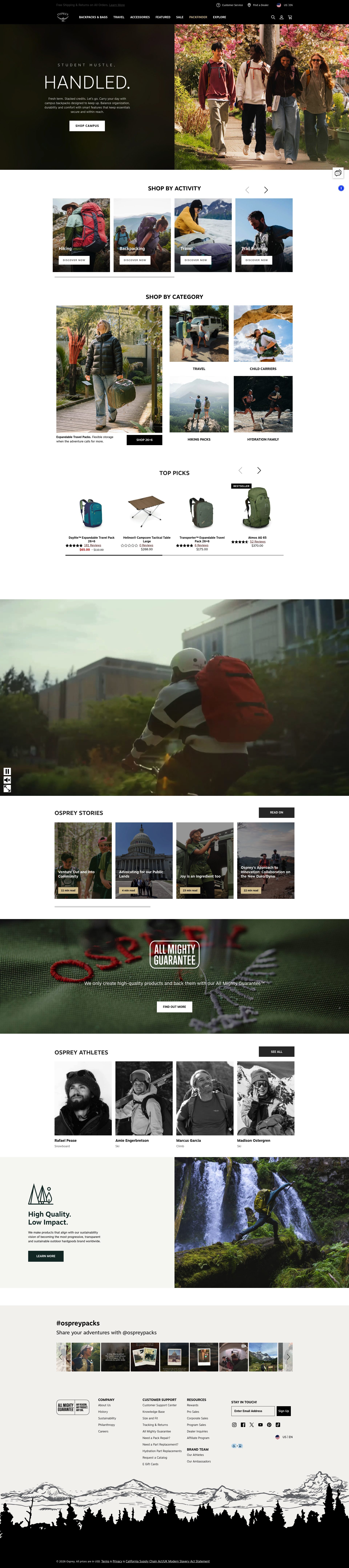
Osprey is the dominant brand in technical backpacks and their Shopify Plus store reflects the depth of the product range without becoming overwhelming. Collection pages are structured by use case: hiking, travel, everyday carry, and cycling each have their own entry point, which means a customer landing on the site from a specific query immediately finds a relevant collection rather than a broad product grid. Product pages are built around the "why this bag" question: every PDP includes a fit system explanation, a suspension compatibility chart, and a detailed feature breakdown with labelled photography showing the interior organisation panels, hip belt pockets, and hydration sleeve.
The lifetime guarantee is surfaced prominently on every product page, not buried in a FAQ. That placement matters because it directly counters the main objection to spending £150 or more on a backpack: whether it will last. Osprey also uses a "fit guide" tool that recommends torso length and adjusts the size recommendation accordingly, reducing returns without adding customer service overhead.
2. Fjällräven
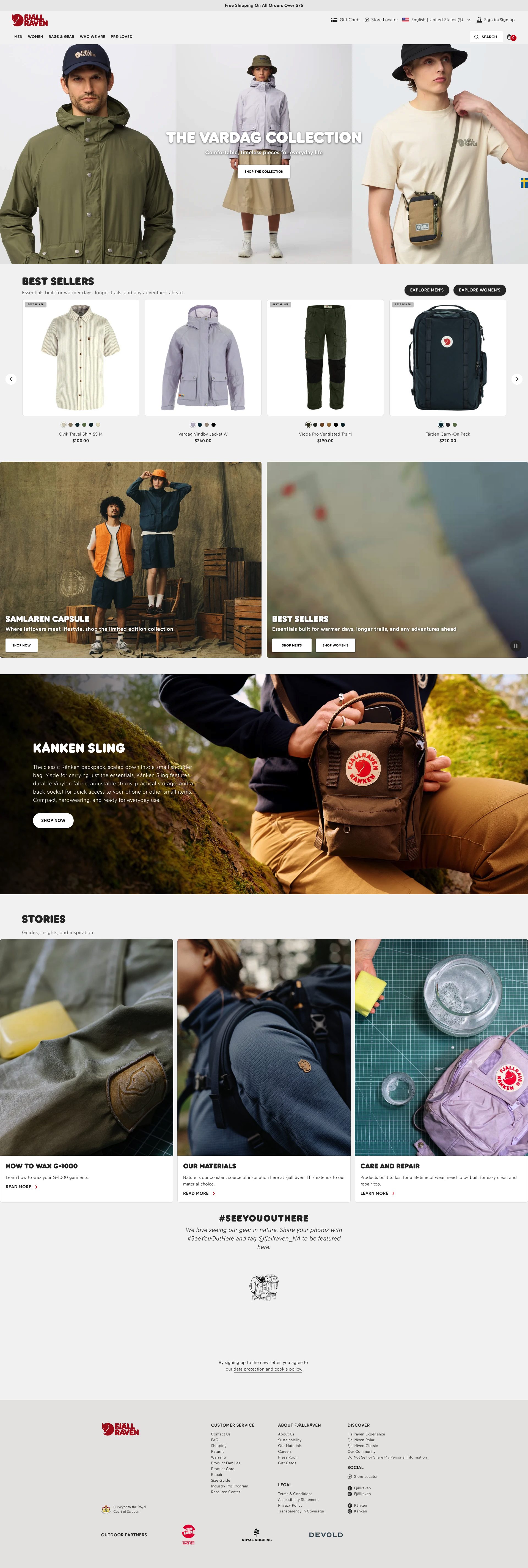
Fjällräven's store is a masterclass in premium brand storytelling within an ecommerce context. The Kånken backpack is iconic enough to carry significant brand recognition, but the store does not rely on that alone: every product page includes detailed material provenance, Greenland Wax care instructions, and links to the brand's sustainability reporting. That transparency communicates quality in a way that product photography alone cannot.
Their colour selection UX is worth noting: Fjällräven's Kånken comes in dozens of colourways and the selector shows a large swatch preview rather than a tiny dot, which reduces colour mismatches and associated returns. Navigation to the Kånken collection is clear and persistent throughout the site, leaning into the brand's hero product without neglecting the broader technical range. Their "Fjällräven Classic" expedition events are referenced throughout the site, giving the brand a community dimension that reinforces the product quality claims.
3. Millican
Millican is a Cumbrian DTC brand that has built one of the strongest Shopify stores in the UK outdoor space. Their product range is deliberately focused — a small number of well-designed bags for travel and everyday use — and the store structure reflects that. Rather than a wide grid, the homepage surfaces curated editorial content alongside the products, giving buyers context for how the bags are actually used before they commit to a PDP.
The product photography is exceptionally well-executed: every bag is photographed packed and in use in real outdoor settings, which helps buyers understand capacity in a way that a flat-lay cannot. Their founder story and British manufacturing provenance are woven into the product narrative without being overwrought. The store uses a persistent "Why Millican?" section in the PDP layout that answers the key objections: what is it made of, how long will it last, and is the price justified. Each of those questions gets a specific, concrete answer rather than a marketing platitude.
4. Timbuk2
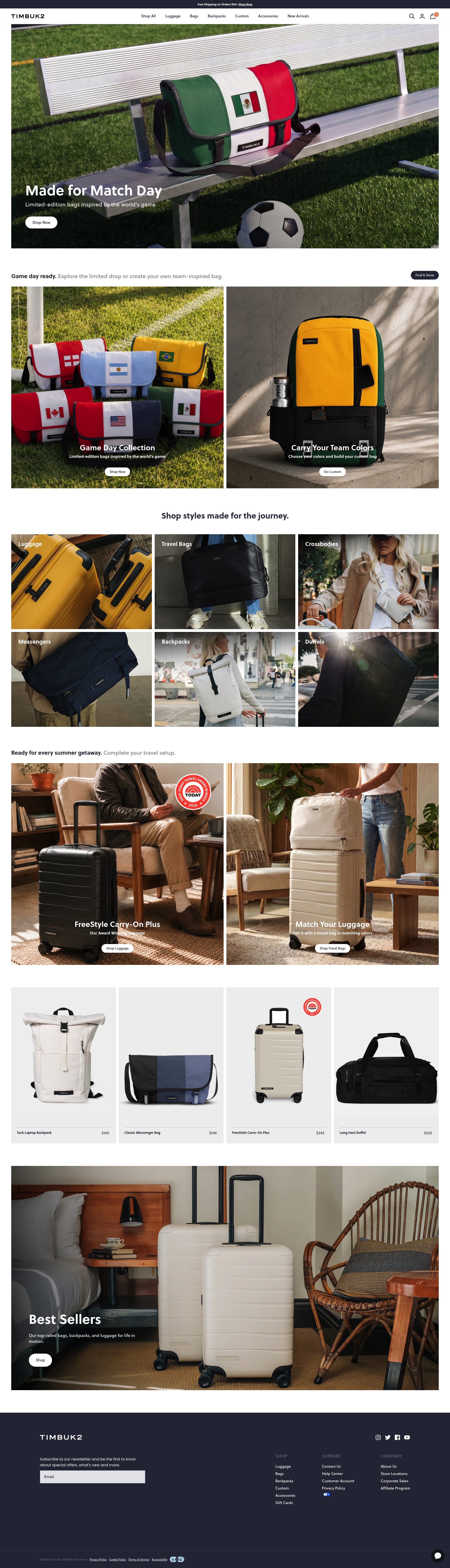
Timbuk2's long-standing custom bag builder is the centrepiece of their Shopify Plus store and it remains one of the better-executed product configurators in the bag category. Customers can select body colour, accent colour, strap colour, and capacity, with a live preview that updates in real time. The configurator is accessible from the homepage and from every relevant PDP, and the resulting custom bag ships at a price point only slightly above the standard equivalent, which removes the price objection that sinks most custom product tools.
Beyond the configurator, their standard product pages are built with commuter and travel buyers in mind: carry-on compatibility is called out explicitly on travel bags, and laptop sleeve sizing is shown with specific laptop model equivalents rather than just inches. Their "Works Hard. Plays Hard." brand positioning is reinforced throughout the copy without crossing into cliché: the messaging stays functional and specific.
5. Thule
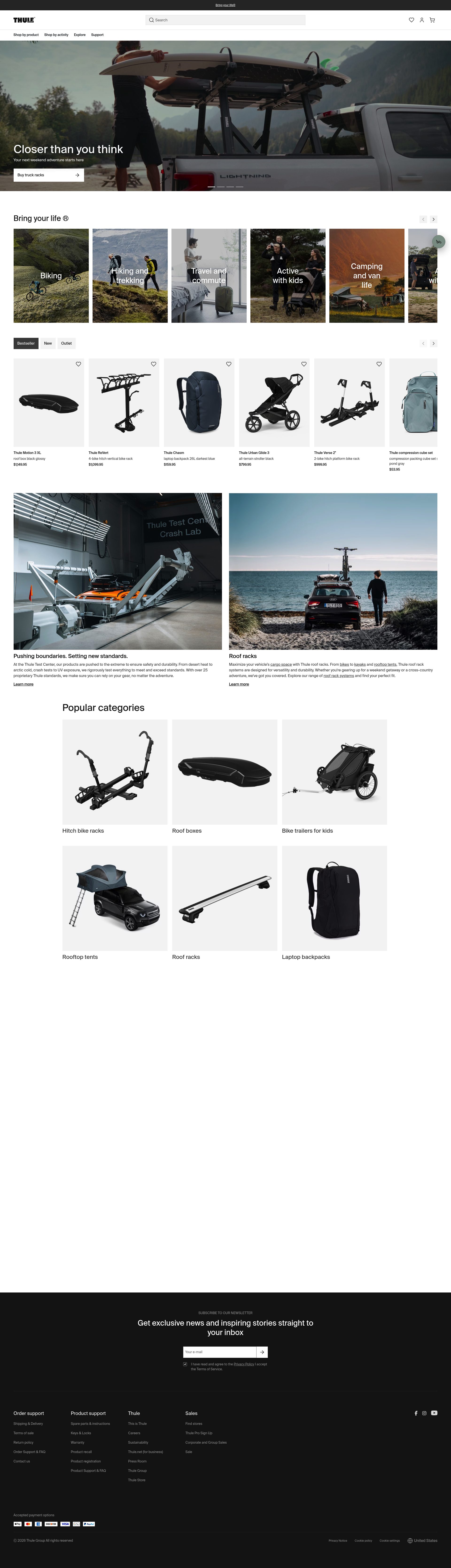
Thule's Shopify store manages a wide product range, from roof racks to camera bags, within a clean navigation architecture. Their backpack and bag category has benefited from the brand's reputation in the automotive accessories space: buyers already trust Thule with expensive equipment, and that trust transfers. Product pages for their camera and laptop bags feature internal organisation diagrams with callout labels, which is exactly the right format for a bag where the compartment layout is a key purchase criterion.
Thule's "compatible with" feature on relevant PDPs is well-implemented: it tells buyers which laptop models fit which sleeve, and which camera bodies can be stored in which compartment. That specificity removes a common reason for abandonment when buying a technical bag online. Their cross-selling approach pairs bags with relevant accessories such as packing cubes and laptop sleeves, and those recommendations appear in a clear "Complete the setup" module on the PDP rather than in the checkout, where they are less likely to interrupt the purchase flow.
6. Cotopaxi
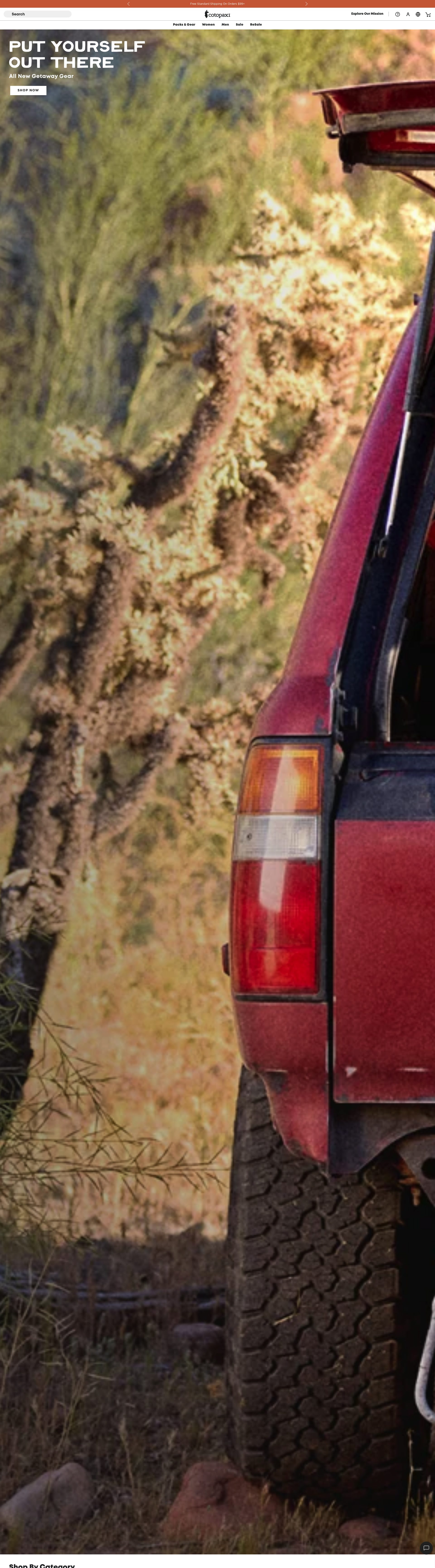
Cotopaxi's "Gear for Good" positioning is backed by specific commitments on every page: the percentage of revenue donated, the partners they fund, and the factory standards they require. That specificity is important because vague sustainability claims are increasingly ignored by consumers; Cotopaxi gives buyers enough detail to evaluate the claims independently. Their distinctive use of bright, random colourway combinations — the "Del Dia" range where every bag is unique — is surfaced as a feature rather than a limitation, and the store communicates clearly what buyers should expect when ordering a Del Dia product.
Their product pages include a "Materials" section that names the specific recycled fabric used and explains the certification it holds. Collection pages for hiking and travel bags are structured with filter options for capacity, activity type, and price, which keeps navigation fast for a buyer who knows what they need. Cotopaxi's loyalty programme is introduced naturally within the PDP flow rather than only at checkout, which gives buyers a conversion incentive earlier in the decision process.
7. Wandrd

Wandrd makes camera and travel bags aimed at photographers and creators, and their Shopify store is built around demonstrating versatility. The hero product, the PRVKE, has a dedicated landing page that walks through each use case: travel photography, day hiking, and daily carry, with different configuration photographs for each. That editorial approach within the product experience means buyers can find their own use case reflected before committing to a purchase.
Their expansion panel, which allows the PRVKE to go from 21L to 31L, is demonstrated through a short video loop embedded directly in the PDP. Video at the product level is well-justified here because a static image cannot communicate a bag's expandability. Wandrd's reviews are structured to surface context: reviewers are prompted to describe how they use the bag, and that information is displayed alongside the star rating, which makes the social proof more actionable than a score alone.
8. Stubble & Co
Stubble & Co is a UK DTC brand that has built a loyal following with a focused range of backpacks and travel bags designed for weekenders and commuters. Their Shopify store keeps the product range tight, which means every collection page feels curated rather than exhaustive. The store design is clean and restrained, with product photography that shows the bags in real urban and travel settings without resorting to overproduced lifestyle imagery.
Their product pages answer the practical questions buyers actually have: what fits in the main compartment, does the laptop sleeve fit a 16-inch MacBook, how does the shoulder harness distribute weight on a longer carry. Stubble & Co uses a persistent customer photo gallery that pulls in Instagram content alongside verified purchase photographs, which gives the social proof a range of contexts rather than a single staged image. Their "As worn by" editorial series, featuring real customer stories, is linked from the homepage and drives brand trust without requiring a celebrity endorsement budget.
9. Chrome Industries
Chrome Industries makes bags and footwear for urban cyclists and commuters, and their Shopify store is built around that audience's specific concerns: waterproofing, durability, carrying method, and security. Product pages lead with the functional claim, then support it with specification: their Chrome Niko camera backpack PDP opens with the waterproofing credentials before moving into the organisational layout and the padded compartments.
Their rollup closure system is a distinctive product feature and the store gives it appropriate prominence: a short demonstration video appears in the product gallery rather than only in the feature list copy. Chrome's brand voice is direct and functional throughout, which suits their audience well. Cross-selling on PDPs pairs bags with relevant accessories and clothing, and those recommendations are specific to the product category rather than generic bestseller lists.
10. Aer
Aer makes premium everyday carry bags and travel packs, primarily for the tech and business professional audience, and their Shopify store reflects that with a clean, minimal aesthetic and exceptionally detailed product pages. Their Work Pack and Travel Pack are frequently cited in carry-on travel communities, and the store captures that audience intent clearly: carry-on compatibility dimensions appear above the fold on every relevant PDP, alongside specific airline compatibility notes.
Aer's internal organisation photography is some of the best in the bag category: each compartment is shown packed with representative items, which communicates usable volume in a way that raw litre measurements do not. Their "Compare" feature allows buyers to view two bag models side-by-side with matched specifications, reducing the main source of decision paralysis for buyers choosing between similar capacity options. Aer's email capture is offered with a specific incentive tied to new product announcements rather than a generic discount, which attracts higher-intent subscribers.
If you sell bags, outdoor equipment, or accessories and want to improve your Shopify store's conversion rate or product page structure, SuttonCommerce can help: take a look at our Shopify design service or get in touch.
Frequently asked questions
Which backpack Shopify stores use Shopify Plus?
Osprey and Timbuk2 are confirmed Shopify Plus merchants. Both use the platform's advanced checkout customisation and handle high product volume across technical and custom bag ranges. Most other stores in this list run on standard Shopify with third-party app stacks to handle configurators, reviews, and loyalty programmes.
What makes a high-converting backpack product page?
The strongest backpack PDPs answer three questions before the buyer has to scroll: what fits inside it, how long will it last, and does it suit my body or carry style. Osprey does this with fit guides and a foregrounded lifetime guarantee. Aer does it with above-the-fold carry-on dimensions and compartment photography packed with real items. Vague feature lists and flat-lay photography are the two most common conversion killers in this category.
How do backpack brands handle sustainability claims on Shopify?
The best brands are specific rather than vague. Cotopaxi names the recycled fabric certification on every PDP and states the exact revenue percentage donated. Fjällräven links to full sustainability reporting from product pages. Millican explains the manufacturing provenance in the product narrative. Generic claims like "eco-friendly" without detail are increasingly ignored by buyers and do not build the trust that converts in a high-consideration category.
What is the best Shopify backpack store for UK buyers?
Millican and Stubble & Co are the two strongest UK-native DTC backpack brands on Shopify. Millican focuses on travel and everyday bags with British manufacturing provenance and editorial product pages. Stubble & Co targets weekenders and commuters with a tight, curated range and strong customer photo integration. Both price competitively against European brands and ship domestically without customs friction.
How do these stores handle product configurators or customisation?
Timbuk2 runs the most mature custom bag builder in the category, allowing buyers to choose body colour, accent, strap, and capacity with a live preview, at a price only marginally above the standard equivalent. Fjällräven handles colourway selection well with large swatch previews that reduce colour-mismatch returns. Most other stores in this list do not offer configuration, relying instead on comprehensive colourway photography and detailed size guidance to reduce decision friction.