
Quick summary
Fever-Tree leads the category with a gifting and mixed-case structure that raises average order value without sacrificing simplicity for first-time buyers. Curious Elixirs is the standout subscription play, using a sampler box as the trial product before locking buyers into recurring orders. Double Dutch earns its place by serving trade buyers and DTC consumers from the same store without making either experience feel like an afterthought. Belvoir Farm demonstrates how farm provenance, done with real photography and a consistent story, builds trust that no advertising budget can replicate.
The cocktail mixer category has grown sharply as home bartending went from lockdown habit to mainstream hobby, and the brands winning direct-to-consumer sales are not always the ones with the biggest retailer presence. Shopify has become the platform of choice for mixer brands that want to own customer relationships, build subscription revenue, and sell gifting bundles without relying on Amazon margins. These 10 stores show what that looks like in practice.
1. Fever-Tree
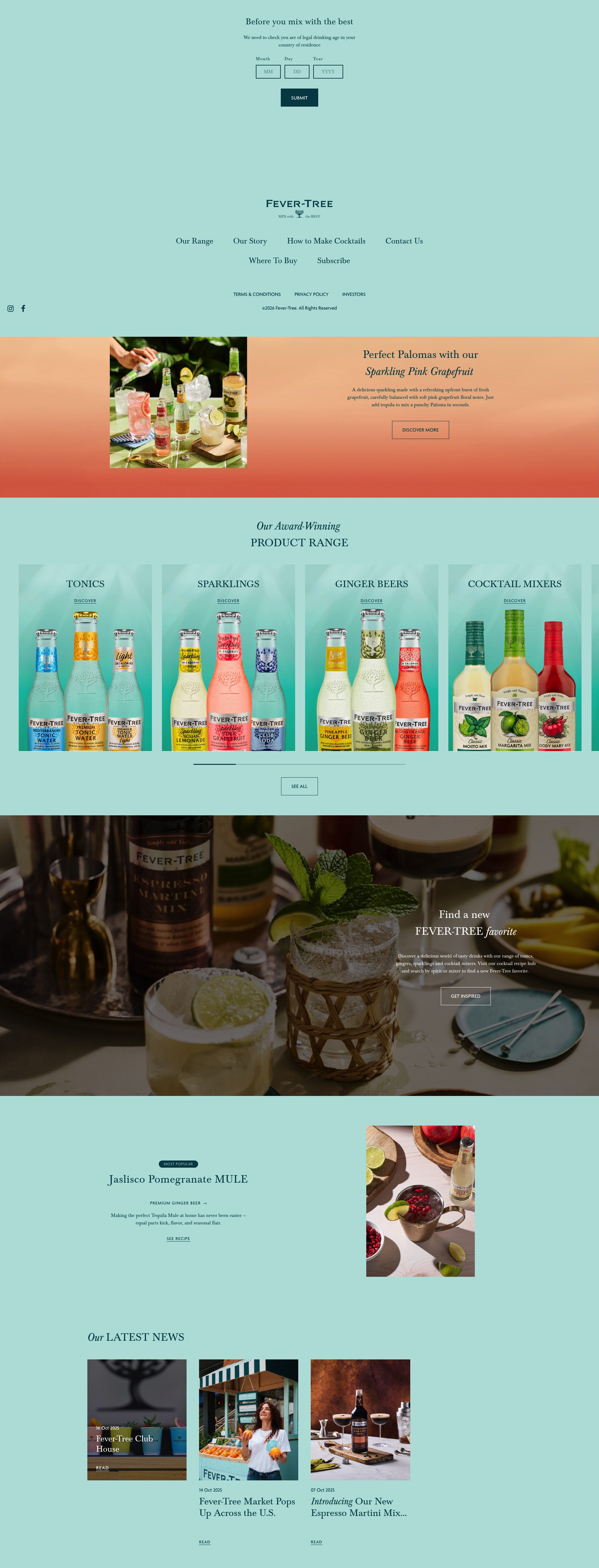
Fever-Tree runs a Shopify store that functions as both a retail channel and a brand education platform. The product catalogue is structured to guide buyers from individual bottles and cans through to mixed cases and gifting sets, with clear price anchors at each tier. The mixed case format is the smart commercial move here: it raises average order value while giving first-time buyers a lower-risk way to explore the range rather than committing to a single mixer.
The recipe content is woven into the product experience rather than siloed in a blog. Individual product pages reference specific cocktail pairings, which is a direct conversion mechanic: a customer browsing Fever-Tree Mediterranean Tonic sees a Rosemary Negroni variation and the case for buying is made visually. The trust signals are strong throughout, including press coverage from independent drinks press rather than just brand-supplied endorsements.
The gifting range, which includes premium gift sets with branded glassware and paired spirits, is presented with clean variant selection and gift-ready packaging callouts on the product page itself. That keeps the gifting decision within a single product page rather than requiring the customer to browse across collections.
2. Lixir Drinks
Lixir Drinks targets a specific position in the mixer market: lower-calorie tonics and mixers made with real fruit juice rather than artificial sweeteners. The Shopify store makes that positioning explicit from the homepage hero, which leads with the core differentiator rather than generic lifestyle imagery. For a brand competing against Fever-Tree and Schweppes in premium supermarkets, the DTC store needs to justify why a customer would buy direct, and Lixir does this through subscription savings and mixed trial packs that supermarkets do not offer.
The product pages carry detailed ingredient lists and per-can calorie counts upfront, which matters to their audience. Health-conscious mixer buyers are making an active comparison against standard tonic water, and Lixir understands that surfacing the nutritional information immediately removes the main purchase hesitation. The Subscribe & Save mechanic offers a clear percentage discount on recurring orders, and the interval options are sensible for a product with a long shelf life.
Collection architecture is clean: by mixer type (tonic, ginger beer, soda) rather than by flavour, which means a bar-setup buyer navigating by function gets to the right range quickly. That is a practical UX decision that reflects an understanding of how professional and home bar buyers actually shop.
3. Double Dutch
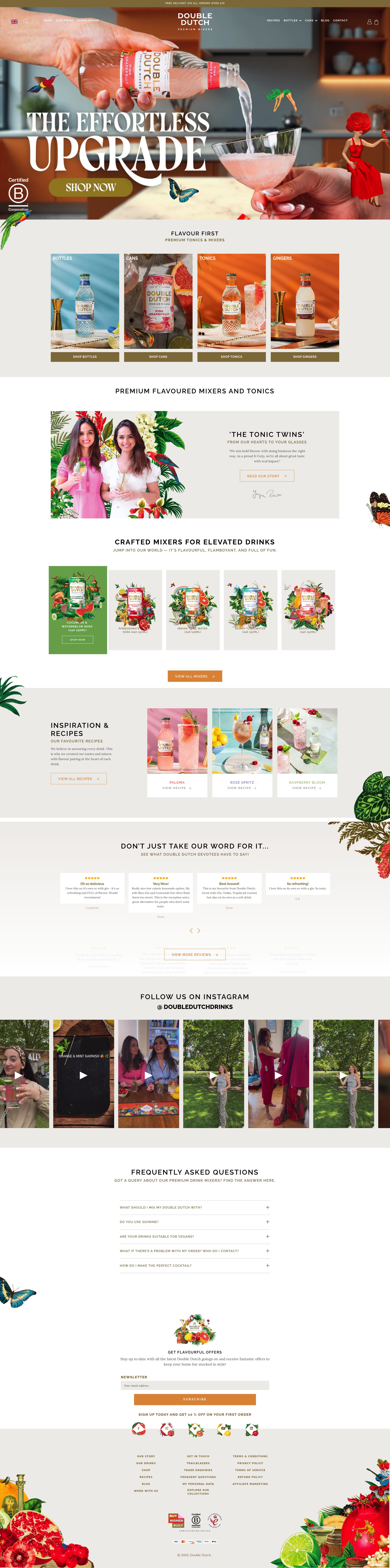
Double Dutch has built a Shopify store that reflects their positioning as the premium mixer brand for serious bartenders and hospitality buyers. The product range covers tonics, ginger beers, and sodas, and the store segments these clearly by category and by use case (home bar versus trade), which is a commercially important split when the brand sells into both on-trade venues and DTC consumers.
The trade inquiry route is surfaced through the main navigation rather than buried in a footer link, which is the right call for a brand where wholesale accounts represent significant revenue. A Shopify store that can handle both retail baskets and wholesale lead generation from the same domain is doing structural work that reduces reliance on external CRM tools.
The case-format product options (24 cans per case) cater to the trade buyer without making the single-purchase experience awkward for a household consumer buying a mixed case for home. The product pages carry cocktail pairing suggestions from named bartenders, which is a credibility signal that positions Double Dutch as a professional-grade ingredient rather than a supermarket mixer alternative.
4. Double Chicken Please
Double Chicken Please is a New York cocktail bar that has extended into DTC mixer sales through a Shopify store, selling their house-made syrups, bitters, and cocktail bases. The commercial logic is clear: a venue with a loyal following converts fans into recurring customers by selling the ingredients that make their signature cocktails replicable at home. It is a model that works particularly well for bars with a strong identity and a menu that people want to recreate.
The product range is deliberately limited to what the bar makes in-house, which gives every product page an authenticity that mass-produced mixer brands cannot replicate. Tasting notes reference specific cocktails on the current bar menu, creating a direct link between the in-person experience and the DTC purchase. Limited batch releases and seasonal syrups create urgency without countdown timers: the scarcity is real, not manufactured.
The store handles shipping clearly, with product pages specifying storage requirements and shelf life, which removes a practical objection for buyers who are new to ordering artisan syrups online. For a bar brand venturing into DTC, that operational transparency is commercially important.
5. Curious Elixirs

Curious Elixirs is a US-based non-alcoholic cocktail brand whose Shopify store is built almost entirely around the subscription model. The product range, sparkling botanical drinks designed to mimic specific cocktail styles, is positioned as a recurring purchase rather than a one-off buy: the hero section leads with the subscription option and presents single-purchase as the secondary choice. That framing is a deliberate commercial decision and it reflects where the brand makes margin.
The variety pack is the acquisition product. Curious Elixirs offers a sampler box that lets buyers try four different cocktail styles before committing to a recurring order. That trial-first approach reduces the main objection to subscribing to a non-alcoholic drink you have never tasted. The subscription management interface, built on Recharge, is surfaced clearly in the account area, and cancellation is not hidden behind a support ticket, which matters for retention: customers who feel in control of their subscription cancel less.
Product pages lead with the cocktail inspiration (No. 1 is inspired by a Negroni; No. 2 by a Whiskey Sour) before getting to ingredient lists. That framing helps buyers who know what cocktail they like but are new to non-alcoholic alternatives understand exactly where the product fits in their drinking habits.
6. Zing Zing
Zing Zing produces premium ginger beer and mixer cans in the UK and runs a Shopify store that handles both single-case retail and a structured gifting range. The product photography throughout is consistent and high-quality, with lifestyle images that place the cans in premium bar settings rather than on a white background, which reinforces the on-trade positioning for a brand that also sells into restaurants and hotels.
The gifting case is well made. Zing Zing offers branded gift cases with the option to include a handwritten note at checkout, which is a small but commercially effective detail: it removes the need for a separate gifting wrapping service and makes the product page the complete gifting solution. Free delivery above a clear threshold drives basket size without requiring a coupon code.
The product pages surface allergen information and the real-ginger content claim prominently, which addresses the main credibility question for a premium ginger beer buyer who is paying significantly more than they would for a supermarket brand. That information architecture reflects an understanding of what the conversion-blocking question actually is for this specific product category.
7. Funkin Cocktails
Funkin Cocktails sells cocktail purees, mixer pouches, and ready-to-blend mixes direct-to-consumer through a Shopify store that is structured to serve both home bartenders and professional venues. The range split between consumer products (Cocktail Mixer pouches, Mojito Mix) and professional-grade purees is handled clearly through separate collections, which means a home buyer and a bar manager land on different pages that are each relevant to their purchasing context.
The cocktail recipe library is the store's strongest conversion asset. Each recipe links directly to the Funkin product required to make it, which is a seamless content-to-commerce path. A buyer who arrives via a Google search for "how to make a Bramble cocktail" lands on a recipe page, sees the Funkin Bramble Mix as the exact product needed, and adds to cart without navigating back to a product catalogue. That funnel is worth more than any homepage optimisation.
The case-buy pricing for professional buyers is surfaced without making single-unit retail awkward, and the brand carries credibility across both channels because the same product goes into professional bar programmes. That dual-channel positioning is reflected clearly in the store architecture.
8. Mr Black
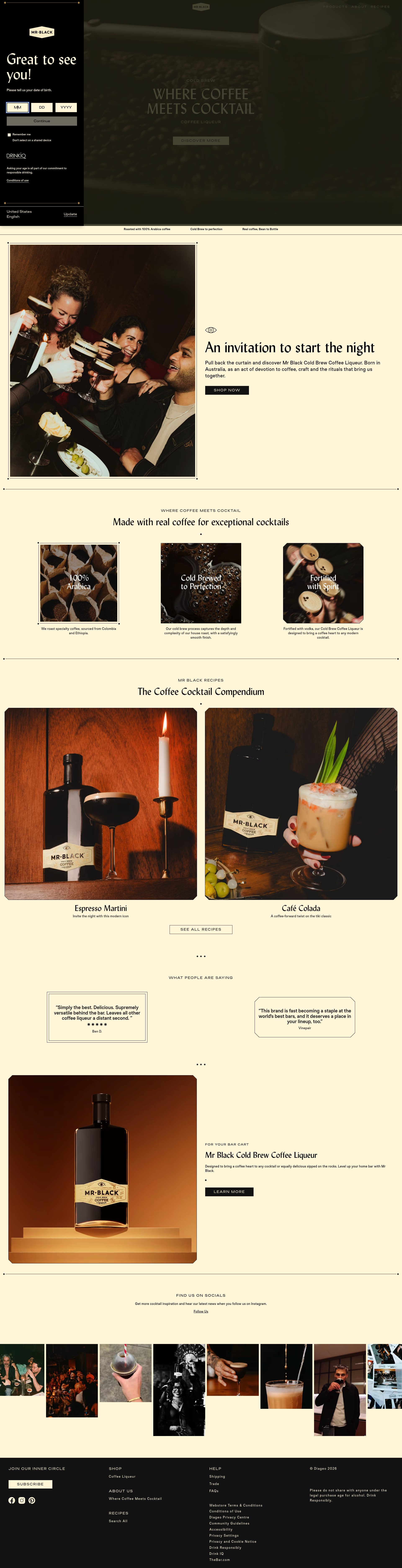
Mr Black is an Australian coffee liqueur brand whose Shopify store is a case study in premium spirits and mixer positioning for the international DTC market. The store ships globally and handles the complexity of international alcohol shipping with clear country-specific messaging and shipping cost transparency upfront, which removes the checkout-abandonment trigger that catches many drinks DTC stores.
The product page for Mr Black Cold Brew Coffee Liqueur leads with the craft production story: cold-brew extraction, single-origin coffee, and the specific percentage ABV. That level of ingredient detail is the right call for a product competing in a category (coffee spirits and mixers) where the buyer is comparing against Kahlua at a lower price point. The brand story justifies the premium.
The cocktail content, particularly around Espresso Martini variations, is integrated into the product pages and runs through a dedicated recipes section. For a coffee liqueur brand, the Espresso Martini is the primary use case and the store treats it accordingly: the recipe content is high-quality, specific, and leads back to the product. The gifting set options are presented as standalone SKUs rather than configurable bundles, which simplifies the gifting checkout.
9. Cawston Press
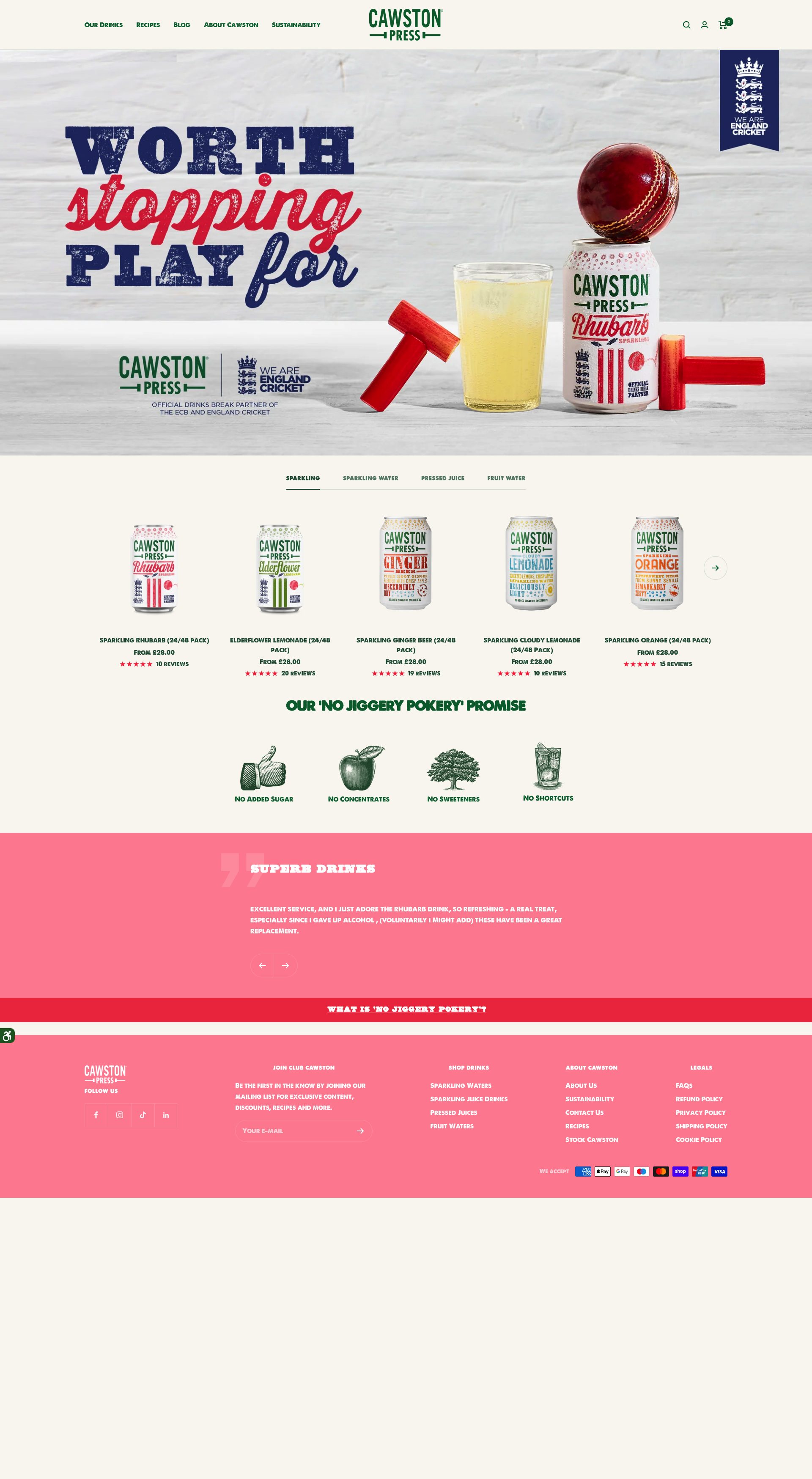
Cawston Press makes pressed fruit juices and sparkling drinks that work as both straight drinks and cocktail mixers, and their Shopify store serves both use cases clearly. The product range covers cans, cartons, and case formats, and the store handles the price-per-unit difference between single purchases and case buys in a transparent way that actively encourages bulk buying without making the single-unit buyer feel penalised.
The brand story, pressed British and seasonal fruit without concentrate, is the conversion argument for every product page. Cawston Press is more expensive than supermarket fruit juice, and the product pages justify that premium through clear sourcing information and the "no concentrate" claim, which addresses the main objection directly. That is how a DTC store earns the right to charge a premium without running constant discount codes.
The subscription option is available across most of the range and is presented as a secondary option rather than the primary call to action, which is the right choice for a brand where many buyers are purchasing for a specific occasion rather than a recurring habit. The gifting mixed cases are well structured, with clear suggestions for festive and summer gifting occasions that reduce decision paralysis.
10. Belvoir Farm
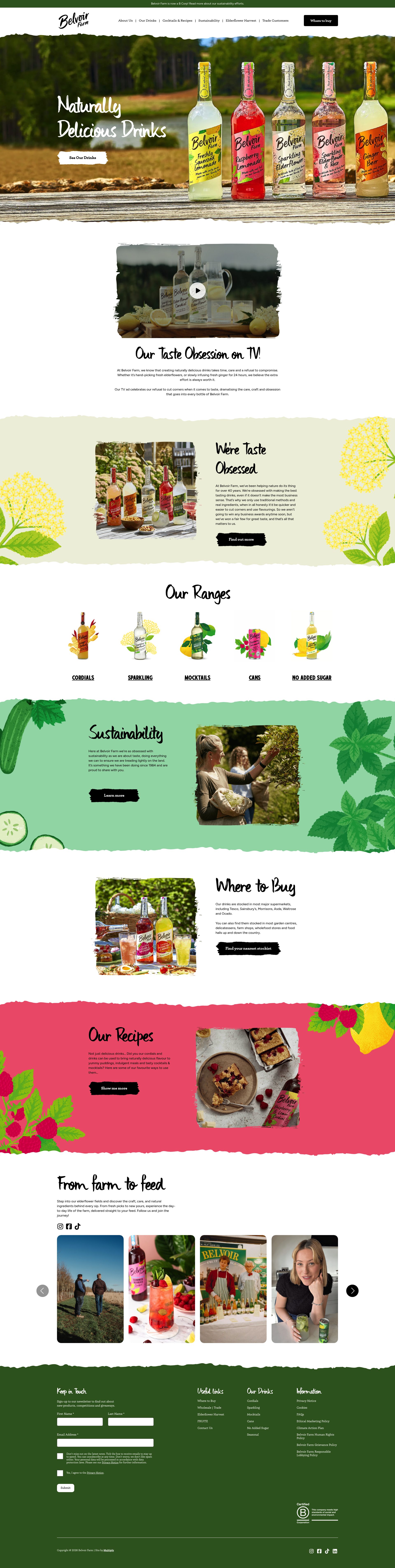
Belvoir Farm produces elderflower cordials, pressés, and mixers from a working farm in Lincolnshire, and their Shopify store makes the farm provenance central to every product page. The "made at the farm since 1984" positioning is not just copy: the store backs it with photography of the farm, the orchards, and the family behind the brand, which creates a trust layer that larger food and drink brands cannot authentically replicate.
The cordial range has obvious cocktail mixer applications, and Belvoir surfaces cocktail serving suggestions throughout the product pages, which broadens the purchase context beyond soft drink alternatives. A buyer who arrives looking for an elderflower cordial sees cocktail pairings with gin and prosecco, which expands the range of occasions they can imagine buying for and raises average order value through multi-SKU basket building.
The gifting section is comprehensive: hampers, cordial gift sets with branded glassware, and seasonal gift boxes that are updated for Christmas, Valentine's Day, and summer. Each gifting product is presented as a ready-to-give option with occasion-specific copy, which shortens the gifting decision journey. Free delivery over a sensible threshold (currently £35) aligns well with the basket size of a typical gifting order.
If your drinks or mixer brand is ready to improve conversion or build out your subscription and gifting mechanics, our Shopify design service is built around exactly these commercial outcomes. Get in touch to talk through what your store needs.
Frequently asked questions
Which cocktail mixer brands sell on Shopify?
Fever-Tree, Double Dutch, Lixir Drinks, Funkin Cocktails, Curious Elixirs, Zing Zing, Mr Black, Cawston Press, and Belvoir Farm all operate Shopify stores. Some, like Curious Elixirs, run Shopify as their primary sales channel with subscription mechanics built in via Recharge; others like Fever-Tree use it alongside large retail distribution.
Do cocktail mixer brands use Shopify subscriptions?
Yes, and it is one of the most commercially important mechanics in the category. Curious Elixirs leads with a subscription-first homepage where single purchase is the secondary call to action. Lixir Drinks offers Subscribe & Save with multiple interval options. Both use Recharge as the subscription layer on top of Shopify.
How do drinks brands handle gifting on Shopify?
The best performers treat gifting as a standalone product category rather than an upsell. Fever-Tree sells pre-configured gift sets with glassware as distinct SKUs. Zing Zing includes a handwritten note option at checkout. Belvoir Farm builds seasonal gift boxes updated per occasion. The common thread is that the gifting decision is resolved on a single product page, not across multiple navigation steps.
Can a cocktail bar sell its own mixers DTC on Shopify?
Double Chicken Please proves that it works. The New York bar sells its house-made syrups, bitters, and cocktail bases through Shopify, with tasting notes tied to specific cocktails on their current bar menu. Limited batch releases create genuine scarcity. The model depends on having a venue with an existing loyal audience, but for bars in that position it is a high-margin revenue stream with low acquisition cost.
What makes a cocktail mixer Shopify store convert well?
Three things stand out across the top performers: content-to-commerce paths where recipe content links directly to the product needed to make it (Funkin does this best), transparent ingredient information surfaced on the product page rather than in a PDF (Lixir and Zing Zing both do this for health-conscious buyers), and clear price anchoring between single-unit and case-buy options that nudges buyers toward higher-value orders without obscuring the base price.