

Quick summary
Seedlip sets the benchmark for new-category education, weaving recipe content and serve guides directly into product pages so first-time buyers can commit without leaving the PDP. Sauce Shop's dedicated Hot Sauce Club landing page is one of the most conversion-honest subscription implementations in the condiment space, with subscriber counts used as social proof rather than buried in fine print. Minor Figures stands out for running a unified DTC and B2B wholesale operation from a single Shopify store without cannibalising either channel. Primal Kitchen handles one of the widest food-and-drink SKU ranges on this list through diet-framework filtering that lets customers cross-reference keto, paleo, and Whole30 simultaneously.
Food and drink is one of the most crowded categories in ecommerce, and one of the most rewarding when a brand gets the online experience right. The challenge is consistent across the sector: customers cannot taste, smell, or touch before they buy. Every element of a food or drink Shopify store — the product photography, the copy, the subscription mechanics, the checkout flow — has to do the sensory work that a physical shelf would normally handle. The stores below have worked that out. They span hot sauce, condiments, tea, functional food, premium mixers, olive oil, and more. Each one demonstrates specific decisions worth stealing if you are building or improving a Shopify store in this space.
1. Seedlip
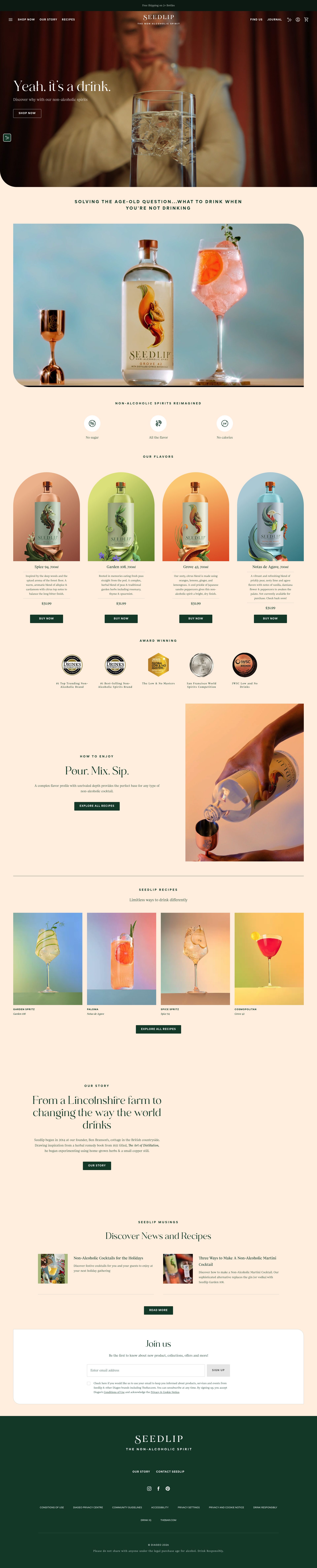
Seedlip pioneered the premium non-alcoholic spirits category and their Shopify store reflects the considered positioning of the brand at every touchpoint. The product pages treat their distilled non-alcoholic spirits with the same editorial weight you would give a premium gin: named botanicals, serve suggestions, and a clear flavour profile descriptor that gives first-time buyers enough to make a confident choice without overwhelming them.
The navigation is structured by occasion rather than by product variant, which is the correct call for a brand where the use case (a sophisticated soft drink at a dinner party or dry January) matters more than the SKU. Their gifting section is well-developed with curated bundles, which lifts average order value without requiring any active upsell logic on the merchant's part.
Seedlip also handles the new-to-category education problem well. A customer arriving from a Google search for "non-alcoholic spirits" is likely unfamiliar with the product format. The store addresses this with recipe content and serve guides embedded alongside product pages rather than siloed in a separate blog, which means the educational content is visible at the point of purchase decision rather than only to customers who actively browse.
2. Belazu Ingredient Co
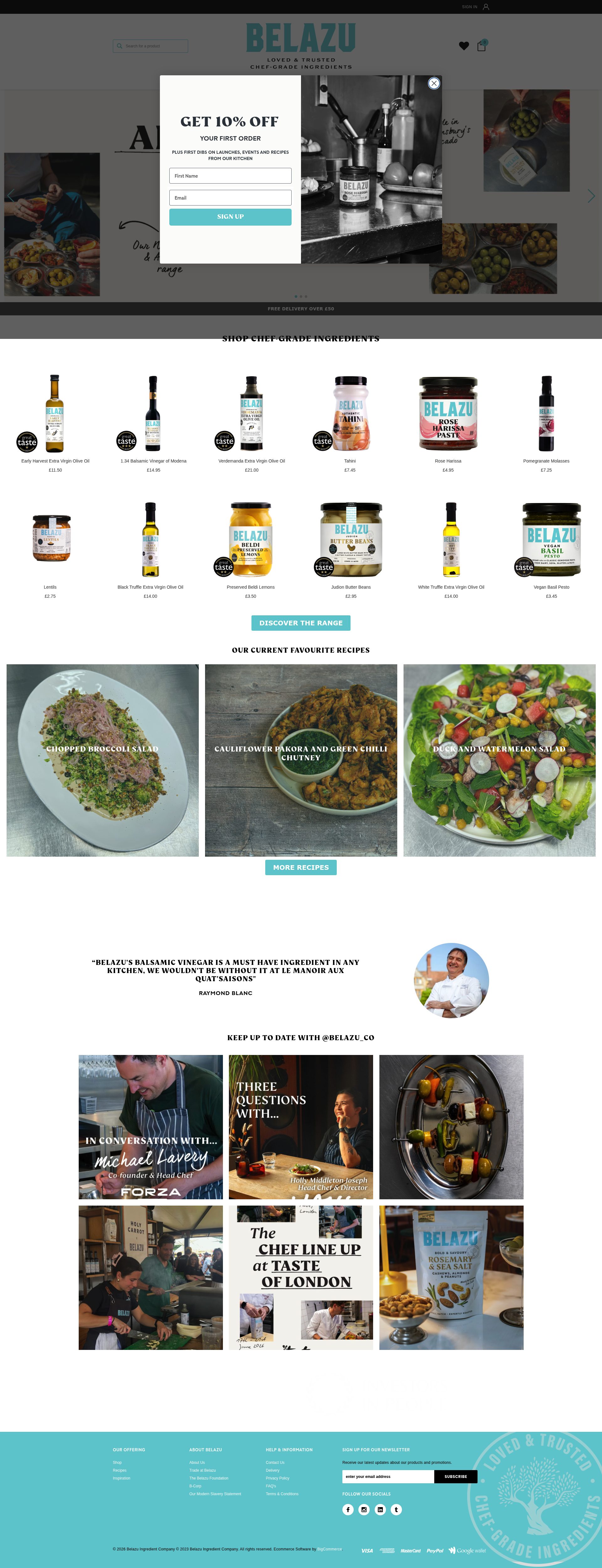
Belazu supplies premium Middle Eastern and Mediterranean ingredients to professional kitchens across the UK, but their Shopify consumer store takes that wholesale credibility and uses it as a trust signal for retail buyers. The "as used by restaurant kitchens" positioning justifies the price premium on their rose harissa, preserved lemons, and single-origin olive oils without requiring a lengthy brand story on every product page.
Their ingredient-led recipe content is integrated directly into product pages as a secondary content block. A customer looking at the pomegranate molasses can immediately see three dishes it works in, which reduces the "but what would I actually use this for?" objection that kills speciality ingredient sales. This is a straightforward Shopify approach — metafield-powered related content — but Belazu execute it more consistently than most brands at their tier.
The B2B and retail paths are clearly separated in the navigation, which prevents the friction of a food-service buyer landing on a consumer product page with retail pricing and vice versa. For a brand operating across both segments, clean separation of those journeys is a meaningful conversion improvement.
3. Sauce Shop
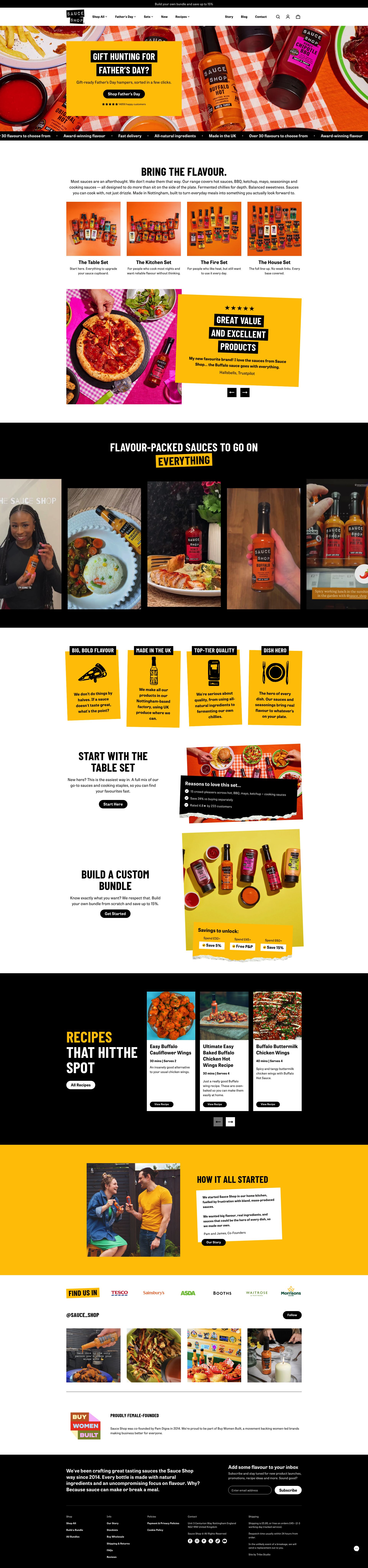
Sauce Shop started as a farmers' market brand in Nottingham and their Shopify store has scaled that origin story into a genuine DTC brand proposition. The product range is extensive — over 30 sauces — and the navigation handles that depth with a flavour-intensity filter that lets customers find what they want without scrolling through a full catalogue grid.
Their subscription model is one of the better-implemented examples in the condiment category. Rather than a generic subscribe-and-save option bolted onto individual product pages, Sauce Shop offers a curated monthly Hot Sauce Club with a dedicated landing page that explains the value proposition clearly: exclusive sauces, free delivery, cancel anytime. The subscriber count is displayed as social proof on that page, which adds credibility to the commitment ask.
The bundle builder is also worth studying. Customers can create their own mixed packs from the full range with dynamic pricing shown as the quantity increases. For a condiment brand where the product cost is relatively low and the main barrier is "I don't know which ones I'd like," giving customers control over composition reduces the risk of a bad-fit first order and increases the likelihood of a repeat purchase from a customer who knows exactly what they have tried.
4. Biona Organic
Biona Organic runs one of the more logistically complex food Shopify operations in the UK: a broad range of certified organic products across grocery, snacks, spreads, and canned goods sold through their own DTC store alongside wholesale. Their Shopify store handles this range with clean category architecture and filter logic that lets customers shop by dietary requirement (gluten-free, vegan, no added sugar) across the full catalogue simultaneously.
The product pages are structured around certifications first: Soil Association organic certification, Vegan Society trademark, and Rainforest Alliance sourcing are all displayed at the product level rather than only on an about page. For a buyer making a values-based purchase decision, seeing the certification at the product rather than requiring a trust journey elsewhere is a friction-reduction decision that matters.
Their subscription offer for core staples (coconut oil, tinned tomatoes, pasta) is positioned alongside the one-off purchase option with the saving quantified in pound terms rather than percentage, which converts better for a customer who is price-conscious about regular grocery spend.
5. Minor Figures
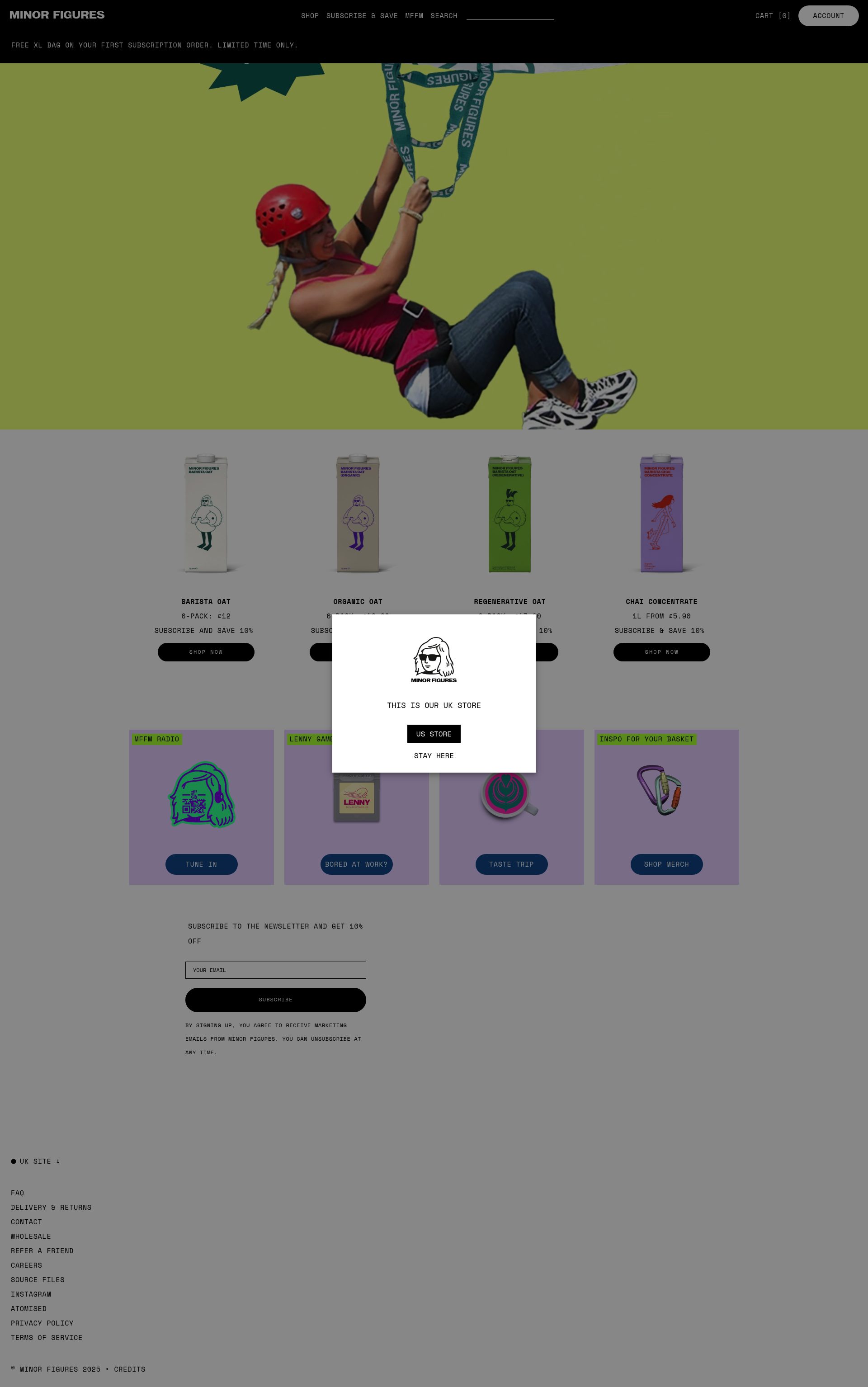
Minor Figures make oat milk specifically engineered for coffee use, and their Shopify store is one of the cleanest examples of product-first DTC in the food and drink space. The visual identity is distinctive — bold illustration, high-contrast colour blocks — and it carries through from the homepage hero to the packaging shown on product pages to the tote bags in the accessories section. Brand consistency at that level reduces the cognitive load of the buying decision because the customer builds visual trust incrementally rather than being confronted with a generic product page.
The product page for their barista oat milk leads with the coffee context: how to froth it, which machines it works with, why the formulation is different from standard oat milk. That specificity targets the customer (coffee drinkers, cafe owners) and excludes the wrong one (someone buying generic plant milk for cereal), which improves conversion quality and reduces returns.
Minor Figures also use their trade page well. Cafe buyers can buy wholesale directly through the Shopify store with quantity pricing and a separate checkout flow, which means their DTC and B2B revenue runs through a single platform with unified inventory management.
6. Pip & Nut

Pip & Nut built a nut butter brand that holds its own against supermarket own-label on the physical shelf, and their Shopify store justifies the premium price point in a way a supermarket shelf never could. The product pages are built around flavour discovery: each butter has a tasting note, a suggested pairing (the almond butter with banana on toast, the coconut almond butter in smoothies), and a "what makes ours different" copy block that names the specific sourcing and process decisions behind the formulation.
The subscription mechanics are straightforward and conversion-optimised. The subscribe-and-save option on each product page defaults to the subscription tab, which shifts the default buying behaviour toward recurring orders without requiring an explicit upsell. The saving is shown as a monthly and annual figure, which makes the value case for commitment legible at different time horizons.
Their limited-edition seasonal launches are handled as drops with email capture before launch, which builds the subscriber list with buyers who are already in a purchasing mindset rather than general-interest signups. That list segmentation has a direct impact on the conversion rate of launch emails.
7. Willy's Apple Cider Vinegar
Willy's built their brand around a single hero ingredient — raw, unpasteurised apple cider vinegar with the "mother" — and their Shopify store is structured to maximise the health-positioned buyer journey. Every product page opens with the claimed benefit before describing the product, which matches the search intent of a customer who has already decided they want the health outcome and is choosing which product delivers it.
The education content is embedded throughout the store rather than relegated to a blog. Recipe integrations, dosage guides, and a "how to take it" section appear on product pages alongside customer reviews that include condition-specific language. For a functional food product where the purchase decision is driven by a health rationale, this content placement removes the objection at the exact point it is most likely to arise.
Their subscription retention mechanics are above average for the category. Subscribers get access to a members' area with content not available to one-off buyers, which creates a tangible reason to maintain the subscription beyond the product discount alone.
8. Ghia

Ghia is a US-based non-alcoholic aperitif brand whose Shopify store is one of the more design-forward examples in the food and drink space globally. The homepage functions as a brand magazine: lifestyle imagery, short editorial copy, and product positioned within a social context (the aperitivo hour, the summer gathering) rather than as a standalone item. For a relatively unfamiliar product category, this contextualisation is the right ecommerce decision.
Their product pages are minimal by design. The ingredient list is prominent and specific — gentian, elderflower, yuzu — which speaks to the customer who is already buying into functional and botanical ingredients across other categories. The serve suggestion (two fingers over ice with soda) is shown visually on the PDP rather than in a separate recipe section, which means every product page viewer sees the usage context without having to look for it.
Ghia's limited-edition can collaborations are sold as drops through the Shopify store with a countdown mechanic and early-access emails to subscribers. That approach drives list growth and purchase urgency simultaneously, which is an efficient use of a single campaign.
9. Primal Kitchen
Primal Kitchen is a US-based clean-label condiment and dressing brand whose Shopify store handles a wide SKU range with unusually clear navigation architecture. Their "Shop by Diet" filter lets customers shop simultaneously by keto, paleo, Whole30-approved, and dairy-free — four overlapping dietary frameworks that their core customer base navigates daily. Rather than forcing customers to browse a full catalogue, the filter surfaces only the products that meet their specific criteria.
The product pages lead with certifications and then move into ingredients and macros, which is the correct hierarchy for a customer buying on the basis of a specific dietary protocol. Nutritional information is displayed in a custom-styled breakdown rather than a generic nutrition label image, which makes it scannable at mobile scale.
Their bundle offers are structured around dietary goals (a keto starter kit, a Whole30 pantry bundle) rather than arbitrary volume discounts, which means the bundle creates a context that justifies the purchase rather than just a price incentive. Contextual bundling converts better than discount-only bundling, particularly for a buyer who is building out a new dietary approach and wants curated guidance on where to start.
10. Squirrel Sisters
Squirrel Sisters make raw, plant-based snack bars and their Shopify store is a good example of a small food brand using Shopify's native features to compete at a level above their SKU count. The product range is narrow — a dozen or so bar variants — but the store extracts maximum value from that range through variety pack builders, subscription options, and a loyalty programme that tracks spend across both product and subscription purchases.
Their wholesale enquiry path is handled directly through the Shopify store with a trade account application form rather than a generic contact email, which gives wholesale buyers a structured path and gives Squirrel Sisters a consistent data capture for new trade accounts. For a snack brand at their stage, wholesale revenue can equal or exceed DTC, and having that path properly built into the store architecture rather than handled ad hoc reduces the friction for both parties.
The brand copy throughout the store is consistent and specific: the founding story names the sisters, the ingredients are named and sourced, and the "why we made this" copy on each product is written to the specific audience segment (gym-goers, busy parents, school-run snackers) rather than generic wellness language that applies to everyone and convinces no one.
Comparison Table
| Brand | Niche Focus | Price Point | Shopify Standout |
|---|---|---|---|
| Seedlip | Non-alcoholic spirits | Premium | Occasion-led navigation, recipe content on PDPs |
| Belazu Ingredient Co | Speciality ingredients | Mid-premium | B2B/retail path separation, recipe metafields |
| Sauce Shop | Hot sauces and condiments | Mid-range | Bundle builder, dedicated subscription landing page |
| Biona Organic | Organic grocery | Mid-range | Certification-first PDPs, multi-filter catalogue |
| Minor Figures | Oat milk for coffee | Premium | Trade and DTC in one store, brand consistency |
| Pip & Nut | Nut butters | Mid-premium | Default-subscribe PDP tab, drop mechanic for launches |
| Willy's ACV | Functional vinegar | Mid-range | Benefit-first PDP structure, subscriber content area |
| Ghia | Non-alcoholic aperitif | Premium | Brand-magazine homepage, drop-based limited editions |
| Primal Kitchen | Clean-label condiments | Premium | Diet-framework filtering, contextual bundle building |
| Squirrel Sisters | Plant-based snack bars | Mid-range | Wholesale form in-store, variety pack builder |
What These Stores Get Right
- Subscription as the default, not the upsell. The stores converting best in food and drink have made subscription the primary offer on product pages rather than a secondary option beneath the one-off price. Defaulting to the subscription tab shifts behaviour without requiring a pushy pop-up.
- Certifications and credentials at the product level. Organic certification, dietary approvals, and sourcing claims need to appear on the product page, not only on an about page. Customers making a values-based purchase decision should not have to leave the PDP to verify the claim.
- B2B and DTC separated cleanly. Several of these brands run wholesale and retail from the same Shopify store. The ones that handle it well — Belazu, Minor Figures — have separate navigation paths and pricing logic for each segment rather than a single generic product grid that serves both badly.
- Bundle structure built around context, not just discount. Dietary goal bundles, occasion gift sets, and curated starter kits convert better than arbitrary multi-buy offers because they tell the customer who the bundle is for and what it solves.
- Education embedded at the point of decision. Recipe integrations, serve suggestions, usage guides, and dosage information all belong on the product page. If a customer has to leave the PDP to find out how to use the product, a meaningful proportion will not come back.
If you run a food or drink brand and want to build a Shopify store that handles DTC, subscription, and wholesale properly, SuttonCommerce can help: see our Shopify design service or get in touch.
Frequently asked questions
Which food and drink brands use Shopify?
Many of the UK and US's best-known food and drink DTC brands run on Shopify or Shopify Plus, including Seedlip, Sauce Shop, Minor Figures, Pip & Nut, Willy's ACV, Biona Organic, and Squirrel Sisters. Shopify Plus is the typical choice once a brand is running significant subscription or wholesale volume alongside DTC.
What makes a food and drink Shopify store convert well?
The highest-converting food and drink stores solve the same core problem: customers cannot taste or smell before buying. Stores that put education — serve guides, recipe integrations, dosage information, certifications — directly on the product page rather than in a separate blog convert measurably better than those that don't. Subscription defaulting and contextual bundle building are the two biggest AOV levers.
How do food and drink brands handle subscriptions on Shopify?
The best implementations treat subscription as the primary offer rather than a secondary upsell. Sauce Shop uses a dedicated landing page for their Hot Sauce Club with subscriber counts as social proof. Pip & Nut defaults the PDP to the subscription tab. Willy's ACV adds subscriber-only content as a retention mechanic beyond the price saving. All three outperform the generic subscribe-and-save toggle.
Can food and drink brands run DTC and wholesale from the same Shopify store?
Yes, and several on this list do — Minor Figures and Belazu both handle trade and retail from a single Shopify store. The key is clean separation in navigation and pricing logic so that a cafe buyer and a retail customer never land on the same product page with mismatched pricing. Shopify B2B (available on Shopify Plus) is the standard approach for brands doing meaningful wholesale volume.
What Shopify features matter most for speciality food brands?
Diet and attribute filtering matters more in food than almost any other category — customers shopping by keto, vegan, or allergen-free need to be able to surface compliant products across the full catalogue simultaneously, not browse and check individually. Beyond that: subscription apps (Recharge or Skio), metafield-powered recipe content on PDPs, and a dedicated wholesale path via Shopify B2B are the three features that separate a functional food store from a great one.