
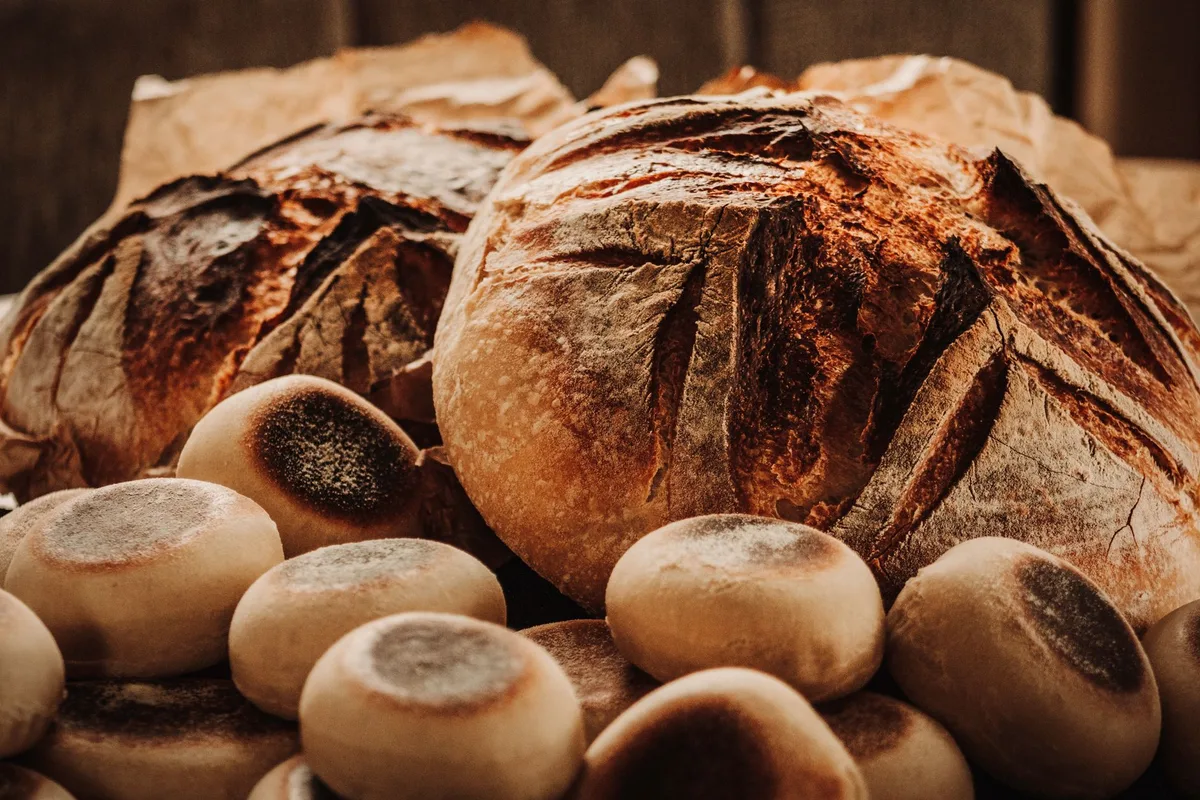
Quick summary
Bread Ahead sets the benchmark for bakery ecommerce, combining subscription mechanics with workshop upsells in a single clean store. Cutter & Squidge handles celebration cake ordering better than almost anyone, with personalisation, lead times, and delivery date selection all resolved on the product page. Proof Bread shows how a subscription-first homepage can work for a capacity-constrained artisan bakery — membership before product grid is the right call when you sell out every week. Ottolenghi's Shopify Plus store is the most complex of the bunch, managing restaurant bookings, cookbook sales, pantry ingredients, and cake ordering without the navigation falling apart.
Bakery is a genuinely tricky ecommerce category. The product is perishable, the delivery window is narrow, and customers buying artisan bread or celebration cakes need a level of trust that most food categories can bypass. The stores that work in this space have solved the logistics communication problem at the product page level, built subscription mechanics that turn one-off buyers into regulars, and used brand storytelling to justify premium price points in a market full of supermarket alternatives. Here are ten that do it well.
1. Bread Ahead
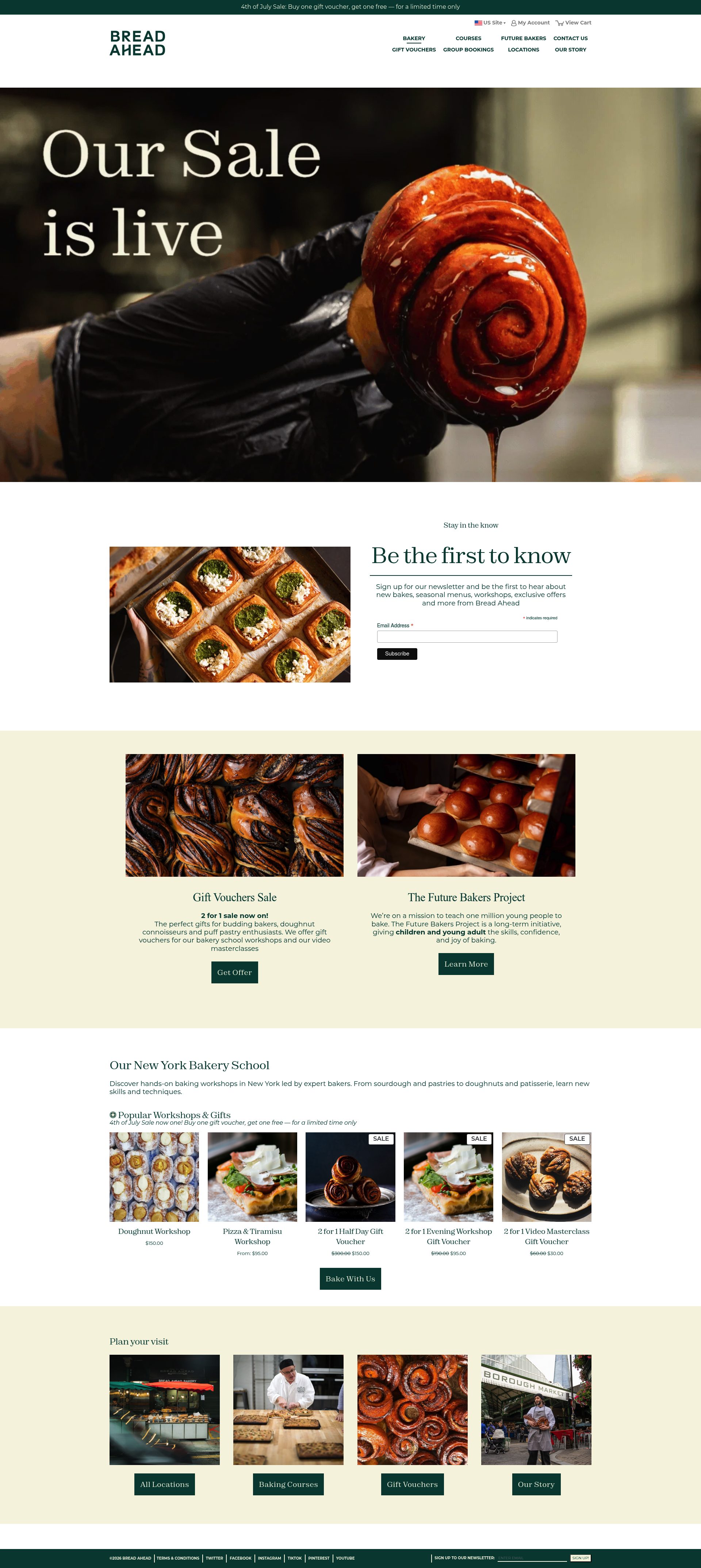
Bread Ahead's Shopify store is a strong example of a bakery that has built ecommerce around its core identity: the Borough Market original that teaches you how to bake. Their online shop surfaces classes and workshops alongside product, which means every visit can convert in two directions. The product pages for their bread and pastry subscriptions are clear about delivery frequency, window, and cutoff, which removes the three biggest friction points for perishable subscriptions in a single scroll.
The gifting range is merchandised separately with occasion-based navigation: birthdays, celebrations, corporate. That structure means a visitor arriving via a gift-search query lands directly in a curated context rather than a general product grid. The photography is natural and tactile, with close-up crumb shots that make the quality legible on screen.
2. Rye by the Water
Rye by the Water is a smaller independent bakery with a Shopify store that punches above its size. Their subscription model is the central mechanic: weekly bread deliveries, clearly priced, with a simple frequency selector at the product level. The store leans into provenance throughout, naming the grain suppliers and milling partners, which gives the premium price point a specific justification rather than vague artisan positioning.
The checkout experience is streamlined for repeat buyers, with account-based order management surfaced in the navigation rather than buried in the footer. That is a small but meaningful decision: subscription customers need easy access to pause, change, or manage their delivery, and putting it front-and-centre reduces churn from frustrated subscribers who cannot find the right setting.
3. Ottolenghi
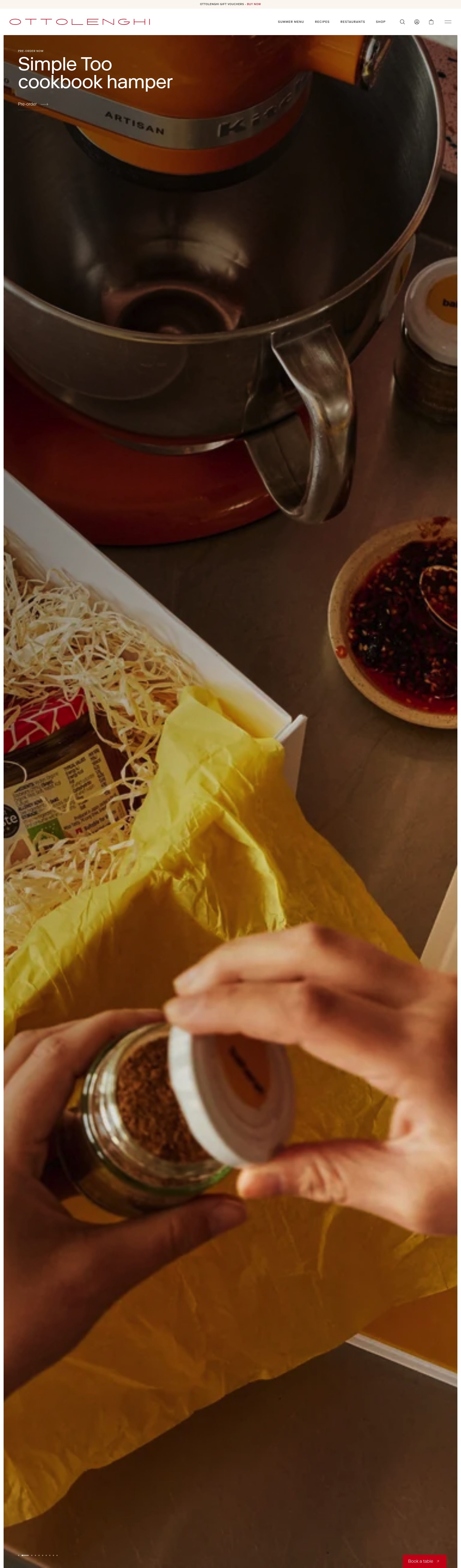
Ottolenghi's Shopify Plus store serves multiple purchase intents simultaneously: restaurant booking, cookbook purchase, pantry ingredient shopping, and celebration cake ordering. The navigation manages that complexity without confusion, using clear category separation and editorial photography that communicates the brand's aesthetic before any product is loaded.
Their celebration cake ordering flow is worth studying. Rather than a generic product page, the process is structured as a guided configuration: occasion, tier, flavour, message. Each step is explained in plain language with lead time requirements stated upfront, which removes the uncertainty that kills high-ticket food orders. The store treats the buying journey as a service, not just a transaction.
4. GAIL's Bakery
GAIL's Shopify store is notable for how it handles the gap between a large cafe chain and a genuine DTC bakery proposition. Their online offer is focused: bread subscriptions and gifting, not an attempt to replicate the in-store experience. That constraint is a good ecommerce decision. The subscription pages are structured around delivery area first, which immediately filters out non-convertible visitors and reduces post-purchase complaints about delivery.
The product photography uses natural light and linen textures to maintain the bakery aesthetic at scale, and the recipe content published alongside products creates an SEO and engagement layer that justifies return visits beyond the subscription cycle. Their cross-sell logic surfaces complementary items (cultured butter with sourdough, coffee with pastry boxes) in a way that lifts basket size without feeling aggressive.
5. Luminary Bakery
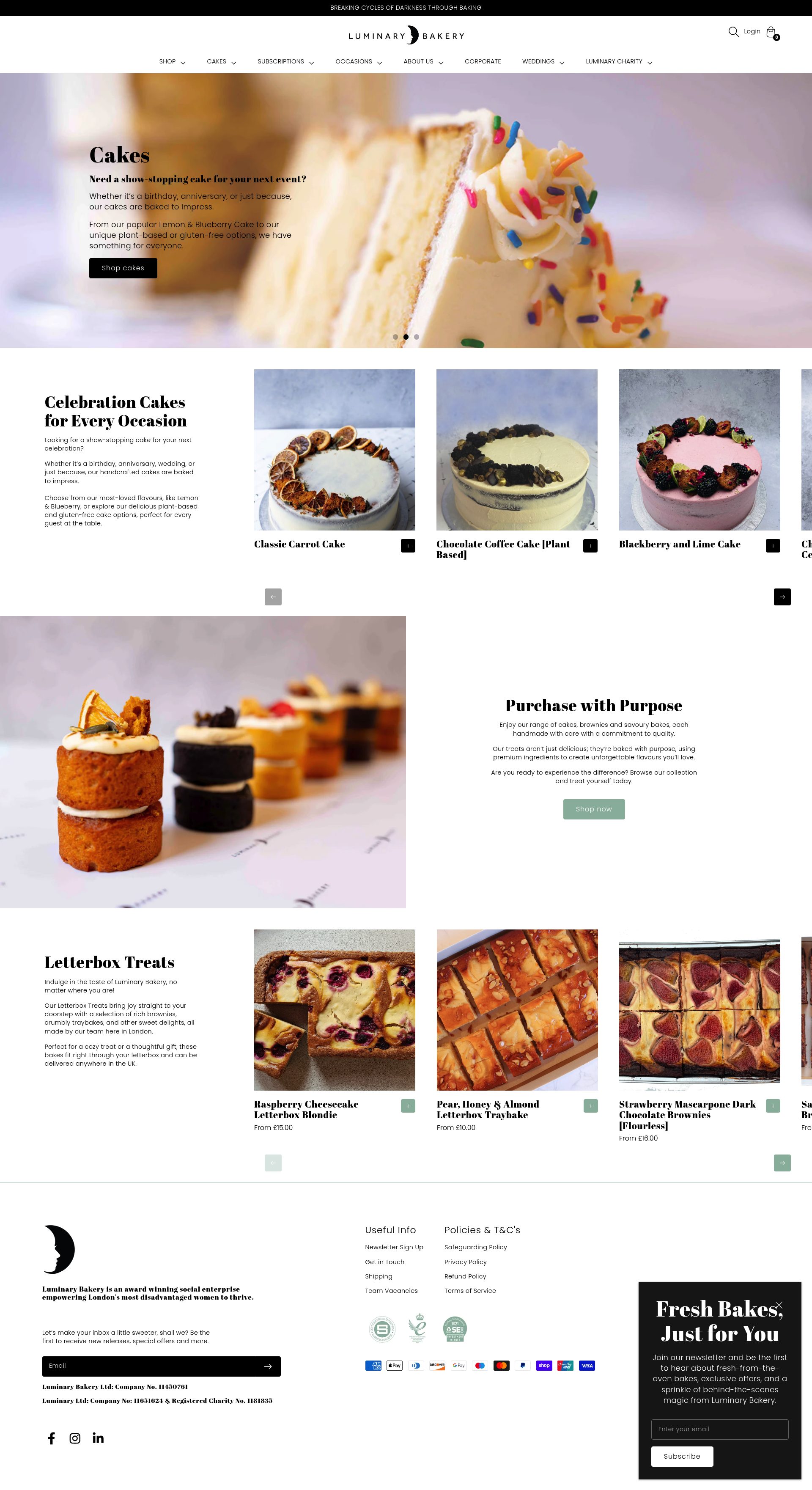
Luminary Bakery's store is an example of mission-led ecommerce done without sentimentality. Their social mission (providing employment and training for women who have faced significant barriers) is woven into product pages as genuine copy, not a footer footnote. Customers buying a celebration cake understand what they are contributing to, which strengthens both the brand relationship and the price justification.
Their corporate gifting tier is well-developed with volume pricing, branded packaging notes, and a straightforward enquiry path that keeps high-value orders on the site rather than pushing prospects to email. The product range is deliberately focused: the store does not try to compete with a full bakery catalogue, instead concentrating on celebration cakes, gift boxes, and event catering where the premium and the mission story both carry weight.
6. Cutter & Squidge

Cutter & Squidge's Shopify store is built around celebration and gifting, and the product pages reflect that intent precisely. Every cake PDP includes a personalisation option, a lead time notice, and a delivery date selector, which are the three fields a customer needs to resolve before they can commit to a celebration cake purchase. Handling all three on the product page rather than at checkout removes a significant drop-off point.
The "biskie" as a branded format is used as an entry-level product that introduces new customers to the brand at a low spend threshold. That strategy is deliberate: once a customer has received a Cutter & Squidge gift box, the brand recall for future celebration purchases is strong. The loyalty programme is surfaced early in the customer journey rather than only at post-purchase, which changes the acquisition cost calculation for that first order.
7. Baked by Melissa
Baked by Melissa is a US-based Shopify Plus store that demonstrates what a cupcake brand can do when the product format is also the core conversion mechanic. Their bite-sized cupcakes are sold in configurable packs, and the build-your-own-box tool on the product page turns what is usually a passive selection into an active engagement. Customers who spend more time customising convert at a higher rate and return more frequently.
The store's subscription mechanics are worth noting: they offer a cupcake-of-the-month club with a clear value proposition (exclusive flavours, early access, fixed price). The subscription landing page quantifies the saving versus one-off purchase, which is the correct way to sell a recurring food product online. Their gifting and corporate pages are structured identically to the main purchase flow, which reduces cognitive friction for buyers in an unfamiliar purchase mode.
8. Bang Bang Bakery
Bang Bang Bakery built a significant following on TikTok before their Shopify store caught up with demand. Their store now reflects that social-first origin: product launches are treated as drops, with countdown timers and limited availability signals used on product pages to create purchase urgency for their croissant-hybrid pastries.
The product page structure is minimal by deliberate design: a large hero image, a short flavour description, and a clear add-to-cart button. For impulse-driven purchases from social traffic, this is the right call. Shoppers arriving from a viral TikTok are in a motivated state; adding friction with specification tables or detailed ingredient lists would reduce conversion. The store also handles delivery communication well: specific dispatch days and a postcode checker are accessible without leaving the PDP.
9. Peyton and Byrne
Peyton and Byrne's Shopify store represents the museum-cafe-to-DTC transition done properly. Their product range maps cleanly onto occasion gifting: afternoon tea hampers, cake subscriptions, biscuit tins presented as gifts. The store's visual identity draws on their institutional settings (Natural History Museum, National Gallery) without making it feel like a corporate merchandise operation.
The hamper and afternoon tea category pages use editorial photography that communicates the occasion context rather than just the product contents. A customer buying an afternoon tea delivery is purchasing an experience, and the store photography reflects that. Their corporate gifting pathway is clearly separated and includes minimum order guidance and a dedicated contact route for custom requirements.
10. Proof Bread
Proof Bread is a Phoenix-based artisan bakery whose Shopify store is one of the more instructive examples of community-led ecommerce in the food space. Their subscription model accounts for the majority of their revenue, and the store is structured to drive subscription sign-ups before one-off purchases. The homepage leads with membership rather than a product grid, which is an unconventional but conversion-correct decision for a bakery that operates within a fixed weekly production capacity.
The store communicates scarcity honestly: bread is made to order, quantities are limited, and subscribers get priority access. Those constraints are presented as quality signals rather than inconveniences. The FAQ section addresses delivery concerns, subscription mechanics, and product provenance in depth, which reduces support overhead and builds pre-purchase trust for customers considering a recurring commitment.
If you run a bakery or artisan food brand and want to build a Shopify store that handles subscriptions, gifting, and perishable logistics properly, SuttonCommerce can help: see our Shopify design service or get in touch.
Frequently asked questions
Do bakeries actually sell well on Shopify?
Yes, but the category has specific requirements that most generic Shopify setups do not handle out of the box. Perishable products need clear delivery windows, dispatch day communication, and postcode eligibility checks at the product level rather than buried in the checkout. Stores that solve these three things early see significantly lower post-purchase complaint rates and higher repeat purchase rates.
What Shopify apps do bakery stores typically use for subscriptions?
Recharge and Skio are the most common subscription apps for food and bakery stores on Shopify, with Recharge particularly prevalent on Shopify Plus stores handling high subscription volumes. Both integrate cleanly with Shopify's checkout and allow frequency selection at the product page level, which is where the conversion decision happens for recurring bread and pastry orders.
How do bakery Shopify stores handle delivery area restrictions?
The best bakery stores handle delivery eligibility at the product page or early in the checkout, not after the customer has entered card details. GAIL's structure their subscription pages around delivery area first, which filters out non-convertible visitors immediately and reduces the support overhead from customers outside the delivery zone who have already placed an order.
Is Shopify Plus worth it for a bakery with high order volumes?
For bakeries processing more than around 500 orders per month or running active subscription programmes, Shopify Plus pays for itself through the lower transaction fee structure, checkout extensibility, and multi-channel management tools. Ottolenghi and Baked by Melissa are both on Shopify Plus and use the platform's flow automation to manage the complexity of multi-category ordering and subscription fulfilment.
How do bakery stores justify premium pricing online?
The stores that convert at premium price points do three things consistently: they name their suppliers and sourcing partners (Rye by the Water names grain mills; Bread Ahead cites Borough Market provenance), they use tactile close-up photography that communicates quality without the customer being able to physically handle the product, and they tell a specific brand story rather than generic artisan positioning. Vague premium does not convert. Specific provenance does.