
Quick summary
Clive Coffee is the standout pick for multi-brand high-ticket espresso retail, with a machine comparison tool and pre-sales consultation baked into every product page. La Marzocco converts the most demanding buyers by leading with commercial heritage and offering a rental model alongside direct purchase. Sage Appliances handles a broad range better than almost anyone, using a product finder that routes buyers by skill and budget before showing a single recommendation. Baratza is the model for selling technical accessories, with a grinder selector tool, refurbished programme, and free repair guides that turn one-time buyers into long-term customers.
Espresso machines are one of the most demanding product categories in ecommerce: high ticket prices, long research cycles, and buyers who know exactly what they want before they hit your site. The stores that convert well in this niche earn trust before they ask for money, make complex technical decisions feel manageable, and build post-purchase ecosystems that drive accessories, consumables, and repeat business. Here are ten stores doing that well.
1. Sage Appliances
Sage runs a well-structured Shopify Plus store that handles the complexity of a broad machine range without overwhelming first-time visitors. The homepage uses a product finder mechanic, routing buyers by skill level and budget before presenting a curated set of recommendations. That single decision removes the paralysis that kills conversion in high-SKU appliance stores.
Product pages are thorough without being dense. Each machine includes a structured comparison with the model above and below it in the range, which encourages upsell naturally rather than through aggressive prompting. The "barista skills" content section is integrated directly into the store rather than siloed on a separate blog, which shortens the path between research and purchase.
Warranty and service information is front-loaded, not buried in the footer. For a £300-plus purchase, the visible support promise does real conversion work.
2. Rocket Espresso
Rocket Espresso sells Italian-made prosumer machines at price points between £800 and £3,500. Their Shopify store is built for a buyer who has already decided to invest seriously and is comparing Rocket against one or two other premium brands. The product pages reflect that: they go deep on engineering detail, materials, and build quality rather than trying to justify the category spend.
The store uses editorial photography that shows machines in lived-in home environments rather than studio setups, which helps buyers visualise the product in their own kitchen. That is a consistent conversion principle at this price point: the machine has to feel at home before the buyer feels confident.
Accessories and spare parts are integrated into the main navigation rather than treated as an afterthought. Grinders, portafilters, and cleaning products all have dedicated sections with machine-specific compatibility filters, turning what could be a one-time hardware sale into an ongoing accessories relationship.
3. La Marzocco
La Marzocco occupies a rare position in espresso: the brand is genuinely aspirational across both commercial and home markets. Their Shopify store uses that dual authority deliberately, leading with the commercial heritage before transitioning into the home range. For a buyer spending £3,000-plus on a home machine, knowing the same brand supplies the cafes they already trust removes a significant objection.
The store's product pages are content-heavy in the right way. Each machine page includes video of the internal engineering, not just lifestyle shots, which is the kind of specificity that converts technically-minded buyers who have done their homework. The Linea Mini page in particular is a case study in how to justify a premium price through specification and provenance rather than discount.
La Marzocco Home also runs a rental model, offered through the store alongside the direct purchase option. Presenting both on the same product page captures buyers who want the machine but cannot justify the upfront cost, widening the addressable audience without discounting.
4. Lelit
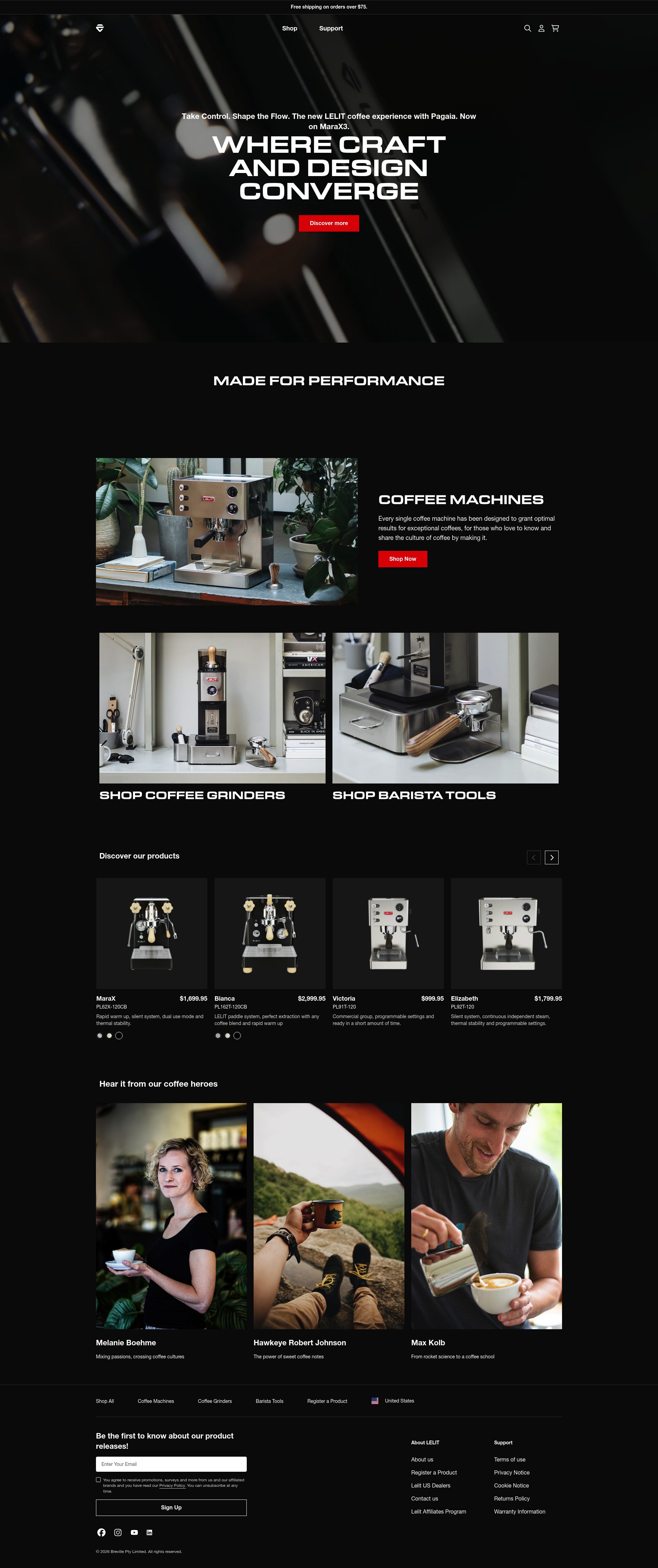
Lelit's Shopify store serves a technically-focused buyer who sits between entry-level prosumer and full commercial specification. The navigation is organised by machine type (single boiler, dual boiler, heat exchanger) rather than by price or skill level, which signals to the buyer that Lelit assumes they understand what they are looking for. That is the right call for this audience.
Product pages include detailed flow charts of the internal hydraulics for each machine, which is unusual in ecommerce and deeply effective for a buyer comparing boiler configurations. The store does not oversimplify; it respects the buyer's knowledge level, which builds trust faster than a generic "easy to use" headline.
The grinder range is cross-sold directly on machine pages using pairing logic: each machine lists two or three compatible grinders at different price points, with a brief explanation of why the pairing works. This drives basket value without feeling like an upsell, because it is framed as genuine technical advice.
5. Nespresso
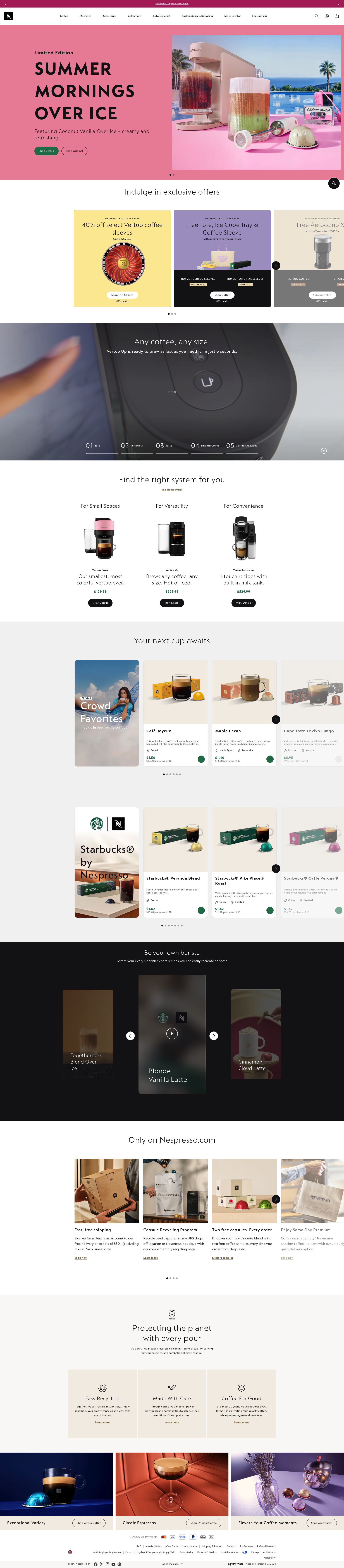
Nespresso runs a large-scale Shopify Plus store with a product range that spans hardware, capsules, and accessories across multiple geographies. The machine range entry point is deliberately simple: three machines at entry, mid, and premium tier, with a guided comparison that focuses on daily coffee volume and preferred drink formats rather than technical specification.
The subscription mechanic for capsules is the commercial engine of the store, and Nespresso has invested in making it friction-free. The capsule selector is integrated directly into the post-purchase flow, and repeat orders are set up through the account area with a single click. Capsule subscription retention is where the lifetime value is built, and the store architecture reflects that priority clearly.
The machine trade-in programme, which offers credit against a new machine purchase, is integrated into the product pages for older models. It drives upgrade cycles and removes the barrier of a high upfront outlay by partially offsetting it with existing equipment value.
6. ECM Manufacture
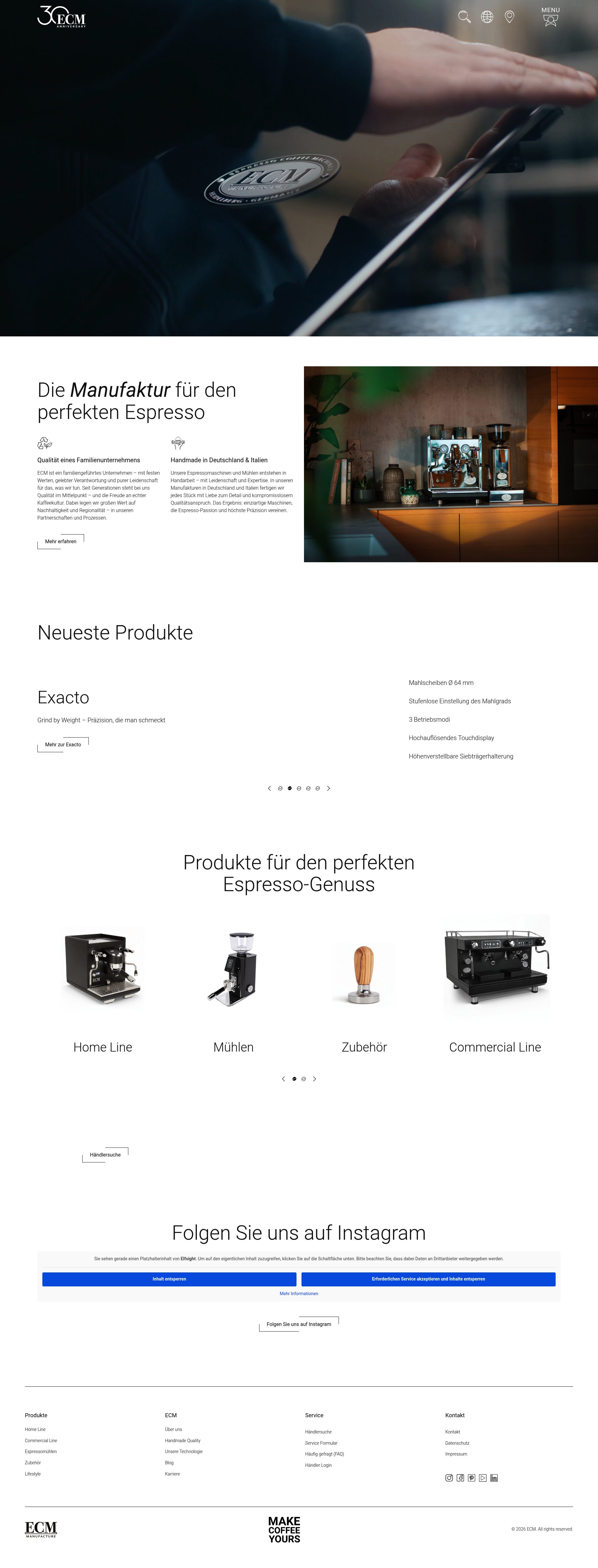
ECM is a German manufacturer selling handbuilt espresso machines at the upper end of the prosumer range. Their Shopify store is spare by design: limited copy, clean product photography, and a navigation structure that puts the machines front and centre without distraction. At this price point, the product needs to carry the page, and the store trusts it to do so.
What the ECM store does particularly well is the technical documentation layer. Every product page links directly to a detailed PDF specification sheet and a downloadable user manual, which is the kind of transparency that reassures buyers who are spending £1,500-plus and want to know exactly what they are buying. It also reduces post-purchase support requests.
The store's warranty section is specific rather than generic. It names the UK importer, lists the exact terms for home versus commercial use, and provides a direct contact for service. That level of detail builds purchase confidence in a way that a generic "2-year warranty" badge does not.
7. Jura
Jura operates a Shopify Plus store for its super-automatic bean-to-cup machine range, targeting buyers who want excellent espresso without manual technique. The store leads with the outcome rather than the process: you see finished drinks and lifestyle settings first, technical specification second. That is the correct call for a buyer who has opted out of the manual espresso journey.
Product pages use a "perfect for" framing that groups machines by household size and daily coffee volume rather than by internal specification. A buyer making two coffees a day and one entertaining guests on weekends gets routed to a different recommendation than a busy household of four. That personalisation layer reduces decision fatigue and increases confidence in the recommendation.
The Jura store also integrates a dedicated "Coffee Recipes" section that links directly back to machine-specific brewing programmes. A buyer reading a guide to flat whites who discovers their machine has a dedicated flat white programme is much more likely to complete a purchase than one navigating a generic recipe blog.
8. Baratza
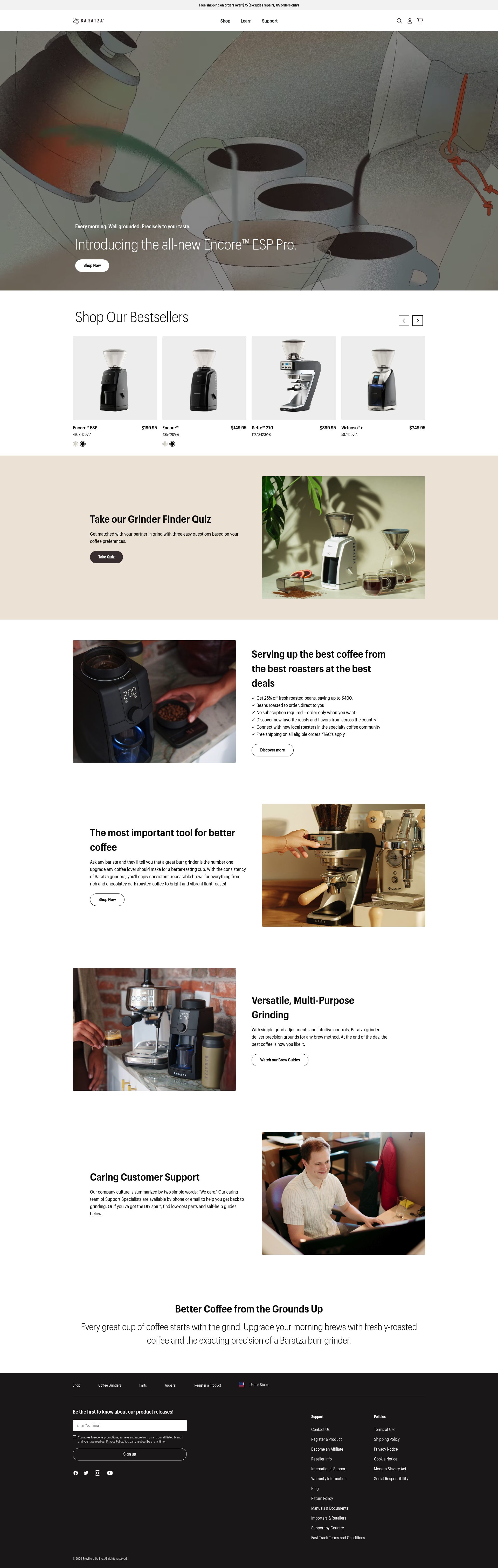
Baratza sells coffee grinders rather than espresso machines directly, but no espresso setup conversation is complete without a grinder, and Baratza's Shopify store is a strong model for how to sell technical hardware to an audience that ranges from curious beginner to serious enthusiast.
The store's grinder selector tool routes buyers through four questions covering budget, brew method, and upgrade path before presenting a recommendation. That interactive element reduces the cognitive load of choosing between thirteen grinders with overlapping price points. The recommendation page includes a side-by-side comparison with the next model up, which drives upsell more effectively than a standalone product page.
Baratza also has a well-executed refurbished programme integrated directly into the main store. Refurbished units are listed alongside new stock with clear condition grading, which opens the range to price-sensitive buyers without cannibalising full-price sales. The repair parts section, including a full parts catalogue with free repair guides, extends customer lifetime value and builds brand loyalty in a category where durability is a core purchase driver.
9. Onyx Coffee Lab

Onyx Coffee Lab is a US-based specialty roaster that expanded into equipment retail on its Shopify Plus store. The equipment section sits alongside the coffee range in a way that creates a coherent end-to-end proposition: buy the beans, buy the machine to make them properly. That bundle logic is built into the store's cross-sell architecture.
The equipment product pages are written from a barista's perspective rather than a retailer's. Copy focuses on how each machine performs with the specific coffee profiles Onyx sells, which is a genuinely differentiated approach. A buyer considering a Fellow Oden or a La Marzocco Linea Mini reads an assessment of how that machine handles light roasts at high extraction, not a generic spec sheet.
Onyx also uses detailed written guides to espresso dialling-in, water quality, and machine maintenance as SEO and conversion assets. Each guide is linked from relevant equipment pages, keeping the buyer engaged with the brand's expertise rather than navigating away to find the same information on YouTube.
10. Clive Coffee
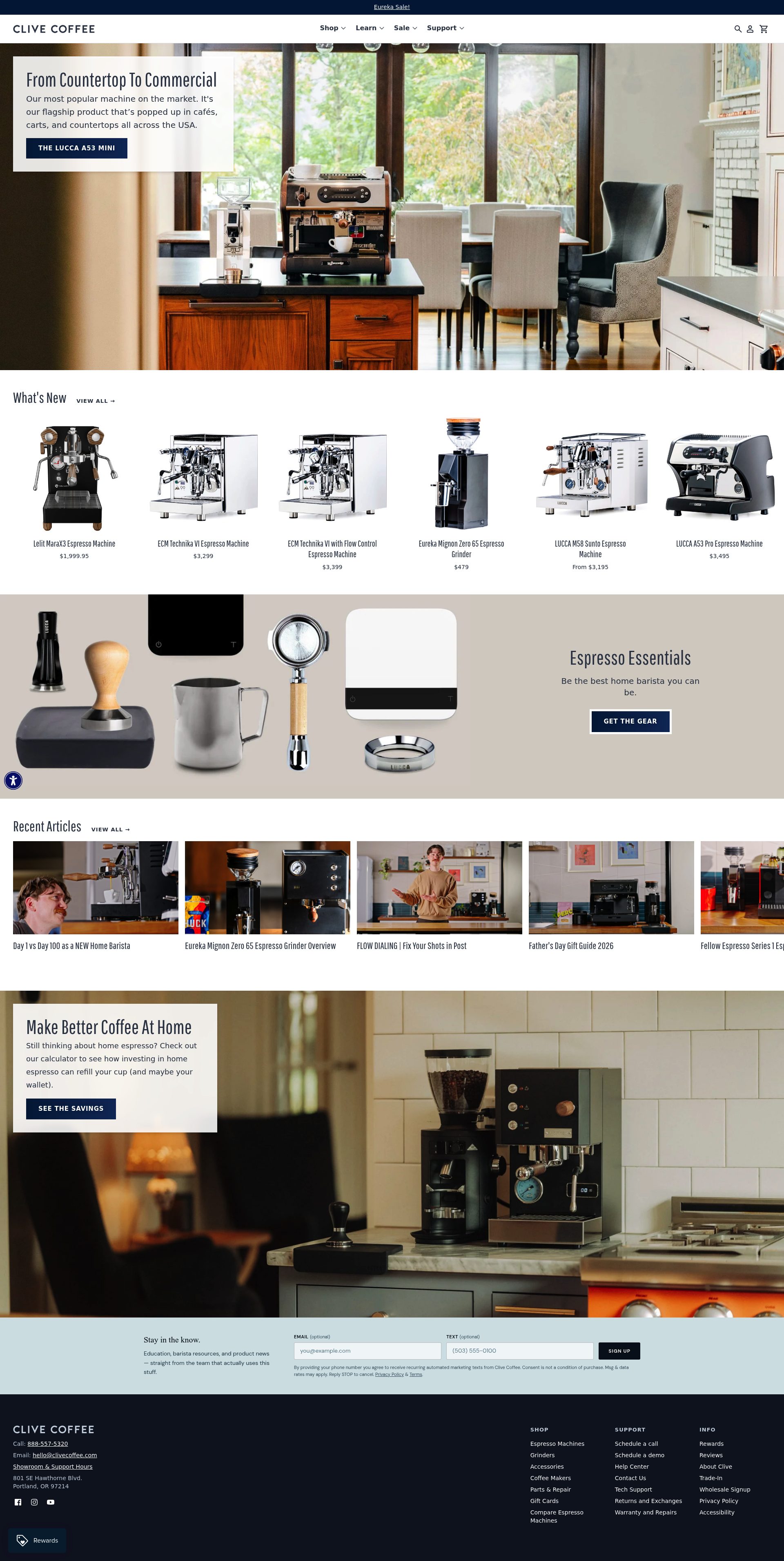
Clive Coffee is a Portland-based Shopify merchant that has built one of the most commercially sophisticated home espresso stores in the US market. The site sells machines from La Marzocco, Rocket, Jura, Breville, and ECM alongside grinders and accessories, and the store architecture is built to handle a consultative sales model rather than a self-serve browse-and-buy journey.
The machine comparison tool lets buyers select up to four machines across different brands and view a structured side-by-side table covering boiler type, pump system, programmability, and dimensions. That feature removes one of the primary barriers in high-ticket appliance ecommerce: the buyer's inability to make a direct comparison without leaving the site.
Clive's product pages include video reviews from their in-house team and a "Talk to a coffee expert" CTA embedded in the page rather than relegated to the support section. For a £1,500-plus purchase, the availability of a pre-sales conversation, positioned as guidance rather than sales pressure, is a strong conversion lever. The store treats customer education as a commercial function, not a cost centre.
If your appliance or specialist hardware brand is ready to improve product page conversion, upgrade the buyer journey, or build a higher-value accessories programme, our Shopify design service is built around exactly these commercial outcomes. Get in touch to discuss what your store needs.
Frequently asked questions
Which espresso machine Shopify stores are best for high-ticket buyers?
La Marzocco, Rocket Espresso, and Clive Coffee are the strongest for high-ticket buyers. All three lead with engineering credibility and trust signals rather than discounts, and each offers pre-sales support — either through a rental model, detailed technical documentation, or an in-page consultation CTA — which is essential for converting buyers at £1,500 and above.
How do the best espresso machine stores handle a wide product range without overwhelming buyers?
Sage Appliances uses a product finder that routes buyers by skill level and budget before presenting recommendations, removing the paralysis that kills conversion in high-SKU ranges. Jura takes a similar approach, grouping machines by household size and daily coffee volume rather than internal specification. Both avoid the most common mistake in appliance ecommerce: presenting every option to every buyer at once.
What makes Clive Coffee's Shopify store worth studying?
Clive Coffee runs a multi-brand store selling La Marzocco, Rocket, Jura, Breville, and ECM, and has built a machine comparison tool that lets buyers put four machines side by side across boiler type, pump system, and dimensions without leaving the site. They also embed a pre-sales consultation CTA directly in the product page, framed as guidance rather than a sales call, which is one of the most effective conversion levers for high-ticket appliance ecommerce.
Do espresso machine stores benefit from selling accessories and consumables alongside hardware?
Yes, and the best stores build this into the store architecture from the start. Rocket Espresso has accessories and spare parts integrated into the main navigation with machine-specific compatibility filters. Nespresso's entire commercial model is built around capsule subscriptions set up at checkout. Baratza goes furthest with a full parts catalogue and free repair guides that extend customer lifetime value well beyond the initial hardware sale.
How do specialty roasters like Onyx Coffee Lab sell espresso equipment effectively?
Onyx Coffee Lab's approach is to write equipment copy from a barista's perspective, assessing how each machine performs with their specific coffee profiles rather than reprinting generic spec sheets. This creates a genuine reason to buy equipment from a roaster rather than a dedicated hardware retailer, and the cross-sell logic between beans and machines is built into the store architecture. It is one of the most differentiated positioning strategies in specialty coffee ecommerce.