
Quick summary
Lakeland is the benchmark for UK homeware on Shopify: the three-year guarantee and review-rich product pages remove purchase hesitation better than almost any competitor. ProCook shows how to build a DTC cookware brand against category giants, using Which? accreditation and in-use photography to drive conversion. Sous Chef wins on content-led curation, with editorial collections that justify premium prices to serious home cooks. Emma Bridgewater leads on gifting and brand identity, with personalisation options and seasonal drops that keep customers returning year after year.
The homeware and kitchenware market is competitive online. Customers arrive with high expectations: they want clear product photography, easy navigation, trusted reviews, and a brand that feels credible before they hand over their card details. The stores below have each cracked at least one of those challenges exceptionally well, and most have cracked all of them.
1. Lakeland
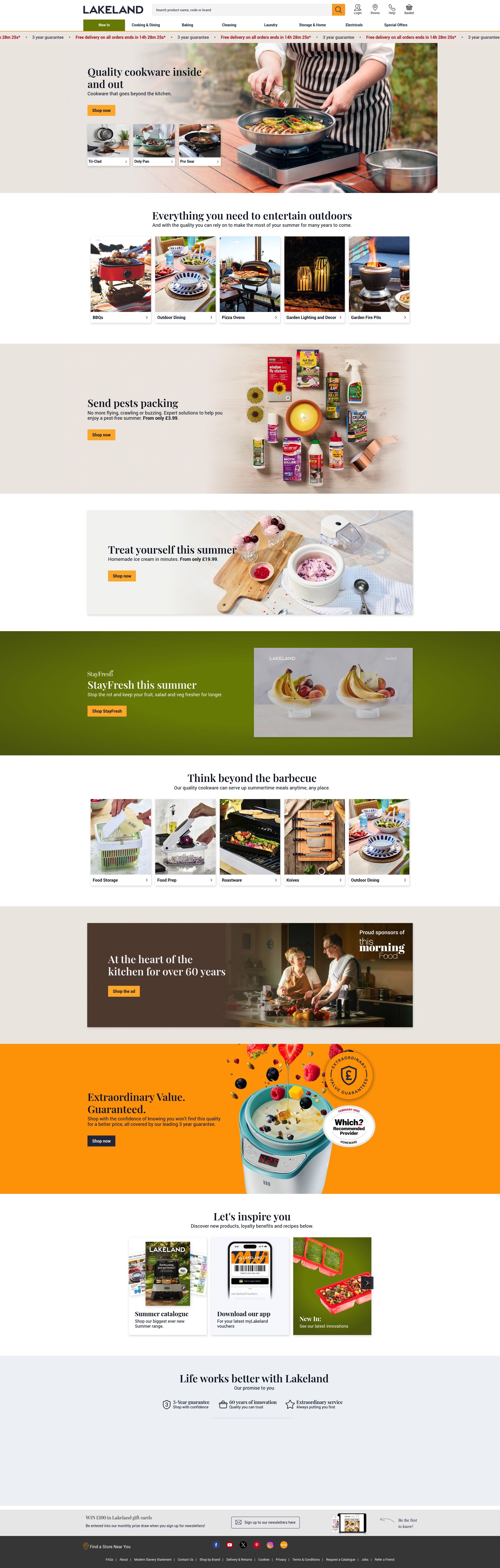
Lakeland has been selling kitchenware since 1964, and their site reflects decades of earned trust. Their product pages are packed with customer reviews, clear specification details, and prominent mentions of their three-year guarantee, a conversion lever that removes almost all purchase hesitation. The search and filter experience is among the best in the UK homeware category.
2. ProCook
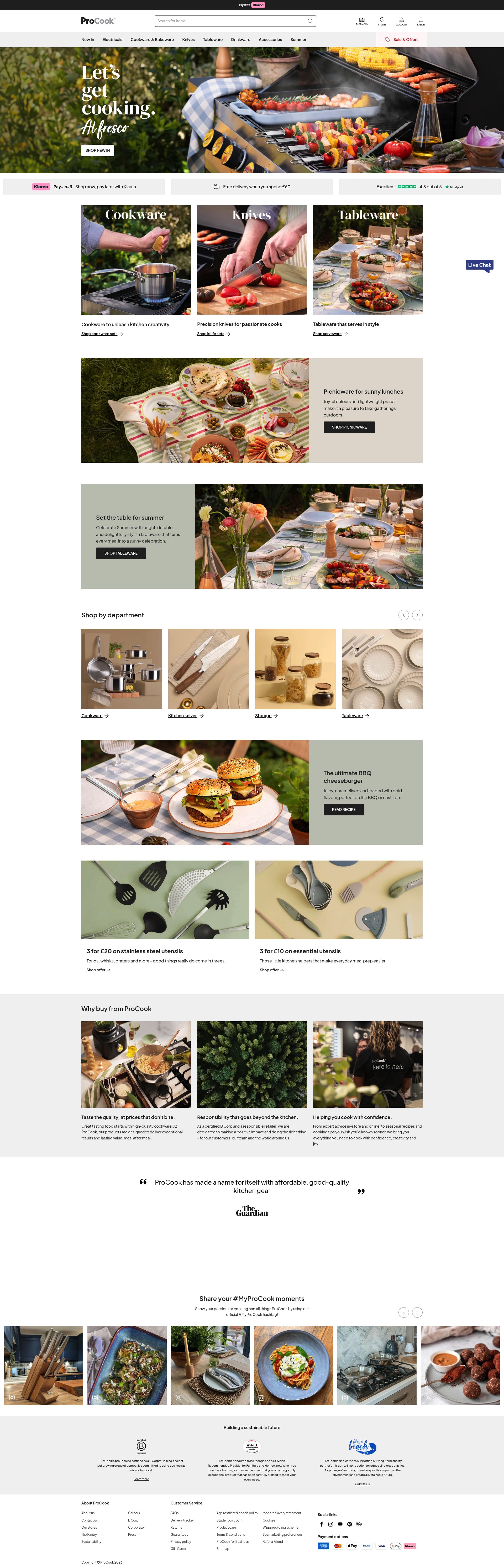
ProCook built a DTC brand in a category dominated by third-party retailers, and their Shopify store shows exactly how they did it. The Which? Recommended Provider badge sits prominently across key pages, product bundles are well-merchandised, and the brand story is integrated throughout rather than buried in an About page. Strong photography of cookware in use rather than on white backgrounds makes the range feel genuinely desirable.
3. Sous Chef
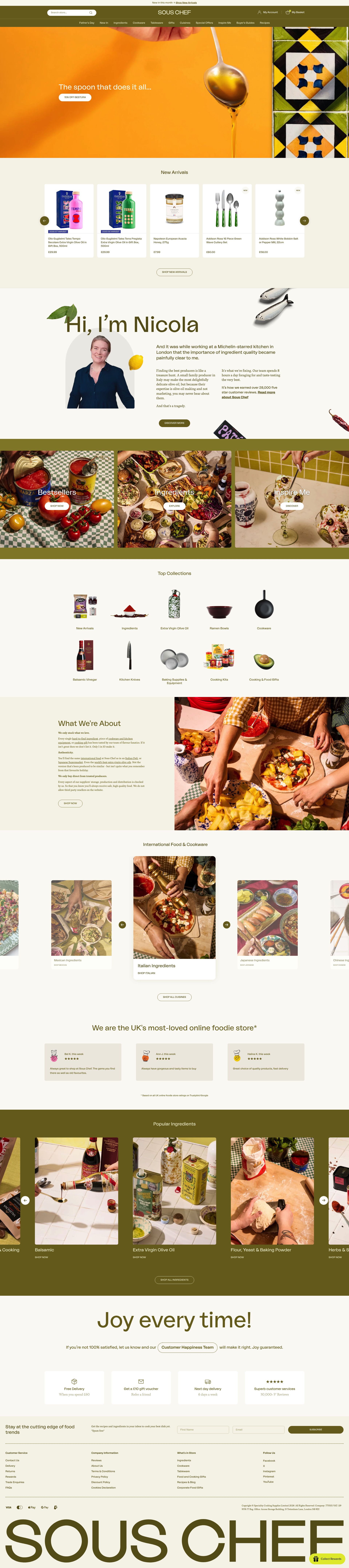
Sous Chef sells specialist cookware and world ingredients to serious home cooks, and the site tone matches the audience perfectly. Editorial content, chef-curated collections, and descriptive copy that explains why each product was chosen all build the sense that someone knowledgeable is behind the curation. It is a masterclass in using content to justify a premium price point.
4. Harts of Stur
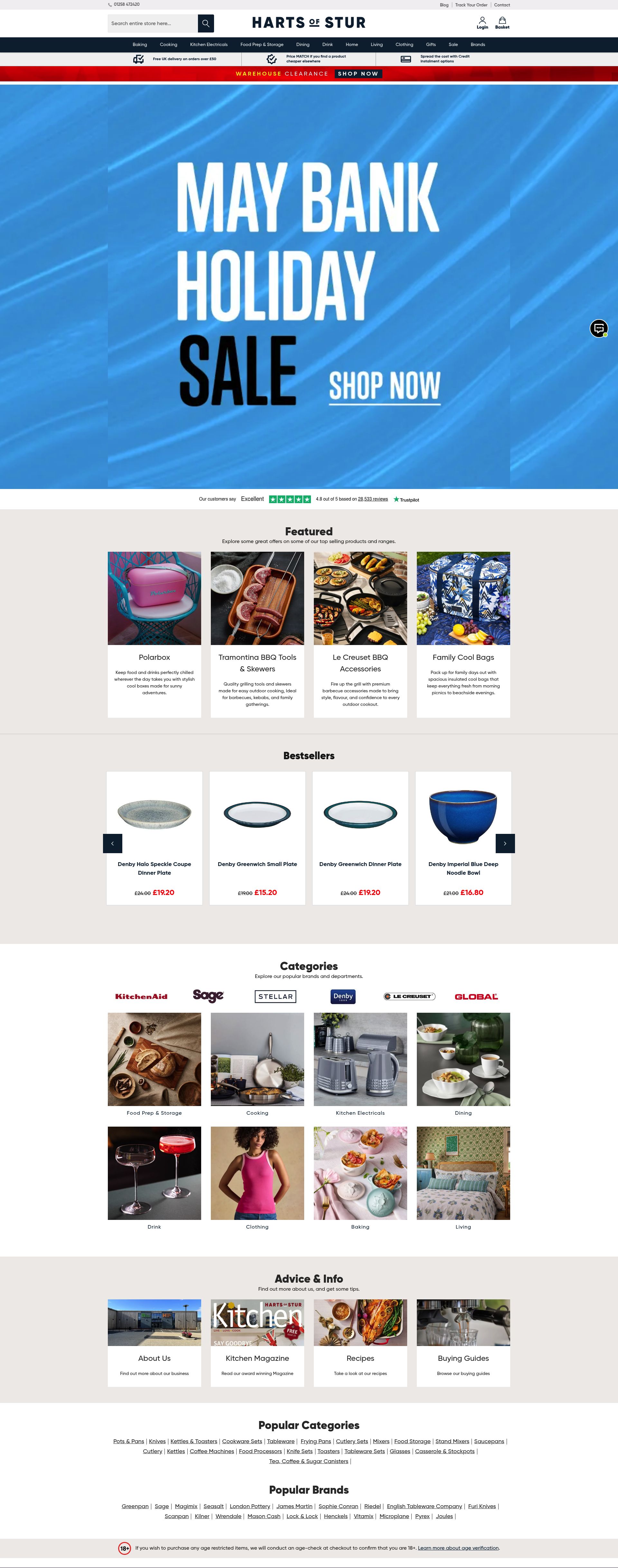
As one of the UK's largest independent cookshops, Harts of Stur carries a broad catalogue including KitchenAid, Le Creuset, and Stellar. Their site handles a wide product range without feeling chaotic: clear category navigation, well-structured brand pages, and customer reviews integrated at the product level. The family-run Dorset provenance is mentioned without being overplayed, which adds authenticity.
5. Divertimenti
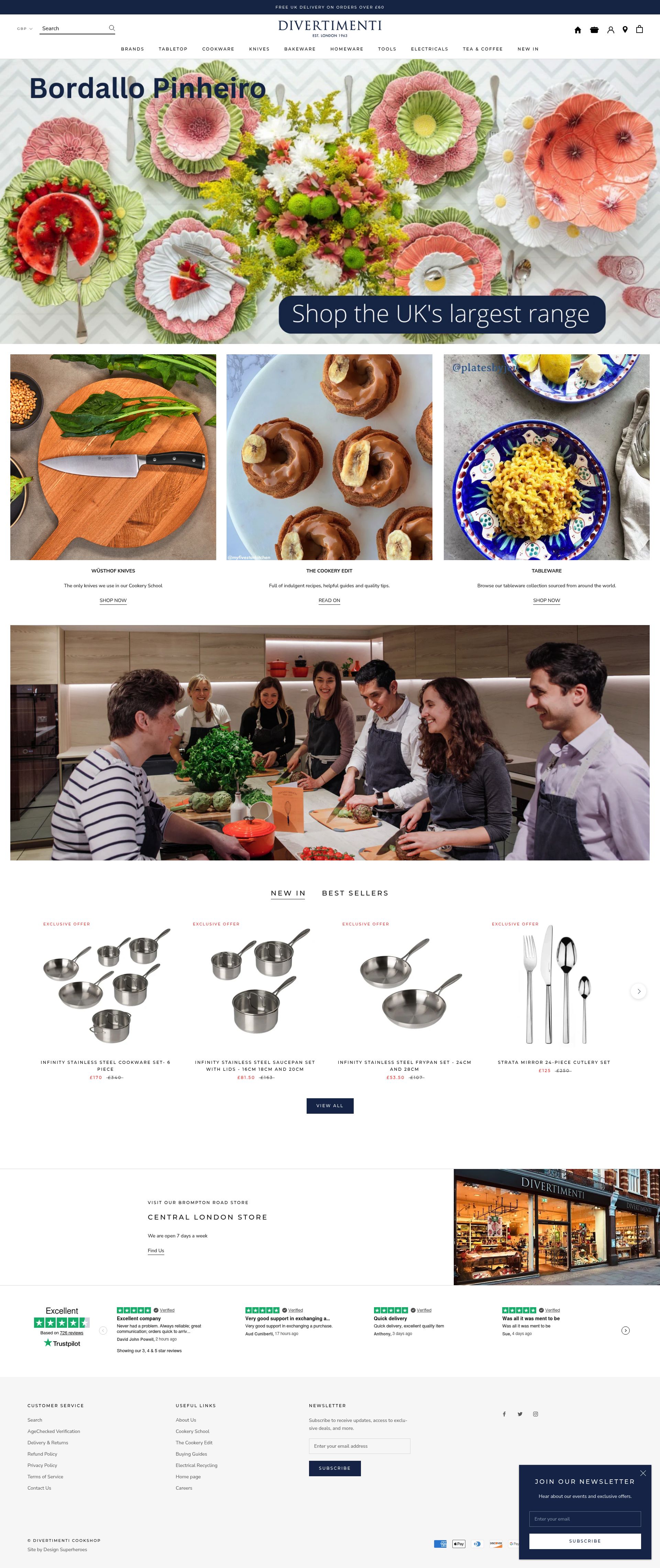
Divertimenti is a London institution, and their online store captures the curated feel of the physical shops. Each product feels hand-selected rather than algorithmically listed, and the cookery school tie-in gives the brand a layer of expertise that generic retailers cannot match. The site demonstrates that a smaller, more considered catalogue can outperform a sprawling one when curation is tight.
6. Emma Bridgewater

Emma Bridgewater is one of the most recognisable homeware brands in the UK, and their Shopify store leans fully into that identity. Made-in-Britain provenance, hand-decorated pottery, and seasonal collections are front and centre. The gifting angle is handled particularly well: clear gift suggestions, personalisation options, and prominent delivery messaging around key dates. It is a strong model for any brand with a distinct aesthetic.
7. Nkuku

Nkuku's site leads with beautiful lifestyle photography and a clear ethical story: handmade, natural materials, sustainable sourcing. The photography style is consistent and aspirational without being unattainable, and the brand values are woven into product descriptions rather than confined to a separate sustainability page. For merchants in the ethical homeware space, this is a benchmark for how to communicate values without lecturing.
8. Cox & Cox
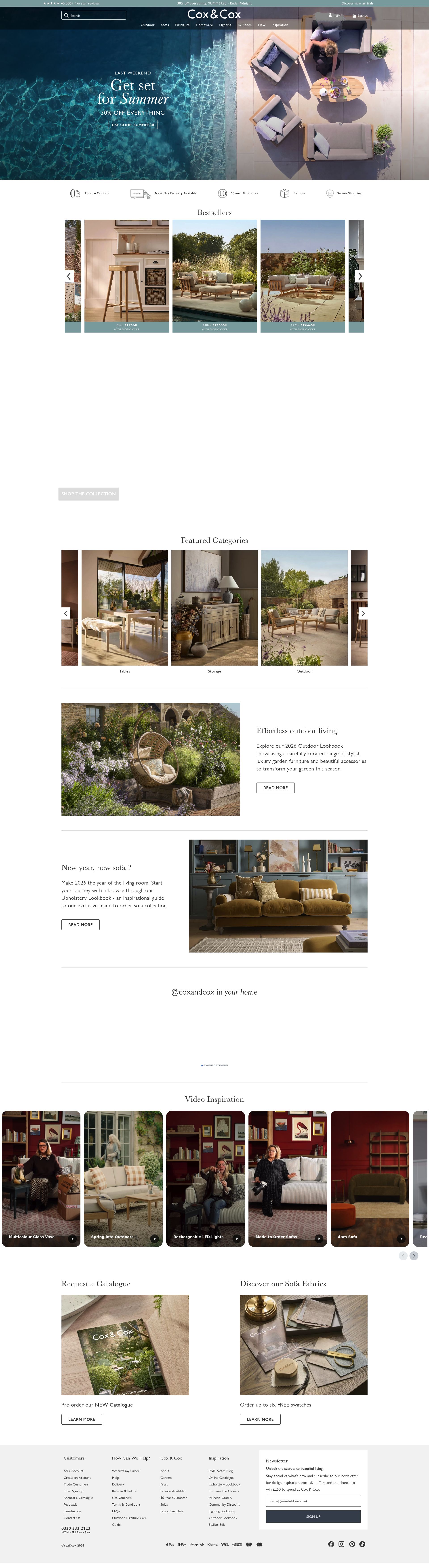
Cox & Cox execute the seasonal homeware brand playbook very well. Regular new arrivals keep the site feeling fresh, the natural materials aesthetic is applied consistently across all categories, and their sale mechanics drive urgency without cheapening the brand. The table accessories and kitchen range sits comfortably alongside their wider homeware offer, with cross-sell done naturally throughout.
9. Graham and Green
Graham and Green is a UK eclectic homeware and kitchenware brand with a Notting Hill heritage and a distinctive eye for decorative, characterful pieces. The DTC store handles a broad product mix, from ceramic mugs and printed napkins to furniture and wall art, with a consistent aesthetic that makes cross-category browsing feel natural rather than chaotic. The editorial approach to product photography, objects shown in lived-in, styled settings, does the conversion work that plain white-background imagery cannot achieve in a category where mood matters as much as specification.
10. Potters Cookshop
Potters Cookshop is an award-winning independent based in Essex, and their site punches well above the weight you might expect from a single-location retailer. Strong product organisation, a clear specialist identity, and genuine independent credentials make it easy for customers to choose them over a national chain. It is a useful reference for any independent retailer trying to compete online without a multi-million pound budget.
Every store on this list has made deliberate choices about how to present products, build trust, and guide customers towards a purchase. If you are running a homeware or kitchenware brand and want a Shopify store that competes at this level, our Shopify agency for homeware and kitchenware brands builds Shopify stores designed to convert — get in touch to discuss your project.
Frequently asked questions
Which homeware brands use Shopify in the UK?
Several well-known UK homeware and kitchenware brands run on Shopify or Shopify Plus, including ProCook, Sous Chef, Nkuku, Cox & Cox, Graham and Green, and Emma Bridgewater. Shopify Plus is particularly common among brands doing over £1m in annual online revenue, offering the custom checkout and integration options that larger catalogues require.
What makes a homeware Shopify store convert well?
The highest-converting homeware stores share three traits: lifestyle photography that shows products in real settings rather than on white backgrounds, strong trust signals such as guarantees, accreditations, or review counts near the add-to-cart button, and clear gifting pathways with personalisation options. Category navigation also matters more in homeware than most niches because customers often browse rather than search with a specific product in mind.
Is Shopify good for kitchenware brands?
Shopify is a strong fit for kitchenware brands at most revenue levels. Shopify Plus handles large catalogues, complex bundles, and multi-currency selling without significant custom development. Brands like ProCook and Harts of Stur demonstrate that Shopify can support thousands of SKUs across brands like KitchenAid and Le Creuset while maintaining fast load times and a clean browsing experience.
How do independent homeware retailers compete with large chains online?
The strongest independent homeware retailers, such as Harts of Stur, Divertimenti, and Potters Cookshop, compete by leaning into specialist credibility rather than breadth. Tight curation, editorial product copy that explains why each item was chosen, and authentic provenance stories do the conversion work that a national chain with a generic listing cannot replicate. Price-matching on branded lines also helps remove the main objection.
What Shopify apps do homeware stores typically use?
Common Shopify app choices for homeware brands include Yotpo or Okendo for reviews, Klaviyo for email and SMS flows, Rebuy or LimeSpot for cross-sell and upsell, and Gorgias for customer service. Brands with a strong gifting angle often add gift message functionality and a gifting-specific landing page, which Shopify handles natively or via apps like Gift Reggie.