

Quick summary
TRIP leads the category with mood-first homepage routing and one of the cleanest subscribe-and-save flows in UK functional drinks. Moju runs the most efficient shots store in the market, collapsing a complex buying decision into a single 30ml serve and smart sampler-to-subscription mechanics. Form Nutrition stands out for ingredient transparency that rivals clinical supplement brands, with every dosage, extract and supplier surfaced directly on product pages. Real Kombucha is the strongest example of premium positioning done right, framing kombucha as a dinner-party wine alternative rather than a gut-health product.
The UK functional drinks market is now worth over £400 million and forecast to double by 2028. Adaptogens, nootropics, gut-health blends and CBD-infused calming drinks have moved out of niche wellness shops and into mainstream weekly shops. The challenge for any brand selling functional drinks on Shopify is that the buyer is rarely impulsive. They are reading ingredient lists, comparing dosages, and weighing claims against price per serving. The stores below are worth studying because each one solves a different part of that decision puzzle, from format clarity to subscription mechanics that actually retain.
1. TRIP

TRIP became the UK's leading functional drinks brand by treating the can as a marketing surface, not just packaging. The Shopify store carries that discipline into ecommerce: the homepage opens with a clear "mood" framing (calm, focus, sleep) rather than a product grid, which routes buyers by intent before they hit a SKU. Variety packs are merchandised as the default first purchase, with single-flavour cases positioned as the repeat option. This is a smart use of bundle psychology in a category where flavour preference is unknown until the buyer tries the product.
The subscription mechanic is one of the cleanest in the category. The "subscribe and save 15%" toggle sits above the add-to-cart button, with delivery frequency presets that match realistic consumption rates (weekly, fortnightly, monthly). Customer photography fills the lower fold rather than studio shots, which adds social proof at the moment of decision. The store also handles a difficult category constraint well: CBD content is explained on a dedicated educational page that doubles as an SEO asset, ranking for informational queries that funnel into product pages.
2. Three Spirit
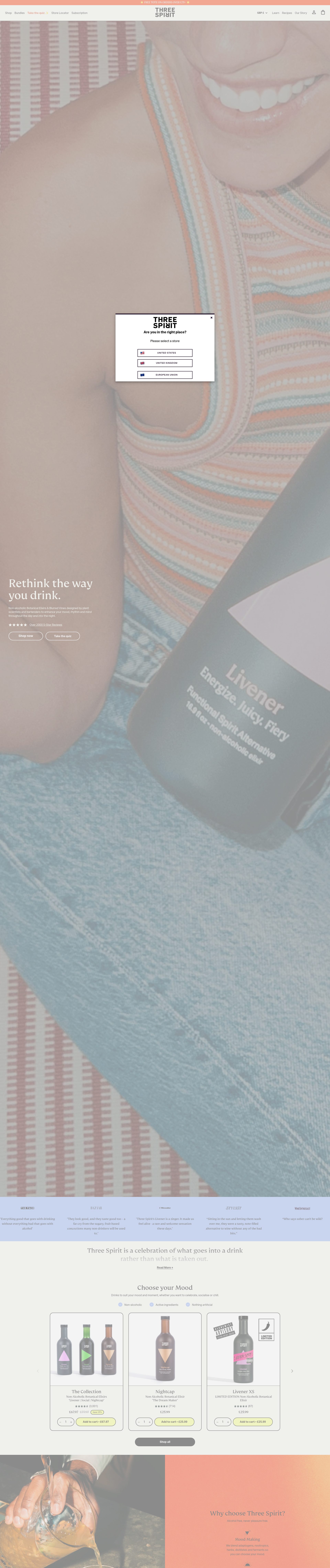
Three Spirit sells plant-based adaptogenic drinks aimed squarely at the no-and-low alcohol audience, but the commercial story is functional first, non-alcoholic second. The product page leads with the active ingredients (lion's mane, ashwagandha, damiana) and the intended effect (lift, social, sleep), then handles the cocktail context as a secondary use case. This sequencing matters: it segments the customer into a wellness buyer rather than an alcohol-replacement buyer, which raises perceived value and price tolerance.
The store does an unusually thorough job of sourcing transparency. Each adaptogen is linked to its origin and concentration, with a short note on what the published research says. This kind of detail would feel heavy on most stores, but Three Spirit handles it with clean typography and progressive disclosure, so the casual buyer is not overwhelmed and the curious buyer can dig in. The bundle builder routes buyers toward mixed cases by occasion, which raises average order value without feeling pushy.
3. Moju

Moju sells turmeric, ginger and immunity shots and runs one of the most efficient functional drinks Shopify stores in the category. The product page collapses a complex buying decision into a single number on the front of the bottle: 30ml. That clarity flows through the rest of the store. The collection page shows shots by goal (immunity, energy, recovery) with the active ingredient and dose visible on the tile, so the buyer can compare without clicking through every product.
Subscription is positioned as a daily wellness ritual rather than a stockpile, which is reinforced through email and account messaging. The "starter pack" combines four shot types into a sampler, designed to find a buyer's preferred flavour before locking them into a single-flavour subscription. The conversion mechanic here is well-judged: lower commitment up front, higher LTV downstream. Cross-sell into immunity bundles during cold and flu season is automated through the homepage and product page, capturing seasonal demand without manual merchandising.
4. The Turmeric Co

The Turmeric Co, founded by former England footballer Thomas Hitzlsperger and friends, leans heavily on athlete endorsement without making it the whole story. The store balances credibility (athlete testimonials, training-room use) with mainstream wellness positioning, which broadens the audience beyond sports nutrition. Product pages explain dose curcumin content in milligrams and back this with absorption data, which speaks directly to the informed buyer the category attracts.
The starter pack is merchandised as the recommended first purchase, and the subscription discount is one of the most aggressive in the category at 30% off the second order. That is a deliberate retention play: the first delivery hooks the buyer, the second cements the habit. The store handles refrigeration and shelf-life logistics through a clear delivery schedule, which removes one of the bigger friction points in fresh functional drinks DTC. The blog content on inflammation, recovery and joint health funnels informational traffic into product pages effectively.
5. Plenish
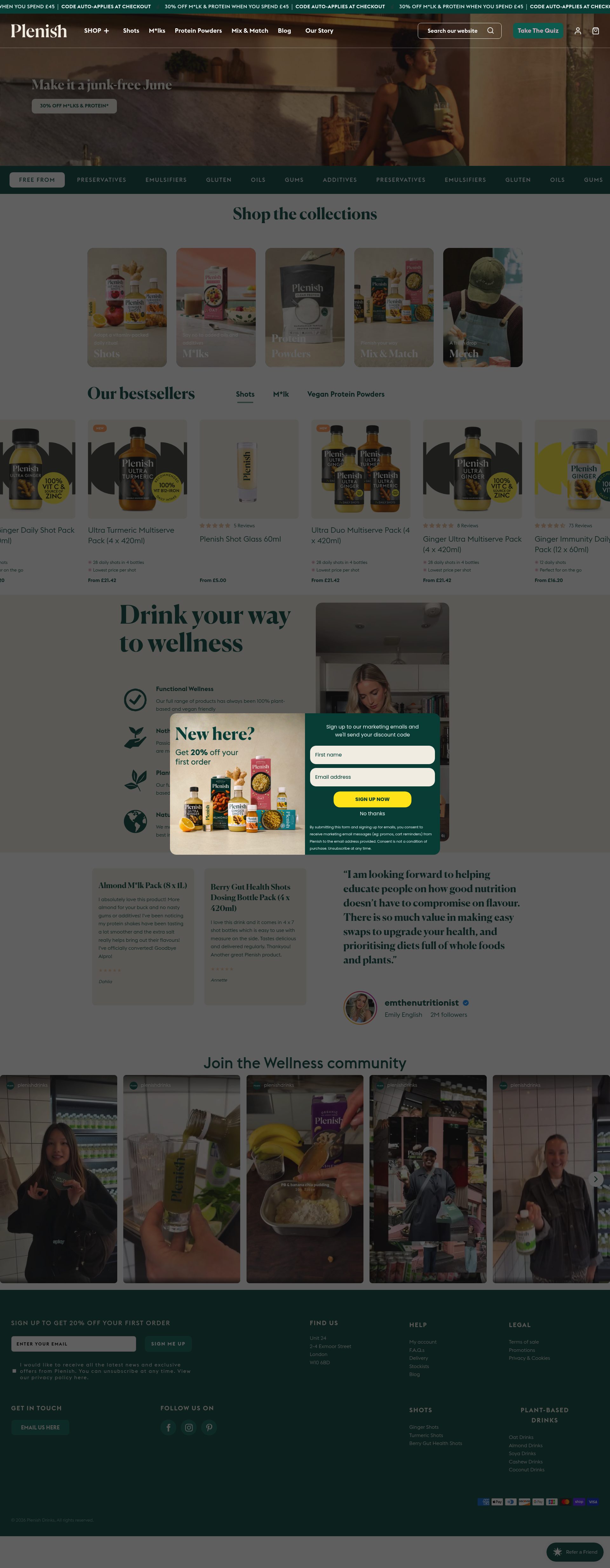
Plenish sits at the premium end of cold-pressed juices and oat drinks with a functional positioning that has evolved well as the category matured. The store separates its range into juices, shots and milks, with each sub-category given its own merchandising logic. The cleanse range is positioned as a multi-day programme rather than a single SKU, which raises average order value and creates a structured purchase decision (three-day, five-day, weekend reset).
The store does an effective job of using comparison content commercially. Pages that compare oat milk to dairy on protein content, or cold-pressed juice to from-concentrate on nutrient density, sit between informational and product content. This serves dual purposes: it ranks for category queries and pre-handles the price objection that premium-positioned functional drinks always face. Subscription frequency presets are aligned to programme cadence, which reduces the cognitive load of choosing a delivery schedule.
6. Press London
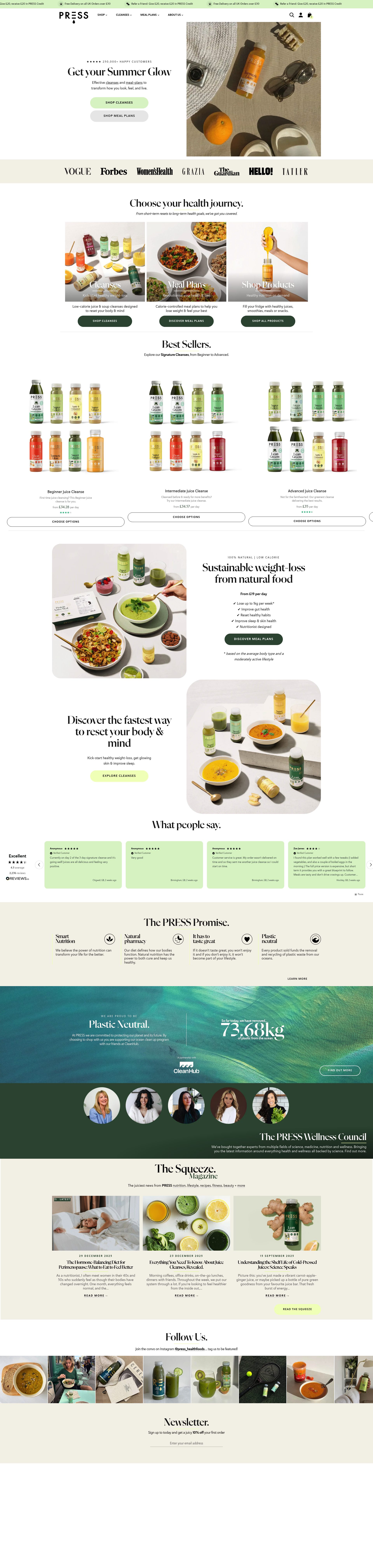
Press London started as a juice bar and now runs one of the better functional drinks Shopify stores in the UK, with a range covering cold-pressed juices, shots, smoothies and cleanse programmes. The store leads with cleanse programmes on the homepage, which is the right commercial choice: cleanses have a higher cart value, a clear use case, and a built-in repeat purchase rhythm. Buyers who arrive on the homepage see a structured programme rather than a juice shelf.
Product pages on individual juices and shots use a consistent nutritional callout that names the standout ingredient and its function (turmeric for inflammation, beetroot for nitric oxide, ginger for digestion). This pattern of "ingredient plus benefit" is repeated across the store, which trains the buyer to recognise the format and choose by need. The subscription model is well-built, with the ability to swap products between deliveries, which addresses one of the bigger retention risks in functional drinks: flavour fatigue.
7. Vit Hit
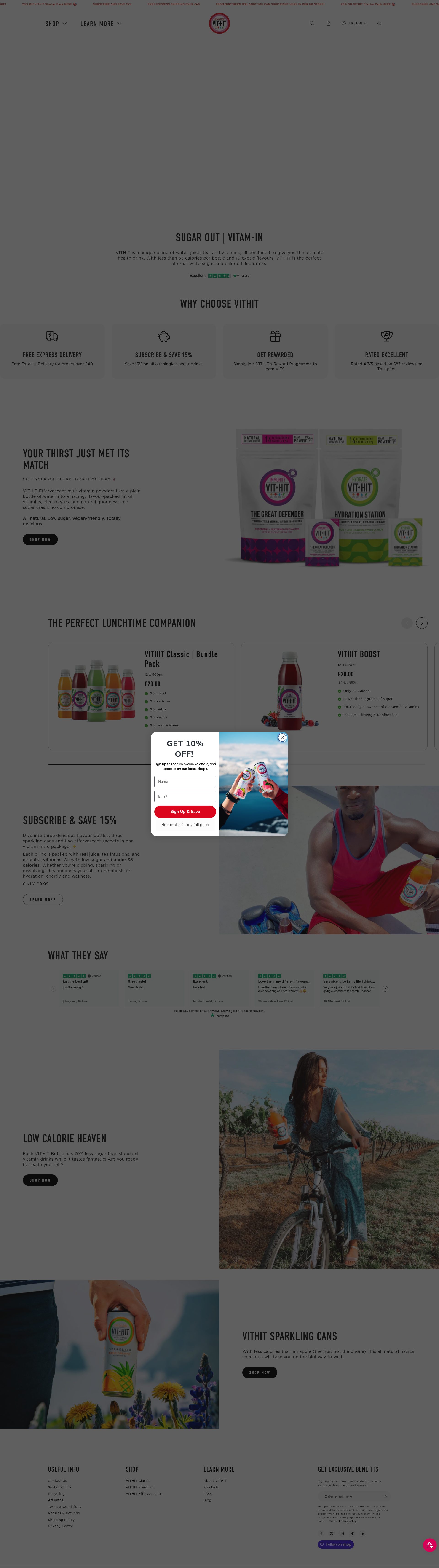
Vit Hit sells vitamin-infused functional drinks and runs a Shopify store that is unusually disciplined about staying in its lane. The product range is small: a handful of flavours, each with a defined vitamin profile and a single use case (energy, immunity, sleep, beauty). The homepage routes buyers by goal rather than flavour, which works well for a category where buyers often do not know which vitamin blend they want until told what each one does.
The bundle merchandising is one of the strongest in the list. Mixed cases of 12 or 24 bottles are priced with clear per-unit savings, and the "build your own" option lets buyers tailor the case to their priorities without locking them into a fixed sampler. The store also handles the price comparison objection well: a callout on every product page compares the per-bottle price to a multivitamin plus a soft drink, which reframes the spend rather than defending it. That kind of indirect price anchoring is harder to do than it looks, and Vit Hit does it consistently.
8. Equi London

Equi London occupies a clear position in women's functional drinks and supplements, with hero products aimed at hormone balance, skin and energy. The store handles a difficult category challenge well: building credibility for claims that are inherently personal and difficult to verify in advertising. Founder credentials, nutritionist input and clinical sourcing are surfaced consistently across the store, not buried in an "about" page.
The hero product is a powdered functional formula rather than a ready-to-drink, which has commercial implications the store leans into. Subscription becomes the obvious purchase mode because the format supports it: one tub is one month, one delivery is one month, one habit. The "complete your routine" cross-sell to skincare and beauty supplements is contextual rather than generic, and the related products feel like a natural extension of the original purchase rather than a basket-padding tactic.
9. Form Nutrition
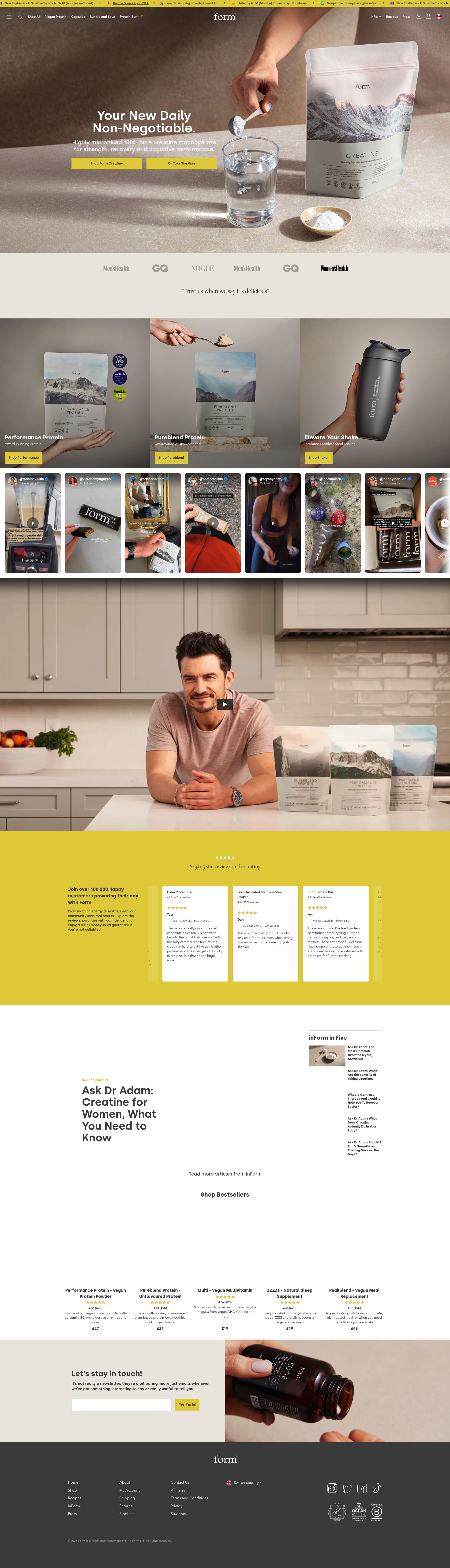
Form Nutrition sits between sports nutrition and functional drinks, with a plant-based protein and a nootropic blend (Edge) that has gained genuine traction in the focus-and-cognition category. The store handles the cross-category positioning by leading with use case rather than ingredient: "perform", "focus", "recover", "sleep". This routing logic flattens the buying decision, which is critical when a buyer might land on the site looking for one thing and convert on another.
The store does a thorough job of ingredient transparency. Every product page links to a sourcing page that lists the specific extract, dosage and supplier where possible. For a category where buyers compare ingredient lists across competitor tabs, this kind of detail is a defensive commercial asset: it makes the buyer less likely to leave to verify a claim. Subscription mechanics offer 25% off the first order and 15% on renewals, with a clear pause-and-skip flow that reduces involuntary churn from full inventory.
10. Real Kombucha
Real Kombucha runs at the premium end of the gut-health functional drinks category in the UK and positions its product more like a wine than a soft drink. The Shopify store reflects that: the homepage uses food pairing recommendations, restaurant placements, and a brewing narrative that elevates the perceived value above the kombucha shelf in a supermarket. Product pages name the specific tea base (Smoke House, Royal Flush) and the flavour profile, which adds the kind of detail that premium drinks buyers respond to.
Bundle merchandising is built around the gift use case as well as the household repeat purchase. Cases of mixed flavours are positioned as host gifts and dinner-party stock, while subscription is presented as a household replacement for wine on weeknights. This dual framing widens the addressable market without splitting the brand message. The store also uses food and drink editorial coverage prominently, which substitutes for traditional health claims that are restricted in the kombucha category.
What these stores have in common
Functional drinks live in a peculiar category position: not quite supplements, not quite soft drinks, often premium-priced, and almost always sold to a sceptical, comparison-shopping buyer. The ten stores above share a few patterns worth studying.
Every one of them routes buyers by goal, not by flavour or ingredient. This is the single most important commercial decision in the category. Buyers arrive with a problem (low energy, poor sleep, stress, dull skin) and the store that converts is the one that maps that problem to a product in two clicks. Stores that lead with a flavour grid lose buyers who do not yet know which flavour they want.
Subscription is treated as a habit-building mechanism, not just a discount. The strongest stores in this list (TRIP, Moju, Form, The Turmeric Co) frame the subscription as a daily ritual that produces a result over time. Each one defaults to subscribe-and-save at the product level, but every one of them also keeps single-purchase visible and clearly priced. The pattern is consistent: make the subscription the obvious best-value choice, not the only choice.
Ingredient transparency is now table stakes, but the better stores go a step further and explain the dose. Buyers in this category compare milligrams across tabs. A store that says "contains turmeric" loses to a store that says "300mg curcumin extract, 95% standardised". This is true even for buyers who do not fully understand what the numbers mean. Specificity reads as credibility.
Finally, starter packs and variety bundles are the recommended first purchase across almost every store in this list. The category has a built-in flavour-discovery problem (buyers do not know what they will like) and a built-in commitment problem (buyers are not sure the product works). A bundle solves both at once: it lowers the per-flavour risk, raises the basket value, and gives the brand a second chance to convert the buyer to a single-flavour subscription once they find a favourite.
If your functional drinks or supplement brand is ready to improve conversion or rebuild its Shopify store, our Shopify design service is built around exactly these kinds of commercial outcomes. Get in touch to talk through what your store needs.
Frequently asked questions
What makes a functional drink Shopify store convert well?
The strongest stores route buyers by goal (energy, sleep, immunity) rather than by flavour or ingredient, which maps the buyer's problem to a product in two clicks. They also lead with starter packs or variety bundles as the default first purchase, which solves the flavour-discovery problem while raising cart value and setting up a single-flavour subscription downstream.
Which functional drink brands use subscription best on Shopify?
TRIP, Moju and Form Nutrition are the standout examples. TRIP presets delivery frequency to match realistic consumption rates and keeps single-purchase clearly visible alongside subscribe-and-save. Moju frames subscription as a daily wellness ritual rather than a bulk buy. Form offers 25% off first order with a clear pause-and-skip flow to reduce involuntary churn.
How do functional drink stores handle health claim restrictions on Shopify?
The best stores separate education from product claims. TRIP uses a dedicated CBD education page that ranks for informational queries and funnels into product pages without making restricted claims on the product itself. Real Kombucha leans on food and drink editorial coverage rather than health claims. Press London uses an ingredient-plus-function pattern (turmeric for inflammation) that stays within copy guidelines while still communicating benefit.
How important is ingredient transparency for functional drinks ecommerce?
Extremely important and increasingly table stakes. Buyers in this category compare milligrams across competitor tabs before buying, so a store that says "contains turmeric" loses to one that says "300mg curcumin extract, 95% standardised". Form Nutrition and Three Spirit go furthest, linking each ingredient to its source, extract form, dosage and the relevant published research, which also functions as a commercial retention asset because it makes buyers less likely to leave to verify a claim elsewhere.
What are the best functional drink Shopify stores for UK merchants to learn from?
TRIP is the most complete example for a canned RTD brand: mood routing, bundle merchandising, clean subscription UX and strong social proof. Moju is the best case study for shots and single-serve formats. The Turmeric Co shows how to use athlete endorsement without making it the whole story, pairing credibility with mainstream wellness positioning to widen the audience beyond sports nutrition.