

Quick summary
Barbour leads with provenance-first PDPs and a re-waxing service that directly answers the premium price objection at the product level. Filson is the strongest US example, with a lifetime guarantee displayed above every add-to-cart button rather than buried in a returns tab. Mulberry sets the benchmark for luxury leather ecommerce: swatch selectors, craftsperson profiles, and a repair service that reframes a handbag as a long-term asset. Taylor Stitch is the most commercially inventive, using a Workshop pre-order model on Shopify to fund production without holding inventory and build a community of customers invested in what gets made.
Heritage brands have an asset that no startup can buy: time. Decades or centuries of documented quality, recognisable design codes, and customer loyalty built before the internet existed. The challenge is translating that asset into ecommerce. A brand that has been making the same waxed jacket since 1894 needs a Shopify store that communicates that story at the moment a customer lands on a product page — not just on an About page nobody reads. The stores on this list have done exactly that. They use Shopify Plus to carry the weight of complex catalogues, global shipping, and high price points while keeping the provenance story central to every purchase decision. These are the benchmark stores for any merchant selling on reputation and craft.
1. Barbour
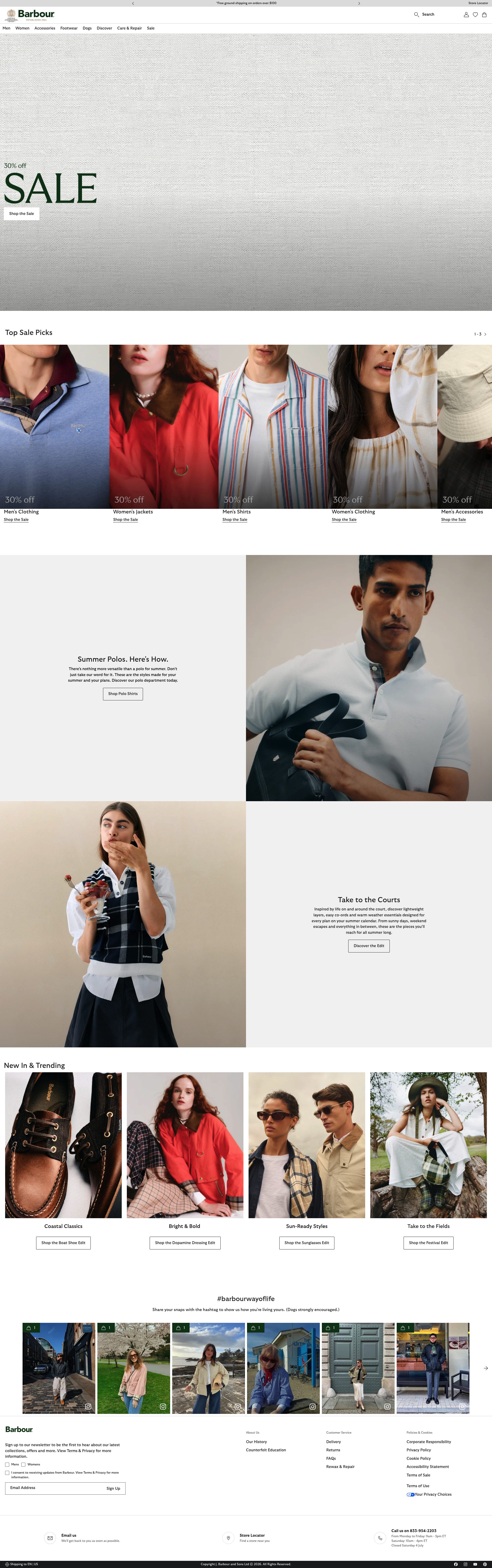
Barbour has been making waxed cotton outerwear in South Shields since 1894, and their Shopify Plus store earns the trust that history demands. Product pages lead with the practical: care instructions, wax weight, regional heritage photographs, and a prominent link to their re-waxing service — a signal that this is a jacket built to last decades, not seasons. That re-waxing programme is positioned as a selling point on the PDP itself rather than buried in an FAQ, which directly addresses the premium price justification question before the customer needs to ask it. The "Heritage" collection is surfaced in navigation alongside current seasonal lines, letting the archive act as social proof rather than being retired to a distant corner of the site. Barbour also handles personalisation well: monogramming options are available at the product level for gifting use cases, which is a significant driver at their price point.
2. Dr. Martens
Dr. Martens has been making boots in Northamptonshire since 1960, and their Shopify Plus store serves a globally distributed audience at serious scale. The store balances two demanding jobs simultaneously: product discovery across a deep catalogue of silhouettes, colours, and collaborations, and brand storytelling that communicates the subculture and workwear roots that justify the price premium. Collection pages are organised around silhouette and occasion, with editorial content about the history of specific styles embedded alongside commercial product listings. Their For Life range, boots built to a higher specification with a free repair or replacement guarantee, is given dedicated prominence in navigation and PDPs, which demonstrates a clear understanding of how to use product guarantee as a conversion argument at premium price points. The checkout is clean and fast for a catalogue of this complexity.
3. Levi's

Levi's has been making denim since 1853, which makes them one of the oldest consumer brands operating on Shopify at scale. Their store handles a genuinely enormous product catalogue — multiple cuts, washes, lengths, genders, and collaborations — with a filtering and navigation system that keeps discovery manageable. The sizing and fit tools on their jean PDPs are among the most detailed in mainstream fashion ecommerce: waist-to-hip ratio guidance, model measurements, and customer review summaries filtered by fit feedback. Levi's also uses Shopify to surface their Secondhand resale programme directly within the main site navigation, which appeals to sustainability-aware customers without requiring them to leave the brand environment. The Vintage Clothing line, sourced from original Levi's archive pieces, is given dedicated editorial treatment that reinforces authenticity claims the rest of the catalogue benefits from.
4. Filson
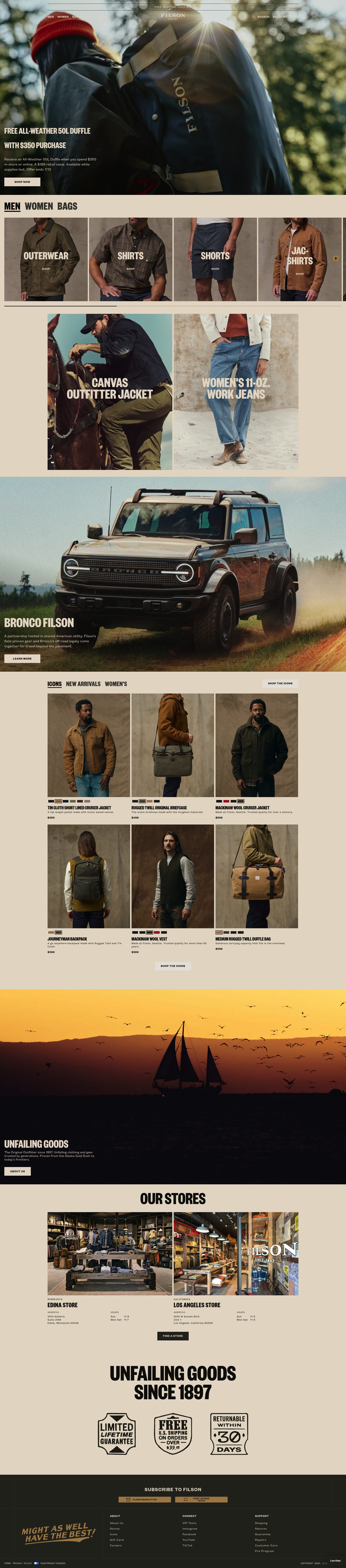
Filson has been making workwear and outdoor gear in Seattle since 1897, and their Shopify store is one of the strongest examples of heritage positioning applied to ecommerce in the US market. Every product page carries a weight of evidence: construction detail photographs, material sourcing information, and direct references to the original prospectors and loggers the product was designed for. That specificity is not nostalgia — it is a conversion argument at the $300–$500 price points Filson operates in. Their "Guaranteed for Life" promise is displayed on every PDP above the add-to-cart button, not tucked away in a returns policy tab. Filson also runs a factory seconds and repair programme promoted through the store, which reinforces the durability narrative while creating an accessible entry point for price-sensitive customers. The photography is consistent, honest, and field-tested in aesthetic: products are shown in use, in weather, not in studios.
5. Hunter Boots
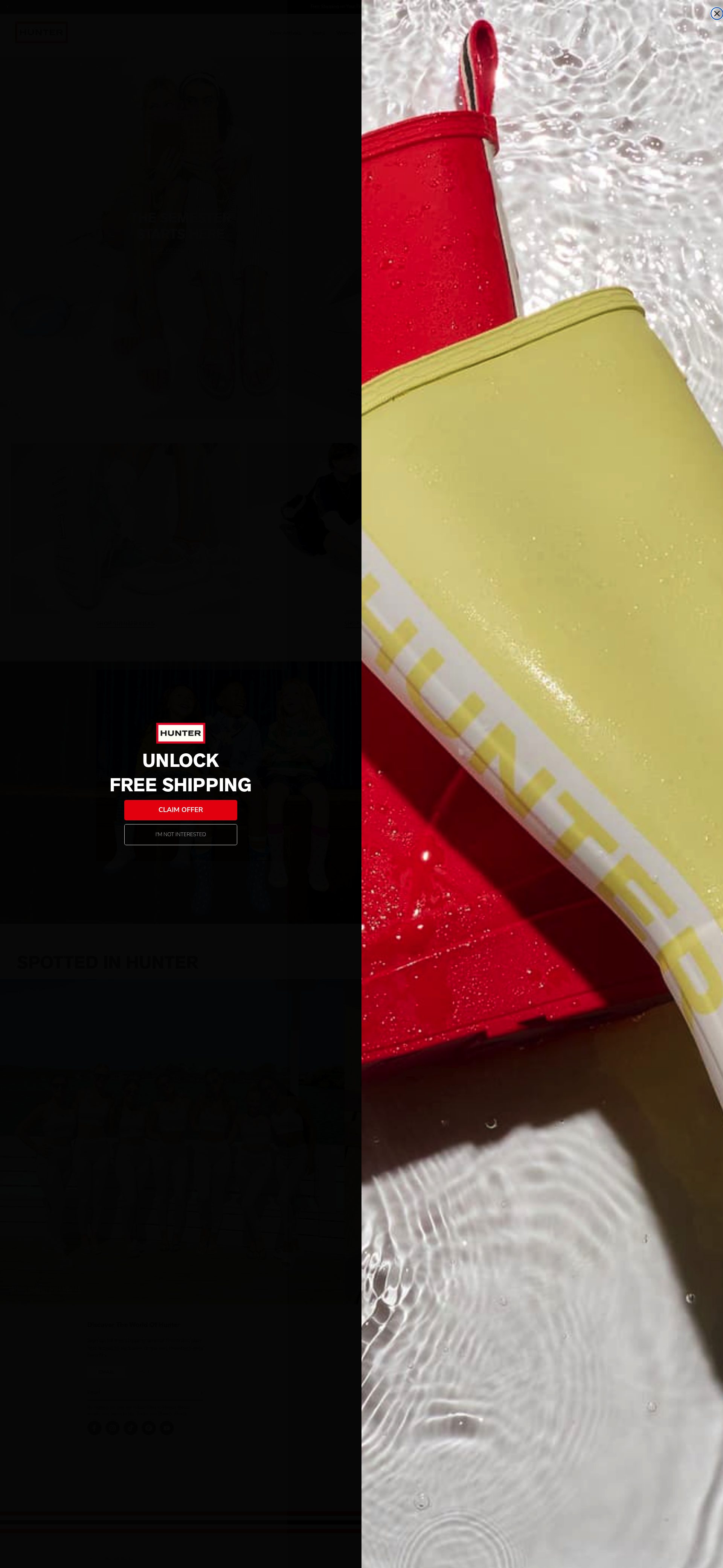
Hunter has been making wellington boots in Britain since 1856 and their Shopify Plus store handles a brand that has expanded significantly beyond its original agricultural roots. The original Field boot sits alongside fashion collaborations, children's ranges, and outdoor accessories in a catalogue that could easily feel incoherent. Hunter manages this with clear collection architecture: Original, Outdoor, and Kids lines are kept editorially distinct, each with their own visual treatment and purpose language. Product pages for core styles carry clear provenance: year of original design, the purpose it was designed for, and material specification. The store performs well for gifting — gift sets, care kits, and seasonal bundles are surfaced explicitly during relevant periods, and their rain boot boot-bag accessories are cross-sold effectively at the cart stage. UK delivery and sizing are handled locally without friction.
6. Mulberry
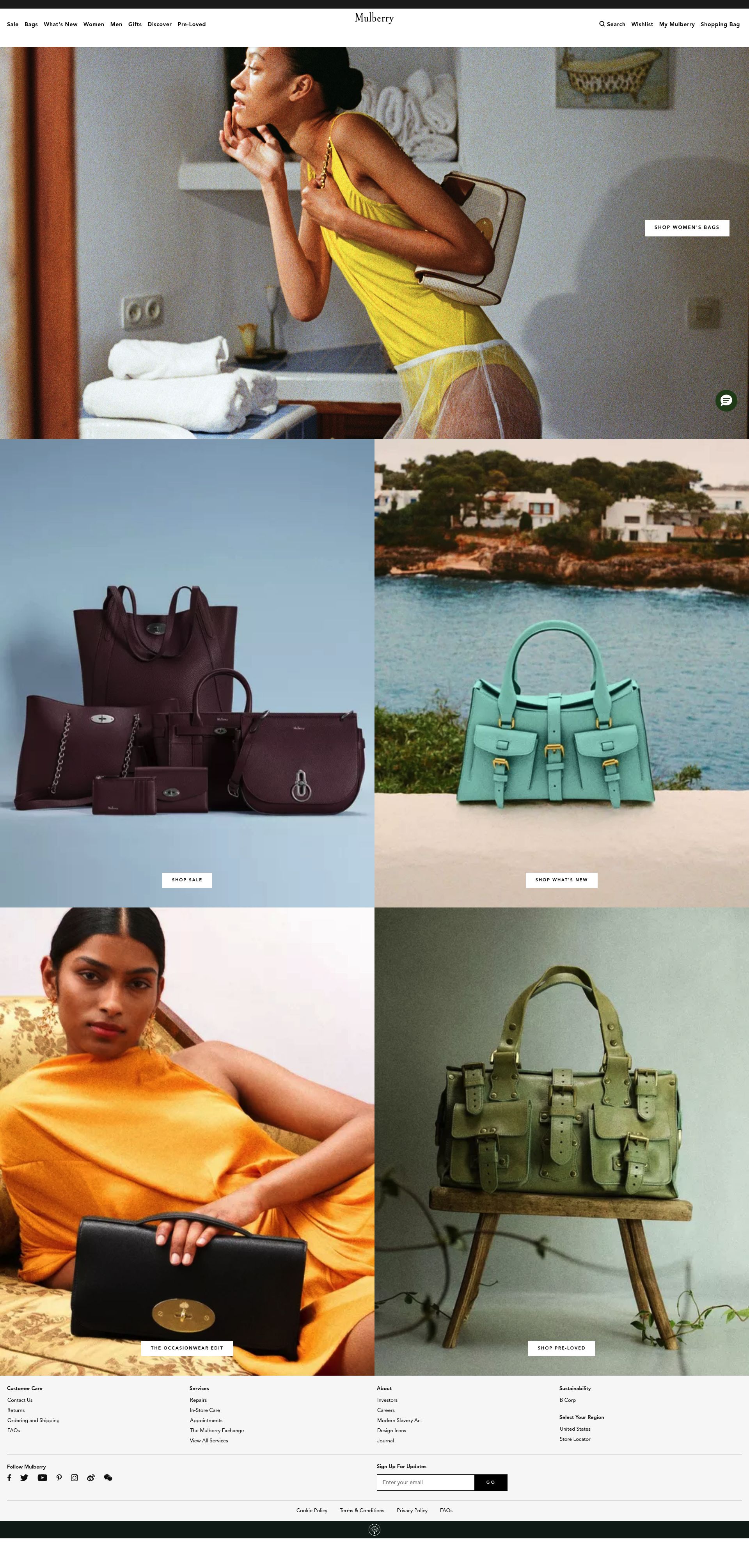
Mulberry has been making leather handbags in Somerset since 1971, and their Shopify Plus store reflects the investment required to sell luxury goods online without losing the premium positioning. Colour and leather variant selectors use swatches rather than dropdown text, so customers can visualise exactly the bag they are configuring before committing. The "Made in England" provenance note is displayed persistently on relevant product pages, not just on a brand page, and craftsperson profiles from the Somerset factory are embedded as content within the main site. Mulberry's Shopify checkout handles the complexity of a high-value, personalised purchase — engraving options, gift wrapping, and a signature orange gift bag option — without creating friction. Their pre-owned Mulberry resale integration and repair service are surfaced as trust signals rather than afterthoughts, communicating that a Mulberry bag is a long-term asset rather than a seasonal purchase.
7. Penhaligon's

Penhaligon's has been making perfume in London since 1870 and their Shopify store faces a harder ecommerce challenge than most brands on this list: fragrance cannot be experienced online. Their answer is depth of storytelling. Every scent has a dedicated character — illustrated portraits, fictional backstories, and detailed fragrance notes presented in a way that appeals to the imagination rather than simply listing top, heart, and base notes. Their scent profiler quiz is integrated into the homepage experience and recommends specific fragrances based on customer preferences, which addresses the sampling problem with a digital approximation. Gifting is core to Penhaligon's revenue and the store treats it accordingly: gift sets, engraved bottles, handwritten notes, and a visual gift builder are all available at product level. Price points are high and the store earns them through presentation, heritage content, and an unbroken thread to the original Victorian apothecary in Wellington Street.
8. Baxter of California

Baxter of California has been making men's grooming products since 1965, which makes them one of the founding names in premium male grooming long before the category became crowded. Their Shopify store is clean and direct, which suits both their California heritage and the no-nonsense customer they serve. Product pages carry full ingredient transparency, application guidance, and a clear differentiation between their original formulations and newer additions. The store bundles well: starter kits and routines are packaged as collections with explicit savings, which serves the customer discovering the brand for the first time and the existing customer looking to complete their routine. Baxter also runs a Shopify-powered subscription programme for their core repeat-purchase products — shave foam, daily face wash, hair products — that converts single-order buyers into recurring revenue without requiring a separate platform. The brand's salon and barbershop wholesale roots are referenced in brand content, adding professional credibility that the retail customer values.
9. Osprey London
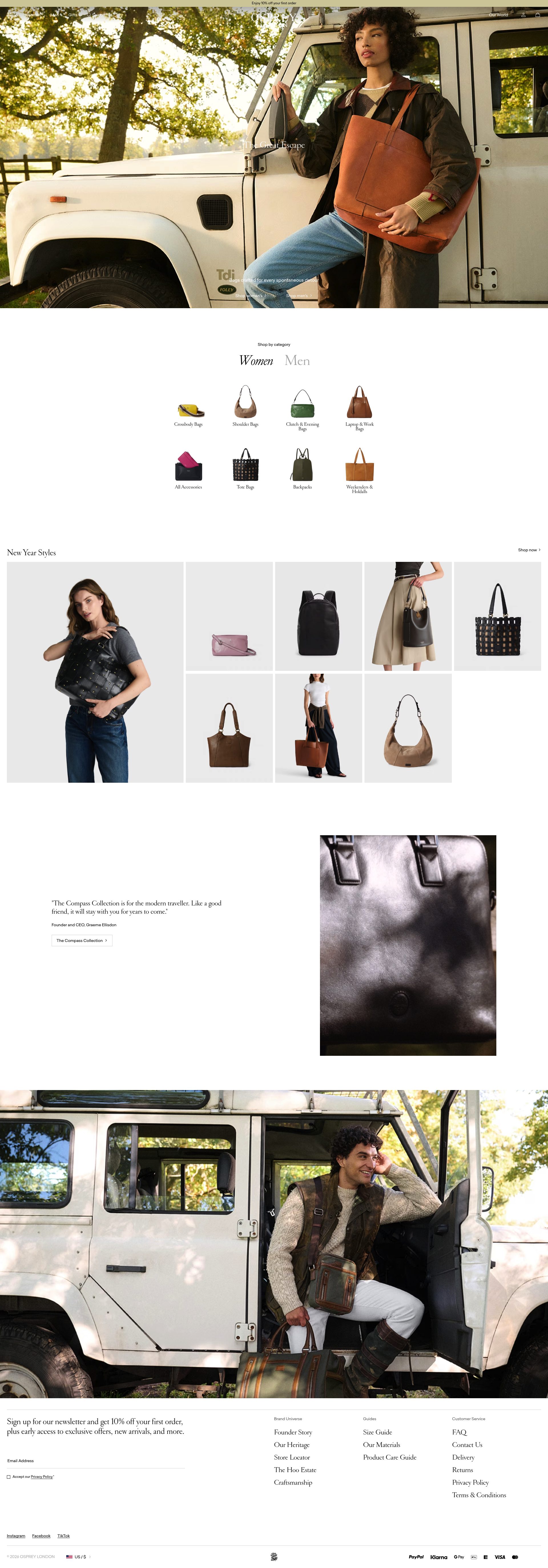
Osprey London has been designing leather bags and accessories in London since 1985 and their Shopify store positions them precisely where they sit in the market: a step below Mulberry on price, a significant step above high-street leather in quality and craftsmanship. Product pages are detailed and honest: leather type, origin, hardware finish, internal organisation, and dimensions are all stated clearly and early. Their product photography rotates between studio and lifestyle shots, with an emphasis on showing the internal organisation of bags — a decision that reflects how their customer actually shops. Osprey uses Shopify to run seasonal archive sales alongside their main collection, handled through dedicated sale landing pages rather than by discounting across the core navigation, which protects full-price positioning. UK delivery is free above a clearly stated threshold, and their packaging and care card presentation is referenced in product copy as part of the overall purchase experience.
10. Taylor Stitch
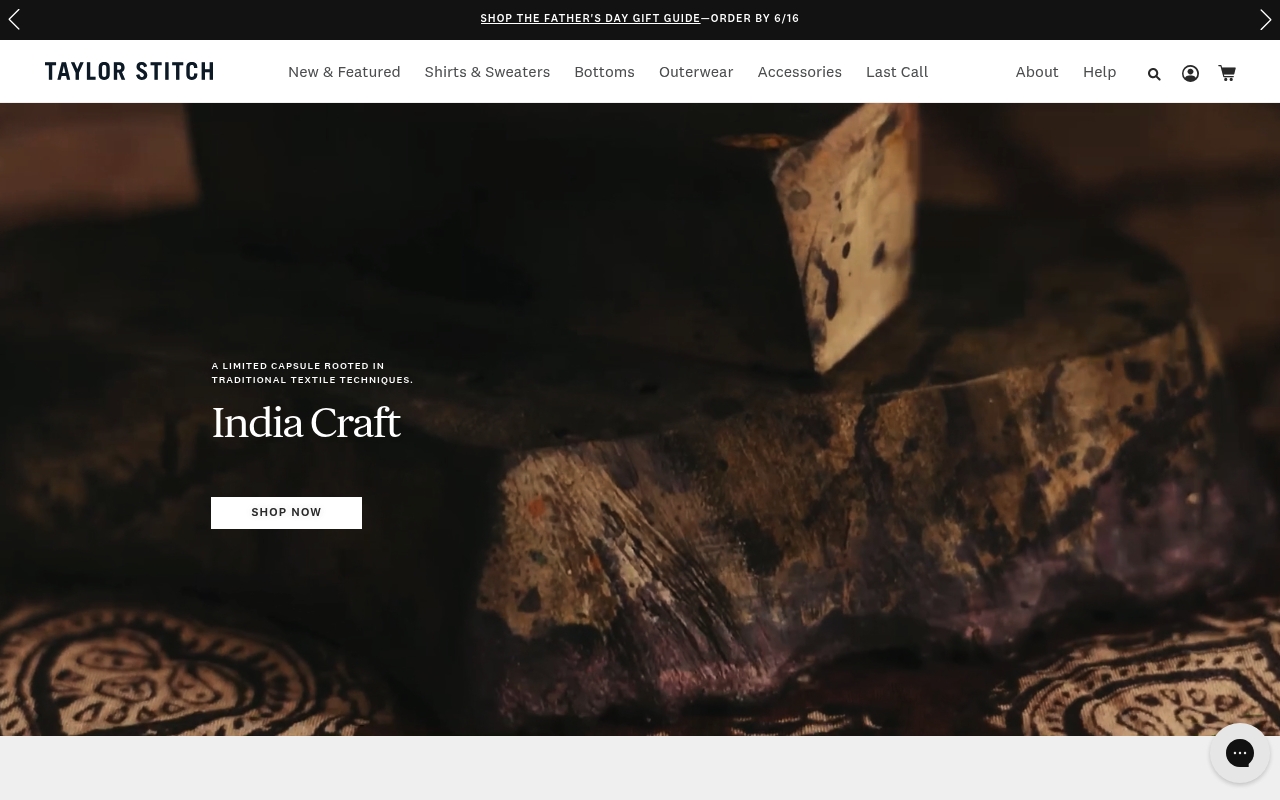
Taylor Stitch has been making workwear-influenced menswear in San Francisco since 2008. While newer than the other brands on this list, they have built a genuine heritage positioning — documented construction standards, American fabric sourcing, and a product archive that sells the same core items across multiple seasonal runs rather than chasing trend. Their Workshop model, which allows customers to pre-order upcoming products at a discount before production runs, is one of the more distinctive Shopify implementations in menswear: it funds production without holding inventory and creates a community of customers invested in what gets made. Product pages carry construction photography — stitching detail, pocket construction, reinforcement points — which is the workwear equivalent of Barbour's material provenance. Their Worn Well resale section, where customers can sell back used Taylor Stitch pieces, is integrated into the main Shopify store and reinforces the durability story with evidence rather than just claims.
Comparison Table
| Brand | Niche Focus | Price Point | Shopify Standout |
|---|---|---|---|
| Barbour | Heritage outerwear | Premium | Re-waxing service surfaced on PDP, monogramming |
| Dr. Martens | Heritage footwear | Mid-premium | Editorial storytelling alongside commercial listings |
| Levi's | Denim and casualwear | Mid | Fit guidance tools, Secondhand programme integration |
| Filson | Workwear and outdoor | Premium | Lifetime guarantee on every PDP, factory seconds section |
| Hunter Boots | Wellington and outdoor boots | Mid-premium | Clear collection architecture across an expanded range |
| Mulberry | Luxury leather handbags | Luxury | Swatch selectors, craftsperson profiles, repair service |
| Penhaligon's | British luxury fragrance | Luxury | Scent profiler quiz, character-led storytelling per product |
| Baxter of California | Men's grooming | Mid-premium | Subscription programme, starter kit bundles |
| Osprey London | British leather bags | Mid-premium | Internal organisation photography, archive sale structure |
| Taylor Stitch | Workwear menswear | Mid-premium | Workshop pre-order model, Worn Well resale integration |
What These Stores Get Right
- Provenance is placed where it converts, not where it is comfortable. The best heritage stores do not confine their history to an About page. Founding year, country of manufacture, material sourcing, and construction detail are on product pages, next to the add-to-cart button, because that is where the purchase decision happens.
- The guarantee replaces the price objection. Filson's lifetime guarantee, Dr. Martens' For Life range, Taylor Stitch's Worn Well programme: these stores understand that premium pricing needs a credible answer to "but why does it cost that much?" and a tangible product promise answers it better than any piece of copy.
- Resale and repair are conversion tools, not afterthoughts. Levi's Secondhand, Mulberry's repair service, Taylor Stitch's Worn Well resale: each of these turns sustainability into a selling point and communicates product longevity in a way that justifies the original purchase price.
- Photography is evidence, not decoration. Every strong heritage store uses product photography to prove construction quality: stitching detail, leather grain, hardware close-ups. This is how the online store replicates what a customer would do in a physical shop — pick the product up and inspect it.
- Gifting is built into the architecture, not bolted on. Personalisation, gift wrapping, and curated gift sets appear at the product and cart level on every strong store here. At heritage price points, a significant share of purchases are gifts. The stores that acknowledge this at the design stage convert more of them.
Frequently asked questions
Do heritage brands actually use Shopify?
Yes — several of the world's most recognised heritage brands run on Shopify Plus, including Barbour, Dr. Martens, Filson, Mulberry, and Penhaligon's. Shopify Plus handles the catalogue complexity, global shipping, and high-value checkout flows these brands require without forcing a bespoke build.
How do heritage brands justify premium prices on their Shopify stores?
The strongest heritage stores justify premium pricing at the product page level, not just on brand pages. Techniques include displaying lifetime guarantees above the add-to-cart button (Filson), embedding craftsperson profiles and factory provenance on PDPs (Mulberry), and surfacing repair and re-waxing services as selling points rather than after-sale admin (Barbour). Price objections are handled before the customer raises them.
What Shopify features matter most for heritage and luxury brands?
Swatch-based variant selectors, gift personalisation at the product level, subscription programmes for repeat-purchase products, and dedicated resale or repair integrations are the highest-impact features for heritage brands on Shopify. These all address the core conversion challenge: proving that the premium price is warranted at the exact moment the customer is deciding.
How do heritage brands handle sustainability on Shopify?
The best heritage stores build sustainability into their commercial architecture rather than treating it as a CSR footnote. Levi's integrates their Secondhand resale programme directly in the main site navigation; Taylor Stitch runs a Worn Well resale section within the main Shopify store; Mulberry's repair service is surfaced on product pages. Each turns sustainability into a conversion argument rather than a brand statement.
Can a newer brand build heritage positioning on Shopify?
Taylor Stitch — founded in 2008 — demonstrates it is possible. They have built credible heritage positioning through documented construction standards, a consistent product archive that returns to the same core items across seasons, and a Workshop pre-order model that creates community investment in what gets made. Heritage is not just age: it is demonstrated commitment to a standard over time, and Shopify can support the content and commercial structures that communicate that.
Related reading
- Best luxury Shopify stores
- Best fashion Shopify stores
- Best accessories Shopify stores
- Best outdoor and adventure Shopify stores
If your store sells on craft, provenance, or reputation but is not converting at the level these brands achieve, the gap is usually in how your product pages handle the price justification conversation. See our Shopify design service or get in touch to talk through what is possible.