
Quick summary
Astrid and Miyu leads the UK jewellery space with multi-shot PDPs and mix-and-match styling that reliably lifts AOV. Mulberry is the standout luxury pick: swatch-based variant selectors and heritage storytelling handle a high-ticket handbag catalogue without friction. Quay Australia has solved the hardest problem in online eyewear with an AR virtual try-on embedded directly in product pages, removing the main barrier to conversion. Herschel Supply Co. demonstrates how to run a large global bag catalogue on Shopify with clean localisation and precise internal volume specs on every PDP.
Fashion accessories are a demanding category to sell online. A handbag needs to show texture, scale, and hardware finish. A pair of sunglasses needs to communicate fit. A scarf needs to read as versatile. Customers cannot touch the product, so the store has to do the work that a physical retail environment would normally handle. The brands that convert well in this space have solved that problem: they invest in photography, product detail, and UX that makes the gap between screen and reality feel small. These ten stores are the benchmark.
1. Astrid and Miyu

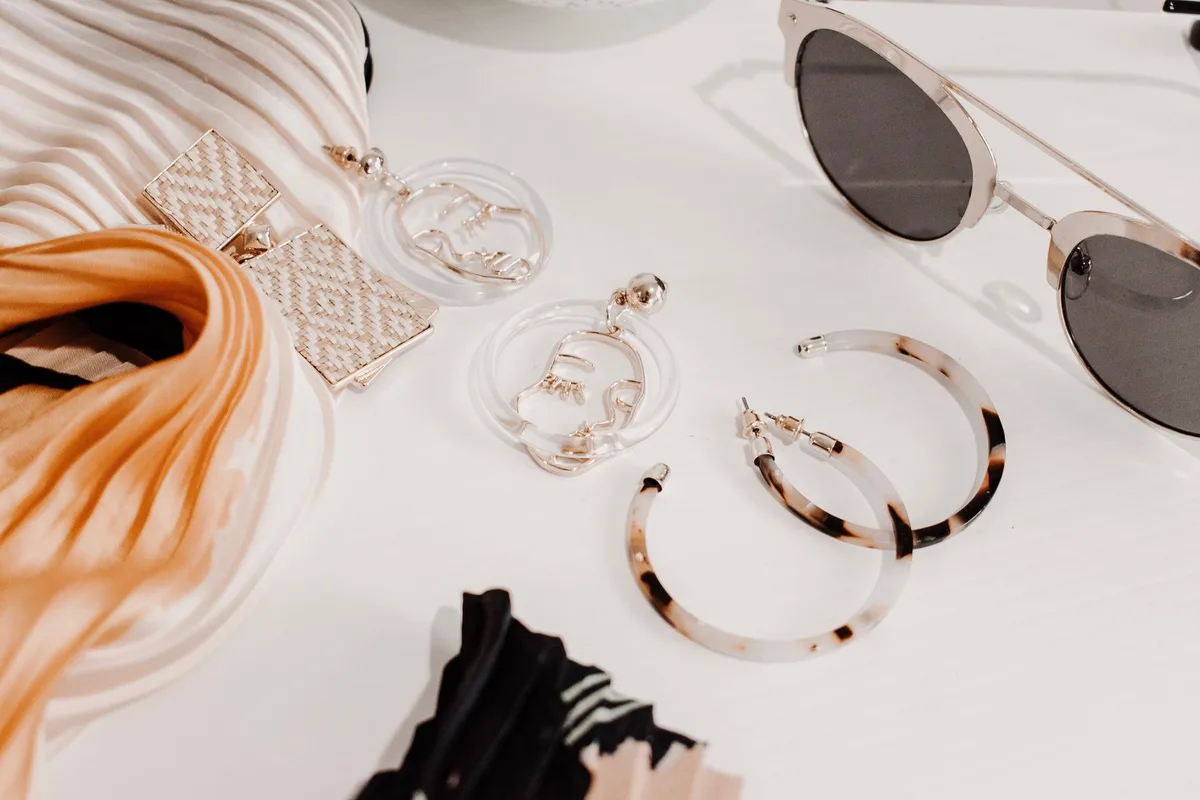
Astrid and Miyu built one of the UK's strongest DTC jewellery brands on Shopify, and their store reflects the effort. Product pages layer multiple image types: clean studio shots on white, styled lifestyle images showing the piece worn, and close-up texture shots that communicate quality of finish at a glance. Their "mix and match" styling suggestions are integrated directly into PDPs, which consistently increases average order value by prompting customers to think in looks rather than individual items. The "pierce with us" in-store experience is promoted through the online store as a point of differentiation that no pure-play ecommerce brand can offer.
2. Mulberry
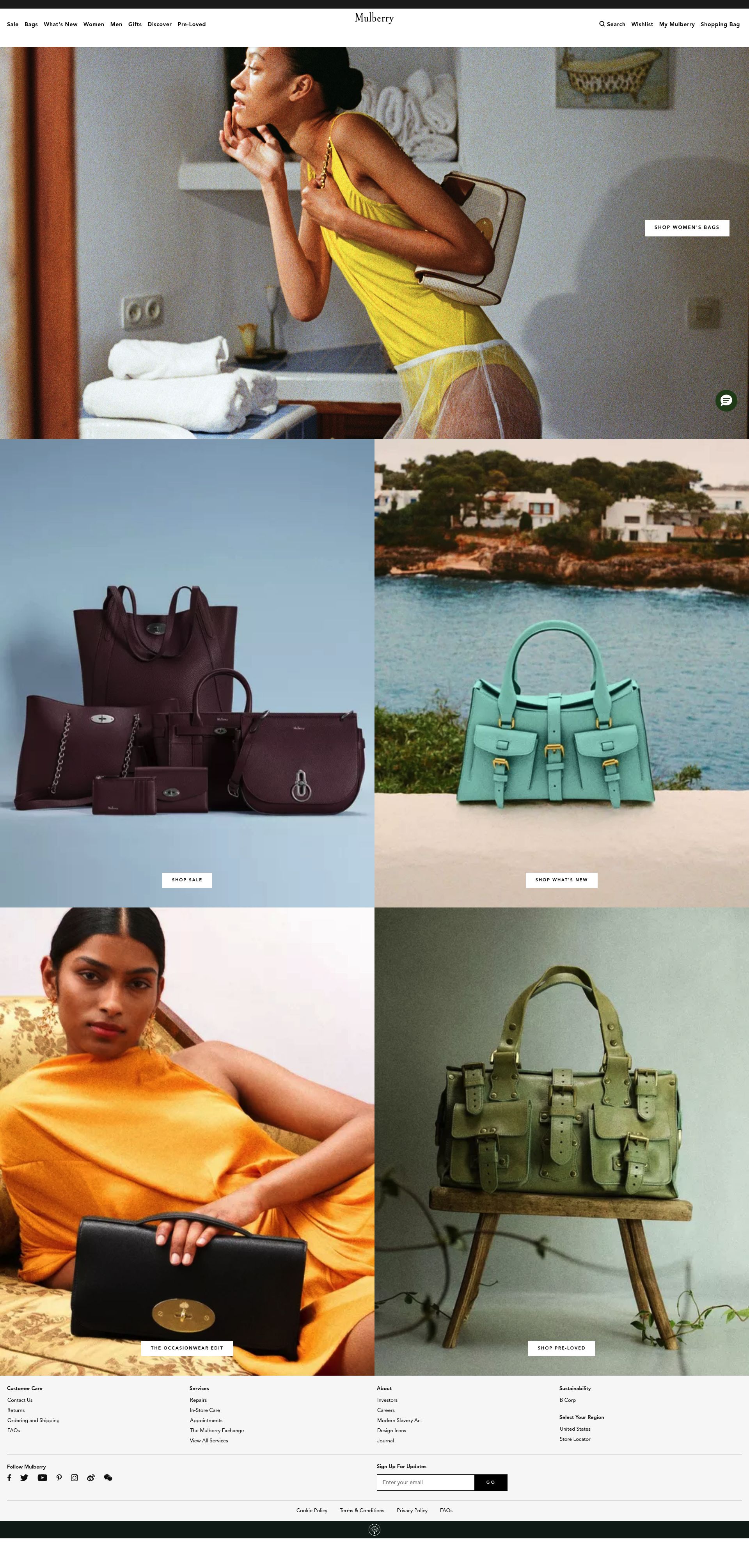
Mulberry's Shopify Plus store handles the complexity of a luxury handbag catalogue with precision. Colour and leather variant selectors use swatches rather than dropdowns, which lets customers visualise the bag they are configuring rather than reading from a list. The "find your Bayswater" heritage content woven into the PDP reinforces the brand story without pulling the customer away from the purchase path. At this price point, trust is the primary conversion lever, and Mulberry earns it through provenance storytelling, craftsmanship detail, and a visible UK warranty.
3. Quay Australia
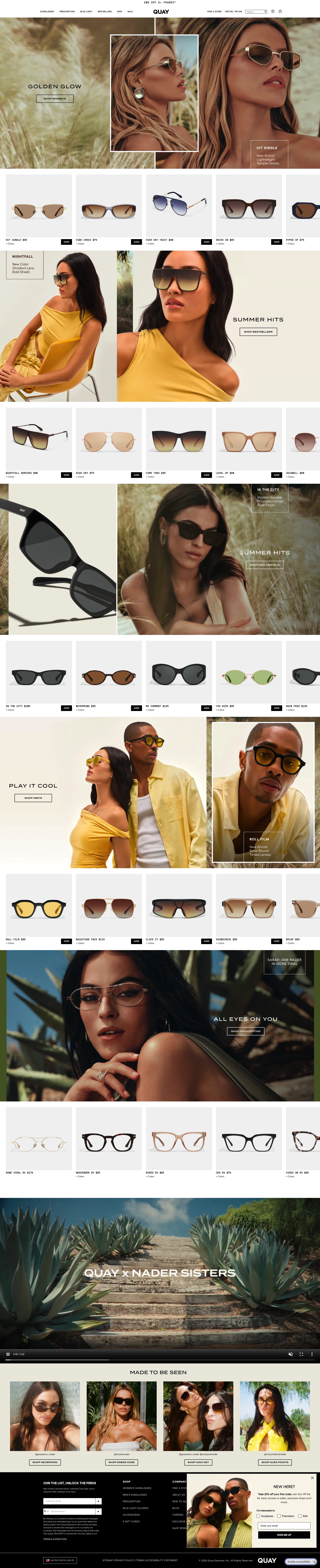
Quay sells sunglasses online at scale and has solved the core category problem — how do these look on a face? — more systematically than most. Their virtual try-on tool, embedded in product pages, uses front-camera AR to overlay frame options on the customer's own face. That single feature removes the biggest friction point in online eyewear retail. Alongside it, their collection pages use model photography across a range of face shapes, which is a lower-tech but equally effective approach to fit confidence. Their colour-led drops and celebrity collab campaigns are promoted through the store without turning it into a marketing brochure.
4. Fairfax and Favor
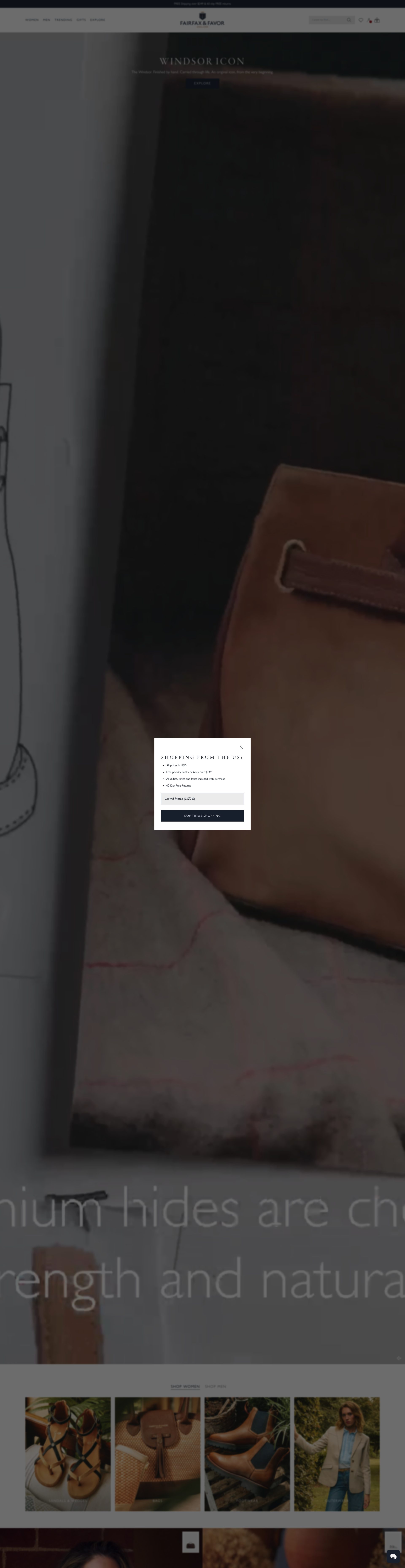
Fairfax and Favor are a strong example of a UK accessories brand using Shopify to serve a premium country and equestrian audience. Their bags, belts, and accessories are positioned carefully: lifestyle photography in countryside settings, product details that emphasise leather grade and hardware finish, and an explicit "Made in Europe" provenance note on relevant items. Their monogramming and personalisation service is surfaced within PDPs rather than buried in a dedicated customisation page, which means it captures impulse interest rather than requiring deliberate navigation. Gifting is a major driver, and the store handles it well with gift message options and curated gift edits.
5. Tatty Devine
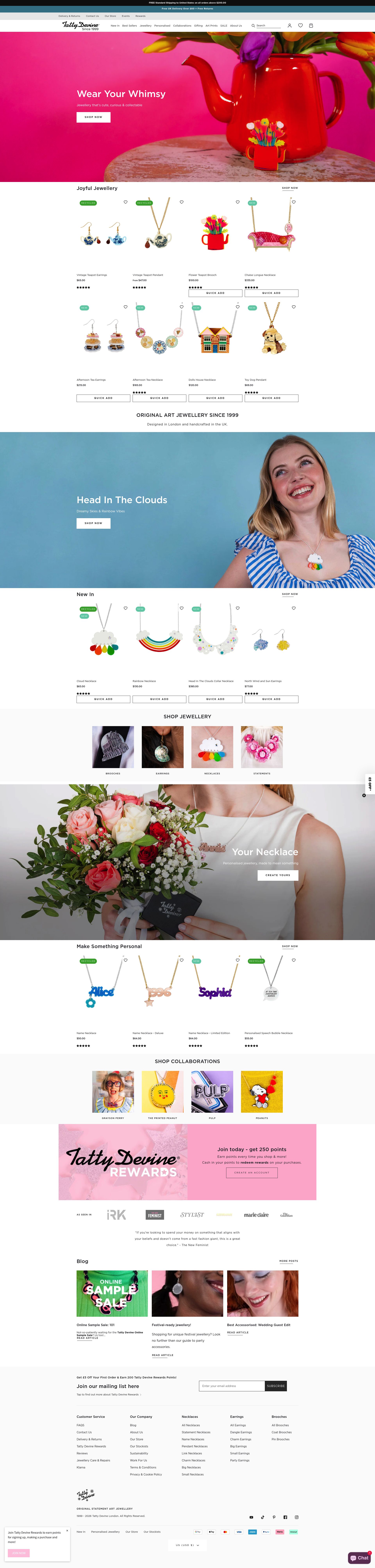
Tatty Devine's jewellery is characterful and playful, and their Shopify store matches it. The product photography leans into colour and personality: pieces are shot in bold contexts, not on clinical white. Their bespoke name necklace tool, which lets customers preview their name in Tatty Devine's signature acrylic lettering before ordering, is one of the more effective customisation implementations in UK jewellery ecommerce. The store's navigation is structured by occasion and mood as much as product type, which suits a gift-heavy customer who arrives knowing they want something "fun" rather than a specific category.
6. MVMT
MVMT built their watch and accessories brand almost entirely through Shopify and DTC marketing. Their store is a textbook example of aspirational lifestyle photography applied at scale: editorial-quality imagery across every collection, bundled with clean typography and minimal product framing. Bundle offers, "complete the look" cross-sells, and subscription-style bundle pricing are all implemented naturally within the product and cart experience. The checkout is fast and the trust signals, free shipping thresholds, reviews, and a prominent returns policy, are placed at the decision points where they matter rather than relegated to the footer.
7. Wolf and Badger
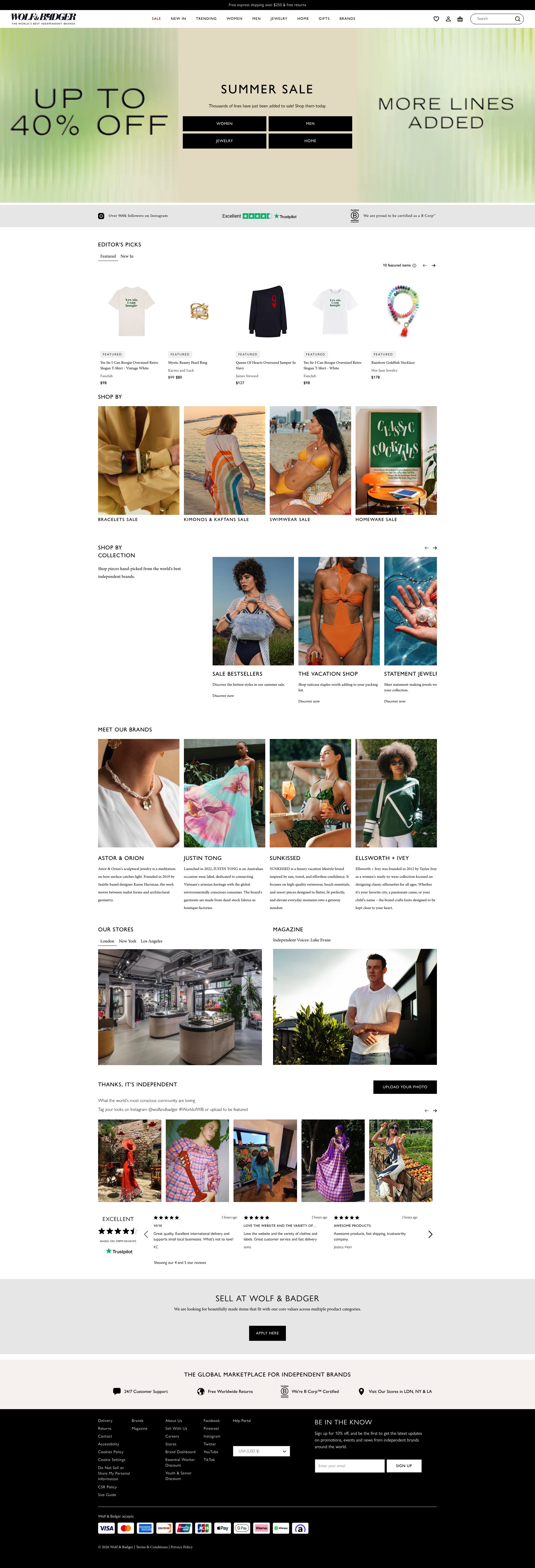
Wolf and Badger is a marketplace for independent designers built on Shopify, which means the store has to handle the complexity of multi-vendor presentation without losing brand coherence. Their navigation and filtering systems do this well: you can filter by category, price, material, and sustainability credentials simultaneously, which serves a customer who knows what they want and a browser who does not. Independent maker stories are featured on product pages, which adds the provenance context that converts browsers into buyers in premium accessories.
8. Mamas and Papas (Accessories)
Mamas and Papas runs their accessories lines through Shopify and their approach to cross-category navigation is worth noting. The accessory and bag collections are integrated into their broader gift and newborn categories rather than siloed, which means customers discovering the store through one product type can naturally arrive at the accessories range. Product bundles with explicit savings are calculated and shown in the cart, not just on promotional pages, and the site handles the emotional weight of gifting with appropriate copy and presentation.
9. Ace and Tate
Ace and Tate sell glasses and sunglasses across Europe with a Shopify-based DTC operation that prioritises frame discovery. Their collection pages use model shots with varied face shapes to communicate fit diversity, and their Home Trial programme, letting customers order five frames to try at home before buying, is integrated into the product page CTA flow rather than promoted only on a dedicated landing page. That integration means the trial option is visible at the moment of hesitation rather than requiring a customer to seek it out. Their store handles a complex variant structure, prescription, non-prescription, multiple lens options, without the product pages becoming cluttered.
10. Herschel Supply Co.

Herschel's bags and accessories store handles a large, globally shipped catalogue with efficiency. Collection pages use consistent photography angles and backgrounds that make browsing a broad product range feel organised rather than chaotic. Internal volume sizing, litre capacity, and fit notes for laptops and travel gear, are called out clearly in product specifications rather than buried in descriptions. Their limited edition and collaboration drops are handled through dedicated landing pages that create urgency without disrupting the main navigation. Herschel also demonstrates clean localisation: UK pricing, free UK delivery thresholds, and UK-specific promotional content are served correctly without awkward currency fallbacks.
Comparison Table
| Brand | Niche Focus | Price Point | Shopify Standout |
|---|---|---|---|
| Astrid and Miyu | Fine and semi-fine jewellery | Mid | Mix-and-match styling, multi-image PDPs |
| Mulberry | Luxury leather handbags | Premium | Swatch-based variant selectors, heritage storytelling |
| Quay Australia | Sunglasses | Mid | AR virtual try-on embedded in PDPs |
| Fairfax and Favor | Country leather accessories | Premium | In-PDP personalisation, gifting UX |
| Tatty Devine | Statement costume jewellery | Mid | Live bespoke name preview tool |
| MVMT | Watches and accessories | Mid | Lifestyle editorial, bundle pricing |
| Wolf and Badger | Multi-brand independent designers | Mid-premium | Multi-vendor filtering, maker storytelling |
| Mamas and Papas | Bags and gifting accessories | Mid | Cross-category navigation, bundle savings in cart |
| Ace and Tate | Glasses and sunglasses | Mid | Home Trial integrated into PDP CTA |
| Herschel Supply Co. | Bags and travel accessories | Mid | Volume specs, localised UK delivery UX |
What These Stores Get Right
- Photography does the selling. Every store on this list invests in multi-shot product pages: studio, lifestyle, detail, and on-model. In accessories, photography is not decoration — it is the primary conversion tool. If your images are flat, no amount of copy or UX optimisation closes the gap.
- The variant selector matches the product. Colour swatches for bags and frames, fabric thumbnails for scarves, size selectors for belts with explicit measurement guidance. None of these stores use a plain text dropdown where a visual selector would serve better.
- Personalisation is surfaced in the PDP, not hidden in a flow. Monogramming, home trial, bespoke name tools: all of them are visible at the product level, not requiring a separate decision to discover. If you offer customisation, put it where the customer is, not where it is easiest to build.
- Trust signals appear at decision points. Free returns, provenance claims, warranty information, and review counts are placed near the add-to-cart button, not only in the footer. The stores that convert best treat every friction point as a place to earn trust, not a place to save screen space.
- Gifting is treated as a primary use case. Gift wrapping, message options, and curated gift edits are built into the store architecture, not added as an afterthought. In accessories, a significant share of purchases are gifts — the stores that acknowledge this convert more of them.
Frequently asked questions
Which Shopify stores sell the best fashion accessories online?
Astrid and Miyu, Mulberry, and Herschel Supply Co. are consistently the strongest performers across jewellery, luxury bags, and travel accessories respectively. Each has invested heavily in product photography, PDP depth, and trust signals that close the gap between browsing and buying in a category where customers cannot handle the product.
How do top fashion accessories brands handle product variants on Shopify?
The best stores replace plain dropdown selectors with visual tools: Mulberry uses leather and colour swatches, Quay embeds AR try-on for frames, and Tatty Devine shows a live preview for bespoke name necklaces. The principle is the same across all of them — let the customer see what they are buying, not read about it.
What makes a high-converting accessories product page on Shopify?
Multi-shot photography is non-negotiable: studio, lifestyle, close-up texture, and on-model images on every PDP. Beyond that, the highest-converting pages surface trust signals (returns policy, provenance, reviews) immediately adjacent to the add-to-cart button, not in the footer. Personalisation options like monogramming or home trial should appear on the PDP itself, not require separate navigation.
How do accessories brands handle gifting on Shopify?
The stores that convert gifting customers well treat it as a first-class use case rather than a checkout add-on. Fairfax and Favor surface gift message options and curated gift edits in the main navigation and on PDPs. Mamas and Papas integrates accessory bundles into gift category pages so customers arriving via gift intent land on relevant products naturally.
Is Shopify Plus worth it for a premium accessories brand?
For brands above roughly £2m annual revenue or with complex requirements — multiple currencies, B2B wholesale, high-volume flash drops, or deep customisation — Shopify Plus is worth the investment. Mulberry, Quay Australia, and Wolf and Badger all run on Shopify Plus. For mid-market brands, standard Shopify with well-chosen apps covers most of what these stores do at a fraction of the cost.
Related reading
- Best jewellery Shopify stores
- Best handbag Shopify stores
- Best luxury Shopify stores
- Best sunglasses Shopify stores
If your accessories store is not converting at the level these brands achieve, the gap is usually product photography and PDP depth. See our Shopify design service or get in touch to talk through what is possible.