
Quick summary
Wedderspoon leads the category with the clearest explanation of manuka grading online, using a KFactor comparison tool that converts confused buyers into confident ones. Beekeeper's Naturals is the strongest pick for a wellness-adjacent honey brand, with third-party testing data and a subscribe-and-save model built around annual savings framing. Hive & Keeper is the best UK example for gifting-first store architecture, surfacing handwritten notes and beekeeper stories before the price. Hilltop Honey handles the DTC-to-wholesale dual audience better than any other store in this list, with a clean subscription toggle and a clear trade enquiry pathway.
Honey is one of the most provenance-driven products in food ecommerce. The best stores in this category do not just sell a jar of sweetener: they sell a location, a beekeeper, a harvest. Getting that story across in a DTC Shopify environment, without tipping into overwrought lifestyle copy, is harder than it looks. The ten stores below do it well, and each one has specific ecommerce decisions worth studying.
1. Hive & Keeper
Hive & Keeper is a UK-based raw honey brand that sources single-origin honeys from independent beekeepers, positioning each product around a specific origin and flavour profile. The store architecture reflects this well: product pages lead with the beekeeper's story and the location of the hives before moving into flavour notes and usage suggestions.
The gifting experience is one of the strongest in the category. Gift boxes with handwritten notes are surfaced clearly in the navigation, and the product page cross-sells are tightly matched to gifting occasions. This matters because honey over-indexes as a gift purchase, and stores that treat gifting as a primary journey rather than an afterthought tend to see higher average order values.
The subscription mechanic is straightforward: a quarterly discovery box of rotating single-origin honeys. It is framed around education and discovery, which is a much more compelling subscription pitch than "save 10% on repeat orders."
2. Wedderspoon

Wedderspoon is a New Zealand manuka honey brand with a strong Shopify Plus presence. The store handles a specific ecommerce challenge well: explaining why manuka commands a premium price. Rather than relying on label credentials alone, the product pages explain the KFactor grading system in plain language, map it to customer use cases (immunity support, wound care, everyday eating), and use third-party certification marks as supporting evidence rather than primary copy.
The site's navigation is structured around the KFactor range, with a comparison tool that lets buyers self-select the right grade for their needs. This is a strong conversion tactic for a high-consideration purchase where buyers arrive with confusion rather than intent. By resolving the confusion on-site, Wedderspoon reduces drop-off at the research stage.
The loyalty programme is visible at multiple points in the browse journey, with the points earned per purchase shown on product pages alongside the price. That placement is deliberately calibrated to lift purchase frequency, not just reward existing loyalty.
3. Rowse Honey
Rowse is the UK's best-known honey brand, and its Shopify presence reflects the challenge of taking a mass-market grocery product direct to consumer. The store is clean and category-organised, with a recipe section that drives organic search traffic and gives the brand a reason to be visited beyond transactional intent.
The product range breadth, from squeezy bottles to specialist manuka, is handled with clear filtering rather than overwhelming category pages. The "Bee Kind" sustainability messaging is consistent across product pages and brand content without becoming the dominant frame, which is the right balance for a brand that is fundamentally selling a cooking and eating ingredient.
Where Rowse stands out structurally is in the recipe integration: each recipe links back to the specific product used, creating a browse loop between inspiration content and the product catalogue. For brands selling a commodity-adjacent ingredient, this kind of content-to-product architecture is one of the most effective ways to differentiate on DTC.
4. Native Honey
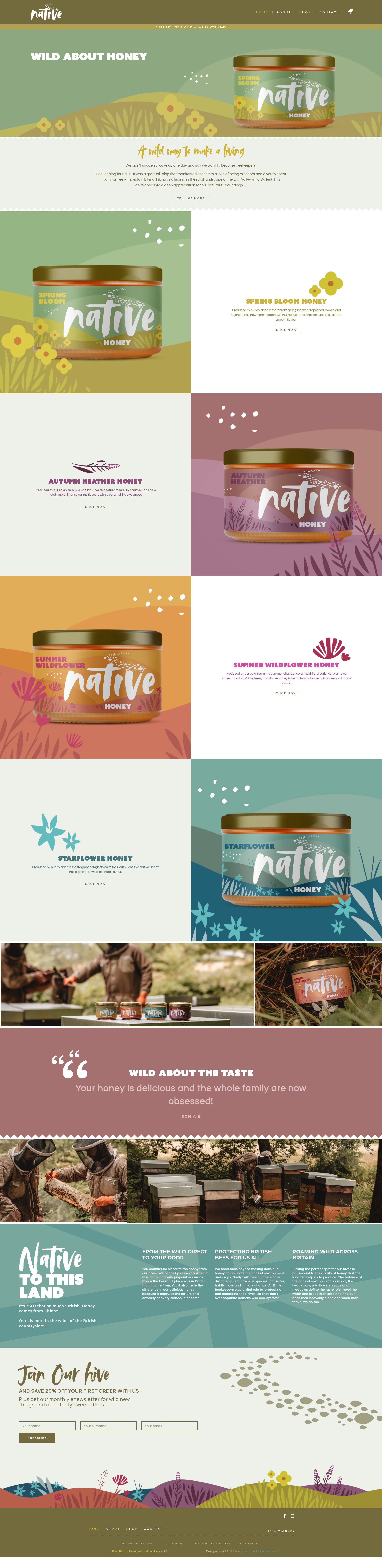
Native Honey sources raw UK wildflower honey direct from independent British beekeepers, with each jar traceable to a specific apiary. The store's visual identity is understated and confident, using close-up photography of honeycomb and hive landscapes to communicate craft without manufactured rusticity.
The product pages use a simple but effective trust architecture: beekeeper name and photo, apiary location with a map pin, harvest date, and a plain-English flavour description. This level of traceability signals authenticity in a category where imported honey sold as "product of multiple countries" is the norm, and it converts well with buyers who care about provenance.
Checkout upsells are relevant and well-chosen: beeswax candles, honeycomb portions, and branded accessories are offered at the basket stage without the typical mismatch between the upsell and the original purchase.
5. Beekeeper's Naturals

Beekeeper's Naturals is a Canadian wellness brand on Shopify Plus that has built a strong DTC operation around honey-derived products: raw honey, propolis sprays, B.LXR brain fuel, and children's wellness products. The brand occupies a distinct position between food and wellness, and the store architecture supports that dual positioning effectively.
The product page structure leads with the health benefit, then supports it with ingredient credentials and third-party testing transparency. For a wellness-adjacent brand, the testing documentation is a genuine conversion asset: buyers who arrive sceptical of "superfood" claims are given specific, verifiable data rather than general assurances.
The subscribe-and-save model is prominently surfaced on every product page, with the savings shown as both a percentage and an annual total. The annual saving framing is more persuasive than a per-unit discount, and Beekeeper's Naturals applies it consistently.
The children's range has its own sub-collection with parent-specific copy and safety information positioned above the fold, which is good practice for any brand that needs to speak to a different buyer persona within a single store.
6. The Raw Honey Shop
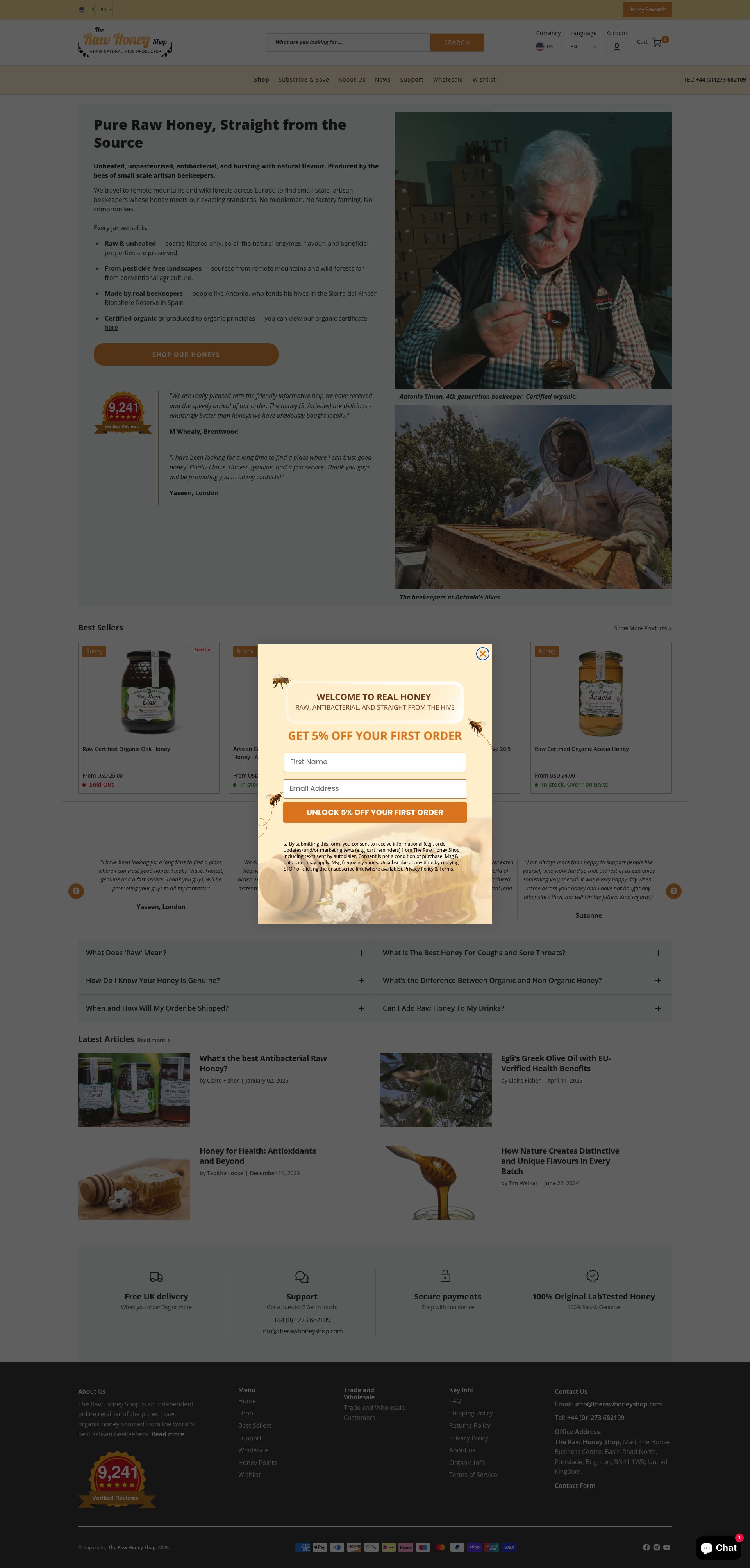
The Raw Honey Shop is a UK retailer curating raw and artisan honeys from around the world, from Scottish heather to Yemeni Sidr. The curation model creates a different set of ecommerce challenges from a producer-brand store: the value proposition is selection and expertise rather than origin story, and the site leans into that well.
Each product page includes a detailed tasting note written by the team, a flavour profile summary, and suggested food pairings. This is the kind of editorial depth that mass-market sites cannot replicate and that positions the store as a specialist worth returning to.
The site handles range breadth through a filtering system that lets buyers narrow by country of origin, honey type, flavour profile, and price. Given the catalogue depth, this filtering is essential to prevent choice paralysis, and it is well implemented.
7. Bermondsey Street Bees
Bermondsey Street Bees is a London urban beekeeping operation producing raw London honey, alongside mead and beeswax products. The brand's local and urban credentials are its clearest differentiator, and the store communicates them with a specificity that is rare in the category.
The product pages name the exact London boroughs and rooftops where the hives are kept, which is not just a story device: it is a genuinely interesting provenance claim for buyers who live in or near those areas. This hyper-local framing creates a strong word-of-mouth dynamic that DTC stores in other categories rarely have access to.
The mead range is an interesting diversification from a basket-size and margin perspective. Honey buyers who are already predisposed to artisan food are well-matched with a mead offer, and the cross-sell from honey to mead on product pages is natural rather than forced.
The subscription offering is framed around seasonal harvests, which creates a genuine scarcity and novelty dynamic rather than a convenience discount. Seasonal positioning is underused in food subscriptions and works well here.
8. Bush Honey
Bush Honey is an Australian raw honey producer selling single-origin honeys sourced from remote bushland across Western Australia. The Shopify store is product-led and clean, with the focus firmly on the honey itself rather than brand atmosphere.
Product pages are detailed on active enzymes, pollen counts, and why raw matters, which is the right approach for a brand selling to buyers who have already decided they want raw honey and are now comparing brands on credentials. The information architecture here serves the considered buyer rather than the impulse buyer, which reflects the brand's customer acquisition strategy accurately.
The international shipping setup is clearly communicated, including customs information for UK and EU buyers. For an Australian brand selling into these markets, removing friction around import queries is a meaningful conversion lever.
9. Hello Honey
Hello Honey is a UK independent honey brand with a bright, accessible visual identity that positions it at the premium end of the mainstream market rather than the niche specialist end. The store is approachable and well-paced, with a range covering flavoured honeys, gifts, and honeycomb.
The flavoured honey range, including chilli honey, cinnamon honey, and truffle honey, opens up a food gifting audience that plain raw honey brands cannot access. Each flavour has a suggested use case (cheese boards, cocktails, pizza) visible on the product page, which reduces the mental work for buyers who are considering a gift rather than a personal purchase.
The brand photography is consistent and well-executed, with a warm palette that communicates artisan quality without the heavy rusticity that can make some honey brands feel dated. For a DTC food brand, the visual identity is doing real commercial work: it signals a gift-appropriate product at the price point the customer is likely expecting before they see the price.
10. Hilltop Honey
Hilltop Honey is a Welsh raw honey brand that has grown from a farmers market operation into a nationally distributed brand, and the Shopify store reflects that transition well. The site covers raw honeys, infused honeys, and gift sets, with the Welsh provenance consistent throughout.
The product page structure is clean and efficient: photography, short description, key credentials (raw, unpasteurised, Welsh), and then the subscribe-and-save toggle. The toggle is placed at the top of the purchase decision, not after the add-to-cart, which is the most conversion-efficient placement for a subscription that has meaningful repeat purchase potential.
The wholesale enquiry pathway is clearly linked from the footer and the about page, which is important for a brand with retail distribution ambitions. Managing trade and DTC through a single Shopify setup is possible with the right B2B configuration, and Hilltop handles the handoff between the two audiences without friction.
The gift set range is well-structured, with clear price-point anchoring from entry-level jars to premium hampers. In a gifting category, offering a clear ladder from low to high spend is a straightforward conversion tactic that many small food brands underuse.
If your honey or artisan food brand is ready for a Shopify store built for both DTC and gifting, take a look at our Shopify design service or get in touch to talk through what you need.
Frequently asked questions
What makes a honey Shopify store successful?
Provenance transparency is the single biggest driver: stores that name the beekeeper, apiary location, and harvest date convert better than those relying on vague artisan language. Beyond that, gifting architecture matters because honey over-indexes as a gift purchase, so stores that surface gift boxes and relevant upsells early in the browse journey consistently see higher average order values.
Which Shopify honey store has the best subscription model?
Beekeeper's Naturals and Hilltop Honey both execute subscriptions well, but for different reasons. Beekeeper's Naturals shows the annual saving amount rather than just a percentage, which is more persuasive for wellness buyers making a considered purchase. Hilltop Honey places the subscribe-and-save toggle at the top of the product page before the add-to-cart button, which is the highest-converting position for repeat-purchase products.
How do honey brands explain premium pricing on their Shopify stores?
The best stores resolve pricing objections through specificity rather than broad claims. Wedderspoon explains the KFactor grading system in plain language and maps each grade to a use case. Beekeeper's Naturals links to third-party testing documentation. Native Honey uses apiary location maps and harvest dates. Generic terms like "artisan" and "pure" do less work than a named beekeeper and a verifiable origin.
Can a honey brand sell both DTC and wholesale through one Shopify store?
Yes, and Hilltop Honey is the clearest example of this working in practice. The store links the wholesale enquiry pathway from the footer and about page without cluttering the DTC browse experience. Shopify Plus B2B features allow for separate pricing catalogues and checkout flows for trade buyers, meaning a single store can serve both audiences without compromise.
What product photography works best for selling honey online?
Close-up honeycomb and hive landscape photography outperforms lifestyle flat-lays in this category because it communicates craft and naturalness without looking staged. Hello Honey is the best example of a warm, consistent palette that signals gift-appropriate quality before the buyer sees the price. Avoid heavy rustic or vintage styling, which can make a brand look dated rather than artisan.