

Quick summary
Seraphine is the standout in UK maternity fashion, with occasion-based navigation, gestational-stage personalisation, and PDPs that show the same garment across multiple bump sizes. Bumpsuit takes the opposite approach, building a high-converting DTC store around a single hero product with trimester-specific reviews that do the pre-purchase work for them. HATCH Collection handles the premium US market best, with honest size inclusivity from XS to 3X and editorial content that keeps customers returning between transactions. Boob Design sets the standard for functional detail, describing every product across its pregnancy, breastfeeding, and beyond uses with GOTS certification prominently placed.
Maternity wear is one of the more demanding ecommerce categories to get right. The customer is buying for a body that is changing week by week, making fit reassurance and size guidance unusually critical to conversion. The category also carries a natural loyalty window: a brand that earns trust during pregnancy has a clear path into postpartum and nursing wear, nursery products, and baby clothing. The stores that convert best here understand both the conversion challenge and the lifetime value opportunity. Here are ten that handle it well.
1. Seraphine
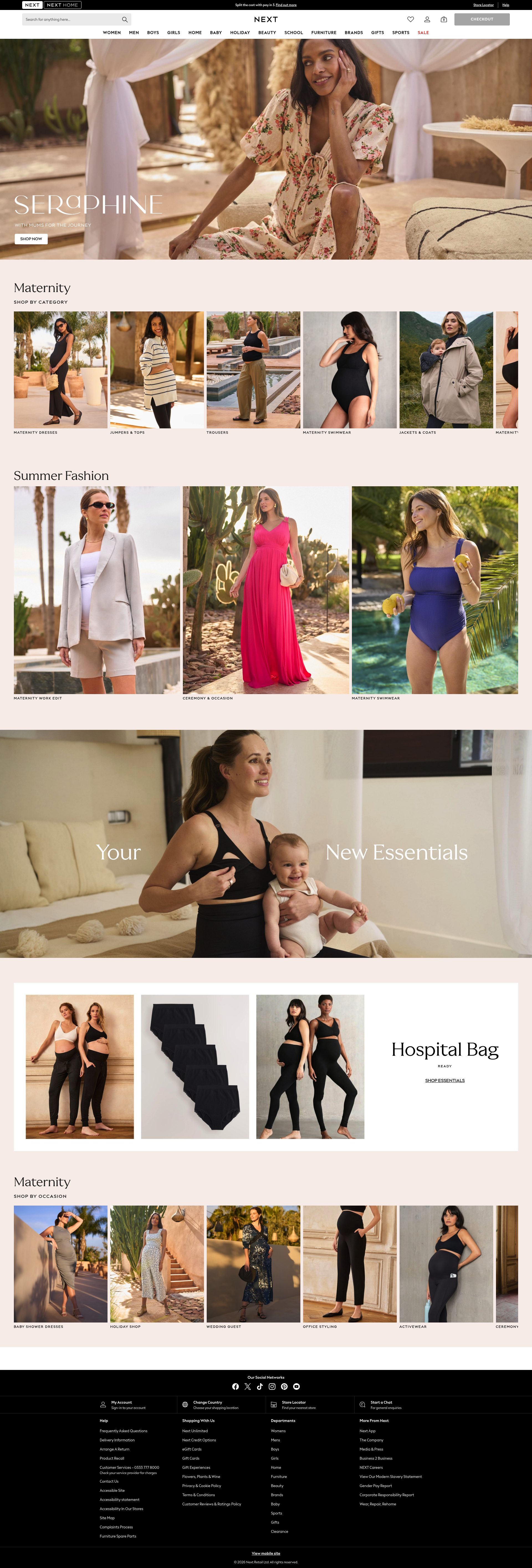
Seraphine is the closest thing to a category authority in UK maternity fashion. Their Shopify Plus store is built around a single key insight: pregnant customers are not just buying clothes, they are buying confidence for specific occasions. Navigation reflects this with clear occasion-based filtering across workwear, eveningwear, casual, and postpartum categories. Product pages show each item at multiple stages of pregnancy, with bump size noted alongside model measurements, which directly addresses the fit uncertainty that triggers hesitation and returns in this category.
The brand's royal endorsement history (the Duchess of Sussex and the Princess of Wales have both worn Seraphine publicly) is referenced subtly in editorial content rather than used as a blunt sales device. That restraint is the right call: it adds credibility without making the store feel like a celebrity gossip page. Subscription to their email newsletter is prompted early with a gestational-stage personalisation mechanic, capturing data that allows them to send relevant size and product timing emails as the pregnancy progresses. That is a strong retention lever that most maternity brands do not bother to build.
2. Bumpsuit
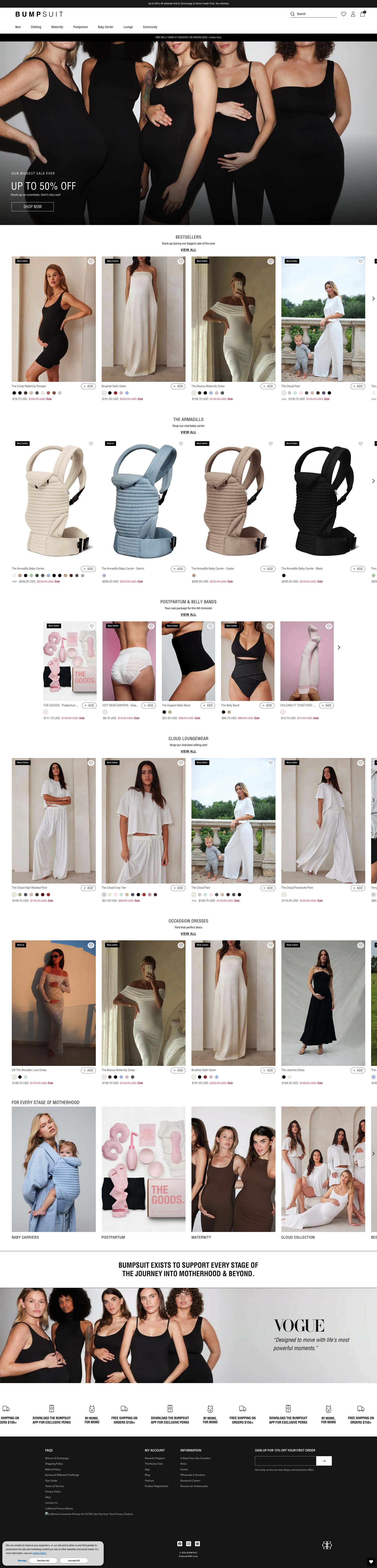
Bumpsuit launched around a single hero product: a one-piece maternity jumpsuit designed for comfort across all three trimesters. The product-focused launch strategy is reflected throughout their Shopify store, which keeps the range deliberately narrow and navigates customers toward the bestselling colourways without overwhelming them with choice. That constraint is a deliberate conversion tactic: a smaller, curated catalogue with strong social proof converts better in the maternity category than a broad one, because the customer is already navigating significant uncertainty about fit and comfort.
Their PDP layout leads with real customer reviews that include trimester and bump size context, not just star ratings. That specificity makes reviews genuinely useful rather than decorative, and it reduces the pre-purchase support load by answering common questions at the point of decision. The brand uses Instagram as its primary acquisition channel, and the Shopify store is optimised for Instagram-referred traffic: above-the-fold content leads with the detail that Instagram posts omit, including sizing, fabric stretch specs, and washing instructions.
3. HATCH Collection
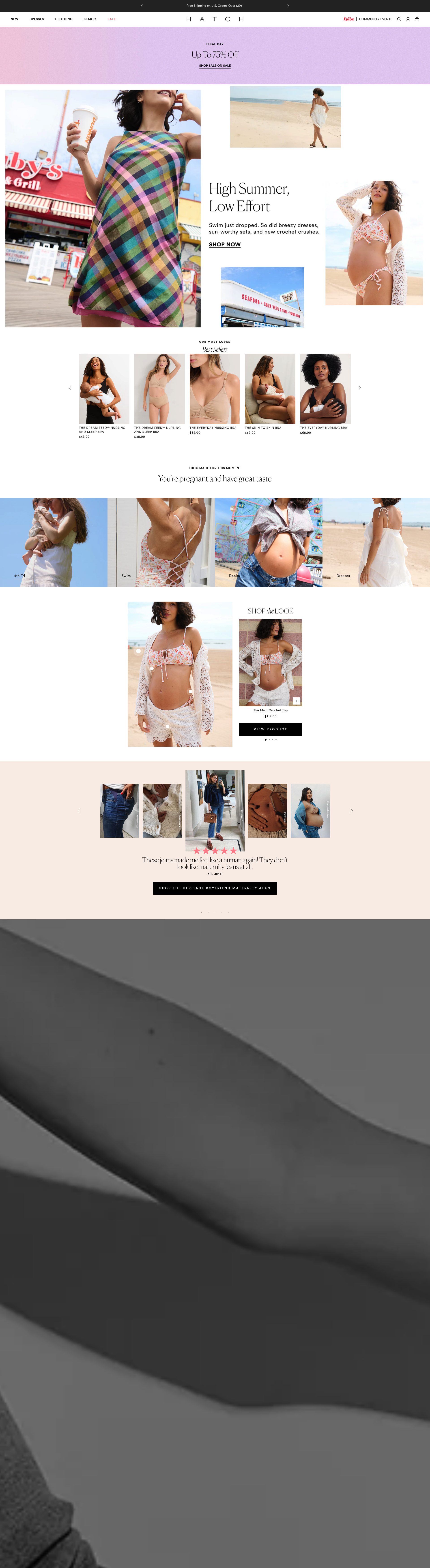
HATCH Collection positions itself at the premium end of the US maternity market, and their Shopify store reflects that. The editorial photography is distinctive: natural light, unposed, deliberately unpretentious in a way that communicates authenticity rather than aspirational distance. Product pages feature styling notes that explain how each item transitions from pregnancy into the postpartum period, which is a strong conversion argument for a customer who is thinking about cost-per-wear on a premium purchase.
Their size range is notably inclusive for a premium brand, running from XS to 3X, and the size guide is specific enough to be useful, with stretch percentage noted alongside traditional measurements. HATCH also runs a strong editorial content layer: the "HATCH Life" section covers pregnancy, parenthood, and lifestyle with enough depth to keep customers on site and build repeat visit behaviour outside of transactional intent. That content investment is a long-term SEO and retention asset that pure-play product stores typically skip.
4. Isabella Oliver
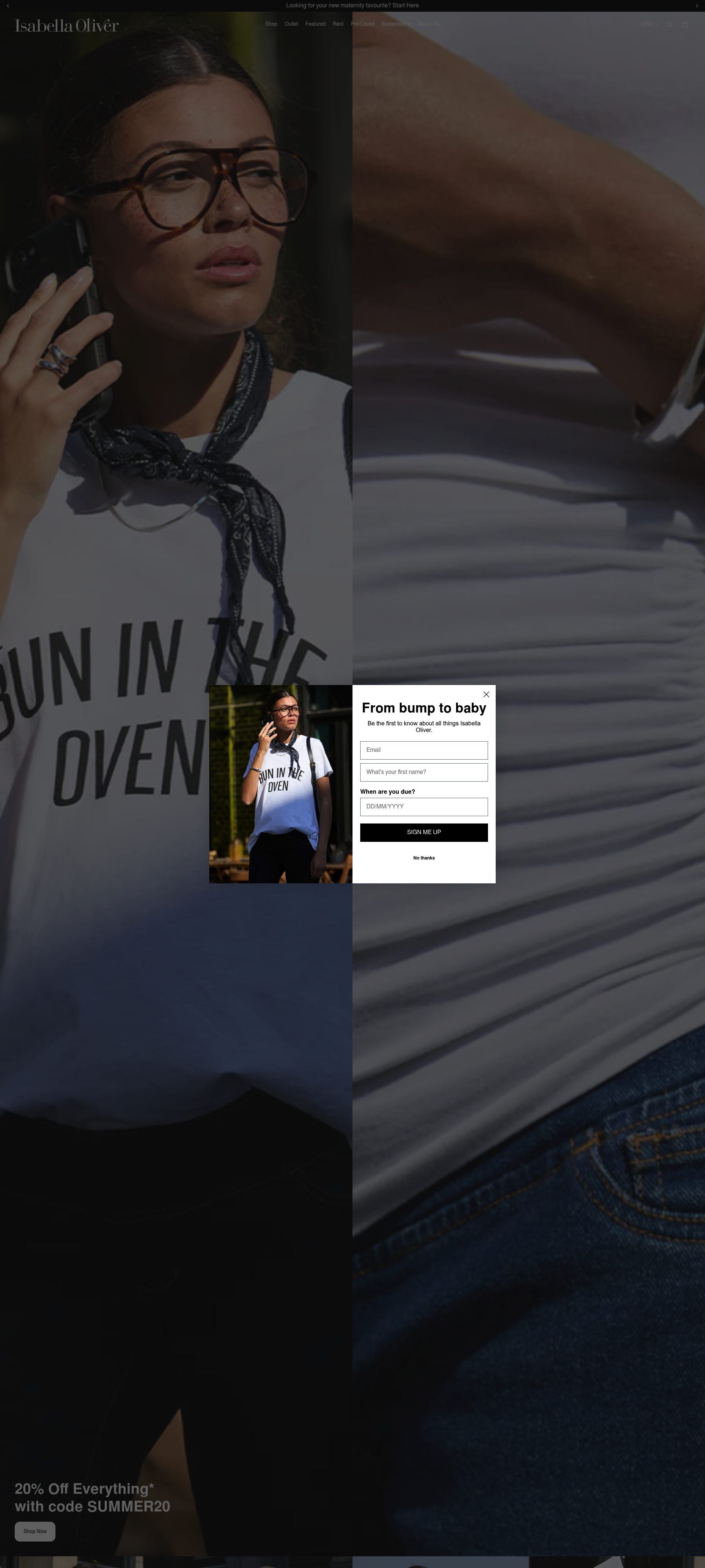
Isabella Oliver is a British maternity and nursing wear brand with a particularly strong approach to product longevity messaging. Every PDP makes the postpartum transition case explicitly: this dress works from bump to nursing, this top is designed to be worn beyond maternity. That positioning is commercially smart because it reframes a maternity purchase as a wardrobe investment rather than a short-term expense, which supports the premium price point.
Their styling guide content is genuinely useful: specific outfit combinations, occasion guidance, and fabric explanations that go deeper than generic style advice. The store's navigation includes a dedicated nursing section rather than folding nursing products into the general catalogue, which makes it easier for a postpartum customer to find what they need without wading through products that are no longer relevant to them. That navigational clarity is a simple change that disproportionately improves conversion for returning customers at a different life stage.
5. Boob Design
Boob Design is a Swedish brand with a Shopify store that executes a sustainability and multifunctionality argument better than almost anyone else in the maternity category. Each product is described across its pregnancy, breastfeeding, and beyond uses with specific feature callouts: discrete nursing access, adjustable support levels, GOTS-certified organic fabric. That level of functional detail gives customers a clear reason to pay more compared to a mass-market alternative.
Their imagery uses models at various stages of pregnancy and nursing, which is both an inclusivity statement and a practical conversion tool: seeing a specific trimester or nursing context represented makes the product feel relevant rather than generic. Boob runs a loyalty and community model that captures post-purchase engagement: their online community content extends the relationship beyond the transaction, which is valuable in a category where the customer relationship naturally has a short transactional window.
6. Storq
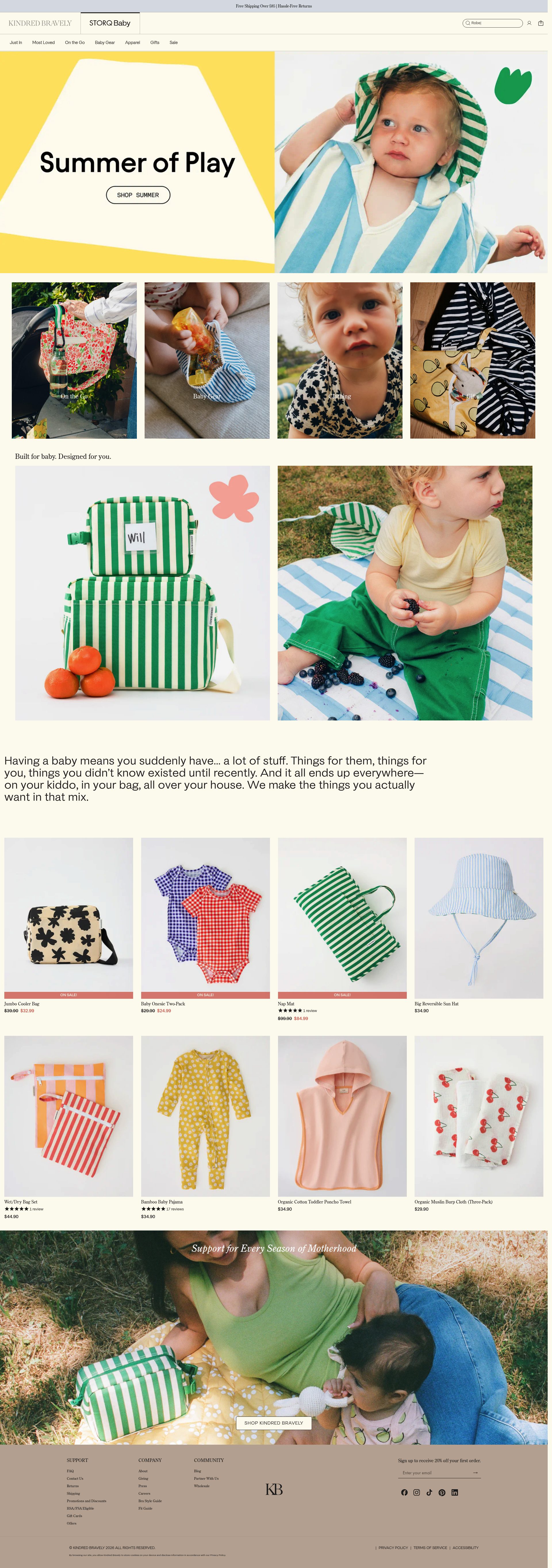
Storq's Shopify store is built around the idea that maternity wear should look and feel like regular clothing. That positioning is reflected in the product photography, which is shot in everyday settings without pregnancy being foregrounded as the primary context. The effect is that their products look like items you would want in your wardrobe regardless of pregnancy, which is a meaningful point of difference in a category where much of the competition leads with bump-centric styling.
Their homepage is sparse by design: a small range, presented clearly, with a strong email capture mechanic that promises early access to new drops. That scarcity approach keeps demand ahead of supply and gives existing customers a genuine reason to stay subscribed. Storq's PDPs are notable for honest fit language: rather than using generic size chart comparisons, they describe how each item fits at different stages and what to expect as the body changes. That specificity reduces post-purchase disappointment and the return rate that follows.
7. Ingrid & Isabel
Ingrid and Isabel is a US maternity brand whose Shopify store handles a broad product range well. They cover maternity clothing, nursing wear, and support products including their signature BellaBand, and the navigation makes clear distinctions between these categories without requiring the customer to understand the full range before they can find what they need. The BellaBand PDP is a masterclass in explaining a non-obvious product: detailed diagrams, use-case explanations, and FAQs address the questions a first-time buyer will have before committing.
Their collection pages use filtering by trimester alongside the standard size and colour options, which is a genuinely useful addition to the maternity category. Most fashion stores filter by size and colour; Ingrid and Isabel filter by where you are in your pregnancy, which maps onto how their customer actually thinks about a purchase decision. That functional empathy in the navigation design is the kind of merchant-side thinking that drives measurable improvements in click-to-purchase rates.
8. Pink Blush Maternity
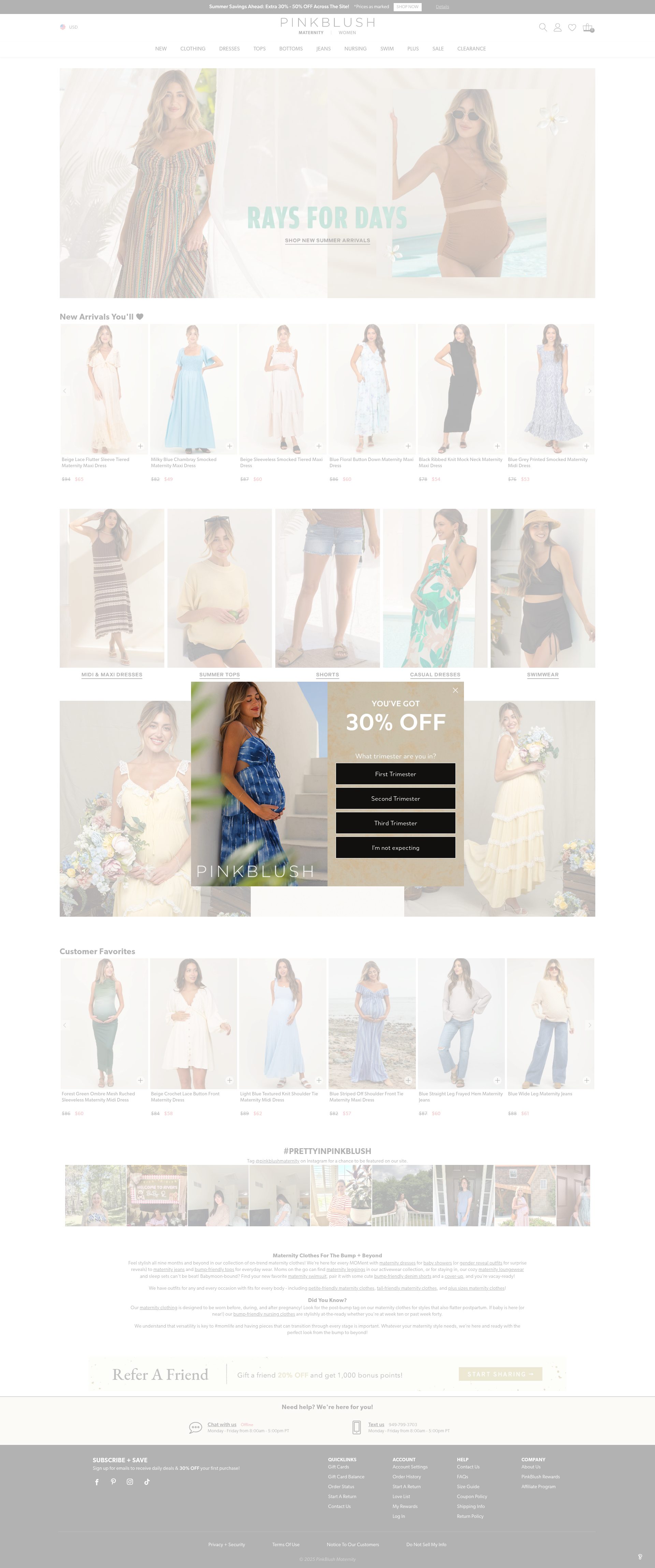
Pink Blush Maternity operates at the accessible end of the price spectrum and their Shopify store is optimised accordingly: fast-loading collection pages, aggressive promotion surfacing (percentage off banners, free shipping thresholds displayed prominently), and a broad product range that keeps customers on site. Their homepage rotates category entry points based on occasion and season, which is a practical approach to keeping a large catalogue feeling relevant to a first-time visitor.
Product pages feature a notably large volume of customer review photos, which is particularly valuable in the maternity category where customers want to see how a garment looks on a real bump rather than a sample model. Pink Blush has clearly invested in review collection and incentivisation as a deliberate conversion asset rather than treating reviews as a passive afterthought. Their email capture is linked to a discount rather than content, which suits the price-sensitive segment of the market they serve.
9. Mamalicious
Mamalicious is a Scandinavian maternity wear brand with a Shopify store that benefits from clean, functional design and a well-structured product hierarchy. As part of the MAMA group, the brand has access to sophisticated ecommerce infrastructure, and this shows in the quality of their PDP layout: size guides with stretch fit indicators, multiple imagery angles including detail shots, and clear nursing-functionality callouts on relevant products.
Their collection page design uses a grid that balances commercial efficiency with browsability: enough product per page to reduce friction in a broad catalogue, but not so dense that the layout feels overwhelming on mobile. The brand's Scandinavian design heritage is communicated through product styling and tone of voice rather than heavy brand narrative, which keeps the pages focused on the product itself. Postpartum and nursing categories are given equal navigation weight to maternity wear, reflecting the brand's understanding that customer lifetime value extends beyond the pregnancy window.
10. Frugi Maternity

Frugi's maternity and nursing range sits within their broader ethical childrenswear Shopify store, and the integration is handled thoughtfully: maternity customers can browse a dedicated section or discover maternity pieces through outfit builders that pair items with baby clothing in the same organic fabric family. That cross-category merchandising is a smart revenue driver in a store where the maternity customer is also, very likely, buying baby clothing.
The sustainability credentials that define the Frugi brand are as prominent on maternity PDPs as they are throughout the rest of the store: GOTS-certified organic cotton, Fairtrade manufacturing, and a repair-and-return programme. That consistency matters because a values-driven customer will notice if the maternity range is treated as a secondary category with weaker ethical credentials than the core baby clothing line. Frugi avoids that trap by applying the same product transparency standards across every section of the store.
Maternity wear customers have a naturally short buying window, which means your store needs to convert efficiently and build postpartum loyalty fast. Whether you are launching a new maternity brand or improving an existing Shopify store, our Shopify design service is built to help you get there. Get in touch to talk through what your store needs.
Frequently asked questions
What makes a maternity wear Shopify store convert well?
The highest-converting maternity stores solve fit uncertainty at the product page level. That means showing garments on real customers at different stages of pregnancy, giving specific stretch and sizing data, and using reviews that include trimester and bump size context. Customers in this category are buying for a body that changes week by week, so generic size charts are not enough.
Do maternity wear brands benefit from a narrow or broad product range?
Narrow and curated generally converts better in the maternity category, as Bumpsuit demonstrates. A focused range reduces decision fatigue and makes it easier to build social proof around specific products. Brands with broader catalogues, like Ingrid and Isabel, compensate by using category filtering based on trimester rather than just size, which maps onto how pregnant customers actually think about buying.
How should maternity Shopify stores handle postpartum and nursing wear?
The best stores treat postpartum and nursing as a distinct but connected category rather than folding it into the maternity range. Isabella Oliver and Mamalicious both give nursing wear its own navigation section, making it easy for a returning postpartum customer to find relevant products without wading through items that no longer apply. Positioning products as transitioning from bump to nursing also supports higher price points by reframing the purchase as a longer-term wardrobe investment.
What role does sustainability play in maternity wear ecommerce?
Sustainability is a genuine conversion lever in this category, not just a brand value statement. Boob Design and Frugi both make GOTS certification and organic fabric sourcing central to their product pages, and their customer base is demonstrably willing to pay more for it. The key is applying those credentials consistently across every product in the maternity range, not just the hero items, since values-driven customers notice when sustainability claims are selective.
How do the best maternity stores build customer lifetime value beyond the pregnancy window?
The strongest stores engineer postpartum loyalty during the pregnancy itself. Seraphine captures gestational data at email sign-up and uses it to send size and product timing emails as the pregnancy progresses. Isabella Oliver and Boob Design frame every product around its post-pregnancy usefulness, giving customers a reason to stay engaged after they have given birth. Frugi takes a cross-category approach, pairing maternity items with baby clothing in the same organic fabric family to drive basket value from a customer who is buying in both categories at the same time.