
Quick summary
Neal's Yard Remedies sets the benchmark for certified organic beauty ecommerce, with Soil Association credentials and full ingredient transparency on every page. UpCircle Beauty is the most differentiated brand in this list — its upcycled ingredient story (coffee grounds, fruit stones, chai spices) is turned into genuinely compelling product copy that goes beyond marketing. Facetheory is the strongest pick for ingredient nerds: full INCI lists with plain-English explanations on every product, plus B-Corp certification and UK manufacturing. Pai Skincare does the best job of a single-hero-product strategy, building an editorial ecosystem around its Rosehip Oil with sourcing stories, clinical data, and before/after reviews that convert.
Natural and organic beauty shoppers are among the most sceptical in ecommerce. They have seen too many "free from" claims that do not hold up, and too many green aesthetics wrapped around not-very-natural formulas. The best stores in this category earn trust through certification badges, full ingredient transparency, and brand stories that are specific enough to be verifiable. Here are ten that do it right.
1. Neal's Yard Remedies
Neal's Yard Remedies has been the benchmark for UK organic beauty ecommerce for years, and the store earns that position. Soil Association certification is displayed prominently throughout, the product pages include full ingredient listings with explanations, and the sustainability credentials — carbon-neutral operations, sustainable sourcing — are backed by detail rather than slogans.
2. UpCircle Beauty
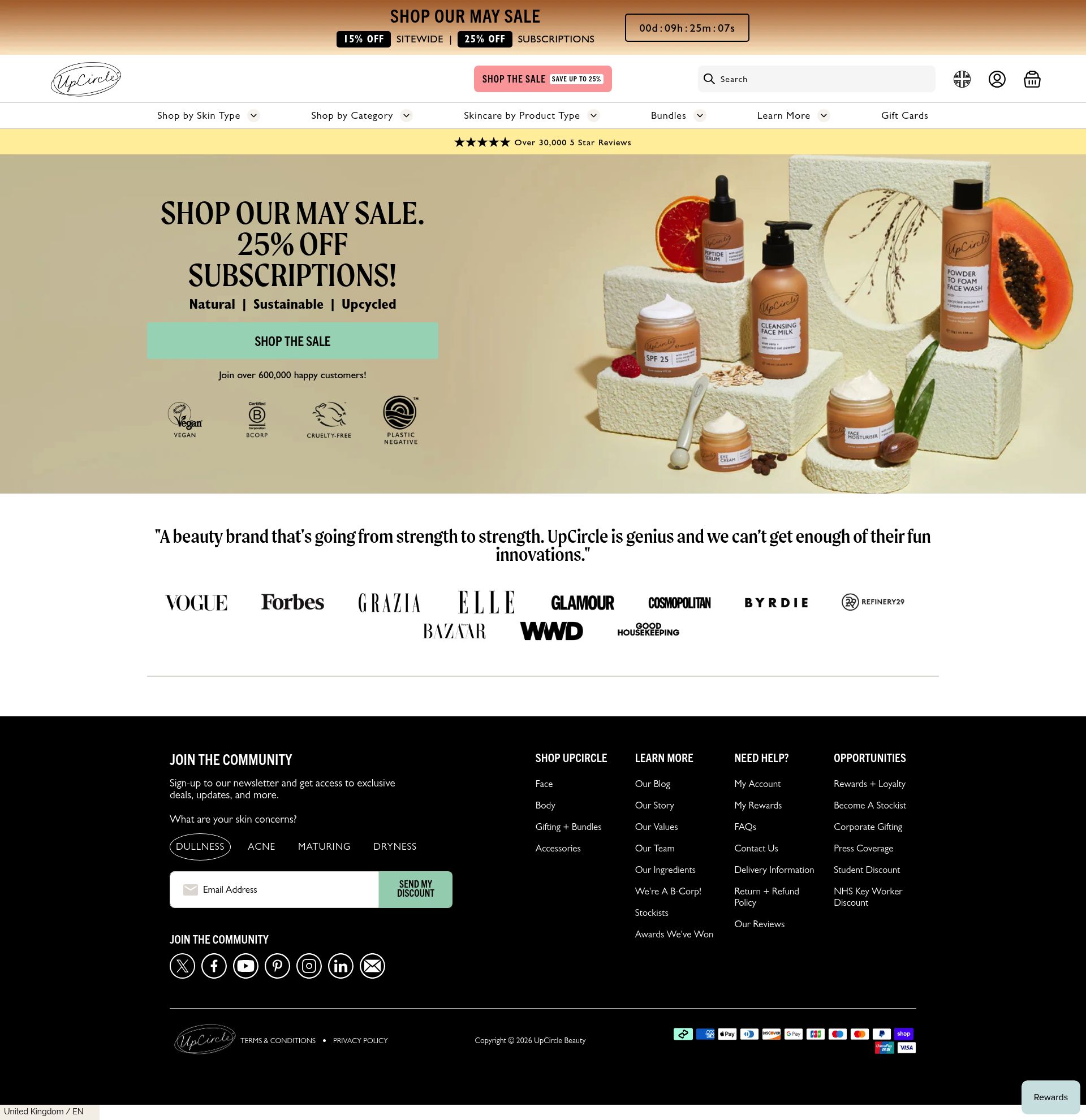
UpCircle's upcycled ingredient story — coffee grounds from London cafes, fruit stones from the food industry, chai spices from tea importers — is one of the most distinctive in natural beauty, and the Shopify store makes the most of it. Each product page explains exactly which waste material is used and where it comes from, turning environmental credentials into compelling product differentiation.
3. Green People
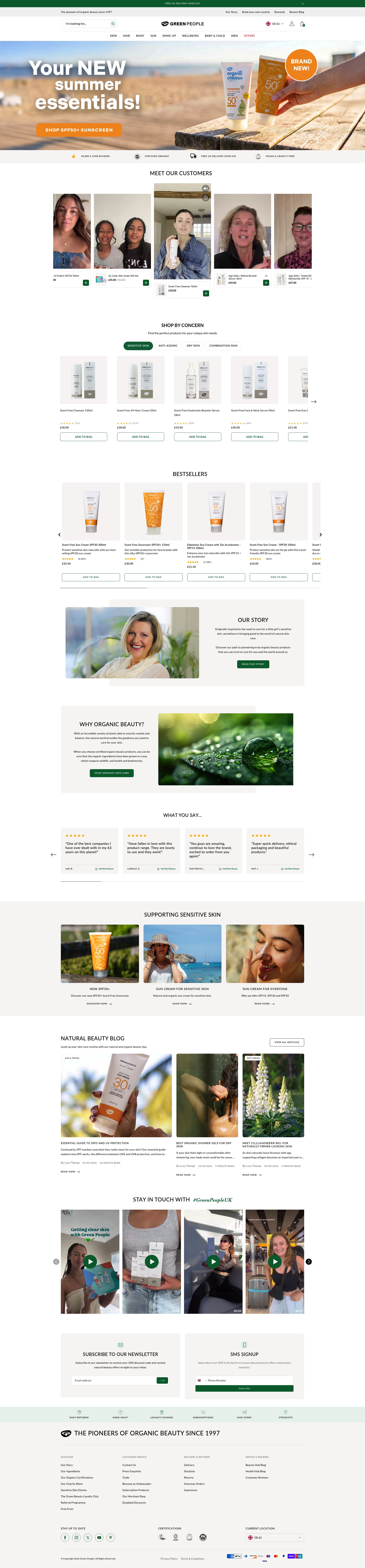
With over 25 years in natural beauty, Green People's store speaks to the allergy-prone and sensitive-skin customer with authority. The filtering system allows shoppers to narrow products by specific allergens or irritants they need to avoid, which is genuinely useful functionality that goes well beyond typical "natural" positioning.
4. Pai Skincare
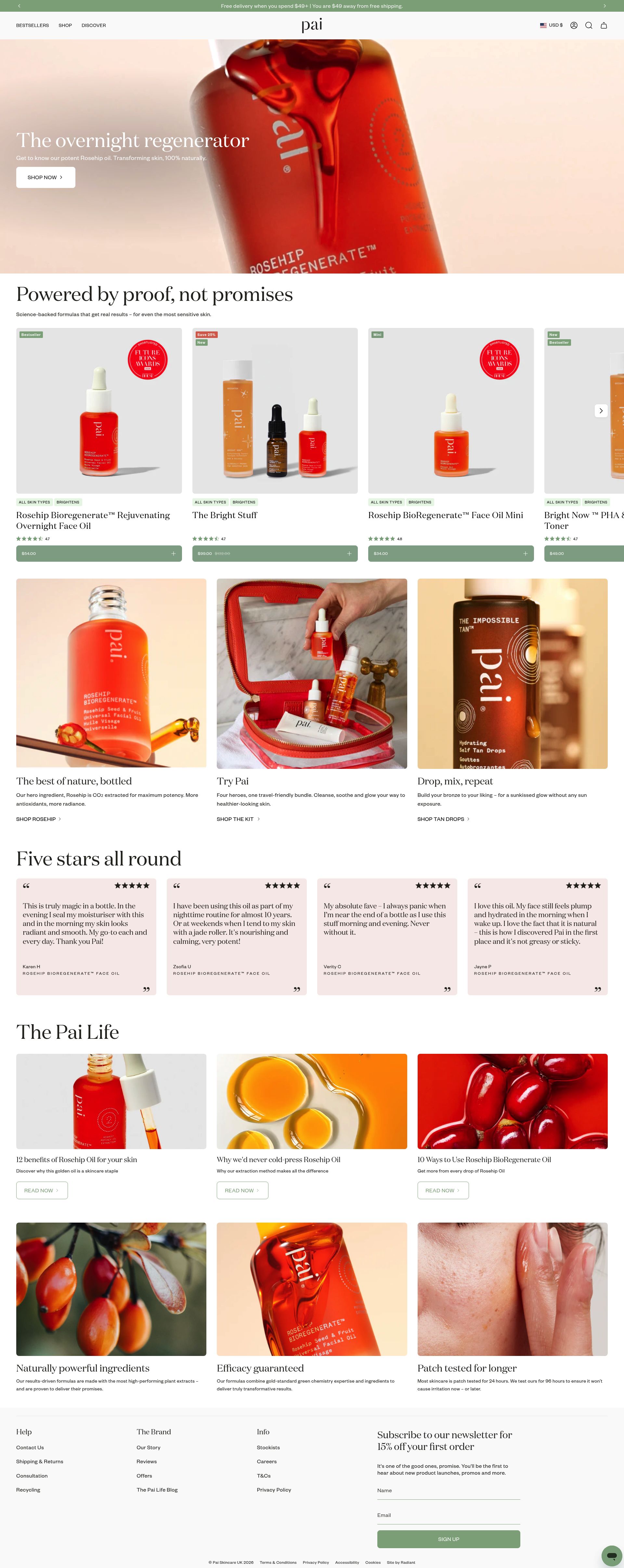
Pai's UK-manufactured, certified organic formulas are built for reactive skin, and the store reflects this through a consistent language of reassurance. The hero product — Rosehip BioRegenerate Oil — has its own editorial ecosystem within the store: sourcing story, clinical data, and a high volume of before/after customer reviews that do the persuasion work.
5. Votary

Votary takes a different approach to the organic credentials conversation: it simply does not make it the lead message. The store leads with results and aesthetics, and the 100% plant oil formulation story sits behind the beauty, not in front of it. This positions Votary for the customer who is natural by preference rather than by necessity.
6. Botanicals
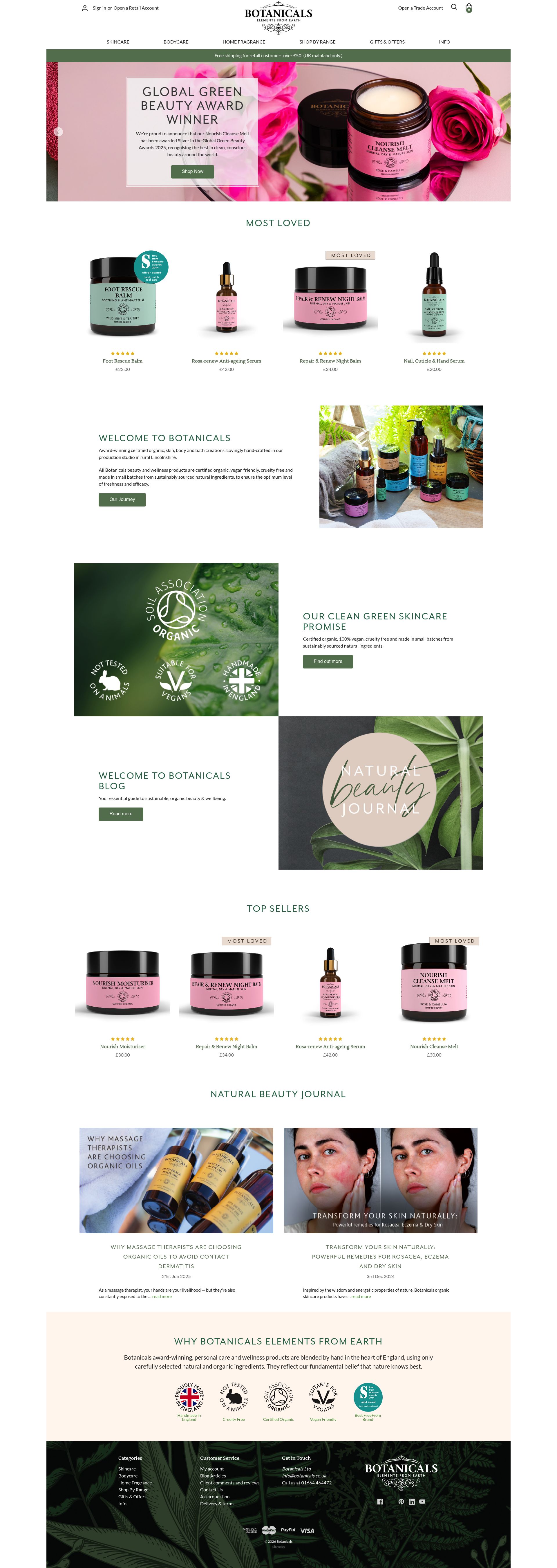
Botanicals' small-batch, Soil Association certified production model is reflected in a store that feels considered and unhurried. The brand avoids the mass-market visual language of larger competitors, instead creating a sense of craft and provenance through photography, typography, and product naming that rewards close attention.
7. Facetheory
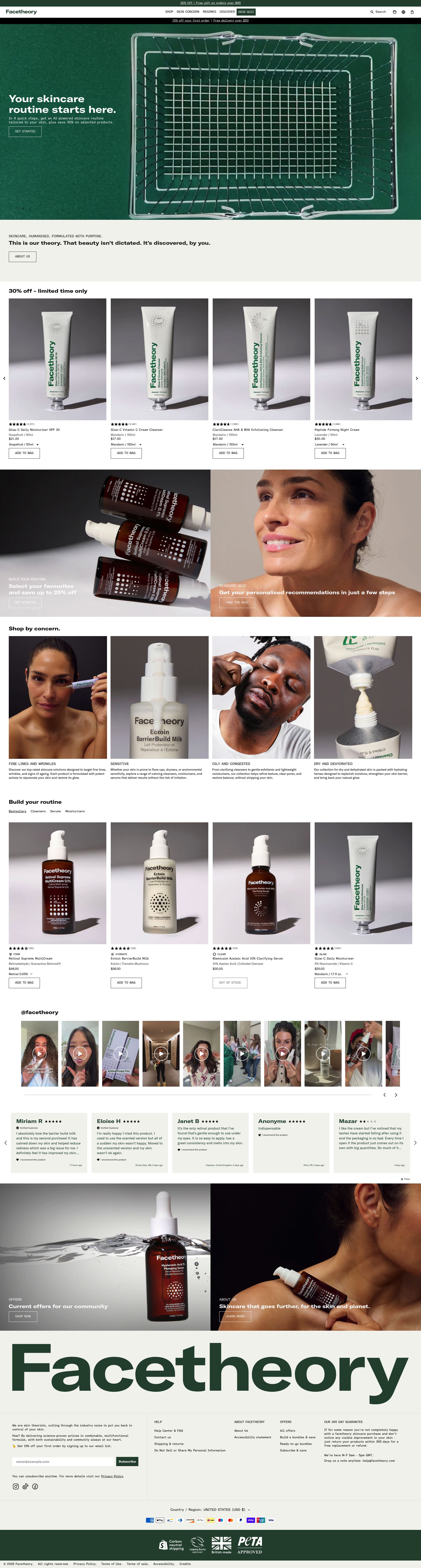
Facetheory's B-Corp certification and Sheffield manufacturing roots are woven into the store architecture, but what makes the natural credentials credible is the ingredient transparency. Full INCI lists are displayed on every product page alongside plain-English explanations of what each ingredient does — a standard that few competitors in the natural space match.
8. Wild Rising Skincare
Wild Rising is a newer entrant in UK natural beauty with a Shopify store that punches above its size. The clean formulas and cruelty-free positioning are communicated through a calm, botanical visual identity, and the product range is tight enough that new customers can navigate it without feeling overwhelmed.
9. Bamford
Bamford's organic skincare sits within a broader luxury lifestyle brand rooted in the Cotswolds and Daylesford Farm. The Shopify store's strength is that the organic and sustainable story feels lived-in rather than marketed — it is the origin of the brand, not an add-on. For customers who distrust greenwashing, this authenticity is the most effective conversion tool on the page.
10. MyPure
MyPure operates as a curated marketplace for certified natural and organic brands, and its Shopify store is built around helping customers find the right product across a wide range. Free samples with orders, certification filtering, and a strong editorial voice reviewing each brand add genuine value that single-brand stores cannot replicate.
Natural and organic beauty ecommerce succeeds when the credentials are specific, the storytelling is honest, and the store design reflects the values it claims to hold. Greenwashing is visible to this audience — but genuine certification and transparent formulations convert exceptionally well.
If you are building a natural beauty Shopify store and want it to perform, explore our Shopify design services or contact us to discuss your brand.
Frequently asked questions
Which natural beauty Shopify stores have the strongest certification credentials?
Neal's Yard Remedies and Green People both carry Soil Association certification and display it prominently throughout their stores. Facetheory holds B-Corp status and backs it up with full INCI ingredient lists on every product page. Botanicals also operates to Soil Association standards but takes a smaller-batch, craft approach rather than the mass-market positioning of larger certified competitors.
Do natural beauty brands actually perform well on Shopify?
Yes, and this category tends to outperform on conversion when credential transparency is high. Shoppers in the natural and organic beauty space are sceptical and research-led — detailed ingredient pages, third-party certifications, and before/after reviews directly lift add-to-cart rates. Brands like Pai Skincare and Facetheory have built their entire store architecture around ingredient education, and it shows in repeat purchase rates.
What makes a natural beauty Shopify store convert better than average?
Three things move the needle most: specific certifications displayed on product pages (not just the homepage), full ingredient transparency with plain-English explanations, and customer reviews that speak to the brand's specific claims (reactive skin, allergen-free, upcycled). Generic "clean beauty" copy with no evidence behind it is the fastest way to lose trust with this audience.
Is Shopify a good platform for launching a natural beauty brand in the UK?
Shopify is the dominant platform for independent and DTC beauty brands in the UK, and for good reason — the app ecosystem covers subscriptions, loyalty programmes, bundling, and detailed product pages without custom development. For brands where subscription replenishment matters (skincare, supplements), Shopify Plus with a tool like Recharge or Skio is the standard setup.
How do the best natural beauty stores handle ingredient transparency on Shopify?
The best stores — Facetheory, Pai, Green People — display full INCI ingredient lists alongside plain-English breakdowns of what each ingredient does and why it was chosen. Green People goes further with allergen filtering across the product range, letting shoppers exclude specific irritants. This level of transparency is not just good ethics; it is a conversion strategy for the sceptical, high-intent buyer this category attracts.