
Quick summary
Brightland is the standout pick for design-led DTC, with a visual identity that makes it instantly giftable and a subscription programme positioned as a named membership rather than a discount. Graza wins on product clarity: two SKUs, two use cases, one price point, with conversion-first PDPs that do not over-explain. Kyoord has built the strongest health-positioning play in the category, structuring its store around polyphenol counts and clinical citations to justify a supplement-tier price point. Odysea is the best UK example, with origin-first navigation, harvest-year detail on every PDP, and a subscription toggle that converts without pressuring.
Olive oil is an unusual ecommerce category: the product is perishable, the quality signals are invisible to the untrained buyer, and the price range runs from supermarket staple to £40 for 500ml single-estate EVOO. The stores that convert best in this space have solved one problem above all others: how do you communicate quality and provenance through a screen? The ten stores below each answer that question differently, and there is a lot to borrow from each of them.
1. Odysea
Odysea has been importing Greek and Eastern Mediterranean produce into the UK since 1989, and their Shopify store reflects that depth of knowledge. Product pages for their olive oils include harvest year, olive variety, and the specific region of origin in Greece, which is the level of detail that converts a food-educated buyer who has been disappointed by vague "Mediterranean blend" labelling elsewhere. The PDP layout pairs tasting notes with recipe suggestions, which extends the perceived value of the product before the customer reaches the price.
Their navigation is built around provenance: country of origin is a top-level filter alongside product type, so a customer who specifically wants Cretan or Kalamata oil can get there in two clicks. That is a smart taxonomy decision for a category where origin matters as much as the product itself. Subscription options are available on core lines, surfaced on the product page as a simple toggle with a visible per-delivery saving, which is the right way to introduce subscriptions without forcing them.
2. Belazu
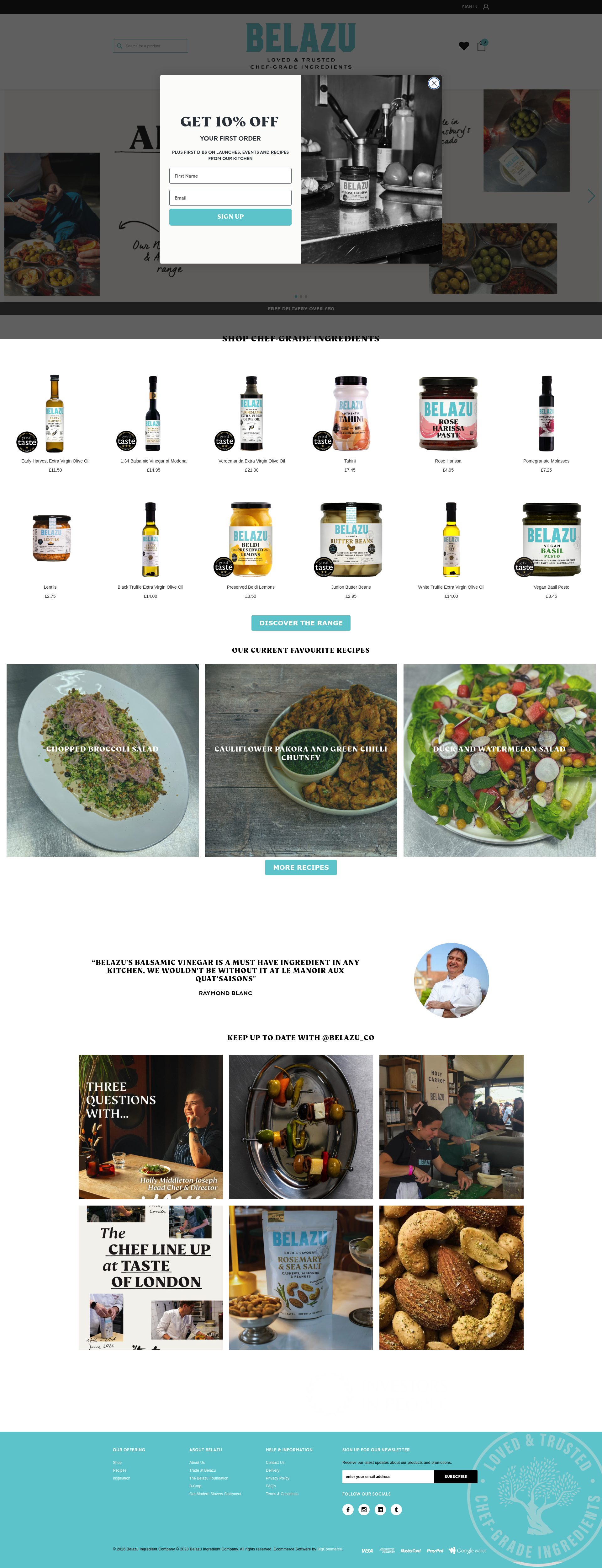
Belazu's store is a case study in how to handle a premium food brand that sells direct and through major retail. Their Shopify site earns its position by offering products, formats, and bundles that are not available in Waitrose or Ocado. The PDP for their extra virgin olive oils includes a flavour profile wheel, a harvest date, and a section on what the oil is best used for, from finishing drizzles to high-heat cooking. That specificity reduces returns and repeat-contact questions.
The gift bundle builder is a standout feature: customers can select oils, vinegars, and accompaniments into a hamper with customisable packaging, which lifts average order value considerably compared to single-product purchases. The build-your-own mechanic is implemented as a guided flow rather than a product configurator, which keeps it accessible to less technically confident gift buyers. Belazu also uses editorial content well: their recipes section is genuinely useful and links directly to the relevant product at the end of each recipe, creating a natural path from inspiration to purchase.
3. Organic Olivia
Organic Olivia (the Greek olive oil brand, distinct from the US wellness brand of the same name) operates a tightly focused Shopify store built around a single estate in the Peloponnese. That focus is a strength: the entire store is an argument for why this one oil, from this one place, is worth the premium. The homepage opens with the family story and estate photography before showing any products, which is the right sequencing for a premium DTC brand where trust must be established before price is revealed.
Product pages include polyphenol content and oleic acid levels with a plain-English explanation of why these numbers matter for health. That is a smart tactic in the current market: polyphenol content has become a genuine purchase driver for health-conscious buyers, and being specific with numbers builds credibility that vague "rich in antioxidants" claims cannot. The store has a minimalist design that suits a single-SKU estate brand and avoids the category trap of trying to compete on range when the value proposition is really about depth.
4. Yiayia & Friends
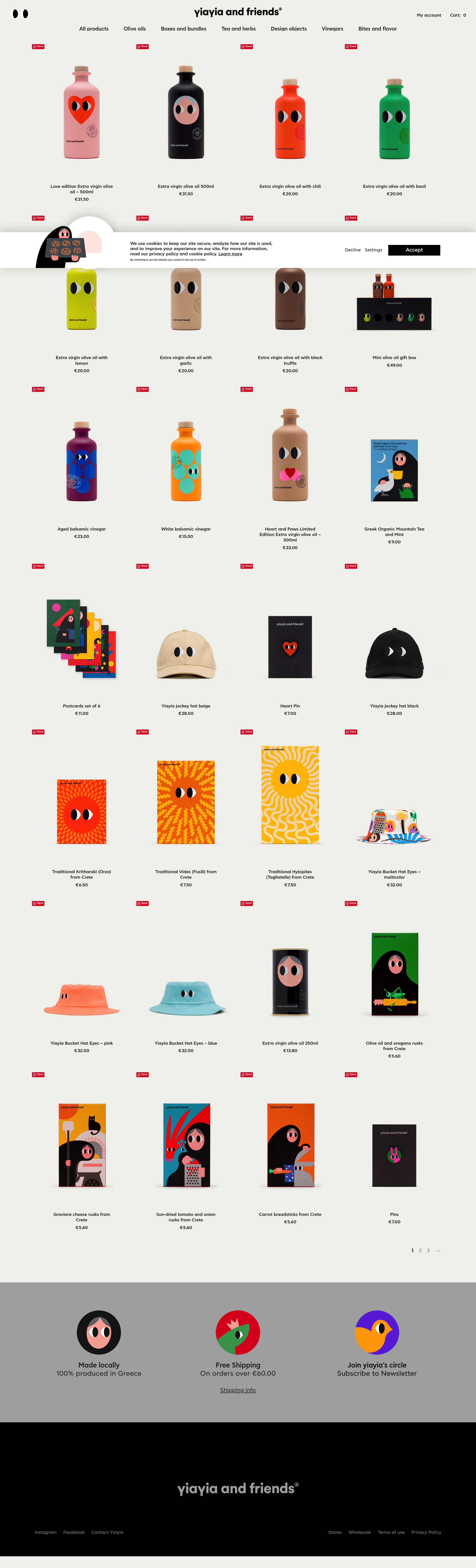
Yiayia & Friends is a UK-based Greek food brand with a tone of voice that stands out in a category that often defaults to either clinical precision or generic Mediterranean lifestyle imagery. Their Shopify store uses illustration and warm copy to communicate the family and community behind the products, which makes the brand feel approachable rather than aspirational. The product photography balances the warm brand identity with clean product shots that show the oil's colour and the bottle design clearly.
Their subscription programme is handled well: instead of hiding the repeat-delivery option in the cart, the product page leads with "Subscribe and Save" as the primary CTA, with one-off purchase as the secondary option. That positioning matters for a consumable product where lifetime value is the real commercial driver. The store also does a good job of cross-selling: a customer buying olive oil is shown olives, honey, and tahini as natural companions, which increases basket size without feeling like a hard upsell.
5. Amphora Nueva
Amphora Nueva is a California-based olive oil retailer that has become a reference point for premium EVOO ecommerce. Their Shopify store is built around the harvest season model: oils are released in numbered batches with specific crush dates, and the store communicates the freshness of each batch directly on the product page. That is a genuinely differentiating tactic in a category where most retailers treat olive oil as a shelf-stable product rather than a perishable one with a peak consumption window.
The PDP for each oil includes a full chemistry panel: free acidity, peroxide values, polyphenols, and oleocanthal content with links to third-party lab reports. That level of transparency builds trust that no amount of lifestyle photography can replicate, because it is objectively verifiable. Their olive oil of the month club is positioned not as a discount mechanism but as an education programme, with tasting notes, producer profiles, and pairing guides delivered with each shipment.
6. Desert Miracle
Desert Miracle focuses on Moroccan argan-infused olive oil and is a useful example of how a niche angle can create a defensible product page story. Their Shopify store leads with the origin narrative: the cooperative of Berber women who produce the argan, the traditional extraction method, and the specific region of Morocco. That story is not just brand content; it is the reason the product costs what it costs, and the store is built to make that clear.
Their PDPs include a comparison section that positions their product against standard olive oil and standard argan oil, which is a smart way to educate a buyer who may not have encountered argan olive oil before. The checkout includes a charitable giving component linked to the producing cooperative, which is surfaced as a fact rather than a promotional hook. That restraint in presentation is more credible than the alternative.
7. Kyoord
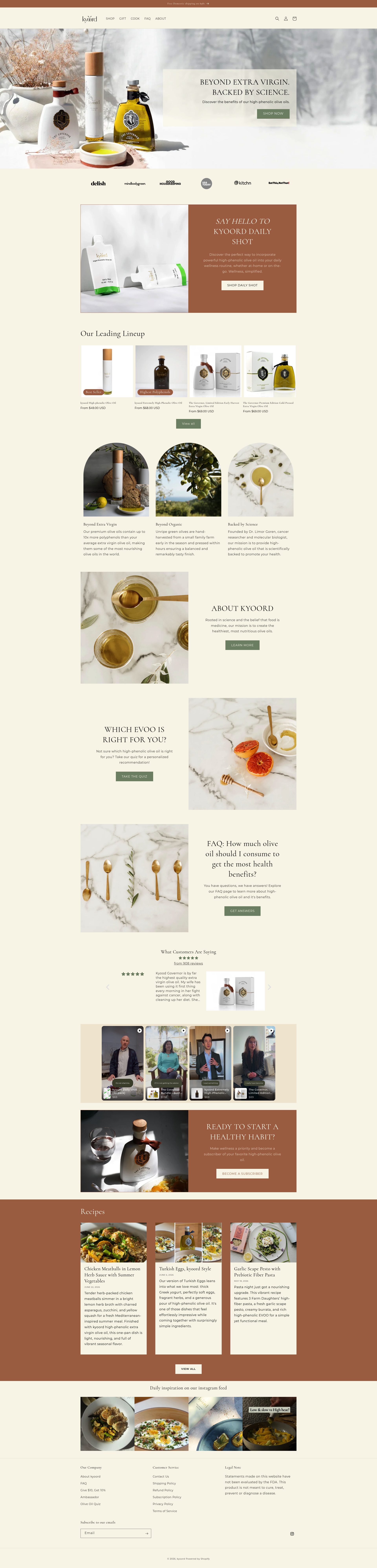
Kyoord is a US brand that has built its entire store around the polyphenol health angle. Their Shopify site is structured more like a health supplement store than a food brand: product pages lead with health benefits, cite clinical research, and include a polyphenol count displayed prominently as if it were a nutritional label. That is a deliberate positioning choice to move olive oil from kitchen staple to daily health ritual, which supports a higher price point and a subscription model.
The subscription mechanic is central to the Kyoord store: the default product page CTA is subscribe, the pricing table shows the per-bottle saving over 12 months, and the checkout flow reinforces the health habit framing. Their bundles include a "starter kit" designed to introduce a buyer to the range before committing to a single-variant subscription, which reduces the friction of a first purchase. The copy throughout is clinical rather than culinary, which is unusual in this category and clearly intentional.
8. Brightland

Brightland is one of the most design-forward olive oil stores on Shopify. Their bottles are distinctive, the branding is confident, and the store design matches: bold typography, high-contrast colour, editorial photography that looks more like a fashion brand than a food one. That aesthetic is a genuine commercial asset in a category where most brands look the same, because it makes Brightland immediately recognisable at the top of collection pages and in gifting contexts.
Product pages balance the visual identity with practical information: each oil includes a flavour profile, recommended uses, and a harvest date. The gifting section is well-developed, with curated sets at clear price points and prominent messaging about gift-ready packaging. Their "GROW" subscription programme is positioned as a membership with a name and identity of its own, rather than just a discount on repeat orders, which increases the perceived value of signing up.
9. Graza
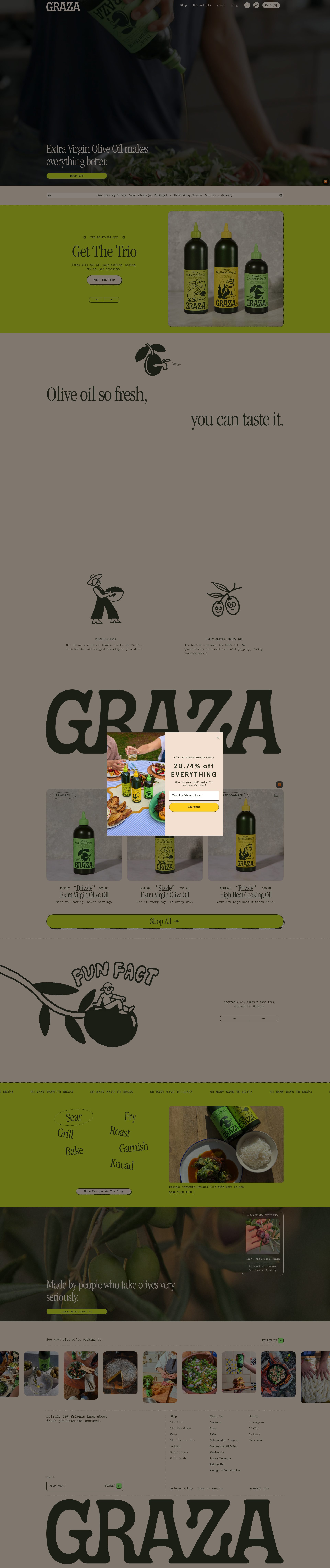
Graza launched in 2022 and grew rapidly on the back of a genuinely clever product concept: single-variety Spanish olive oil sold in a squeeze bottle, with two SKUs differentiated by use case ("Sizzle" for cooking, "Drizzle" for finishing). That clarity of product architecture makes the Shopify store almost impossible to get wrong: two products, two use cases, one price point. The simplicity is a conversion asset because there is no decision paralysis.
Their PDPs are short and confident: origin, olive variety, a sentence on use, and a straightforward buy button. The store does not over-explain because the product does not need it. Their subscription option is introduced with a genuine hook: "Never run out of Drizzle." That is a functional benefit, not a discount pitch, which is the right way to frame subscriptions for a consumable. Customer reviews include UGC-style photos from home kitchens, which grounds the product in real use rather than styled shoots.
10. Cobram Estate
Cobram Estate is an Australian olive producer with a well-structured Shopify store that handles a broad product range without losing the provenance story. Their navigation separates extra virgin by grade (classic, robust, light), which is a useful taxonomy for buyers who know what they want, and by use case (salad dressing, baking, everyday cooking) for those who do not. Providing both routes to the same products is a solid practice for a category where buyer knowledge levels vary widely.
Their farm-to-bottle story is told through video and photography on a dedicated provenance page that is linked from every PDP, so a buyer who wants to verify the origin claims can do so without leaving the buying journey entirely. Cobram also uses a freshness date rather than a best-before date, displayed on each product page, which reinforces the quality message in a way that a standard expiry date does not.
If you sell olive oil or any premium food product direct-to-consumer, the gap between a standard template and a store that earns its price point is almost always design, product page structure, and subscription implementation. See our Shopify design service or get in touch to talk through what is possible for your store.
Frequently asked questions
Which olive oil Shopify stores ship to the UK?
Odysea, Belazu, Yiayia & Friends, and Organic Olivia all ship within the UK and are the strongest domestic options for UK buyers. Brightland and Graza ship internationally from the US, though shipping costs and import duties make them less practical for regular UK orders.
What makes a good olive oil product page on Shopify?
The highest-converting olive oil PDPs include harvest date, olive variety, region of origin, and a recommended use case. Stores like Amphora Nueva go further with full chemistry panels including free acidity and polyphenol counts linked to third-party lab reports, which builds the kind of verifiable trust that lifestyle photography cannot.
How do olive oil stores handle subscriptions on Shopify?
The best implementations treat subscriptions as a functional benefit rather than a discount: Graza uses "Never run out of Drizzle", Kyoord defaults the product page CTA to subscribe and shows a 12-month per-bottle saving, and Yiayia & Friends leads with Subscribe and Save as the primary CTA over one-off purchase. The stores that bury the subscription option in the cart consistently underperform on LTV.
How do premium olive oil brands justify high price points online?
Provenance specificity is the primary lever: harvest year, named estate, olive variety, and region of origin give buyers objective reasons to pay more than supermarket prices. Polyphenol counts have become a credible secondary driver for health-conscious buyers, with Kyoord and Organic Olivia both leading with oleic acid levels and antioxidant content alongside plain-English explanations of why the numbers matter.
What subscription app is best for olive oil stores on Shopify?
Recharge and Skio are the two most commonly used subscription apps among premium food DTC brands on Shopify. Recharge suits stores with complex bundle logic or multi-variant subscriptions; Skio is simpler to implement and generally performs better for single-SKU or two-SKU brands like Graza. Both integrate with Shopify's native checkout, which matters for conversion rate on mobile.