
Quick summary
Riverford Organic Farmers is the benchmark for subscription produce ecommerce, with a skip-week mechanic and seasonal recipe content that reduces churn and earns repeat visits. Daylesford Organic is the strongest premium play, pairing farm-provenance storytelling with a hamper AOV builder that outperforms most gifting implementations on Shopify. Thrive Market sets the standard for high-volume organic grocery on Shopify Plus, with a quantified membership value proposition and a multi-filter system that handles thousands of SKUs cleanly. Wunder Workshop punches above its size through supply chain transparency, naming the farm and processing method on every product page to justify a premium price without relying on certification logos alone.
Organic food is one of the most trust-dependent categories in ecommerce. Shoppers are paying a premium, and in return they expect proof: certifications, sourcing transparency, and ingredient honesty. The stores that convert best are not just selling organic products, they are demonstrating why their organic credentials matter at every point in the purchase journey. These ten Shopify merchants have built stores that handle that trust problem well, and each one has made specific ecommerce decisions worth studying if you sell in this space.
1. Naturya
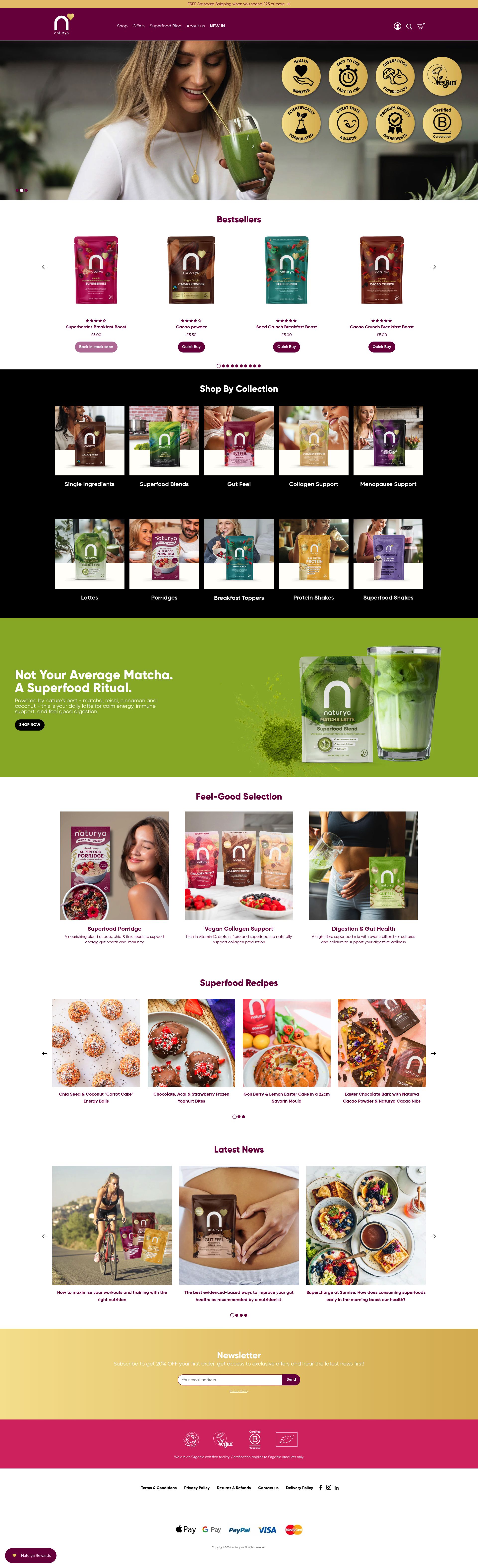
Naturya is a UK-based organic superfoods brand that holds Soil Association certification across its core range, and their Shopify store makes that certification visible without being preachy about it. The product pages carry the Soil Association logo inline with the core claims panel, which is the correct placement: it appears at the moment of decision rather than buried in a footer or an about page. Their range covers cacao powder, hemp protein, spirulina, and wheatgrass, and each product page anchors on the sourcing origin and processing method before moving into nutritional content.
Their collection page filtering lets customers browse by dietary need (vegan, gluten-free, raw) and by product type, which works well for a brand whose catalogue spans bulk powders, snack bars, and liquid shots. That cross-category breadth can cause navigation confusion, but Naturya handles it cleanly because the collection taxonomy is consistent. Their Trustpilot integration sits directly above the add-to-cart button on product pages, giving buyers one last confidence signal exactly where hesitation typically occurs.
2. Wunder Workshop
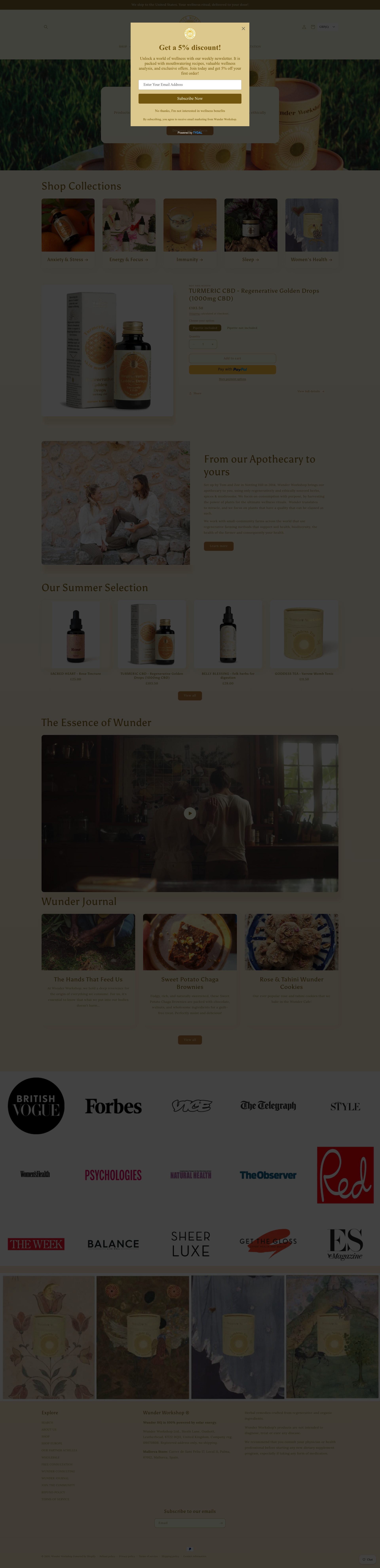
Wunder Workshop is a UK brand built around turmeric and adaptogenic blends, with Soil Association organic certification central to their brand story. Their Shopify store is built around provenance: each product page names the farm or cooperative that supplies the primary ingredient, specifies the country of origin, and explains the processing method. That level of supply chain transparency is unusual in the organic supplement category and functions as a direct justification for the price premium.
Their recipe content is integrated into the product page itself rather than housed separately in a blog. A customer reading about a turmeric golden latte is already one click from the product, and the content answers the most common consumption barrier at the exact point of purchase intent. Wunder Workshop's subscription programme uses a "daily ritual" framing rather than a "save money" one, which is a more effective positioning for premium organic buyers who are motivated by habit-building rather than cost reduction.
3. Riverford Organic Farmers
Riverford is one of the most established organic veg box brands in the UK, and their Shopify-powered store handles the complexity of a subscription produce business better than most. The core mechanic, a recurring weekly or fortnightly veg box, is presented with clear customisation options: box size, contents preferences, delivery frequency, and the ability to skip weeks. That skip-week feature is prominently surfaced during signup rather than buried in account settings, which reduces subscription anxiety and is a measurable churn reduction tactic.
Their Soil Association certification and the co-operative ownership structure (Riverford is majority-owned by its workers) are both surfaced in the main navigation under "Our story," which speaks directly to the values-led buyer who chooses Riverford over a cheaper box scheme. Product pages for recipe boxes include the full ingredient list sourced from the current season's harvest, which reinforces the fresh, seasonal positioning and gives customers practical content that earns repeat visits. Their blog is also one of the strongest recipe and seasonal produce content hubs in UK food ecommerce.
4. Abel and Cole
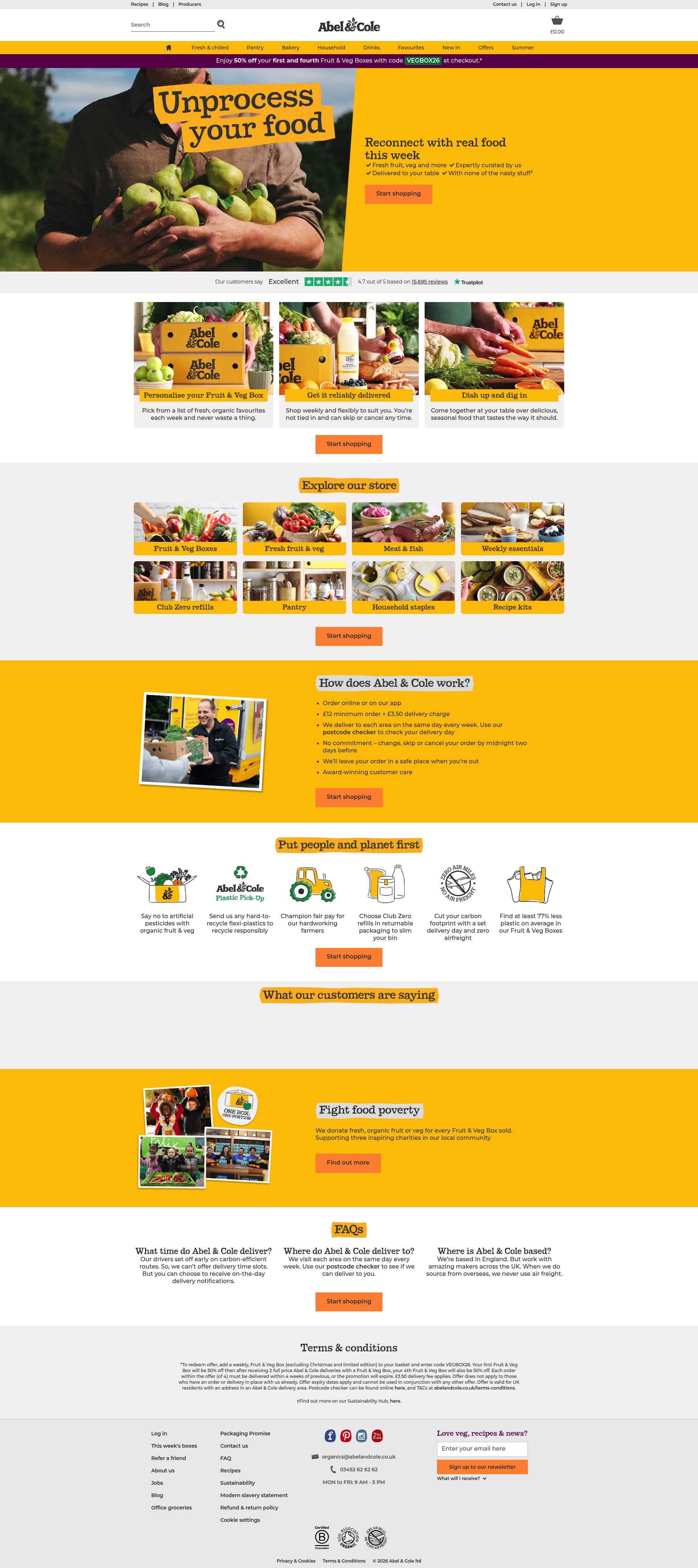
Abel and Cole is another UK organic grocery and veg box pioneer running on Shopify, and their store excels at reducing the friction of the first subscription purchase. The homepage is structured around three entry points: veg boxes, fruit and veg bundles, and grocery add-ons, all presented with enough visual information (contents, portion sizes, meal count) to make a decision without clicking through to a product page. That information density at the browse stage reduces the cognitive effort of the first purchase, which matters for a category where the buying decision involves committing to a recurring delivery.
Their certification credentials, Soil Association organic and the BCorp badge, appear in the site header and on every product page. The BCorp badge in particular resonates with organic buyers who are motivated by business ethics alongside ingredient quality. Their recipe integration is strong: each box type links to a seasonal recipe guide specific to the box contents, which solves the "what do I do with kohlrabi" problem proactively rather than letting it become a cancellation reason.
5. Biona Organic
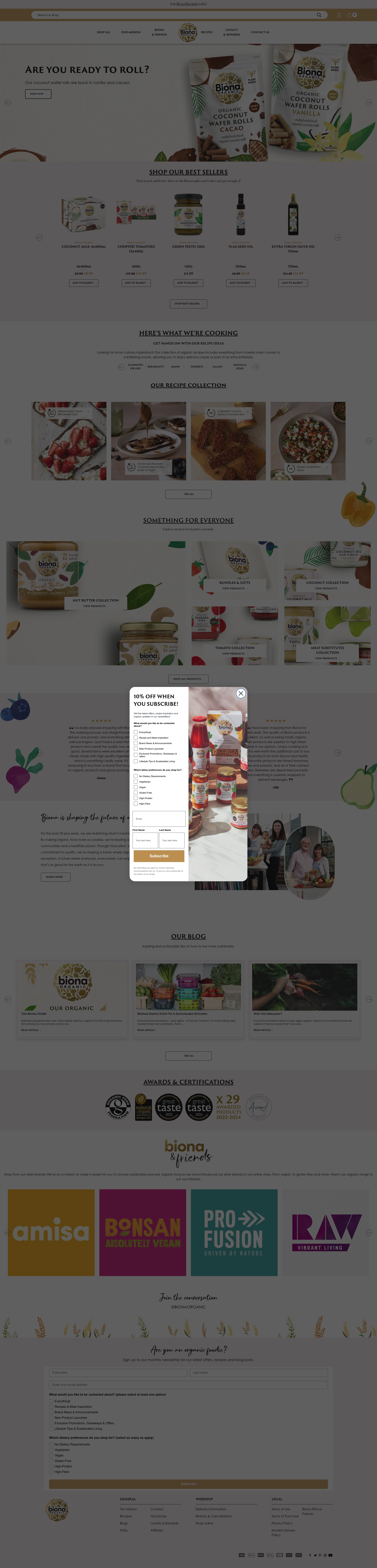
Biona Organic is a long-established UK organic brand with a Shopify direct-to-consumer store that sits alongside their wider wholesale and retail distribution. Their product range covers coconut oil, apple cider vinegar, tinned goods, and specialty health foods, and the Shopify store is built to serve the customer who wants to buy direct in bulk rather than pick up individual units from a health food shop. The store handles bulk purchase well: product pages surface multi-unit bundle options with per-unit pricing clearly displayed, which captures the wholesale-minded buyer without requiring a separate trade account.
Their Demeter biodynamic certification on select products is a meaningful differentiator in the organic grocery category, because biodynamic is a higher certification standard than standard organic and appeals to the most engaged segment of the organic buyer base. Product pages explain the difference between organic and biodynamic concisely, which both educates and justifies the price premium for those products. Their site navigation is clean for a brand with a wide SKU count: category landing pages use consistent card formatting with certification icons visible at the product card level rather than only on the product page.
6. Acala
Acala is a UK organic personal care and food brand that has built a Shopify store around certified organic ingredients across both food and body care categories. Their olive oil and coconut oil products sit alongside skincare formulations, and the store uses a shared ingredient transparency framework across both categories: every product page features a full ingredient list, the certification standard, and the country of origin for the primary ingredient. That consistency across categories is useful because it trains the customer to trust the brand's labelling practices rather than evaluating each product individually.
Their packaging is plastic-free across the range, and the Shopify store makes that claim verifiable: each product page notes the specific packaging material and whether it is home compostable or kerbside recyclable. In the organic and natural food category, packaging claims are increasingly part of the purchase decision, and Acala's specificity on this outperforms the vague "eco packaging" claims common in the sector. Their wholesale and bulk buy options are handled through a dedicated section rather than mixed into the main consumer store, which keeps the UX clean for both buyer types.
7. Clearspring

Clearspring is a UK-based Japanese and European organic food specialist that has been importing and selling organic pantry staples since 1993. Their Shopify store serves a customer who is buying for cooking rather than supplementation, and the product pages reflect that: each one includes suggested uses, cooking methods, and recipe links alongside the ingredient and certification information. That culinary context is the correct approach for a brand selling products like miso paste, tamari, and umeboshi that many customers are unfamiliar with.
Their organic certification covers both Soil Association standards for European products and equivalent Japanese JAS organic certification for their Japanese imports, and the product pages explain the different certification bodies rather than treating all organic claims as identical. That level of nuance is rare in the organic food category and builds significant credibility with buyers who understand what they are looking for. Clearspring's store also handles international shipping clearly, with a country selector that surfaces accurate shipping costs and delivery timelines at the product page level rather than only at checkout.
8. Thrive Market
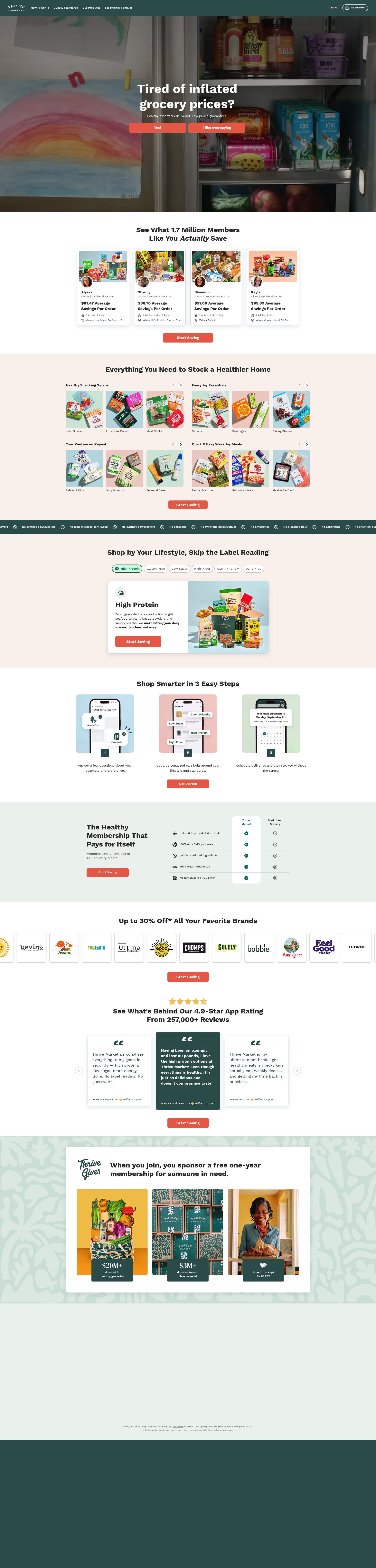
Thrive Market is a US-based membership warehouse for organic and natural grocery, operating on Shopify Plus, and their model is the most operationally ambitious on this list. The membership mechanic, an annual fee that unlocks wholesale organic pricing across thousands of SKUs, solves a genuine problem in the organic food category: certified organic products are expensive, and the brands that can make them more accessible without compromising on quality win the value-conscious organic shopper. Their store handles the membership gating well: the value proposition (the average member saves $32 per order versus retail) is quantified on the homepage rather than left as a vague claim.
Their filtering system is one of the strongest in organic food ecommerce. Customers can filter by diet type (keto, paleo, vegan, gluten-free) and by certification (organic, non-GMO, Fair Trade) simultaneously, which maps directly to how their core buyer shops. The Shopify Plus implementation handles a product catalogue of thousands of items, and the search performance is fast enough to make that volume manageable rather than overwhelming. Their own-brand "Thrive Market" line is positioned as the highest-margin certified organic private label option and is consistently surfaced in search results and category pages.
9. Pip and Nut

Pip and Nut is a UK nut butter brand with organic options across their range and a Shopify store that has been built with a strong visual identity and tight focus on the core product. Their range is not exclusively organic, but their organic almond butter and organic peanut butter variants are consistently the best-sellers and are surfaced prominently on the homepage and collection pages. The store design is clean and appetite-driven: product photography is shot against warm backgrounds with the product in use, which outperforms pack-shot-only imagery in the food category because it creates appetite appeal at the browse stage.
Their subscription option, available on single jars and multipacks, is handled through a subscribe-and-save prompt in the product hero with the discount expressed as a monthly saving rather than a percentage. Pip and Nut has also built one of the better recipe sections in UK food ecommerce: the recipes are searchable, tied to specific products through contextual links, and updated regularly enough to give repeat visitors a reason to come back. That content investment earns them organic search traffic for high-intent queries like "almond butter recipes" that convert directly to product pages.
10. Daylesford Organic
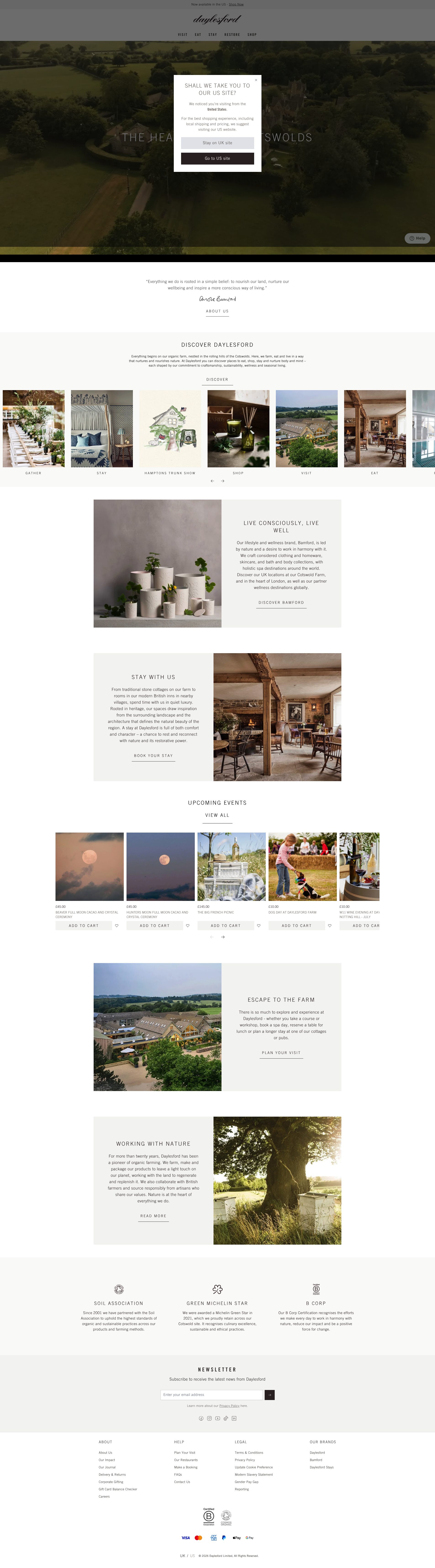
Daylesford Organic is a UK luxury organic farm shop that has built one of the most premium Shopify stores in the food category. Their product range spans organic grocery, fresh produce, charcuterie, dairy, and seasonal hampers, and the store is built to match the premium positioning of their Gloucestershire farm shops. Product photography is among the highest quality in UK food ecommerce: every image is shot with natural light and a food styling approach that communicates freshness and provenance rather than just showing the product against a white background.
Their farm-to-table narrative is the backbone of the store's content architecture: product pages reference the specific farm, the land certification (Soil Association organic), and the season. For fresh produce, the store surfaces harvest dates and provenance notes that most food ecommerce brands skip. The hamper and gifting section is handled through a dedicated builder where customers can choose a base hamper and add individual products, which increases average order value significantly in the gifting occasion. Daylesford's Shopify implementation also supports their loyalty programme and newsletter integration cleanly, with the sign-up appearing inline in the product flow rather than as a pop-up interrupt.
How they compare
| Brand | Niche Focus | Price Point | Shopify Standout |
|---|---|---|---|
| Naturya | Organic superfoods and powders | Mid | Certification placement at point of decision |
| Wunder Workshop | Turmeric and adaptogen blends | Premium | Provenance storytelling integrated into product pages |
| Riverford Organic Farmers | Organic veg boxes and grocery | Mid | Skip-week subscription UX and recipe content depth |
| Abel and Cole | Organic grocery and veg boxes | Mid | Entry-point browse with BCorp and Soil Association surfacing |
| Biona Organic | Organic pantry staples and bulk | Mid-low | Biodynamic differentiation and bulk pricing clarity |
| Acala | Organic food and personal care | Premium | Packaging transparency specificity across categories |
| Clearspring | Japanese and European organic pantry | Mid | Certification nuance (JAS vs Soil Association) and culinary context |
| Thrive Market | Organic membership grocery | Low (via membership) | Quantified membership value and advanced multi-filter system |
| Pip and Nut | Organic nut butters | Mid | Recipe content driving organic search and product conversion |
| Daylesford Organic | Luxury organic farm produce | Premium | Premium photography and hamper AOV builder |
What these stores get right
- Certification is surfaced at the decision point, not buried. The best organic food stores place Soil Association, Demeter, or equivalent certification logos on the product card and at the top of the product page, where they influence the decision rather than just existing for compliance.
- Sourcing specificity justifies the price premium. Naming the farm, the region, and the processing method gives buyers the proof they need to pay more without feeling like they are taking a brand's word for it.
- Subscription friction is reduced through transparency. The stores that convert best on recurring orders surface the skip, pause, and cancel options during signup rather than hiding them in account settings. Reducing perceived lock-in increases subscription conversion.
- Content earns repeat visits and captures search intent. Recipe content, seasonal guides, and ingredient education articles are not just nice-to-haves in organic food ecommerce: they capture high-intent informational search traffic and link it directly to product pages.
- The values case is made visibly, not just in the footer. BCorp badges, worker ownership models, and plastic-free packaging claims are surfaced in the header and on product pages because organic buyers are motivated by the ethics of the brand as much as the quality of the product.
If you are building or scaling a Shopify store in the organic food space, the trust architecture these brands have built, through certification placement, sourcing transparency, and content investment, is directly applicable to your store. Talk to our team about Shopify design or explore our Shopify design and development services.
Frequently asked questions
Are these organic food stores all running on Shopify?
Yes. All ten stores on this list are built on Shopify or Shopify Plus. Thrive Market is the most operationally complex, running a membership warehouse model across thousands of SKUs on Shopify Plus. UK brands including Riverford, Abel and Cole, and Daylesford Organic have all migrated to or built on Shopify for its subscription and content capabilities.
What makes an organic food Shopify store convert well?
The highest-converting organic food stores share three traits: certification logos placed at the decision point on product pages (not just in the footer), sourcing specificity that names the farm or region rather than making vague organic claims, and subscription UX that surfaces skip and cancel options during signup to reduce perceived lock-in. Brands that get all three right consistently outperform those with better brand awareness but weaker store architecture.
How do organic food brands handle subscription churn on Shopify?
The most effective tactic used by brands on this list, including Riverford and Abel and Cole, is surfacing the skip-week option prominently during the signup flow rather than hiding it in account settings. Giving customers visible control over their subscription before they commit reduces anxiety and increases conversion. Pairing that with weekly recipe content tied to the box contents gives subscribers a reason to stay engaged between deliveries.
What Shopify apps do organic food stores typically use for subscriptions?
Most UK organic food brands on Shopify use Recharge Subscriptions or Skio for recurring orders, as both integrate cleanly with Shopify's checkout and support custom delivery frequency options. Riverford and Abel and Cole have subscription logic complex enough that they have likely built custom subscription layers on top of a base app. For a new organic DTC brand, Recharge is the lowest-friction starting point.
How should an organic food brand display certifications on their Shopify store?
The stores that do this best place the Soil Association, Demeter, or equivalent certification logo inline on the product page within the core claims panel, directly above or alongside the add-to-cart button. Putting it only in the footer or on an about page is a conversion mistake: the organic buyer needs that proof at the exact moment of purchase intent, not after they have already decided to leave. Product cards on collection pages should also carry a small certification icon for buyers who are browsing rather than searching.