
Quick summary
Cornerstone is the standout subscription-first build: its entire onboarding funnel is engineered to convert a first-time buyer into a locked-in refill subscriber before checkout. Supply makes the strongest case for switching from cartridges to a single-edge razor, using cost-per-year data and a configurable kit builder that educates before it sells. Murdock London handles the dual-channel challenge better than anyone, keeping its Savile Row barbershop identity fully coherent across digital and physical. The Bluebeards Revenge punches above its price point through a consistent, irreverent brand voice that runs from product names through to PDP copy.
Shaving is a category where product education drives conversion: buyers need to understand why a safety razor outperforms a cartridge system, or what a pre-shave oil actually does, before they will spend more than they would at a supermarket. The stores that do this well combine clear product hierarchy, strong brand storytelling, and subscription mechanics that turn a one-time buyer into a long-term customer. Here are ten Shopify stores that have built something worth studying.
1. Murdock London
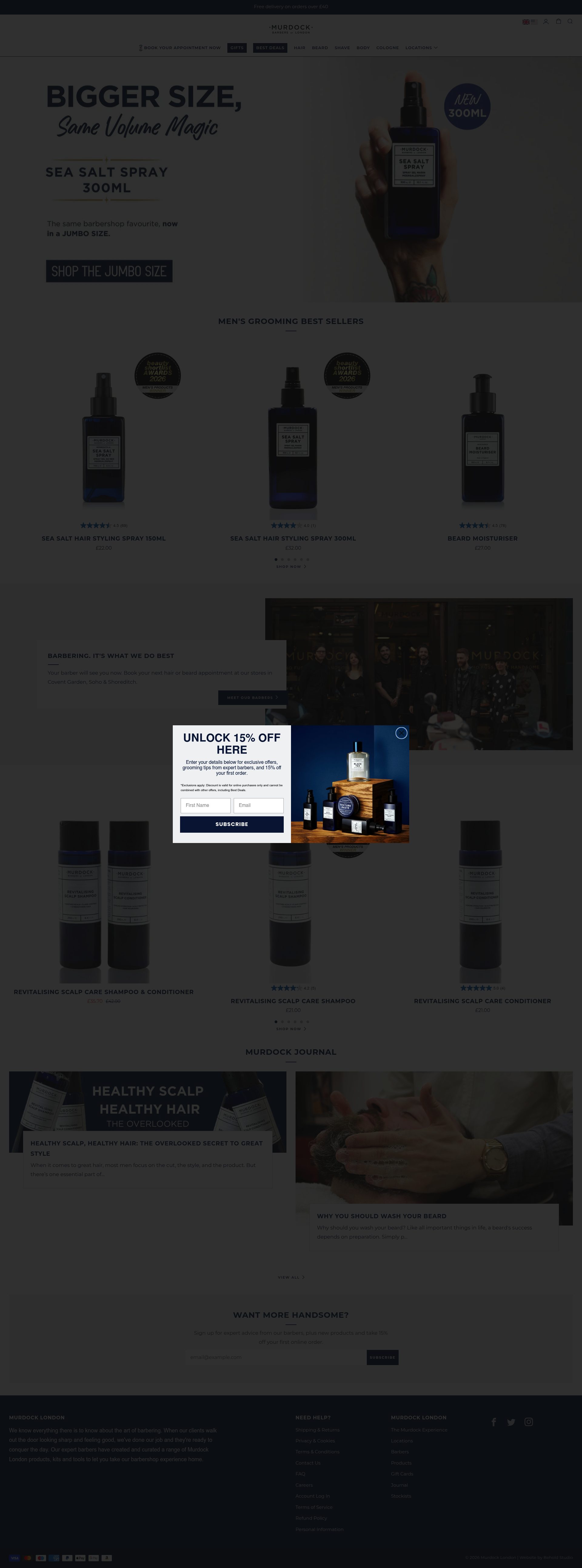
Murdock London brings its Savile Row barbershop credentials into the online store without letting the heritage feel stuffy. The product pages lead with the sensory qualities of each product, explaining texture, scent, and skin type suitability in plain terms rather than vague luxury language. The navigation separates shaving, beard, hair, and skincare cleanly, so a buyer who arrives for a shaving soap can find it in one click and discover the broader grooming range without feeling pushed. The "How to Use" section on each PDP reduces post-purchase regret for buyers new to traditional shaving, which is a significant conversion and retention move in a category with a learning curve.
The barbershop appointment booking is integrated directly into the site footer, which keeps the physical and digital brand presence connected. That dual-channel coherence is difficult for pure DTC competitors to replicate.
2. The Art of Shaving
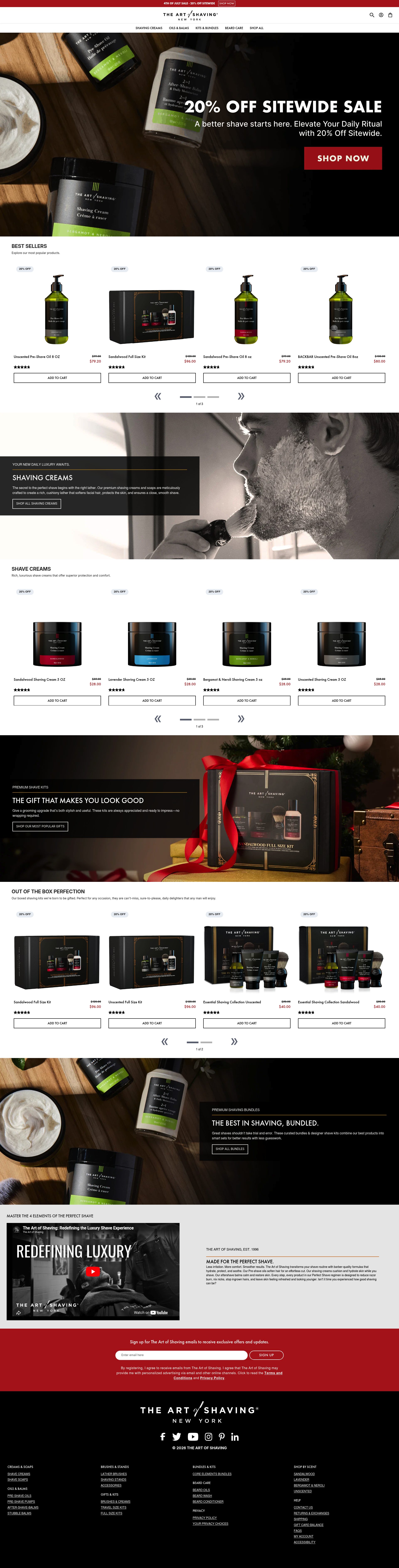
The Art of Shaving has built one of the most structured product education journeys in the shaving category. The "Four Elements of the Perfect Shave" framework runs through the store as a content and navigation device: Pre-Shave Oil, Shaving Cream, After Shave Balm, and Razor each have dedicated collection pages that explain their role in the ritual. That framework converts browsers into buyers of complete systems rather than single products, which is a strong average order value (AOV) mechanic embedded at the category level.
Gift sets are surfaced prominently year-round, not only at Christmas. The product photography uses dark, masculine tones with a clean studio aesthetic, which positions the brand at a premium without relying on lifestyle imagery that some buyers find alienating. Their bundle pricing makes the four-step routine feel like value, not an upsell.
3. Cornerstone
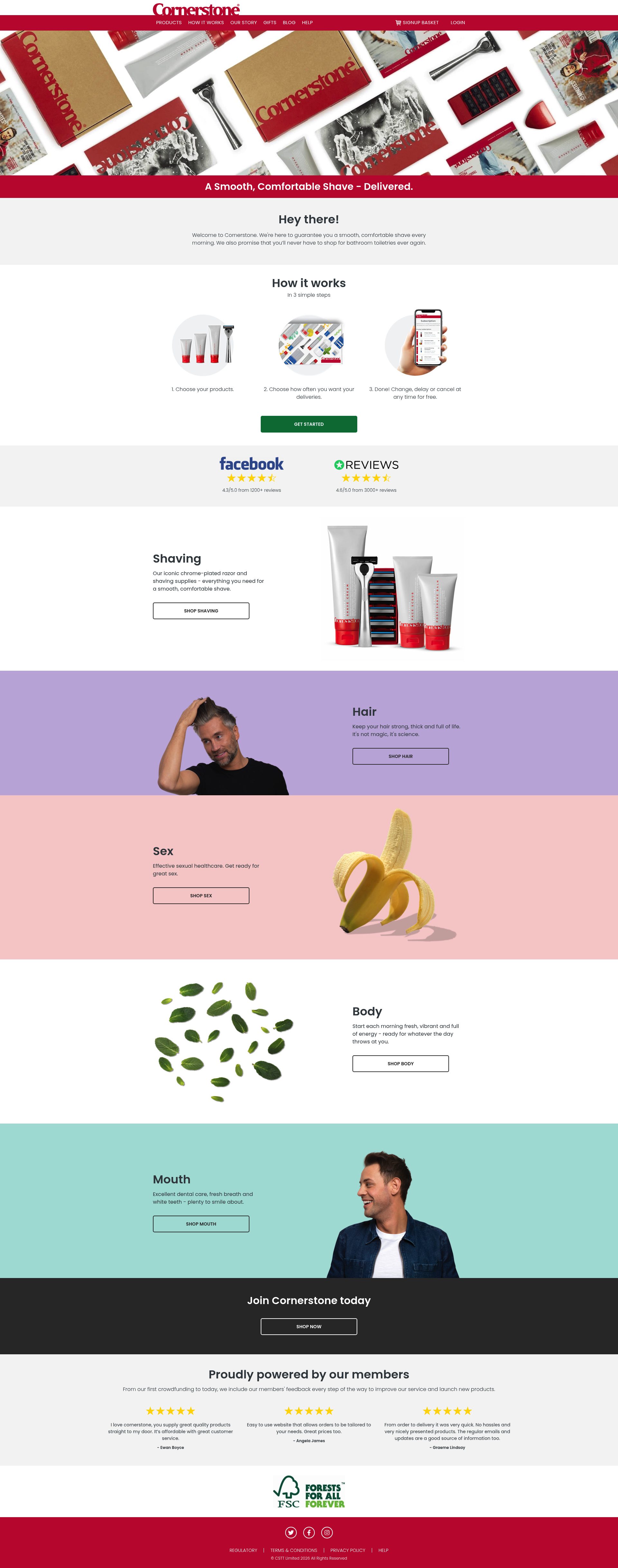
Cornerstone is a UK DTC subscription brand that has built its entire business model around replacing the overpriced supermarket cartridge. Their Shopify store is a masterclass in subscription-first architecture: the entry point for every new customer is a razor starter kit at a steep introductory discount, designed to lock in a refill subscription before the first purchase is complete. The subscription management interface is clean and reassuring, with pause, skip, and cancel options visible and accessible, which reduces the friction that leads to angry cancellations rather than paused ones.
Product pages are concise, benefit-led, and deliberately sparse on technical detail, reflecting the brand's positioning as a simpler, better alternative. The "How it works" page sets expectations for the subscription cadence early, which reduces subscription churn by ensuring new customers are not surprised by their first refill shipment. For any Shopify merchant building a subscription-first model in consumables, Cornerstone's onboarding funnel is worth dissecting in full.
4. Supply
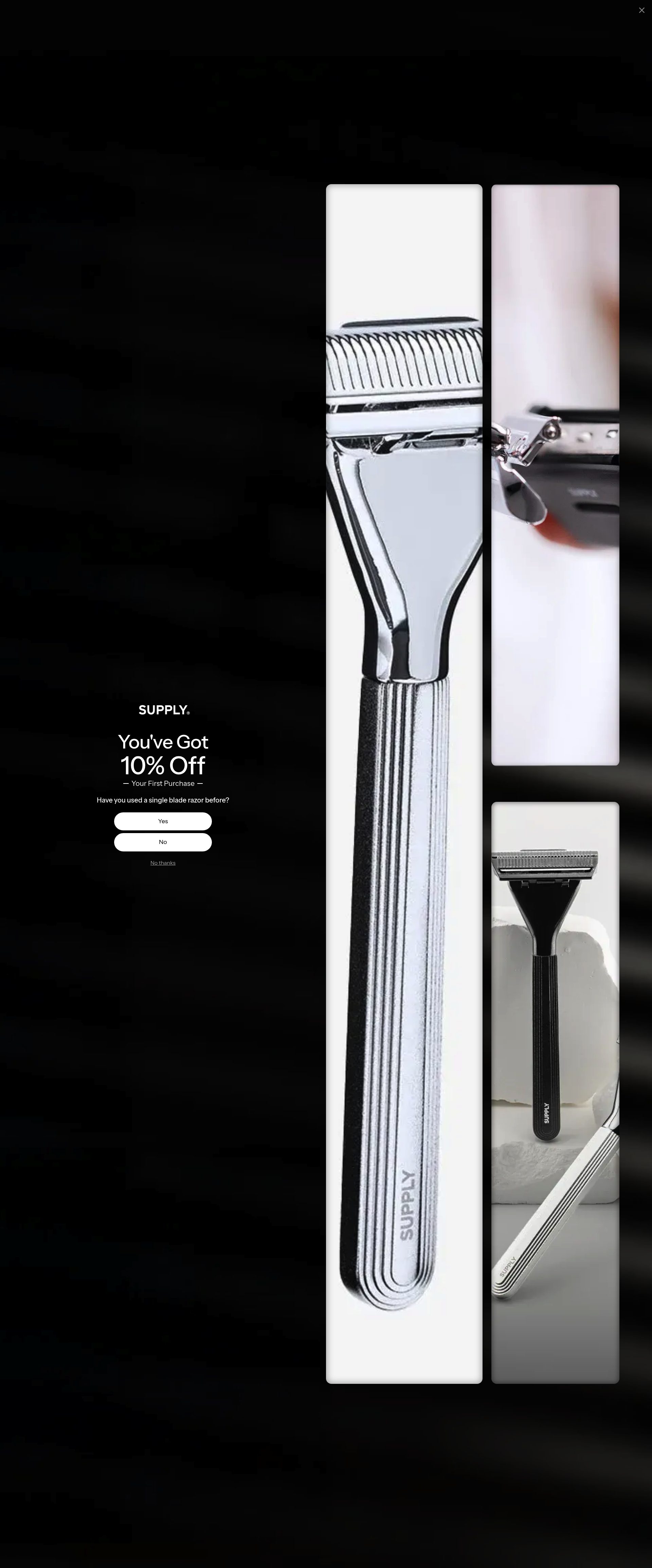
Supply is a US Shopify Plus brand that has made the single-edge injector razor its signature product, and the entire store is structured around making that product feel inevitable. The homepage features a head-to-head comparison between the Supply razor and a cartridge system, using cost-per-year data and a shave quality index to pre-empt the primary objection before a visitor reaches a product page. That objection-handling at the awareness stage is one of the clearest examples of conversion-led content strategy in the category.
Their "Build Your Kit" configurator walks a new buyer through handle, blade, and skin type in a format that feels like a recommendation engine rather than a product filter. Each choice is accompanied by a short explanation of why it matters, which builds confidence in the final selection. The result is a customer who arrives at checkout having been educated rather than sold to.
5. Bevel
Bevel targets men with coarse, curly hair who experience razor bumps with standard multi-blade cartridges. That focus is stated clearly and immediately on every key page, which means the brand earns immediate relevance with its core audience without needing to explain itself at length. The PDP for the Bevel safety razor leads with the clinical rationale: a single blade reduces the repetitive cuts that cause ingrown hairs, and the copy references dermatologist input without tipping into over-clinical language.
Bevel's product line has expanded into skincare and hair care, and the cross-category navigation reflects this with a "Full Routine" tab that sequences the products in order of use. That structure encourages repeat category purchases rather than one-off razor kit sales. The brand's community content featuring real customers with real skin results carries more conversion weight than studio photography in this category.
6. West Coast Shaving

West Coast Shaving operates a large multi-brand catalogue of traditional wet shaving products, and the navigation handles that breadth better than most multi-brand stores. Faceted filtering by product type, brand, and scent profile allows serious wet shaving enthusiasts to navigate a catalogue of hundreds of SKUs efficiently. Their "Starter Kits" collection functions as a curated entry point for buyers new to the category, which captures a segment that would otherwise leave without purchasing due to selection paralysis.
Product pages for brushes include grade, fibre type (badger, boar, synthetic), loft dimensions, and knot size, which is the level of specification that wet shaving buyers expect and that builds trust with an informed audience. The brand content across the blog and buying guides is extensive, which drives organic traffic from comparison and how-to queries and brings buyers into the store in a high-intent research mode.
7. Fendrihan
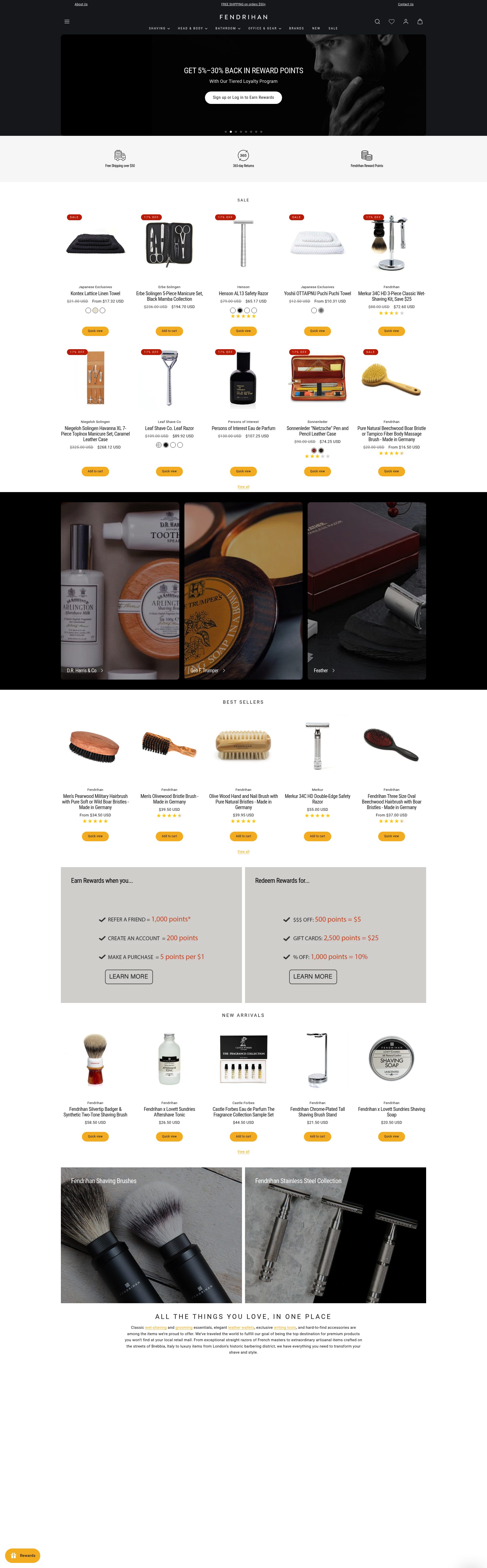
Fendrihan is a Canadian multi-brand grooming retailer with a strong traditional shaving range covering razors, brushes, soaps, and accessories from brands including Edwin Jagger, Merkur, and Taylor of Old Bond Street. The site is product-dense, but a clear category hierarchy keeps navigation manageable. Their gift sets collection is well-structured, with price-banded options that make gift selection straightforward for buyers who are not wet shaving enthusiasts themselves.
The product page template uses a consistent specification table format across the razor category, covering head type, blade gap, blade compatibility, and material, which allows direct comparison between products without requiring the buyer to move between tabs. That consistency reduces the cognitive load of buying in a technically complex category and is a smart UX decision that generalises well beyond shaving.
8. Geo. F. Trumper

Geo. F. Trumper is one of Britain's oldest perfumers and barbers, established in Mayfair in 1875, and the Shopify store carries that heritage with precision. The product pages for shaving creams and soaps include fragrance family descriptions, key ingredients, and usage instructions that give the products a context beyond the transaction. The gifting experience is genuinely premium: presentation sets with clear options for personalisation are surfaced throughout, and the packaging photography communicates luxury without overstating it.
The "Made in England" credential runs consistently through the store and reinforces the brand's positioning as a genuine British institution rather than a heritage brand by association only. For UK buyers who will spend more on provenance than performance, Trumper's product pages handle that buying motivation with care.
9. The Bluebeards Revenge
The Bluebeards Revenge is a UK brand that made its name with a product specifically formulated to prevent razor bumps for men with tough, wiry facial hair. The brand voice is dry and irreverent without being exclusionary, and it runs through the entire store from product names to PDP copy. That consistency is a conversion strength: the brand feels like a person rather than a committee, which builds trust with a customer base that is sceptical of marketing. The professional barbershop channel, where The Bluebeards Revenge has strong distribution, is referenced throughout the retail site to add credibility at the consumer price point.
The subscription option on consumables is well-placed directly on the PDP beneath the add-to-cart, with a clear discount displayed and a "pause any time" note inline, not buried in a terms accordion. That placement treats subscription as the obvious choice rather than an afterthought, which is the right mechanic for a brand with a core SKU that customers buy repeatedly.
10. Acqua di Parma
Acqua di Parma is an Italian luxury house with a shaving collection that positions the ritual of shaving as a form of self-care rather than a daily chore. The Shopify store reflects the brand's aesthetic with restrained, editorial photography and a navigation structure that treats shaving as one of several lifestyle categories alongside fragrance, skincare, and home. Product pages for shaving items include the complete grooming ritual context, cross-referencing fragrance collections and skincare products that share the same scent profile.
The gifting mechanic is executed at a high level: monogramming options, presentation cases, and a dedicated gift-finder tool make the store a strong destination for premium gifting occasions. Free shipping thresholds are structured to encourage the addition of a travel-size product, which lifts AOV without a discount. For any Shopify merchant in the luxury grooming space, Acqua di Parma's cross-category narrative and gift positioning are the elements most worth adapting.
If you sell shaving, grooming, or personal care products on Shopify and want a store that converts browsers into loyal subscribers, take a look at our Shopify design service or get in touch to talk through what is possible for your brand.
Frequently asked questions
Which shaving brands use Shopify?
Cornerstone, Supply, Murdock London, The Bluebeards Revenge, and Bevel all run on Shopify or Shopify Plus. Supply and Cornerstone are among the most studied Shopify stores in the grooming category for their subscription mechanics and conversion-led product pages.
What makes a shaving Shopify store convert well?
Product education is the primary conversion lever in shaving. Buyers considering a switch from cartridges to a safety razor or DE setup need to understand the cost, technique, and skin benefit before they commit. Stores like Supply and The Art of Shaving embed this education directly into the product page rather than hiding it in blog posts, which keeps buyers in the purchase flow.
How do the best shaving stores handle subscriptions?
The strongest subscription mechanics in this category make the subscription the default, not the opt-in. Cornerstone prices the razor starter kit as a loss-leader specifically to lock in a refill subscription, while The Bluebeards Revenge places the subscription toggle directly on the PDP with an inline discount and a visible pause option. Both approaches reduce the mental friction of commitment by making the exit clear before the buyer has entered.
Is subscription or one-time purchase better for a Shopify shaving brand?
For brands built around a consumable core SKU (blades, cream, soap), subscription is significantly more profitable per customer than one-time purchase due to LTV and reduced acquisition cost on repeat orders. The risk is subscription fatigue and cancellations driven by over-shipping: Cornerstone addresses this with a visible, friction-free pause option that converts would-be cancellations into paused accounts.
How do premium shaving brands justify higher prices on Shopify?
Heritage and provenance are the most common justifications: Geo. F. Trumper uses its 1875 Mayfair origin throughout the store, while Acqua di Parma positions shaving as part of a broader Italian luxury ritual. At mid-market, brands like Murdock London and The Art of Shaving use sensory-specific product copy (texture, scent family, skin type) to communicate quality without leaning solely on brand history. In all cases, the photography and site aesthetic must match the price point: a premium product on a generic Shopify template loses credibility immediately.