

Quick summary
Grind leads the pack with a flawlessly clean subscription journey — machine type, blend, and frequency in under two minutes, all powered by Recharge with full self-serve flexibility. Absolute Collagen stands out for churn-reduction intelligence: their results-timeline email sequence is deliberately timed to the eight-week window when supplement subscribers are most likely to cancel. Wild has built an almost entirely subscription-driven DTC business by making the refill model the obvious choice from first visit, with cost savings and environmental credentials baked into the product page itself. LOOKFANTASTIC shows what subscription and retail on the same Shopify Plus instance can do when the cross-sell is handled properly — subscribers convert to high-value retail customers through a well-structured account area.
Subscription ecommerce has moved well past the novelty phase. The brands making it work in 2026 are not pitching subscriptions as a discount mechanism — they are building stores where the recurring model is the natural choice because the product, the experience, and the value proposition all point towards it. Shopify, with native subscription infrastructure and a mature ecosystem of tools like Recharge, Skio, and Loop Subscriptions, has become the default platform for DTC brands building subscription revenue at scale.
These ten stores demonstrate what subscription done well looks like in practice. They range from UK coffee brands to US supplement companies, from curated beauty boxes to meal kit operations. The common thread is that each one has thought hard about acquisition, retention, and the mechanics that keep subscribers around past the third month.
Grind
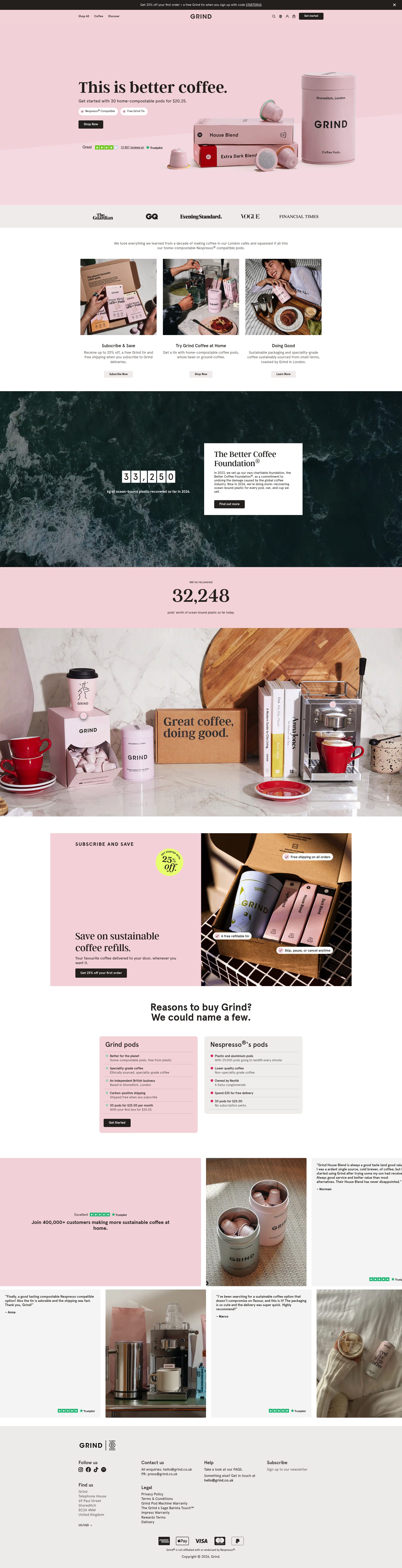
Grind makes coffee pods compatible with Nespresso machines and has built one of the most coherent subscription propositions in UK ecommerce. Their Shopify Plus store leads with the subscription offer: a monthly pod delivery at a per-pod price that undercuts Nespresso's own pods while using compostable materials. That combination of cost, convenience, and environmental credibility is positioned clearly before the customer reaches the product page.
The subscription journey on Grind's site is unusually clean. Customers select their machine type, choose a blend, set a delivery frequency, and check out in under two minutes. Recharge powers the subscription layer, and Grind has configured it to surface flexibility: customers can pause, swap blends, or change frequency from their subscriber portal without contacting support. That self-serve flexibility is one of the strongest churn-reduction mechanics in subscription ecommerce, and Grind executes it well.
Their retention content strategy deserves mention. Brew guides, origin stories, and barista-led video content are built into the post-purchase email sequence, which turns the first delivery into the start of a coffee education rather than just a box arriving. For a product bought on repeat, building that habit and interest loop is smart commercial thinking.
LOOKFANTASTIC
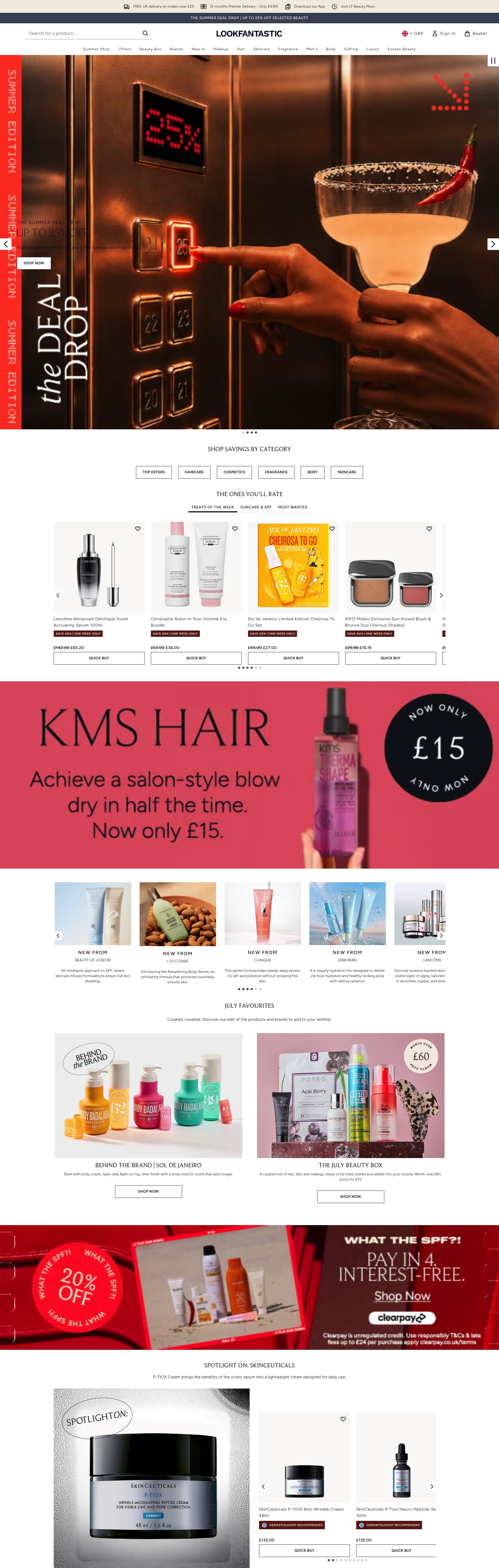
LOOKFANTASTIC runs one of the UK's largest beauty subscription boxes alongside a full retail store, both on Shopify Plus. The subscription box is a standalone product: a curated selection of premium beauty products delivered monthly, with the subscriber value proposition built around discovery (products you would not necessarily buy yourself) and savings (retail value of the box typically exceeds the subscription price by a significant margin).
What LOOKFANTASTIC's implementation gets right is the separation of subscription and retail as distinct customer journeys on the same platform. Retail customers browse and buy as normal; subscribers have their own account area where they can manage delivery dates, view upcoming box contents after a certain point, and access subscriber-exclusive discounts on the wider retail store. That cross-sell from subscription to retail is a genuine revenue driver: a subscriber who trusts the curation is a high-value retail customer.
The unboxing moment is central to LOOKFANTASTIC's brand, and it carries through into how they handle the subscription product listing and post-purchase communications. Monthly reveal content, community sharing, and editorial coverage of each box creates anticipation that keeps subscribers engaged between deliveries. In a category where customers can find individual products anywhere, making the subscription itself feel like a curated experience is what justifies the ongoing commitment.
Huel
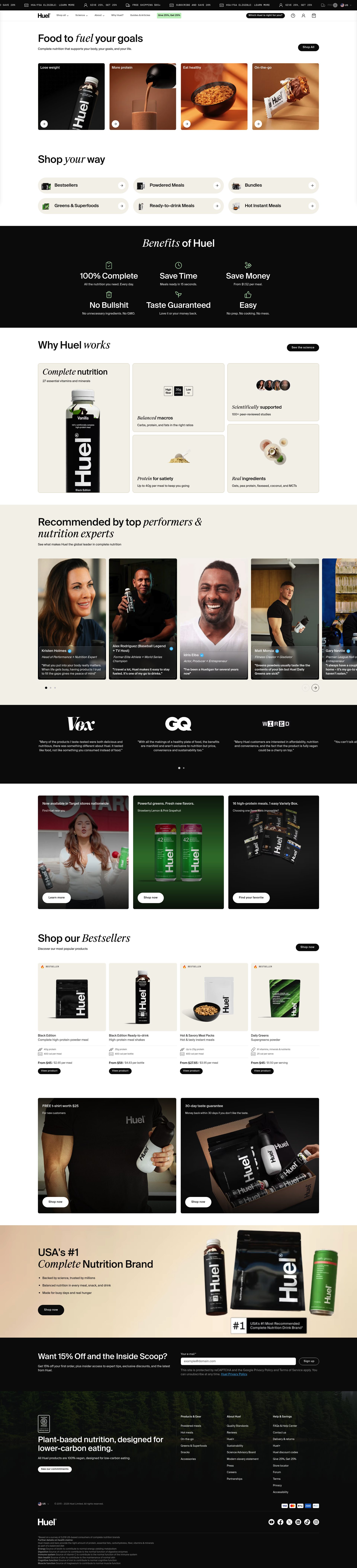
Huel sells nutritionally complete food products — shakes, bars, ready-to-drink meals, and hot savoury products — and has built a subscription model that accounts for a substantial portion of their revenue. Their Shopify Plus store is structured around subscription-first pricing: the subscription price is consistently the most prominent option on product pages, with the one-off price positioned as the alternative for customers not ready to commit.
The product page architecture on Huel's store is worth studying. Subscribe and save messaging is integrated into the price display rather than separated into a tab, which means subscription pricing is the first number a customer reads. The frequency selector and flavour selection tools are built to feel like part of the product configuration rather than an add-on, which reduces the psychological friction of committing to recurring delivery.
Huel's subscriber retention is supported by a genuinely deep post-purchase content library: recipe ideas, training guides, nutrition breakdowns, and community content give the customer a reason to stay engaged with the brand between orders. For a product category (meal replacement) where the purchase decision is partly rational and partly habitual, building that engagement infrastructure is not optional — it is what separates the brands that retain subscribers from the brands that win the first order and then lose the customer to whichever product they find next.
Bloom and Wild
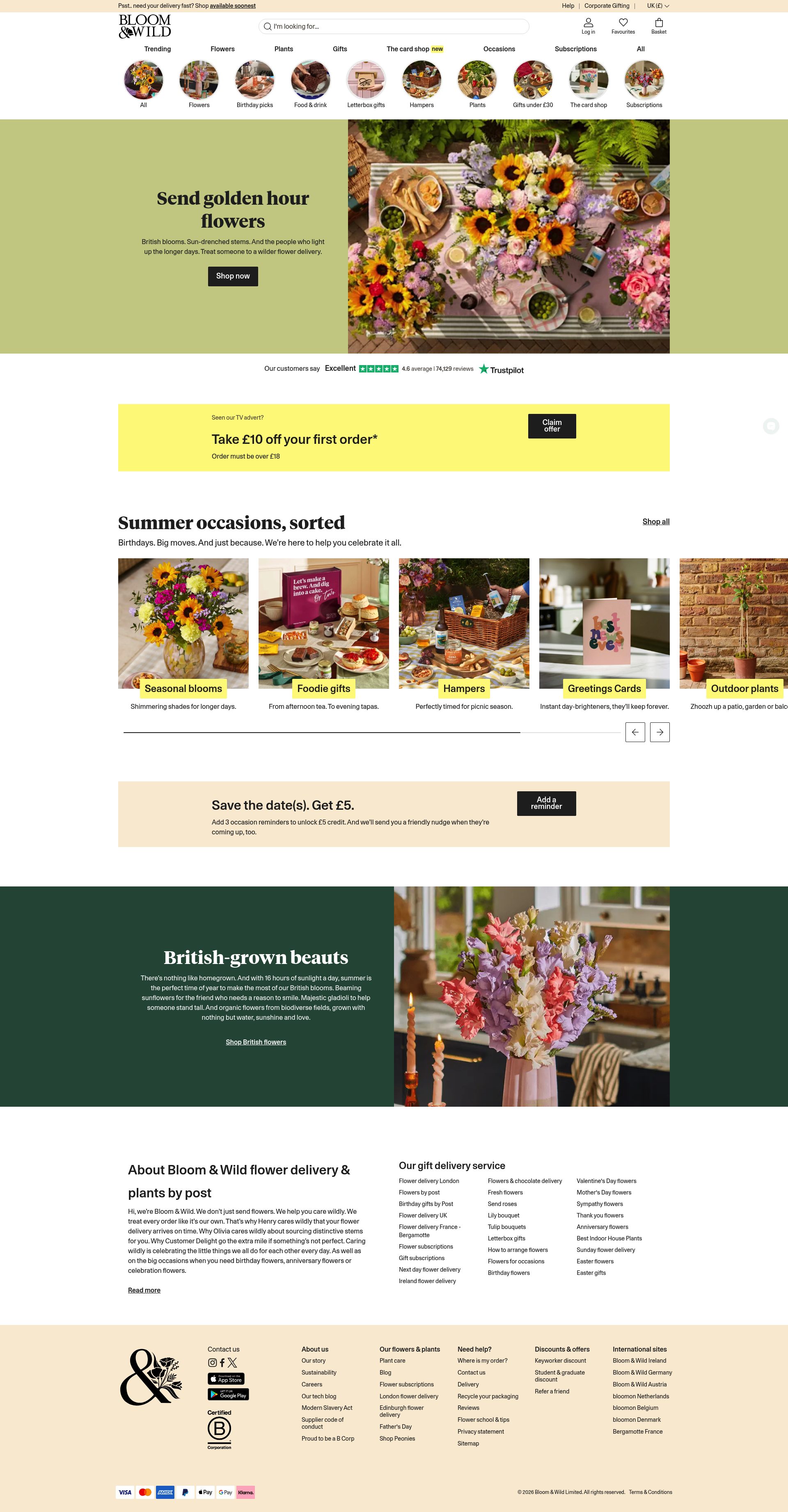
Bloom and Wild sells letterbox flowers across the UK and several European markets, and their subscription product is one of the best-executed in the gifting category. The mechanic is elegant: flowers sized to fit through a letterbox, delivered at a frequency the customer sets, requiring no one to be home. The subscription proposition is built around removing the friction of the traditional florist model rather than just offering a discount for commitment.
Their Shopify Plus store handles the subscription journey well at the point of gifting — a significant portion of Bloom and Wild subscriptions are bought as gifts rather than for the subscriber themselves. The gifting flow allows the buyer to set a start date, customise a message, and choose a delivery schedule without the recipient needing a Bloom and Wild account to receive their deliveries. That flexibility in the purchase flow removes the main objection to buying a flower subscription as a gift: the logistics complexity.
Bloom and Wild uses Recharge for subscription management and has invested in the subscriber portal experience. Pausing around holidays or deliveries the subscriber will miss, swapping bouquet styles, and updating delivery addresses are all self-serve operations. Their cancellation flow includes an option to pause rather than cancel, which is a straightforward retention mechanic that reduces the churn from subscribers who want a break rather than an exit.
Wild

Wild makes refillable natural deodorant and has built their direct-to-consumer business almost entirely around the subscription model. The product mechanic lends itself to subscription naturally: the case is bought once (in one of several materials and colours), and refills are delivered on a schedule matching the customer's usage rate. Subscription removes the need to remember to reorder before running out, which is the core customer problem in personal care.
Wild's Shopify Plus store is built to funnel customers towards subscription from the first visit. The starter kit — case plus initial refills — is marketed as the natural entry point, with the ongoing subscription framed as the logical continuation rather than a separate product. Their product pages make the subscription economics visible and credible: the per-refill cost on subscription versus buying one-off is stated clearly, and the environmental case (plastic-free packaging, significantly reduced waste versus conventional deodorant) is integrated into the product description rather than separated into a sustainability page that most customers will never find.
The range of scents available on subscription has grown significantly, and Wild uses subscriber preference data to inform new product development. Subscribers who have bought five or more refills are a high-value research cohort: they are deeply familiar with the product and their engagement with new scent options gives Wild useful signal on what to develop next.
Pact Coffee
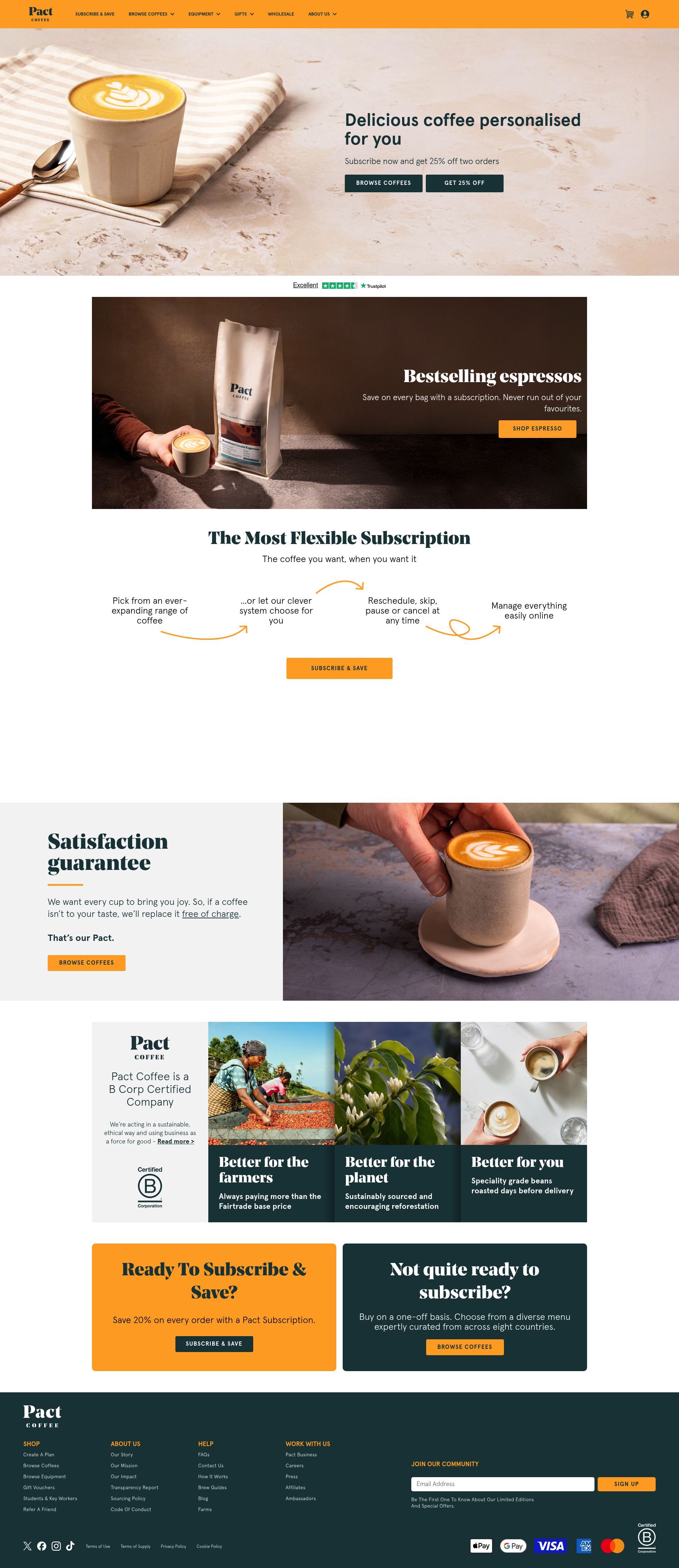
Pact Coffee is one of the UK's original DTC subscription coffee brands, running a direct-trade model where they source from specific farms and pay above Fairtrade minimum prices. Their Shopify store is built around a subscription quiz that matches customers to the right coffee based on their brewing method, taste preferences, and consumption rate. That personalisation at the point of signup reduces early churn significantly: a customer who receives coffee calibrated to their preferences is less likely to cancel in the first month than one who picks a bag at random.
The subscription configuration tool is the strongest feature of Pact's store from a UX perspective. Customers choose whole bean or ground (with grind size specified by brew method), select delivery frequency based on their stated consumption, and can adjust both without contacting support. The result is a subscription that fits the customer's actual usage rather than forcing them to adapt to a standard cadence.
Pact's transparency around the supply chain — farm provenance, harvest details, cup score, and price paid to the producer — is built into each product listing and rotates with the seasonal availability of specific lots. For a customer who has opted into specialty coffee, that level of detail is part of the product value. It also creates natural variety in the subscription: receiving a new single-origin lot with a different flavour profile and a card explaining where it came from is a genuinely better experience than receiving the same bag of supermarket coffee every month.
Pip & Nut

Pip and Nut makes nut butters, nut milks, and snack products and sells direct via a Shopify store with a subscription option on their core products. The brand's positioning — natural ingredients, no palm oil, UK-produced — appeals to a customer who is already thinking about the quality of what they eat regularly, which makes the subscription model a natural fit. A customer who has chosen Pip and Nut over supermarket alternatives has already made a considered decision; subscription converts that decision into a habit.
The subscription implementation is straightforward: customers select their preferred products, choose a frequency, and receive a consistent discount on each delivery. What Pip and Nut does well is the bundle mechanic — a subscriber building a multi-product order (almond butter, oat milk, snack pouches) gets a better per-item saving than a subscriber ordering a single product, which increases average order value while reinforcing the habit of sourcing multiple grocery items from the same brand.
Their packaging and product listings communicate the ingredient quality clearly, with a design language that signals premium without being austere. For a food brand competing at a price point above supermarket alternatives, the store's visual and editorial quality signals that the premium is justified — which reduces price sensitivity in subscription renewals.
Dollar Shave Club
Dollar Shave Club built the playbook for subscription personal care and has operated on Shopify for several years. Their model is built around a starter kit at a low entry price (sometimes as low as a few dollars) with margin made on the blade cartridge refills delivered on a recurring schedule. That model requires the subscription to work both as acquisition (the starter kit deal gets the customer in) and retention (the recurring refill revenue is where the business makes money).
Their Shopify Plus store handles the complexity of their product range well. Blades, grooming products, and lifestyle items are all sold alongside the subscription, and the store surfaces complementary products to existing subscribers in post-purchase flows rather than only in the initial checkout. The membership model — where subscribers get access to member pricing across the wider product range — is a straightforward mechanism for increasing the value of staying subscribed beyond the core blade product.
Dollar Shave Club's content approach is worth noting even for brands that cannot match their production budget. Grooming content, product guides, and editorial material served through the store and post-purchase communications build a brand relationship that extends beyond the functional transaction of receiving razor blades every month. In a high-repurchase category, the brand that occupies mental space between deliveries is more likely to retain the subscriber when a competitor offers a cheaper entry deal.
Absolute Collagen
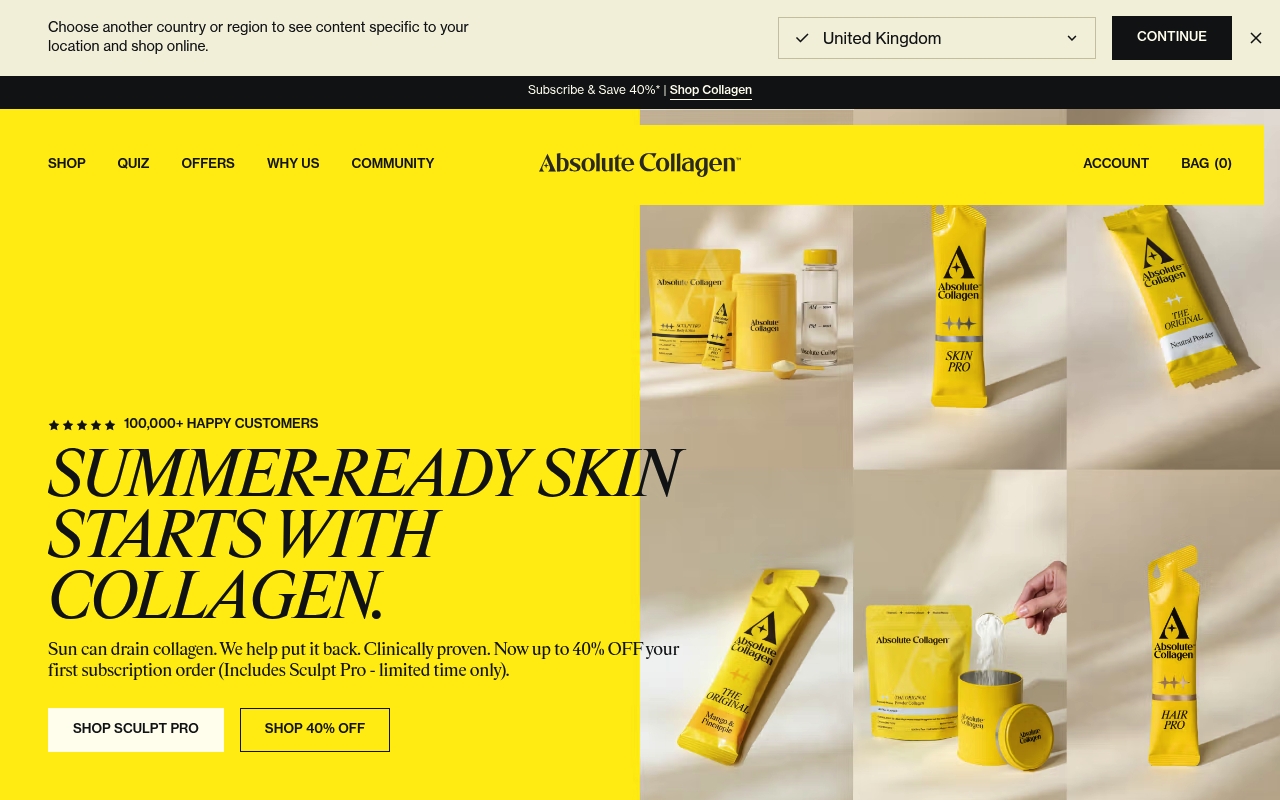
Absolute Collagen sells a liquid marine collagen supplement in individual daily sachets and has built a subscription business on Shopify that reflects a clear understanding of the supplement category's churn dynamics. The product is positioned as a daily ritual rather than a treatment taken until the jar is empty, which reframes subscription renewal as maintaining a routine rather than deciding to buy again.
Their Shopify Plus store presents subscription as the default: the subscription price is what the customer sees first on product pages, with one-off pricing available but not emphasised. The sachet format is a deliberate product decision that supports subscription: a monthly supply of thirty sachets delivered in a pouch is easy to integrate into a morning routine, and running out creates a clear prompt to ensure the next delivery is scheduled.
Absolute Collagen's retention approach centres on results-based content. Before and after content, collagen science explanations, and customer testimonials are integrated throughout the post-purchase journey with a specific structure: emails in the first eight weeks reference the typical timeframe for seeing results, which aligns the content with the period when subscribers are most likely to question whether the product is working. That timing is not accidental — it is a churn-reduction strategy built around the psychology of supplement use.
BattlBox
BattlBox sends curated outdoor and survival gear in monthly subscription boxes at three tier levels: Basic, Field, Pro, and Pro Plus. The tier structure is a well-tested subscription mechanic: a low-entry Basic tier captures customers who are not sure they want to commit significant spend, with upgrade paths built into the subscriber journey for customers who want more.
Their Shopify Plus store is built around community and discovery. The subscription product listing makes clear that the box contents are curated by experts and tested in real outdoor conditions, which is the core value proposition over simply buying individual gear items. Monthly unboxing content, product review videos, and community engagement on the BattlBox YouTube channel create ongoing touchpoints between deliveries that keep subscribers engaged and reduce the likelihood of cancellation during months where the box does not immediately excite.
The Pro Plus tier at the higher end of their range serves a committed outdoor enthusiast willing to spend significantly for a premium curation. Tiered subscription pricing allows BattlBox to serve both the casual customer exploring outdoor gear and the serious enthusiast building a kit, without the value proposition for either group feeling diluted. The upgrade mechanic from Basic to Pro builds naturally as a subscriber's interest deepens.
How these stores compare
| Brand | Niche | Price Point | Shopify Standout |
|---|---|---|---|
| Grind | Coffee pods, Nespresso compatible | Mid | Clean subscription journey with Recharge; flexible self-serve subscriber portal |
| LOOKFANTASTIC | Beauty box, retail crossover | Mid | Subscription and retail on same Shopify Plus instance; subscriber-exclusive retail discounts |
| Huel | Nutritionally complete food | Mid | Subscription-first product page pricing; deep post-purchase content retention |
| Bloom and Wild | Letterbox flowers, gifting | Mid-premium | Gifting subscription flow; pause-over-cancel retention mechanic |
| Wild | Refillable natural deodorant | Mid | Case-plus-refill model; environmental and cost case integrated into product pages |
| Pact Coffee | Specialty direct-trade coffee | Mid-premium | Personalisation quiz at signup; full brew-method and grind configuration |
| Pip and Nut | Nut butters and natural snacks | Mid | Multi-product bundle discount increases AOV for subscribers |
| Dollar Shave Club | Razors and grooming | Entry-to-mid | Low-cost starter kit acquisition; membership pricing model across wider range |
| Absolute Collagen | Marine collagen supplement | Premium | Results-timeline email sequencing reduces churn in weeks two to eight |
| BattlBox | Outdoor and survival gear boxes | Mid-premium | Tiered subscription levels; community content between deliveries |
What these stores get right
-
Subscription is positioned as the default, not the upgrade. The strongest stores on this list present subscription pricing as the primary option and one-off purchase as the alternative. Reversing the hierarchy changes the mental model from "should I subscribe?" to "do I have a reason not to?"
-
Self-serve flexibility reduces churn more than discounts. Pause, skip, frequency change, and product swap — all from the subscriber portal without contacting support — remove the most common reason a subscriber cancels. Most cancellations are triggered by a specific friction point, not a decision to stop using the product.
-
The first eight weeks are where subscriptions are won or lost. Brands like Absolute Collagen and Pact Coffee invest heavily in post-purchase content timed to the early subscriber experience. That is the period when a customer is most likely to question whether they made the right choice, and well-timed content that acknowledges that uncertainty outperforms a generic welcome sequence.
-
The subscription mechanic should match the product's natural repurchase rhythm. Grind, Wild, and Pact Coffee all work because the product is consumed at a predictable rate and running out creates a genuine problem. Subscription is most compelling when it solves an actual inconvenience, not when it is simply a loyalty programme with a direct debit attached.
-
Community and content between deliveries is what separates retained subscribers from churned ones. BattlBox, Pact Coffee, and Huel all invest in keeping subscribers engaged between deliveries. A customer who reads the brew guide, watches the unboxing video, or interacts with the community has a relationship with the brand that is much harder to break than one who simply receives a box and forgets about it until the next charge.
If your Shopify store sells a product people buy on repeat and you are not yet running a subscription model, the infrastructure to build one is mature, the apps are proven, and the brands above demonstrate that it is achievable across a wide range of product categories. Talk to us about Shopify subscription builds or see our Shopify development work.
Frequently asked questions
What Shopify apps do subscription stores use?
Recharge is the most widely used subscription app on Shopify Plus and powers brands like Grind, Bloom and Wild, and Pact Coffee. Skio and Loop Subscriptions are strong alternatives, particularly for stores that want more flexibility in subscriber portal customisation or migration away from Recharge's legacy API. The choice depends on your subscription model complexity and the volume of subscribers you are managing.
How do Shopify subscription stores reduce churn?
The most effective churn-reduction mechanisms are self-serve flexibility (pause, skip, swap, frequency change without contacting support), well-timed post-purchase email sequences in the first eight weeks, and cancellation flows that offer a pause option before exit. Discounts alone are a weak retention tool — they train subscribers to expect them and attract the wrong customer profile in the first place.
Is Shopify Plus required to run a subscription model?
No, but most scaling subscription brands move to Shopify Plus because it removes transaction fees, allows checkout customisation via the Checkout Extensibility framework, and supports the headless and API configurations that subscription apps like Recharge and Skio rely on at higher volumes. For early-stage subscription stores, standard Shopify with a subscription app is sufficient.
How do subscription stores price their subscription tier versus one-off?
The strongest stores on this list present subscription pricing as the primary option — the first price a customer reads on the product page — with one-off pricing positioned as the alternative rather than the default. A 10-15% subscriber discount is standard across most categories. Some brands like Dollar Shave Club use a low-cost starter kit to acquire subscribers, with margin made on recurring refill orders rather than the initial sale.
What product categories work best for subscription on Shopify?
Products with a predictable repurchase rhythm work best: consumables like coffee, supplements, personal care, and pet food are the strongest categories because running out creates a genuine inconvenience that subscription solves. Curated boxes (beauty, outdoor gear, food) work differently — the value proposition is discovery and curation rather than convenience, which requires ongoing editorial investment to maintain subscriber interest month to month.