
Quick summary
Diaspora Co is the benchmark for provenance storytelling in the category, with every product tied to a named farm, harvest season, and farmer relationship that justifies a premium price. Burlap & Barrel is the strongest commercial execution, with a subscription-first architecture that treats the Spice Club as the primary conversion goal rather than an afterthought. Spice Kitchen leads among UK independents by turning its spice tins into a gifting engine that captures high-intent buyers without competing on price. Steenbergs is the best example of how organic and Fairtrade credentials can do structural commercial work across an entire store rather than sitting as a badge on a product page.
Spices are a category with everything working against conversion at first glance: low unit prices, high SKU counts, and an audience that often defaults to the supermarket. The best spice stores on Shopify have found ways around each of those problems through intelligent bundling, strong brand storytelling, and subscription mechanics that turn a one-off purchase into a recurring relationship. Here are ten stores doing it well.
1. Spice Kitchen
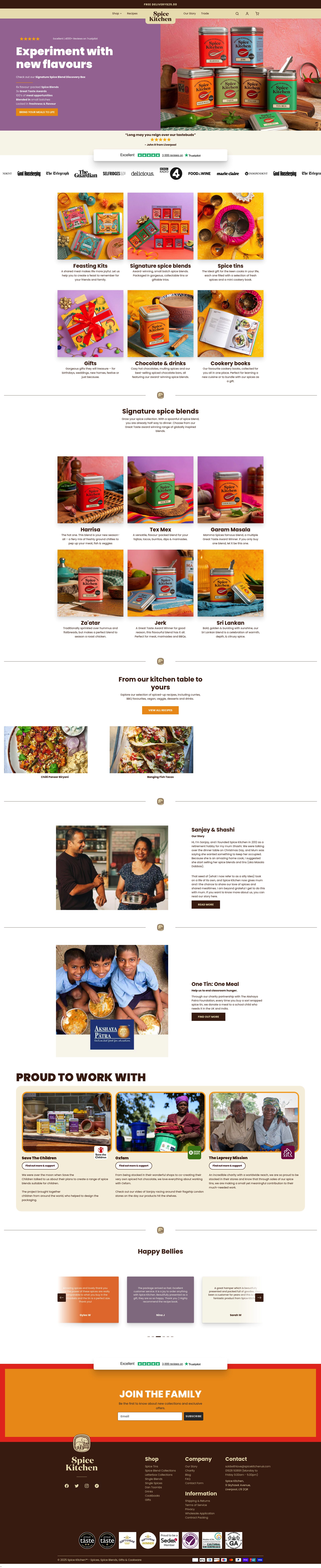
Spice Kitchen is a Birmingham-based, family-run spice and tea blending business with a product range that spans curry kits, spice tins, and loose-leaf tea. Their Shopify store is a strong example of how a small independent brand can use gifting as its primary commercial hook. The spice tins, presented as beautifully packaged ready-to-gift sets, anchor the product range and appear throughout the store's navigation under a dedicated "Gifts" section, which captures the high-intent gifting audience without competing on price against supermarket basics.
Product pages include recipe suggestions and flavour origin notes that do the work of an in-store assistant. That context is not decorative: it converts a commodity purchase into an informed one and increases confidence at the point of decision. The photography is warm and consistent, which is important in a category where the product itself often looks similar across competitors. For UK independent food brands, Spice Kitchen is a reference point for how a well-structured gift offering can anchor an ecommerce business.
2. Bart Ingredients
Bart Ingredients is a Bristol-based spice and herb brand that has been operating for decades, and their Shopify store reflects a business that understands both retail and DTC. The range covers ground spices, whole spices, blends, seeds, and herbs under a clean, category-first navigation that makes it easy to find specific products without needing to know the brand's internal naming conventions. That navigational clarity is often underestimated: in a catalogue with 200-plus SKUs, poor taxonomy is the biggest barrier to discovery.
The product pages include usage guidance, recipe context, and allergen information in a clear, consistent format. Allergen transparency is particularly valuable for a food brand: getting it right builds trust, and Bart handles it without making the page feel clinical. The store's visual identity stays close to the brand's heritage without feeling dated, which is a useful balance for a brand that needs to attract younger home cooks without alienating its existing customer base.
3. Steenbergs
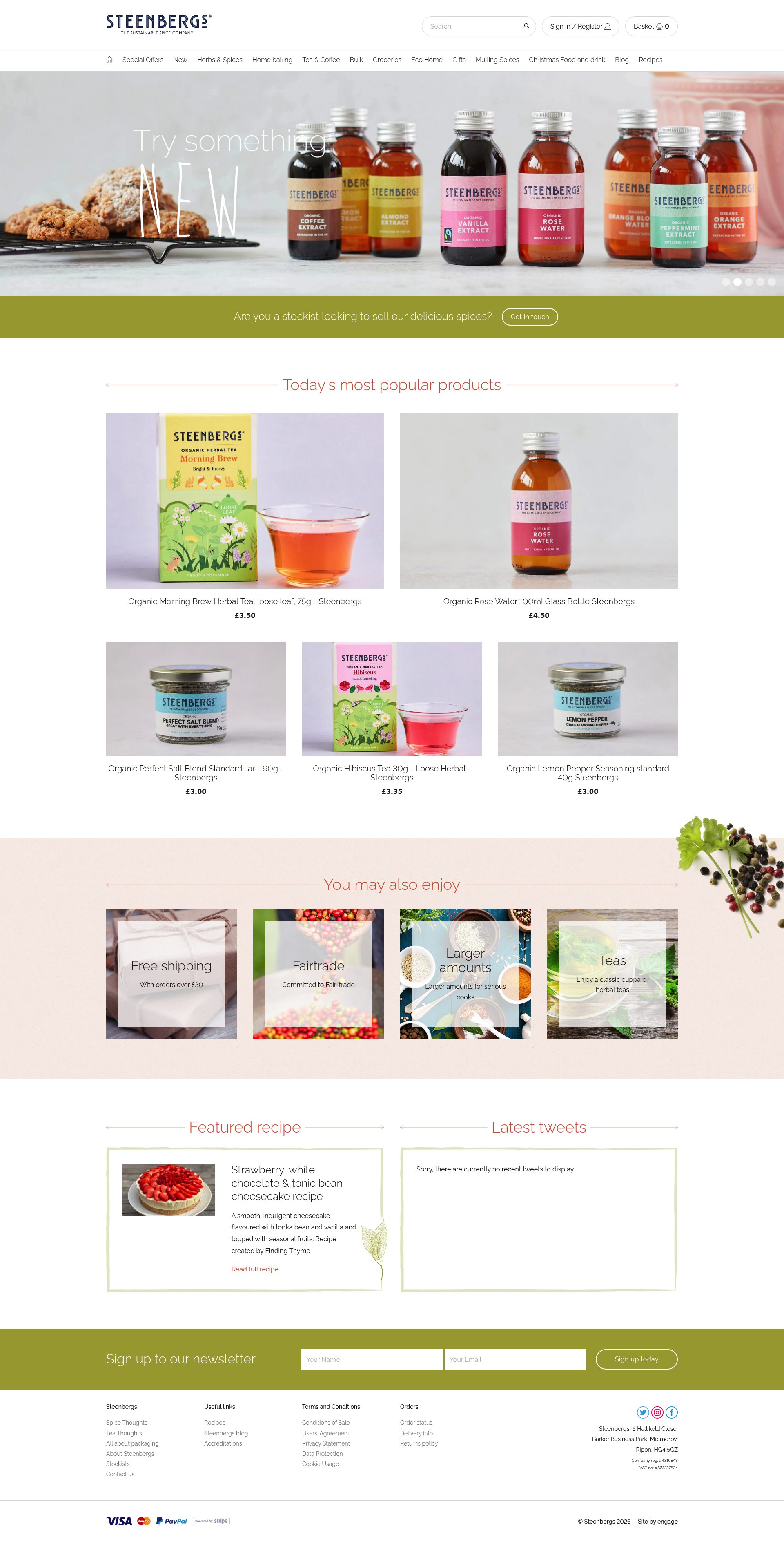
Steenbergs is a North Yorkshire organic spice and herb company founded in 2003, and their Shopify store is one of the most complete examples of how organic credentials can do structural commercial work rather than just appearing as a badge on a product page. The organic and Fairtrade certifications are woven into the navigation, the category descriptions, and the product copy throughout, which builds a coherent value proposition that justifies a higher price point against mainstream competitors.
The subscription model is surfaced cleanly on key repeat-purchase products, with a clear saving versus single orders. For a business where customers are likely buying the same spices on a monthly cycle, that subscriber conversion is worth more than any individual transaction. The recipe section links directly to the relevant product pages, creating a content-to-commerce path that keeps customers within the Shopify ecosystem rather than bouncing to a third-party recipe site. Steenbergs is one of the cleaner examples in the UK of a food brand executing content commerce properly.
4. World of Spice
World of Spice is a UK wholesale and retail spice supplier with a Shopify store that handles both professional and consumer audiences without confusing either. The structure is worth examining for any brand managing trade and retail customers under the same domain: separate navigation paths, clear quantity pricing, and product pages that speak to the professional buyer's need for volume consistency alongside the home cook's desire for flavour context. That dual-audience execution is technically difficult and they handle it without the product discovery breaking down for either segment.
The bulk buying options are well-merchandised, with savings communicated clearly against the per-unit price. For merchants in the food or ingredient space who are tempted to bolt on a trade section as an afterthought, World of Spice demonstrates what a proper dual-channel build looks like on Shopify.
5. Seasoned Pioneers
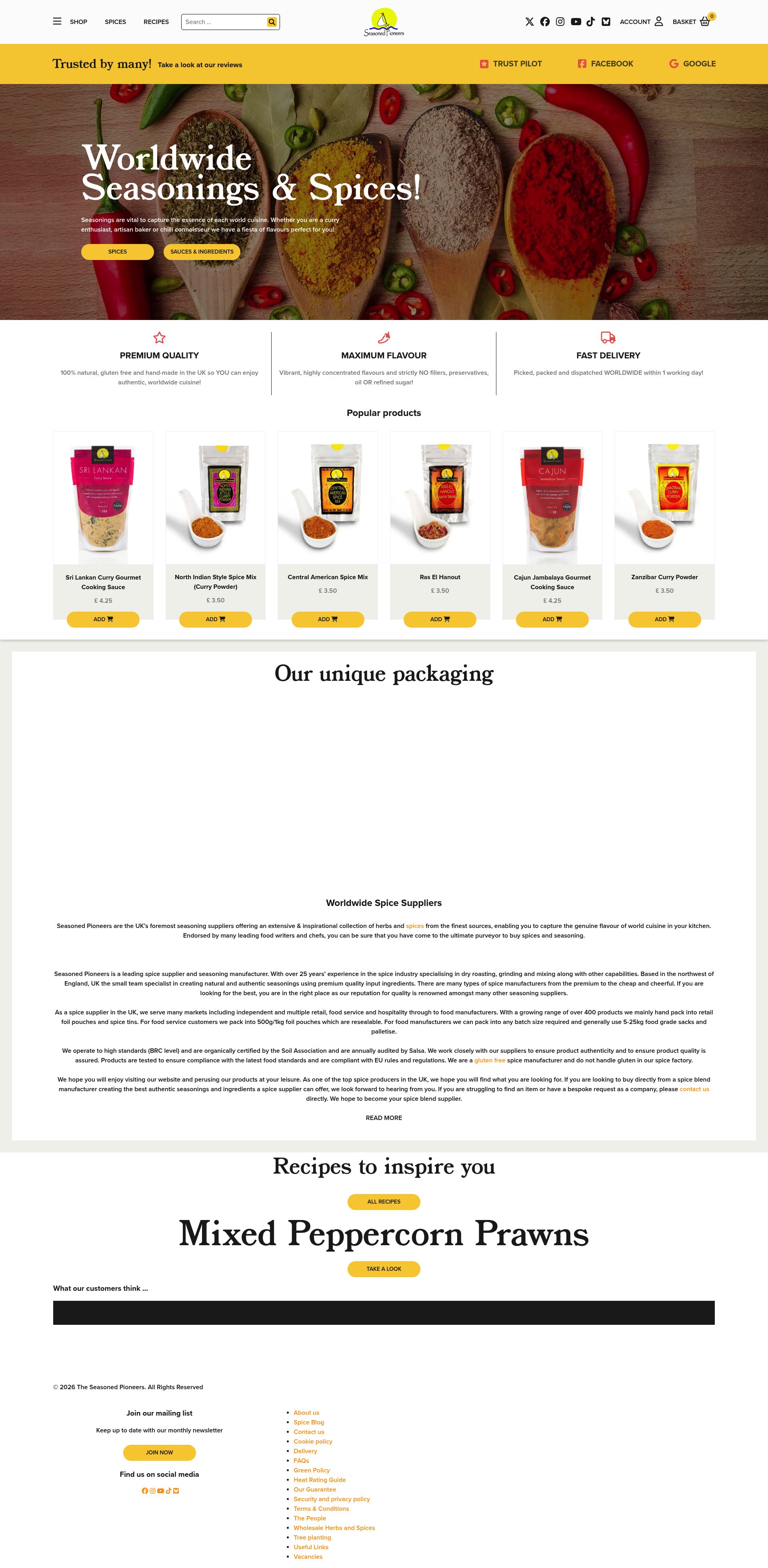
Seasoned Pioneers has been blending spices and rubs in Chester since 1985, and their Shopify store is built around a product range that now spans over 300 SKUs. The primary navigation challenge for any spice store at that scale is preventing the catalogue from becoming a wall of undifferentiated products: Seasoned Pioneers solves it with a cuisine-first taxonomy (African, Asian, Caribbean, Mediterranean, and so on) rather than a product-type structure. That's the right call for a customer who wants to cook Moroccan food this week, not for someone who knows they need ras el hanout by name.
Gift sets are handled well, with a dedicated gifting section that packages the blends into themed collections by cuisine or occasion. The product pages are detailed without being overwhelming: heat ratings, allergen information, suggested pairings, and recipe links all appear in a consistent format. The store's age and authority show in the depth of the range and the quality of the content surrounding it.
6. Diaspora Co
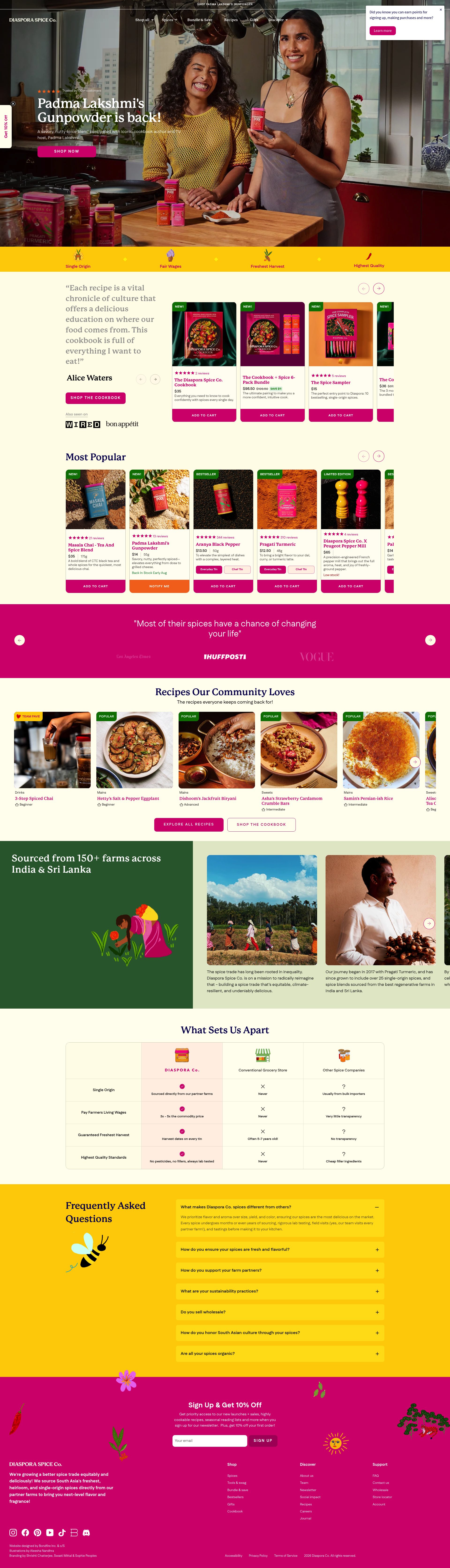
Diaspora Co is a US-based single-origin spice company that has built one of the most distinctive brand identities in the category. Their Shopify Plus store is a masterclass in how provenance storytelling can command a premium price point. Every spice links back to a named farm, a specific harvest season, and a documented relationship with the farmer. That level of transparency is unusual in a category traditionally dominated by opaque commodity supply chains, and it creates a buying experience that feels closer to direct trade than to grocery shopping.
The product pages are long and intentional: spice origin, tasting notes, suggested uses, and a direct explanation of why the product costs what it costs. That last element is doing significant conversion work. Price objections in premium food are almost always information gaps: when a buyer understands why turmeric from Meghalaya costs more than supermarket own-label, the value proposition is clear. The site's visual identity, with its hand-drawn illustrations and bold colour palette, also positions it clearly as a gift-worthy brand.
7. Burlap & Barrel
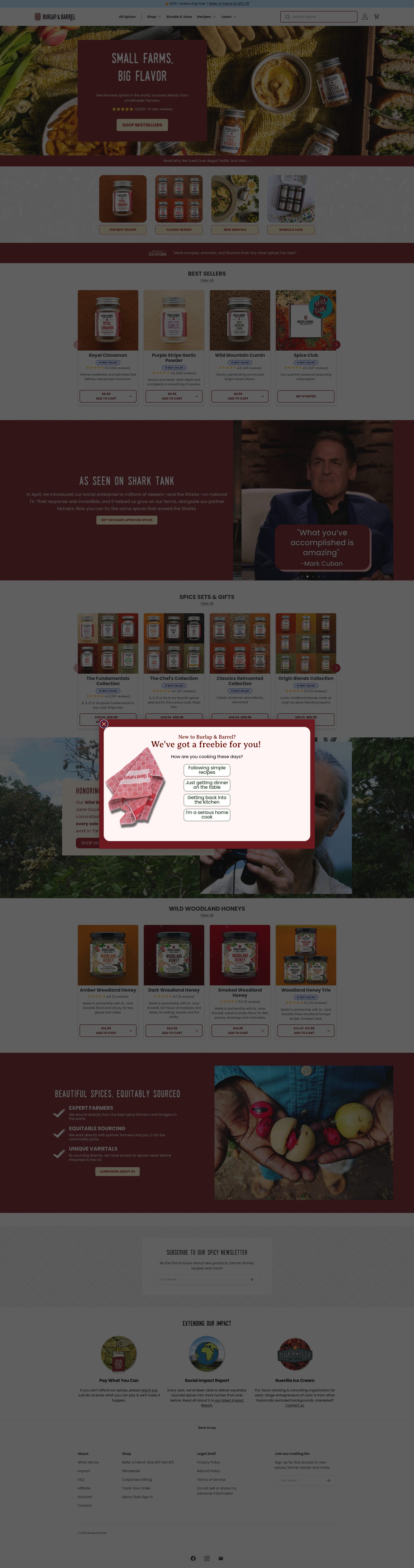
Burlap & Barrel is a New York-based single-origin spice company with a Shopify Plus store that executes the DTC spice model with notable commercial precision. The subscription offering sits front and centre: the "Spice Club" subscription is presented as the primary path for new customers, not an afterthought for the retention team. That subscription-first architecture is correct for a high-repurchase category: getting a customer into a subscription on their first order is worth significantly more than a single transaction conversion.
The product pages are built around food writer and chef endorsements, with specific quotes from named professionals rather than generic five-star reviews. In a premium food category where undifferentiated review scores carry limited credibility, named endorsements from recognised voices are a more persuasive trust signal. Cross-sells are tightly curated: spice pairings rather than random catalogue items, which reinforces the brand's expertise positioning. The bundle mechanic for "Starter Kits" by cuisine region removes the friction of building a first order from scratch.
8. Penzeys Spices
Penzeys Spices is a Wisconsin-based family spice company that has been operating for decades and runs one of the most visited independent spice Shopify stores in the US. The product range is unusually deep, covering single-origin spices, proprietary blends, salts, and vanilla products. The search and filter functionality handles that depth well: by category, flavour profile, and popularity. For a store with hundreds of SKUs, search quality is a direct conversion variable, and Penzeys has invested properly in making it work.
The recipe integration is more thorough than most food DTC stores: Penzeys links to a substantial in-house recipe library from both category pages and individual product listings, creating multiple paths from discovery to purchase. The newsletter programme is built around seasonal recipe content rather than discount codes, which attracts a higher-quality subscriber who is interested in cooking rather than just waiting for a sale. That distinction matters for retention metrics and long-term LTV.
9. Ras El Hanout
Ras El Hanout is a UK-based specialist in North African and Middle Eastern spice blends, taking its name from the complex Moroccan spice mix that translates as "head of the shop." The Shopify store is tightly focused, which is one of its strongest commercial attributes. A narrow, well-curated range signals expertise in a way that a broad catalogue cannot, and in a category where buyers are often uncertain about unfamiliar ingredients, that sense of curation lowers the decision cost at the point of purchase.
Product pages explain the composition and cultural context of each blend, which is exactly the right content for a customer encountering za'atar or chermoula for the first time. The visual identity leans into the Moroccan craft tradition with warm, earthy tones and hand-drawn pattern motifs, which reinforces the provenance story visually. For independent food brands competing against supermarket own-label, that kind of coherent brand world is a meaningful conversion advantage.
10. Angus & Oink
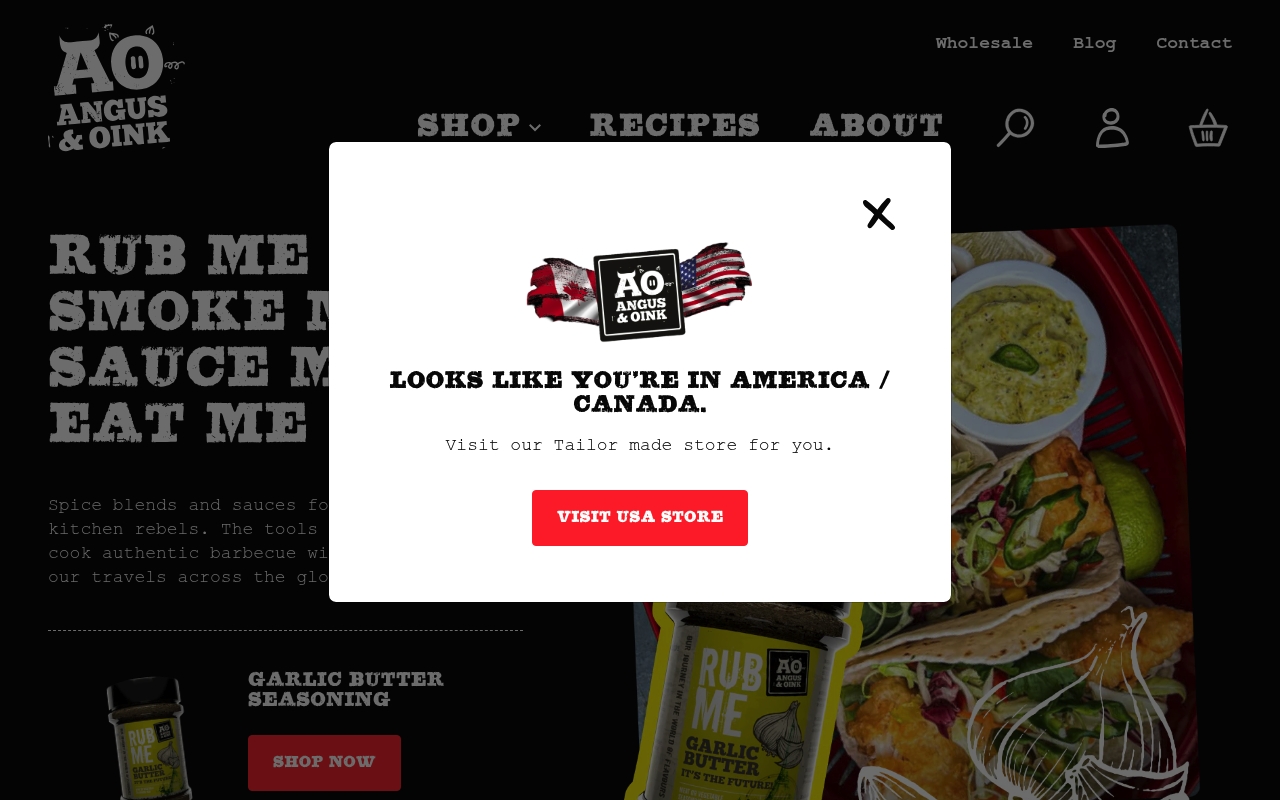
Angus & Oink is a Scottish BBQ rub and seasoning brand with a product range built around bold, globally-inspired flavour profiles. Their Shopify store turns what could be a simple condiment shop into a brand-led experience. Product pages include flavour notes, heat levels, and pairing suggestions that give customers the confidence to buy something they have never cooked with before. Bundles are well-executed: starter kits group complementary rubs with a clear saving, lifting average order value without the upsell feeling forced.
The subscribe-and-save mechanic on high-frequency consumables captures repeat buyers automatically, which is the correct commercial priority for a seasoning brand where margin on the initial acquisition is slim. The tone of voice throughout, irreverent, specific, and confident, makes the browsing experience enjoyable in a way that most condiment stores are not. For any food brand considering a Shopify build, the Angus & Oink store is worth studying for how personality and product information can coexist in the same product page without either compromising the other.
If you sell spices, seasonings, or specialist food products and want a Shopify store that converts browsers into subscribers, explore SuttonCommerce's Shopify design service or get in touch to talk through what your store needs.
Frequently asked questions
What makes a spice Shopify store convert well?
The highest-converting spice stores solve three problems: they reduce decision friction on a large SKU range through smart taxonomy (cuisine-first works better than product-type), they use content to contextualise unfamiliar ingredients rather than just listing them, and they convert one-off buyers into subscribers on repeat-purchase products. Stores that get all three right, like Burlap & Barrel and Steenbergs, generate significantly more LTV per acquired customer.
Which spice Shopify stores have the best subscription models?
Burlap & Barrel presents its Spice Club subscription as the primary acquisition path, not a retention add-on, which is the correct commercial structure for a high-repurchase category. Steenbergs surfaces subscribe-and-save clearly on key products with transparent savings versus single orders. Angus & Oink applies the same mechanic to its BBQ rubs where frequency of use makes subscription a natural fit.
How do premium spice brands justify higher prices on Shopify?
The most effective approach is provenance transparency: Diaspora Co and Burlap & Barrel both link every product to a named farm, specific harvest, and documented farmer relationship, which frames the price against a supply chain story rather than a commodity comparison. Product pages that explain the cost explicitly, covering the why behind the price point, convert better than those that simply show a number and hope the customer infers the value.
Which spice stores are best for gifting?
Spice Kitchen is the clearest gifting specialist in the category, with its packaged spice tins sitting at the centre of the store's navigation and commercial strategy. Seasoned Pioneers handles gifting well at scale, with themed collections by cuisine and occasion across a 300-plus SKU range. Both use dedicated gifting sections rather than relying on generic filters, which matters for customers arriving with gift intent rather than ingredient need.
How should a spice store handle a large product catalogue on Shopify?
Cuisine-first taxonomy outperforms product-type taxonomy for most spice stores because customers typically know what they want to cook before they know which spice they need. Seasoned Pioneers demonstrates this at scale with over 300 SKUs organised by regional cuisine. Strong search functionality is non-negotiable beyond 150 SKUs, and Penzeys' investment in category, flavour profile, and popularity filters is a direct model for stores at that size.