
Quick summary
Graze stands out as the benchmark for subscription box UX: the preference quiz feeds directly into checkout with no unnecessary steps, and churn prevention is baked into the account area before the cancel button appears. HelloFresh shows what serious conversion optimisation looks like at scale, with a dynamic price-per-serving calculator that defuses the cost objection before it forms. Oddbox turns an unusual proposition — surplus veg — into a mainstream offer by leading with live environmental impact data, which does more to justify the subscription than any discount could. Beer52 is the strongest example of editorial content carrying a premium price: brewery storytelling on every product makes the unboxing feel like an experience rather than a delivery.
Subscription boxes are one of the harder business models to execute on Shopify. The product is partially invisible at point of purchase: you are asking someone to pay now for something they will receive later, repeatedly, without seeing it first. That requires a level of trust that most ecommerce stores never need to build. The brands below have figured it out. They convert cold traffic on the promise of curation, they retain subscribers through consistency and surprise, and their stores are built specifically around the subscription purchase journey rather than adapted from a standard one-off checkout flow.
1. Graze
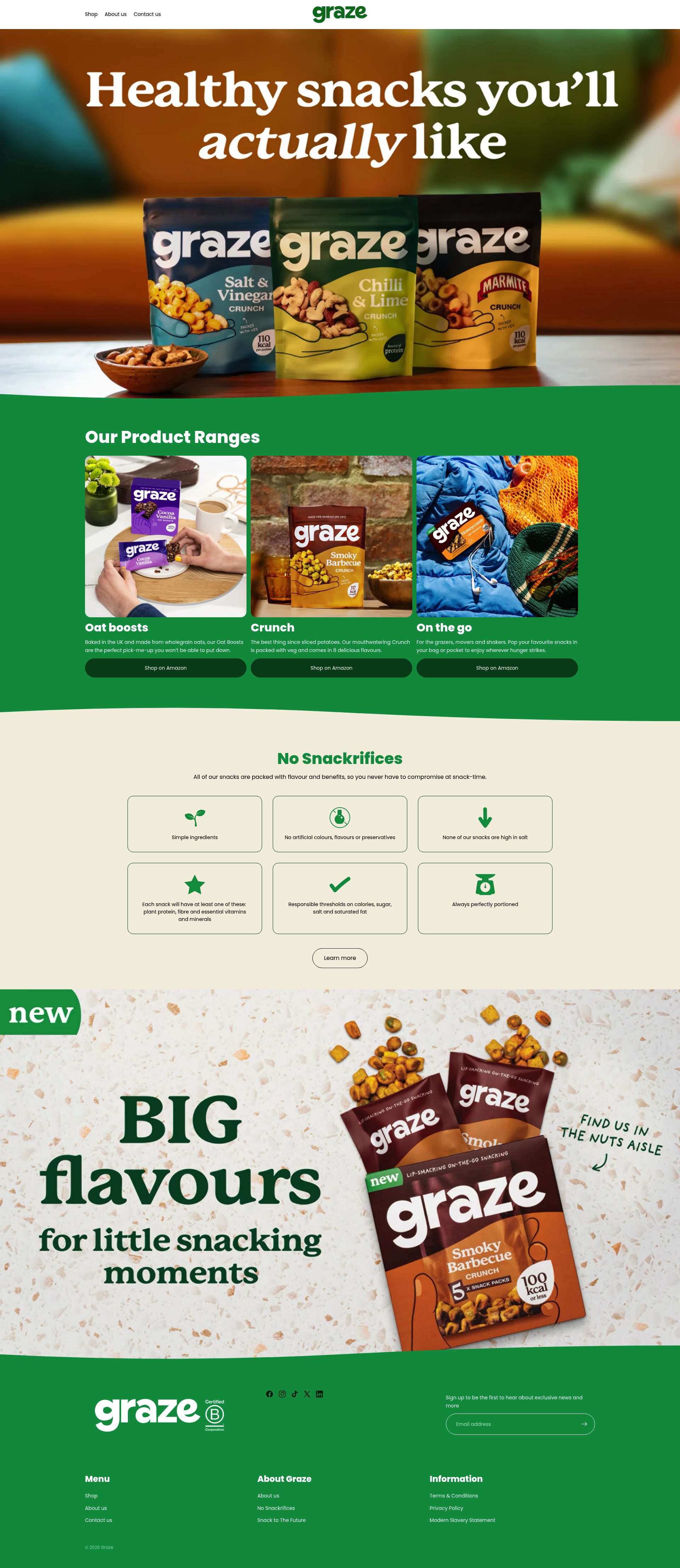
Graze has been selling snack subscriptions since 2008, and their Shopify store reflects that maturity. The homepage leads with the value proposition immediately: a monthly snack box tailored to your preferences, with a clear price per box and a free first box offer prominently placed above the fold. Their onboarding quiz, which captures taste preferences before signup, is a smart pre-purchase customisation mechanism that both increases perceived value and feeds their personalisation engine. The quiz-to-checkout flow is tight, with no unnecessary steps between answering the questions and completing the subscription setup. Graze also manages churn intelligently: pause and skip options are surfaced in the account area before cancellation, reducing involuntary churn without being manipulative.
2. Birchbox UK
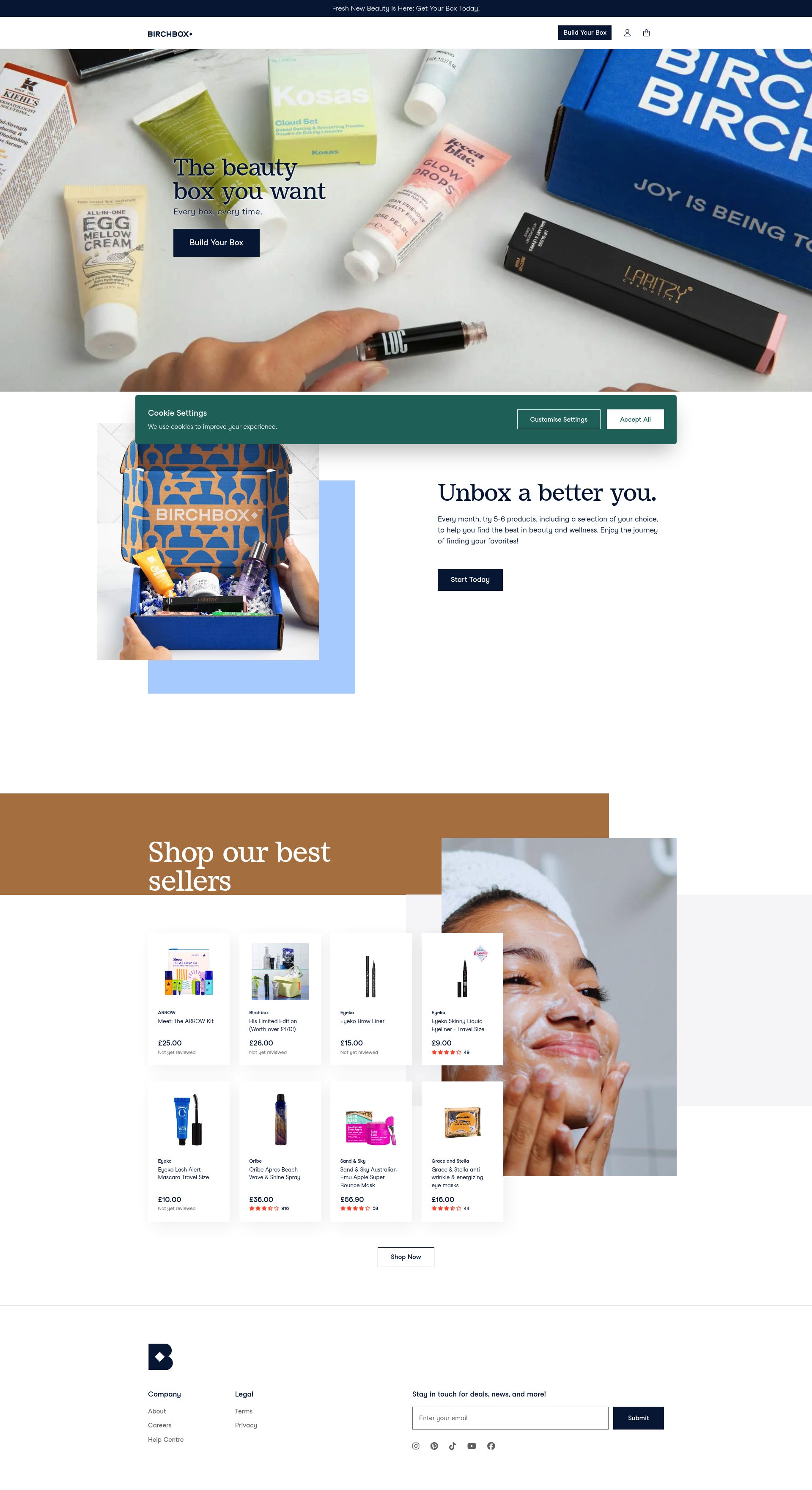
Birchbox is a beauty subscription brand that has built a genuinely useful editorial layer into its Shopify store. Every product that appears in a box is matched with usage tutorials, reviews, and recommended pairings in a content hub that functions as both a discovery tool and a retention mechanism: subscribers who engage with the content are more likely to upgrade or purchase full-size versions. Their product pages for individual full-size purchases cross-reference which box the item appeared in, closing the loop between the subscription and the shop in a way that drives meaningful add-on revenue. The subscription landing page handles the "what will I actually get?" objection cleanly, with past box reveals and a money-back-equivalent satisfaction guarantee.
3. HelloFresh
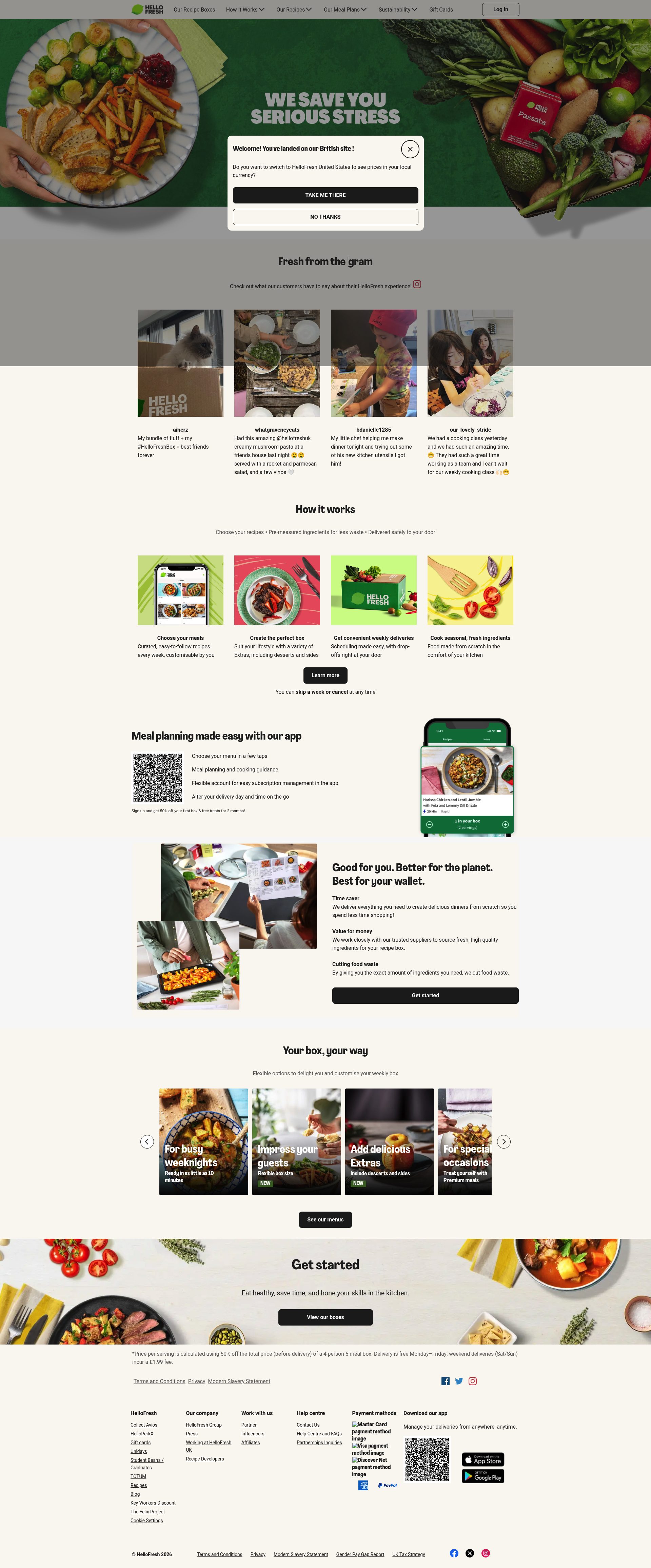
HelloFresh is the largest meal kit subscription brand in the world by revenue, and their Shopify-based UK store shows what serious conversion optimisation looks like at scale. The meal selection UI is built into the homepage journey, letting first-time visitors choose meals and see exactly what they would receive before committing to sign up. Price-per-serving is calculated dynamically as the plan is configured, which directly addresses the most common objection to meal kits: perceived cost. Their checkout funnels are extensively A/B tested, which shows in the directness of the copy and the absence of friction between plan selection and payment. Pause, skip, and swap functionality is first-class in the account area.
4. Beer52
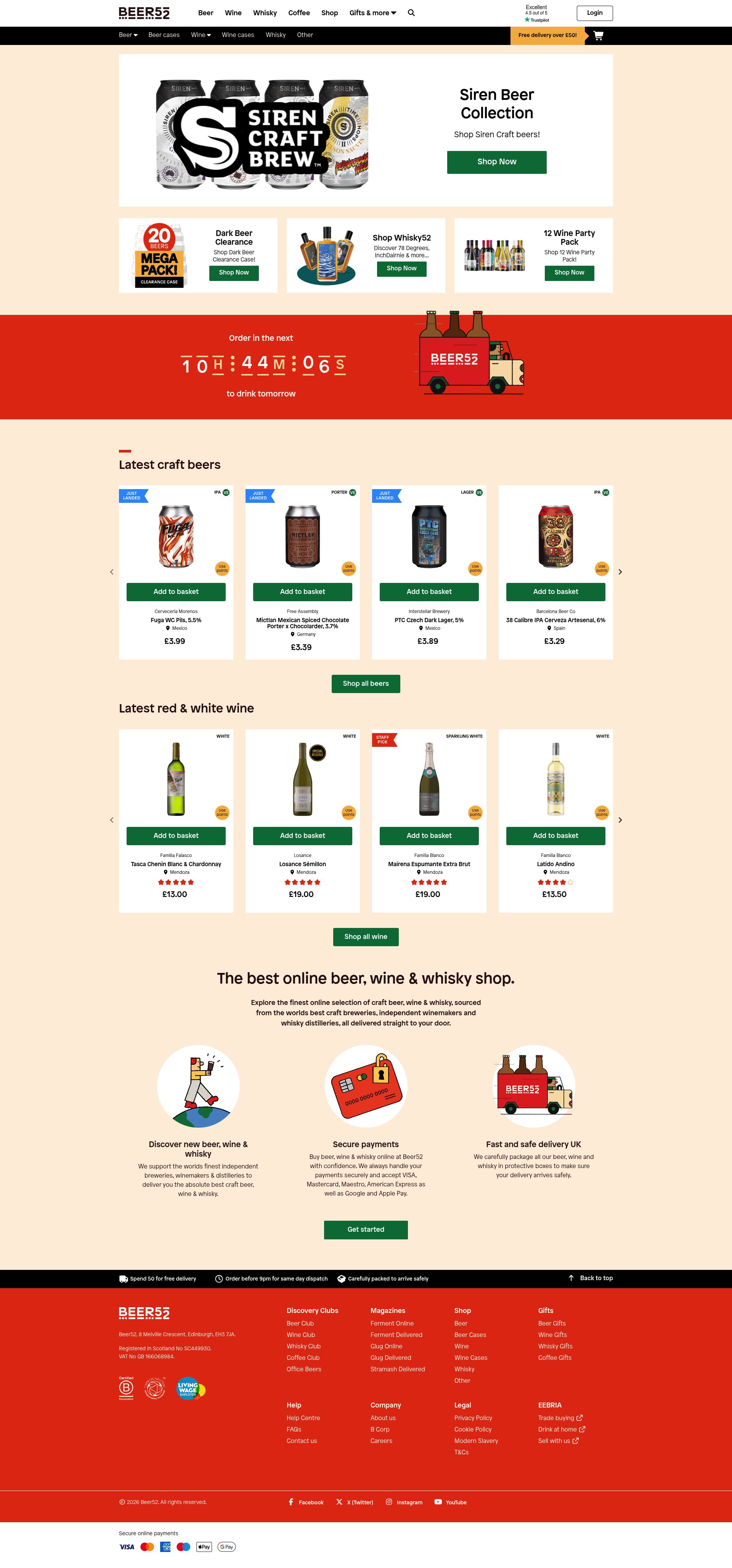
Beer52 is a craft beer subscription brand based in Edinburgh, and their store is one of the better examples of editorial content driving subscription conversion. Each monthly box is presented with a full story: the brewery that made each beer, the region it comes from, and the recommended food pairings. This content does two jobs: it justifies the premium price point relative to supermarket beer, and it makes the unboxing experience richer for the subscriber who arrives already knowing the story behind what they are opening. Their subscription landing page leads with the number of beers, the price per can, and the free first box incentive, all in the first viewport. The social proof integration, which includes a Trustpilot widget and subscriber count, is well-positioned relative to the CTA.
5. Oddbox
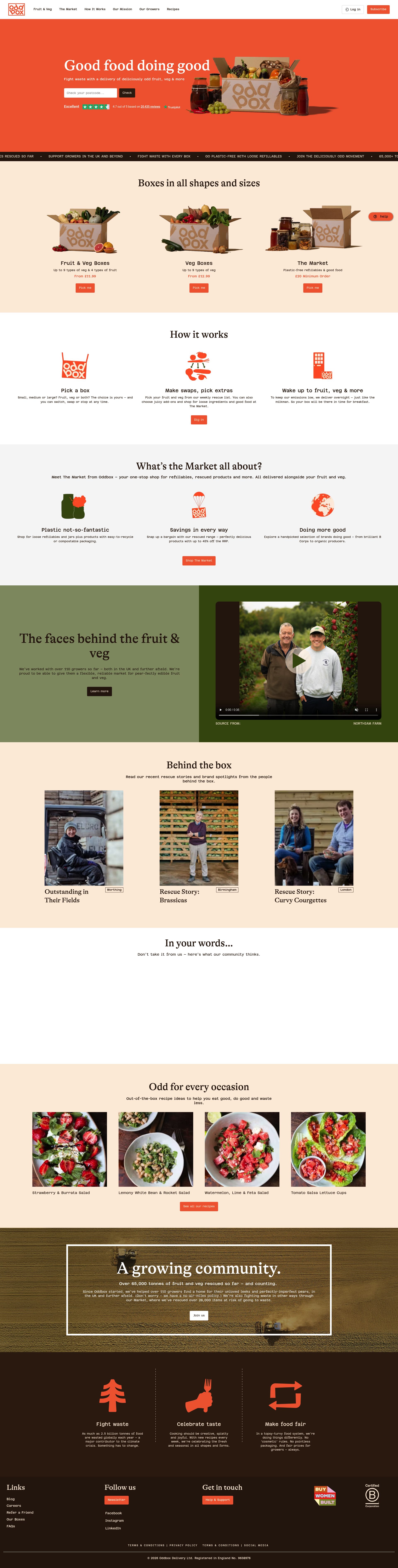
Oddbox delivers surplus and "wonky" fruit and veg on a subscription basis, and their Shopify store turns a potentially niche proposition (imperfect produce) into a compelling mainstream offer. The store leads with environmental impact data: kilograms of food waste rescued, CO2 equivalent saved, presented as a live counter. This is a high-trust signal for their target customer, and it differentiates Oddbox from both conventional veg box subscriptions and supermarket alternatives. Box customisation is handled through a clean preference selector that lets subscribers exclude items they do not eat, which directly reduces the most common reason for cancelling a veg box (receiving something you cannot use). Delivery slots and postcode eligibility are checked early in the funnel, preventing drop-off later.
6. Loot Crate
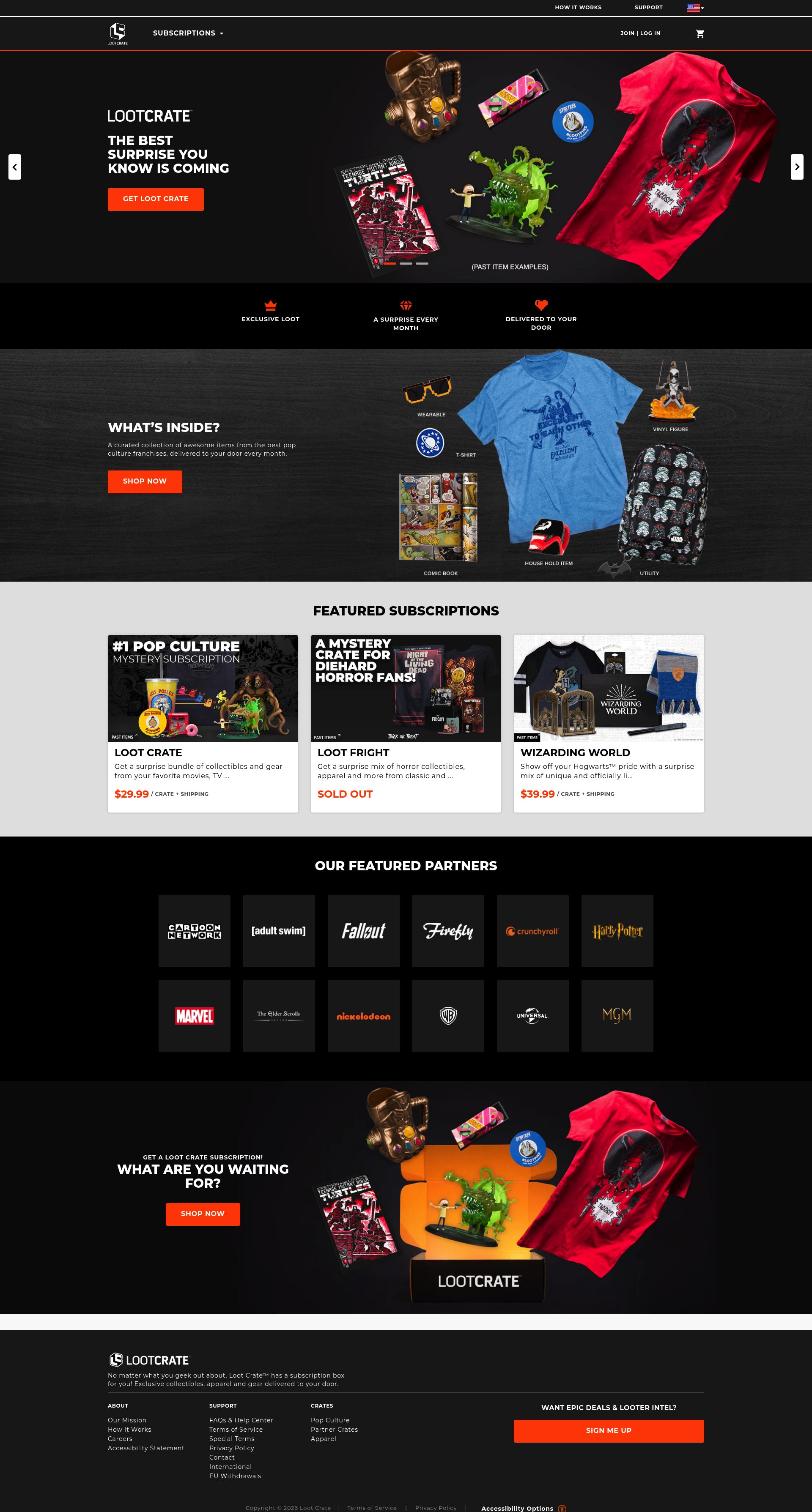
Loot Crate targets gaming and pop culture fans with themed monthly boxes, and their Shopify store leans into that audience's instinct for collecting and exclusivity. Each box theme is announced as a "reveal" with partial product previews designed to generate social sharing before the box ships. Limited edition and past boxes are sold in a separate shop section that drives revenue from non-subscribers and one-off buyers, which is a smart way to monetise the brand's catalogue. Their product photography is designed for unboxing content: every item is shot to look good on camera, because Loot Crate's customers are likely to share their unboxing on social media. The store handles multiple subscription tiers clearly, with a comparison layout that makes upgrading the obvious next step.
7. Pasta Evangelists

Pasta Evangelists sells restaurant-quality fresh pasta meal kits on a subscription basis, and their Shopify store positions the brand firmly at the premium end of the meal kit market. The homepage photography is genuinely food-magazine quality, which does the work of justifying a higher-than-average price per portion before any copy is read. Their recipe content is exceptional: each kit's recipe card is available on the PDP, so a first-time visitor can assess the cooking experience before subscribing. The subscription configurator lets users choose delivery frequency and number of portions, with price-per-portion shown at every step. Pasta Evangelists also runs a retail gifting business and their gift subscription flow is one of the cleaner gift purchase journeys on Shopify: date picker, personalised message, and a choice between physical and digital gift cards all handled without leaving the page.
8. DEGUSTABOX
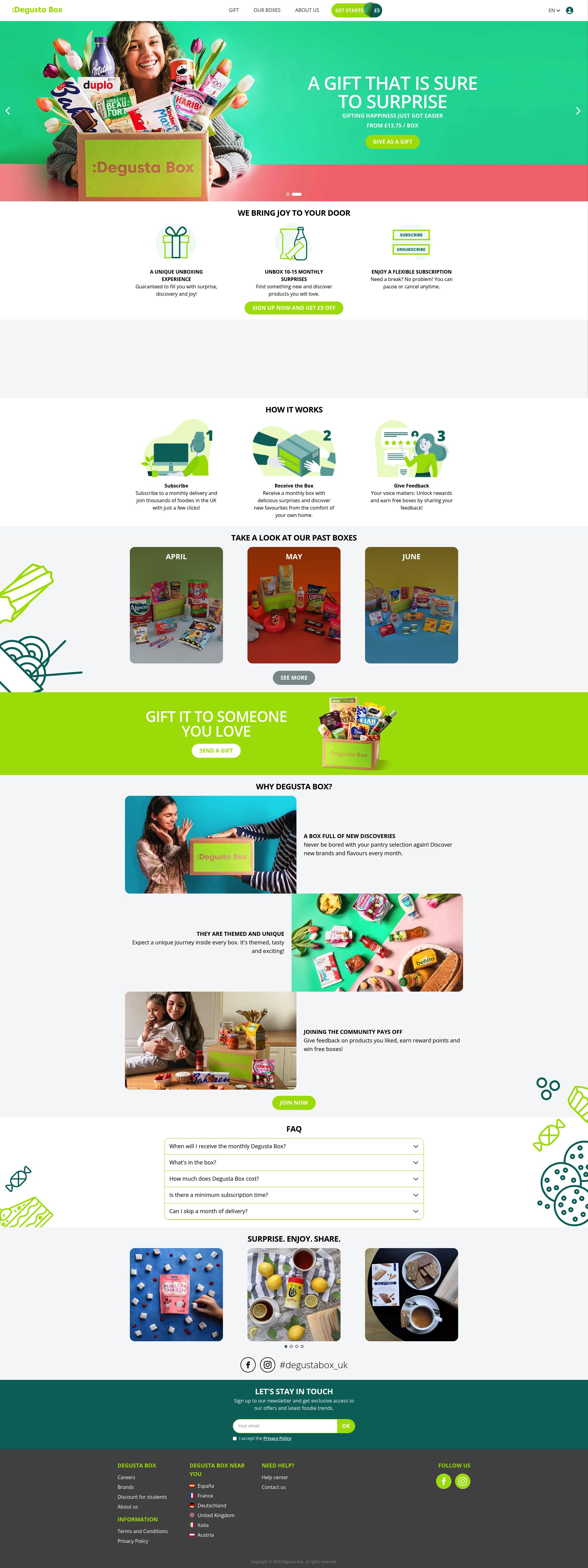
DEGUSTABOX is a food discovery subscription that delivers 10 to 15 full-size branded food and drink products each month. Their Shopify store addresses the core challenge of food subscription boxes: convincing someone to pay for products they have not chosen. They do this through past box reveals with full product lists and brand names, which gives potential subscribers a clear idea of the quality and variety on offer. The pricing page is one of the more straightforward on the market: one box, one price, clear billing date. This simplicity is a competitive advantage in a category where complex tier structures create hesitation. Their referral scheme is surfaced in the post-purchase flow and in the subscriber account area, and it has visibly contributed to their subscriber growth in the UK market.
9. The Hamper Emporium
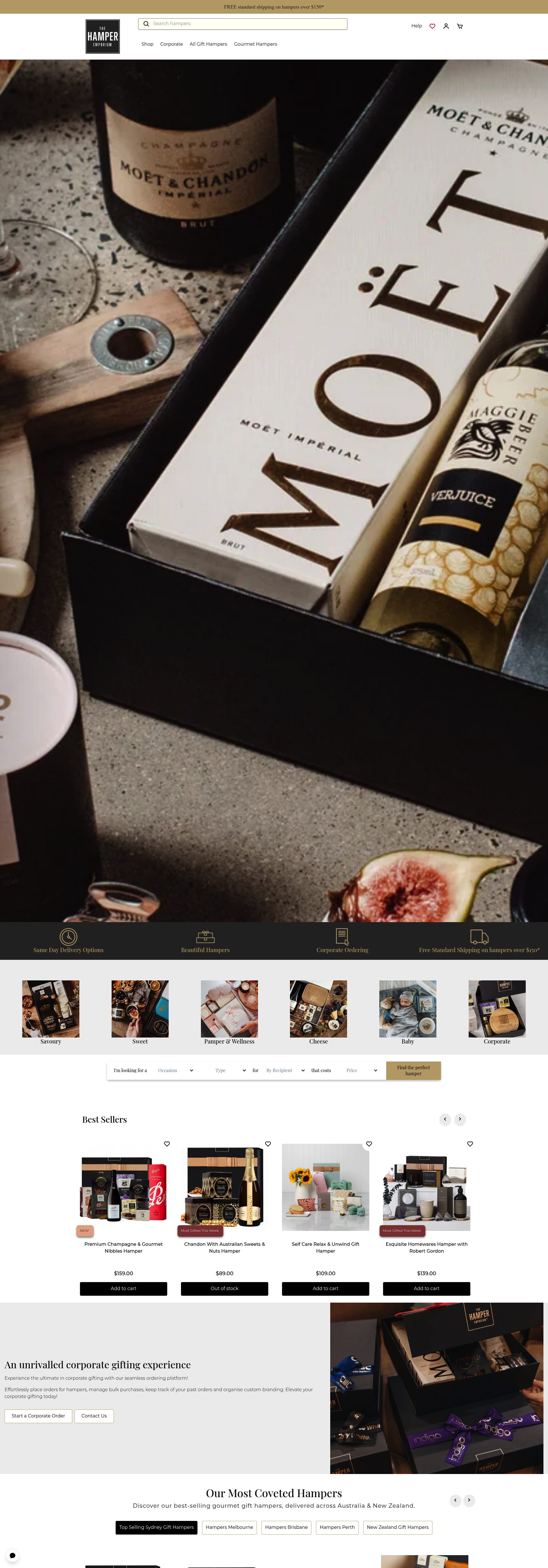
The Hamper Emporium occupies the premium gifting end of the subscription box market: curated British food and drink hampers, including a monthly subscription product aimed at the corporate gifting sector. Their Shopify store is built to convert gift purchases rather than self-subscriptions, which requires a different approach to the purchase journey. Occasion filters (birthdays, anniversaries, corporate) are prominent in the navigation, and the gift subscription product pages include a corporate enquiry CTA alongside the standard checkout. Product photography is shot in a lifestyle context rather than on white, which communicates the "unboxing" experience before purchase. Trust signals are calibrated for gift buyers: courier tracking, satisfaction guarantee, and UK-based customer service are all highlighted near the add-to-basket button.
10. Prezzybox Monthly Club
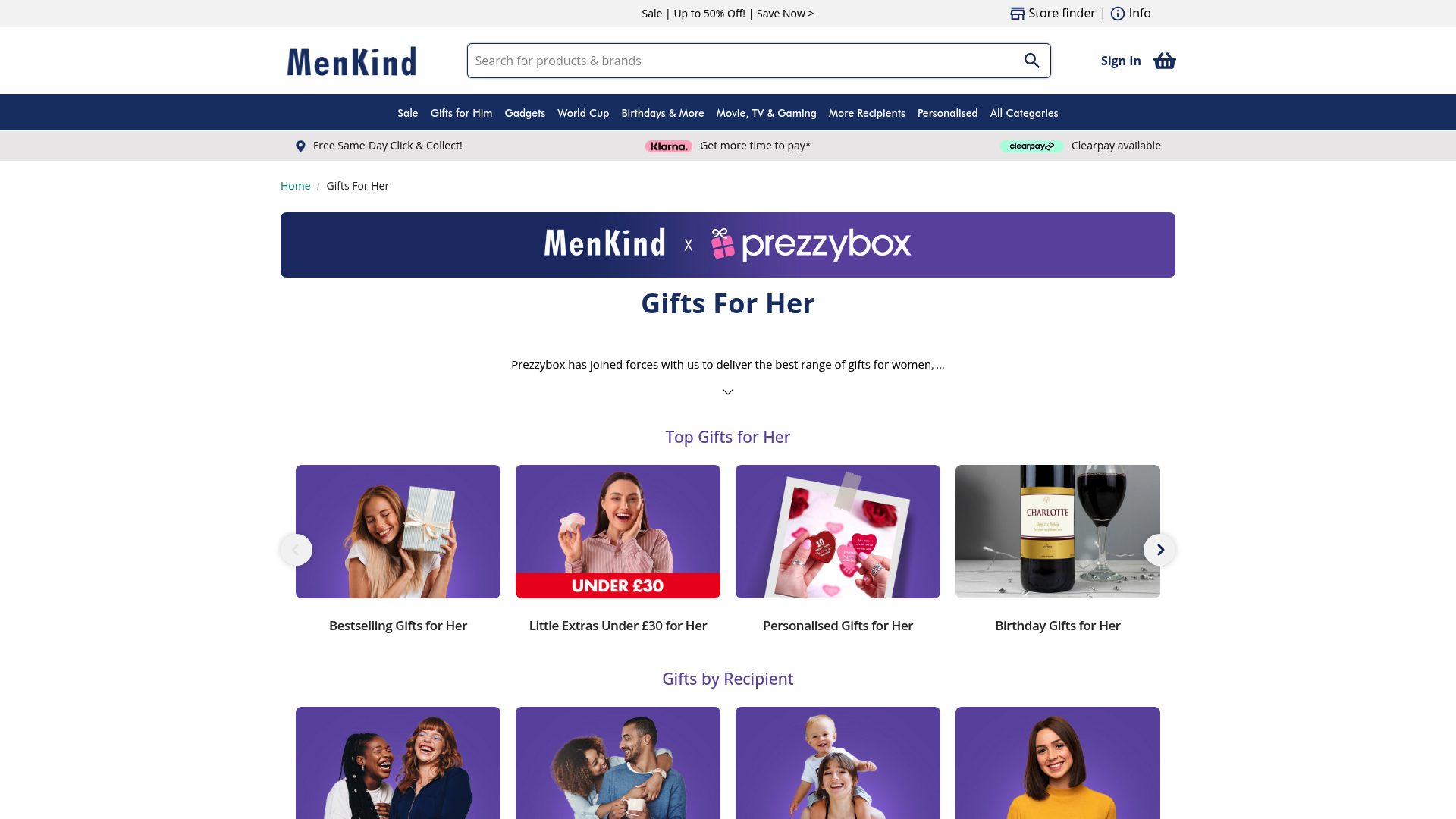
Prezzybox runs several subscription club products alongside their broader gifts and novelty ecommerce catalogue, which makes their Shopify store an interesting case study in how a multi-category retailer integrates subscription products without them being buried. Subscription boxes are surfaced in the main navigation under "Monthly Clubs" and are given dedicated landing pages that lead with the subscription value rather than treating them as just another product category. Their use of countdown timers for monthly dispatch deadlines creates genuine urgency without being artificially inflated. The checkout for monthly clubs is handled via their Shopify subscription integration, with plan selection, billing frequency, and cancellation terms all clearly laid out before payment.
Comparison table
| Brand | Niche Focus | Price Point | Shopify Standout |
|---|---|---|---|
| Graze | Healthy snacks | Low (under £10/month) | Preference quiz to checkout flow |
| Birchbox UK | Beauty samples | Mid (£10–£15/month) | Editorial content tied to subscription products |
| HelloFresh | Meal kits | Mid-High (per serving) | Dynamic price calculator in configurator |
| Beer52 | Craft beer | Mid (under £30/month) | Brewery storytelling on every product |
| Oddbox | Surplus fruit and veg | Mid (£10–£20/week) | Live impact counter, early postcode check |
| Loot Crate | Gaming and pop culture | Mid (£20–£30/month) | Past box shop, tiered plan comparison |
| Pasta Evangelists | Premium meal kits | High (per portion) | Recipe cards on PDP, clean gift subscription flow |
| DEGUSTABOX | Food discovery | Low-Mid (under £20/month) | Simplified single-tier pricing |
| The Hamper Emporium | Premium gifting | High (varies) | Corporate gifting CTA, occasion-filtered navigation |
| Prezzybox | Novelty gifts | Low-Mid (varies) | Monthly Club surfaced in main navigation |
What these stores get right
- Value is communicated before price. Every strong subscription box store answers "what will I actually get?" before asking for a credit card. Past box reveals, product previews, and editorial content all serve this function.
- The subscription configurator is part of the conversion flow, not a barrier. Frequency selectors, portion sizes, and preference inputs are designed to move the customer toward checkout, not give them more reasons to hesitate.
- Churn prevention is built into the account area. Pause, skip, and swap options are surfaced before the cancellation link. This is not manipulation: it is giving subscribers the flexibility they actually want without forcing them to cancel and resubscribe.
- Social proof is calibrated to the category. Subscription boxes require a higher level of trust than one-off purchases. The best stores use subscriber counts, review volume, and named third-party press mentions rather than generic star ratings.
- Gift subscriptions are treated as a separate purchase journey. The mental model of buying a subscription as a gift is different from buying one for yourself. Stores that handle this with a dedicated flow, including date pickers, personalised messages, and clear terms, convert gift buyers at a significantly higher rate.
Frequently asked questions
Which Shopify apps do subscription box stores use for recurring billing?
The most widely used apps are Recharge Subscriptions and Skio, both of which integrate with Shopify Checkout and handle billing, dunning, and subscriber account portals. Recharge is the most established option with the broadest app ecosystem integrations. Skio is increasingly preferred by higher-volume brands for its Stripe-native architecture and cleaner subscriber-facing UX.
How do the best subscription box stores reduce churn on Shopify?
The strongest brands surface pause and skip options in the account area before the cancellation link, which converts a significant share of would-be cancellations into temporary pauses. They also use dunning management apps to recover failed payments automatically, and run win-back email flows triggered when a subscriber cancels. The account portal UX is where most subscription brands lose money they could easily keep.
What conversion rate should a subscription box landing page aim for?
Benchmarks vary by niche and traffic source, but top-performing subscription box landing pages on Shopify typically convert paid traffic at 3 to 6 percent and organic traffic at 1.5 to 3 percent. Stores that use an onboarding quiz or preference selector before checkout consistently outperform flat landing pages, because the quiz increases perceived personalisation and reduces the risk of receiving something irrelevant.
How do subscription box stores handle gift subscriptions on Shopify?
The better stores treat gift subscriptions as a separate purchase journey rather than a product variant. This means a dedicated landing page, a date picker for the start date, a personalised message field, and clear terms on when the recipient's billing begins. Stores that bundle these into the standard checkout flow see significantly lower gift conversion because the decision process for buying as a gift is fundamentally different from buying for yourself.
Is Shopify a good platform for a subscription box business?
Shopify is a strong choice for subscription boxes when combined with a dedicated subscription app like Recharge or Skio. Native Shopify Checkout handles the transaction, while the subscription app manages recurring billing, subscriber accounts, and cancellation flows. The main limitation is that the subscriber account portal is separate from the standard Shopify account, which can create friction — the brands that manage this best either customise the portal heavily or use an app that fully replaces it.
Related reading
- Best food and drink Shopify stores
- Best gifting Shopify stores
- Shopify subscriptions: choosing the right app for recurring revenue
If your subscription model is not converting or retaining at the level these brands achieve, the issue is usually in the configurator UX or the post-purchase account experience. See our Shopify design service or get in touch to talk through what is possible.