
Quick summary
Anker is the strongest all-round tech DTC store, with sub-brand architecture and thousands of verified reviews that handle a sprawling multi-product catalogue without losing buyers. dbrand stands apart for its real-time device skin configurator — a genuine product moat that makes the DTC case obvious in a marketplace-dominated category. Peak Design sets the benchmark for premium pricing defended entirely through product depth: interactive diagrams, manufacturing detail, and use-case video that does the work of a knowledgeable sales assistant. Casetify leads on customisation commerce, embedding its case builder directly at the product page level so customers configure at the point of intent rather than three clicks later.
Consumer electronics is one of the hardest categories to sell DTC. Customers comparison shop aggressively. Marketplaces, grey importers, and big-box retailers compete on price. And the product itself — a charger, a speaker, a smartwatch — often looks identical across half a dozen competing listings. The brands that win in this space do not try to beat Amazon on price. They win on expertise, trust, and a store experience that makes the right product feel obvious. These ten stores have figured that out, and there is a clear lesson in each one for any merchant selling tech DTC.
1. Anker

Anker has built one of the strongest DTC electronics brands in the world, and their Shopify store is engineered to handle the complexity of a multi-product, multi-range catalogue without losing the customer. Product pages lead with clear compatibility information: which devices a charger powers, what wattage is delivered, how many ports are available and in what configuration. That specificity is the conversion lever in a category where buyers are paranoid about buying the wrong thing. Anker's sub-brand architecture — Soundcore for audio, Eufy for home security, Anker for charging — is surfaced clearly at navigation level, so customers arriving for one product type are not confused by adjacent categories. The review volume across product pages, often running to thousands of verified ratings, is presented prominently because at a £20–£80 price point, social proof is the primary trust signal.
2. Casetify

Casetify has turned device protection into a lifestyle brand, and their Shopify store is the clearest example in consumer electronics of how customisation can be a primary conversion driver rather than an add-on. The custom case builder, which lets customers upload artwork, choose materials, and preview their design on the exact device model they own, is embedded at the product level rather than buried in a separate customisation flow. That integration matters: customers configure a case at the point of intent, not after clicking through three extra pages. Casetify also handles new device launches better than almost any DTC electronics brand: the moment Apple or Samsung announces a new model, compatible cases are live on the store, which captures the early-adopter purchase wave that generic accessories retailers miss entirely.
3. Incipio
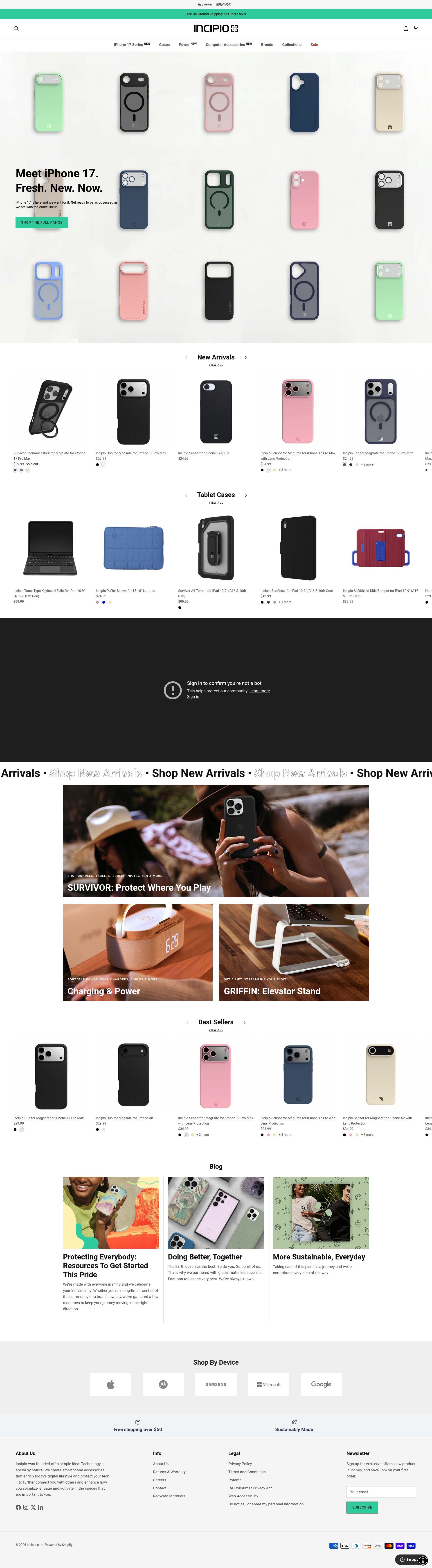
Incipio is a US-based mobile accessories brand specialising in cases, screen protectors, and charging accessories for phones and tablets. Their Shopify store handles the core category UX challenge, helping customers find the right product for their exact device model, with a device selector embedded early in the browsing flow. Rather than asking customers to search through hundreds of SKUs, the store filters the catalogue based on what you own. That friction reduction has a measurable impact on conversion in a category where the wrong case is a return and a lost customer. Incipio also uses clear, functional photography: each case is shown from multiple angles, with deliberate shots of the port cutouts, button covers, and camera aperture — the exact details buyers scrutinise before purchasing protection products.
4. dbrand
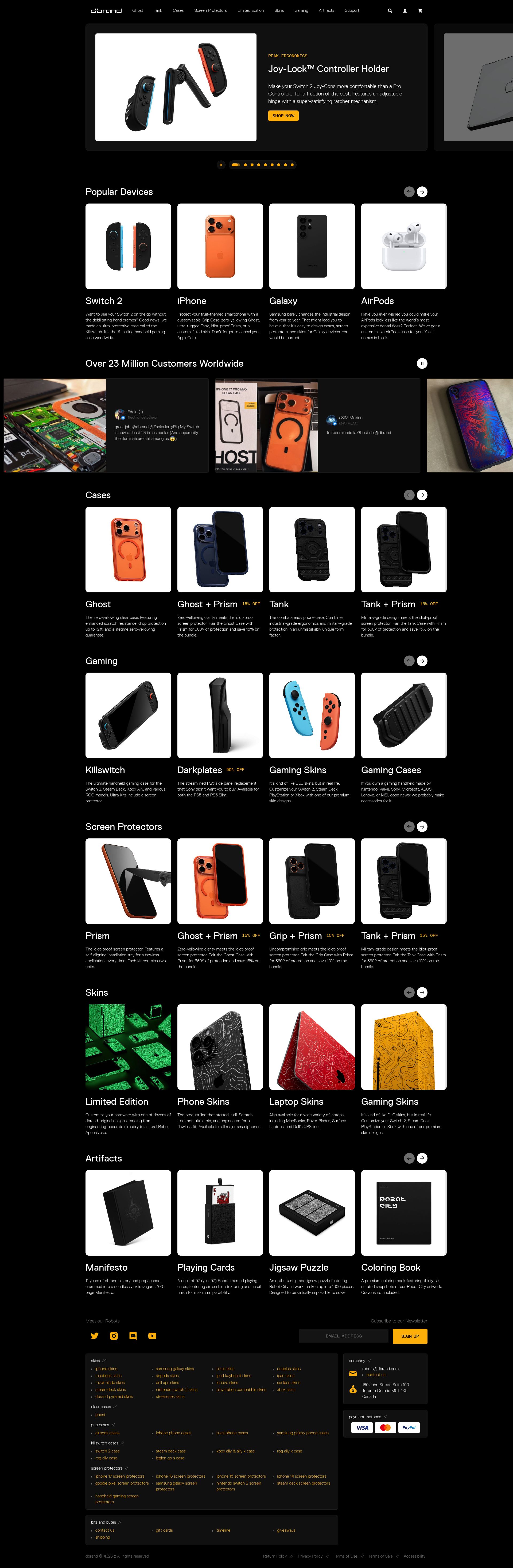
dbrand built a cult following on precision-cut device skins and a brand voice that is deliberately abrasive and irreverent. Their Shopify store reflects that brand identity: the copy is dry and confrontational, the photography is clean and precise, and the entire experience is engineered around a configurator that lets customers build their exact skin combination — device, finish, and cutout — with a live preview. The configurator is technically impressive, rendering accurate previews across hundreds of device models in real time, and it is the single feature that justifies the brand's DTC-only distribution. dbrand has never relied on marketplaces; the configurator is the product moat, and the store is built to deliver it. For Shopify merchants in accessories, the lesson is that a genuinely differentiated tool can make the DTC case obvious in a market dominated by marketplace comparisons.
5. Moment
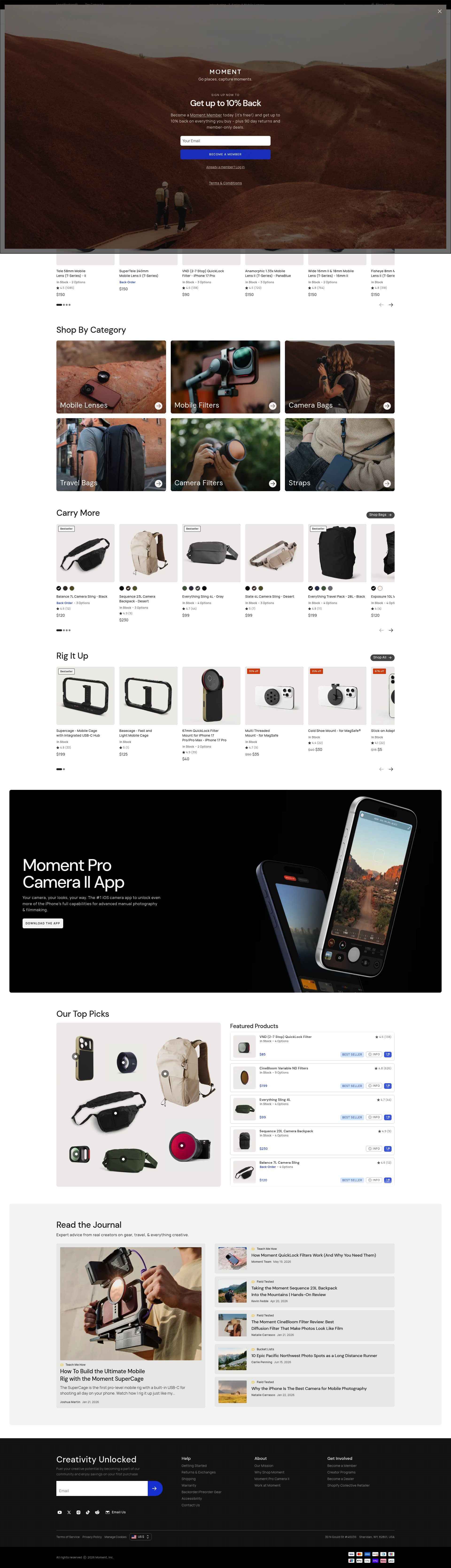
Moment started as a lens attachment brand for mobile photographers and has expanded into a full range of phone cases, filters, straps, and photo and video accessories. Their Shopify store is a strong example of content-led commerce: buying guides, how-to articles, and gear breakdowns are integrated into the shopping experience rather than maintained as a separate blog. Product pages include use-case context, a photo taken with this lens, a video comparison between lens options, which gives buyers the confidence to commit to a specialist product without needing to research externally. Moment appeals to a technically engaged customer and the store earns that audience's trust by treating them as competent rather than dumbing down the product information. The creative community and ambassador content layered through the store also drives repeat visits in a way that transactional product listings never do.
6. Nomad Goods
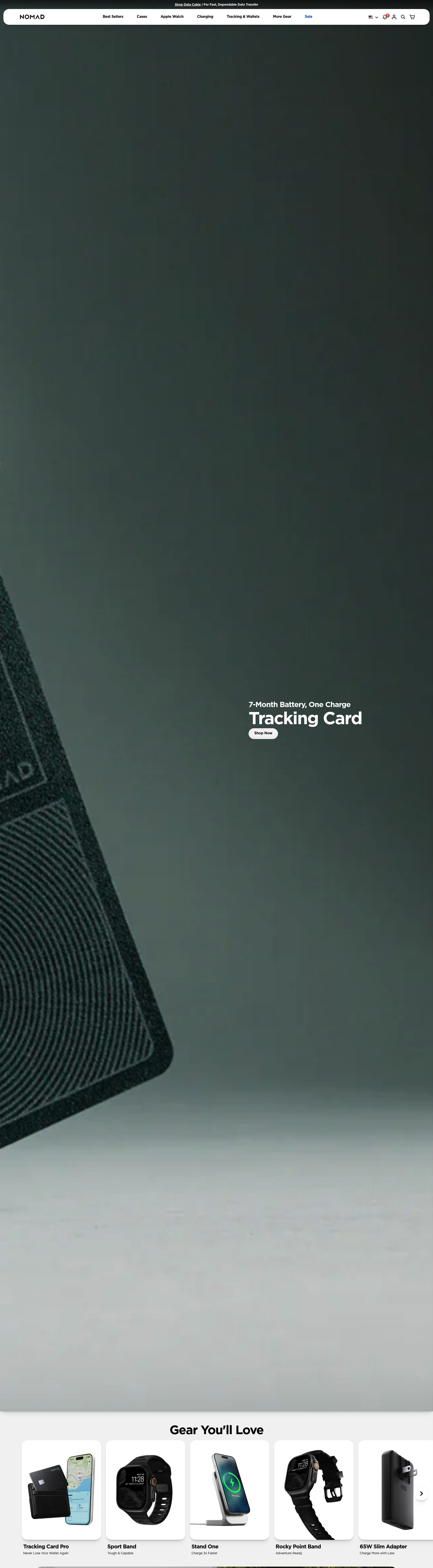
Nomad Goods is a US accessories brand focused on Apple ecosystem products: iPhone cases, Apple Watch bands, AirPods cases, and MagSafe accessories, all made with premium materials including genuine leather and rugged Horween hide. Their Shopify store positions the brand squarely at the premium end of the accessories market, and the product pages deliver on that positioning with material close-ups, durability detail, and explicit comparisons between Nomad's construction and mass-market alternatives. The store is structured around the Apple ecosystem, so if you land on an iPhone 15 Pro case, related Watch bands and AirPods cases for the same finish are surfaced immediately. That ecosystem cross-sell logic is one of the most effective AOV strategies in mobile accessories, and Nomad executes it cleanly without making the page feel promotional.
7. Tile (Life360)
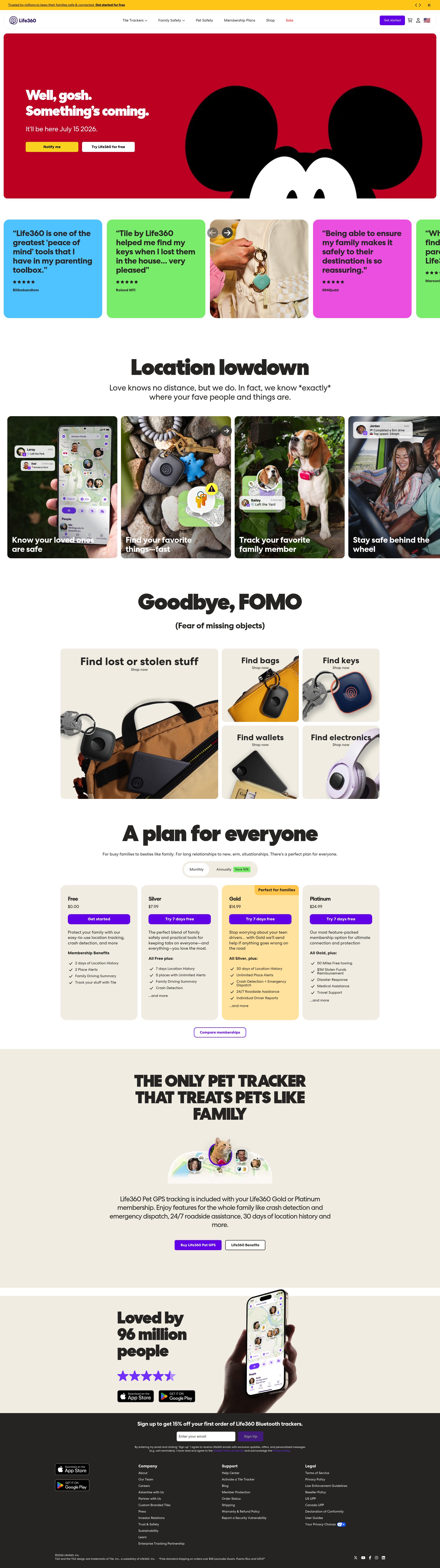
Tile, now operating under the Life360 brand, sells Bluetooth trackers and their Shopify store handles the educational challenge that comes with a genuinely novel product category. A Bluetooth tracker is not a purchase most people make spontaneously; they need to understand what problem it solves and why their existing phone features do not already solve it. Tile's store addresses this with clear use-case framing on collection pages: tracking keys, bags, bikes, and pets each get distinct positioning that speaks to the specific buyer rather than generic "find your stuff" messaging. Product comparison tables across the tracker range, covering range, battery type, size, and compatibility, are placed exactly where you would expect them as a customer trying to choose between three similar-looking devices. The subscription upsell for premium location history is presented at the product level rather than only post-purchase, which converts more of the customers who would benefit from it.
8. Peak Design
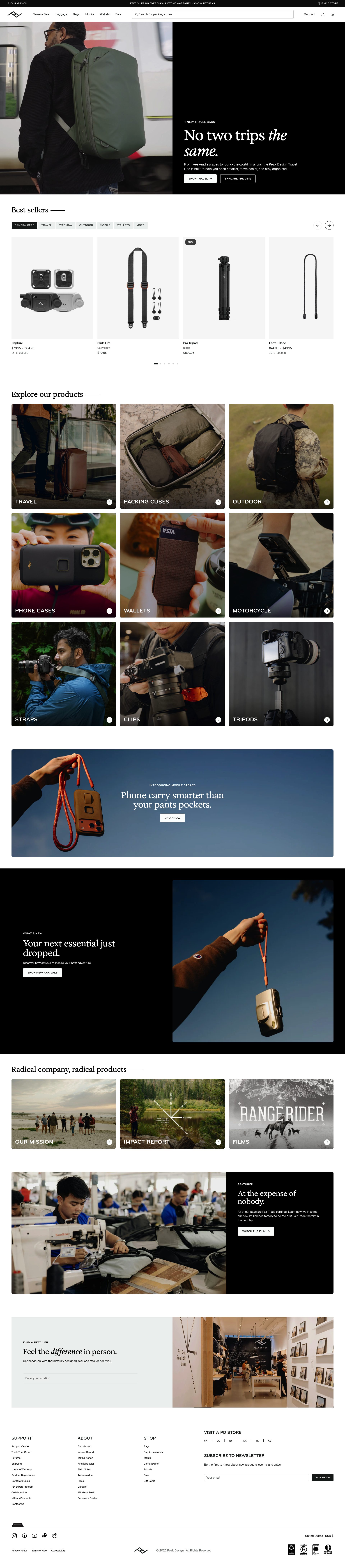
Peak Design makes camera straps, bags, and mounting systems, alongside a modular phone case and accessory ecosystem called Mobile. Their Shopify store is one of the most content-rich in consumer electronics, built on a brand with deep roots in crowdfunding and community. Product pages include video demonstrations, manufacturing detail, and explicit comparisons between Peak Design's approach and conventional alternatives. The modular system, where one base case connects to a range of adapters, mounts, and accessories, is explained through interactive product diagrams rather than expecting customers to read their way to understanding. Peak Design also demonstrates how a premium price point, their iPhone cases start at over £70, can be defended entirely through product detail and trust signals without resorting to discount mechanics. The store converts at price points that should be a barrier because the product pages do the work of a knowledgeable sales assistant.
9. Mophie
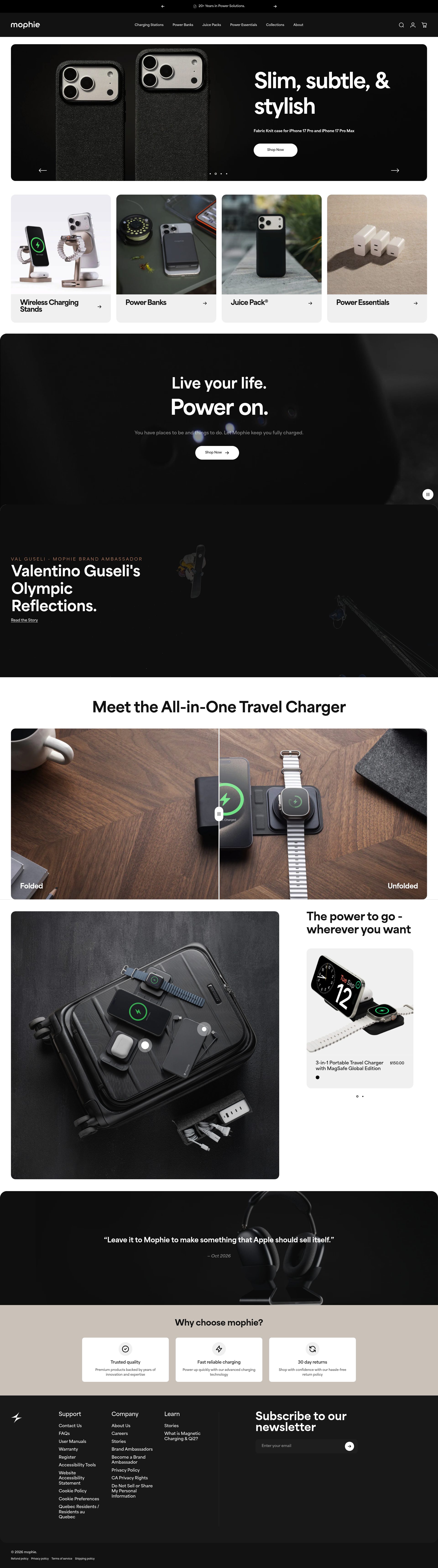
Mophie is one of the original premium mobile charging brands, now owned by Zagg, and their Shopify store handles the complexity of a charging product catalogue that spans power banks, wireless pads, MagSafe accessories, and multi-device charging stations. The store organises products by use case rather than product type: travel charging, desk charging, wireless charging, which matches how buyers actually think about the problem they are solving rather than how the product team has categorised the range. Device compatibility information is surfaced on every product page, and the store uses a clean visual language that communicates quality at a glance, which is essential in a category where the difference between a Mophie and a £5 unbranded charger is not always obvious from a product thumbnail. Their MagSafe ecosystem presentation, showing how multiple Mophie accessories work together on a compatible iPhone, is a strong AOV driver for customers already invested in the Apple ecosystem.
10. Backbone

Backbone makes the Backbone One, a mobile gaming controller that turns an iPhone or Android phone into a portable gaming device, and their Shopify store is a focused, single-product experience done exceptionally well. The store opens with gameplay footage rather than static product images, which is the right call for a product whose primary appeal is experiential rather than aesthetic. Product page content works through the key objections in sequence: which phones are compatible, how it fits different case thicknesses, what games are supported through the companion app, and what the gameplay experience actually feels like in practice. The companion Backbone app, which unlocks a curated game library and social features, is positioned as a product benefit rather than an afterthought. For Shopify merchants with a single hero product, Backbone demonstrates how depth of page content and use-case specificity can convert at a premium price point without requiring a broad catalogue.
Comparison Table
| Brand | Niche Focus | Price Point | Shopify Standout |
|---|---|---|---|
| Anker | Charging and audio accessories | Budget-mid | Sub-brand architecture, review volume, compatibility clarity |
| Casetify | Custom device cases | Mid | Live customisation builder in PDP |
| Incipio | Mobile cases and screen protection | Mid | Device selector filtering, functional multi-angle photography |
| dbrand | Precision device skins | Mid | Real-time configurator across hundreds of device models |
| Moment | Mobile photography accessories | Mid-premium | Content-led PDPs, use-case photography and video |
| Nomad Goods | Premium Apple ecosystem accessories | Premium | Material detail, ecosystem cross-sell logic |
| Tile | Bluetooth trackers | Mid | Use-case framing, in-PDP subscription upsell |
| Peak Design | Camera bags and modular phone accessories | Premium | Interactive product diagrams, crowdfunded brand community |
| Mophie | Mobile charging | Mid-premium | Use-case navigation, MagSafe ecosystem presentation |
| Backbone | Mobile gaming controllers | Premium | Gameplay video lead, single-product depth |
What These Stores Get Right
- Compatibility information is treated as a conversion tool, not a footnote. Every store on this list surfaces "does this work with my device?" at the product page level, not buried in a spec sheet PDF or only discoverable through a support article. In consumer electronics, the fear of buying the wrong product is the most common reason a transaction does not complete.
- The store architecture matches how buyers think, not how the product team categorises. Use-case navigation, "charging for travel", "cases for iPhone 15 Pro", "audio for sport", converts better than category trees built around product type. The best tech stores organise around the customer's problem.
- Premium pricing is defended through product page depth, not discount mechanics. Nomad, Peak Design, and Backbone all sell at price points that face aggressive competition from cheaper alternatives. None of them compete on price. They compete on product information, material detail, and a store experience that makes the premium feel justified.
- Customisation is surfaced at the point of intent. Casetify and dbrand both have configurators, and both put them in the product page rather than behind a separate "customise" flow. The closer you place the personalisation tool to the natural decision point, the higher the take-up rate.
- Social proof is placed where the doubt lives. Review counts near the add-to-cart button, not only in a tab below the fold. Compatibility confirmations next to variant selectors. In-use photography from customers, not only brand studio shots. These stores treat trust as a design problem, not a marketing one.
Frequently asked questions
Which Shopify stores sell consumer electronics DTC successfully?
Anker, Casetify, dbrand, Peak Design, and Backbone are among the strongest consumer electronics DTC operations on Shopify. Each wins not on price but on store experience: compatibility clarity, configurators, deep product page content, and trust signals placed where buyer doubt actually lives.
How do tech gadget Shopify stores handle device compatibility?
The best stores surface compatibility at product page level — not in a PDF spec sheet or a support article. Incipio uses a device selector to filter the entire catalogue. Anker leads every product page with port configuration, wattage, and device support. Mophie organises by use case rather than product type so buyers find the right charger without having to decode spec tables.
Can a single-product tech brand compete on Shopify without a broad catalogue?
Yes — Backbone is the clearest proof. Their store sells one product, the Backbone One mobile gaming controller, and converts at a premium price point through gameplay video, compatibility depth, and companion app positioning. Deep product page content and use-case specificity can outperform a broad catalogue if the hero product has a clear and differentiated value proposition.
How do premium tech accessory brands justify higher prices on their Shopify stores?
Nomad Goods, Peak Design, and Backbone all sell at price points with cheaper alternatives on Amazon and marketplace sites. None compete on price. They compete on material detail — Horween leather close-ups, modular system diagrams, manufacturing process video — and a store experience that makes the premium feel earned rather than arbitrary. Review volume and use-case photography also carry significant weight at higher price points.
What is the most effective AOV strategy for tech accessories on Shopify?
Ecosystem cross-selling is the strongest AOV lever in mobile and consumer electronics accessories. Nomad Goods surfaces matching Apple Watch bands and AirPods cases when you land on an iPhone case. Mophie shows how multiple charging accessories work together on a MagSafe-compatible iPhone. Presenting complementary products from the same finish or ecosystem — rather than generic "you may also like" blocks — increases basket size without feeling promotional.
Related reading
If your electronics or tech accessories store is losing conversions at the product page stage, compatibility clarity and trust signal placement are usually the first things to fix. See our Shopify design service or get in touch to talk through what is possible.