

Quick summary
The Nue Co leads the field with KSM-66 extract specificity and intent-led navigation that routes buyers by goal before presenting a SKU. Ancient + Brave is the strongest UK brand, blending ashwagandha into a ritualistic evening product that commands a premium price through formulation depth. Moon Juice is the standout US pick, with brand-commissioned clinical research on SuperYou anchoring its premium positioning. Gaia Herbs sets the benchmark for supply chain transparency with its Herb ID batch-traceability programme that no competitor has matched.
Ashwagandha has moved from a niche Ayurvedic herb to one of the fastest-growing supplement SKUs in UK and US ecommerce, driven by consumer demand for stress management, sleep support, and hormone balance without pharmaceutical intervention. The brands winning in this category are not simply riding the trend: they are building Shopify stores that earn trust in a market where ingredient transparency, clinical dosing, and honest benefit claims are the primary conversion levers. Here are ten that are doing it well.
1. The Nue Co
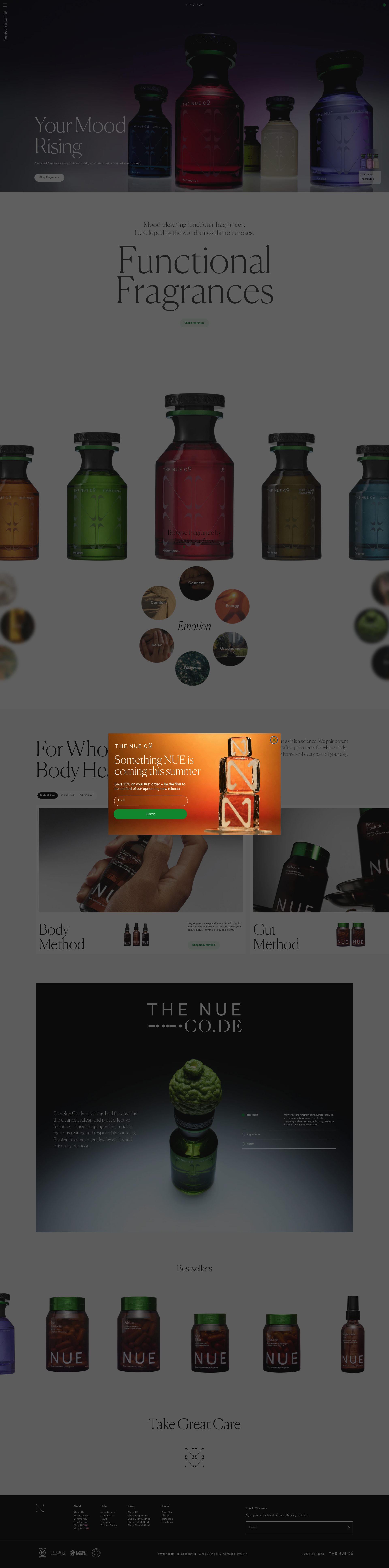
The Nue Co built its Shopify Plus store around a single proposition: functional supplements backed by published science. Their ashwagandha product, DESTRESS, is positioned as the centrepiece of a stress and cortisol management stack, and the product page earns its premium price tag through clinical referencing, dosage justification, and a clean ingredient list that names the KSM-66 extract standard rather than hiding behind generic "ashwagandha root" terminology. That specificity matters in a category where dosage variance is enormous: buyers with any research background recognise KSM-66 as the most clinically studied ashwagandha extract and it shortens the trust-building cycle significantly.
The store's broader architecture is worth studying for any supplement brand. Collections are organised by goal rather than by product format, routing buyers through stress, sleep, energy, and gut health pathways before presenting a SKU. This intent-led navigation reduces category confusion in a multi-product supplement range where a buyer could otherwise spend five minutes trying to find the right product. Subscription is presented as the default purchase mode at checkout, with a 15% saving that is material enough to shift behaviour without destroying margin.
2. Ancient + Brave
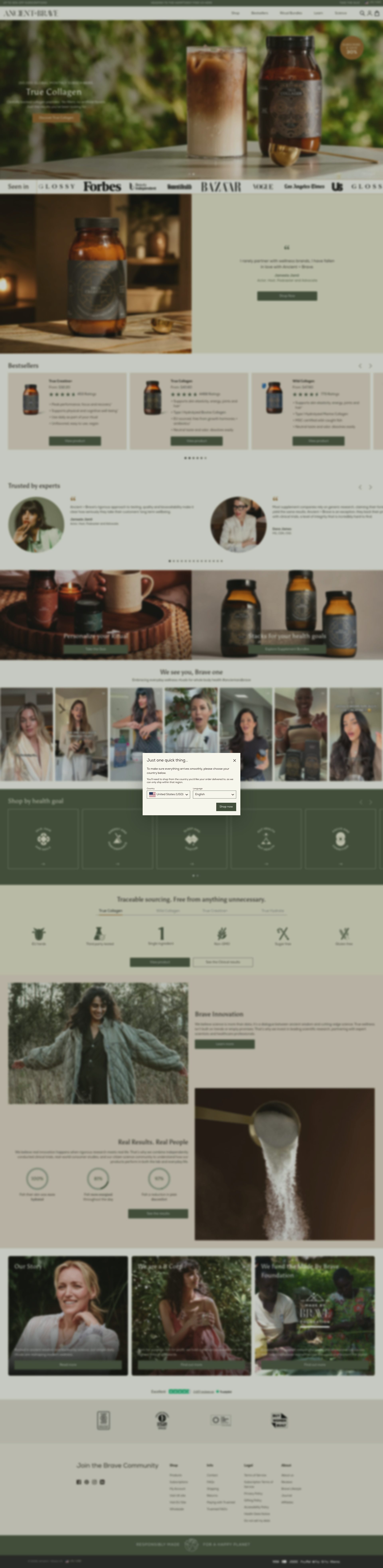
Ancient + Brave is one of the UK's strongest Shopify wellness brands and ashwagandha features across multiple products in their range, most prominently in the True Calm powder blend. The store's visual identity is sophisticated but warm: earthy photography, restrained typography, and product copy that speaks to the lived experience of stress and fatigue rather than just the biochemistry. That emotional register works particularly well for a category where the buyer is often someone who has been burned by overpromised supplements before and is looking for a brand that sounds honest rather than hyperbolic.
The True Calm positioning is clever from a conversion standpoint. Rather than selling ashwagandha as a standalone SKU, it is blended with l-theanine, magnesium, and glycine in a powder format designed for evening routine use, which raises the perceived value, justifies the price point, and naturally suggests a subscription cadence tied to daily consumption. The product page explains each ingredient's mechanism in accessible but specific terms, and the ritual framing (evening calm routine, stir into warm milk, pre-bed) gives the buyer a clear mental picture of how this product fits into their life. That is a high-quality job of reducing the purchase risk that holds back many supplement buyers.
3. Superfood World
Superfood World is a UK Shopify brand that built its business on organic superfood powders, and ashwagandha root powder is one of their core SKUs. The store's strength is in its pricing and sourcing transparency: they source certified organic ashwagandha, display Soil Association certification prominently, and price at a level that makes regular supplementation genuinely accessible. Their ashwagandha product page provides standardised withanolide content, suggested daily dose, and a clear explanation of why root powder and root extract have different potencies, which is the kind of specific, useful information that separates a credible supplements retailer from a generic powder reseller.
The site handles a large SKU count across dozens of superfood categories without losing navigational clarity, which is genuinely difficult to achieve on Shopify at volume. The category taxonomy is clean, the search function surfaces relevant results quickly, and the bundle mechanic (mix-and-match multiple powders at a discounted per-unit price) works well for a buyer who is already supplementing with multiple superfoods and wants to consolidate their order. The repeat purchase rate in this category is naturally high when dosing is regular, and the bundle discount accelerates the first order towards a basket value that justifies the loyalty.
4. Wunder Workshop
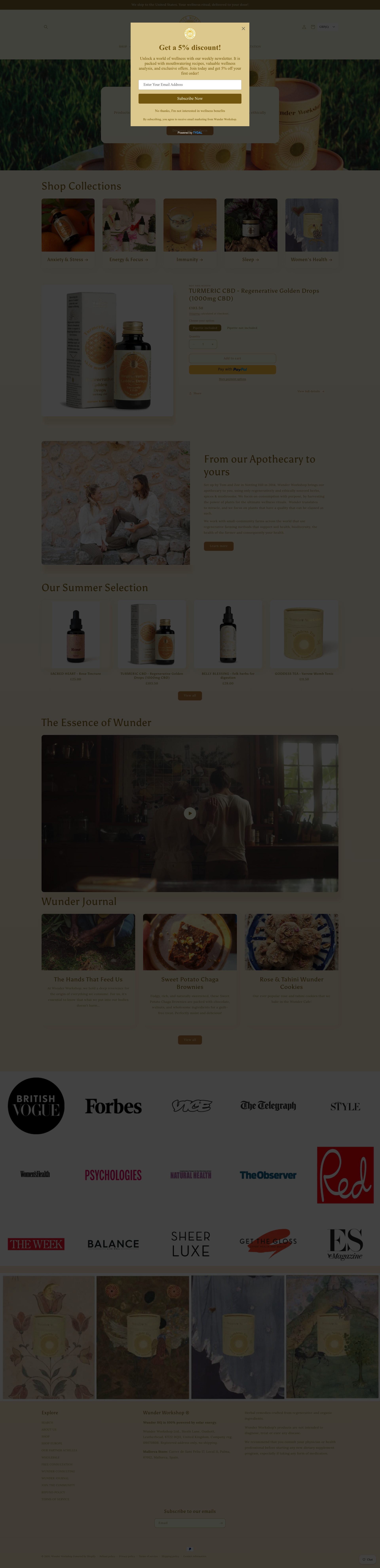
Wunder Workshop is a UK-based Shopify brand with deep roots in Ayurvedic formulation, and ashwagandha sits alongside turmeric, shatavari, and triphala in a range that is more botanically literate than most UK wellness brands. The store's content marketing is the standout commercial asset: long-form guides on adaptogenic herbs, Ayurvedic principles, and specific formulation rationale give the site both topical authority for SEO and a genuinely useful resource for buyers who are new to the category. That combination, educational depth plus credible product range, is one of the most effective DTC supplement strategies available.
Their ashwagandha blends are presented with clear formulation rationale, including the traditional Ayurvedic reasoning behind each combination, which adds a layer of heritage and legitimacy that single-ingredient brands cannot replicate. The store's visual identity is minimal and botanical, with product photography that reads as premium without the clinical sterility of some supplement brands. Subscription is offered with a reasonable discount, and the product count is intentionally curated: a tight range of thoughtfully formulated blends rather than a SKU proliferation that would dilute the brand's authority positioning.
5. Puresport
Puresport is a UK DTC sports nutrition brand on Shopify where ashwagandha features prominently as a recovery and stress-management ingredient in their Recover and Sleep SKUs. The sports nutrition category has historically been slow to adopt adaptogens, and Puresport's positioning bridges the gap between evidence-based sports supplementation and the broader wellness movement, which gives them a differentiated audience reach. Their product pages ground adaptogen claims in athletic context: stress reduction for overtrained athletes, cortisol management for high-volume training periods, and sleep quality for recovery. That framing speaks directly to a buyer who understands the science of overtraining and is looking for a non-pharmaceutical intervention.
The store's conversion architecture is clean: a single product CTA, a subscription-first prompt with clear savings, and a social proof stack that combines athlete endorsements with customer reviews including specific use-case context. The ingredient sourcing section names KSM-66 as the ashwagandha standard in relevant products, which is the credibility signal that positions Puresport above lower-cost competitors who use generic root extract. The blog content is consistently written for an athletic reader and avoids the vague wellness language that alienates the sports nutrition buyer, which is the right editorial positioning for the audience they are building.
6. Form Nutrition
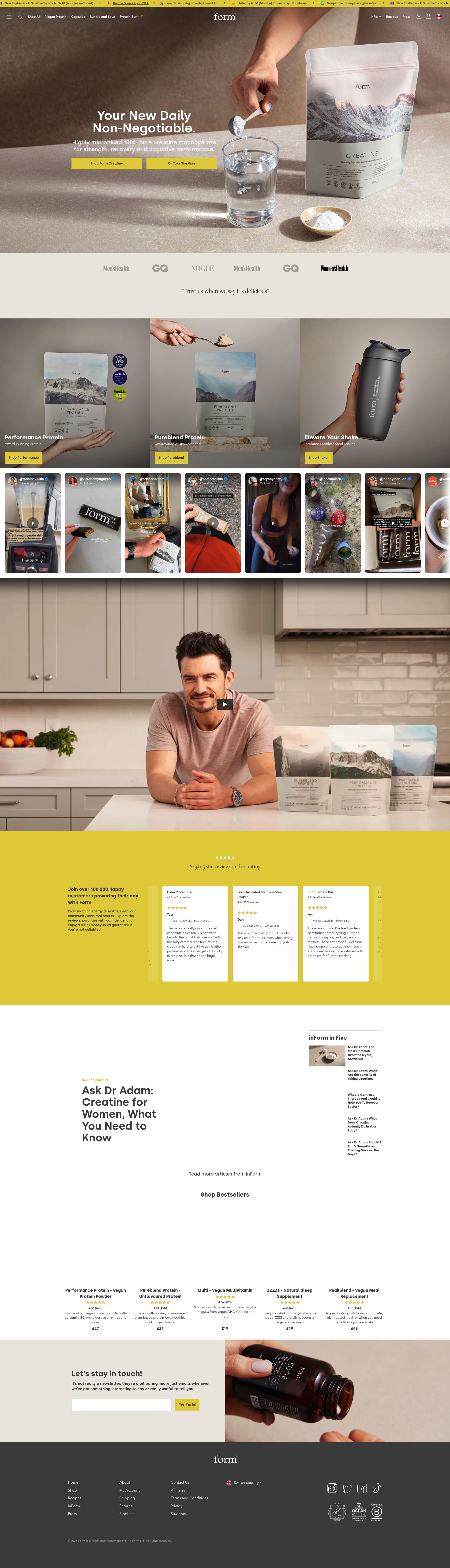
Form Nutrition is a Shopify Plus brand built around plant-based performance nutrition, and ashwagandha appears in their Rest formula and several blend products. The store's design is among the most considered in UK supplement ecommerce: restrained, typographically precise, and with a layout that gives each product room to breathe rather than merchandising everything at maximum density. That restraint signals confidence in the product range and reads as premium to a buyer comparing multiple supplement stores simultaneously.
Form's product pages are commercially sophisticated in how they handle ingredient transparency. Rather than listing ingredients in a generic supplement facts box, each ingredient is broken out with its function explained in a single sentence, its source named, and its dose justified against published research. For ashwagandha in the Rest formula, that means naming the extract type, giving the mg dose, and explaining why that dose is sleep-relevant rather than stress-relevant. This kind of formulation transparency is the most effective trust signal available in the supplement category, particularly for a buyer who has previously purchased underdosed products from brands that did not disclose their specifications.
7. Moon Juice
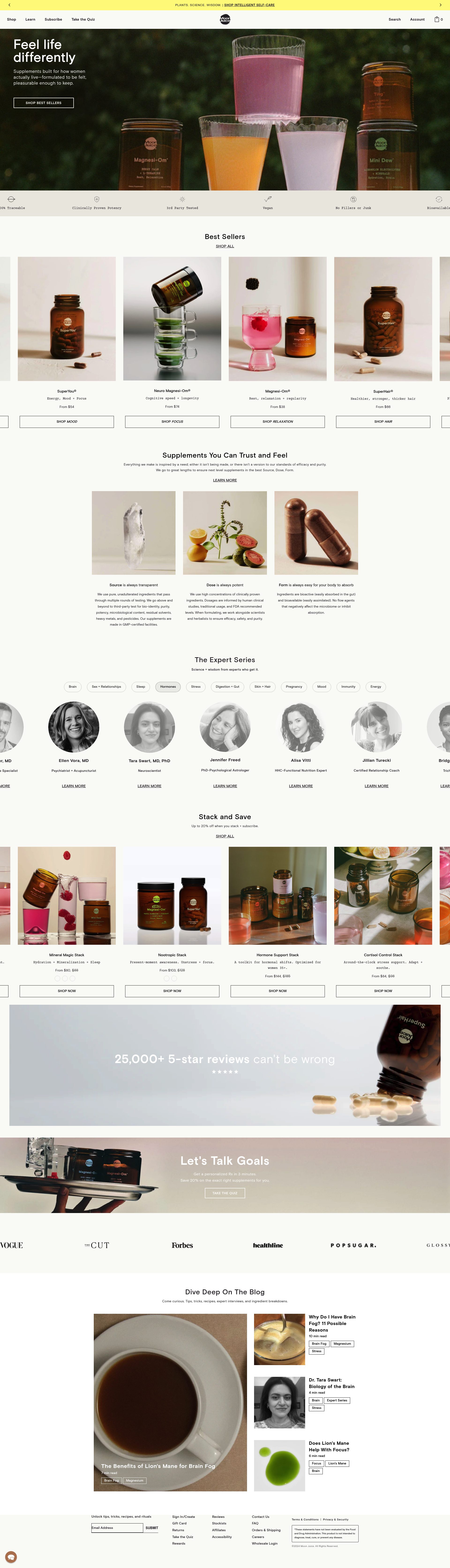
Moon Juice is a US Shopify Plus brand where ashwagandha is a genuine hero ingredient: their SuperYou adaptogen supplement features it as the lead ingredient, and the brand's entire stress and energy positioning is built around their adaptogen formulations. The store is worth studying for how it handles a premium price point in a crowded category. Product pages are rich with brand story, editorial photography, and specific ingredient provenance (sourcing from certified farms, extract standardisation), and the pricing is defended through the combination of premium branding and clinical specificity rather than through heavy discounting.
The SuperYou PDP is a strong example of benefit-led copywriting that stays credible: it leads with specific claimed outcomes (lowered cortisol, improved energy, better sleep), attributes them to named adaptogens with mechanism explanations, and backs the product claims with a clinical study commissioned by the brand. Commissioning your own clinical research and publishing the results on your product page is the highest-credibility move available in supplements, and it justifies both the premium price and the brand's authority positioning in adaptogen marketing. Subscription mechanics are prominent at first CTA, and the loyalty programme rewards regulars with early access and points that work as a retention mechanic for a high-LTV supplement buyer.
8. Cosmic Dealer
Cosmic Dealer is a Swiss Shopify brand that built its business on ashwagandha-infused ceremonial cacao and adaptogen chocolate blends, making it one of the most distinctive positioning plays in the adaptogen category. Where most ashwagandha brands sell capsules or powders and compete primarily on dose and price, Cosmic Dealer competes on ritual and indulgence: their products are designed to be consumed as a daily ceremony, dissolving chocolate into hot water as a coffee alternative, which creates a consumption habit that is dramatically more enjoyable than swallowing capsules. That habit loop is a commercial advantage because it produces a genuinely high repeat purchase rate with minimal reminder required.
The store handles the functional ingredient story clearly without over-medicalising the experience: product pages explain the ashwagandha and reishi content, the standardisation approach, and the sourcing, but the primary emotional benefit sold is calm, pleasure, and ritual rather than clinical outcomes. That positioning sidesteps the regulatory grey area that more clinical supplement brands navigate, while still communicating the functional ingredient story to buyers who want it. The visual design is distinctive and gifting-optimised, with packaging photography that reads well in social media contexts and positions the product as a considered gift as well as a personal wellness purchase.
9. Gaia Herbs

Gaia Herbs is a US Shopify brand with three decades of history and an ashwagandha range that spans capsules, liquid phyto-caps, and standardised root extract in multiple strength tiers. The store's most distinctive commercial feature is the Herb ID transparency programme: every product carries a batch-specific identifier that buyers can use to trace the herb from farm to finished product on the Gaia Herbs website, including a phytochemical analysis of the specific batch. This level of supply chain transparency is genuinely unusual in the supplement category and produces a trust signal that no amount of copy or branding can replicate, because it is verifiable rather than claimed.
The store handles a large product range across multiple herb categories and a wide price range, from entry-level herb capsules to their premium Ashwagandha Root liquid phyto-caps, without losing coherence. The product taxonomy filters by health goal, herb type, and product format, which serves a diverse buyer mix ranging from category newcomers to experienced herbalists who know exactly what they want. Subscription is offered at a 20% saving across all SKUs, and the email capture and loyalty programme are visible through the checkout journey, which reflects the brand's understanding that lifetime value in supplements is built through consistent repurchase of a trusted product, not through one-time conversion.
10. Naturya
Naturya is a UK Shopify brand specialising in certified organic superfood powders and blends, with ashwagandha appearing as both a standalone powder and a key ingredient in their stress and sleep blends. The store's commercial advantage is certification depth: Soil Association Organic, certified B Corp, and third-party quality testing are all displayed on relevant product pages, which matters in a category where organic claims are frequently made without certification backing. The B Corp status in particular is a meaningful differentiator for a buyer who is weighing up multiple UK superfood brands, because it signals governance and supply chain standards that go beyond organic ingredient sourcing.
The store architecture is well-organised for a multi-category superfood retailer: a clear primary navigation, goal-led collections (Energy, Calm, Immunity), and a blog with category-specific content that routes organic search traffic into relevant product ranges. The ashwagandha powder product page includes preparation guidance, dose recommendations for different use cases (morning smoothie, evening milk blend), and customer reviews that mention specific benefits rather than just general satisfaction. That review specificity, which Naturya actively encourages through post-purchase email, builds a social proof stack that is more persuasive than generic star ratings for a buyer still deciding whether ashwagandha is right for them.
If you are building a supplement store on Shopify or looking to improve an existing one, our Shopify design team works with health and wellness brands on conversion architecture, subscription mechanics, and ingredient transparency pages. Get in touch to discuss your project.
Frequently asked questions
What makes an ashwagandha Shopify store convert well?
The top-performing stores name the extract standard on the product page — KSM-66 or Sensoril — rather than using generic "ashwagandha root" language. That specificity shortens the trust-building cycle for any buyer who has done basic research. Dosage transparency, clinical citations, and a subscription-first CTA with a material saving (15–20%) are the other consistent conversion levers across the strongest stores in this list.
Which ashwagandha Shopify stores use subscription models effectively?
The Nue Co, Puresport, Gaia Herbs, and Form Nutrition all present subscription as the default purchase mode rather than an opt-in afterthought. Gaia Herbs offers 20% off subscription across all SKUs, which is material enough to shift first-time buyers into a recurring order. Ancient + Brave's ritual framing (daily evening routine) does the behavioural work of making subscription feel natural without over-discounting.
Are there UK ashwagandha brands on Shopify worth buying from?
Several strong ones: Ancient + Brave and Wunder Workshop are the most formulation-sophisticated, with deep Ayurvedic rationale behind their blends. Puresport positions ashwagandha specifically for athletes and overtrained gymgoers. Superfood World and Naturya are the best value options for certified organic ashwagandha powder with proper withanolide standardisation disclosed.
How do the best supplement stores handle ingredient transparency?
The benchmark is naming the extract standard (KSM-66, Sensoril), giving the exact mg dose, and explaining why that dose is relevant to the specific benefit claimed. Form Nutrition does this most clearly, breaking out each ingredient with its source, dose, and function in a single sentence. Gaia Herbs goes furthest with batch-level phytochemical traceability via its Herb ID programme, which is verifiable rather than just claimed.
What Shopify features do ashwagandha brands use to increase average order value?
The most effective mechanic across this list is goal-led product bundling: selling ashwagandha as part of a stress, sleep, or recovery stack rather than as a standalone SKU. The Nue Co uses goal-based navigation to present complementary products before checkout. Ancient + Brave and Form Nutrition build multi-ingredient blends that raise the per-unit price without requiring the buyer to assemble a basket themselves. Mix-and-match bundle discounts, as used by Superfood World, work well when the buyer is already supplementing with multiple products.