

Quick summary
Dedar sets the benchmark for luxury fabric presentation, with dense trade-ready product pages and a sample-first funnel that matches how high-value specifications are actually made. Loome is the strongest all-round pick for made-to-measure in the UK consumer market, combining per-fabric lead times, real-home review photography, and a clear ready-made versus bespoke navigation split. Lick stands out for cross-category basket building: its paint-and-curtains coordination mechanic drives multi-product purchases in a way no other brand in this list has cracked. The Curtain Company earns its place through sheer accessibility: a built-in measurement guide and a ten-sample programme directly tackle the two objections that kill curtain conversions before they start.
Curtains sit at an awkward intersection for ecommerce: they are a tactile, made-to-measure product that customers traditionally buy in person or through an interior designer. The stores that succeed online have worked out how to close the confidence gap, whether through configurators, sample programmes, or editorial content that teaches customers what to buy and why. Here are ten curtain and soft furnishings Shopify stores worth studying for their ecommerce decisions.
1. Dedar
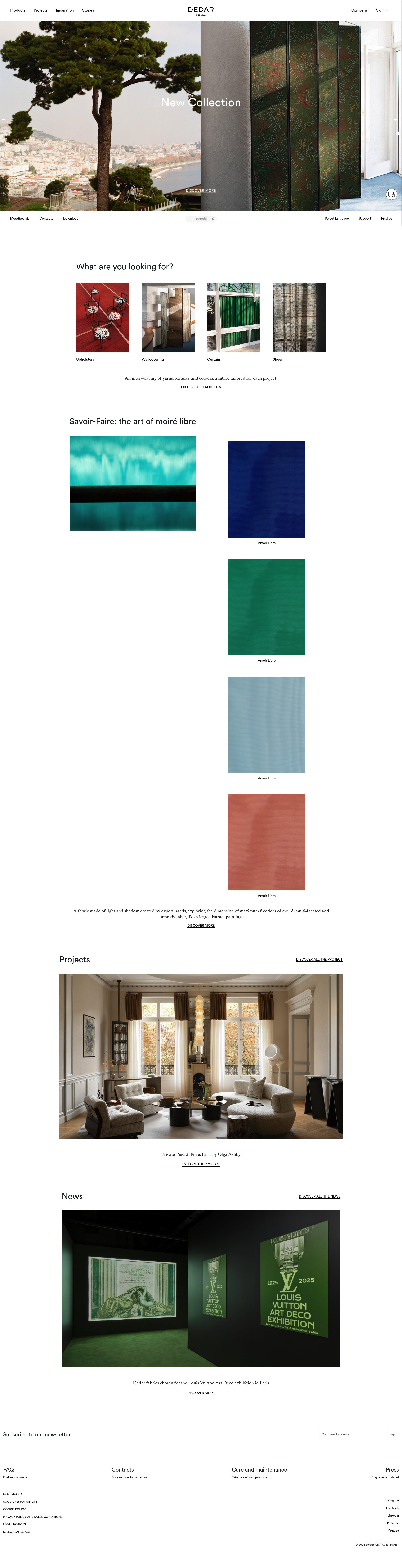
Dedar is a Milan-based luxury fabric house selling to interior designers and high-end consumers, and their Shopify-powered store reflects the precision of a brand that understands its audience well. The homepage leads with fabric and texture photography rather than room sets, which is the right decision for a customer who is specifying materials rather than decorating a room. Product pages surface thread count, weave type, and colourway details in a format that is dense without feeling cluttered: exactly what a trade buyer needs to make a confident specification decision.
The sample ordering mechanic is central to the purchase funnel. Dedar surfaces sample requests prominently on every product page, which is the correct priority for a brand where the final order value can run into thousands. Their international multi-currency and multi-language handling is robust, which matters for a business with genuine global distribution. The navigation uses fabric family groupings rather than generic colour or style filters, reflecting a customer who arrives knowing the product language rather than browsing exploratively.
2. Cloth & Co
Cloth & Co is an Australian interiors brand selling fabric by the metre, made-to-measure cushions, curtains, and upholstery services. Their Shopify store is one of the better examples of how to handle a configurator-dependent product without building a custom app. The fabric-to-finished-product journey is clearly signposted: customers browse fabric collections, order samples, then return to configure their made-to-measure item using the same fabric swatch they already have at home. That sequenced journey reduces the purchase gap between "I like this fabric" and "I know how to buy it."
Product pages use natural light photography that renders colour accurately, which matters enormously for a fabric brand. Cloth & Co also runs a well-structured trade programme with clear pricing tiers and a dedicated trade application flow, extending their commercial reach beyond the consumer segment without muddying the consumer experience. Their collection naming uses seasonal language that works as both merchandising and organic search strategy: collections get updated content rather than being archived.
3. Quiet Town

Quiet Town is a New York-based brand that started with shower curtains and expanded into bath textiles, towels, and home accessories. Their Shopify store is a textbook example of how a brand with a narrow entry product can use that product to anchor a broader home goods identity. The shower curtain is still the hero: the homepage leads with it, the brand story returns to it, and the category structure keeps it front and centre. But the product range around it is built thoughtfully, with each addition extending the bathroom context rather than drifting into unrelated home categories.
The product pages are structured around lifestyle benefit as much as specification: descriptions explain how the product feels and performs in a daily routine, not just what it is made of. Colour naming is branded and specific, which reduces the gap between how a customer describes what they want and how they find it on the site. Quiet Town uses a clean, text-forward aesthetic that keeps page load fast and the copy prominent, which suits a customer who is making a considered purchase rather than a high-frequency impulse buy.
4. The Curtain Company
The Curtain Company is a UK brand specialising in made-to-measure curtains, blinds, and soft furnishings across a wide range of fabrics and styles. Their Shopify store demonstrates how a product with high customisation complexity can be presented accessibly without requiring a complex configurator. The measurement guide, which explains exactly how to measure a window for curtains and blinds, is built into the site architecture rather than hidden in a FAQ, which reduces a primary objection before the customer reaches the product page.
Their fabric swatches service is prominent: customers can order up to ten free samples, which directly addresses the colour and texture confidence gap that prevents online curtain purchases. The collection structure maps to how customers actually search: by fabric type, by heading style, and by room. That taxonomy reflects a genuine understanding of how the purchase decision unfolds for a customer who has not bought made-to-measure curtains before. Product pages surface delivery lead times clearly, which is important for a category where timeline management matters.
5. Lick
Lick started as a paint brand and expanded into wallpaper and, more recently, curtains and soft furnishings, and their Shopify store shows how a DTC brand can extend a category without losing the core identity. The paint and curtain categories are cross-referenced throughout the site using the "shop the look" mechanic: a curtain colour is shown with the matching paint code, making Lick the natural destination for a customer who wants everything to coordinate. That cross-sell architecture is well-executed and drives multi-category basket building without being heavy-handed.
Their sample programme for curtains mirrors the paint tester model that built the brand: order a fabric sample, see how it looks in your light, then buy. The checkout for made-to-measure items uses a clean measurement input system that feels less intimidating than the technical configurators common in the category. Lick's email list segmentation, visible through their communication strategy, routes customers to category-specific content based on their browsing behaviour, which keeps the brand relevant without sending generic newsletters.
6. Loome
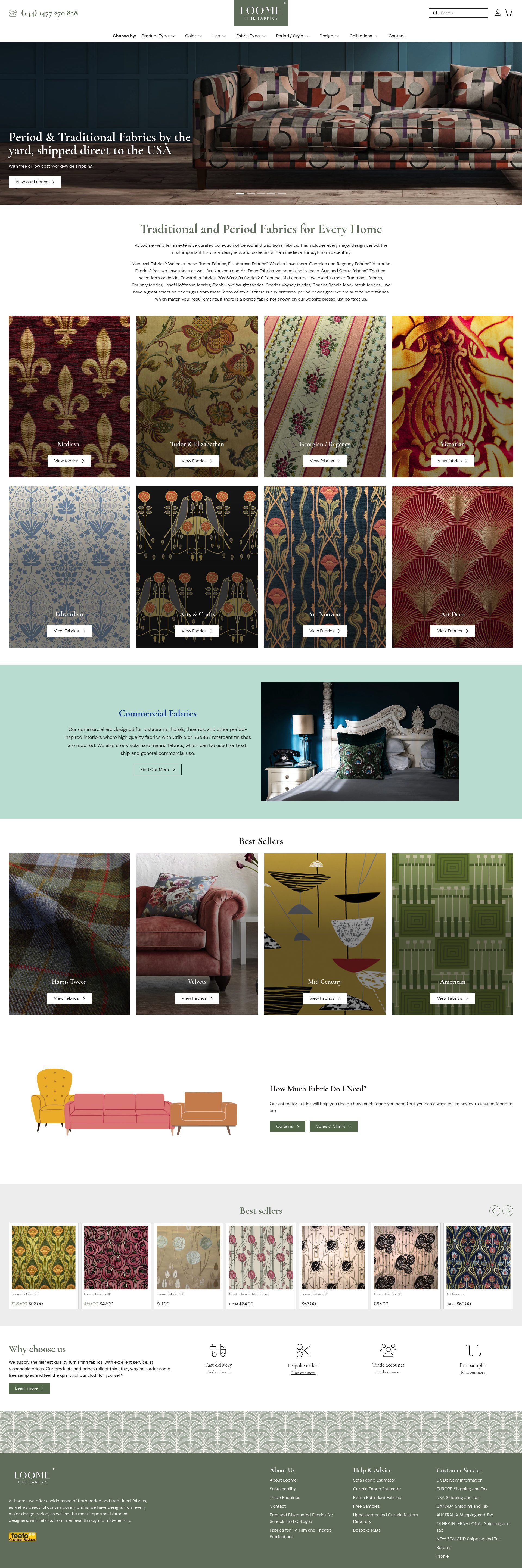
Loome is a UK brand selling pre-made and made-to-measure curtains, cushions, and blinds through a Shopify store that handles the challenge of communicating fabric quality online particularly well. Their product photography uses close-up texture shots alongside room-set images, giving customers both the detail view and the context view they need to make a confident decision. The fabric weight and lining options are clearly explained in layered product descriptions rather than buried in a technical table, which suits a consumer audience who may not know the difference between blackout lining and pencil pleat heading.
Loome uses customer room photography extensively in their reviews section, which is the most credible social proof mechanism in a category where fit and appearance in real homes matters more than in-studio photography. Their category navigation distinguishes between ready-made and made-to-measure from the first click, which routes different customer intents correctly rather than forcing both audiences through the same funnel. The checkout lead time display on made-to-measure items is specific per fabric, not a generic "up to six weeks," which builds trust through transparency.
7. Scion
Scion is a UK printed fabric and wallpaper brand, part of the Sanderson Design Group, and their Shopify store is a strong example of how a heritage print brand can manage a wide pattern library without creating navigation confusion. The collection structure groups prints by design family rather than by product type, which reflects how their customer actually browses: they find a pattern they love, then explore what that pattern is available on. That collection logic is the right architecture for a brand where pattern is the primary buying motivation.
Product pages link between fabric, wallpaper, and accessories versions of the same design, making it straightforward to build a coordinated room scheme without navigating back to the search. Their sample ordering flow is streamlined: sample requests are handled through the basket in the same flow as full purchases rather than through a separate form, which removes friction from the step that is most important for their conversion rate. Scion's editorial content, including room scheme guides and pattern stories, extends session time and builds search authority in competitive interior design keywords.
8. Piglet in Bed
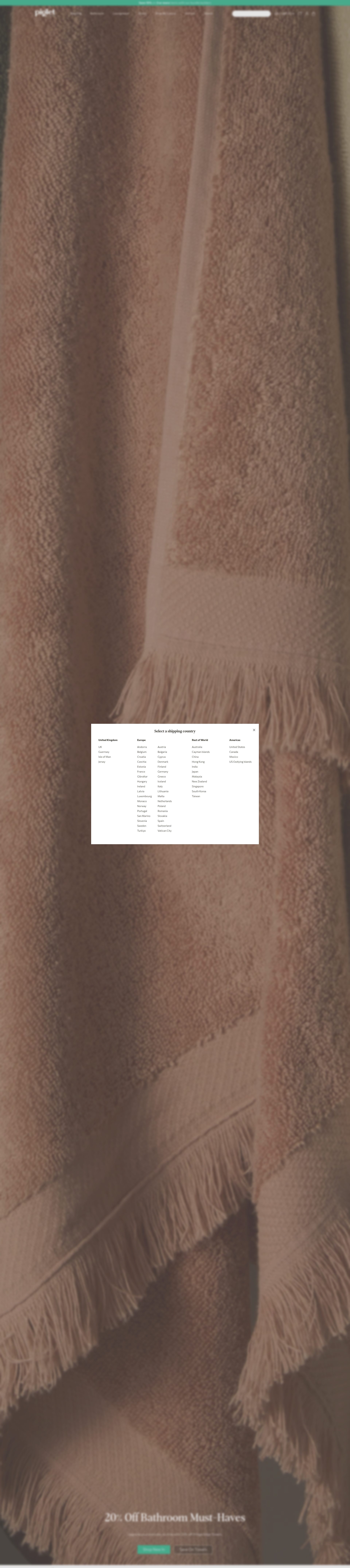
Piglet in Bed is best known for linen bedding but their expansion into curtains, tablecloths, and wider home textiles is an instructive example of how a Shopify brand can extend its range using an established brand identity rather than starting from scratch. The curtain pages use the same photography language as the bedding: natural linen textures in warm, lived-in domestic spaces that communicate quality and lifestyle simultaneously. The consistency means customers arriving for bedding who encounter the curtain range do not experience a tonal shift that undermines confidence.
Their fabric-first navigation remains the smartest decision on the site, allowing a customer to start with "I want linen" rather than "I want curtains" and arrive at the right product through their preferred decision pathway. Piglet in Bed's subscription and loyalty mechanics are mature: their returning customer programme surfaces relevant new categories through post-purchase email rather than requiring the customer to navigate back. For a brand expanding into soft furnishings, that existing customer base is the primary commercial lever.
9. Mustard Made

Mustard Made is an Australian brand best known for locker-style metal storage but they have extended into home textiles, including curtains and room dividers, and their Shopify store shows how a strong visual brand identity creates cross-category credibility. The signature mustard yellow and bold colour palette means the brand is recognisable from the first scroll, and new product categories feel like natural extensions rather than pivots. The product pages for curtains use room-set photography that shows the textiles alongside their signature furniture, which drives cross-category discovery within a single page visit.
Their waitlist mechanic for popular colourways is handled well: customers can join a waitlist directly from the sold-out product page and receive a targeted restock notification rather than a generic email. That mechanic recovers demand that would otherwise be lost and generates a high-intent segment for future marketing. The Mustard Made community, active across Instagram and email, is used as a product development feedback channel, which means new product launches arrive with a warm audience already familiar with the category direction.
10. Studio McGee
Studio McGee is the design studio behind the McGee & Co retail brand on Shopify, and their curtain and soft furnishings range demonstrates how a media-first brand can build a credible ecommerce operation. The design studio's profile, built through the Netflix series "Dream Home Makeover," provides the E-E-A-T foundation that most DTC home brands spend years trying to establish: customers arrive knowing who the designers are and trusting their aesthetic judgement. Product pages use editorial photography from actual client projects rather than studio mockups, which is a more credible visual context for a premium curtain purchase.
Their room-by-room navigation guides customers through the range in a way that mirrors how an interior designer thinks, which matches their audience's aspirations. The "how to style" content integrated into product pages gives customers the confidence to pair curtains with rugs, cushions, and furniture from the same range. Basket size at McGee & Co is consistently high because the cross-sell architecture is built around complete room schemes rather than individual product additions. For a business that started as a service firm, the ecommerce operation is a well-executed extension of the original brand value.
If your curtain, soft furnishings, or interiors brand is ready for a Shopify store that handles configurators, samples, and high-consideration purchases properly, SuttonCommerce can help: take a look at our Shopify design services or get in touch to discuss your project.
Frequently asked questions
Which Shopify curtain stores are best for made-to-measure?
The Curtain Company and Loome are the strongest UK options for made-to-measure: both surface measurement guides prominently, offer free fabric samples, and display per-fabric lead times at the product level rather than hiding them in FAQs. Lick handles the measurement input well at checkout for a customer who wants minimal friction.
How do curtain brands handle the fabric sample problem on Shopify?
The best stores treat sample requests as the primary conversion goal, not an afterthought. Dedar and Scion integrate sample ordering directly into the basket flow alongside full purchases. The Curtain Company offers up to ten free samples, and Lick mirrors its paint-tester model: order a fabric sample first, then buy once you have seen it in your light.
What makes a curtain product page convert better than average?
The highest-converting curtain product pages combine close-up texture photography with real-home lifestyle images, surface heading style and lining options clearly without burying them in a technical spec table, and display accurate lead times per fabric. Loome's per-fabric delivery transparency and Dedar's trade-ready specification detail are the two best examples in this list.
Can Shopify handle curtain configurators and made-to-measure pricing?
Yes, and the best stores do it without custom-built apps. Cloth & Co sequences the journey across multiple visits: browse fabric, order sample, return to configure. Lick uses a clean measurement input at checkout. The key is reducing the number of variables the customer has to handle at once, not building a complex configurator that overwhelms on first visit.
How do the top curtain stores build trust for a high-consideration purchase?
The most effective trust signals in this niche are real-home customer photography in reviews (Loome does this better than anyone), clear measurement guides built into site architecture rather than buried in FAQs (The Curtain Company), and editorial credentials from a known designer or media presence (Studio McGee's Netflix profile does the trust-building that most DTC brands spend years trying to replicate).