
Quick summary
Ruggable is the standout pick for product innovation, with a washable two-piece system built around a genuine functional insight and product pages that sell the mechanic before the design. Beni Rugs handles premium provenance best, using artisan storytelling and one-of-a-kind labelling to justify £500+ price points. Armadillo sets the standard for design coherence and transparency, with detailed material sourcing content that earns trust from customers spending £1,000 to £3,000. WEAVER GREEN is the strongest sustainability-led option, turning a recycled bottle count into a specific, credible claim that outperforms generic eco-friendly messaging.
Rugs are one of the more demanding product categories in ecommerce. They are large, tactile, and highly visual: customers cannot feel the pile, judge the true scale, or see how the colour reads in their own light. The stores that convert well in this category invest heavily in solving those problems before the customer has to ask. Here are ten Shopify stores that handle the category's unique challenges well, and what merchants in home and interiors can take from each one.
1. Ruggable
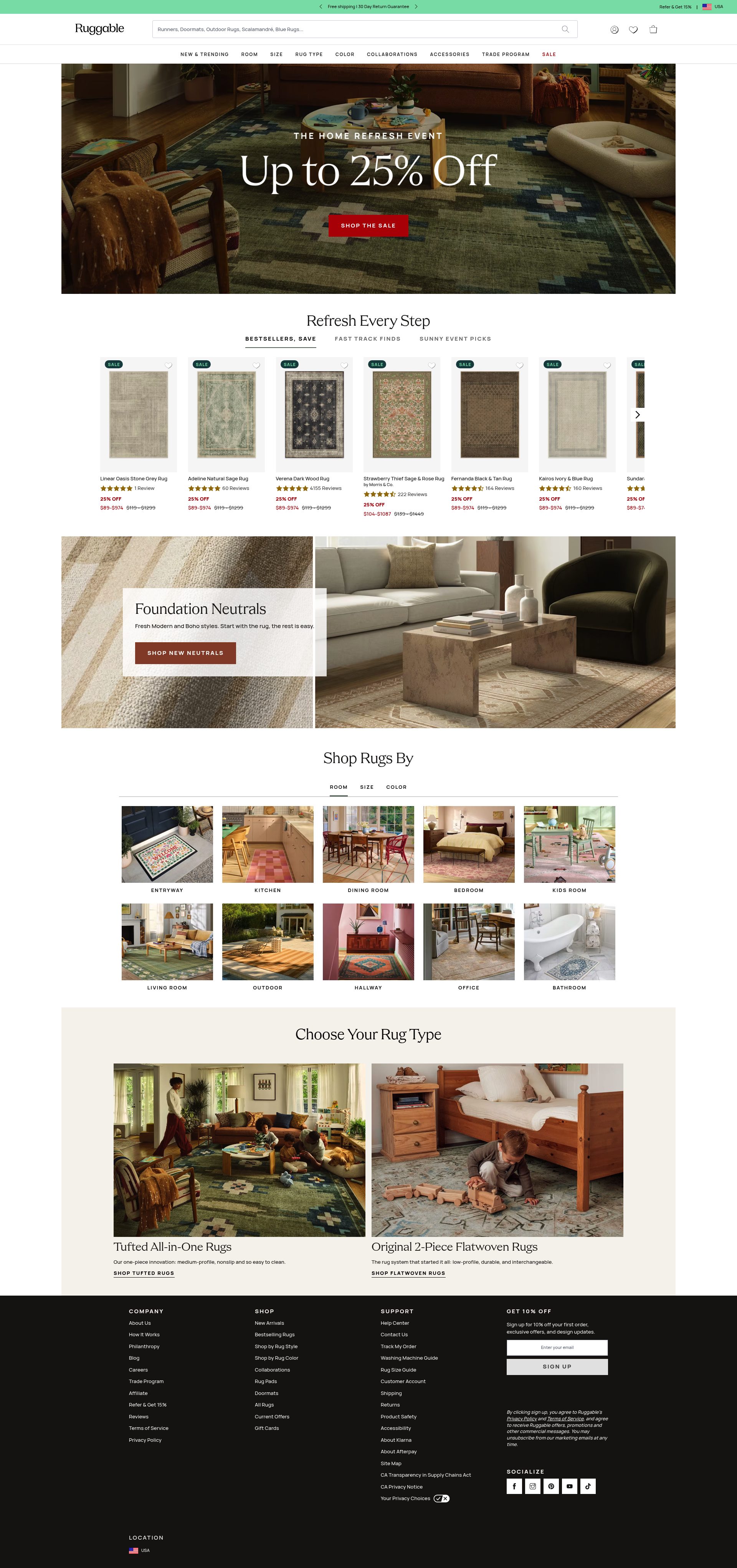
Ruggable built their entire business model around a single product insight: rugs get dirty and people hate cleaning them. Their two-piece washable rug system is the offer, and every page of the store is designed to explain and sell that idea. The homepage leads with the washable mechanic before it leads with design, which is the right hierarchy for a brand where the functional benefit is the primary reason to buy. Product pages include a washing machine demonstration video, a size guide with room visualisation, and a rug builder that lets customers mix covers and pads, nudging the average order value upward through configuration rather than upsell popups.
Ruggable's collection filtering is thorough: customers can sort by size, colour, style, pile height, and room type simultaneously. That filtering depth matters for a high-SKU catalogue where a poor navigation experience loses the customer before they find the right product. Their trade and interior designer programme is surfaced in the footer and through dedicated landing pages, extending reach into a high-value B2B segment without disrupting the consumer journey.
2. The Rug Seller
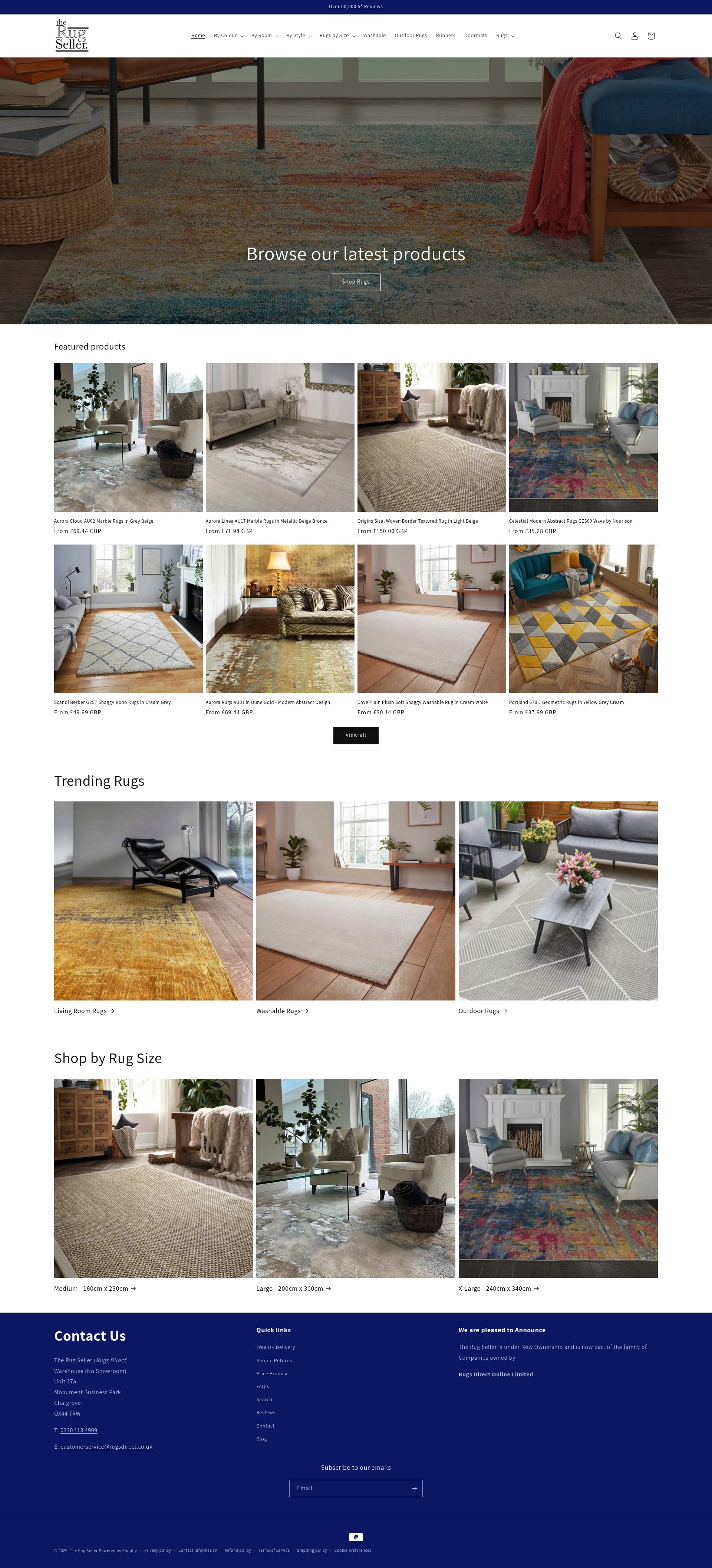
The Rug Seller is one of the UK's largest independent online rug retailers and their Shopify store shows how a high-SKU catalogue can be made navigable without overwhelming the customer. Room-type navigation sits alongside style and size filtering from the collection entry point, which matches how buyers actually approach a rug purchase: "I need something for my living room that is traditional." Product pages include multiple lifestyle photography angles, a detailed size and material guide, and delivery information that is specific rather than vague.
Free delivery and free returns are carried prominently across the header and basket, which removes two common objections for a product category where size and colour mismatch risk is high. Their "Sample Service" for selected rugs, where a customer can order a small swatch before committing, is a smart conversion mechanic that directly addresses the tactile gap in online rug shopping. That kind of friction-reduction investment shows an understanding of where the purchase hesitation actually sits.
3. Beni Rugs
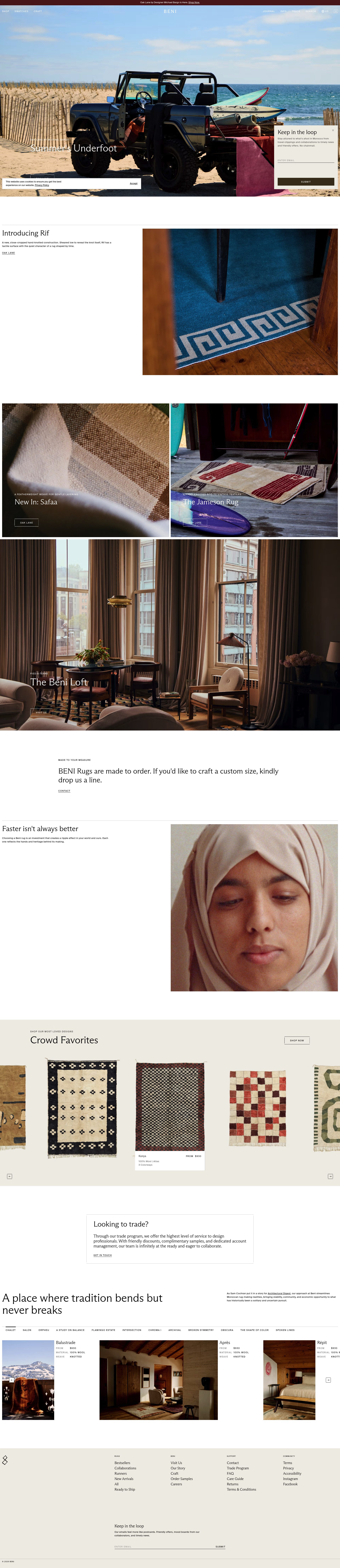
Beni Rugs is a direct-to-consumer brand specialising in authentic Moroccan Beni Ourain and Azilal rugs, and their Shopify store does an excellent job of justifying the premium price point through provenance storytelling. Each product listing includes the specific weave region, the artisan context, and an explanation of why natural wool variations and irregularities are features rather than defects. That transparency matters for a product where a £500+ purchase decision hinges on whether the customer trusts that the rug is genuinely handmade.
Photography is shot on natural surfaces with warm ambient light, which communicates the aesthetic accurately and helps the customer visualise the rug in a lived-in space. Beni Rugs also uses a "one-of-a-kind" label on individual pieces, creating urgency in a way that is authentic rather than manufactured: these rugs genuinely are unique, and the store communicates that clearly. Custom sizing enquiry links on product pages extend their commercial reach without requiring a complex configurator build.
4. Linie Design
Linie Design is a Danish design brand that distributes internationally and their Shopify store reflects a Scandinavian approach to product presentation: clean layouts, generous white space, and photography that always shows the rug in a carefully styled room context. The room-set photography is the most important conversion asset on any rug product page, and Linie Design invests in it more than most. Every product has multiple room scenarios, showing scale, colour interaction with walls and furniture, and different light conditions.
Their "Style Guide" editorial content bridges the gap between a product catalogue and an interior design resource, which builds the kind of session time and return visit rate that lifts organic ranking alongside conversion. The filterable product grid handles their range of flatweaves, hand-tufted, and natural fibre rugs without imposing too much categorical complexity on the customer. Trade pricing and stockist information is easily accessible, reflecting that their business model spans consumer DTC and B2B wholesale channels.
5. Rugs USA
Rugs USA is a high-volume US-based retailer operating on Shopify Plus and their store demonstrates how to manage a genuinely enormous catalogue, several hundred thousand SKUs, without creating a poor browsing experience. Their faceted search and filtering system is among the most comprehensive in the category: customers can filter by shape, material, pattern, pile height, indoor/outdoor suitability, and price band in combination. Getting that filtering architecture right is a significant technical decision and Rugs USA's implementation keeps it fast and responsive.
Their sales and promotional mechanics are always active: percentage-off banners, countdown timers on specific collections, and a clearance section all reinforce a value positioning that suits their target customer. The account area includes an order tracking integration that is specific to rug delivery, including freight delivery status for large orders. That operational transparency reduces customer service load at scale, which matters for a business processing this volume.
6. Nodi Rugs
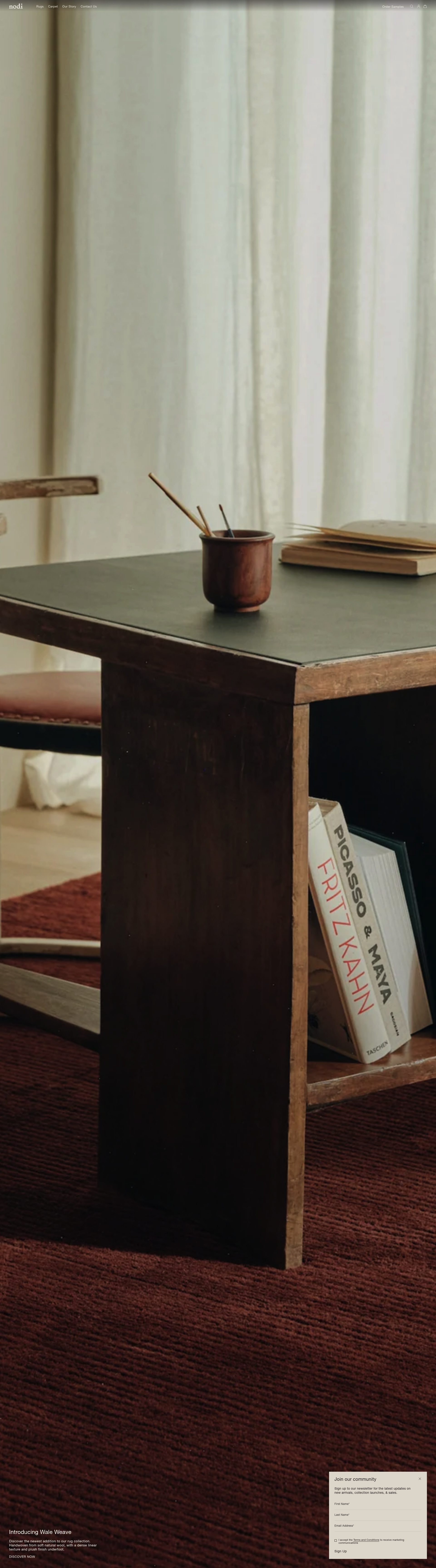
Nodi is an Australian DTC rug brand that has built a Shopify presence with a strong visual identity and a clear positioning in the contemporary handmade segment. Their product pages use a large format photography layout that gives the rug genuine screen real estate, supported by close-up texture shots that communicate pile quality better than most. The "in your space" lifestyle imagery is consistently high quality and covers a range of interior styles, which makes the product feel versatile rather than niche.
Nodi uses a sample request system to convert customers who are hesitant about colour and texture. The request is frictionless: a customer adds a sample to their basket at minimal cost, and the follow-up from that sample drives a high conversion rate compared to customers who only browse online. Their email capture at the basket stage, tied to a meaningful discount offer, is well-placed to recover the segment of customers who browse then close.
7. Armadillo
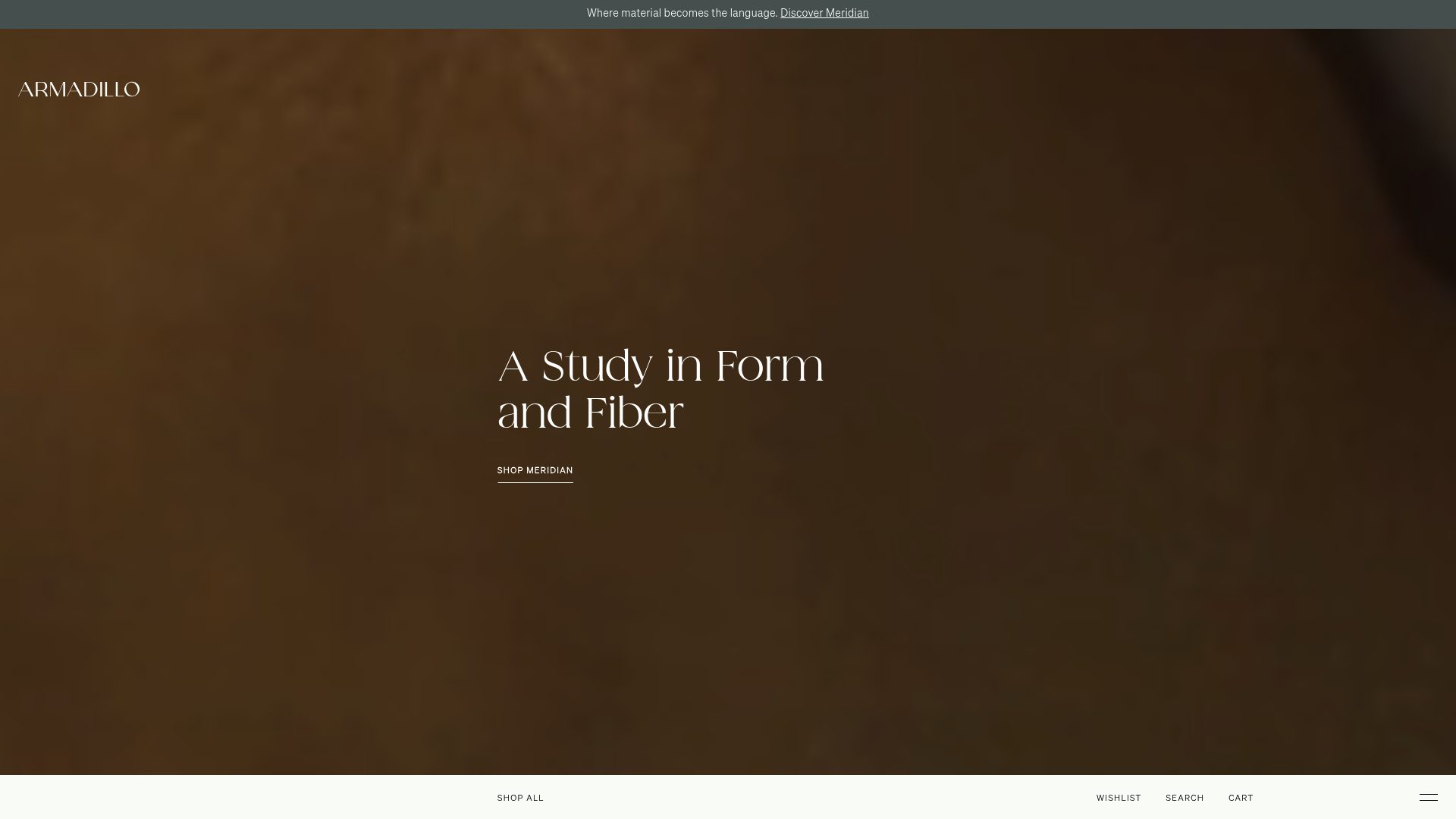
Armadillo is a Sydney-based rug and textile brand known for its natural fibre collections and sustainability credentials, and their Shopify store is one of the more design-coherent examples in the category. The navigation is deliberately restrained: a small number of collections with clear naming, rather than an attempt to surface every possible filter from the first click. That restraint creates a browsing experience that feels considered, which aligns with the brand's premium positioning and the deliberate purchasing behaviour of their customer.
Material sourcing and manufacturing process are given significant page space, with dedicated content on their Nepalese artisan partnerships, the yarns they use, and their environmental certifications. For a customer spending £1,000 to £3,000 on a rug, that transparency is not decorative: it is a functional part of the purchase justification. Their "Bespoke" enquiry pathway is surfaced early and clearly, which captures the segment of buyers whose requirements fall outside the standard range.
8. WEAVER GREEN
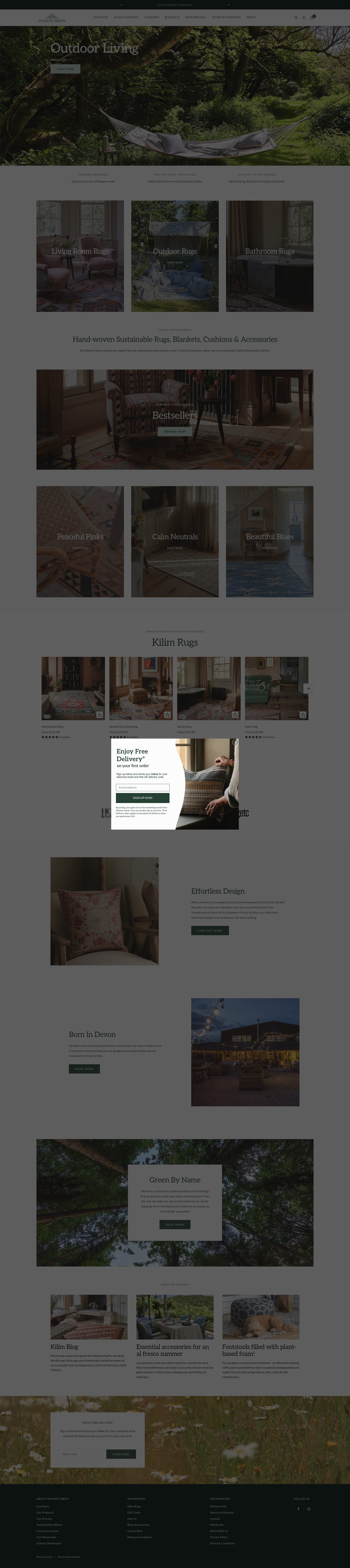
WEAVER GREEN is a UK brand making rugs and textiles from recycled plastic bottles, and their Shopify store is structured around making that sustainability story credible and commercial rather than preachy. The bottle count per product is displayed on every PDP: "Made from 100 recycled plastic bottles" is a specific, visual claim that sticks in a way that a generic "eco-friendly" label does not. Their indoor/outdoor positioning is handled clearly, with specific advice on outdoor performance and care that reduces post-purchase disappointment.
The product range has extended over time into cushions, poufs, and runners, and the cross-category navigation uses the "shop the look" mechanic to move customers across categories within a single session. WEAVER GREEN's trade programme is well-developed, with a dedicated trade sign-up flow and pricing structure that supports their route-to-market through interior designers and architects. Their photography consistently shows the rugs in high-quality residential settings, which positions the brand at the upper end of the accessible sustainable home goods market.
9. Tuftingshop
Tuftingshop operates in a different part of the rug market: they sell tufting guns, yarn, backing cloth, and accessories to customers who make their own rugs. Their Shopify store demonstrates how a niche DTC brand can build a community-led business around a hands-on product. The product pages are detailed on technical specifications: pile height range, motor speed, needle gauge, and recommended backing materials are all listed. That specificity serves a customer who is making a considered purchase based on craft performance rather than aesthetics.
Tutorial content and beginner guides are woven into the store structure, which extends session time and builds the kind of organic search authority that reduces paid acquisition dependency over time. The starter kit bundles are the primary conversion mechanic for new customers: a well-curated bundle removes the research burden of choosing compatible equipment and increases the first-order value significantly. Their community content, showing finished customer projects, functions as product validation for a category where the outcome depends on user skill as much as product quality.
10. Rug & Weave
Rug & Weave is a UK independent retailer with a curated range across traditional, transitional, and contemporary styles. Their Shopify store takes a personal, curation-led approach that distinguishes them from high-volume competitors: category introductions on collection pages explain the style and room context for each range in a way that adds value for a customer who is still at the research stage of the purchase journey. That editorial layer is a meaningful differentiator in a category where most stores are catalogue-first.
Their product photography is clear and well-shot, with multiple size options shown in room contexts where available. Size and colour swatches on the product page are clickable rather than requiring a new page load, which keeps the customer in the decision-making flow rather than introducing friction between variant selection and add-to-basket. The store handles custom sizing enquiries through a clear contact pathway rather than an automated configurator, which suits the scale of an independent business and allows for genuinely tailored customer service.
If you sell rugs, home textiles, or interior products on Shopify and want to improve your store's product presentation, filtering architecture, or conversion rate, SuttonCommerce can help: see our Shopify design service or get in touch.
Frequently asked questions
Which rug Shopify stores are best for high-volume filtering and large catalogues?
Rugs USA and The Rug Seller are the strongest examples. Rugs USA operates hundreds of thousands of SKUs on Shopify Plus with faceted filtering across shape, material, pile height, pattern, and price in combination. The Rug Seller handles room-type navigation alongside style and size filtering from the collection entry point, matching the way buyers actually approach a purchase.
How do premium rug stores justify high price points on Shopify?
Beni Rugs and Armadillo are the best benchmarks here. Beni Rugs uses artisan context, weave region specifics, and one-of-a-kind labelling to explain why irregularities are features rather than defects. Armadillo dedicates significant page space to Nepalese artisan partnerships and environmental certifications, treating provenance as a functional part of the purchase justification rather than decorative content.
What is the best way to handle the tactile gap when selling rugs online?
The stores converting best on this problem offer physical samples before commitment. The Rug Seller's swatch service and Nodi Rugs' frictionless sample request both address the colour and texture uncertainty that causes abandonment at high price points. Combining samples with detailed close-up texture photography and room-set lifestyle imagery covers the gap from multiple angles.
Are washable rugs sold on Shopify, and which store leads on them?
Ruggable is the category leader and runs its entire DTC business around a washable two-piece rug system on Shopify. The product pages include a washing machine demonstration video, a rug builder for mixing covers and pads, and size visualisation tools. The washable mechanic leads the homepage hierarchy above design, which is the right call when the functional benefit is the primary reason to buy.
Which Shopify rug stores are strongest for sustainability credentials?
WEAVER GREEN is the clearest example of sustainability done commercially rather than generically. Every product page displays a specific recycled plastic bottle count, which is more persuasive than a broad eco-friendly label. Armadillo's environmental certifications and material sourcing transparency sit close behind, particularly relevant for customers at the £1,000-plus price tier.