

Quick summary
Neom Organics leads the category with a wellness quiz that routes new customers to the right product and a subscription-first product page that converts repeat buyers. Atkinsons 1799 is the strongest pick for heritage positioning, using 200-year-old provenance as a genuine differentiator rather than decoration. Apotheke sets the benchmark for gifting architecture, with custom label options and a dedicated gifting section that serves corporate and personal buyers equally well. Voluspa handles the most complex range of the group through a three-way mega-menu that serves fragrance, vessel, and gifting intent without friction.
Home fragrance is one of the most photogenic and emotionally driven niches in ecommerce, and that makes it a brutal test for any Shopify build. You are selling a sensory experience through a screen. Customers cannot smell a reed diffuser or feel how a room changes after ten minutes with a scented candle. The stores that win in this space earn trust through photography, storytelling, and product architecture that makes the invisible feel tangible before anyone reaches the checkout.
The category also has an unusually high gifting share. A significant proportion of home fragrance purchases are gifts, which means stores need to serve two customers simultaneously: the gift buyer who needs confidence and convenience, and the repeat purchaser who already knows the brand and wants frictionless reorder. The ten stores below have built Shopify experiences that handle both well, and all of them have something worth studying regardless of what you sell.
1. Neom Organics

Neom Organics is one of the most commercially sophisticated home fragrance brands operating on Shopify in the UK. The product range spans scented candles, reed diffusers, room sprays, and oil blends, all built around a wellness positioning that anchors the brand firmly in the premium end of the market. What separates Neom from most competitors is how tightly the wellness story is integrated into the commerce layer: every product page leads with the functional benefit — sleep, stress relief, energy — before the fragrance note, the burn time, or the price.
The quiz mechanic on the Neom site is one of the stronger examples of guided selling in the home fragrance category. Customers answer three to four questions about their primary wellness goal and the quiz routes them to a specific product or collection. This reduces decision fatigue significantly in a category where the range can be overwhelming for new customers, and it lifts average order value by surfacing bundles and gift sets rather than single SKUs.
Subscription is built into the product page as a default, with the one-time purchase price presented as the secondary option. The saving is real enough to be motivating and the cancel-any-time messaging is prominent. For a brand with strong repeat purchase dynamics, structuring the product page this way is the right call.
2. Skandinavisk

Skandinavisk is a Copenhagen-based home fragrance brand with a Shopify store that is among the cleanest in the category. The brand sells candles, diffusers, room sprays, and home accessories, and the design philosophy across both the products and the store shares a consistent logic: restrained, considered, and specific about place. Every fragrance is named after a Scandinavian landscape or concept and the product pages connect the scent profile to that geography through copy that is specific enough to be evocative without being overwrought.
The photography across the Skandinavisk site is genuinely useful as conversion content. Rather than isolated product shots, the images show products in room contexts that reflect how customers would actually use them: on a desk, beside a bath, on a windowsill. That context helps customers mentally place the product in their own homes, which shortens the time between consideration and purchase.
The gifting architecture is thoughtful. Gift sets are photographed to look ready to wrap, and the personalisation options are surfaced early in the browse journey rather than reserved for checkout. The brand has also invested in a B2B wholesale channel that is integrated into the main Shopify store, with a trade login rather than a separate subdomain, which keeps channel management clean without fragmenting the brand experience.
3. Boy Smells
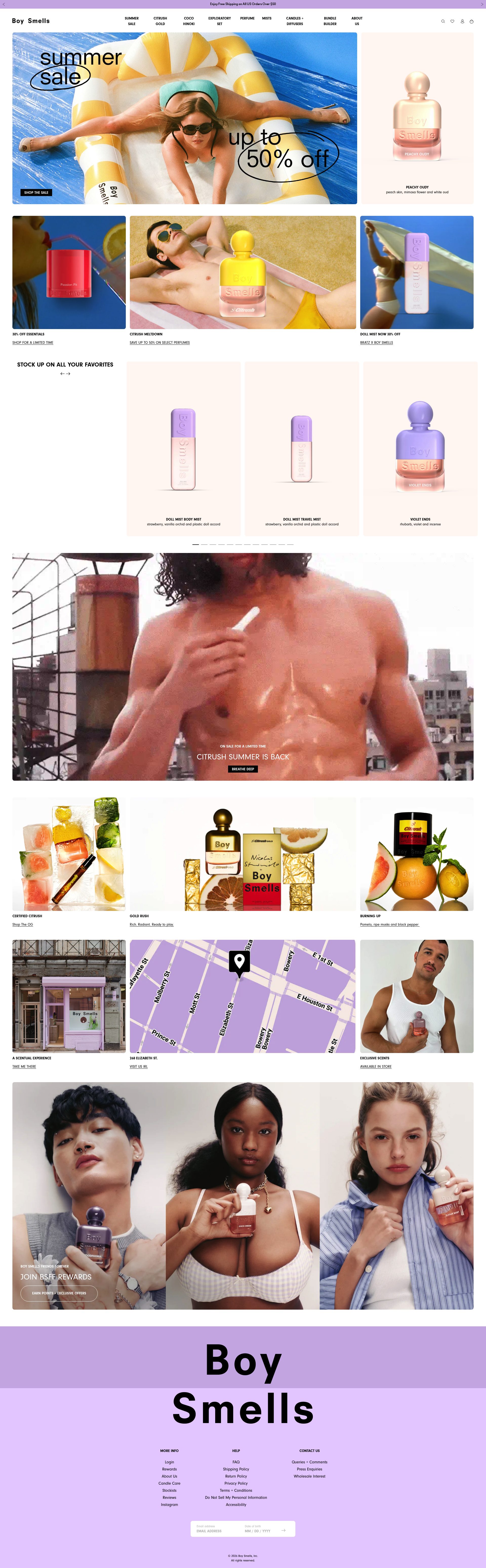
Boy Smells is a Los Angeles fragrance brand that has built its Shopify store around a clear and confident aesthetic identity. The brand sells candles, eau de parfum, and body products, and the store does not hedge its positioning: the photography, copy, and product names are all of a piece, creating a consistent world that customers buy into rather than just buying from. That brand coherence is doing commercial work — it justifies the price point, it increases gift appropriateness, and it creates the kind of social currency that drives organic sharing.
The product detail pages are well-structured for a brand with a complex range. Each candle page leads with the fragrance story, moves through the ingredient list with sourcing notes, and then addresses the practical details — burn time, wick guidance, vessel reuse — in a logical sequence that matches how a customer actually evaluates a candle purchase. The cross-sell on the product page surfaces complementary fragrances from the same collection, which is a more effective upsell mechanism than generic related products.
The retail stockist page on Boy Smells is worth examining. Wholesale is material to the brand and the stockist list is maintained current and searchable by city, which serves as a discovery tool for customers who want to smell before buying as well as a trust signal for the DTC channel.
4. Cowshed
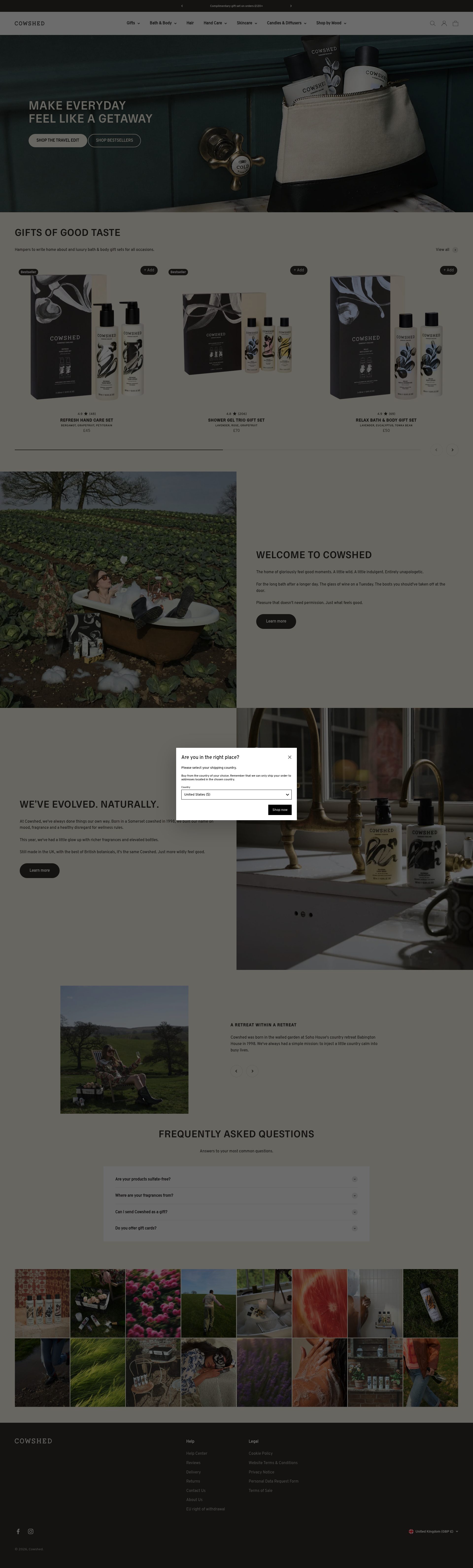
Cowshed is a UK spa brand that has built a Shopify store with a clear dual audience: spa visitors who know the brand from hotel stays and want to recreate the experience at home, and new customers arriving via gifting or search. The home fragrance range sits within a broader bodycare and bath offer, and the store architecture manages this breadth without letting it become overwhelming. Category navigation is clean, the filtering works, and the visual design carries enough of the spa brand DNA to make it feel coherent rather than generic.
The product pages lean into provenance and ingredient quality without becoming clinical. Cowshed was founded at Babington House and the brand history is woven into product descriptions rather than siloed on a separate About page — it functions as conversion content rather than corporate storytelling. The gift sets are photographed in a way that makes them look genuinely premium at the price point, with ribbon and tissue paper visible in the lifestyle shots, which reduces the risk perception for gift buyers.
The Cowshed subscription offer on diffuser refills is smart category thinking. Reed diffuser users refill regularly on a predictable schedule, which makes them an ideal subscription cohort. Surfacing the refill subscription prominently on the main product page rather than treating it as an afterthought captures that repeat revenue at the moment of highest intent.
5. Stoneglow
Stoneglow is a UK home fragrance specialist that has been trading since the 1980s and has built a Shopify store that balances heritage with a clean, contemporary presentation. The range covers scented candles, reed diffusers, wax melts, and room sprays across several distinct collections, each with its own fragrance story and visual identity. The collection architecture is well-executed: customers can browse by collection or product type, and the filtering system handles a large SKU count without creating choice paralysis.
The pricing at Stoneglow sits confidently in the mid-premium tier, and the product pages do the work to justify it. Fragrance notes are presented in a layered format showing top, middle, and base notes, which signals quality and gives fragrance-literate customers the information they need to make a decision without requiring a physical sample. Burn time, wax type, and wick material are all listed clearly, which reduces the most common pre-purchase questions.
Stoneglow has invested in a trade and wholesale channel that is surfaced in the footer navigation with a dedicated landing page. For a brand with a long wholesale history across UK gift and home retailers, maintaining a visible trade enquiry path alongside the DTC channel is the right structural decision.
6. Atkinsons 1799

Atkinsons 1799 is a historic British fragrance house with a Shopify store that manages the rare trick of communicating genuine heritage without feeling dusty. The brand was established in Old Bond Street in 1799 and the store deploys that history as a premium signal throughout the product architecture: founding dates appear in the brand mark, the editorial content references archive recipes, and the packaging photography emphasises the kind of material quality that is hard to fake. For a home fragrance customer choosing between a hundred brands at a similar price point, provenance that is this specific is a meaningful differentiator.
The room fragrance range sits within a broader fine fragrance offer, and the cross-category navigation is handled cleanly. Room sprays and home diffusers are positioned as natural companions to the personal fragrance range, with scent families bridging the two categories and allowing customers to extend their signature scent into their living space. That olfactive coherence between the personal and home fragrance ranges is a more sophisticated positioning than most brands in the category.
The gift architecture reflects the brand's Bond Street heritage. Presentation boxes, ribbon dressing options, and personalised gift messages are surfaced at the basket stage with photography that makes the gifting value visible rather than requiring the customer to imagine it.
7. Paddywax
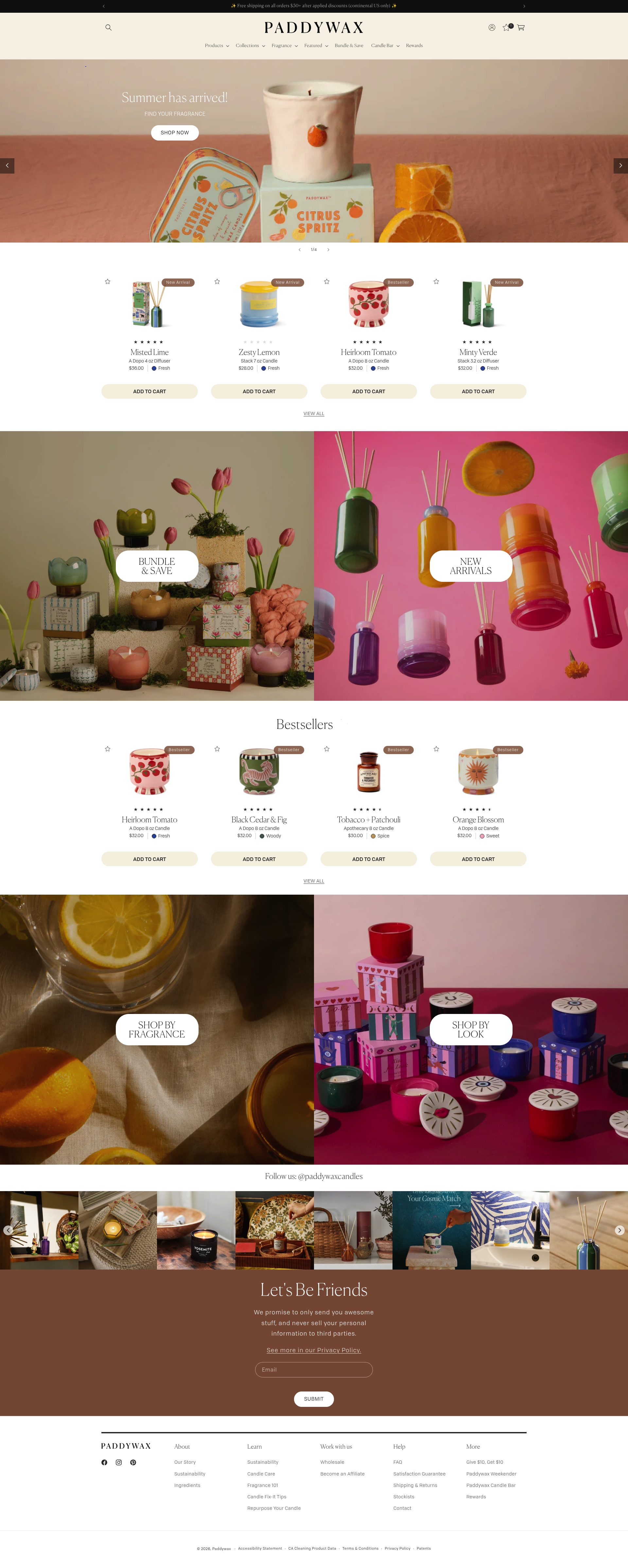
Paddywax is a Nashville-based candle brand with a Shopify store that has made an identifiable visual style into a commercial asset. The brand is known for distinctive vessel design: ceramic pots, amber apothecary jars, coloured glass, and embossed tins that are kept and repurposed long after the candle is finished. The product pages lead with this physical distinctiveness, and the photography is styled to make the vessels as appealing as the fragrance, which serves the gifting use case particularly well.
The collection architecture at Paddywax is worth studying. Rather than organising entirely by vessel type or fragrance family, the store offers collections named after experiences and inspirations: libraries, writers, national parks. Each collection has its own visual identity and landing page with editorial context explaining the theme, which gives the store the feel of a curated lifestyle brand rather than a product catalogue. That editorial layer is doing conversion work by giving customers a framework for choosing that goes beyond scent profile or price.
Wholesale is significant for Paddywax and the trade programme is surfaced with a standalone landing page and straightforward account application. The DTC and wholesale channels coexist clearly in the navigation without creating confusion about which path a given customer should take.
8. Elume
Elume is a UK candle and home fragrance brand whose Shopify store is one of the tidiest mid-premium builds in the category. The range covers soy candles, diffusers, and wax melts, and the store manages a broad colour-led product range through category pages that are genuinely useful for browsing. Filtering by fragrance family, vessel type, and price point is available on collection pages, which reduces the navigation burden in a range where visual similarity between products can make discovery difficult.
The subscription mechanics on Elume are set up for the reed diffuser refill cycle, where customers on a regular top-up schedule are worth significantly more over twelve months than one-time buyers. The refill subscription is presented at the product level with a clear monthly saving and delivery frequency options, and the programme avoids the most common subscription UX mistake of hiding the management portal — account holders can pause, skip, or cancel from the subscription dashboard without needing to contact support.
The brand has invested in a loyalty and rewards programme that goes beyond purchase points. Reviews, referrals, social follows, and birthdays all generate points, which creates engagement touchpoints between purchase cycles and reduces churn in the subscription cohort.
9. Apotheke
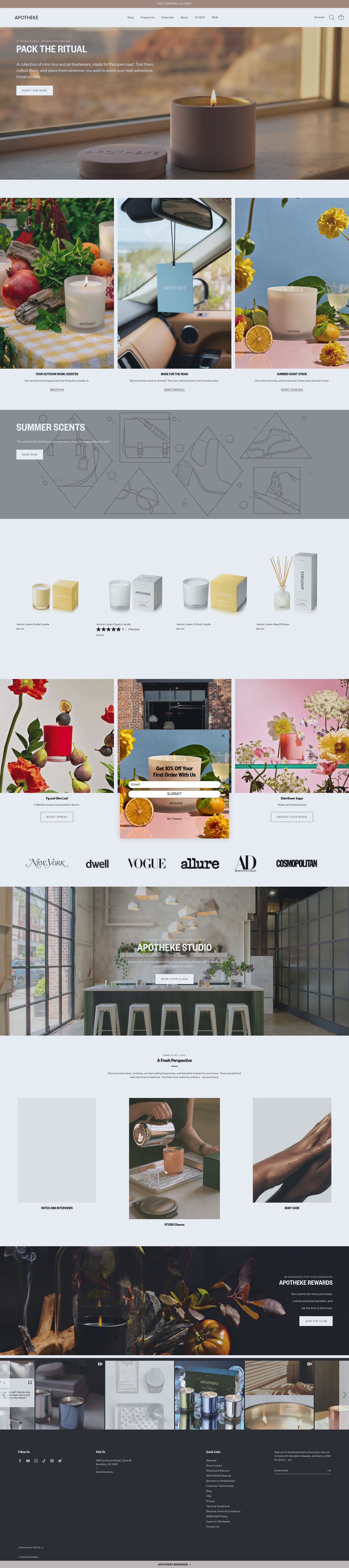
Apotheke is a New York fragrance brand with a Shopify store that positions itself firmly at the luxury end of the candle and home fragrance market. The brand sells candles, diffusers, body products, and gift sets, and every element of the store communicates a premium experience: the photography is studio-grade, the copy is precise, and the packaging photography is styled to make the unboxing experience look as considered as the product itself. For a brand where the price point requires justification before the customer buys, this level of production investment in the store itself is a commercial necessity, not a vanity choice.
The product pages on Apotheke are structured around the fragrance story first, with each candle having a named inspiration and a brief editorial note that explains the olfactive direction before listing the fragrance notes formally. That sequencing matters: telling the story before presenting the technical specification makes the product feel authored rather than manufactured.
The gift customisation on Apotheke is more developed than most competitors in the category. Custom label options, note cards, and curated gift sets at multiple price points are all surfaced in a dedicated gifting section with its own navigation entry. For a brand where corporate gifting and personal gifting are both material revenue channels, building a proper gifting destination within the store rather than treating gifting as a product variant is the right structural decision.
10. Voluspa
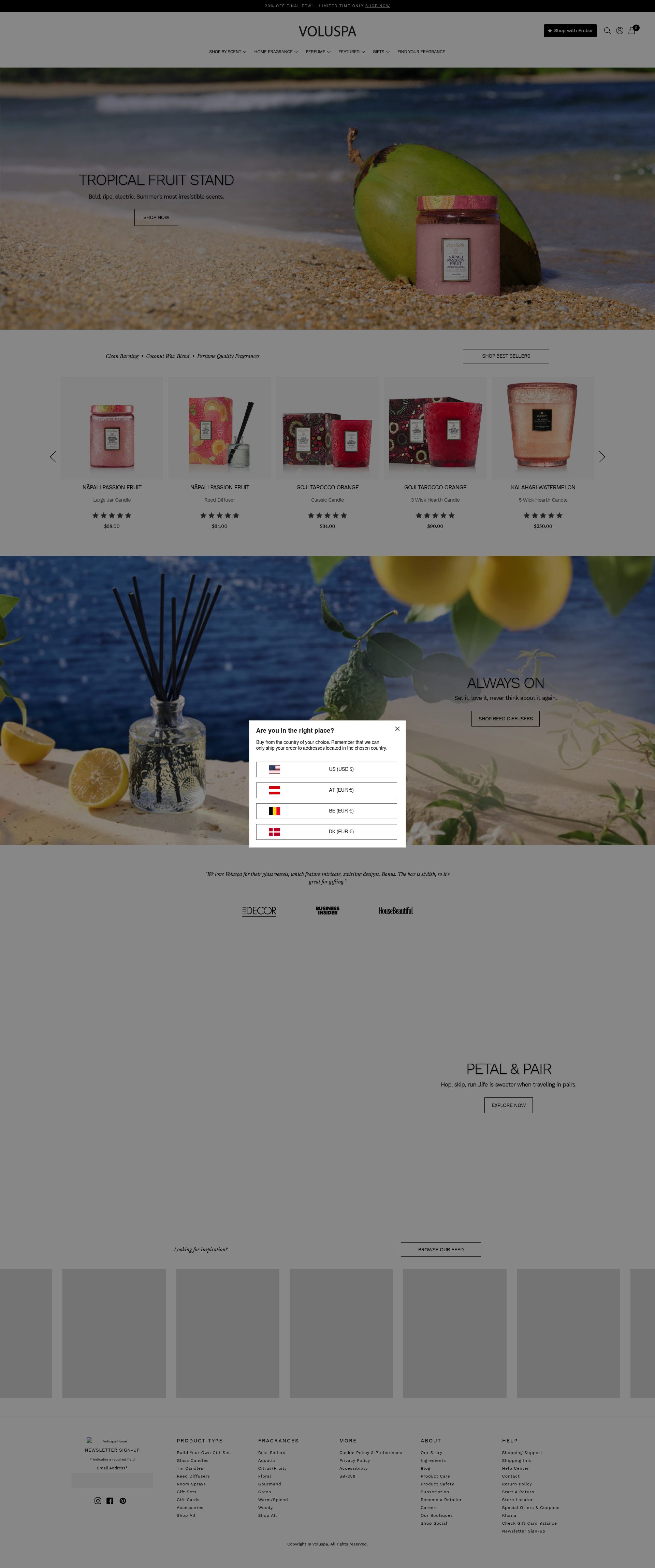
Voluspa is a California fragrance brand with a Shopify store built around one of the most recognisable visual identities in the candle category. The brand's embossed tins and glass vessels are instantly identifiable, and the Shopify store amplifies this visual distinctiveness through collection pages that read as display rather than catalogue. The photography is warm, the layout gives products room to breathe, and the editorial styling makes each collection feel curated rather than listed.
The range management on Voluspa is sophisticated. The brand operates multiple collections with distinct vessel formats, fragrance families, and price points, and the store navigation manages this complexity through a mega-menu that lets customers enter by fragrance type, vessel style, or gifting intent. That three-way entry point serves three different customer mindsets without requiring any of them to navigate through an irrelevant category.
The Voluspa travel and gift packaging tier is presented as a category in its own right rather than as a subset of the main range. Mini sets, sampler packs, and gift-ready formats have their own collection page, which makes the brand genuinely usable for gift buyers who want a lower-commitment entry point before committing to the full-size product.
Comparison Table
| Brand | Niche Focus | Price Point | Shopify Standout |
|---|---|---|---|
| Neom Organics | Wellness-led fragrance | Premium | Wellness quiz guided selling, subscription-first product pages |
| Skandinavisk | Nordic candles and diffusers | Mid-premium | Sense-of-place storytelling, clean trade channel integration |
| Boy Smells | Design-led candles and fragrance | Premium | Brand coherence as a conversion tool, curated cross-sells |
| Cowshed | Spa heritage home fragrance | Mid-premium | Diffuser refill subscription, provenance-led product copy |
| Stoneglow | UK fragrance specialist | Mid-premium | Fragrance note layering, trade channel surfacing |
| Atkinsons 1799 | British fine fragrance heritage | Luxury | Cross-category olfactive coherence, gift presentation UX |
| Paddywax | Vessel-led lifestyle candles | Mid | Thematic collections with editorial context, trade landing page |
| Elume | Soy candles and diffusers | Mid | Subscription refill mechanics, loyalty programme depth |
| Apotheke | Luxury candles and diffusers | Luxury | Gifting destination architecture, custom label options |
| Voluspa | Visual-led fragrance collections | Mid-premium | Mega-menu for complex range, travel and gift tier as category |
What These Stores Get Right
-
Sensory storytelling earns the price point. In a category where customers cannot smell before they buy, the stores that convert at premium price points are the ones that invest in photography, fragrance note presentation, and ingredient provenance. These are not nice-to-haves — they are the primary conversion mechanism.
-
Gifting is a first-class experience, not a checkout add-on. The strongest stores in this list treat gift buyers as a distinct audience with their own navigation entry, dedicated collection pages, and presentation options surfaced before the cart. Stores that tuck gifting into a checkout upsell lose the gift buyer at the point of browse.
-
Subscription is structured for the category's repeat purchase cycle. Reed diffusers refill every four to six weeks. Candles finish in forty to sixty hours. The stores doing subscription well have matched the subscription frequency options to actual product depletion, not generic monthly billing cycles.
-
Trade and wholesale have a proper home in the store architecture. Home fragrance brands with a wholesale channel often hide it in the footer. The better-built stores in this list give trade buyers a dedicated landing page with clear account application paths, recognising that B2B revenue requires the same UX investment as DTC.
-
Brand coherence does commercial work. The stores with a clear and consistent visual identity — in photography, copy tone, product naming, and packaging — convert better at premium price points because the experience itself signals quality before the customer reads a single product detail. In a category with hundreds of competing brands, distinctiveness is a revenue driver.
If you are building or scaling a home fragrance Shopify store, explore our Shopify design services or contact us to talk through what the right store architecture looks like for your brand.
Frequently asked questions
Which home fragrance brands use Shopify?
Neom Organics, Skandinavisk, Boy Smells, Cowshed, Stoneglow, Atkinsons 1799, Paddywax, Elume, Apotheke, and Voluspa all run on Shopify or Shopify Plus. The platform is dominant in this category because it handles subscription refills, gifting customisation, and multi-currency selling — all of which are essential for mid-premium and luxury fragrance brands.
What Shopify features matter most for a home fragrance store?
Subscription mechanics for diffuser refills and candle replenishment are the highest-leverage feature in the category. Beyond that, guided selling tools such as fragrance quizzes reduce decision fatigue in large ranges, and a dedicated gifting destination — with presentation options surfaced before checkout — converts gift buyers who would otherwise abandon without purchasing.
How do home fragrance brands handle the sensory problem in ecommerce?
The strongest stores solve the cannot-smell-it problem through three content layers: detailed fragrance notes listed in top, middle, and base structure; lifestyle photography that shows products in room contexts rather than on white backgrounds; and editorial copy that makes the scent experience tangible by anchoring it to a place, mood, or memory. Brands like Skandinavisk and Paddywax use named fragrance inspirations to give customers an emotional framework for choosing.
Is subscription worth setting up for a home fragrance Shopify store?
Yes, particularly for reed diffusers. A standard reed diffuser refill cycle runs four to six weeks, which makes it one of the most predictable subscription products in ecommerce. Elume and Cowshed both surface refill subscriptions directly on the product page with a clear monthly saving, and this captures repeat revenue at the point of highest intent rather than relying on reactivation emails.
How should a home fragrance Shopify store handle wholesale and trade?
Give trade buyers a dedicated landing page with a clear account application path — do not hide the wholesale channel in the footer. Stoneglow and Paddywax both use standalone trade pages that communicate minimum order requirements, pricing structures, and account setup without requiring a phone call. For brands with significant wholesale revenue, a Shopify B2B channel or a trade login on the main store is cleaner than running a separate subdomain.