
Quick summary
Sneak Energy is the strongest overall example: their customisation-first architecture drives high AOV and locks customers into a flavour discovery loop that feeds repeat purchases. Tenzing stands out for positioning clarity, using B Corp credentials and ingredient transparency to convert customers who distrust traditional energy drinks. Gorilla Mind leads on PDP trust-building, with full ingredient breakdowns and dosage rationale that converts sceptical supplement buyers. Carabao is the best example of using sports sponsorship as a DTC conversion tool, bringing its football and cycling partnerships into the product pages rather than keeping them as above-the-line assets.
Energy drinks are one of the fastest-growing DTC categories in UK ecommerce. The purchase journey is short, repurchase rates are high when a product lands, and brand identity does enormous conversion work. The stores that perform best in this space have figured out how to turn a can of liquid into a lifestyle proposition, then back it up with the mechanics that turn first-time buyers into subscribers.
1. Carabao

Carabao's Shopify store leads with its sports sponsorship portfolio: Championship football, cycling, and rugby partnerships are front and centre, and that association does real conversion work for a brand competing against much larger incumbents. Product pages are kept tight: flavour options are the main variable, with clear descriptions for each. The brand leans into the Thai heritage story early, which gives it a genuine point of difference from own-label energy drinks. Subscription is offered on every product with a persistent discount badge, making the value of recurring orders visible without burying it in a footer.
2. Tenzing
Tenzing is doing something structurally different: it is positioning natural ingredients as the headline, not the energy. The Shopify store reflects this with ingredient transparency on every PDP, a commitment to the B Corp certification displayed prominently throughout, and photography that reads more like a premium soft drink brand than a traditional energy drink. Checkout upsells are handled through bundle suggestions rather than aggressive cross-sells, which suits a customer who is already paying a premium and does not want to feel pushed. The subscription mechanic is clear and friction-free: select frequency, save 15%, done.
3. Sneak Energy
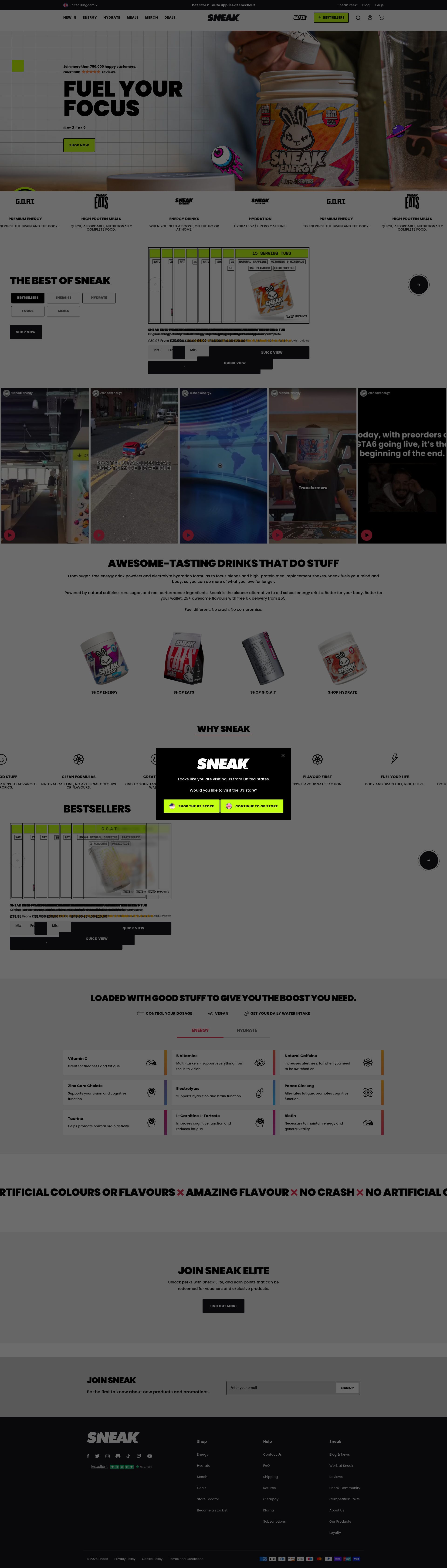
Sneak's entire store architecture is built around the customisation of their powdered energy formula: flavour mixing, custom shaker bundles, and limited-edition drops are the commercial engine. Product pages let customers build their own starter kits, which increases first-order AOV while reducing the risk of a flavour the customer does not enjoy. Their Shopify Plus implementation handles frequent new-flavour drops without the store becoming cluttered: collection pages are filterable by flavour profile and use case (focus, pre-workout, gaming). The gaming and esports community framing is consistent throughout, from copy to photography, and creates a clear mental picture of who this product is for.
4. Grenade
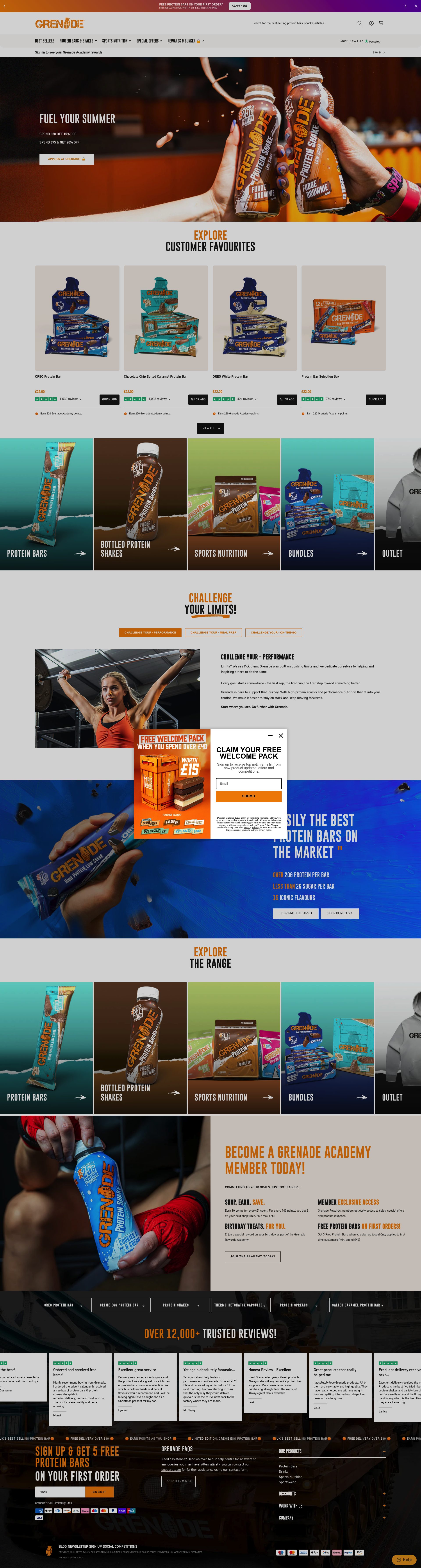
Grenade has expanded from protein bars into energy drinks, and their Shopify store manages a broad product catalogue without losing the brand clarity that made the bars famous. Category navigation is structured by product type first, then by goal (energy, protein, recovery), which is the right call for a customer who may be discovering the energy range for the first time. Product pages carry full nutritional detail with on-label imagery alongside lifestyle photography. The cross-sell logic is well-executed: if you are buying an energy drink, you are shown the protein bar in a flavour that complements it. Grenade also uses bundle pricing effectively, with multi-box deals surfaced on PDPs rather than hidden in a separate bundles section.
5. Nocco
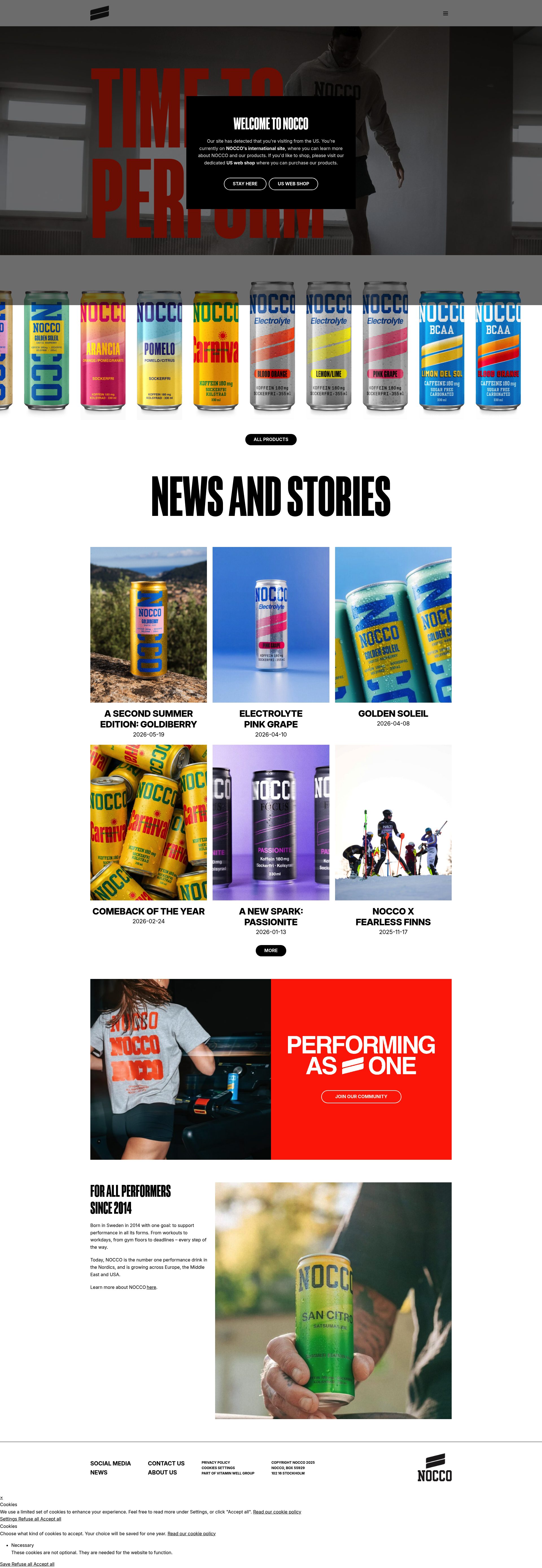
Nocco (No Carbs Company) is a Swedish brand that has built substantial UK DTC presence on Shopify. Their store's strongest element is the athlete and ambassador content: professional sports photography is embedded throughout the buying journey, not just on an about page. This is important for a brand making performance claims, because it keeps the credibility signals close to the purchase decision. The limited-edition flavour model creates urgency without relying on countdown timers or stock scarcity messaging, which keeps the store feeling premium. Subscription mechanics are prominent and clearly explained, with explicit mention of free shipping as an incentive.
6. Prime
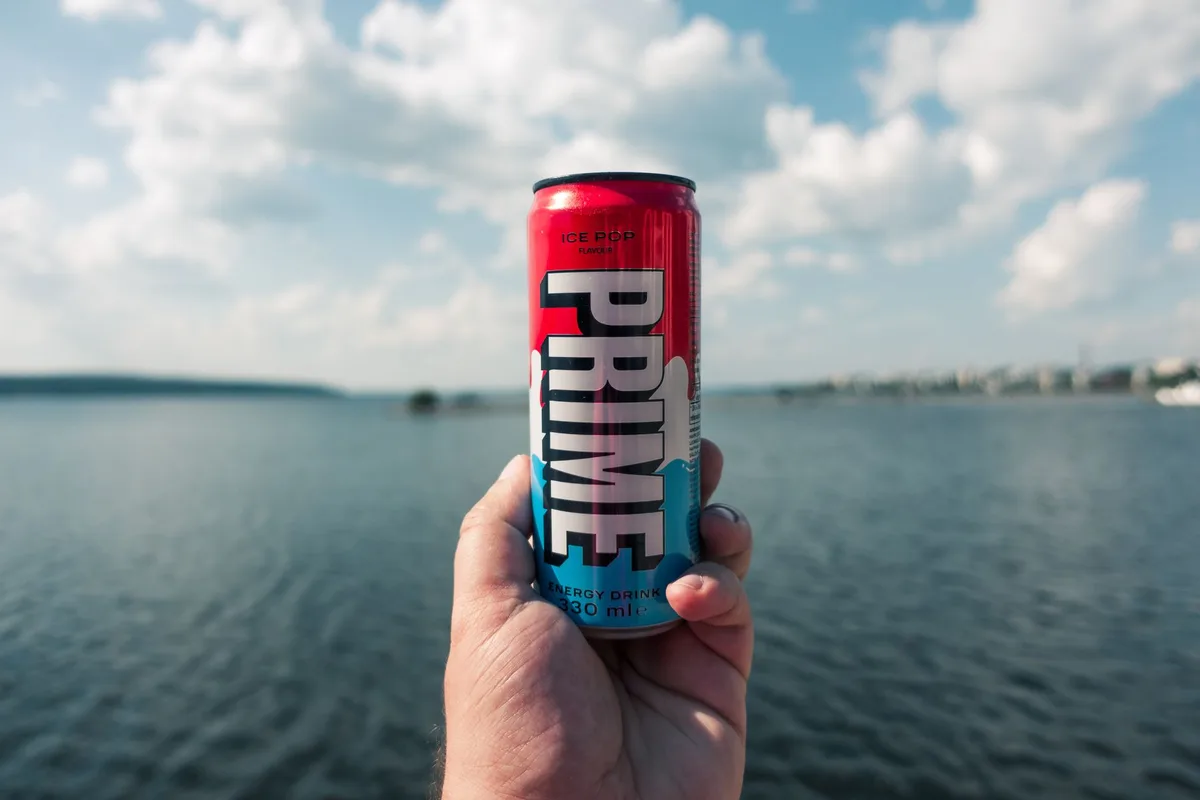
Prime's UK Shopify store handles enormous product demand with a clean, drop-led structure. The approach is minimal: large imagery, clear flavour listings, and a store architecture that gets out of the way of a customer who already knows what they want. This works because Prime's demand is driven primarily by social content and influencer activity outside the store, so the on-site job is conversion, not discovery. Collection pages are fast to navigate, with a consistent card format that surfaces flavour, format (drink vs hydration), and price clearly. The add-to-cart flow is simple and the checkout is not interrupted by excessive upsell modals, which keeps conversion rates high for an already-motivated buyer.
7. Reign
Reign is Monster's premium DTC entry in the performance energy category. Their Shopify store leans heavily on sports performance credentials: total body fuel messaging, BCAAs and CoQ10 callouts, and athlete content. The PDP structure follows a pattern that works well for supplement-adjacent products: headline benefit, full ingredient panel, usage guidance. This sequence mirrors the decision process of a buyer who needs to justify the premium before committing. Multi-pack pricing is surfaced clearly on every product, and the discount stacking between multi-packs and first-order codes creates a compelling initial offer.
8. Applied Nutrition
Applied Nutrition is a UK brand that has grown its energy drink range as an extension of a wider sports nutrition catalogue. Their Shopify store benefits from strong cross-category credibility: customers buying protein already trust the brand, so the energy drink becomes a natural adjacent purchase. The store handles this with collection pages that surface the energy range within the broader product architecture, and PDPs that reference the brand's sports science credentials. Bundle builders allow customers to mix energy drinks with protein and pre-workout, which reflects how their target customer actually buys. Subscription is available across the full range with clear frequency options.
9. Zest Tea
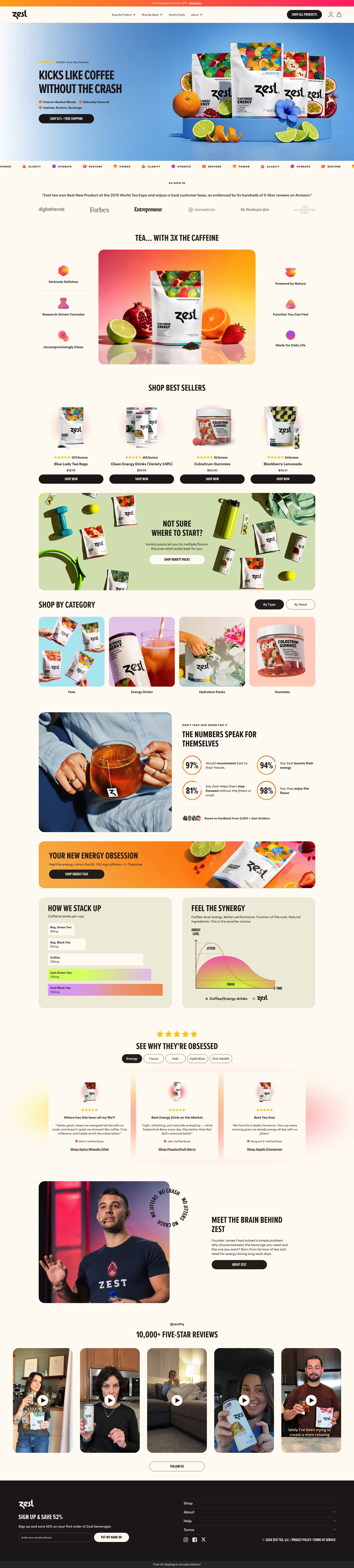
Zest Tea's Shopify store makes a smart positioning bet: high-caffeine tea as an alternative to coffee and energy drinks. That framing opens up a customer segment that actively avoids traditional energy drinks, and the store speaks to them directly. The product page copy leads with the caffeine content comparison (up to 150mg versus 40mg in standard tea), then explains why the clean energy delivery from L-theanine justifies the switch. Subscription is the dominant call-to-action on every PDP, with the per-serving cost breakdown making the value proposition explicit. The store is clean and focused, with photography that references the morning routine rather than a gym or gaming setup, which differentiates it visually from every other brand in this list.
10. Gorilla Mind
Gorilla Mind is a US brand with a strong UK DTC presence built on Shopify. The store is notable for its transparency: each product page includes a detailed breakdown of every ingredient and the reasoning behind the dosage, which is unusual in the energy and nootropic category. For a customer who has been burned by underdosed or overhyped supplements, this level of specificity is a meaningful conversion signal. The subscription model is clearly explained with a visible saving percentage, and the store does not overuse urgency mechanics. Gorilla Mind's blog and educational content is integrated into the buying journey: relevant articles are linked from PDPs, which increases dwell time and trust before the add-to-cart decision.
If you are a supplement or energy drink brand looking to improve your Shopify store's conversion rate, retention mechanics, or subscription experience, SuttonCommerce's Shopify design service is built for exactly this, get in touch to discuss your store.
Frequently asked questions
Do energy drink brands use Shopify?
Yes, and it is the dominant platform in this category. Brands including Sneak Energy, Carabao, Tenzing, Grenade, Nocco, and Gorilla Mind all run their DTC operations on Shopify or Shopify Plus. The platform handles the subscription mechanics, limited-edition drops, and bundle builders that energy drink brands rely on heavily.
What makes a high-converting energy drink Shopify store?
The best-performing stores in this category share three traits: subscription is offered on every PDP with a visible per-unit saving, flavour or format customisation increases first-order AOV, and brand identity is reinforced on product pages rather than only on the homepage. Stores that bury subscription in the footer or treat it as an afterthought consistently leave recurring revenue on the table.
How do energy drink brands handle frequent product drops on Shopify?
The most effective approach is filterable collection pages combined with a drop announcement infrastructure. Sneak Energy uses filterable collections by flavour profile and use case so new SKUs slot in cleanly. Nocco manages limited-edition urgency through scarcity without countdown timers, keeping the store feeling premium. Shopify Plus gives brands more control over launch mechanics, including password-protected pre-launch pages and dedicated drop URLs.
What subscription apps do energy drink Shopify stores typically use?
Recharge and Skio are the two most common platforms used by DTC energy drink brands at scale. Both integrate natively with Shopify and handle the flexible frequency options, discount stacking, and subscriber portal functionality that repeat-purchase categories require. For brands with complex bundle subscription logic, Skio's architecture tends to be more flexible. For straightforward subscribe-and-save mechanics, Recharge is the faster path to deployment.
How important is influencer and ambassador content for energy drink DTC?
It is the primary demand driver for most brands in this category. Prime is the clearest example: the store's job is conversion, not discovery, because demand is generated entirely through social and influencer activity outside the store. Nocco and Carabao use athlete ambassador content directly on PDPs to keep credibility signals close to the purchase decision, which is a more sophisticated use of the same asset. The brands that treat influencer content as homepage decoration and nothing else consistently underperform on PDP conversion.