

Quick summary
St.Tropez is the category benchmark, with shade-matching navigation and formula-specific bundles that remove the biggest conversion barrier in fake tan: not knowing which product to pick. Tan-Luxe is the strongest play for skincare-first buyers, building product pages around application instruction and ingredient transparency that cuts return rates. Bondi Sands wins on accessibility, with collection-level filtering by shade intensity and formula that gets first-time buyers to the right product faster than any competitor. Dripping Gold punches above its size by treating packaging as a product story and integrating its loyalty programme at the highest-intent moment in checkout.
Fake tan is a deceptively demanding category for ecommerce. Customers need to understand shade, formula, application method, and skin tone compatibility before they commit, and if any of that is unclear at the point of purchase, they leave. The brands that convert best here have built stores that do most of the decision-making work upfront: clear shade guidance, strong before-and-after imagery, and product pages that answer the questions a first-time buyer would type into Google. Here are ten stores doing that well.
1. St.Tropez
St.Tropez is the category's benchmark brand and their Shopify store reflects the weight of that reputation. The homepage leads with shade-matching content rather than promotional banners, which is the right call for a brand where product selection anxiety is the main conversion barrier. Their "Find Your Shade" functionality sits at the top of the navigation, not buried in a product page — that placement tells you they understand the path to purchase here begins with confidence, not urgency.
Product pages use a combination of on-skin swatches, tone descriptors ("honey glow", "deep bronze"), and skin tone photography across a range of complexions. That combination of visual and descriptive information reduces the hesitation that kills conversion in this category. Bundles are constructed around application logic (mousse plus mitt plus extender serum) rather than arbitrary multi-buy discounts, which makes them feel like genuine recommendations rather than margin plays.
2. Bondi Sands
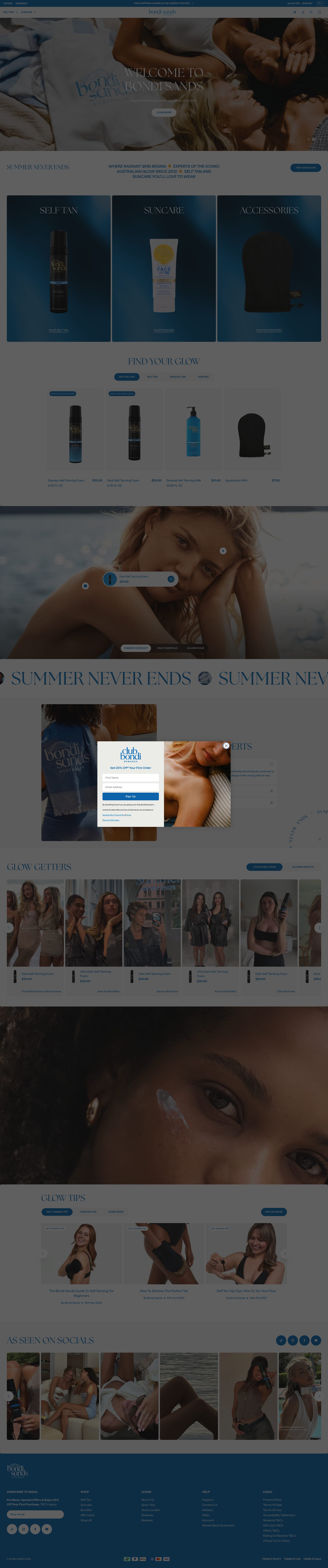
Bondi Sands runs a clean Shopify Plus store built around accessible tanning for first-time buyers. Their collection pages filter by shade intensity and formula type (foam, liquid, drops), which are the two variables a new customer uses to narrow down a choice. Most brands bury this filtering in a sidebar. Bondi Sands surfaces it as the primary navigation layer on collection pages, which reduces the time to a confident product selection.
Their PDPs include an FAQ section specific to each product, not generic tan FAQs recycled across the range. That tells search engines this page is the authoritative source on that specific product, and it tells buyers that the brand has anticipated their exact concerns. Subscription options are presented on product pages with a clear percentage saving and no buried small print, which lifts repeat purchase rates without relying on post-purchase email flows alone.
3. Tan-Luxe
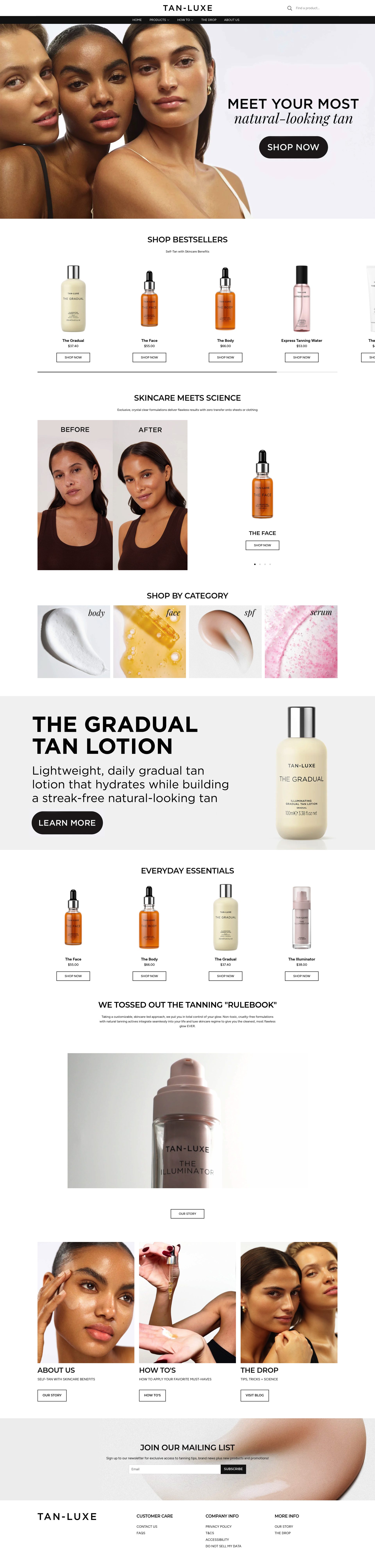
Tan-Luxe built their brand around the proposition that self-tan is a skincare product, not a cosmetic shortcut, and their Shopify store delivers that positioning throughout the buying journey. The product range is organised by skin concern as well as shade, which is unusual in the category and directly relevant to their target buyer: someone who already has a skincare routine and wants their tan to fit into it.
The product page structure for their drops (the format they popularised) explains the application formula: how many drops per body region, how to layer with existing serums, what to expect after 4 hours versus 8 hours. That level of instruction reduces post-purchase returns driven by misuse, which is a real problem in the tanning category. Their editorial content sits within the product discovery flow rather than in a separate blog section, so customers encounter education at the moment they are deciding rather than as an afterthought.
4. Isle of Paradise
Isle of Paradise's colour-drops format is a conversion asset and they know it. The homepage leads with the format itself, the three-shade system (Light/Medium/Dark), and the skincare ingredient story. That clarity at the top of the funnel filters out the wrong buyers and reassures the right ones within the first scroll. Their store does not try to be everything to everyone, which in a crowded category is a decision that pays off in lower return rates and higher repeat purchase.
Their PDP photography is shot in natural light across genuine skin tone diversity, and they make the distinction between their drops and their instant products explicit: the shade guide does not conflate gradual tan with express, which is a common point of confusion on competitor stores. The checkout experience includes routine-building prompts (application mitt, gradual lotion for maintenance), surfaced as a post-add-to-cart upsell rather than a full cross-sell grid, which keeps the purchase flow clean.
5. Tanologist
Tanologist positions itself as the accessible, ingredient-forward choice in the category. Their store's navigation is structured by skin tone first, which is the right move for a brand that leads on shade inclusivity as a differentiator. Collection pages load quickly and use a card layout that shows shade names and formula types without requiring a click-through, reducing the cognitive load of product selection.
Their product pages lean on ingredient transparency: hyaluronic acid, vitamin E, and natural DHA percentages are called out in the first visible section of the PDP, above the fold, rather than buried in a collapsible description tab. That placement matters because a customer who is already comparing formulas across brands will make the decision based on what they can see without scrolling. Bundle sets are priced with visible per-unit savings rather than just a total bundle price, which makes the value proposition obvious.
6. Loving Tan
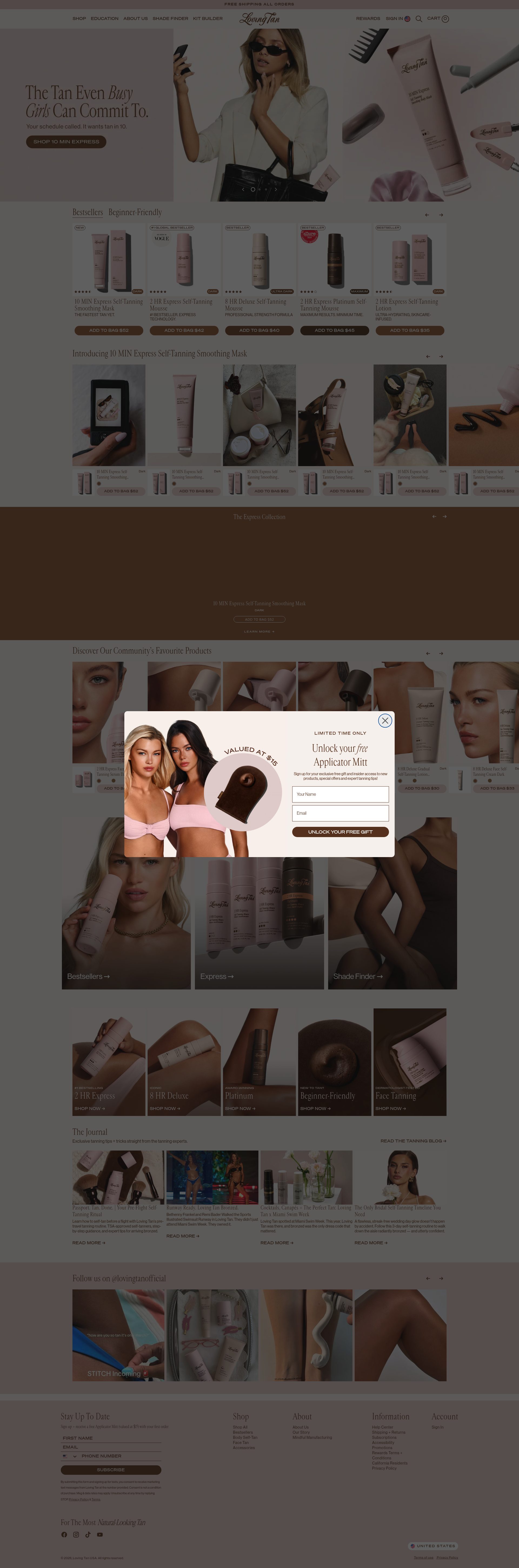
Loving Tan is an Australian brand with a strong DTC store that converts well in the UK market. Their homepage centres on application tutorials and before-and-after results, which shifts the conversion lever from brand recognition (which they lack in the UK versus St.Tropez) to evidence. That is the right strategic call for a challenger brand entering a market where trust is already allocated to established names.
Their "2 Hour Express" range is merchandised with a countdown-to-event framing throughout: wedding, holiday, event. That framing creates urgency without using a fake timer or discount mechanic, and it aligns the product benefit with the moment of purchase intent. The subscription mechanic is surfaced on product pages with a clear difference in cycle options (monthly, bi-monthly) and a one-click cancellation guarantee, which removes the hesitation that kills subscription uptake in beauty.
7. Fake Bake
Fake Bake has been in the category longer than almost any other brand and their Shopify store reflects a more considered, professional buyer. The navigation separates consumer and professional products clearly, which is functionally important: a salon buyer has entirely different needs to a first-time DTC customer, and mixing those two audiences in a single product grid creates confusion for both. Their trade account system is accessible directly from the main navigation rather than via a footer link, which signals that professional business is taken seriously.
Product pages for their professional range include dilution ratios, application timing, and spray tan machine compatibility, which are the exact details a salon technician needs to make a buying decision. That specificity is a competitive advantage: most fake tan brands write PDPs for consumers and treat the professional audience as an afterthought. Fake Bake's store demonstrates that understanding both audiences, and building distinct journeys for them, is worth the architecture investment.
8. Dripping Gold
Dripping Gold launched as an Irish brand and has grown into a strong DTC operator with a Shopify store built around its packaging aesthetic as much as its product. The unboxing quality of their products is a consistent talking point in customer reviews, and their store leans into that: product photography treats the packaging as part of the product story, and the gifting range is surfaced prominently rather than limited to a seasonal tab. That makes the store function well as a gift destination throughout the year, not just around Christmas.
Their shade naming system (Tanned, Tanned AF, Ultra Dark) is direct and unpretentious, which removes the ambiguity that plagues more cosmetically-framed shade descriptors. Application guides are embedded within product pages rather than linked out to a separate content hub, which keeps customers in the purchase flow rather than sending them elsewhere and hoping they come back. The loyalty programme is integrated into the account creation prompt at checkout, which captures programme sign-ups at the highest-intent moment.
9. MineTan
MineTan is an Australian spray tan brand operating a Shopify store that serves both trade and consumer markets. Their professional range navigation is structured by spray tan solution type (rapid, ultra dark, organic, competition), which reflects the taxonomy a trained technician uses, not the language of a consumer marketing team. That precision in category structure reduces the friction of finding the right product for a professional buyer who arrives with a specific requirement.
Their consumer range cross-links heavily with their spray tan training content, which is an unusual but effective strategy: customers who buy a spray tan machine are also prospective students for spray tan courses, and surfacing that link within the product journey increases lifetime value. Product pages include skin tone swatches with developed result photography for each solution, shot under consistent lighting, which makes comparison between products meaningful rather than decorative.
10. Utan
Utan operates a focused Shopify store with a clear USP: vegan, cruelty-free tan built around skincare ingredients. Their product pages lead with the ingredients story before the shade or formula, which is the right priority order for their target customer who will have already filtered for vegan status before landing on the PDP. The shade range is presented with a skin tone matching tool rather than just shade names, which reduces the selection barrier for customers who are unfamiliar with the brand.
Their store handles the body versus face distinction well: face tan products have separate application instructions, different active ingredient callouts, and separate shade matching guidance. Many brands mix body and face products in a single collection without explaining the difference, which creates confusion and returns. Utan's clear separation of those journeys is a straightforward fix that most competitors have not bothered to make, and it shows in their review sentiment around first-time buyer satisfaction.
If you sell beauty, skincare, or tanning products and your store is not converting at the level these brands achieve, the gap is usually in how your products are presented at the point of decision. See our Shopify design service or get in touch to talk through what we can build for your store.
Frequently asked questions
Which fake tan brand has the best Shopify store for first-time buyers?
Bondi Sands is the strongest option for first-time buyers. Their collection pages filter by shade intensity and formula type at the top level, which means a customer who does not know the difference between a mousse and drops can narrow down their choice without reading product descriptions. The product-specific FAQ sections on their PDPs also address the exact concerns a first-time buyer would have, rather than recycling generic tanning advice.
How do the best fake tan Shopify stores handle shade navigation?
The highest-converting stores treat shade selection as the primary job of the store, not a secondary filter. St.Tropez puts "Find Your Shade" in the top navigation rather than on product pages. Isle of Paradise makes the three-shade system (Light/Medium/Dark) the centre of the homepage. Utan uses a skin tone matching tool rather than relying on shade name alone. The common principle is that shade confidence has to be built before the add-to-cart, not after.
Do any fake tan brands on Shopify serve both professional and consumer markets well?
Fake Bake and MineTan both handle dual-audience stores effectively. Fake Bake separates consumer and professional navigation at the top level and includes dilution ratios, application timing, and spray tan machine compatibility on professional PDPs. MineTan structures their professional range by solution type (rapid, ultra dark, organic, competition) rather than using consumer-facing shade names. Both demonstrate that building distinct journeys for different buyers is worth the architecture investment.
What makes fake tan product pages convert better than average?
The highest-converting fake tan PDPs share three characteristics: on-skin swatch photography across a genuine range of complexions, ingredient callouts above the fold rather than in collapsed description tabs, and application instructions embedded in the product page rather than linked out to a separate content hub. Stores that send customers away from the PDP to find application guidance lose a measurable percentage of them. The instruction content needs to be in the purchase flow.
How do the best fake tan stores handle subscriptions and repeat purchase?
The most effective approaches avoid burying subscription options or leading with aggressive discount framing. Bondi Sands presents subscription on product pages with a clear percentage saving and no small print. Loving Tan includes a one-click cancellation guarantee on the subscription prompt, which removes the hesitation that typically kills uptake in beauty. Dripping Gold integrates its loyalty programme into the account creation prompt at checkout rather than promoting it separately, capturing sign-ups at the moment of highest intent.