

Quick summary
Dalstrong is the standout brand-builder in the knife category, with a series-based product architecture, thousands of verified reviews, and product pages dense with 360-degree photography and video. Knives & Tools leads on specialist retail depth, offering side-by-side comparison tools and granular filtering by steel type and blade geometry that serious buyers actually need. Japanese Knife Imports wins on provenance storytelling, presenting each knife as a document of the blacksmith and region behind it. Misen is the strongest direct-to-consumer pick for mid-market buyers, pairing transparent price-versus-quality claims with a subscription model and clean checkout experience.
Kitchen knives are one of the most technically complex products to sell online: the buyer needs to understand steel type, handle material, blade geometry, and intended use before committing, often at a price point between £80 and £500. The stores that perform in this category invest heavily in product education, trust signals, and navigation that mirrors how serious buyers actually shop. Here are ten doing it well.
1. Knives & Tools
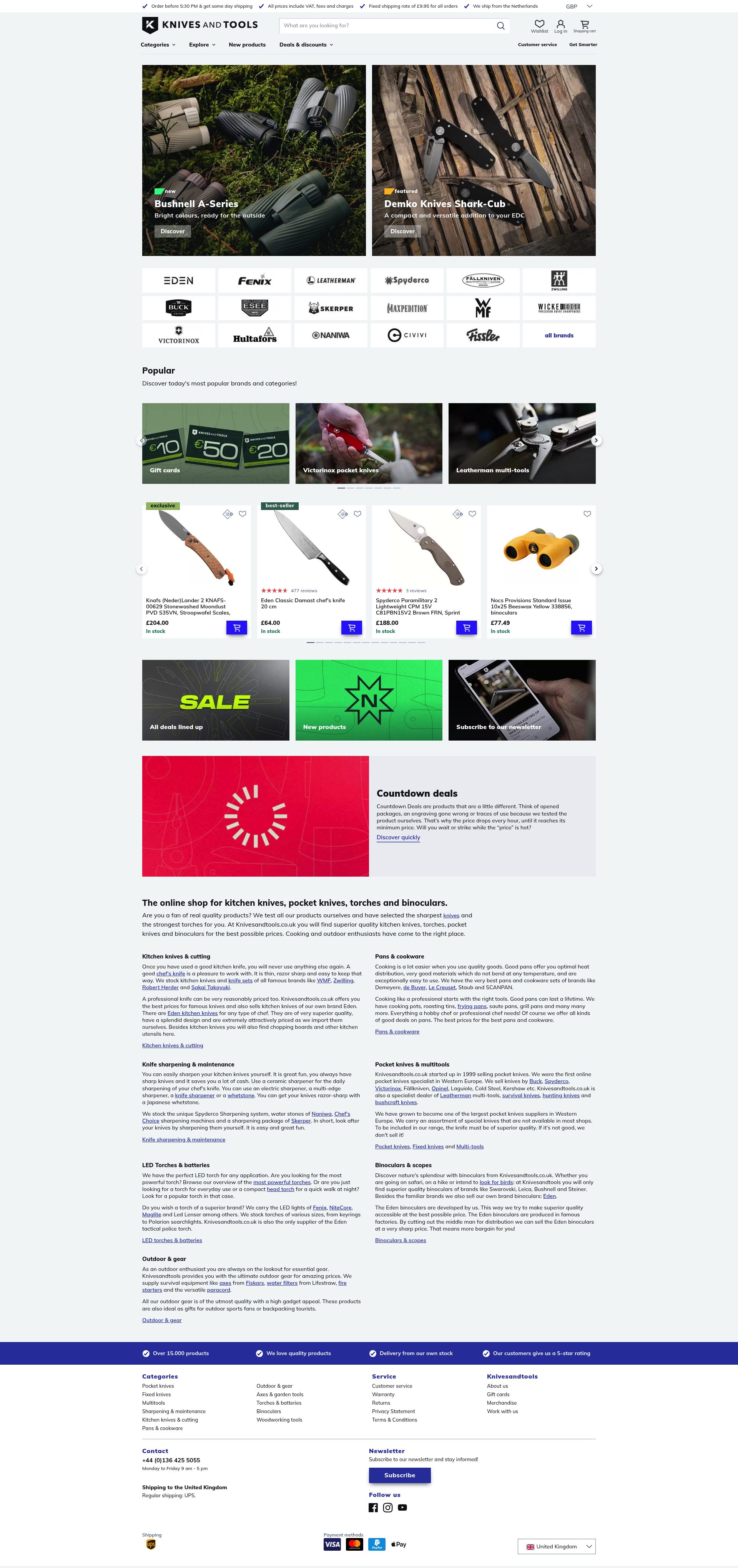
Knives & Tools is a Dutch-founded retailer that has built one of the most product-depth-rich knife stores on Shopify. Their filtering system is genuinely useful: buyers can narrow by blade steel, handle material, country of origin, and blade length simultaneously, which is the kind of specificity that separates a knife-focused store from a generic kitchenware retailer. Product pages include cross-section diagrams of blade profiles and steel hardness ratings alongside standard photography, giving informed buyers the data they actually want before purchasing.
Their review integration pulls in detailed customer feedback that mentions specific use cases, which reinforces trust for high-ticket purchases. The store also runs a comparison tool that lets shoppers stack two knives side by side on a single screen, reducing the friction that comes from tabbing between product pages. At higher price points, that kind of decision support directly lifts conversion.
2. Cangshan Cutlery
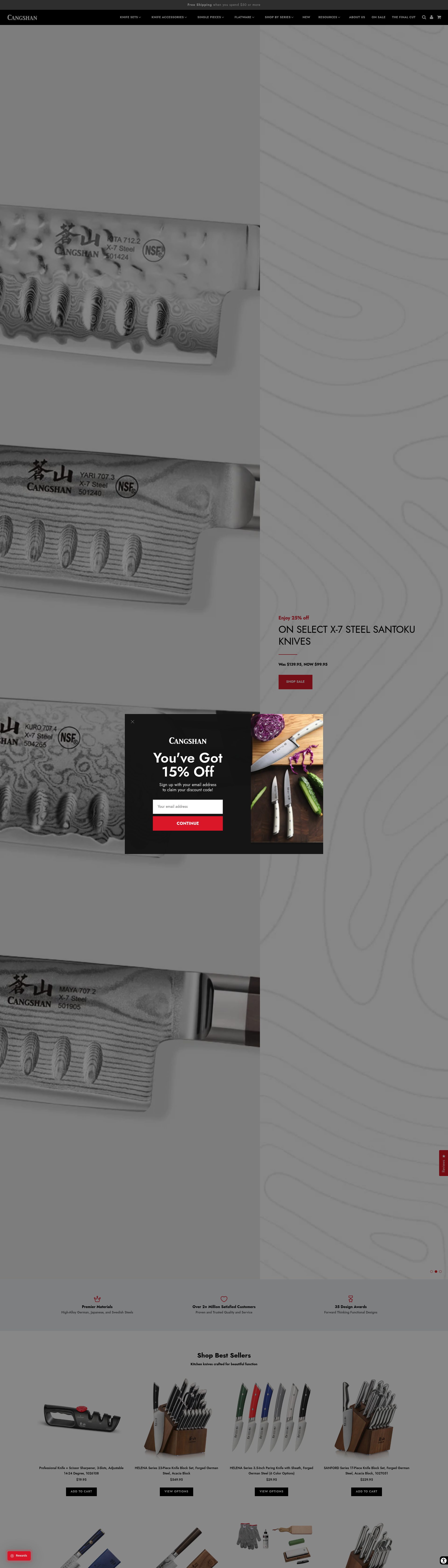
Cangshan has built a Shopify store that communicates craftsmanship without feeling like a catalogue. Their collection architecture separates knife series by steel type and aesthetic family rather than by product type alone, which works well for a brand with multiple distinct ranges. Each series has its own landing page with a narrative around the steel and forging process, which justifies the price difference between entry-level and premium lines.
Product pages include a custom-built sharpness and hardness scale displayed visually alongside the steel spec, which makes a complex purchasing variable immediately readable. Their gift sets are packaged clearly with recommended use cases, and the checkout experience surfaces engraving options during the basket stage rather than only as an upsell on product pages, which increases take-up. Cangshan's photography focuses on the blade geometry itself rather than the kitchen setting, reinforcing a tool-first positioning.
3. Misen
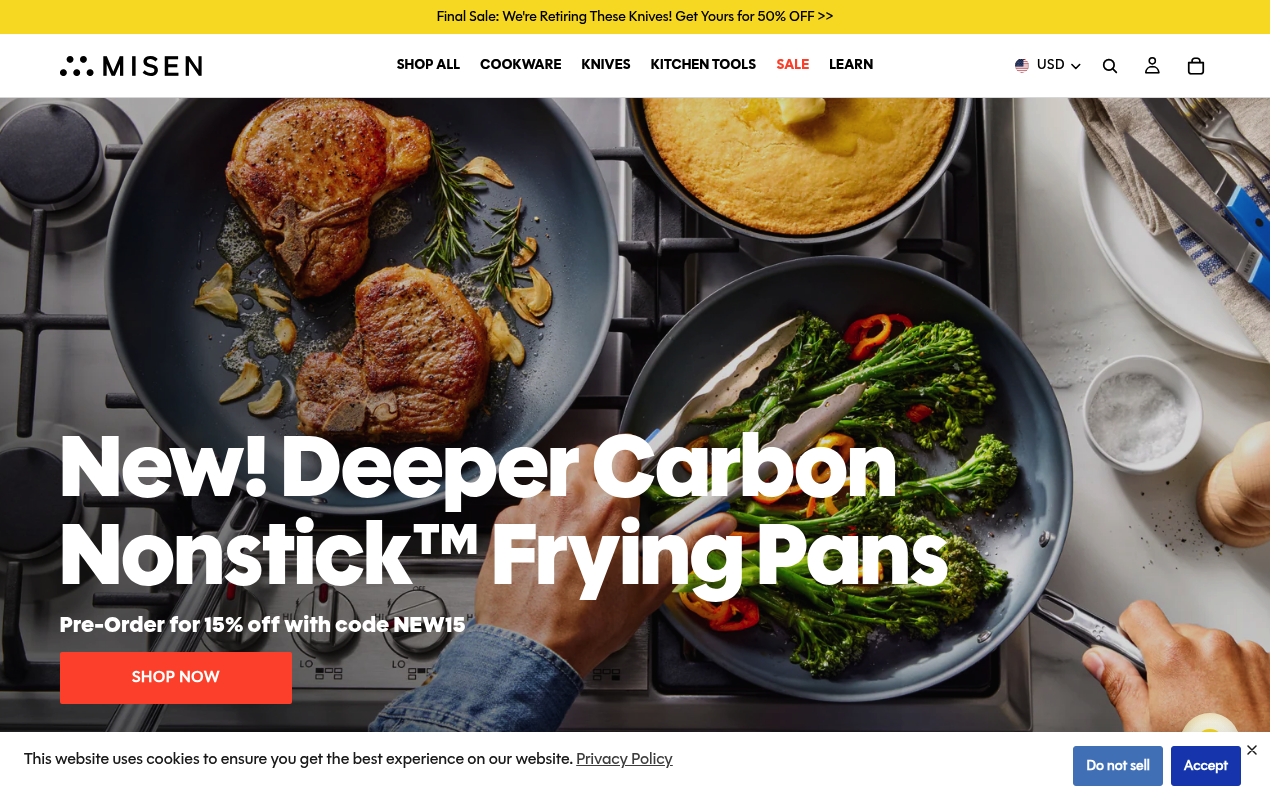
Misen launched as a Kickstarter brand and has carried that direct-to-consumer transparency into its Shopify store. Their core value proposition, quality-comparable-to-expensive-brands at a mid-market price, is communicated clearly on the homepage with comparison claims against well-known names. That kind of explicit positioning is a risk most knife brands avoid, but Misen backs it up with steel specifications and a satisfaction guarantee that make the claim credible rather than promotional.
The store's subscription model for their sharpenable knives and replacement handles is integrated directly into product pages with a clear cost-per-year breakdown, which reframes a one-off purchase as an ongoing value relationship. Their email capture is tied to a free knife guide rather than a discount code, which attracts buyers who are genuinely interested in the category. Checkout is clean, with free shipping thresholds surfaced persistently in the header.
4. Material Kitchen
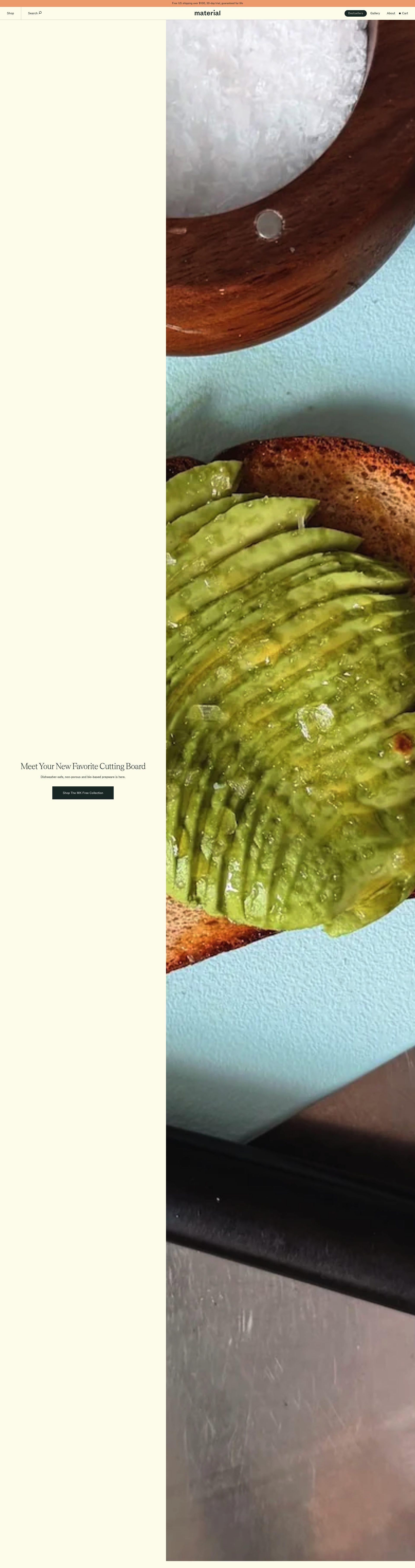
Material Kitchen is one of the few knife brands that has extended its Shopify store into a genuine lifestyle destination without losing conversion focus. Their colour-coordinated cookware and knife sets allow buyers to build a complete kitchen aesthetic in a single session, and the "Shop the Set" prompts on product pages are well-executed: they show the full kitchen context without being pushy. This cross-sell approach increases average order value meaningfully in a category where most stores only sell knives.
Their product page copy is written for design-led buyers rather than technical enthusiasts: the emphasis is on feel, weight balance, and how the knife sits in the hand, alongside the practical specs. That tone is the right call for a brand competing on aesthetics. Material's upsell mechanics on the cart page are minimal and relevant, which keeps the basket experience clean for a customer who has already made a considered choice.
5. Hedley & Bennett
Hedley & Bennett is primarily a chef apron brand that has expanded into knives and kitchen tools on Shopify Plus. Their knife section benefits from the brand's established credibility with professional chefs, and product pages reference specific chef partnerships and kitchen endorsements rather than generic "professional quality" copy. That specificity adds weight that most knife stores cannot replicate without genuine industry relationships.
Their store handles a product range spanning aprons, knives, and accessories without navigational confusion: the main menu is structured by product type with clear visual categories, and cross-sell recommendations are curated by profession rather than just popularity. Hedley & Bennett's photography is consistently high quality and restaurant-set, reinforcing the professional audience positioning. Their gift wrapping and gift note options are surfaced cleanly at checkout, which is relevant for a brand frequently bought as a professional gift.
6. Dalstrong
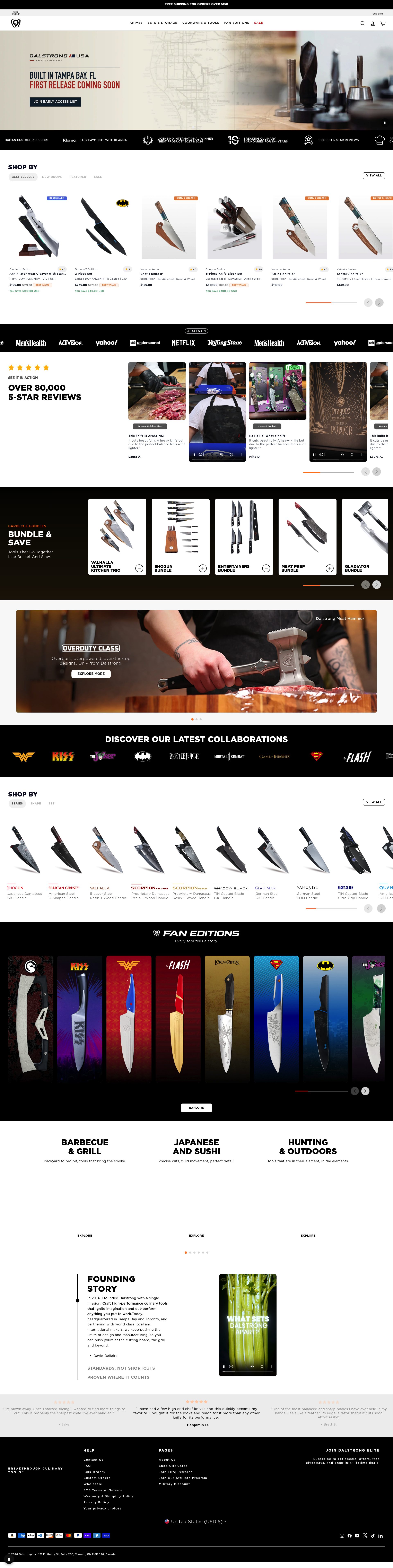
Dalstrong is the most aggressive brand builder in the knife category on Shopify. Their homepage leads with dramatic blade photography and series-name branding ("Shogun Series", "Shadow Black Series"), building a product identity language that makes range navigation intuitive for returning customers. Each series has its own brand story and aesthetic, which creates upsell logic: a buyer who starts with the Gladiator Series understands why the Omega Series costs more without needing it explained at length.
Product pages are some of the most detailed in the category: 360-degree photography, exploded views of handle construction, embedded video demonstrations, and packaging unboxing content. The review count on core SKUs is in the thousands, and Dalstrong surfaces the aggregate score prominently. Their bundle strategy is well-executed: knife rolls and storage solutions are bundled with knives at a visible saving, and the bundle pages are built as standalone collections rather than buried in the checkout. Cross-border: the store handles UK and EU currency and shipping cleanly, which matters for a brand with a strong US origin selling globally.
7. Victorinox
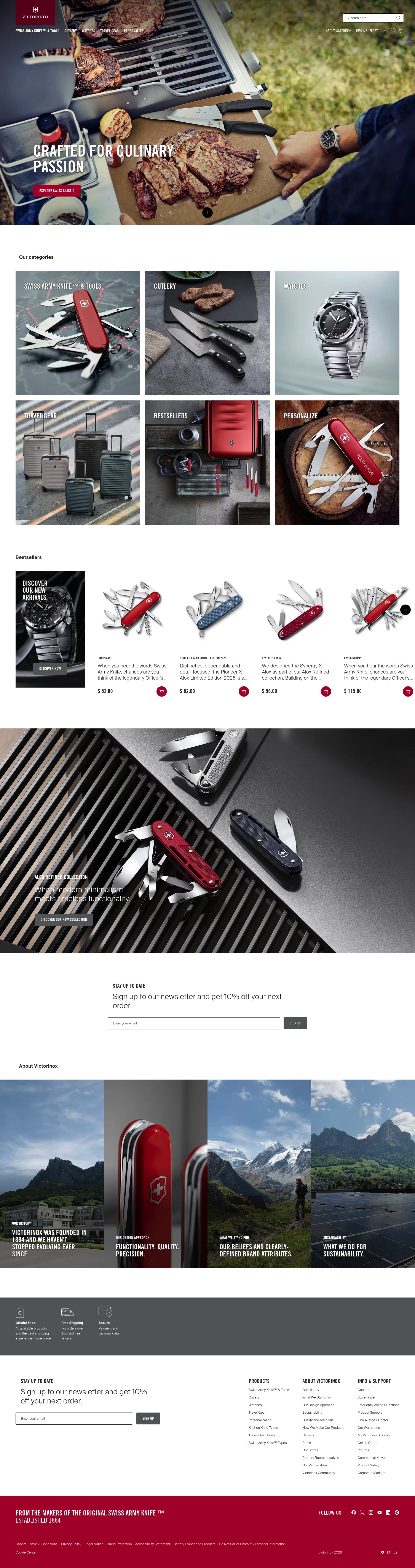
Victorinox runs a multi-category Shopify store covering knives, watches, and luggage, and their kitchen knife section handles that breadth without getting lost. The Fibrox and Grand Maître lines are clearly differentiated by use case on collection pages: professional kitchen versus home cook, with price and feature differences explained in plain terms. That segmentation reduces decision paralysis for buyers who know they want a Victorinox but are unsure which line.
Product page trust signals lean heavily on the Swiss-made provenance and the brand's 130-year history, both of which are referenced contextually rather than just in brand boilerplate. Their warranty information, lifetime sharpening guarantee for certain products, is surfaced on product pages rather than buried in FAQs, which is the right placement for a high-ticket category where after-sale confidence matters. Victorinox's site speed and checkout experience are clean at scale, which reflects the platform investment behind a brand of this size.
8. Japanese Knife Imports
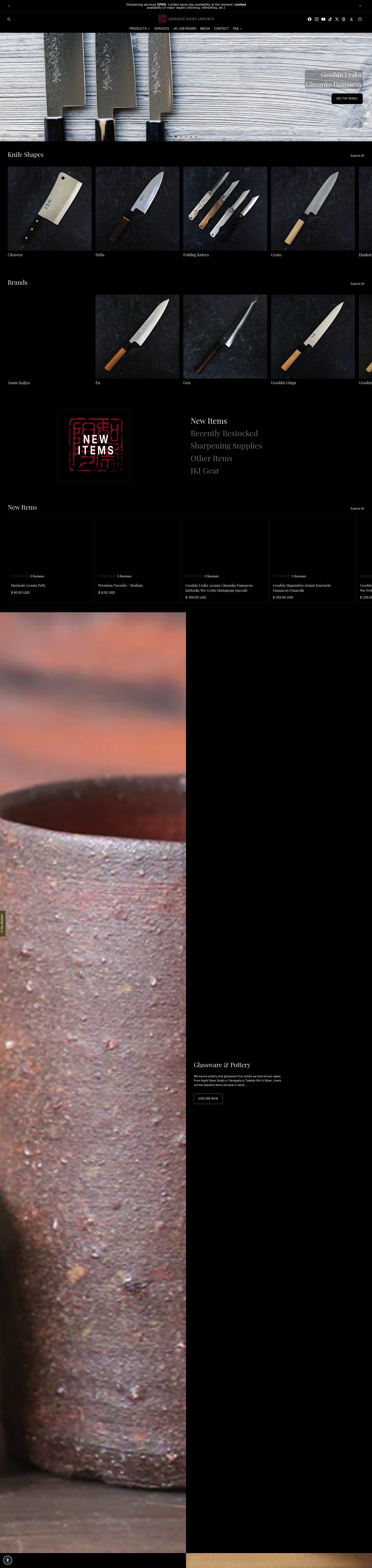
Japanese Knife Imports is a specialist retailer whose Shopify store is built entirely around the needs of an informed, enthusiast buyer. Their navigation allows filtering by blacksmith name, region of Japan, steel type, and knife style simultaneously, which is the level of granularity that serious buyers require and that generic kitchenware stores cannot offer. Each knife page includes the blacksmith's background, the region and forge where it was made, and the intended use in Japanese cooking, which transforms a product listing into a provenance document.
The store does not discount aggressively because the customer base is buying for craft value rather than price comparison. Instead, the conversion levers are information depth and the editorial knife-care guides that demonstrate expertise. Their custom sharpening and handle replacement service is listed as a separate offering on product pages, which extends the customer lifetime and positions the store as a long-term relationship rather than a single transaction.
9. Bob Kramer
Bob Kramer's store on Shopify sells collaborations with Zwilling rather than bespoke hand-forged pieces, which makes the store a commercial vehicle for an extremely high-value brand. The product pages are built around scarcity and provenance: limited run numbers, forge dates, and Kramer's profile as one of the few certified Master Bladesmiths in the United States are referenced throughout. For knives priced at £200 to £400, that context is not optional reading, it is the primary conversion argument.
The store is deliberately minimal in its product range, which reinforces the premium positioning. No filler products, no budget line. This keeps the average order value high and prevents the browse experience from diluting the brand signal. Email capture is positioned around new collection announcements and waitlist access, which builds a list of engaged, high-intent buyers rather than deal-seekers. Checkout handles international shipping clearly, which matters for a brand with a global collector audience.
10. Tojiro
Tojiro is a Japanese manufacturer that has taken its professional knife range direct-to-consumer via Shopify, cutting out the distributor margin and communicating product detail more precisely than a multi-brand retailer can. Their DP and Shirogami series are presented with full technical specification alongside practical guidance on who each series is suited to, and the copy is honest about maintenance requirements. A Shirogami carbon steel knife requires different care than a stainless blade, and Tojiro explains this on the product page rather than hiding it in the returns policy.
The store's pricing reflects factory-direct economics: equivalent quality at meaningfully lower prices than retail competitors. That value argument is stated clearly in the brand story section of the homepage, which gives buyers a reason to choose direct over Amazon or a multi-brand retailer. Product bundling follows professional logic: knife and compatible sheath, knife and whetstones, rather than arbitrary gift sets. The sharpening guides and maintenance content linked from product pages are genuinely useful rather than SEO filler.
If you are building or scaling a Shopify store in a high-consideration category like kitchenware, the decisions these brands have made around product page depth, navigation, and trust signals are worth studying closely. Talk to our team about Shopify design or explore our Shopify services.
Frequently asked questions
Which kitchen knife Shopify store has the best product pages?
Dalstrong has the most comprehensive product pages in the category, combining 360-degree photography, exploded handle construction views, embedded video demonstrations, and thousands of verified customer reviews. Japanese Knife Imports is the strongest pick if you are selling to enthusiast buyers who want blacksmith provenance and regional specifics rather than broad visual content.
How do kitchen knife stores handle the high-consideration purchase problem on Shopify?
The best stores use comparison tools, granular filtering, and inline steel specification data to give buyers the information they need without forcing them off the page. Knives & Tools offers side-by-side knife comparisons and simultaneous filtering by steel type, blade length, and country of origin. Cangshan displays custom sharpness and hardness scales visually on each product page, making a complex variable immediately readable.
What makes Dalstrong's Shopify store effective at scaling revenue?
Dalstrong uses a series-based brand architecture where each product line has its own name, aesthetic, and price tier, creating natural upsell logic between ranges without needing to explain the value gap at length. Their bundle pages for knife rolls and storage solutions are built as standalone collections rather than buried in checkout, which improves bundle conversion significantly compared to the standard approach.
Can a specialist knife store compete with Amazon on Shopify?
Yes, and the brands doing it best compete on trust signals and information depth rather than price. Japanese Knife Imports does not discount aggressively because its buyers are purchasing for craft value. Tojiro competes on factory-direct pricing with full technical transparency, and Bob Kramer uses scarcity and provenance messaging that Amazon cannot replicate. The key is giving buyers a specific reason to buy direct that a marketplace listing cannot provide.
What subscription or retention mechanics work well for knife stores?
Misen's subscription model for sharpenable knives and replacement handles is the clearest example in the category, presented on product pages with a cost-per-year breakdown that reframes the purchase as ongoing value rather than a one-off transaction. Japanese Knife Imports uses custom sharpening and handle replacement services listed on product pages to extend customer lifetime, positioning the store as a long-term relationship rather than a single-transaction retailer.