
Quick summary
GT's Living Foods is the standout pick for subscription mechanics and DTC authority, with a bundle builder and flavour quiz that handles a large SKU count without losing buyers. Jarr Kombucha is the best British independent in this list, running a subscription model built on identity rather than discount that is worth copying directly. Real Kombucha leads on premium positioning, with tea-provenance product naming and a gifting strategy that earns the £3.50-plus price point. Remedy Drinks has the most polished Shopify Plus build in the functional drinks space, with colour-coded flavour taxonomy and automatic multipack discounts that lift AOV without friction.
Kombucha is one of the fastest-growing segments in UK functional drinks, and DTC brands in this space face a specific set of ecommerce challenges: explaining fermentation to sceptical buyers, managing subscription churn on a product that needs consistent consumption to show benefits, and justifying a premium price point against supermarket own-brand options. The stores below handle those challenges well. Each has built a Shopify presence that earns the sale rather than hoping the product speaks for itself.
1. GT's Living Foods
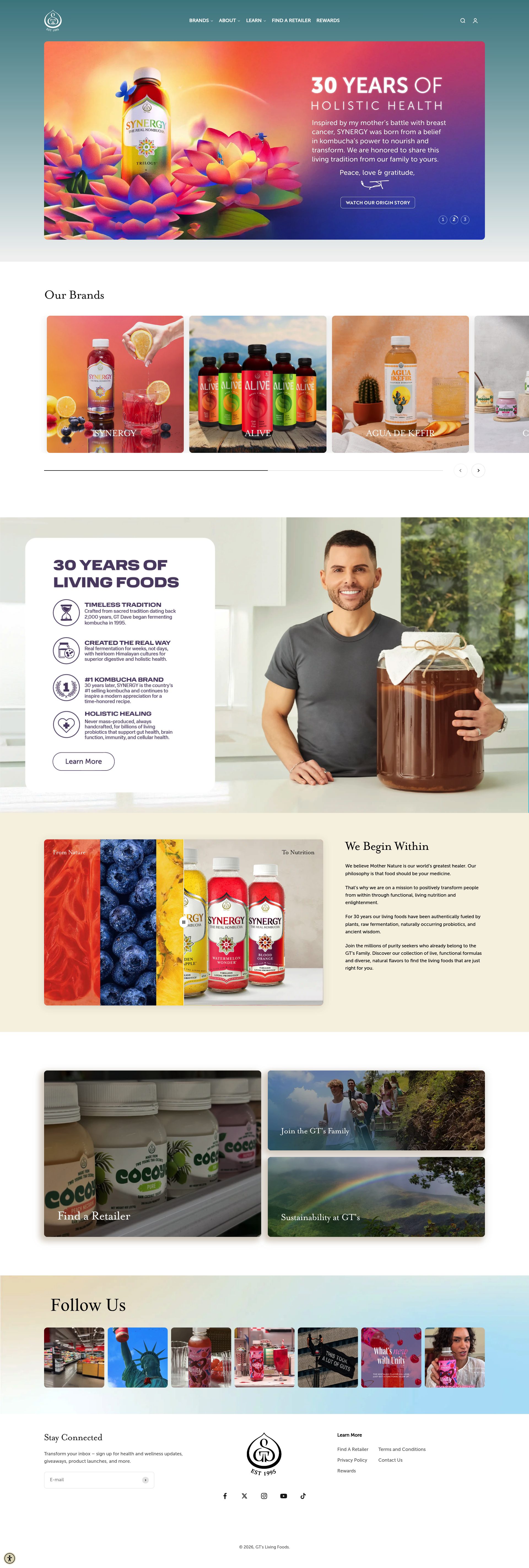
GT's is the category pioneer, and their Shopify store reflects the brand's authority without coasting on it. The homepage leads with origin story and founder narrative, which is a deliberate trust-building choice in a category where provenance matters. Product pages are structured around flavour and brew strength, with a flavour finder quiz surfaced prominently to reduce decision paralysis across a large SKU count. Subscription is offered on every PDP with a clear percentage saving and explicit cancel-anytime framing, which addresses the biggest objection to recurring FMCG purchases upfront.
The bundle builder is a strong average order value tool: customers can mix cases, and the interface makes it easy to select variety packs without navigating away from the current page. GT's uses educational content throughout the purchase flow, with short explanatory copy on live cultures and fermentation that builds confidence without slowing the journey to checkout.
2. Jarr Kombucha
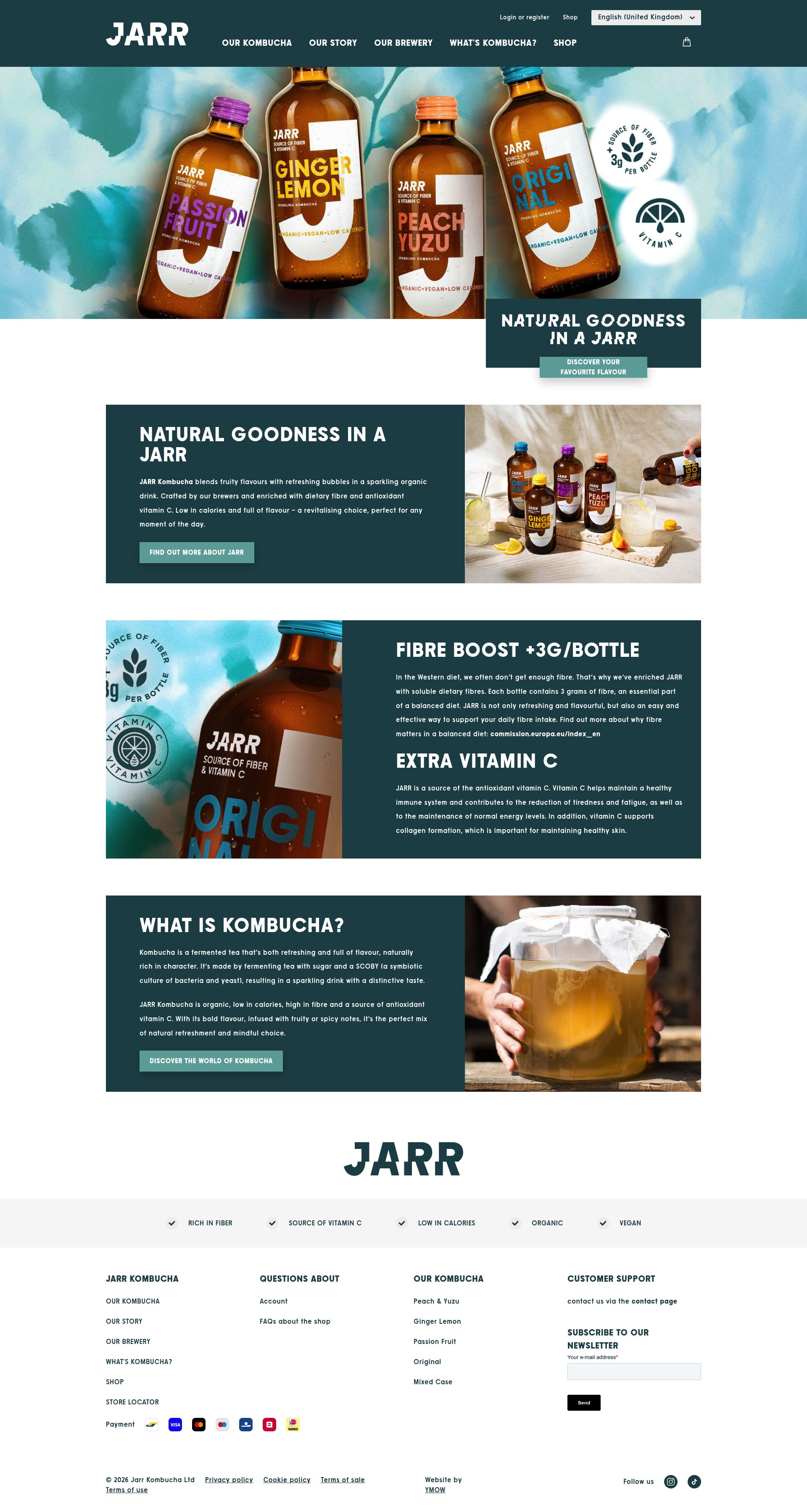
Jarr is one of the strongest independent British kombucha brands in DTC, and their Shopify store reflects a clear understanding of the London premium drinks buyer. The brand positioning is clean and confident: brewing credentials are stated factually (cold-brewed, unpasteurised, glass-bottled), and the product photography makes a strong case for the aesthetic side of a premium £3-plus drink. Navigation is tight, with a small SKU range displayed in a way that does not feel sparse.
The subscription mechanics are worth studying: Jarr presents subscriptions as "join the brew club" rather than "subscribe and save", which reframes the offer from a discount to an identity. That framing is visible across their email capture, product pages, and checkout. Their homepage features stockist information alongside DTC purchasing, which is the right call for a brand that sells across both channels and wants to avoid cannibalising retail relationships.
3. Remedy Drinks
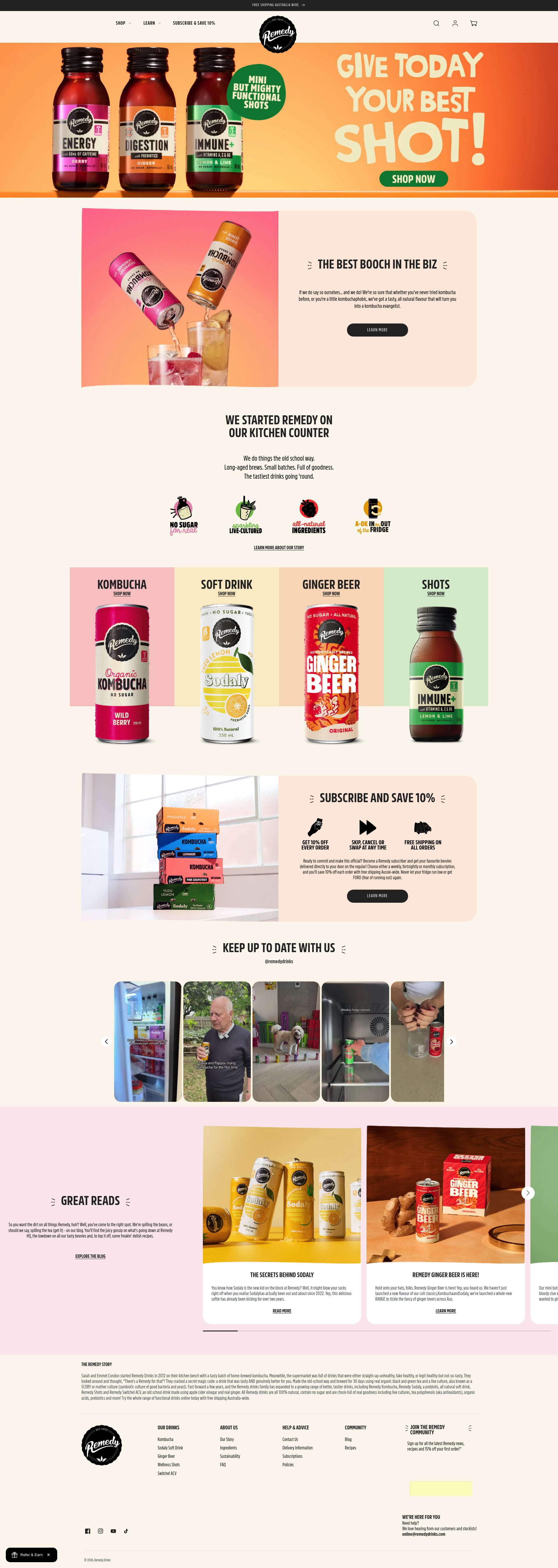
Remedy is the Australian brand that has built a strong UK DTC operation on Shopify Plus, and their store is one of the most polished in the functional drinks space. The "no sugar, live cultures" positioning is present on every collection and product page without being repetitive, and the health claims are made within UK advertising guidelines by being claim-adjacent rather than claim-explicit. That is a smart legal and conversion choice.
Their collection pages use colour-coded flavour taxonomy that makes it visually fast to identify flavour families across a large range. The PDP is structured with the nutrition panel above the fold on mobile, which reflects insight into the customer's primary concern (sugar content, calorie count) rather than leading with ingredient provenance. Multipack discounts are automatic at quantity thresholds, showing up as the price changes as customers update quantity, which is a low-friction upsell mechanic.
4. Jun's Kitchen
Jun's Kitchen is a UK-based raw kombucha brand with a deliberately artisan Shopify store. The store is simple by design: a small SKU count, prominent batch and brew date information, and a strong narrative about the Jun culture (a rarer relative of the SCOBY used in standard kombucha). The batch labelling approach is a genuine differentiator in a market where most brands position on flavour, and it creates a reason to return to the site to check what is new.
Product pages include fermentation and storage guidance as a default section, not hidden in an FAQ. That is the right call for a brand whose audience is educated and expects specifics. Order minimums and delivery windows are communicated early in the purchase flow, which reduces abandoned carts from customers who were not expecting a minimum order or lead time.
5. Equinox Kombucha
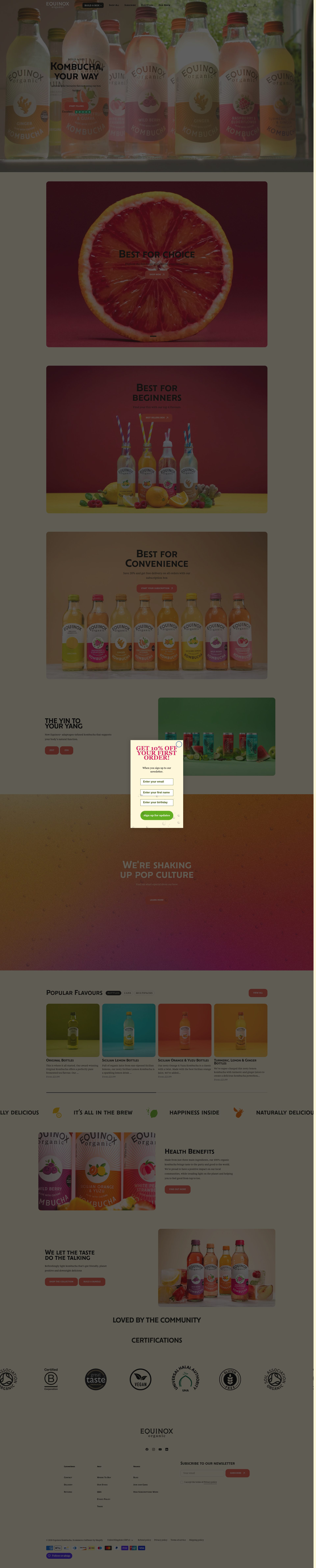
Equinox is one of the UK's most established kombucha brands and their Shopify store reflects the brand's maturity. The product range is wide: cans, bottles, and multipacks across a range of flavours, and the collection architecture handles this well without overwhelming the first-time buyer. A "start here" recommendation section on the homepage reduces decision fatigue for new customers who do not know which product to try first.
The store uses customer reviews with visible brew format and flavour preferences, which makes the social proof functionally useful rather than decorative. Equinox also surfaces their B Corp certification visibly throughout, which in the health drinks space is a meaningful trust signal to the target audience. Their trade and wholesale enquiry path is integrated into the same Shopify storefront, which means wholesale buyers land on a coherent brand experience rather than a separate B2B portal.
6. Real Kombucha
Real Kombucha has positioned squarely at the premium end: their brewing process uses whole leaf teas, they sell into restaurants and hotels, and their product photography is on-bottle and editorial in equal measure. The Shopify store makes this premium positioning credible from the homepage through to checkout. Product naming uses tea provenance (Dry Dragon, Royal Flush, Smoke House), and the PDPs explain the tea origin and tasting notes in the style of a fine wine merchant rather than a health food brand.
That is a deliberate conversion strategy for a customer spending £3.50-plus per 330ml bottle and needing a story to justify the price. Gift sets are built into the navigation, and the store surfaces them year-round rather than only seasonally, which reflects an understanding that premium kombucha is a regular gifting occasion. The subscription offer includes a printed tasting guide delivered with the first order, which reduces early churn by giving subscribers a reason to engage beyond the drinks themselves.
7. The Pressery
The Pressery is a UK cold-press and fermented drinks brand whose Shopify store handles a broader functional beverages range alongside kombucha. The collection page structure is clear: kombucha, kefir, and cold-pressed juice are navigable without confusion, and the brand ties them together under a consistent "functional, cold-pressed, alive" theme. The store is an example of how to manage a multi-category functional drinks range without diluting the individual product propositions.
Their PDP for kombucha is concise: flavour, format, culture information, and a subscription toggle. No overloaded content blocks. The subscription modal appears after adding to basket on the first visit, offering a saving without disrupting the add-to-cart flow for customers who do not want to commit. The checkout is localised well for UK buyers: delivery expectations and cold-chain packaging are explained in a persistent notification, which is important for a product where temperature integrity matters.
8. Momo Kombucha
Momo is a London-based kombucha brand that has built a strong community around their Bermondsey taproom and DTC store. Their Shopify site reflects that local identity: the taproom is referenced in the header navigation, and the homepage draws a clear line between the live venue experience and the home delivery product. For a brand built on local presence, that connection between physical and digital is important to the purchase story.
The product range is seasonal: limited-edition ferments appear throughout the year and are surfaced with appropriate urgency on the homepage. Their email capture is positioned as early access to seasonal releases rather than a generic discount offer, which attracts buyers who are interested in the product rather than those looking for a one-off saving. The store's checkout page includes a field for delivery notes, which sounds minor but matters significantly for a glass-bottled cold product that cannot be left on a doorstep in summer heat.
9. Better Booch
Better Booch is a US-based Shopify Plus kombucha brand with a strong DTC operation and a well-structured store. Their "better for you" positioning is backed up with specific numbers on PDP pages: live culture count, sugar gram comparison versus conventional soft drinks, and organic certification. That specificity is the right approach for a customer who has done some research and wants confirmation before purchasing.
Their subscription programme is surfaced differently to most: a dedicated "subscribe and thrive" page explains exactly what subscribers receive, when, and with what benefits, before asking for a commitment. Most subscription programmes ask customers to opt in from the PDP, which means the terms are skimmed. Better Booch makes the case for subscription first, then takes the customer to the product selection. Loyalty points are visible in the navigation and on the PDP, which keeps existing customers aware of their balance and creates a low-friction reason to repurchase.
10. Health-Ade

Health-Ade is a US Shopify Plus brand that has built one of the most ecommerce-mature kombucha operations. Their product photography is consistently high-quality across a wide range, and the visual consistency between collection pages and PDPs creates a coherent browsing experience. Flavour discovery is handled through a quiz that outputs a personalised case recommendation, which is a practical tool on a range of 20-plus SKUs where new customers face a genuine choice problem.
The checkout experience includes a smart upsell for their newly launched kombucha sodas, positioned as an add-on rather than a redirect. That is exactly the right use of post-add-to-cart upsell mechanics for a drinks brand: the suggestion is relevant, the price point is lower than the basket item, and the commitment required is minimal. Health-Ade also makes strong use of influencer and athlete partnerships surfaced directly on PDPs, with named collaborators and linked editorial content that adds credibility without cluttering the product information.
If your drinks brand is not converting at the level these stores achieve, the gap is usually product page structure, subscription mechanics, or brand storytelling in the buying journey. See our Shopify design service or get in touch to talk through what a well-built store looks like for your product.
Frequently asked questions
Which kombucha brands sell direct-to-consumer on Shopify in the UK?
Jarr Kombucha, Equinox Kombucha, Real Kombucha, Momo Kombucha, and The Pressery all run active UK DTC stores on Shopify. Remedy Drinks also operates a strong UK Shopify Plus storefront despite being an Australian brand by origin.
How do kombucha Shopify stores handle the subscription churn problem?
The strongest stores frame subscriptions around identity rather than discount. Jarr uses "join the brew club" language, and Better Booch runs a dedicated "subscribe and thrive" page that explains the full offer before asking for a commitment. Both approaches outperform the standard PDP opt-in because they reduce buyer uncertainty before the ask.
What makes a good product page for a premium kombucha brand?
Specificity on brew credentials (cold-brewed, unpasteurised, live culture count), sugar content above the fold on mobile, and flavour guidance that reduces decision paralysis. Real Kombucha's tea-provenance PDPs and GT's flavour finder quiz are the two best examples in this list.
How do kombucha stores justify a premium price point on Shopify?
Through brew provenance, specific nutritional claims (live culture count, sugar comparison versus conventional soft drinks), and brand storytelling that gives buyers a narrative to attach to the price. Real Kombucha uses fine-wine-style tasting notes; GT's leads with a founder origin story. Both are deliberate conversion strategies, not marketing decoration.
What subscription mechanics work best for DTC kombucha stores?
Clear cancel-anytime framing, a visible percentage saving on every PDP, and a first-order hook that creates engagement beyond the product itself. Real Kombucha sends a printed tasting guide with the first subscription order. Better Booch shows loyalty points in the nav so subscribers always know their balance. Both tactics reduce early churn by giving customers a reason to stay engaged.