
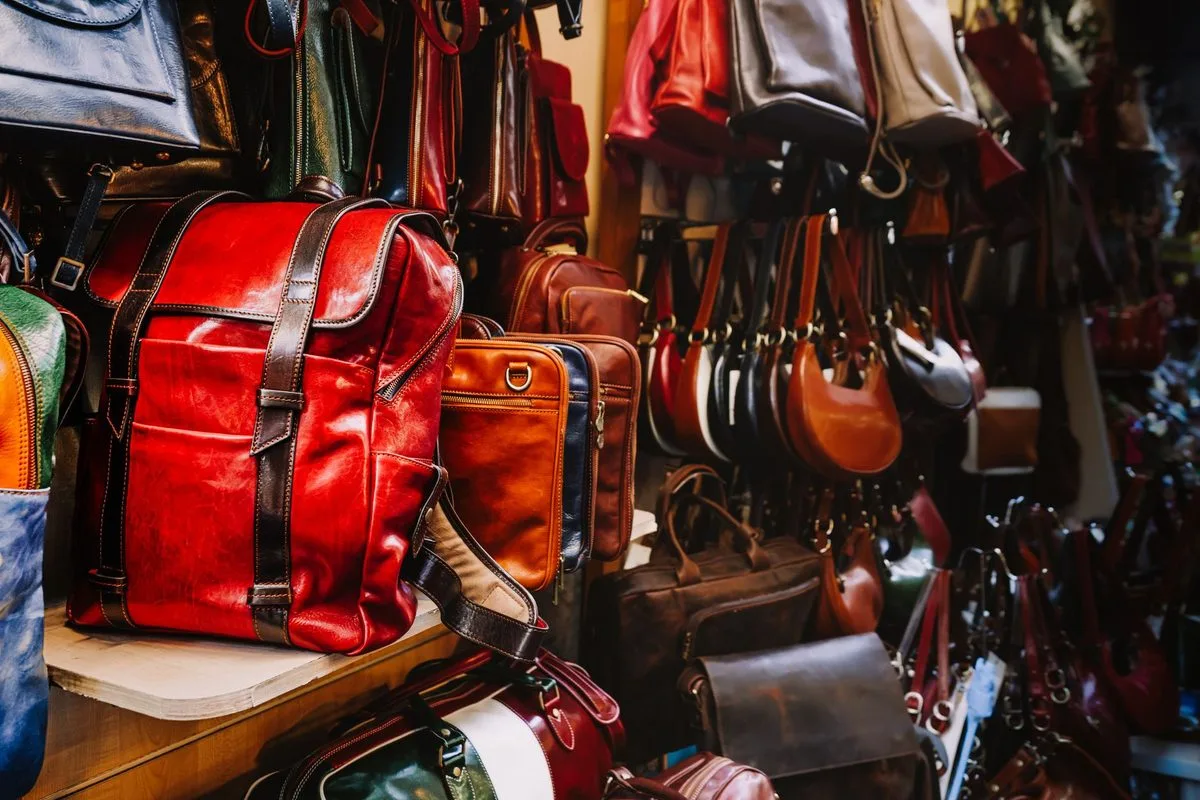
Quick summary
Portland Leather Goods is the benchmark for volume leather DTC: 400,000+ monthly visitors driven by grain-close photography and a tannery-proximity story that does real conversion work. Bellroy leads on functional transparency, with dimension diagrams and a cross-product comparison tool that shortens the decision for buyers choosing between similar SKUs. Popov Leather turns a basement-workshop origin into a trust asset, backed by a lifetime guarantee and hundreds of real-world customer photo reviews showing how full-grain hides age in daily carry. For luxury positioning, Lotuff Leather's deliberate absence of sales, discount codes, and countdown timers is itself a conversion signal — and it works at the £300–£1,000 price point.
Leather goods are one of the most demanding categories to sell online. Customers cannot feel the grain, test the weight, or smell the tannery — so every conversion decision comes down to how well the store communicates quality, provenance, and value. The Shopify stores below get this right: through photography, material storytelling, variant presentation, and trust signals that justify prices well above the high-street average.
1. Portland Leather Goods
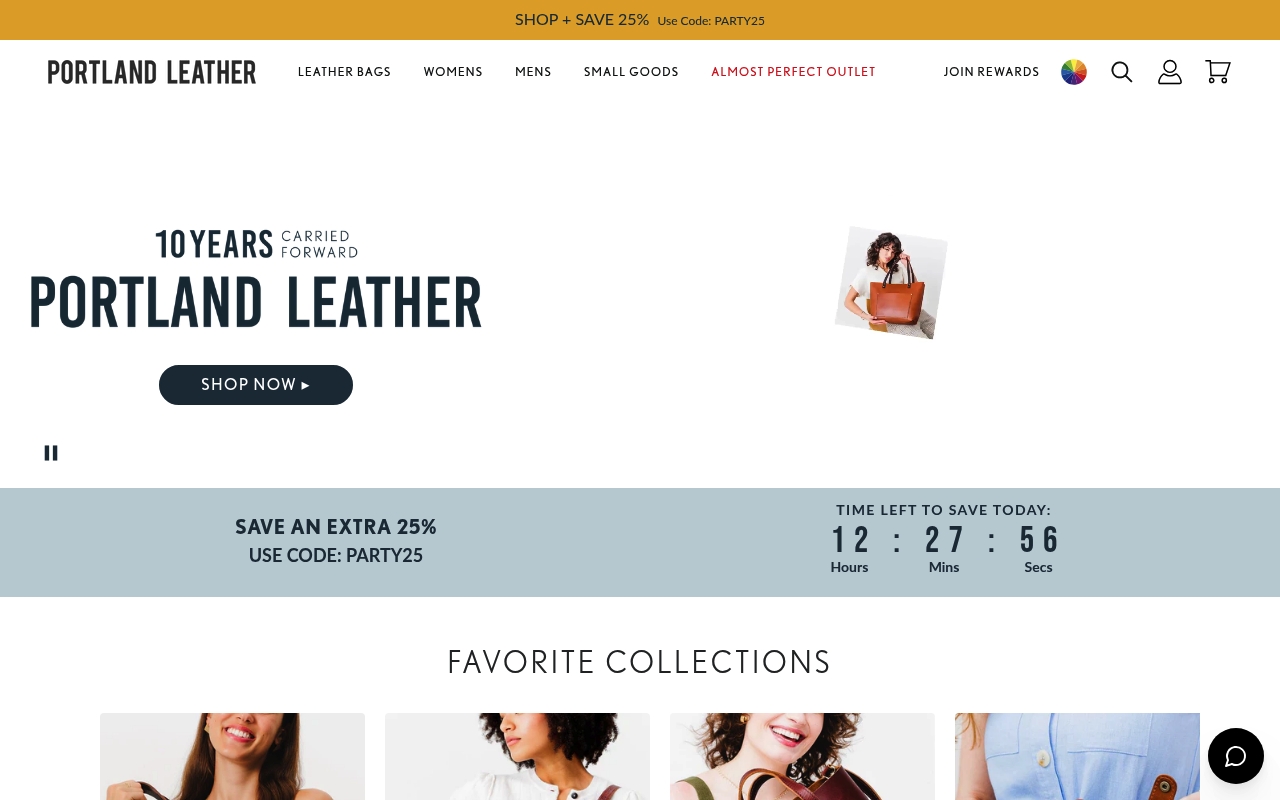
Portland Leather Goods has scaled to top-50 Shopify status on the back of a product page experience built around texture. Every bag is photographed in close-up to show grain, stitching, and edge finishing — customers know exactly what they are buying before they click add to cart. The store leans into its workshop story: all goods are made in a purpose-built studio near León, Mexico, using leather from tanneries less than two miles away. That specificity does real conversion work for sceptical buyers. Colour variant swatches are large and accurate, and a live reviews feed with photos from real customers reinforces quality claims across every PDP. With estimated monthly organic traffic over 400,000, the store is a benchmark for volume leather DTC done without sacrificing brand positioning.
2. Tanner Krolle
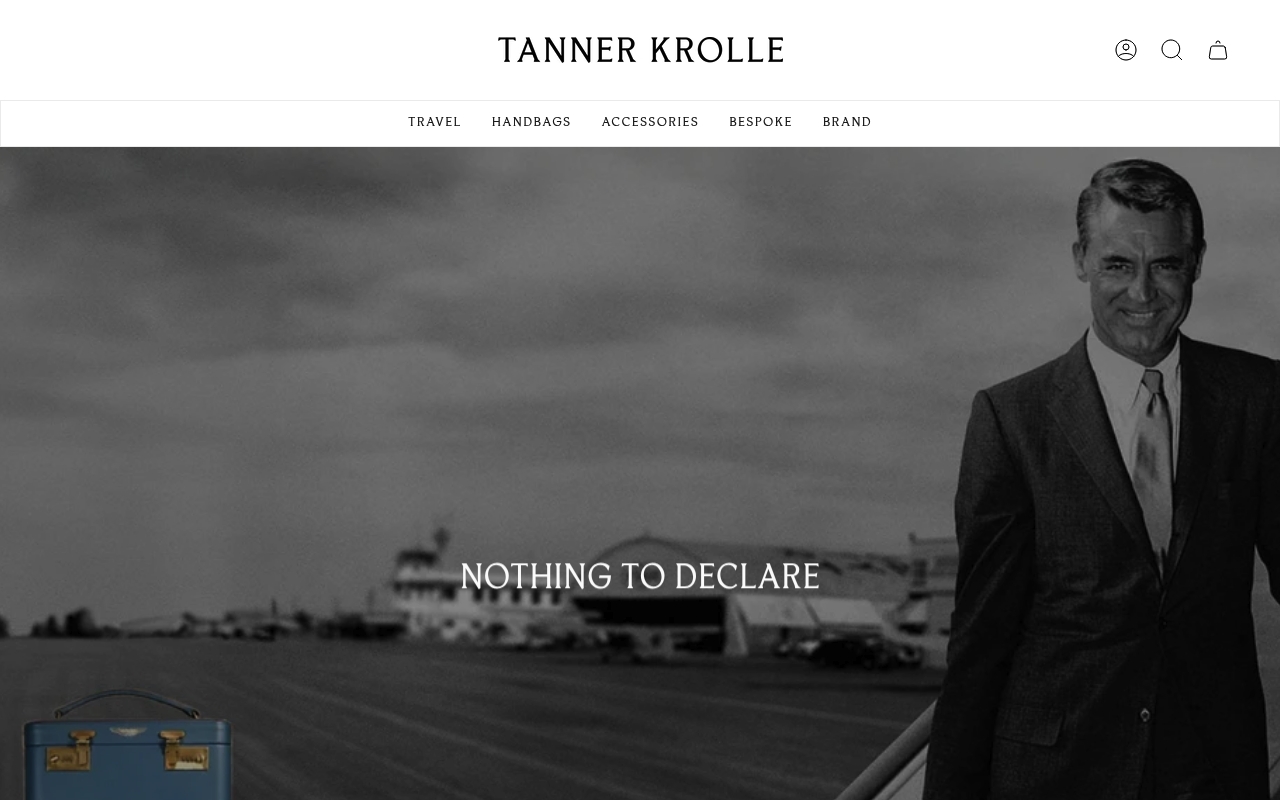
Tanner Krolle has been making leather luggage since 1856. Its Shopify store reflects that heritage without feeling stuffy — minimal layout, editorial photography, and product copy that prioritises material provenance over marketing language. Handbag and small leather goods pages specify hide origin, tanning method, and hardware grade, which reassures buyers at the £500+ price point where the store operates. The brand's Mayfair flagship feeds credibility back into the online store through location references and in-store appointment booking integrated directly into the site. For Shopify merchants in luxury accessories, Tanner Krolle is a useful model for how to translate physical retail authority into a digital experience without losing the premium positioning.
3. Bennett Winch
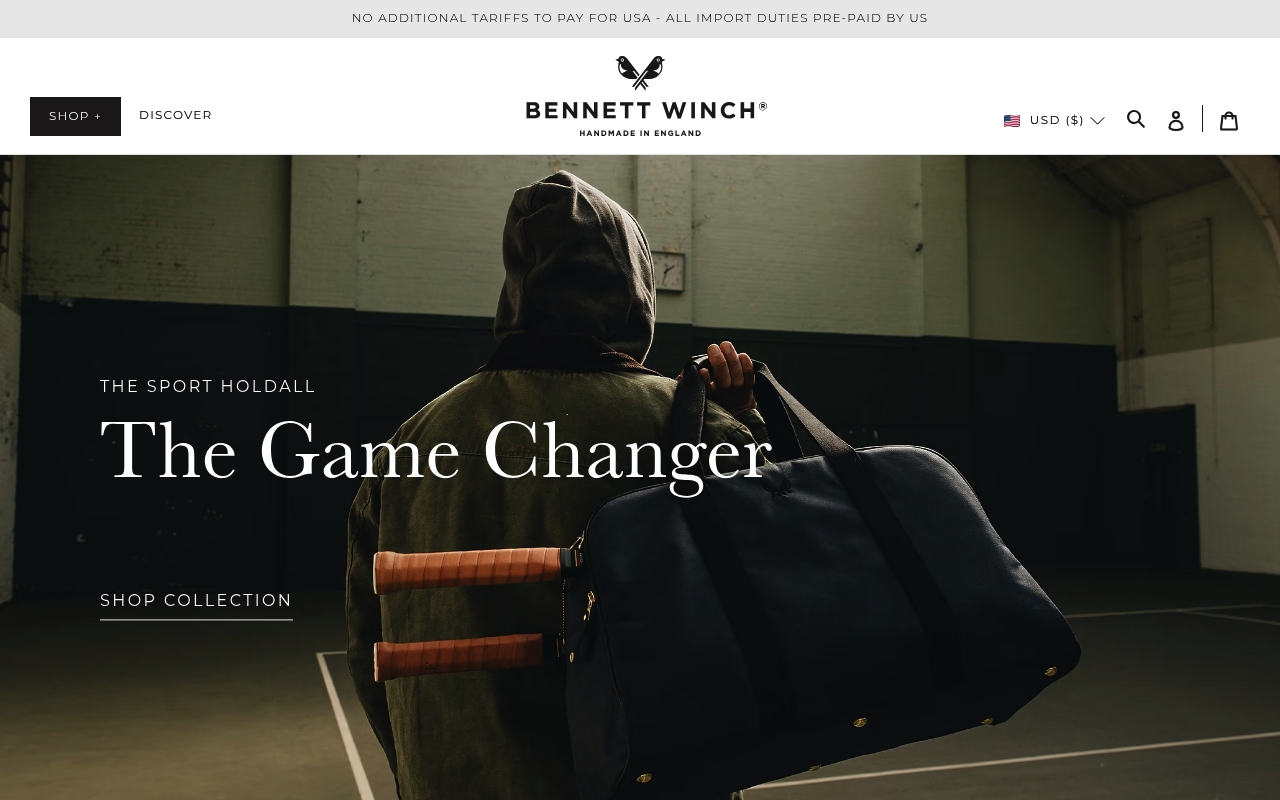
Bennett Winch makes every product by hand at its Hackney workshop in East London and at its facility in Carlisle. The Shopify store builds its entire proposition around this fact. Product pages include workshop photography showing craftspeople cutting, stitching, and finishing goods — these are not marketing assets, they are trust assets. The store also runs a small leather goods section called The Lab, which extends the range into cardholders, keyrings, and passport covers at lower entry price points, broadening the conversion funnel without diluting the brand. Gifting is handled well: product pages surface personalisation and gift note options early in the buying flow, which matters for a brand that does strong seasonal gifting volume. Shopify Payments integration is confirmed, and the checkout experience is clean and frictionless.
4. Popov Leather
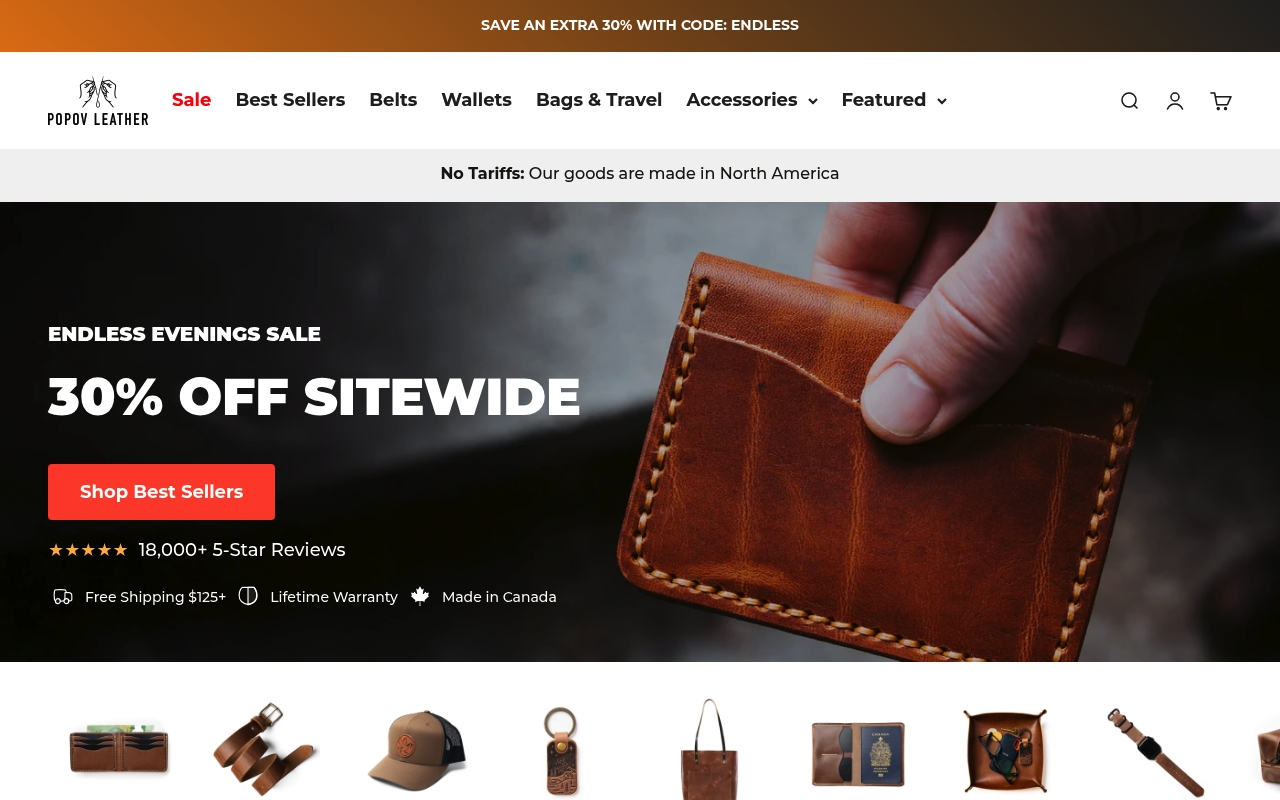
Popov Leather started in a basement in Nelson, British Columbia, and has shipped more than 100,000 orders from that same town. The Shopify store leans hard into this founder story, and it works — Ryan Popoff's face and voice appear throughout the site, from the about page to product videos. Every item is photographed showing the natural variation in full-grain USA leather, with honest copy about how the hide will age and develop a patina over years of use. This is smart for a category where customers often fear buying something that looks "used" — Popov reframes ageing as a feature and backs it with a lifetime guarantee on every product. The store's use of customer photo reviews is particularly strong: hundreds of real-world shots of wallets, belts, and bags after months of daily carry, which no studio photography can replicate.
5. Bellroy
Bellroy built its reputation on the wallet category and expanded into bags, backpacks, and phone cases without losing the core positioning. The Shopify store is one of the best-structured in the accessories space: every product page opens with a "what it holds" diagram showing exact internal dimensions and capacity, which removes the single biggest objection for functional carry goods. Material pages go into genuine depth about hide sourcing, environmental certification, and the difference between grades of leather — this kind of content builds trust and captures SEO traffic from buyers researching before they purchase. The store uses a comparison tool across its wallet range that surfaces differences in thickness, card capacity, and cash carry, which shortens the decision-making process for customers choosing between similar SKUs. Cross-sell is handled through complementary product carousels that stay relevant to the category rather than generic upsells.
6. Lotuff Leather
Lotuff Leather operates out of Providence, Rhode Island, where every bag is hand-stitched and finished in-house. The Shopify store reflects this at every point: product pages are sparse on text but dense on photography, with multiple angles showing saddle stitching, burnished edges, and brass hardware in detail. Prices run from £300 to over £1,000, and the store supports these figures through a "Made in Our Studio" section that shows the workspace and the craftspeople by name. There are no sales, no discount codes, and no countdown timers — a deliberate positioning choice that communicates permanence and quality. For leather goods merchants selling at the upper end of the market, Lotuff's restraint is instructive: the absence of promotional mechanics can itself be a conversion signal for buyers who associate discounting with brand weakness.
7. Holtz Leather
Holtz Leather's Shopify store is built around one differentiator: personalisation at scale. Every wallet, journal, belt, and keyring can be monogrammed or custom-stamped with initials, names, or short messages, and the personalisation interface on the product page is straightforward and quick to use. This makes the store particularly strong for gifting traffic, and the product photography reflects this — lifestyle shots of personalised goods as gifts are prominent throughout the site. Holtz also does well on product education: each listing specifies the exact type of leather used, whether that is full-grain, top-grain, or tooling leather, and includes care instructions on the PDP rather than buried in a separate FAQ. That level of transparency reduces post-purchase regret and contributes to the brand's strong repeat purchase rate.
8. Mismo
Mismo is a Danish brand that has built a genuinely international DTC business on Shopify from its Copenhagen base. The store's design is as minimal as the bags themselves: white space, large photography, and product copy that avoids adjectives and lets material specifications speak. The full-grain leather collection is merchandised with clear ageing notes — customers are told the exact hide origin and what to expect as the bag develops over years of use. Mismo's site handles multi-currency and multi-language without the typical friction of redirects, which reflects the brand's global reach. The "Companions for Life" positioning is carried through from homepage to checkout: the store's warranty and repair programme is highlighted on product pages, not just in the footer, making longevity a live purchase argument rather than an afterthought.
9. hardgraft
hardgraft designs and produces its leather goods in Italy, and the Shopify store treats that fact as a primary asset. Product pages open with the production location and material sourcing before moving to dimensions and price. The brand uses vegetable-tanned leather throughout, and the store explains the tanning process in plain language on a dedicated materials page, positioning hardgraft clearly against the chrome-tanned mainstream. Photography is dark, moody, and consistent — every image looks like it belongs in the same editorial shoot, which creates a strong brand impression across the catalogue. The store handles a relatively wide range: bags, wallets, phone cases, and tech accessories, all unified by the same material and production standards. The navigation is clean enough that customers moving between categories never lose the sense of a single coherent brand.
10. MacKenzie Leather Edinburgh
MacKenzie Leather Edinburgh has been handmaking bags, briefcases, and small leather goods on the Royal Mile since 1990, and it is the only five-star VisitScotland rated leather workshop in the city. The Shopify store translates this physical credibility well: product pages include the option to personalise each item with a choice of leather colour, lining, and fittings, with lead times clearly stated so customers know what bespoke actually means in practice. The craft story is told through workshop imagery and copy that names the master craftsmen rather than using generic "our artisans" language. For UK buyers looking for genuinely British-made leather goods, MacKenzie's store is one of the few that can substantiate every claim it makes. The gifting experience is strong too, with options to include a handwritten note and gift packaging presented clearly during checkout.
If your leather goods or accessories brand is ready to improve conversion or overall Shopify experience, our Shopify design service is built around exactly these kinds of commercial outcomes. Get in touch to talk through what your store needs.
Frequently asked questions
What makes a leather goods Shopify store convert well at high price points?
High-AOV leather stores convert by removing doubt about quality before the buyer reaches checkout. That means grain-close photography showing stitching and edge finishing, material provenance copy that names the tannery and hide origin, and social proof in the form of real customer photos showing the product in daily use over time. Generic lifestyle imagery and vague "premium quality" copy rarely justify prices above £200.
Which leather goods brands sell on Shopify?
Portland Leather Goods, Bellroy, Popov Leather, Holtz Leather, hardgraft, Lotuff Leather, Mismo, Tanner Krolle, Bennett Winch, and MacKenzie Leather Edinburgh all run their primary DTC operations on Shopify or Shopify Plus. Bellroy and Portland Leather Goods are among the highest-traffic examples in the category globally.
How important is personalisation for leather goods ecommerce?
For gifting-heavy leather categories — wallets, cardholders, belts, journals — personalisation is a meaningful revenue driver. Holtz Leather has built its entire store positioning around monogramming and custom stamping, and it shows in the proportion of gifting-intent traffic the store attracts. The key is surfacing the personalisation option early on the PDP, not burying it below the fold or in a separate FAQ.
How do leather goods stores handle the "can't feel the product" problem online?
The best stores solve this with four things: macro photography showing grain, stitching, and hardware in fine detail; honest copy about how the leather will age and develop patina; video showing the product being made or handled; and a strong return policy that removes the risk from the first purchase. Popov Leather's lifetime guarantee is a direct answer to this objection.
What Shopify features matter most for a leather goods store?
Variant presentation is critical — colour swatches need to be large and colour-accurate because hides vary and buyers know it. Metafields for material specifications (hide origin, tanning method, hardware grade) keep product pages structured without cluttering the theme. For personalisation, a custom line item properties setup or a dedicated app like Infinite Options handles monogramming without requiring custom development. High-resolution image zoom is non-negotiable in this category.