
Quick summary
Manilife is the standout: farm-to-jar origin storytelling and a variety pack entry point that converts without discounting. Pip & Nut leads on subscription UX, with a frictionless subscribe-and-save toggle and a product grid structured around flavour breadth. The Protein Works uses a bundle builder to drag nut butter into a sports nutrition basket, driving AOV beyond what a standalone store could manage. Sun & Seed earns trust with the most ingredient-transparent product pages in the niche, avoiding vague health claims in favour of specific processing-to-nutrition links.
Nut butter is a deceptively competitive Shopify niche. The category sits at the intersection of health food, sports nutrition, and premium grocery, and the best brands have built stores that reflect that complexity: they need to justify a higher price than supermarket own-label, handle a subscription model, and convert a customer who genuinely reads ingredient labels. Here are ten stores doing that well.
1. Pip & Nut

Pip & Nut's Shopify store is one of the cleaner examples of a food DTC brand making the case for buying direct rather than through a retailer. The homepage leads with flavour variety and bundle offers, not just a single hero product, which reflects the breadth of their range. Product pages carry nutrition information alongside ingredient storytelling, with specific callouts like "no palm oil" and "slow roasted" doing real work to differentiate from supermarket alternatives. Reviews are integrated into PDPs and surface specific use-case feedback (training, kids' lunchboxes, baking) rather than just star ratings. Their subscription offering is surfaced early in the product page with a clear saving mechanic, and the subscribe-and-save toggle is frictionless rather than buried in a separate flow.
The brand's visual identity translates well into ecommerce: bold colour per flavour makes the product grid scannable, and the navigation separates nut butters by nut type rather than just a single "shop" link, which is the right call for a range this broad.
2. Manilife
Manilife built its store around a single origin story: peanuts from a named farm in Argentina, processed to preserve a specific flavour profile. That specificity carries through the entire store. Product pages name the farm, describe the roasting process, and explain the difference between deep roast and original roast in terms a non-expert can understand. This is exactly the kind of content that earns trust at a price premium.
Their variety pack is prominently positioned as an entry point: it functions as a sampling mechanism without requiring the brand to discount, and it consistently appears in their bestseller positioning. The subscription model is woven into the product page naturally. Manilife also makes smart use of social proof: press mentions (Sunday Times, Observer Food Monthly) are pulled into the homepage in a way that signals credibility without feeling defensive.
3. Meridian Foods
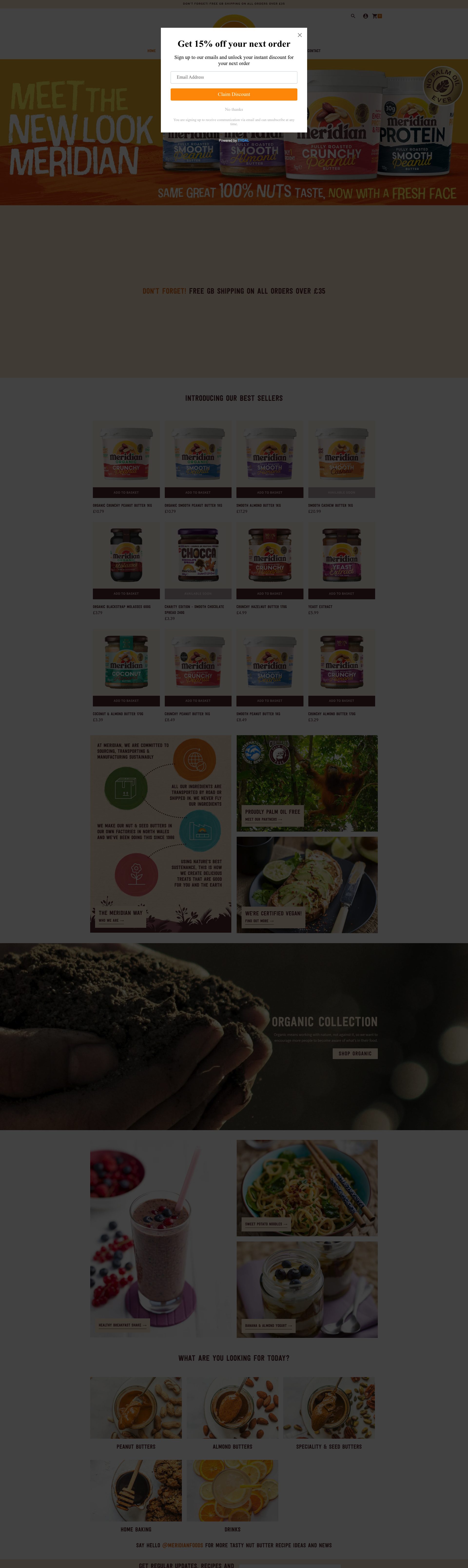
Meridian is a longer-established brand in the natural food space, and their Shopify store reflects a more functional ecommerce approach. Navigation is category-led and covers their full range (nut butters, syrups, oils), which requires clear filtering to avoid a customer getting lost. The product pages are clean and ingredient-forward, and Meridian's "no added anything" positioning is consistent throughout. The store handles multi-SKU product pages well: switching between sizes updates pricing without a page reload, which is a small UX detail that reduces friction on higher-volume purchases.
Their trade and wholesale section sits alongside the DTC offering without competing for attention on the homepage, which is a sensible structural decision for a brand that sells primarily through retailers.
4. Whole Earth
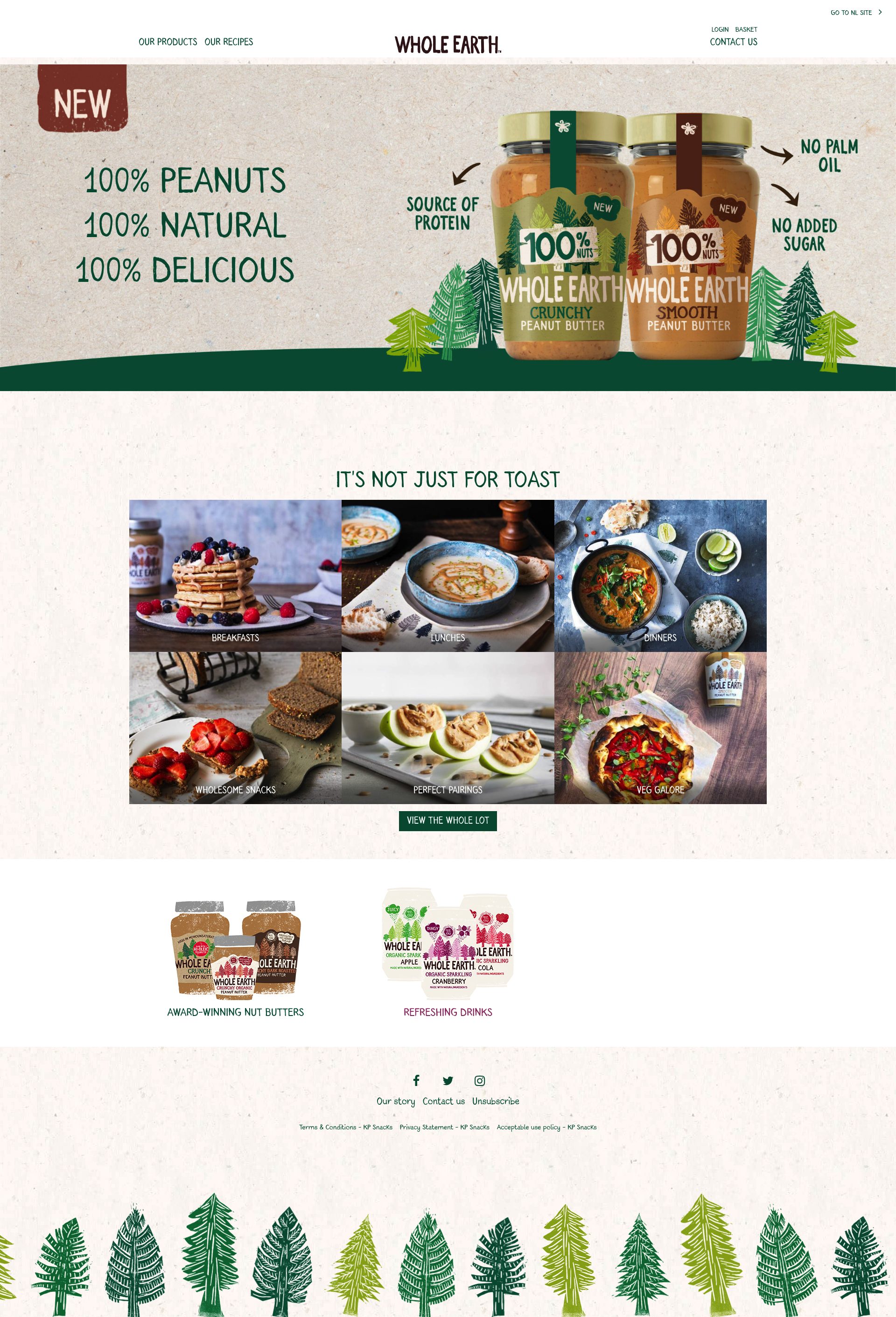
Whole Earth's Shopify store serves a broad audience: long-term natural food buyers who have used the brand for decades, alongside newer health-food shoppers. The store manages this by keeping product pages information-dense without being overwhelming: certifications (organic, Rainforest Alliance), flavour and texture descriptors, and serving suggestions are all present without competing for attention. Bundle deals and multi-pack pricing are surfaced clearly in the product page's price block, which is where the conversion decision actually happens rather than on a separate promotions page.
Whole Earth benefits from strong retail presence, and the store leans into that credibility rather than trying to displace it. The "where to buy" section points to major retailers alongside the direct purchase option, which is an honest approach that builds trust with a customer who might want to see the product in person before committing.
5. Treat Kitchen
Treat Kitchen's store crosses categories, covering nut butters, confectionery, and gifting, and they handle this breadth through strong collection page design. The gifting angle is central to their positioning, and product pages reflect this with gift packaging options, personalisation callouts, and "pairs well with" cross-sells. For nut butter specifically, the flavour combinations (sea salt caramel, dark chocolate almond) are photographed to appeal to a gifting purchase rather than a weekly grocery shop.
Their checkout experience includes gift message and gift wrap upsells that are timed correctly: appearing at cart review rather than at the final payment screen, which reduces last-minute friction. The store uses countdown timers and low stock indicators sparingly and in contexts where they are credible rather than as a blanket tactic.
6. The Protein Works
The Protein Works operates across a wide supplements and sports nutrition catalogue, and nut butter products sit within a broader high-protein food range. Their Shopify Plus store handles volume well: faceted filtering by goal (muscle building, weight management), flavour, and pack size keeps a large catalogue manageable. Product pages for nut butters carry macro breakdowns as a primary content block rather than buried in a nutritional table, which is the right decision for an audience that is counting protein and fat grams.
Bundle builders are a notable conversion mechanic on the store: customers can create custom protein bundles that include nut butters alongside supplements. This drives higher average order values and introduces customers to nut butter who may have arrived looking for protein powder. Subscribe-and-save discounts are aggressive (typically 15 to 25 percent off) and clearly positioned as the default option.
7. Nut Butter Everything
Nut Butter Everything is a smaller independent brand with a store that punches above its size. Their product range is focused: a handful of single-nut and mixed varieties, all made to order in small batches. The store makes this a feature: "made fresh to order" messaging appears on the homepage and in PDPs, framing the short product list as a quality signal rather than a limitation. Delivery expectations are set clearly at the cart stage (made-to-order lead times), which reduces post-purchase complaints.
The store's photography is honest rather than heavily styled: open jars, ingredient shots, and real texture photography. For a handmade food product, that authenticity works in favour of conversion. Their referral programme and "tell a friend" mechanic is surfaced in the post-purchase email sequence and on the account page, rather than on the homepage, which is the right placement for a retention mechanic.
8. Clearspring
Clearspring's store spans a wide range of Japanese and European organic foods, with nut butters as part of a broader health food offering. The Shopify store handles category breadth through a well-structured navigation that leads with diet type and cuisine rather than product type, which mirrors how their core customer shops. Product pages for nut butters carry both nutritional credentials and origin provenance: organic certification, country of origin, and processing method.
The store integrates recipes prominently in product pages, which is a conversion tactic worth noting: a customer arriving for a specific ingredient who finds a recipe they want to make is far more likely to buy. Clearspring links to recipe content from PDPs, which lifts both basket size and session depth.
9. Pip Organic
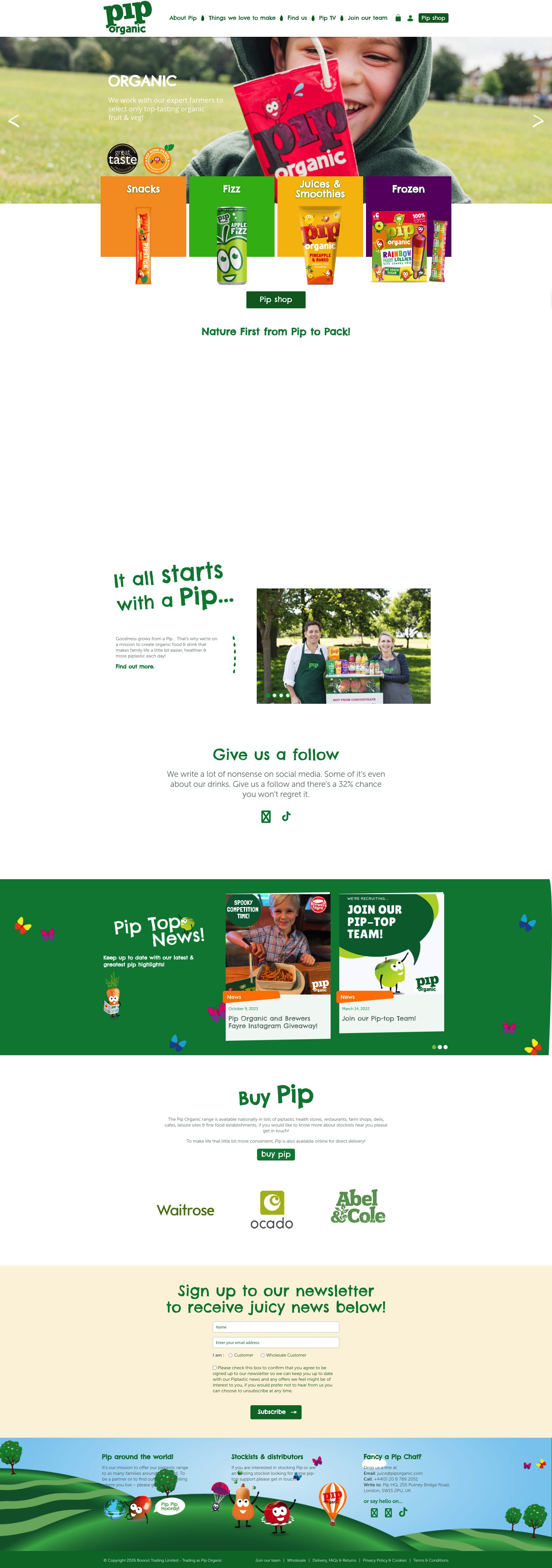
Pip Organic's Shopify store centres on children's and family health food, with a nut butter range positioned as a lunchbox and snacking staple. The product pages lead with age suitability and allergen information, which is exactly the right prioritisation for a parent purchasing audience. Ingredient lists are shown in full without being hidden behind a "see more" toggle, reflecting the store's transparency positioning.
Subscription bundles are presented with specific messaging around convenience for parents: "never run out", "easy to pause or cancel", and predictable monthly costs. The cancel-any-time copy is more prominent than on many subscription stores, which increases opt-in rates because it reduces the commitment anxiety. The store's colour palette and illustration style extend consistently from brand to pack to product page, creating a coherent customer experience that supports premium pricing.
10. Sun & Seed
Sun & Seed's store is built for a specific health-food customer: raw, sprouted, and organic ingredients processed at low temperatures. Every product page explains the why behind the method, with short paragraphs that link the processing decision to a specific nutritional outcome. This is content that earns trust with a customer who is already informed and sceptical of vague health claims. The store avoids generic "good for you" language in favour of specific claims tied to specific ingredients.
Their product photography uses a consistent flat-lay style that communicates the artisan nature of the products without looking amateur. Basket page cross-sells are matched to product type (seed butters paired with crackers and cereals), which is a smarter approach than generic "customers also bought" recommendations.
If your food or health brand is selling direct on Shopify and not converting at the level these stores achieve, the gap is usually product page structure and subscription mechanics. See our Shopify design service or get in touch to discuss what is possible.
Frequently asked questions
Do nut butter brands actually use Shopify, or do they use custom platforms?
Most UK nut butter DTC brands run on Shopify or Shopify Plus. The platform handles subscriptions via apps like Recharge or Smartrr, and the ecosystem of food-specific apps (nutrition labelling, bundle builders, recipe content) makes it a natural fit for the category. Larger brands like The Protein Works use Shopify Plus for the additional checkout customisation.
What subscription app do most nut butter Shopify stores use?
Recharge is the most common choice in this niche, used by brands like Pip & Nut and Manilife. It handles subscribe-and-save discounts, pause and cancel flows, and integrates cleanly with Shopify's native checkout. Smartrr is an alternative for brands on Shopify Plus who want more control over the subscription portal UI.
How do premium nut butter brands justify charging more than supermarket own-label on their Shopify stores?
The best stores in this niche justify the price premium through three content elements on product pages: named origin provenance (a specific farm or region), a specific processing claim (slow roasted, raw, sprouted), and a negative credential (no palm oil, no added sugar, no emulsifiers). Manilife names its Argentinian farm. Sun & Seed explains its low-temperature processing. Generic health claims without specificity do not convert at a premium price point.
What is the best way to structure a nut butter Shopify store's navigation?
For a focused nut butter range, organise navigation by nut type (peanut, almond, cashew, seed) rather than a single "shop all" link. This mirrors how customers search and makes the range feel broader. For stores with multiple categories like Clearspring or Treat Kitchen, lead with diet type or occasion rather than product type, since the customer's intent is the anchor point.
Should a nut butter Shopify store show "where to buy" links to supermarket stockists?
Yes, if the brand already has retail distribution. Whole Earth does this well: showing supermarket stockist links alongside the direct purchase option signals that the brand is established rather than hiding its retail presence. Customers who see a product in Waitrose or Holland & Barrett and then land on the DTC store are reassured by the consistency, and some will buy direct for the subscription discount.