
Quick summary
Pasta Evangelists is the standout UK pasta DTC operation — their Shopify Plus subscription flow, self-service account dashboard, and dual one-off shop make them the benchmark for fresh pasta online. Sfoglini wins on product specificity: shape-led navigation, chef collaborations baked into PDPs, and a Pasta Club subscription that converts food-literate buyers into recurring revenue. Gustiamo is the best example of provenance-led merchandising in the category, with producer-origin cataloguing and editorial content that drives both topical authority and conversion. Cipriani Food owns the premium gift segment, with hamper sets, clear international shipping, and packaging photography that treats the box as part of the product.
Pasta is a category where the gap between commodity and premium is enormous, and the stores that win online are the ones that close that gap on the product page, not in the brand guidelines. Whether it's a fresh pasta subscription built around weekly deliveries or an artisan dry pasta brand selling on provenance and bronze-die extrusion, the best pasta Shopify stores share one trait: they answer the customer's implicit question, "why pay more than the supermarket?", before the customer has to ask it.
1. Pasta Evangelists

Pasta Evangelists is the most studied pasta DTC operation in the UK, and their Shopify Plus store earns that attention. The subscription mechanic is built around a recurring recipe kit model: fresh pasta, sauce, and garnish delivered weekly or fortnightly, with a clear meal-for-two or meal-for-four format. The product pages communicate prep time (under five minutes) and portion size in the headline copy, which removes the two questions every kit buyer has before they can commit.
The onboarding flow for new subscribers is tightly sequenced. Preference selection, delivery cadence, and first box customisation are handled across three steps with a progress indicator, which keeps drop-off low through a journey that could easily feel long. The store also runs a parallel one-off shop for customers who want restaurant-quality pasta without a subscription commitment, and the pricing delta between the two formats is shown side by side, nudging repeat intent from the first purchase.
Retention mechanics are strong: subscribers can skip, pause, or swap boxes without calling support, with account management built into the dashboard rather than gated behind customer service. That self-service architecture reduces churn from subscribers who hit a logistics friction point rather than losing interest in the product.
2. Sfoglini
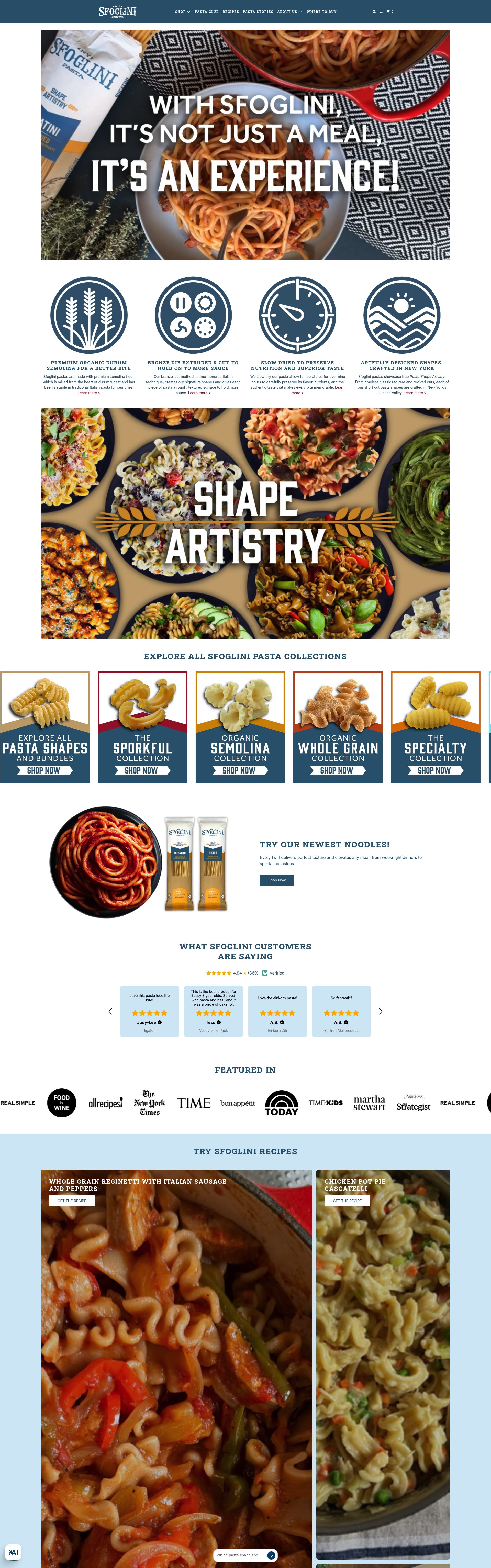
Sfoglini is a Brooklyn-based artisan pasta brand whose Shopify store is built around a simple but effective positioning: bronze-die extrusion, organic semolina, shapes you cannot find in a supermarket. Their product pages lead with the shape name, the sauce pairing recommendation, and the weight per pack, which is exactly the information a food-literate customer needs to make a decision. There is no generic "premium quality" copy because the specifics do that job more effectively.
The shop is organised by pasta shape rather than by flavour or format, which is the correct decision for a brand whose differentiation is the product itself. A customer arriving from a search for "cascatelli pasta" or "whole wheat fusilli" lands in a context that confirms they are in the right place immediately. Sfoglini also runs a subscription tier called the Pasta Club, with exclusive seasonal shapes and a flat monthly price, which converts engaged one-off buyers into predictable recurring revenue.
Their collaborations with well-known chefs and food publications (Serious Eats, Alison Roman) are referenced in product pages and site copy, not just in social media. That integration of earned credibility into the purchase environment gives the brand authority in a category where credibility is the primary price-point justification.
3. Gustiamo
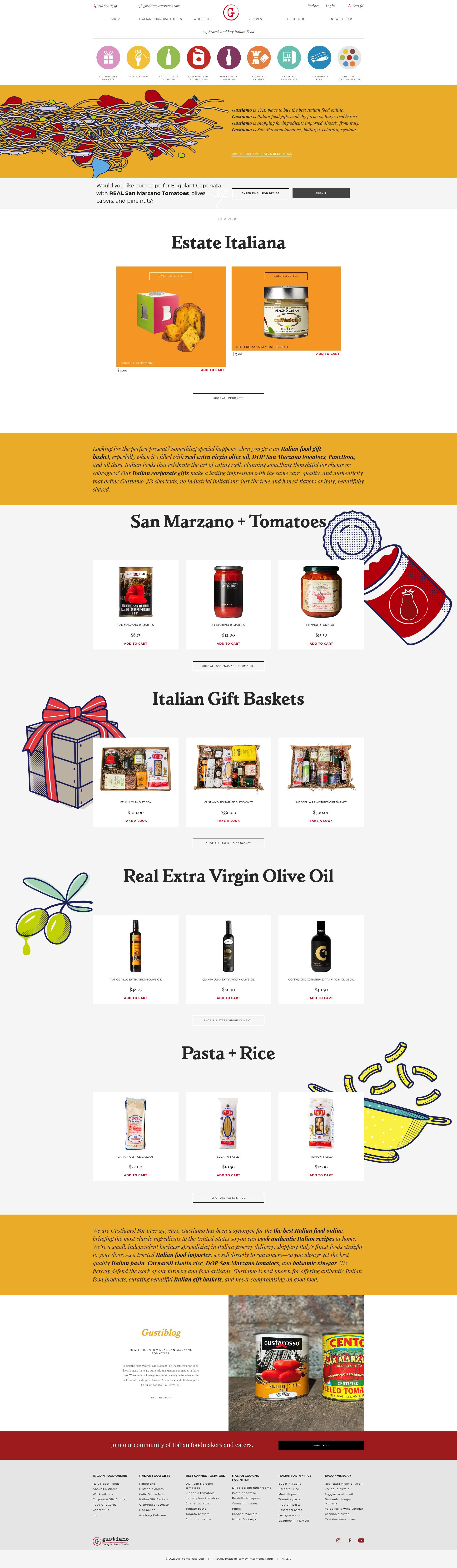
Gustiamo is a New York-based Italian food importer whose Shopify store represents one of the best examples of provenance-led merchandising in the food category. Their pasta range is small by design: a curated selection of Italian dry pasta from specific producers, each with a detailed origin story, a named farmer or miller, and a tasting note. That editorial approach to product presentation converts browsers who are genuinely interested in Italian food culture, which is also the customer most likely to spend at the premium end of the range.
The store structures its catalogue around producer origin rather than pasta format, which means a customer interested in a specific Sicilian producer can browse their full range in one context. That cross-sell logic is based on producer loyalty rather than product similarity, a meaningful difference from generic "you might also like" carousels. The content investment is considerable: blog posts, producer videos, and recipe content all feed into product pages via internal linking, which creates topical authority and increases the time a qualified customer spends on the site before converting.
Gustiamo's gift boxes and hampers are merchandised as a separate category with curated themes (pasta lover, Italian pantry starter) that remove the selection friction for gift buyers who know what they want to achieve but not what to pick. The boxes are priced at a range that spans gifting occasions from birthday to corporate, with clear contents listed rather than just a headline description.
4. Seggiano
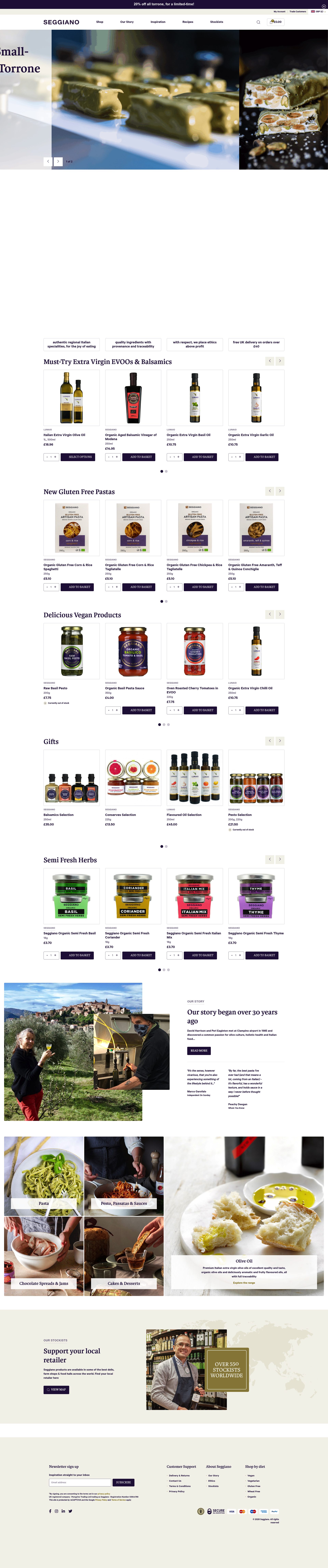
Seggiano is a UK Italian food brand with a Shopify store that handles a complex product range cleanly. Their catalogue covers pasta, sauces, olive oil, condiments, and antipasti, and the store manages that breadth by using a strong category architecture with cross-product bundle logic that keeps basket value high. The "complete meal" bundles pairing pasta shapes with matching sauces are a direct response to a genuine customer need: high-quality Italian cooking simplified into one decision.
The brand's positioning around health and clean ingredients is carried through product pages consistently: no refined sugar, no additives, and organic certification details are present on every relevant PDP rather than only on a dedicated values page. That placement matters because it reaches customers at the moment they are making a purchasing decision, not just customers who are already persuaded. The imagery throughout uses a warm, Mediterranean aesthetic that reinforces the brand positioning without overpowering the product information.
Seggiano's subscription option for their staple products (premium olive oil, pasta sauces) is presented at the product level with a clear price saving, which is the correct conversion architecture for consumables. The trade and wholesale section is accessible from the main navigation, which captures the B2B buyer journey without creating a separate site experience that fragmentsthe brand identity.
5. Garofalo
Garofalo is one of the most respected Italian pasta producers, and their UK DTC Shopify store demonstrates how a heritage brand translates its values into ecommerce without losing authenticity. The product pages centre on the Gragnano PGI designation: the geographical indication that certifies the pasta's origin in the Naples region and the bronze-die production method. That certification is explained in brief copy on every product page, giving a customer unfamiliar with Gragnano a specific reason to pay more than standard supermarket pasta without requiring them to seek that information elsewhere.
The store's design reflects the brand's century-old heritage through typographic choices and restrained product photography that places the pasta itself in focus rather than lifestyle imagery. That decision is deliberate: Garofalo's customer is buying a specific culinary product, and showing the pasta clearly — shape, texture, colour — is the primary conversion signal. The size range (500g and 1kg) is presented with per-unit cost comparison, which handles the common price objection before it becomes a checkout abandonment reason.
6. La Molisana
La Molisana's UK Shopify presence shows how a major Italian producer approaches DTC when the goal is brand building alongside revenue. Their product range covers over 200 pasta shapes, and the store uses a filter system by shape category (long pasta, short pasta, special formats, whole wheat) that makes navigation workable at scale. The individual product pages include a shape-specific recipe suggestion with the pasta's optimal sauce pairing, which lifts engagement and provides practical value that a supermarket shelf cannot replicate.
The brand's story around the Molise region, wheat sourcing, and 1912 founding is integrated into the about section with specific detail rather than vague heritage claims. That specificity is the difference between credible provenance and generic Italian-brand copy. La Molisana's gifting range, which packages multiple shapes into curated sets with recipe cards, uses the same regional story as a gift narrative, making the premium over a supermarket pasta gift set legible and convincing.
7. Natoora

Natoora is a UK fruit and vegetable specialist whose Shopify store has expanded into one of the better online sources for Italian fresh pasta and pantry staples. Their approach to pasta merchandising is rooted in seasonal availability: the products on the site are genuinely limited to what is available from their supplier network at that moment, and the copy makes that scarcity a quality signal rather than a logistics problem. A customer buying fresh pasta from Natoora understands they are purchasing something closer to a market find than a warehouse product.
The product pages are information-dense in a way that rewards the food-literate buyer: producer name, region, ingredients, and handling advice are all present without requiring a second click. That depth of information is particularly effective for fresh pasta, where the customer is paying a significant premium and needs specific reassurance about quality and shelf life. The subscription model for produce boxes includes pasta and Italian pantry items as regular additions, which integrates pasta into a broader relationship between the customer and the brand.
Natoora's editorial content, including producer profiles and seasonal recipe guides, is linked from product pages in a way that adds context without distracting from the conversion path. That balance between content and commerce is difficult to execute at the product page level, and Natoora manages it more cleanly than most food brands of their size.
8. Daylesford Organic
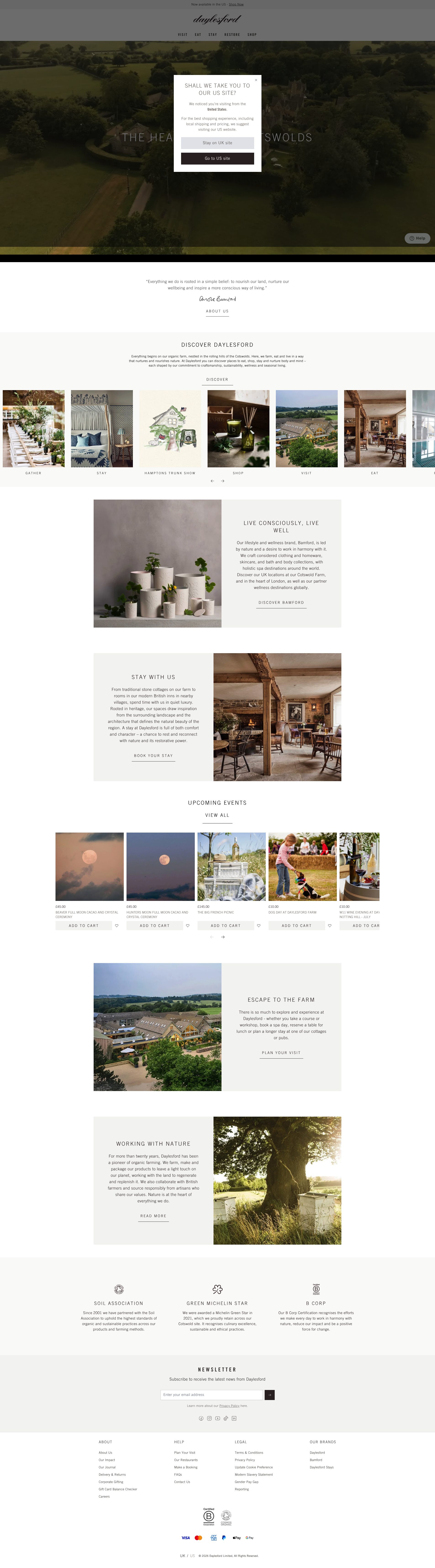
Daylesford Organic's Shopify Plus store covers a broad food and lifestyle range, and their pasta offering sits within a larger Italian pantry and organic food category. What makes the Daylesford pasta experience worth studying is not the pasta-specific pages but the ecosystem those pages sit within: organic certification, farm origin, and nutritional credentials are applied consistently across the entire store, which means a customer buying pasta is not reading isolated claims but making a purchase inside a brand they already trust on those values.
The subscription and regular delivery mechanics at Daylesford are mature: they run a farm box service alongside individual product subscriptions, and the pasta category is accessible from both. That dual acquisition path captures both the planned purchase and the add-on-to-existing-subscription behaviour. The seasonal gifting category at Daylesford includes pasta sets positioned as premium kitchen gifts, with copy that emphasises the organic certification and farm provenance as the core gift story, which justifies price points well above the generic hamper market.
9. Brindisa
Brindisa is a UK importer of Spanish and Italian produce with a Shopify store that handles the complexity of a mixed-country catalogue without losing clarity. Their Italian pasta range sits alongside Spanish charcuterie, conservas, and olive oil, and the store manages this through strong category architecture: pasta by shape, pasta by producer, pasta by region. That multi-axis navigation means a customer with a specific need finds it quickly, and a customer browsing broadly discovers the category depth that justifies Brindisa's positioning as a serious specialist rather than a general deli.
The product pages are written for a knowledgeable buyer, with tasting notes that go beyond generic descriptors and producer information that reflects genuine sourcing relationships. That register of expertise builds trust with the core Brindisa customer, who is paying a significant premium and wants confirmation that the people selling the product understand it as well as they do. The bundle logic on pasta pages, pairing shapes with matching pasta sauces from the same producer or region, lifts basket size in a natural rather than algorithmic way.
10. Cipriani Food
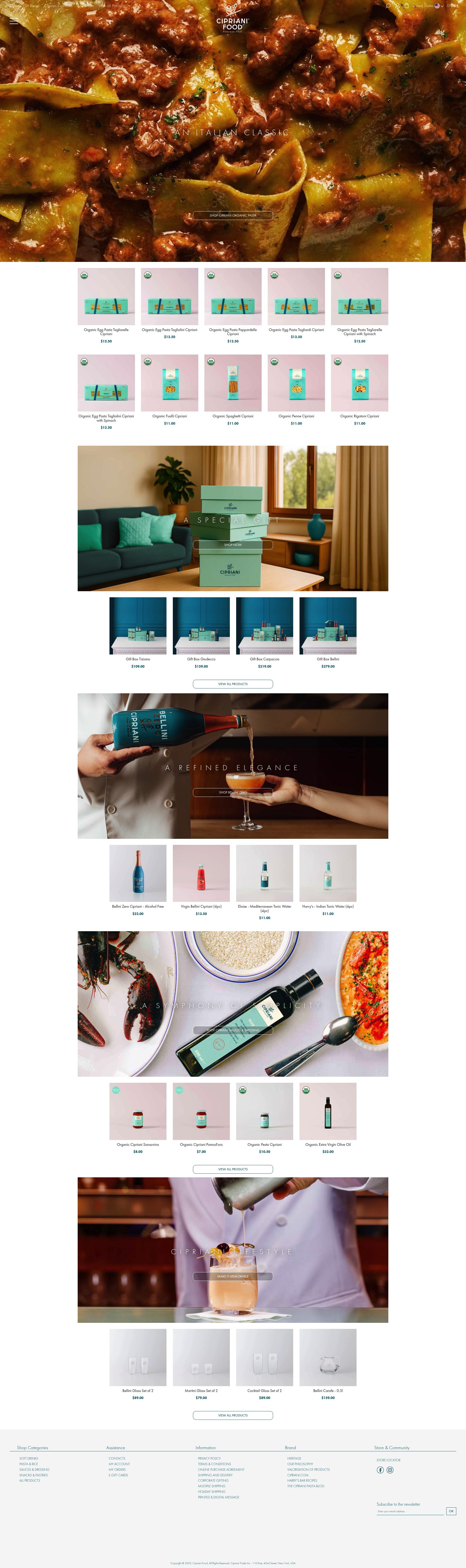
Cipriani Food is the pasta brand of the Cipriani family, founded in Venice in 1931, and their Shopify store carries that heritage into a clean, modern ecommerce experience. The brand is built around egg pasta made with a specific recipe, and the product pages communicate that recipe and its origin with a confidence that reflects genuine differentiation. Cipriani's egg tagliolini and fettuccine are positioned not as premium commodity pasta but as a specific product with a named provenance, and the pricing reflects that: this is the gift aisle of the pasta category.
The store's gifting section is the most developed part of the site, with pasta sets presented alongside Cipriani sauces, risottos, and condiments in curated hamper formats. That category logic works because the buyer arriving at a Cipriani pasta gift set is not comparison shopping on price but buying into a specific brand story associated with a recognisable name in Italian hospitality. The product photography reflects this: clean backgrounds, linen textures, natural light, with the packaging given as much prominence as the product itself, because at this price point the packaging is part of the gift experience.
The international shipping information is clear and accessible on product pages, which matters for a brand whose primary gift-buyer audience spans the UK, Europe, and the US. Managing cross-border delivery expectations at the product level reduces cart abandonment from customers who discover unexpected shipping costs or restrictions at checkout.
If you sell pasta, Italian food, or any premium food product and want to build a Shopify store that converts on provenance and justifies premium pricing, SuttonCommerce can help: see our Shopify design service or get in touch.
Frequently asked questions
Do pasta brands actually sell well on Shopify?
Yes, particularly at the premium and artisan end of the market. Brands like Pasta Evangelists, Sfoglini, and Cipriani Food have built significant DTC revenue on Shopify and Shopify Plus. The key is that they are selling differentiated products — fresh pasta kits, bronze-die shapes, named-provenance dry pasta — where the price premium is clearly communicated on the product page rather than assumed.
What Shopify features do pasta brands use most effectively?
Subscriptions are the single most impactful feature: fresh pasta brands use recurring kit deliveries to smooth revenue and reduce churn, while dry pasta brands use subscriptions for staples like sauces and premium shapes. Beyond subscriptions, the best pasta stores lean on bundle builder apps for meal kits and hampers, detailed product metafields for ingredient and provenance information, and blog content integrated with product pages via internal links.
How do premium pasta brands justify their price online?
The best pasta Shopify stores answer the implicit customer question — "why pay more than the supermarket?" — before the customer has to ask it. That means naming specific production methods (bronze-die extrusion, slow drying), geographical certifications (Gragnano PGI), named producers or farms, and exact ingredient sourcing. Storing that information on every product page, not just on a values landing page, is what converts the informed buyer at the point of purchase.
What is the best Shopify theme for a food or pasta store?
No single theme dominates among the best pasta stores, but the consistent pattern is clean, editorial layouts that prioritise product photography and readable copy over decorative design. Daylesford and Cipriani both use restrained, high-contrast aesthetics. The more important decision is the app stack — subscriptions (Recharge or Skio), reviews (Judge.me or Okendo), and bundle logic — rather than the base theme.
Should a pasta brand build a subscription or sell one-off?
Both, with a clear pricing delta between them. Pasta Evangelists runs this model effectively: a subscription-first flow for recurring kit buyers, plus a parallel one-off shop for customers who want to try before committing. The side-by-side price comparison between the two formats on the product page is a direct conversion mechanism, nudging one-off buyers towards the subscription on the second or third purchase rather than leaving repeat intent to chance.