
Quick summary
Ethique is the standout in this category: the hair type quiz, transition-period education on every PDP, and bundled starter kits make it the most conversion-optimised shampoo bar store on Shopify. Hibar is the strongest pick for performance-first positioning, stripping out the ethics-heavy framing to win customers who want results. Kitsch scales furthest by pairing shampoo bars with tools and accessories in curated routines that push AOV well beyond what a single-category brand can achieve. For UK shoppers, Friendly Soap has the most coherent zero-waste proposition, with review content that does real objection-handling work.
Shampoo bars are one of the cleaner DTC plays in haircare right now. The product is easy to ship, has a low return rate, and attracts a customer who researches before buying and repurchases on a short cycle. The stores that succeed here are not just riding the sustainability wave: they are building conversion architecture around ingredient storytelling, trial mechanics, and subscription to capture a customer who, once switched from liquid, almost never goes back.
1. Ethique
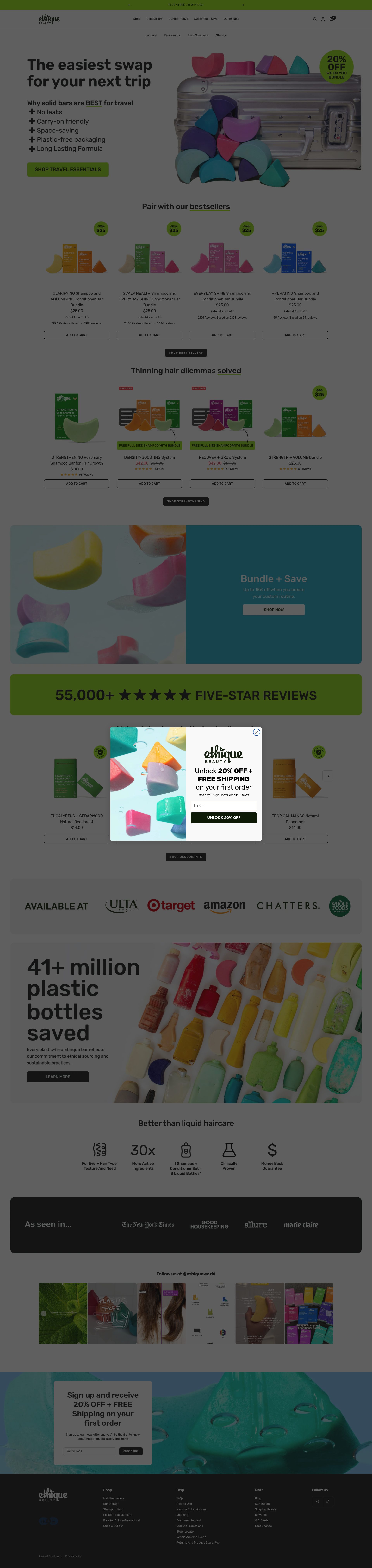
Ethique is the New Zealand brand that effectively created the mainstream shampoo bar category when it launched in 2012. Its Shopify store is one of the most optimised in the zero-waste beauty space, and the navigation reflects a company that has thought carefully about how new customers enter the category. The "Find Your Bar" quiz sits prominently in the primary navigation, not buried in an FAQ, which is the right call: a customer who has never used a shampoo bar needs help matching formula to hair type before they commit to a purchase.
The product pages are dense with information in a way that earns rather than loses conversions. Each listing includes a full ingredient breakdown with sourcing context, a carbon footprint comparison against liquid equivalents, and explicit guidance on lather technique and transition period. This last point matters: the most common reason customers return shampoo bars is that they did not know their hair needs one to two weeks to adjust. Ethique addresses this objection on the PDP, which reduces return rates and post-purchase dissonance.
Bundling is the AOV driver. Ethique packages shampoo bars with matching conditioner bars under "starter kit" and "complete hair routine" SKUs, which are priced to create a saving while moving two units per transaction. The subscription option is available on individual bars and kits, with a 15% saving clearly shown at cart. That discount level is calibrated to be meaningful without training customers to hold out for promotions.
2. Friendly Soap
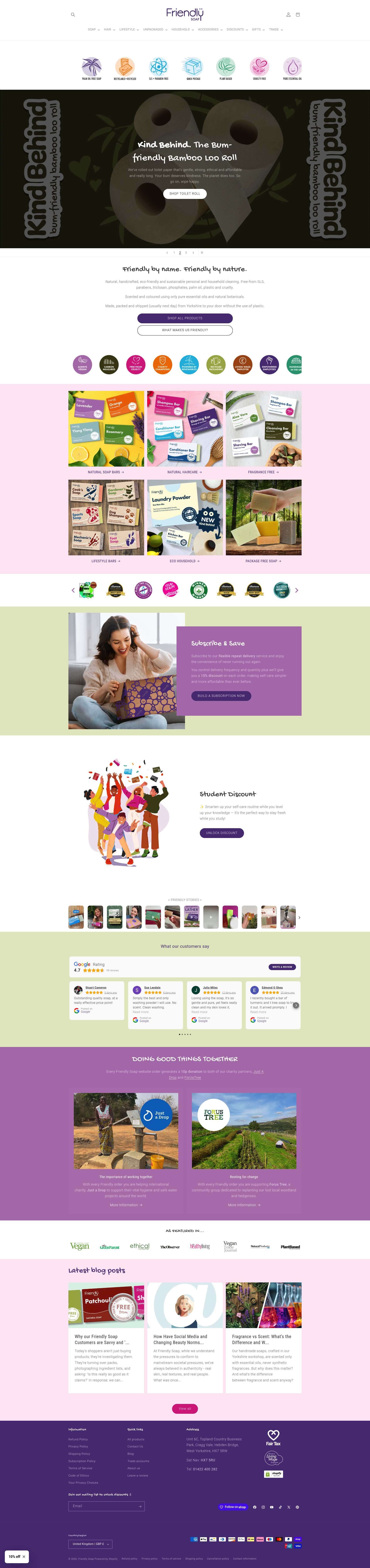
Leeds-based Friendly Soap has built one of the most coherent zero-waste DTC stores in the UK. The shampoo bar range sits within a broader personal care catalogue, and the site handles multi-category browsing without losing focus. The navigation separates hair care from body care at the top level, which means a customer arriving for a shampoo bar is not immediately distracted by shower gel or hand cream.
The free shipping threshold is set at a level that rewards multi-product baskets without being unreachable. For a brand with AOV in the range of a few bars, this threshold does real commercial work: it nudges customers toward adding a conditioner bar or a soap to qualify, which lifts both revenue per order and repurchase probability. The checkout does not surface a progress bar toward free shipping, which is a missed conversion opportunity, but the threshold figure is stated clearly on the cart page.
Review content on Friendly Soap's PDPs is unusually useful. Rather than a generic star rating aggregate, the listed reviews frequently discuss specific hair types and transition experiences, which functions as social proof for the exact objections a first-time buyer has. This kind of qualitative review content is more persuasive than review volume alone, and it happens organically when customers feel the product has genuinely changed their hair routine.
3. Hibar
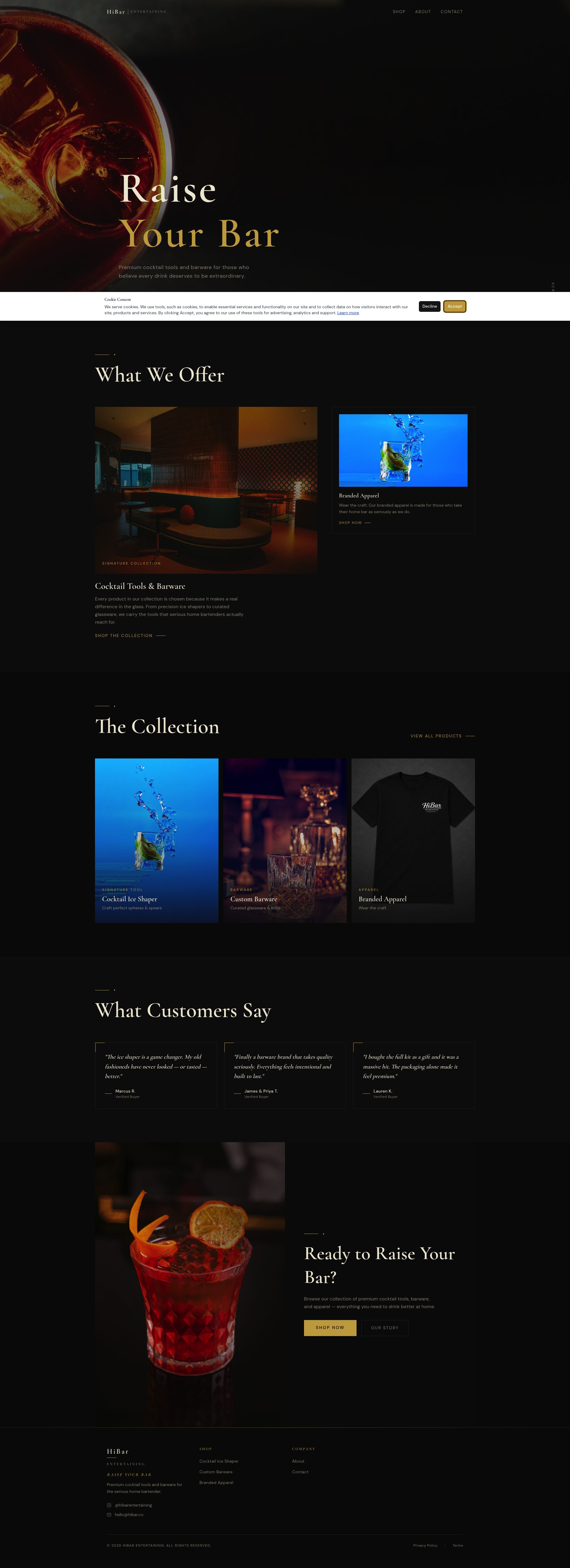
Hibar is a Canadian brand that has taken a more clinical and functional approach to shampoo bars than most of its competitors. The store positions itself explicitly against the "hippy bar" perception that holds some customers back from the category: the brand language is precise, the formulation is described in terms of performance rather than ethics alone, and the product pages lead with claims about lather quality and results rather than packaging footprint.
This positioning is a smart commercial decision. The sustainability credentials are still present, but they are secondary to performance, which opens the brand to customers who are motivated by results rather than values. The product page structure reflects this: ingredients are listed with functional explanations ("cetyl alcohol: conditions and detangles, not drying") rather than a raw INCI list. This turns a regulatory requirement into a conversion asset.
Hibar's hair type segmentation is executed well. The category page groups products by hair type rather than by product format, so a customer with fine hair sees only the SKUs relevant to them. This reduces the cognitive load at the browsing stage and increases the probability of clicking through to the correct PDP on the first attempt.
4. Kitsch
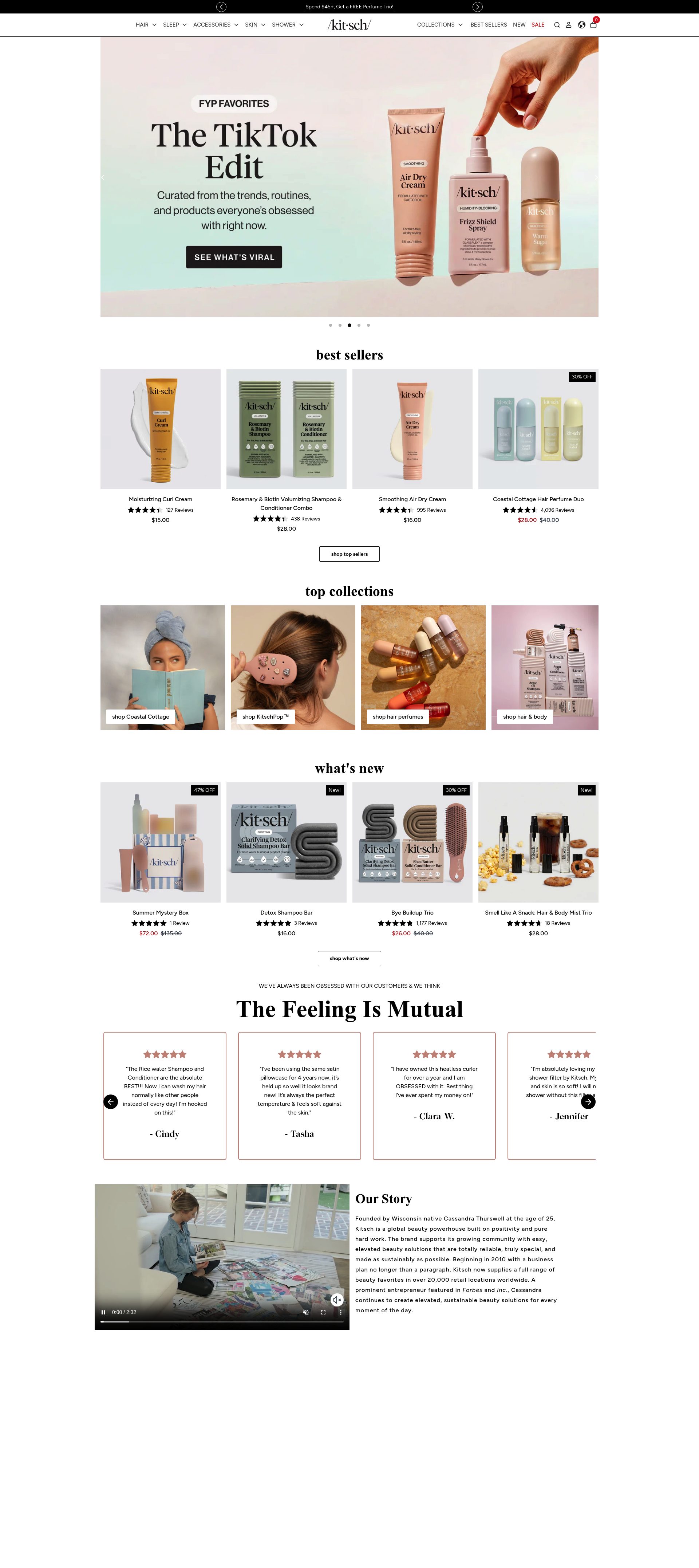
Kitsch is a US lifestyle haircare brand that has scaled across Shopify and wholesale simultaneously, with the DTC store operating on Shopify Plus. The shampoo bar range sits within a broader product catalogue that includes hair tools, accessories and skincare, which creates a larger natural basket and supports higher AOV than a single-category brand would achieve.
The homepage merchandising strategy is worth studying. Rather than leading with hero banners for hero SKUs, Kitsch uses its homepage to surface product families and routines, which exposes customers to more of the catalogue earlier in the visit. The "Routine Builder" functionality connects haircare steps into a curated bundle, which is both a conversion mechanism and an AOV driver. A customer who comes for a shampoo bar and leaves with a scalp brush and a hair towel has a fundamentally different LTV trajectory.
The paid social presence feeds directly into the store. Kitsch runs a high volume of UGC-style content across Meta and TikTok, and the landing pages behind those ads are consistent with the ad creative in terms of imagery and copy tone. This reduces drop-off between click and PDP, which is a detail many brands get wrong by sending paid traffic to a generic category page rather than a matched landing experience.
5. Foamie

Foamie is a German brand that has built an international Shopify presence around the solid beauty format, covering shampoo bars, conditioner bars and shower bars within a tightly designed catalogue. The store is a useful example of how to internationalise a DTC business on Shopify without fragmenting the brand experience. Currency and shipping are handled by market, but the visual identity and brand voice are consistent across regions.
The product page architecture on Foamie is compact by the standards of this category. Rather than long-form ingredient breakdowns, the brand uses a structured benefit summary format: a three or four-point feature list above the fold, with the detailed ingredient information accessible below for customers who want it. This approach serves two different buyer types without creating a page that feels too long for either.
Foamie also makes good use of its format range to build complementary baskets. A customer landing on a shampoo bar PDP sees the matching conditioner bar and shower bar in a "Complete the Routine" module before they reach the add-to-cart button. This is straightforward cross-sell logic, but the implementation matters: the recommendation is contextual and matched by scent family, not a generic "customers also bought" module.
6. Blithe
Blithe is a Korean haircare brand with a Shopify store serving international markets. The shampoo bar range is positioned at the premium end of the category, with retail prices that require the PDP to do more conversion work than a value-brand product page. The brand meets that requirement through content investment: each product page includes a detailed explanation of the hero ingredient, the formulation rationale, and a comparison with conventional shampoo in terms of both performance and environmental impact.
The photography on Blithe's PDPs is among the best in the shampoo bar category. Each bar is shot in multiple contexts: isolated on a clean surface, in a shower setting, and alongside the full routine. This variety of visual context reduces the abstraction between product and actual use, which is a meaningful conversion factor for a format that many customers have never handled before.
Localisation is handled well for a brand operating across multiple regions from a single Shopify store. The currency conversion is automatic, the shipping information is market-specific, and the product descriptions avoid idioms that do not translate cleanly. These are basic hygiene factors for international DTC, but a surprising number of brands in this category still fail them.
7. Shampoo with Bennies
Shampoo with Bennies is an Australian zero-waste haircare brand with a Shopify store that leans heavily on community and customer education as conversion tools. The brand name itself is a marketing decision: "Bennies" (benefits) is memorable and positions the product around its functional upside rather than its format. This naming choice creates a more positive framing than "shampoo bar," which can still carry connotations of compromise for some customers.
The education infrastructure on the site is one of the more developed in this category. The blog covers transition tips, hair type guides and ingredient explainers in enough depth to rank for informational search queries, and the internal linking between editorial content and product pages is tight. A customer reading a guide on hard water and shampoo bars will find a direct link to the relevant SKU rather than a generic "shop now" prompt.
The sampling mechanic is notable. Shampoo with Bennies offers trial-size bars at a low entry price point, which reduces the financial risk of trying the format for the first time. Trial purchases are followed by an automated email sequence that covers transition expectations and introduces the full-size product, which is the right conversion pathway from trial to full purchase.
8. Beauty and the Bees
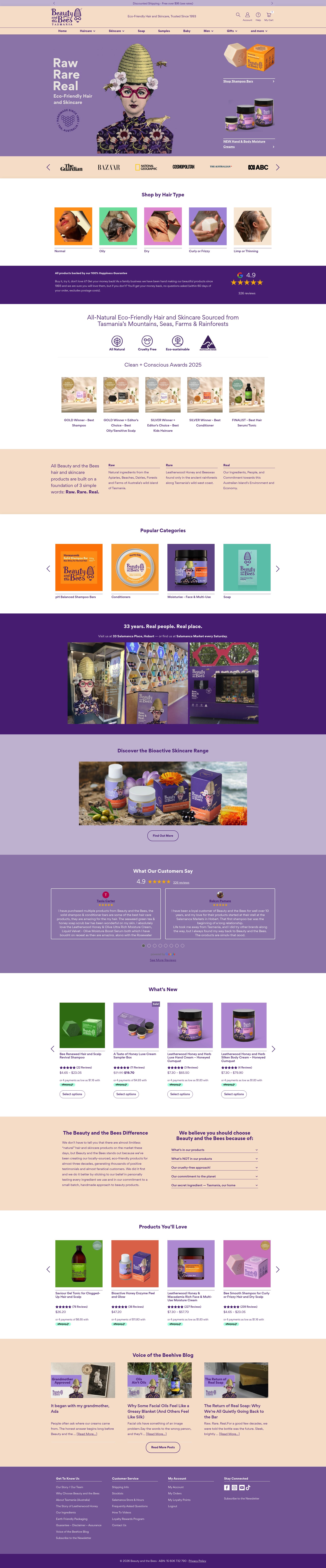
Beauty and the Bees is a Tasmanian brand making shampoo and conditioner bars using natural ingredients including beer, honey and egg yolk. The product formulations are genuinely unusual in the category, and the store is built around communicating that differentiation. The homepage leads with the founding story and the Tasmanian provenance, which functions as both a quality signal and a brand differentiation point in a market that has become crowded with functional equivalents.
The product pages on Beauty and the Bees are structured around ingredients in a way that turns unusual inputs into purchase motivators. The beer shampoo bar, for example, includes an explanation of why protein from fermentation benefits hair structure, linked to the specific malt used. This is the kind of specificity that convinces a sceptical customer that the formula is more than a marketing concept.
Wholesale and DTC are clearly separated on the site, which matters for a brand that sells through both channels. Stockist information does not cannibalise the DTC conversion path because it is accessible from a separate menu item rather than surfaced alongside add-to-cart buttons. This is a navigation decision that protects DTC margin without alienating wholesale customers.
9. Lush
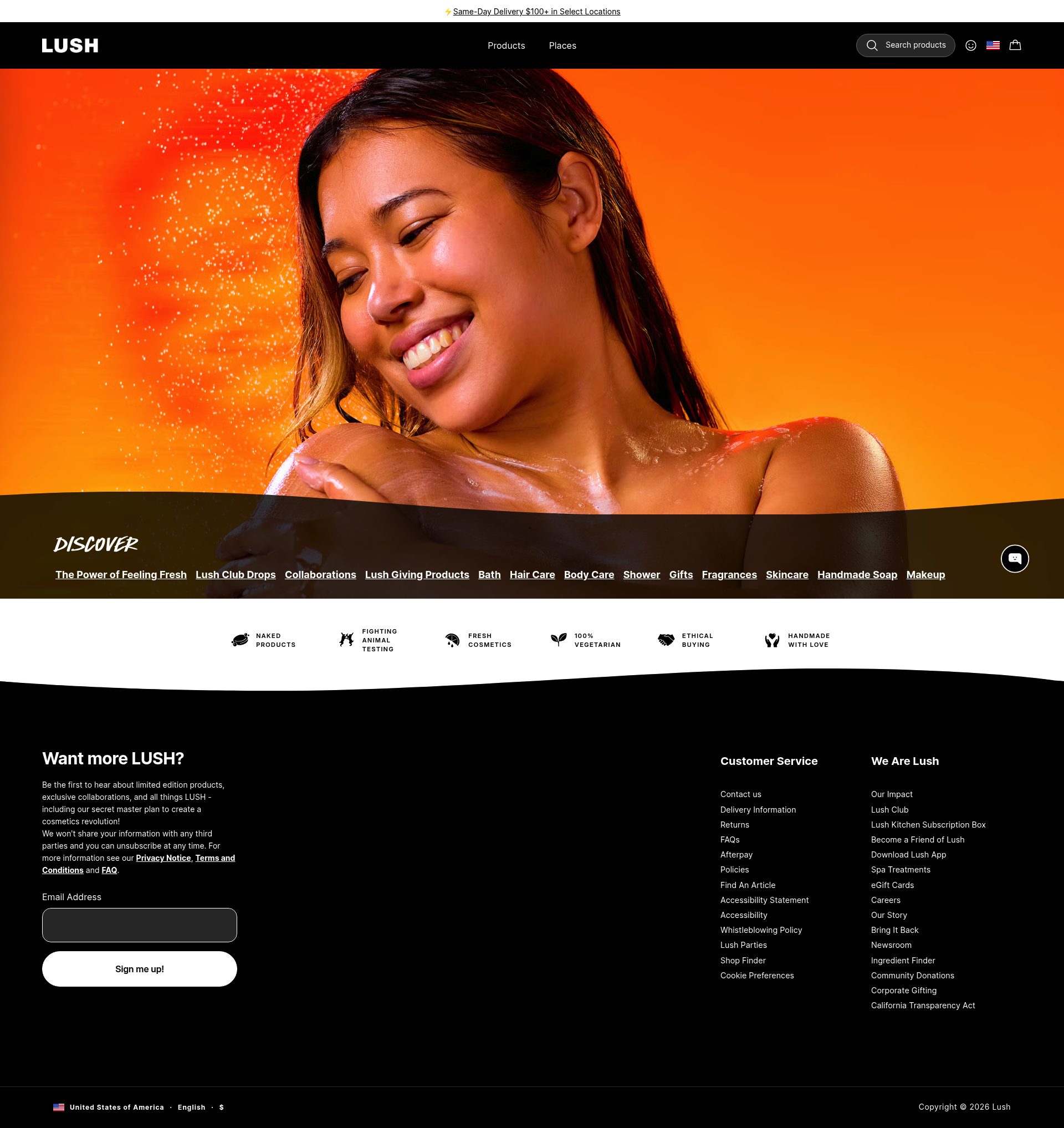
Lush operates a Shopify-powered DTC channel for its UK and international markets alongside its retail estate. The shampoo bar range is one of the brand's strongest categories and the product pages reflect the depth of investment the brand makes in product storytelling. Each bar has a named inventor, a production context and a scent profile description that reads more like a tasting note than a product specification. This is deliberate: the writing style is the same in-store and online, which creates consistency for a customer who knows the brand from retail and is making their first online purchase.
The challenge Lush faces online that it does not face in-store is that the product cannot be smelled before purchase. The store addresses this through fragrance-first copywriting and a "Smell Similar" navigation feature that groups products by scent family. For a customer who has a favourite in-store bar but cannot remember the name, this is a genuinely useful tool. The fragrance-led navigation also increases the probability of cross-sell: a customer browsing by scent will encounter products across multiple categories rather than staying within a single format.
Lush does not use a conventional subscription mechanic. The repurchase model is built around a loyalty programme, the Lush Kitchen newsletter for limited-run products, and a naked packaging return incentive. These mechanics are harder to execute for a smaller brand, but the underlying principle, building a reason for customers to return that is not just a discount, is applicable at any scale.
10. Davines
Davines is an Italian professional haircare brand that has moved into the shampoo bar category as part of a broader sustainability commitment, and the Shopify store reflects a brand that has thought seriously about how to position professional-grade products for direct consumer purchase. The site handles the tension between salon credibility and consumer accessibility better than most professional haircare brands manage online.
The product pages on Davines use a "certified B Corp" and sustainability credential stack that is more developed than most brands in this list. Rather than a single badge, the pages walk through the specific commitments: carbon neutral certification, organic ingredient sourcing, the Sustainable Beauty Coalition membership. For a customer in the premium segment who cares about brand values, this level of specificity is more persuasive than a generic "eco-friendly" badge.
The Davines store also makes intelligent use of the professional heritage in its conversion copy. The product descriptions reference the formulations used in salons, and the "as used by" credential is surfaced on category pages rather than only on individual PDPs. This positions the shampoo bars not as a compromise alternative to conventional shampoo, but as access to professional results at home, which supports the premium price point and justifies the AOV.
If you want your Shopify store to convert as well as the best stores in this list, the team at SuttonCommerce can help. See our Shopify design services or get in touch to talk through what you are building.
Frequently asked questions
What makes a shampoo bar Shopify store convert well?
The highest-converting shampoo bar stores address two objections directly on the product page: hair type matching and the transition period. Brands like Ethique use a quiz in the main navigation to match formula to hair type, and include explicit guidance about the one-to-two week adjustment phase on every PDP. Skipping either of these steps leads to returns and negative reviews from customers who were never the right fit.
Should a shampoo bar store offer subscriptions?
Yes, and the discount level matters. The category suits subscriptions well because repeat customers on a two-to-three month cycle are the norm once someone switches from liquid shampoo. A 15% subscription discount is the most common calibration in this list: high enough to change behaviour at checkout, low enough not to cannibalise margin or train customers to hold out for promotions.
How do the best shampoo bar stores handle the smell problem online?
Lush is the clearest example: the store uses fragrance-first copywriting and a "Smell Similar" feature that groups products by scent family. Without the ability to smell a bar before purchase, copy has to carry more sensory weight than it does in most categories. Scent-family navigation also increases cross-sell by exposing customers to multiple format types while browsing.
What AOV tactics work specifically for shampoo bar DTC stores?
Bundling shampoo bars with matching conditioner bars under a named "starter kit" SKU is the most consistent AOV driver across this list. Ethique and Foamie both use it. The bundle should be priced to deliver a visible saving versus individual products, and the "Complete the Routine" cross-sell module on the PDP should match by scent or hair type, not just generic purchase data.
How should a shampoo bar store handle the transition period objection?
On the product page, not in the FAQ. Ethique places transition-period guidance directly on every bar PDP, which addresses the most common return reason before the customer adds to cart. Brands that bury this information in a blog post or FAQ lose returns they could have prevented. A brief, honest note that hair takes one to two weeks to adjust, with tips on what to expect, reduces post-purchase dissonance and improves review scores.