

Quick summary
Burton sets the benchmark with its Board Finder tool and interlocking catalogue structure that guides beginner and expert buyers to the right gear without overwhelming either. Volcom leads on brand identity — their store sequences editorial content before product, which is exactly right for outerwear buyers who want to buy into a lifestyle first. Bataleon stands out for turning a single technical differentiator, Triple Base Technology, into a buying criterion woven through every PDP. Nitro Snowboards handles a 30-board catalogue better than almost anyone in the category by organising by rider profile rather than spec tier.
Snowboarding is a high-consideration, seasonal niche: buyers spend weeks researching flex ratings, rocker profiles, and boot compatibility before committing to a board that costs upwards of £500. The stores that convert in this category are the ones that earn trust fast, make technical information digestible, and give first-time and returning buyers a clear path to the right gear. Here are ten that do it well.
1. Burton
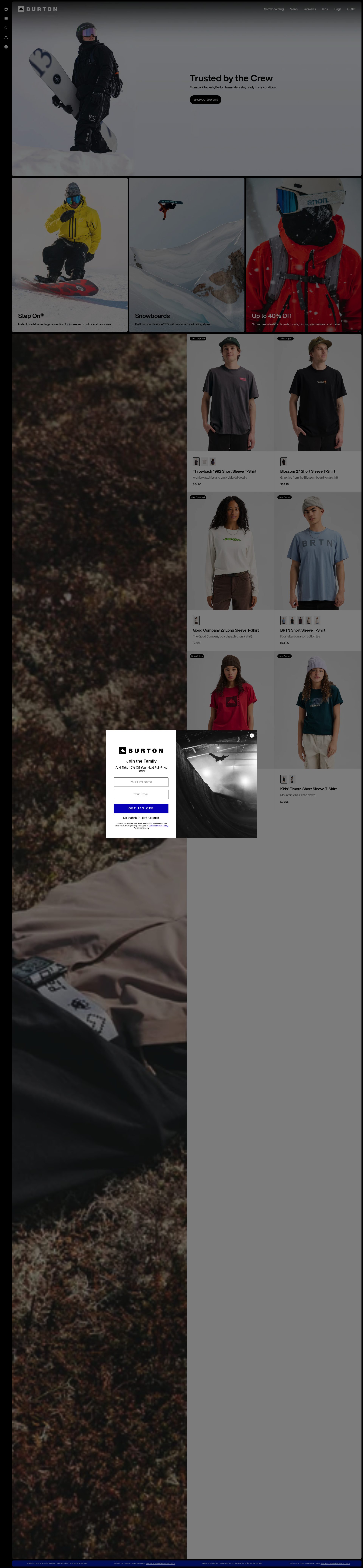
Burton is the category benchmark. Their Shopify Plus store handles one of the most complex product catalogues in outdoor retail: boards, boots, bindings, outerwear, and accessories across men's, women's, and kids' ranges, all with interlocking compatibility requirements. The way they solve this is through their Board Finder tool, which filters by ability level, terrain preference, and riding style to surface a shortlist of three to five boards. For a buyer who does not know the difference between directional twin and true twin, this is the difference between a confident purchase and an abandoned session.
Product pages are dense with technical detail but structured so a beginner can skip to the summary and an experienced rider can drill into the spec sheet. Flex ratings are explained in plain language alongside the numerical score. The "Complete the Setup" section below each board PDP cross-sells compatible bindings and boots, which lifts basket value without requiring the customer to navigate away. Burton's store is a lesson in how to make a technically complex product accessible without dumbing it down.
2. Volcom
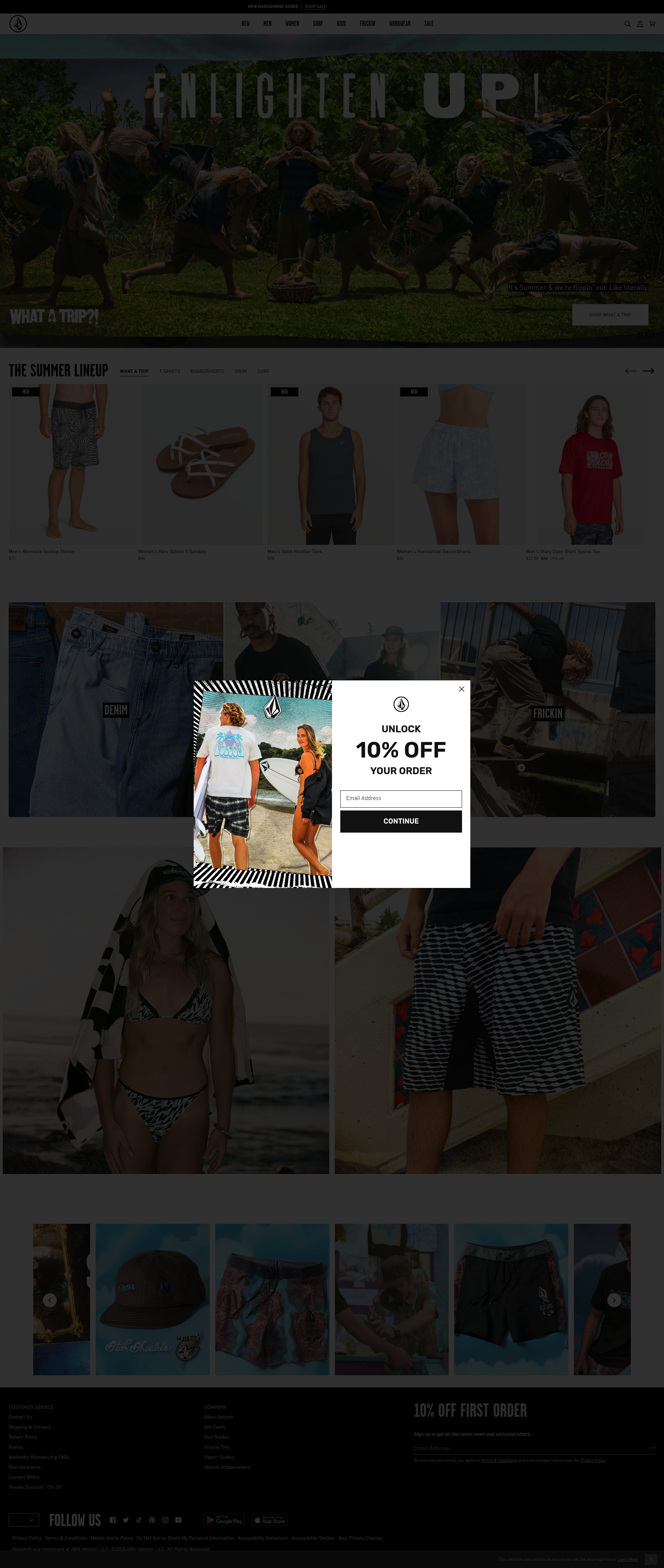
Volcom runs a Shopify store that leads with culture before product. The homepage rotates through snowboard team edits, resort content, and competition footage before the customer even sees a product grid. That sequencing is deliberate: snowboarding buyers, particularly in outerwear, want to buy into a brand identity, not just a jacket. Volcom's editorial layer does that work upfront.
On product pages, their snow outerwear specs are detailed and clearly laid out: waterproof rating in millimetres, breathability rating, seam taping, and pocket placement. These are the details that a knowledgeable buyer needs to compare across brands, and Volcom makes them easy to find rather than burying them in a downloadable PDF. Size charts include chest, waist, and hip measurements alongside recommended height and weight ranges, which reduces the fit hesitation that drives returns in outerwear.
3. Bataleon
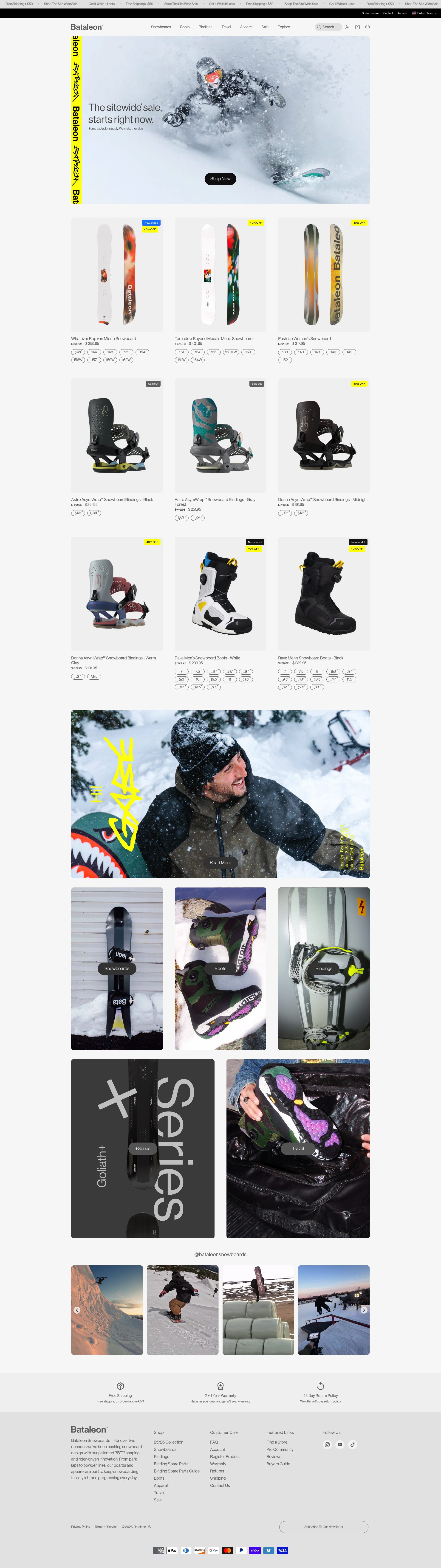
Bataleon has built a Shopify store around a single product differentiator: their Triple Base Technology (TBT) rocker-camber-rocker construction. Rather than listing it as a spec and moving on, every board PDP opens with a visual explanation of how TBT works and what it means for ride feel in different terrain. That commitment to educating the customer on their point of difference is smart ecommerce: it creates a buying criteria in the customer's mind that competitors cannot easily match.
Their board selector asks three questions: ability level, preferred terrain, and riding style. The results page is a filtered collection rather than a decision tree, which keeps the customer browsing rather than locking them into a single recommendation. Bataleon's store is also notable for its approach to size guidance: each board page includes a weight range, shoe size range, and a note on whether the board runs short or long compared to the industry standard.
4. Nitro Snowboards
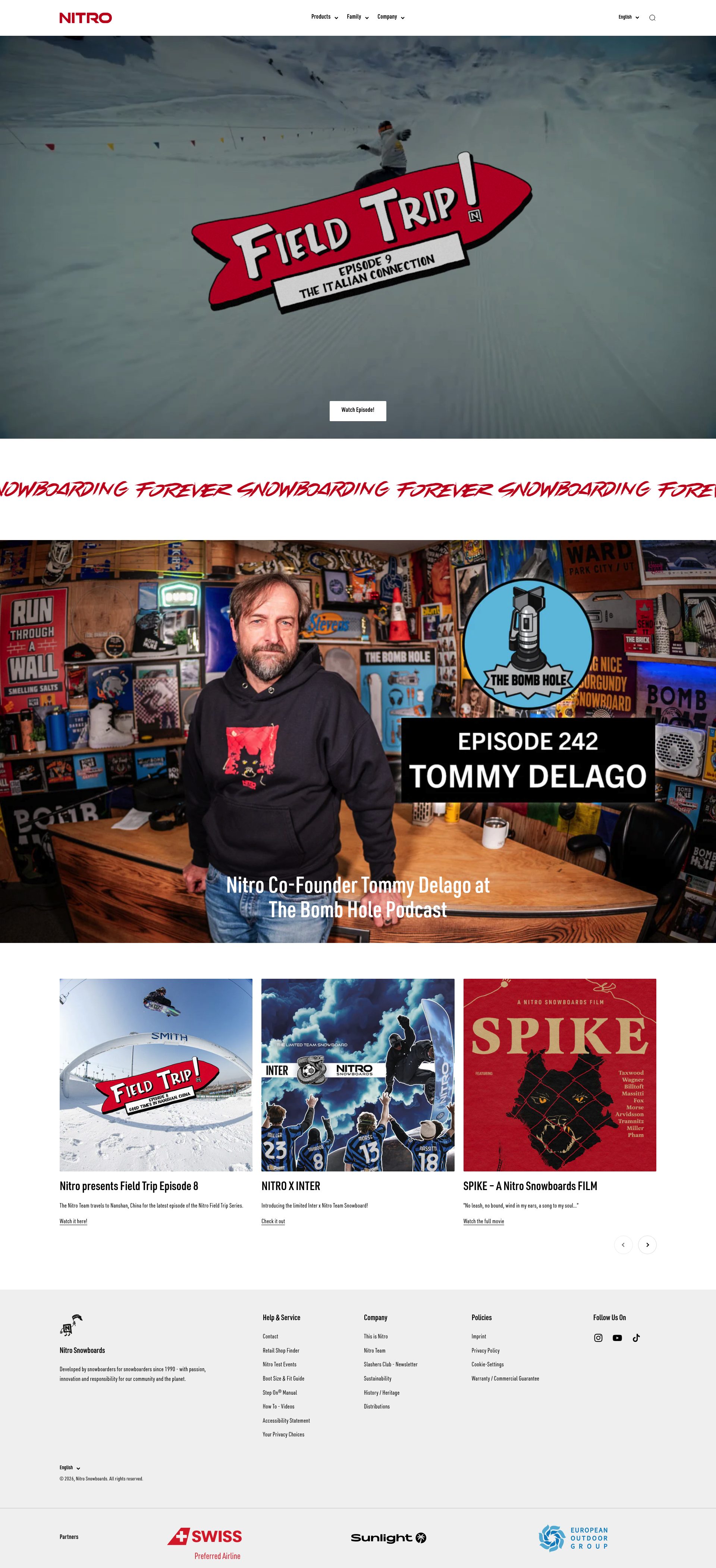
Nitro's Shopify store does a strong job of segmenting a large catalogue by rider profile. Their "Collections" navigation groups boards by character — Quiver, Park, Powder, All Mountain — rather than by technical spec or price tier. That framing matches how riders think about their riding and reduces the cognitive load of a 30-board catalogue. Each collection page includes a short paragraph explaining who the boards are for, which functions as a soft recommendation before the customer gets to individual PDPs.
Nitro's binding compatibility section on board PDPs is one of the more useful tools in the category: it shows which Nitro binding models pair well with each board, with brief notes on why. For a buyer who is kitting out from scratch, this removes a major friction point. They also make strong use of rider video content on PDPs, linking to team rider footage that shows each board in use across different terrain and conditions.
5. Roxy
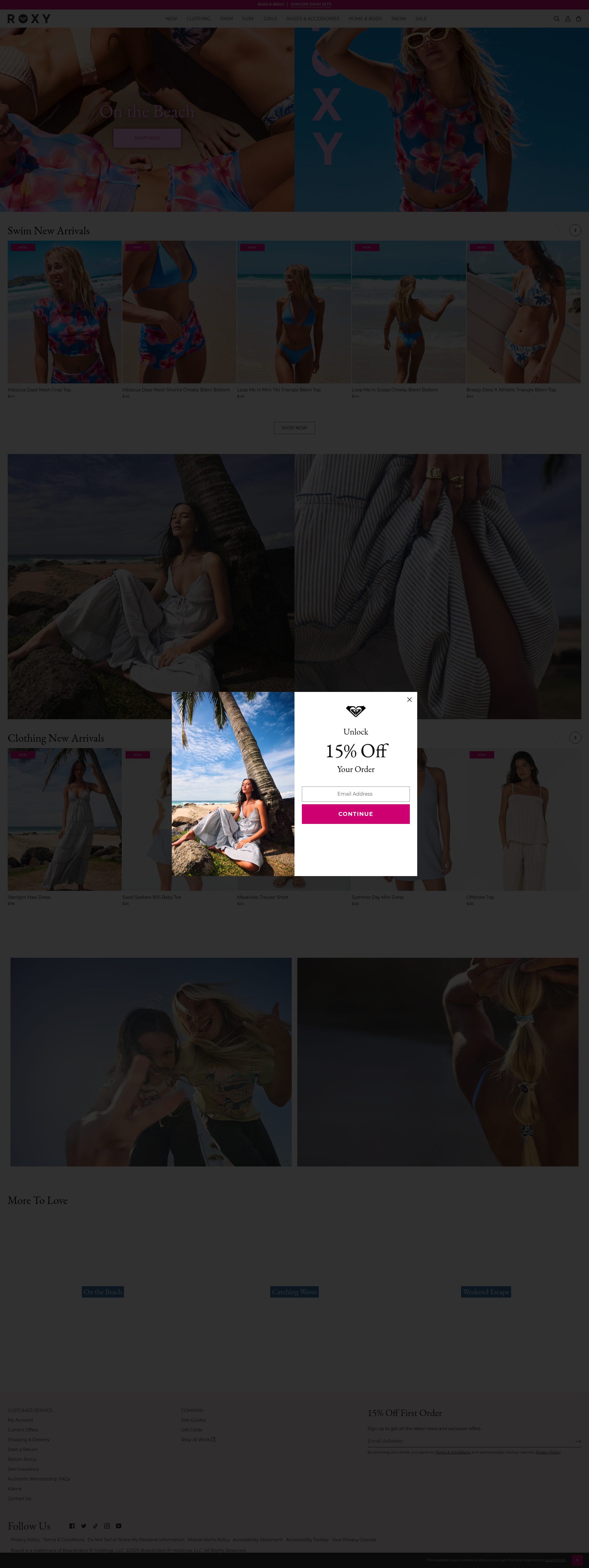
Roxy's Shopify store operates across surf, snow, and lifestyle, and the snow category is well separated in navigation and visual identity. Their outerwear collection pages use a "Warmth Level" filter, a practical sorting mechanic that speaks directly to a buyer trying to match a jacket to the conditions they typically ride in. That kind of functional filter, built around how customers think rather than how the product catalogue is structured, is an underused conversion tactic in technical outerwear.
Board PDPs include clear ability-level badging alongside flex and shape specs. Their size guides for snow jackets and pants are thorough, with both body measurement tables and a "what we recommend" paragraph that adds editorial guidance on top of the data. Roxy's loyalty programme is integrated into the checkout flow and surfaced prominently on collection pages, with point earn rates visible before the customer has added anything to their basket.
6. ThirtyTwo
ThirtyTwo's Shopify store is focused almost entirely on boots, which is their core product category, and that focus shows in how the site is structured. The boot finder tool walks the buyer through flex preference, riding style, and fit system (traditional lace, Boa, or speed-lace) and narrows the catalogue to a short list. That specificity matters in boots: a bad boot fit ruins a day on the mountain, and buyers know it. Any tool that builds confidence in the purchase decision before checkout is high value.
Their PDPs include a detailed heat moulding guide for custom-fit liners, which is technically dense but well explained. The fact that they address this in the product page rather than directing the customer to a separate FAQ signals that they understand their buyer: someone who has already done their research and wants confirmation that the product will perform. ThirtyTwo also surfaces customer reviews with filter options for ability level and foot width, which makes the social proof more targeted.
7. Rome Snowboards
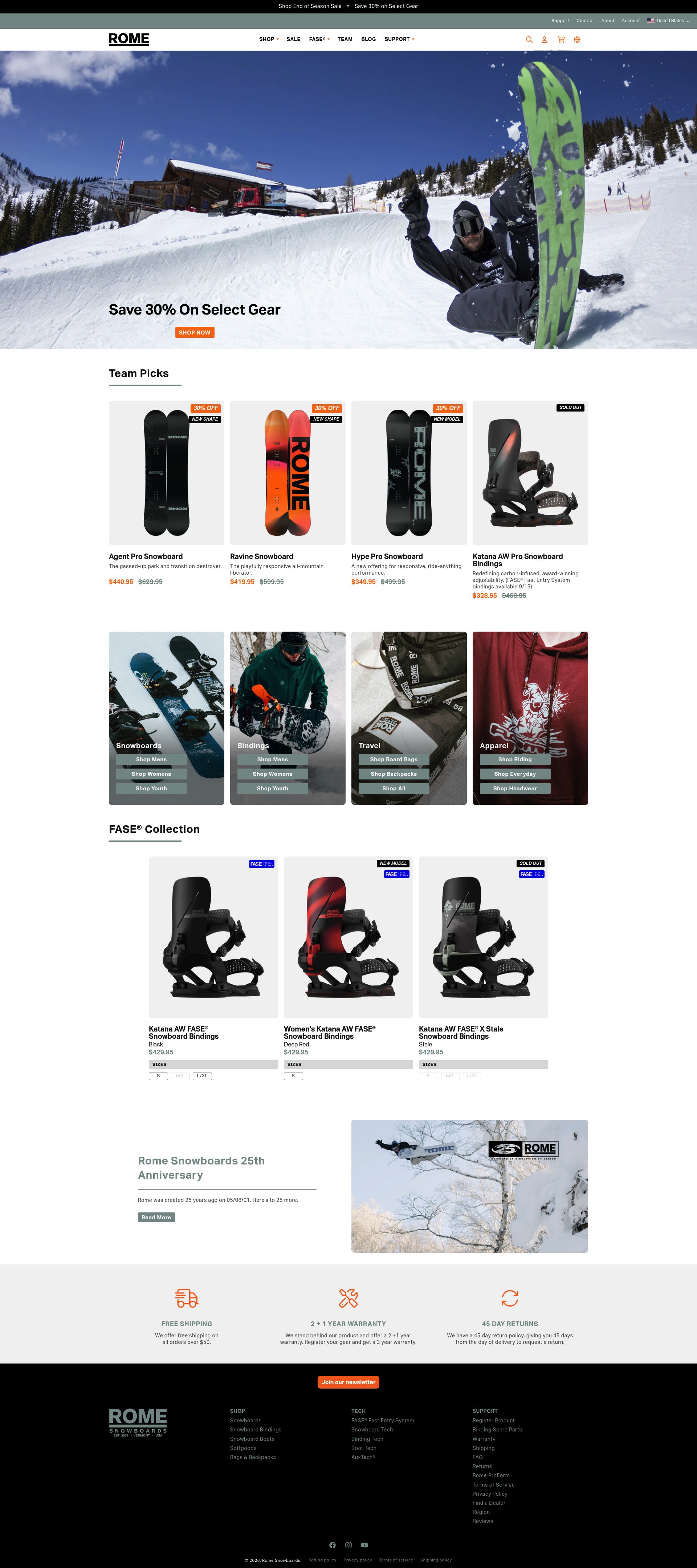
Rome's store is built around simplicity and speed: the catalogue is deliberately smaller than Burton or Nitro, and the store architecture reflects that. Navigation is lean, collection pages load fast, and product pages get to the point. For a buyer who already knows what they want, this is a better experience than a site loaded with features they do not need.
Their board PDPs include a "Who It's For" section at the top of each page, written in conversational language rather than marketing copy. "Best for intermediate to advanced riders who want a surfy, playful feel in all conditions" tells a buyer more in one sentence than three paragraphs of adjective-heavy spec text. Rome also makes strong use of video on PDPs, with rider footage shot specifically to show each board's characteristics rather than repurposed team edits.
8. Lobster Snowboards
Lobster's Shopify store targets a specific rider: park and freestyle snowboarders with a sense of humour about the sport. Their brand voice carries through every element of the store, from product names to the copy on size guides. That consistency signals brand maturity and builds the kind of tribal identity that drives repeat purchases and referrals in a niche category.
Their board PDPs are structured around shape and flex first, with technical specs presented as supporting information rather than the headline. The "Shape Guide" page in their navigation is a strong educational asset: it explains rocker, camber, and hybrid profiles with diagrams and plain-language descriptions, and links directly to boards in each category. Educational content that sits close to the purchase path, rather than in a separate blog section, converts better than content buried away from the shopping flow.
9. Endeavor Snowboards
Endeavor is a smaller brand that has built a Shopify store with a clear point of view: premium, hand-crafted boards for serious riders. Their store leads with craftsmanship: factory photography, wood core construction details, and manufacturing process content sit alongside product pages. For a buyer who is considering a £700 board, that behind-the-scenes transparency is a meaningful trust signal.
Their PDPs are detailed without being overwhelming: flex rating, shape profile, and core construction are the three leading specs, with extended technical detail available lower on the page for buyers who want it. Endeavor also makes strong use of their team rider roster on product pages, linking the board to the riders who use it in competition and at resorts. That association adds credibility in a category where brand legitimacy matters.
10. 686

686 runs a Shopify store across outerwear, streetwear, and snowboard apparel, and their navigation handles the crossover between those categories cleanly. Their SMARTY Technology outerwear system, which uses zip-in fleece liners to create a modular layering solution, is explained clearly in a dedicated features page and referenced on every relevant PDP. That kind of technical feature, properly explained and consistently surfaced, gives buyers a clear reason to choose 686 over a generic outerwear brand at a similar price point.
Their "Build Your Kit" section groups outerwear by activity and condition, which is a smart merchandising approach in a category where buyers often underestimate how many layers they need. 686 also runs regular colourway drops, and the store handles these with a "New Arrivals" section and email capture tied to drop notifications, which builds a direct relationship with customers between seasons.
If your store is not converting at the level these brands achieve, the gap is usually design and product page structure. See our Shopify design service or get in touch to discuss what is possible for your store.
Frequently asked questions
Which snowboarding brands use Shopify?
Burton, Volcom, Bataleon, Nitro Snowboards, Roxy, ThirtyTwo, Rome Snowboards, Lobster Snowboards, Endeavor Snowboards, and 686 all run on Shopify or Shopify Plus. Shopify Plus is the dominant platform in outdoor and snow sports ecommerce because it handles large, seasonal catalogues and complex product configurations without the infrastructure overhead of a custom build.
How do the best snowboarding stores handle technical product information?
The strongest stores in the category separate their audiences: they surface a plain-language summary (ability level, riding style, terrain) at the top of each PDP, then make detailed specs available lower on the page for buyers who want them. Burton and Bataleon do this particularly well. The worst PDPs lead with a numbered flex rating and assume the buyer already knows what it means.
What makes a snowboarding store convert well despite high product prices?
High-consideration buyers need three things before they commit: confidence that the product suits their ability and riding style, evidence that the brand is legitimate, and reassurance that sizing and fit will be right. Board finder tools, rider video content, detailed size guides with body measurements, and customer reviews filtered by ability level all address these directly. Stores that skip any of these typically see higher abandonment on PDPs.
How do snowboarding stores cross-sell boards, bindings, and boots effectively?
Burton's "Complete the Setup" section is the clearest example: it surfaces compatible bindings and boots directly on the board PDP, removing the need for the customer to navigate away and research compatibility separately. Nitro does something similar with a binding compatibility tool that recommends pairings with brief notes on why they work. The key principle is that cross-selling in this category has to be compatibility-led, not just algorithmic "you might also like" suggestions.
Do snowboarding stores need a separate mobile experience?
No separate experience is needed, but mobile optimisation is critical. A significant share of snowboard research happens on mobile during lift queues, in chalets, or while watching footage. Stores that load slowly or bury technical specs behind accordions that are hard to tap on mobile lose buyers at the research stage, before they even reach checkout. Rome Snowboards' lean, fast-loading store is a good reference point for mobile-first thinking in this category.