

Quick summary
Supergoop! is the standout — their Shopify Plus store treats SPF as a skincare routine staple and uses intent-based navigation that reduces friction better than any other brand in the category. Ultrasun wins on product differentiation, building every page around the once-daily application claim with clinical evidence to back it up. Altruist punches hardest on value positioning: dermatologist-developed credentials at sub-£4 pricing make conversion almost effortless. Kinfield is the strongest pick for the clean beauty and outdoor crossover market, with ingredient-led product pages aimed squarely at the customer who has already opted out of synthetic-heavy SPF.
Sunscreen is a category where trust sells. Shoppers are buying health claims, not just a product, which means every element of a DTC store has to earn credibility fast: ingredient transparency, SPF education, dermatologist endorsements, and product photography that conveys efficacy without feeling clinical. The stores doing this well share a common trait: they treat the product page as their primary sales tool, not an afterthought. Here are ten that get it right.
1. Altruist
Altruist has built its entire store around one positioning idea: professional-grade SPF at a price that removes the excuse not to use it. That positioning is communicated immediately on the homepage with a clean value proposition and a price anchor that is bold enough to be the hero message. Product pages are structured around the "why it works" argument first, with dermatologist-developed credentials and ingredient lists given the same prominence as product imagery. This is the right call in a category where the buyer is sceptical of marketing claims.
Their collection navigation is simple by design: SPF 30, SPF 50, SPF 50+, and a separate after-sun range. Fewer decisions mean less friction for a returning customer who knows what they want. The social proof strategy leans on press coverage and dermatologist endorsements rather than influencer content, which reinforces the scientific credibility angle. At a sub-£4 price point, the store's conversion job is largely done by the product, but the page structure means it does not waste that advantage.
2. Bondi Sands
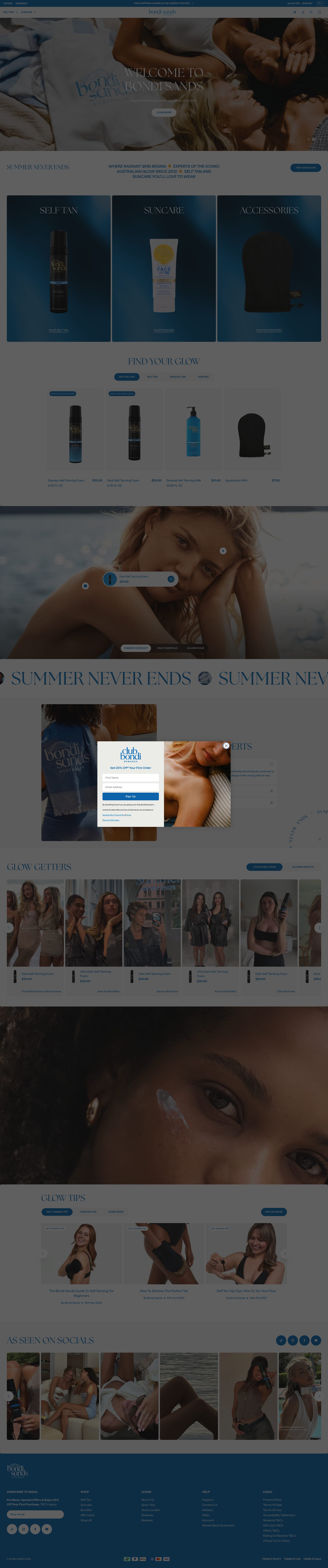
Bondi Sands is a strong example of a lifestyle suncare brand that has kept its DTC store aligned with its aspirational positioning rather than defaulting to a generic product catalogue. The homepage leads with seasonal imagery and hero products, with clear seasonal navigation that pushes the right SPF level based on time of year. That contextual merchandising is a practical conversion tactic: customers arriving in June need different guidance than those arriving in October.
Product pages carry both SPF data and skin-feel messaging, which matters for sunscreen because feel is often the reason people stop using a product. They surface "everyday SPF" and "beach SPF" as separate need-states across collection pages, which mirrors real purchase intent rather than forcing customers to navigate by SPF number alone. Their Australian beach heritage is a genuine credibility asset in sun protection, and the store uses it throughout without overplaying it.
3. Soleil Toujours
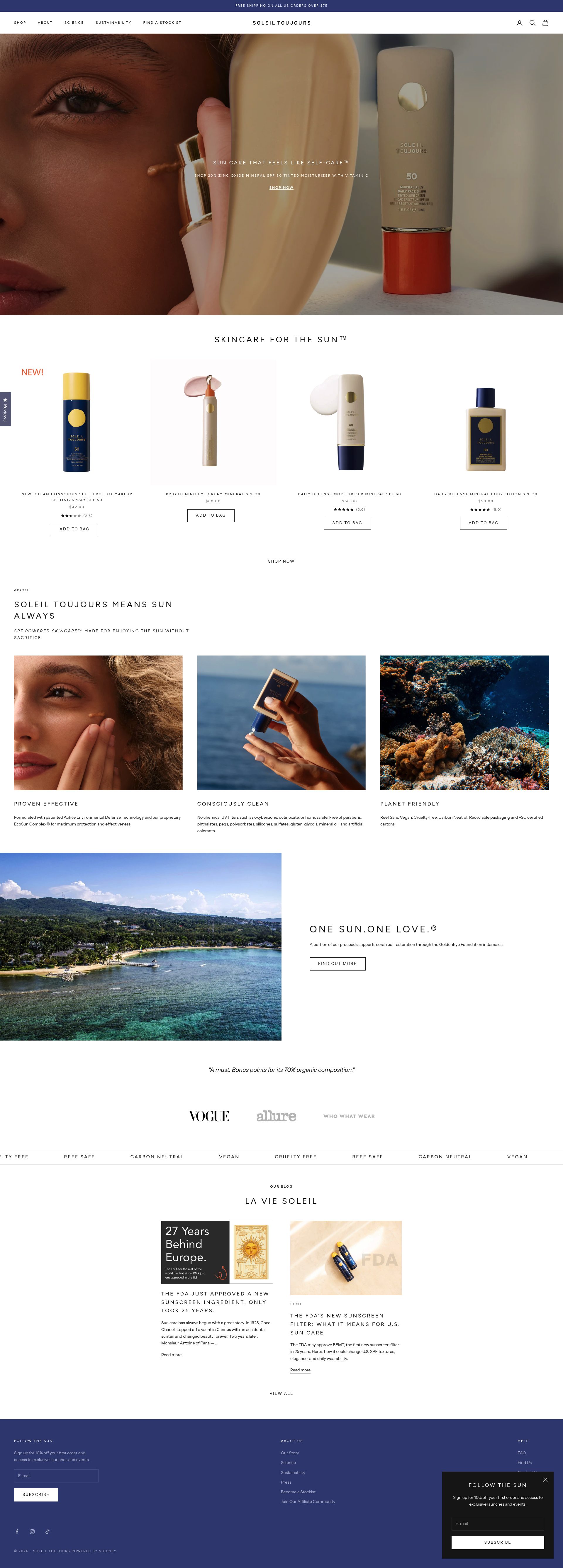
Soleil Toujours operates at the premium end: mineral SPF formulations, luxury packaging, and an average order value that puts it in direct competition with high-end skincare rather than mass-market sunscreen. Their Shopify store reflects that positioning with restrained product photography, a muted editorial colour palette, and product pages that lead with ingredients and formulation philosophy before price. The clean mineral formulations are explained clearly rather than assumed knowledge, which reduces friction for a customer who is new to the brand.
The store's subscription offering for core everyday SPF products is surfaced on product pages without being aggressive, which is the right balance for a luxury purchase. Customers at this price point are more likely to subscribe once they trust the product, so the subscription CTA is positioned post-review block rather than above the fold. Their gift sets are merchandised prominently in navigation, which is commercially smart: premium SPF makes an unusual but genuinely useful gift proposition.
4. Ultrasun
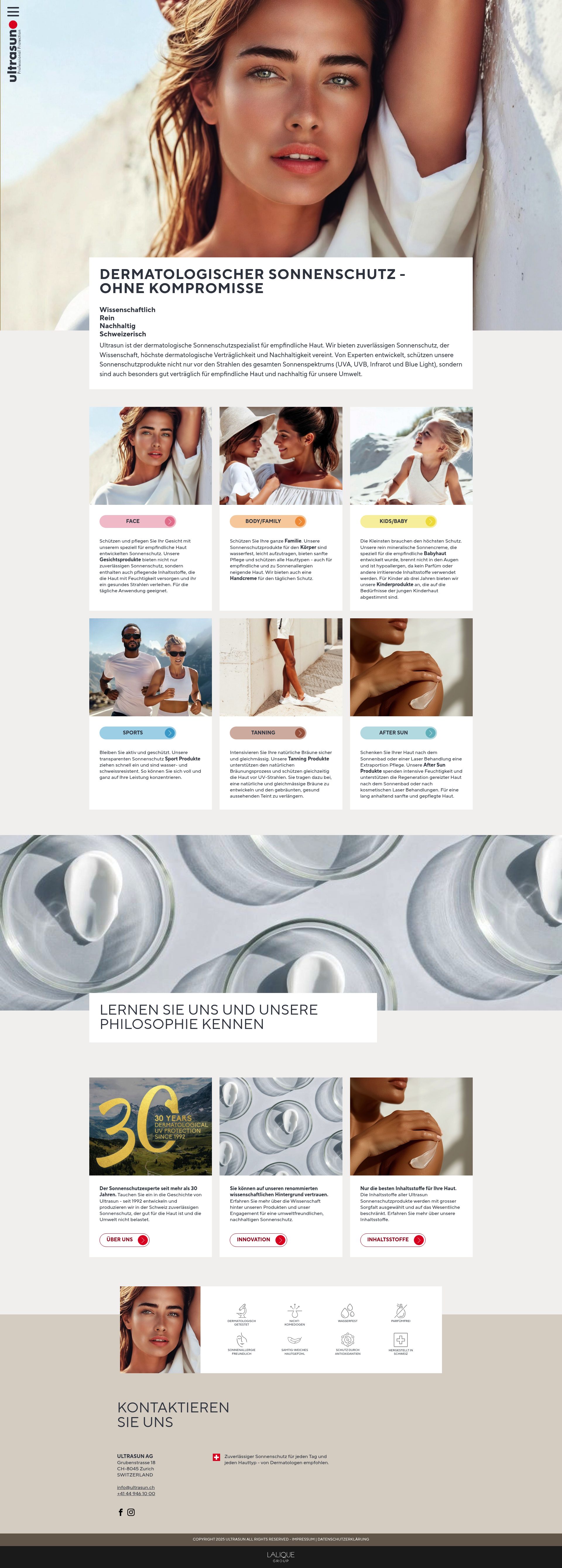
Ultrasun has built its store around a specific product claim: once-daily application, no need to reapply throughout the day. That single differentiator drives the entire page structure. The homepage leads with the claim and immediately links it to clinical evidence. Product pages lead with the "apply once" message before any SPF number, which is deliberately different from how most sunscreen brands organise their PDPs. That structural choice is also a SEO and conversion tactic: it captures a distinct search intent that competitors are not targeting.
Their "skin type finder" quiz is integrated into the navigation, which reduces decision paralysis for a range that covers sensitive skin, anti-ageing, and children's formulations. The quiz output links directly to a filtered product page rather than a generic recommendation, which keeps the conversion path short. Reviews are segmented by use case, so a customer looking at the sensitive skin SPF 50+ can filter to reviews from customers with reactive skin. That specificity builds purchase confidence at a premium price point.
5. Sun Bum
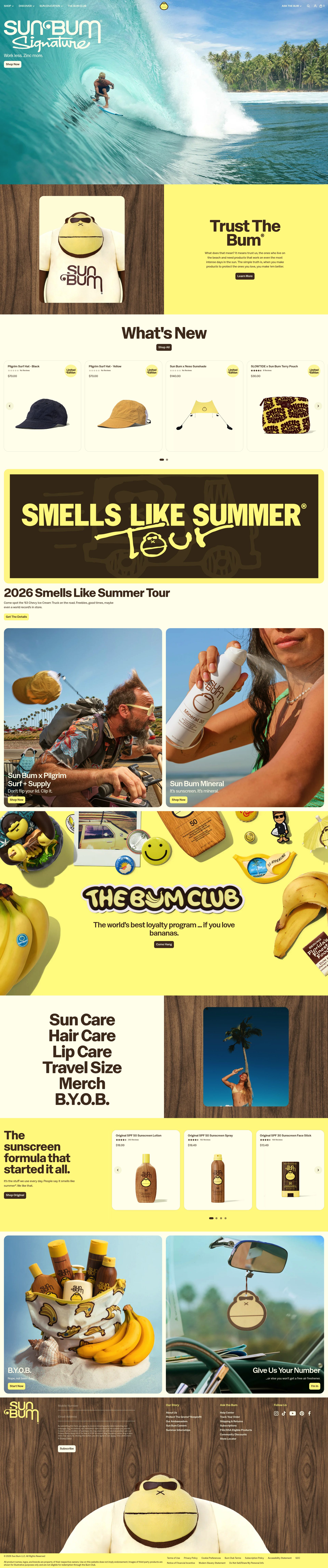
Sun Bum's Shopify store is built on brand character as much as product efficacy: the retro beach aesthetic, the mascot-led branding, and the "mean to be outside" tone run consistently from the homepage through to every product description. That tonal consistency is commercially valuable because it differentiates a product in a category that would otherwise compete purely on SPF number and price. The store does not take itself too seriously, which lowers the barrier for a first-time buyer who is unsure whether sunscreen needs to be a serious purchase.
Product pages cover SPF formulations for face, body, hair, and lips, with cross-sell logic that groups these by activity rather than just product type. A customer landing on the beach spray SPF 70 is shown the lip balm and hair and scalp mist as natural additions. Bundle logic runs throughout collection pages, which lifts average order value without the mechanics feeling forced. Their subscription and loyalty mechanics are integrated into the account area rather than pushed on product pages, which keeps the purchase path clean.
6. Kinfield
Kinfield targets outdoor enthusiasts and the clean beauty crossover market with a dual-benefit product range: SPF, insect repellent, and aftersun formulated without the synthetic fragrance and heavy chemical sunscreens that segment the market. Their Shopify store is structured to communicate that dual-benefit clearly: "SPF for the rest of us" is the brand positioning, and it is delivered consistently across homepage hero sections, product page titles, and email capture copy.
Product pages lead with active ingredients and what each one does, which is the right approach for a customer who has already decided to prioritise clean formulations and wants confirmation before they add to cart. The photography is styled for an outdoor, adventure-forward customer: trail running, camping, coastal settings rather than beach umbrellas. That specificity is a strong merchandising decision because it attracts exactly the customer who values the brand's formulation philosophy. The store's loyalty programme is surfaced within the checkout journey, which is more effective placement than a standalone loyalty page.
7. Supergoop!
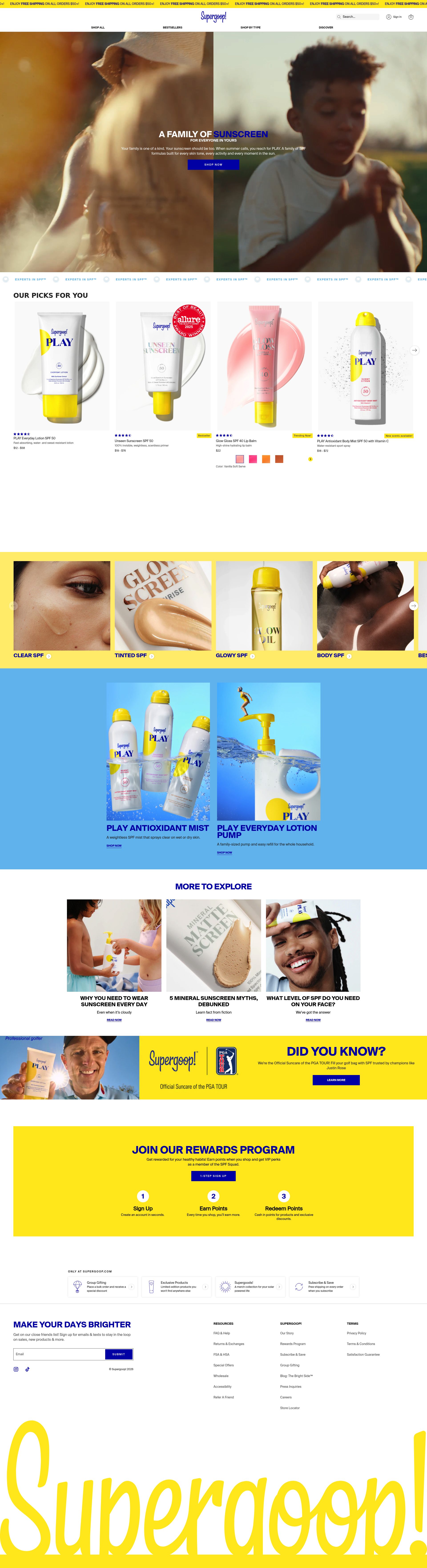
Supergoop! built its brand around a single argument: SPF should be part of your skincare routine, not just a beach product. That positioning is embedded in every page of their Shopify Plus store. Collection navigation is built around usage occasion: "everyday SPF", "makeup with SPF", "SPF for children" rather than SPF numbers. That intent-based structure matches how their target customer thinks about the purchase, which reduces navigation friction and increases time spent in relevant product sections.
Their product pages are among the most information-dense in the category: full ingredient lists with plain-English explanations, dermatologist and aesthetician reviews, and a "complete the routine" section that cross-sells complementary skincare products. The SPF education content is woven into the product page rather than siloed in a separate blog, which keeps customers in the purchase funnel while they are learning. Subscription pricing is displayed alongside one-time pricing on every PDP, with the saving made clear in a way that is easy to compare without any extra clicks.
8. Piz Buin
Piz Buin is one of the longest-established suncare brands in Europe, and their Shopify store reflects a deliberate effort to modernise the DTC experience for a heritage brand. The homepage leads with product benefits rather than brand history, which is the right choice for a customer who is searching by need state rather than brand loyalty. Their "find your protection" navigation guide, accessible from the homepage, filters by skin type and activity and links directly to product pages, which shortens the decision journey for a first-time buyer.
Product pages carry Boots and pharmacy stockist information alongside the direct purchase option, which is an honest approach to a brand with strong retail distribution. Acknowledging that the customer can buy elsewhere builds trust rather than undermining it, because it positions the DTC store as a convenience channel rather than a hard-sell environment. Gift bundles and travel formats are given dedicated collection pages, which surfaces a commercially important product segment that often gets buried in general product listings.
9. Minnidip
Minnidip sits at an unusual crossover of inflatable pool accessories and SPF products, but their Shopify store handles the brand extension well. The sunscreen range is positioned as a natural companion to outdoor water play rather than a standalone product category, which gives the brand a legitimate reason to be in the SPF market and a distinct customer acquisition angle. Their PDPs for SPF products carry the same playful, high-contrast visual language as the inflatable pool products, which reinforces brand coherence across the range.
The store's photography is styled with children and families as the primary subject, which is correct targeting for a product range built around outdoor play. That specificity in imagery reduces the need for long product descriptions: the use case is immediately clear. Add-to-cart mechanics work efficiently on mobile, which matters for a brand whose social traffic skews heavily Instagram and TikTok. Their limited-edition SPF drops create urgency in a category that rarely has it, which is a smart way to drive email list sign-ups and repeat purchase behaviour.
10. Aesop
Aesop's Shopify Plus store is one of the most studied examples of premium brand experience online, and their approach to suncare products within a broader skincare range demonstrates how to position SPF at a luxury price point. The facial hydrating cream with SPF 25 is merchandised within skincare rather than suncare, which is a deliberate positioning choice: the Aesop customer buys skincare, not sun protection. That framing justifies the price point and places the product in a competitive context where Aesop's ingredient quality and formulation philosophy are the relevant benchmarks.
Product pages are long-form by design: botanical ingredient sourcing, formulation rationale, and application guidance are all given space. The photography is tightly controlled: uniform lighting, product isolation, and architectural styling that is consistent across the entire catalogue. Navigation relies on a customer who is willing to browse and discover, which is appropriate for a brand with a loyal repeat purchase base. Their in-store consultation model is integrated into the online experience via a fragrance and skincare consultation tool, which extends the brand's service-led positioning into the DTC channel.
If you sell sunscreen or personal care products on Shopify and want a store that converts on trust and product education, get in touch to find out how SuttonCommerce can help with your Shopify design service.
Frequently asked questions
What makes a sunscreen Shopify store convert well?
The highest-converting sunscreen stores lead with trust signals: dermatologist credentials, transparent ingredient lists, and clinical evidence surfaced on the product page rather than buried in a blog post. Buyers in this category are sceptical of marketing claims, so stores that answer ingredient and efficacy questions before the customer has to ask see measurably lower bounce rates on PDPs.
Which sunscreen brands sell directly on Shopify?
Several major sunscreen brands run their DTC channel on Shopify or Shopify Plus, including Altruist, Bondi Sands, Sun Bum, Kinfield, Supergoop!, and Minnidip. Ultrasun and Soleil Toujours also use Shopify for their direct stores. Piz Buin operates on Shopify alongside significant pharmacy and retail distribution.
How do the best sunscreen stores handle SPF education without losing customers mid-funnel?
The strongest stores integrate education directly into the product page rather than sending customers to a separate blog or FAQ section. Supergoop! embeds plain-English ingredient explanations inline on the PDP. Ultrasun surfaces its once-daily application claim with clinical backing at the top of every relevant product page. The pattern is consistent: answer the sceptical question before the customer thinks to ask it, and keep them in the purchase funnel while you do it.
Do premium sunscreen brands perform better selling DTC or through retailers?
Premium sunscreen brands with a strong formulation story, like Soleil Toujours and Aesop, tend to perform better DTC because they can control the full brand experience and justify price points without competing on a shelf. Mass-market brands with wide distribution, like Piz Buin, use their DTC Shopify store as a convenience and bundle channel rather than a primary revenue driver, and acknowledge stockist availability openly on their product pages.
What subscription and loyalty tactics work for sunscreen brands on Shopify?
Subscription on sunscreen works best when the brand has an everyday SPF product with high repurchase intent, specifically facial SPF and once-daily formulations where the customer already has a habitual use case. Supergoop! and Soleil Toujours both display subscribe-and-save pricing alongside one-time pricing on every PDP. Kinfield integrates its loyalty programme into the checkout journey rather than a standalone page, which is where it has the most influence on the purchase decision.