
Quick summary
Johnstons of Elgin is the benchmark for heritage knitwear on Shopify, using documented fibre sourcing from Mongolian herder to finished garment to justify £300 cashmere. Wool and the Gang stands out for building a dual retail-and-kit model that drives repeat purchases through yarn replenishment. Unbound Merino converts through use-case specificity, answering every practical travel question on the PDP before the buyer raises it as an objection. Paloma Wool proves that creative direction alone can carry a premium price, keeping out-of-stock items live with a waitlist to capture demand rather than lose it.
Knitwear is one of the hardest categories to sell online: the customer cannot feel the hand of the yarn, cannot assess the weight of the fabric, and cannot tell whether a sweater will pill after three washes. The best knitwear stores on Shopify have found precise, repeatable ways to close that gap through product page depth, material transparency, and brand storytelling that earns trust before the buyer even reaches the add-to-cart button. These ten are doing it better than most.
1. Wool and the Gang
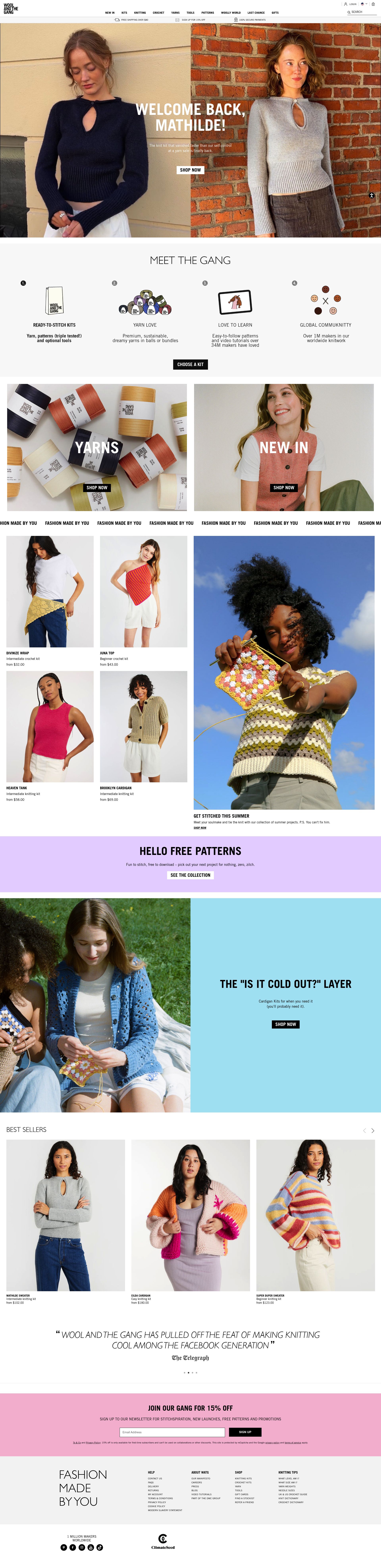
Wool and the Gang runs both a retail knitwear offer and a yarn and knitting kit business from the same Shopify store, and the navigation handles that dual audience clearly. The product taxonomy separates finished knitwear from make-your-own kits without burying either. PDPs for finished garments include fibre provenance (Peruvian alpaca, Scottish lambswool) and weight specifications alongside photography that communicates scale. The sustainability messaging is woven into product descriptions rather than siloed into a dedicated landing page, which gives it more credibility than a standalone "our impact" section that customers rarely visit.
The knit kit side of the catalogue adds a retention mechanic that most knitwear brands miss: customers who buy a kit return for yarn replenishment and supplies, building a transactional relationship that extends well beyond the initial purchase. Pattern PDFs are gated behind account creation, which adds a low-friction incentive to register.
2. Chinti and Parker
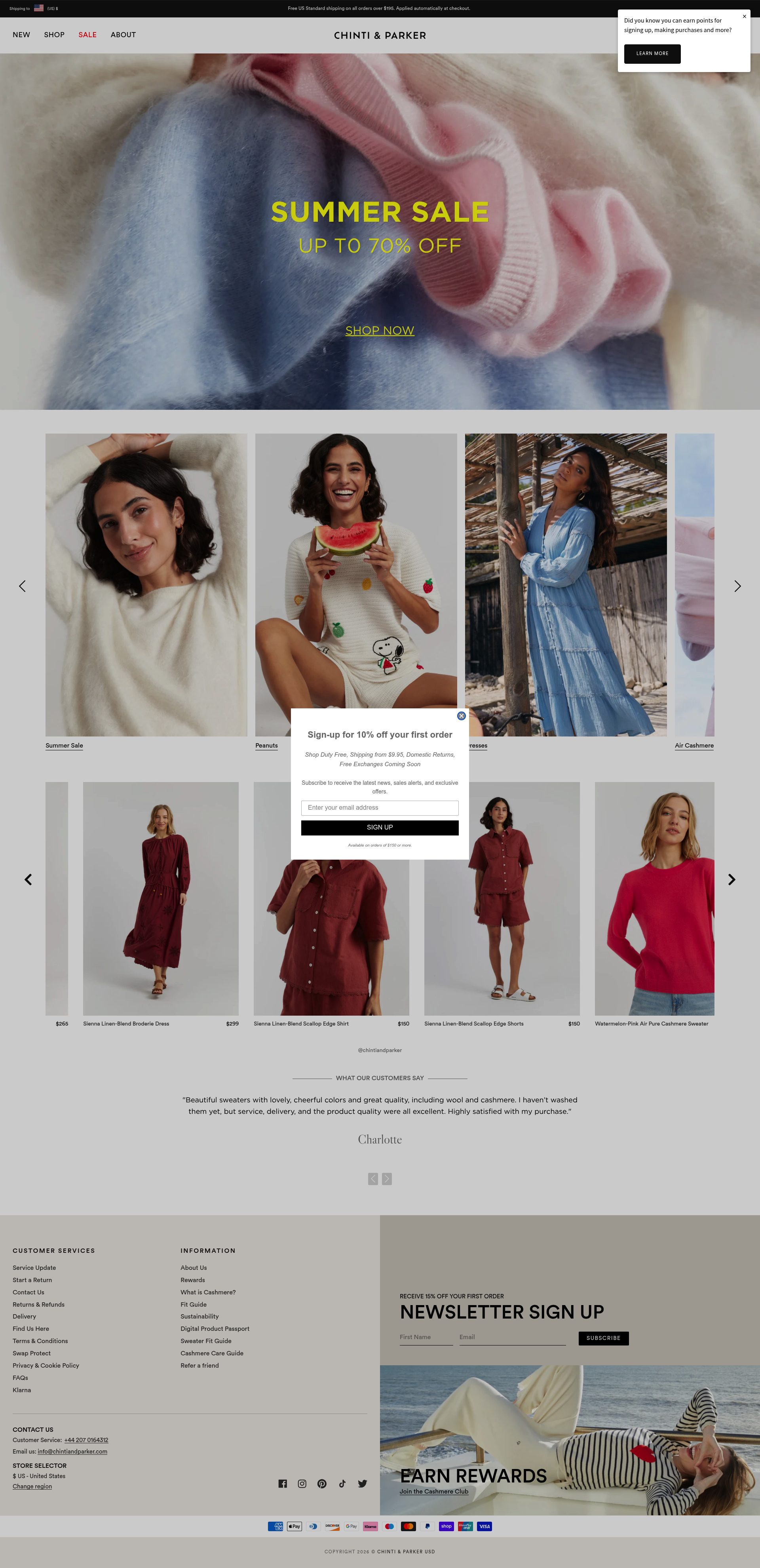
Chinti and Parker's Shopify store is built around premium positioning, and every design choice supports it. The navigation is minimal, the collection structure is edited, and the photography is shot at a quality level that justifies prices starting well above average high street. Their product pages use detail shots extensively: close-up photography of rib texture, intarsia patterning, and cuff construction communicates fabric quality in a way that a straight-on product shot cannot. That level of image investment is a direct conversion tactic for a brand where a jumper can cost £250.
Their end-of-season sale is handled through a dedicated collection page rather than a site-wide percentage banner, which preserves brand positioning. Reducing all prices to a number feels aggressive for a premium brand; filtering older stock into a structured sale section maintains perceived value on the rest of the catalogue.
3. Rowing Blazers
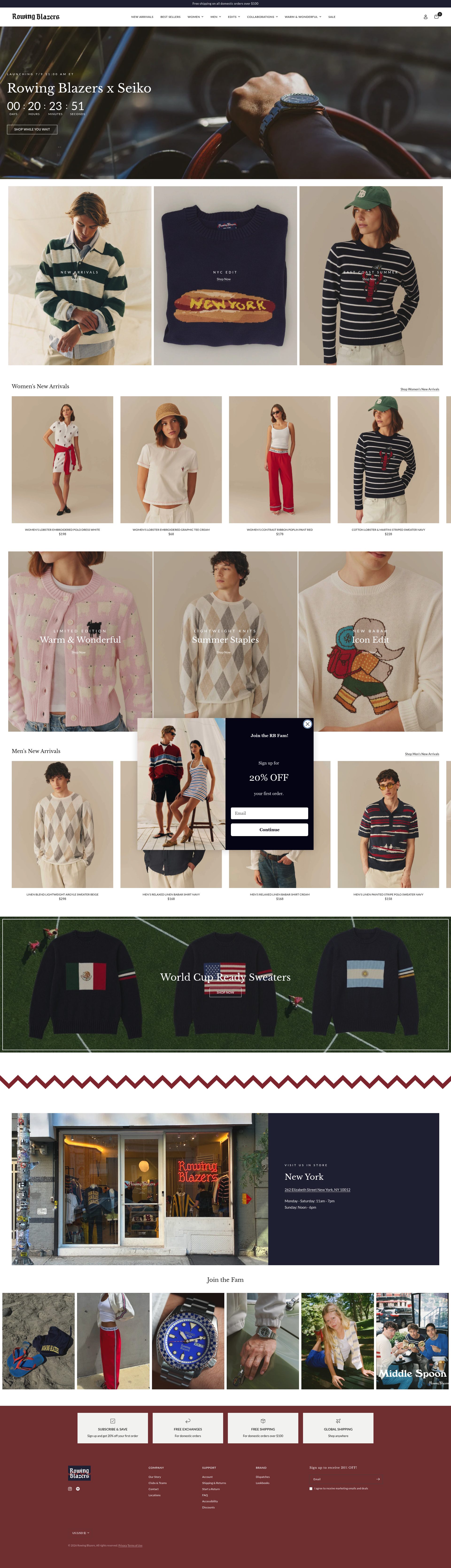
Rowing Blazers is a US Shopify merchant, but they are relevant to any knitwear merchant studying how to build a store around provenance and collaboration. Their knitwear offer is anchored in archive references: Fair Isle patterns, Shetland wool, preppy American collegiate aesthetics. Every product has a story, and the PDPs commit to telling it, often running to three or four paragraphs of background before a single technical spec. That works at their price point because the buyer is paying for provenance and cultural context as much as for the physical object.
Limited drops and collabs are handled through the store in a way that builds urgency without manufacturing it artificially. Customers know stock is genuinely limited because the brand explains why, which is more persuasive than a countdown timer with no backstory.
4. Pangaia
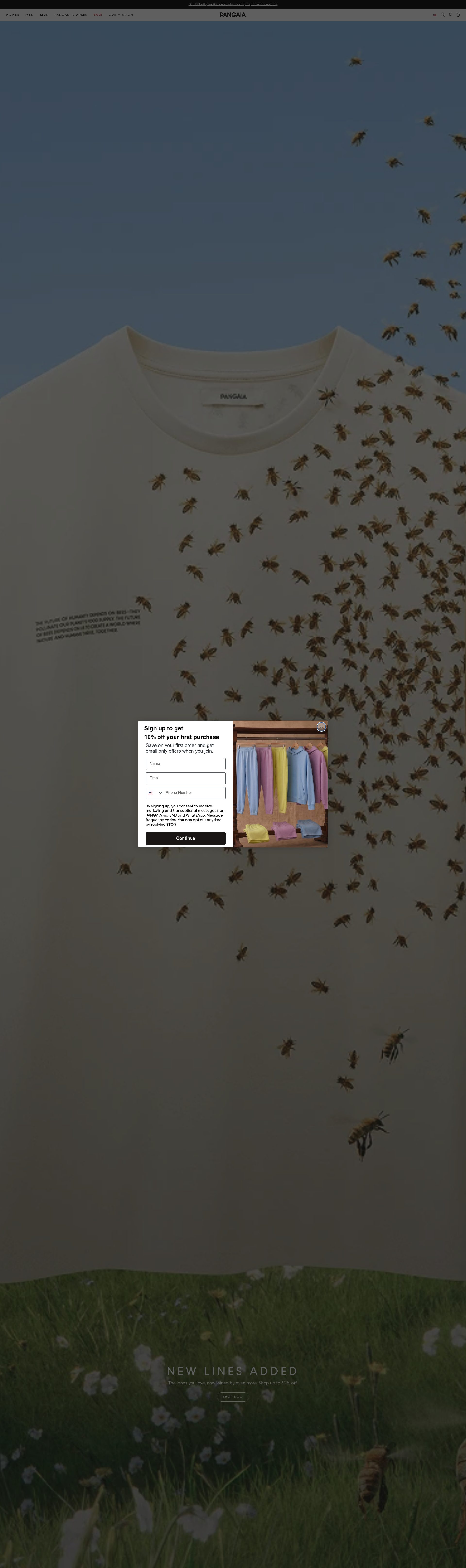
Pangaia's knitwear sits within a broader materials science brand, and their Shopify store treats each garment as evidence of that positioning. Product pages lead with the material story: FLWRDWN insulation, seaweed fibre, recycled cotton. Every claim is backed by a specific fact or certification rather than a vague environmental commitment. The transparency is both an ethical choice and a smart conversion tactic: a customer reading a PDP for twenty minutes because the material science is genuinely interesting is a customer who is ready to spend £150 on a hoodie.
Their collection structure groups by material as well as by product category, which is an unusual navigation choice that works because the material is often the reason a returning customer comes back. A buyer who loved the FLWRDWN jacket wants to see what else uses that technology.
5. Nagnata
Nagnata is an Australian brand running on Shopify whose knitwear and active pieces have built a strong UK and international following. Their store is a tight editorial operation: a small, curated catalogue, no visual clutter, and product photography that treats each garment as an art object. The limited SKU count is a strategic choice: it reduces decision fatigue and signals that everything in the store has been edited to meet a standard. That editorial restraint is a positioning decision as much as a practical one.
Their size and fit notes are unusually detailed for the category: each PDP includes the model's measurements, the exact size photographed, and specific guidance on whether the piece runs oversized or fitted. That specificity reduces return rates on a product type where fit is the primary driver of returns.
6. Johnstons of Elgin
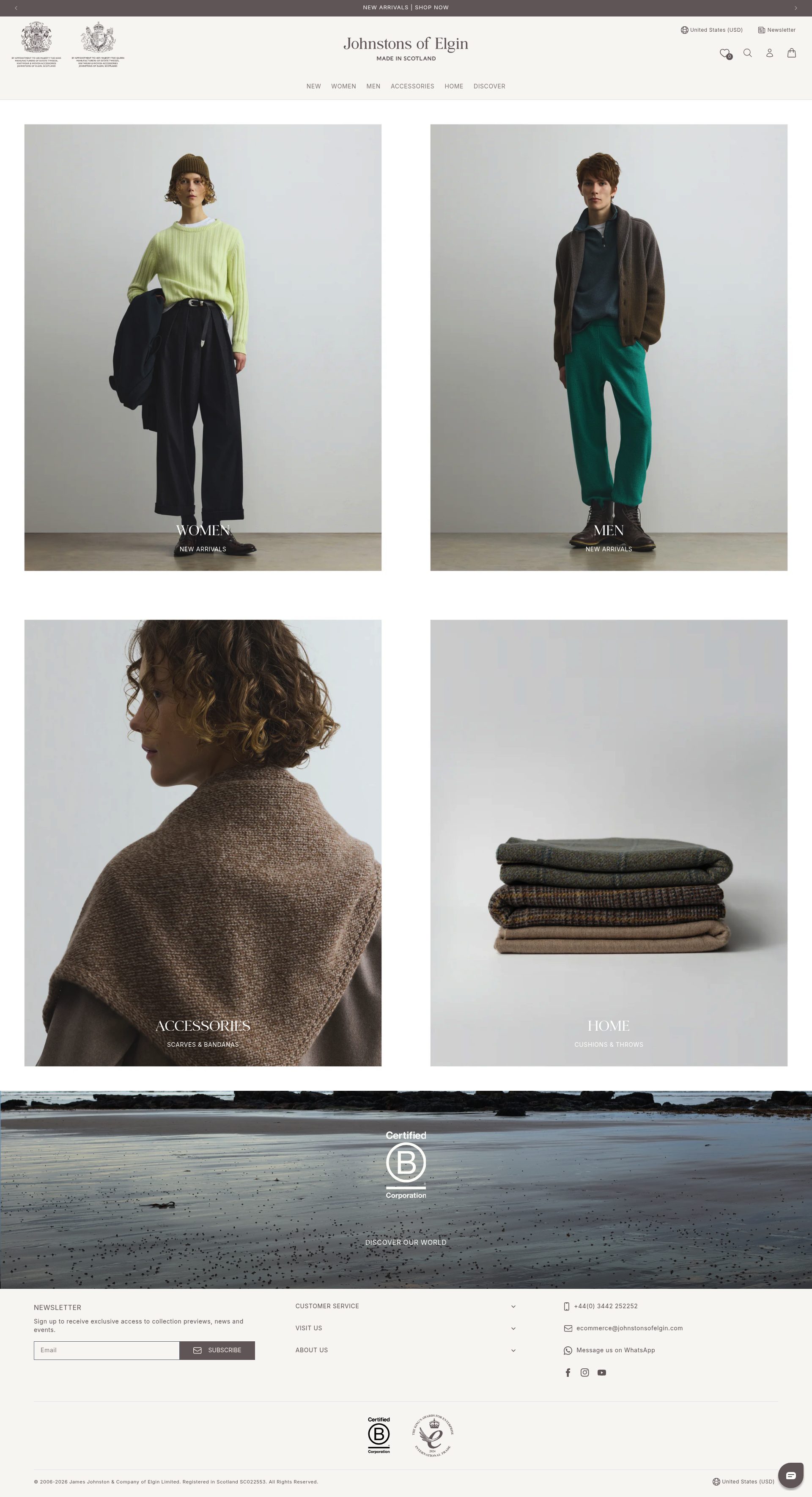
Johnstons of Elgin has been weaving at their Elgin mill since 1797, and their Shopify store makes that heritage operational rather than decorative. The cashmere sourcing chain is documented from Mongolian herder to finished garment, with mill visit content and craftsperson profiles sitting alongside standard PDPs. That depth of provenance content is not marketing filler: it is the primary reason a customer chooses a £300 cashmere jumper from a Scottish mill over a cheaper alternative. The store supports that decision with evidence.
Their gifting mechanic is strong: gift boxes, monogramming, and a dedicated gifting guide make the store easy to navigate as a gift destination, which is an important revenue channel for a premium knitwear brand with high average order values. Gifting customers often have a higher willingness to spend than customers buying for themselves.
7. Begg x Co
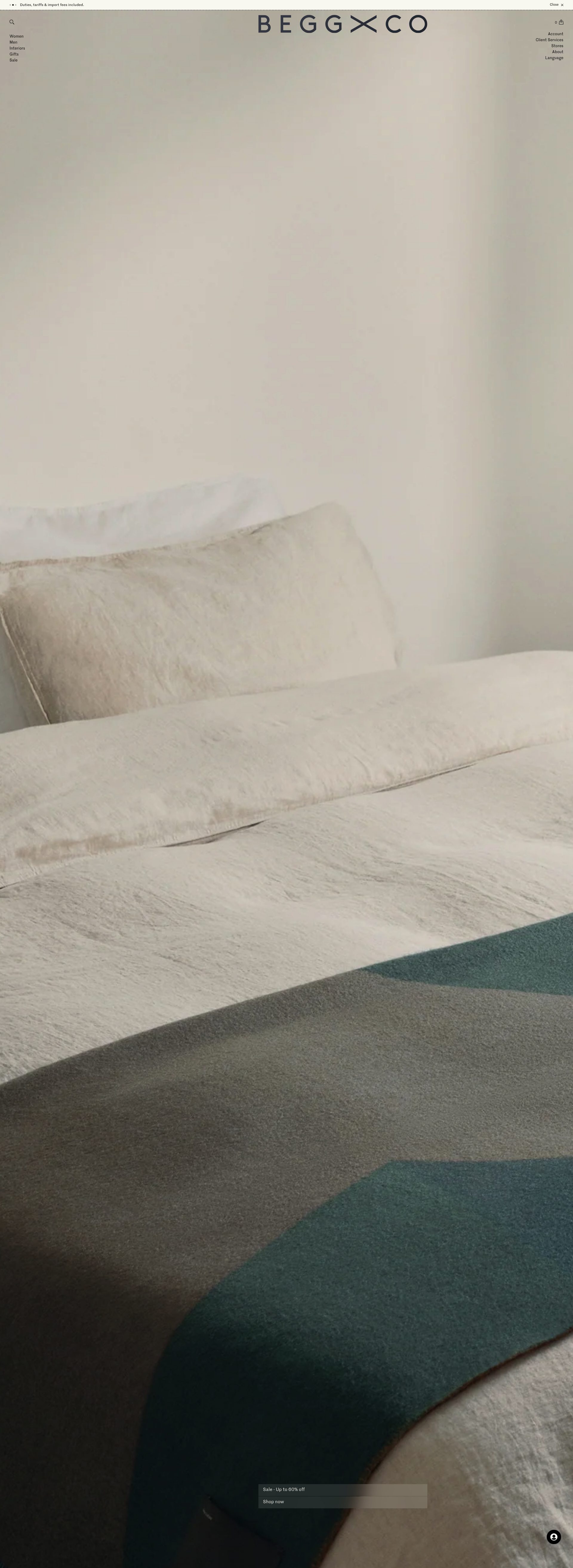
Begg x Co is a Ayrshire mill brand whose Shopify store handles luxury scarves and wraps alongside knitwear. The store design is stripped back in a way that communicates confidence: no pop-ups, no urgency banners, no loyalty points messaging on the homepage. That absence of conversion pressure is itself a signal to a luxury buyer that they are in the right place. Premium customers are often repelled by tactics that imply the brand needs to push them to buy.
Product pages use an accordion pattern to organise care instructions, fibre sourcing, and delivery detail without overwhelming the above-the-fold view. The photography is consistently shot on a plain ground with strong directional light, which prioritises fabric texture over model lifestyle, which is the right call for a product where material quality is the headline.
8. Drakes
Drakes is a London menswear brand whose Shopify Plus store covers shirting, accessories, and knitwear. Their editorial approach is one of the strongest in UK menswear DTC: a regularly updated journal covers cloth sourcing, maker visits, and how-to-wear guides that build the kind of sustained brand engagement that makes knitwear at £200 feel like a considered investment rather than an impulse. The journal articles are not gated and are regularly indexed by Google, which drives organic acquisition from customers researching fabric types and style questions.
Their product pages for knitwear include yarn weight, gauge, and construction details (fully fashioned versus cut-and-sew) that are exactly the information an informed menswear customer uses to justify a high-ticket purchase. Writing for the informed customer signals quality to customers who are still learning.
9. Unbound Merino
Unbound Merino is a Canadian DTC brand that built its Shopify store around a single performance claim: merino wool that travels. Their knitwear is positioned at the intersection of travel and wardrobing, and every PDP supports that positioning through specific use-case copy: how many days you can wear a piece before washing, how it packs into a carry-on, how it performs across climates. That use-case specificity is a direct response to the question a buyer has when evaluating merino at £150, and answering it on the PDP removes the objection before it becomes a reason not to buy.
Their FAQs are unusually practical: they address the "does it smell" question directly, which is either a credibility signal or a brand with a lot of returns to deal with. Answering awkward questions about your product builds more trust than avoiding them.
10. Paloma Wool
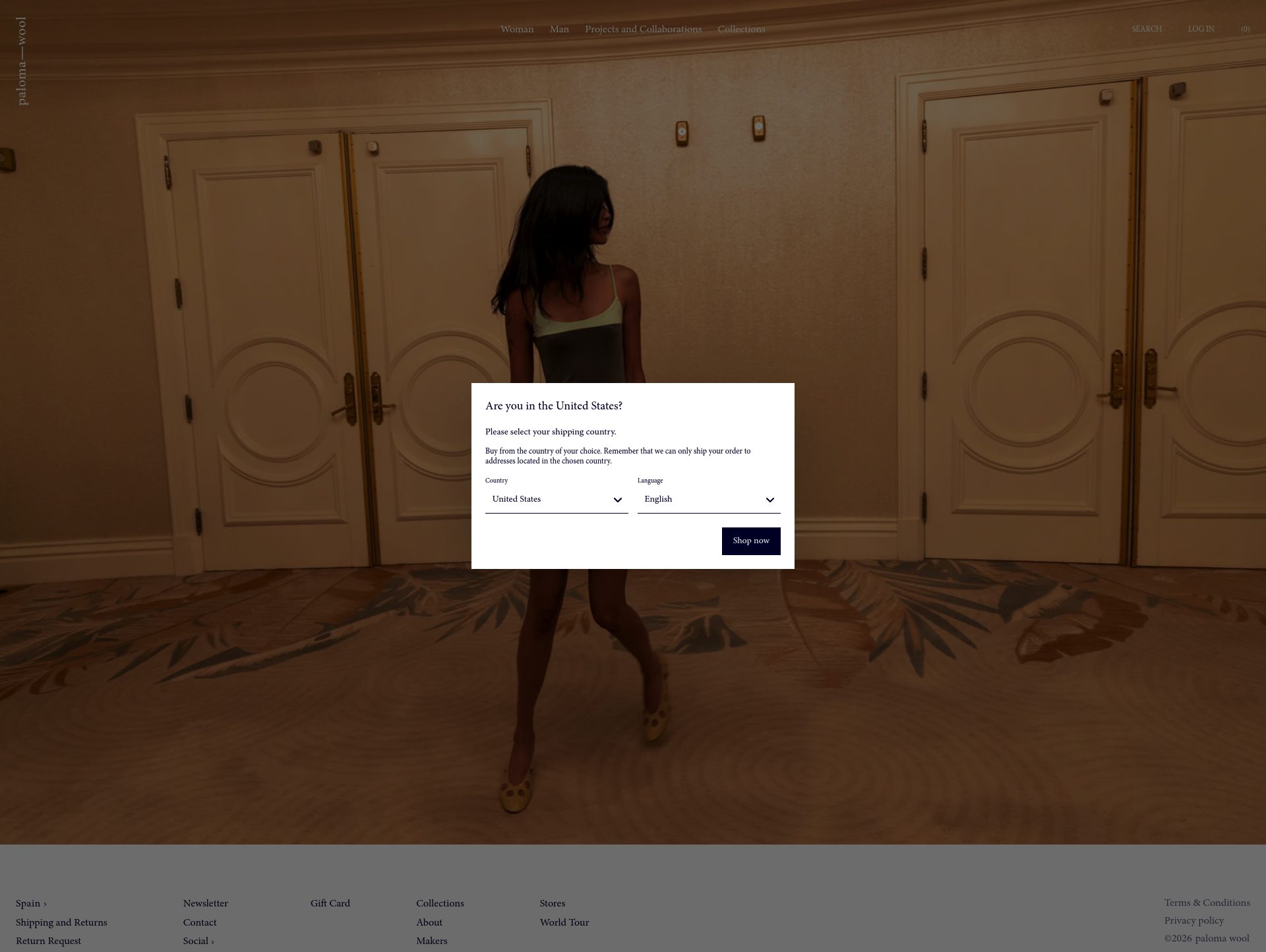
Paloma Wool is a Barcelona-based brand on Shopify whose knitwear has developed a strong following in the UK and internationally. Their store is a case study in how creative direction can function as a conversion tool: the photography, editorial content, and campaign imagery create a coherent visual world that makes the product feel like an object of desire before the customer reads a single spec. For a brand where the knitwear is often hand-finished and produced in small runs, that creative consistency is what commands the margin.
Their scarcity mechanics are credible because the production runs are genuinely small: out-of-stock items are left visible on the site with a waitlist option rather than removed, which captures demand that would otherwise be lost and gives the brand data on what to restock. That waitlist approach is a better retention tool than a generic newsletter sign-up for a brand whose customers are specifically motivated by limited production.
If your knitwear store is not converting at the level these brands achieve, the issue is usually product page depth and material storytelling. See our Shopify design service or get in touch to discuss what your store needs.
Frequently asked questions
What makes a knitwear Shopify store convert well?
Product page depth is the single biggest factor. Knitwear buyers cannot feel the fabric, so the store has to do that work through fibre provenance, weight specs, close-up texture photography, and specific fit notes. Stores that treat those elements as optional extras leave money on the table.
Which Shopify knitwear brands are best for sustainable shoppers?
Pangaia and Wool and the Gang are the strongest options. Pangaia leads on material science credibility, backing every environmental claim with a specific fact or certification rather than vague language. Wool and the Gang is transparent on fibre sourcing and integrates sustainability into product descriptions rather than a standalone page most customers never visit.
How do premium knitwear stores justify high price points on Shopify?
The best ones use provenance content, not discounting. Johnstons of Elgin documents the cashmere sourcing chain from Mongolian herder to Scottish mill. Rowing Blazers runs three or four paragraphs of archive context on each PDP. That level of storytelling tells the buyer they are purchasing something with a genuine backstory, which is what justifies a £200-plus price tag.
Should knitwear stores show out-of-stock products on Shopify?
Yes, for limited-production brands. Paloma Wool leaves sold-out items visible with a waitlist option rather than removing them, which captures purchase intent that would otherwise be lost entirely. It also signals genuine scarcity without manufacturing it artificially, which is more persuasive for a customer who has seen countdown timers misused elsewhere.
What retention mechanics work best for knitwear brands on Shopify?
Wool and the Gang's knitting kit model is the most effective example in this list: customers who buy a kit return for yarn and supplies, building a transactional relationship that extends well beyond a single garment purchase. For pure knitwear brands without a kit offer, gifting mechanics like Johnstons of Elgin's monogramming and gift box service drive repeat purchase from high-AOV gift buyers.