
Quick summary
Osprey sets the benchmark for technical pack stores on Shopify, with torso-fit guides and function-specific feature explanations that justify prices up to £350. Petzl stands out in safety-critical gear by leading every PDP with EN and UIAA certification numbers before any feature copy — the right priority for life-safety equipment. Ortlieb earns trust fast by opening every product page with its IPX rating and test conditions, which is exactly what a kayaker or touring cyclist needs before anything else. Palm Equipment handles the drysuit sizing problem better than almost any specialist store, with video-guided measuring and a direct route to custom sizing for buyers who fall outside standard fits.
Outdoor adventure is one of the most demanding categories in ecommerce. The buyer is often experienced, gear-literate, and buying something they will depend on in a remote location where a wrong choice has real consequences. They will read every specification, question every claim, and leave a store the moment they sense marketing taking precedence over accuracy. The Shopify stores that succeed in this space have built their entire product presentation around that buyer: technical depth, credible provenance, and a store structure that treats product discovery as part of the purchase decision. Here are ten doing it well across climbing, kayaking, mountaineering, and expedition.
1. Sea to Summit
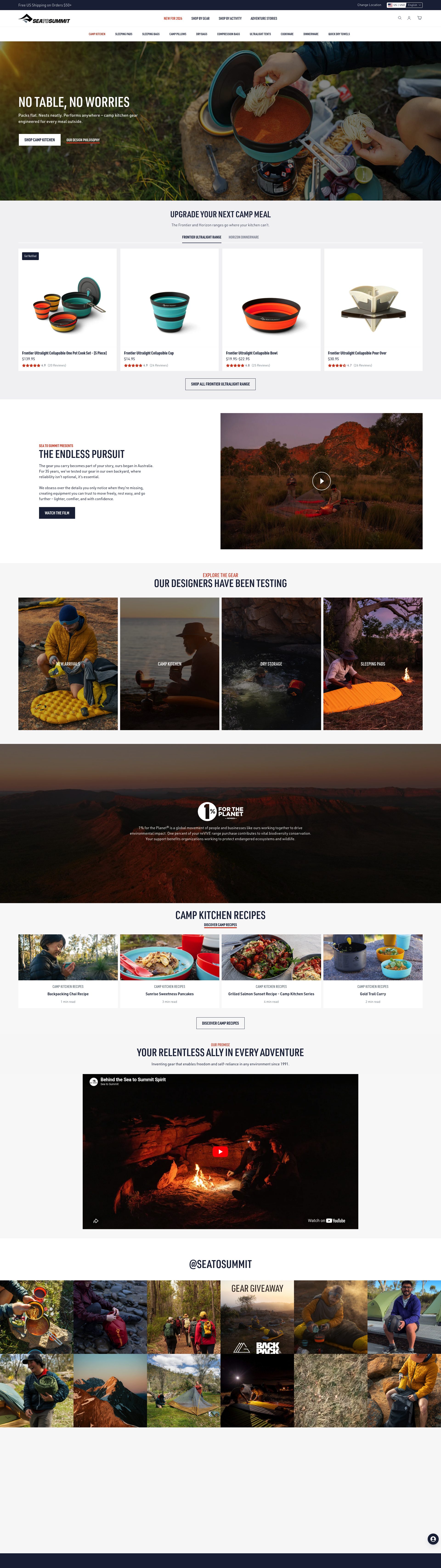
Sea to Summit is an Australian adventure equipment brand specialising in lightweight and packable gear for kayakers, hikers, and expedition travellers: dry bags, sleeping bags, camp kitchen, and pack accessories. Their Shopify store manages a wide product range without sacrificing the detail that a technical buyer needs. Collection pages are organised by activity and environment rather than by product type, so a kayaker can find a relevant gear list without wading through hiking-specific kit. That activity-led navigation reduces cognitive load in a catalogue that spans hundreds of SKUs across very different use cases.
Product pages carry weight, packed dimensions, and volume ratings for every relevant item, which are the three numbers an adventure buyer checks before anything else. Their dry bag PDPs include immersion test ratings alongside volume options, and the sizing guidance distinguishes between day paddle, overnight, and multi-day expedition use cases with specific volume recommendations for each. That level of packing guidance embedded directly in the PDP reduces post-purchase regret on a category where buying the wrong size means starting a trip without workable storage.
2. Osprey
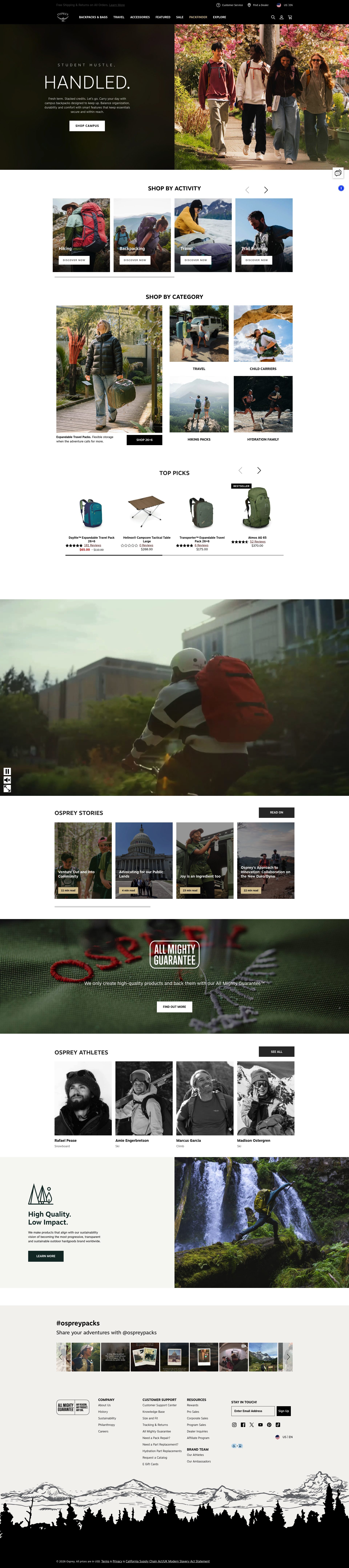
Osprey is the benchmark for technical pack design in the adventure market, and their Shopify store reflects the complexity of a brand that sells packs for alpine climbing, multi-day kayak touring, trail running, and everyday commuting from the same catalogue. The navigation separates adventure, travel, and everyday carry into distinct pathways, which prevents a buyer looking for a crevasse-rescue-compatible alpine pack from landing on a laptop bag collection. Within the adventure section, packs are filterable by volume, gender fit, and intended use, which narrows a large product set to a relevant shortlist in a few clicks.
Their product pages are among the most detailed in the outdoor industry on Shopify. Every pack PDP includes a full feature list with function-specific explanations: ice axe attachment points, hydration reservoir compatibility, hip belt load transfer ratings, and harness adjustment range are all named and explained in context. The fit guide integrates torso measurement instructions with a recommendation system that suggests the correct back length for each model. That detail is a direct conversion lever for a buyer spending £150 to £350 on a pack they intend to use in demanding conditions where fit failures have physical consequences.
3. Fjallraven
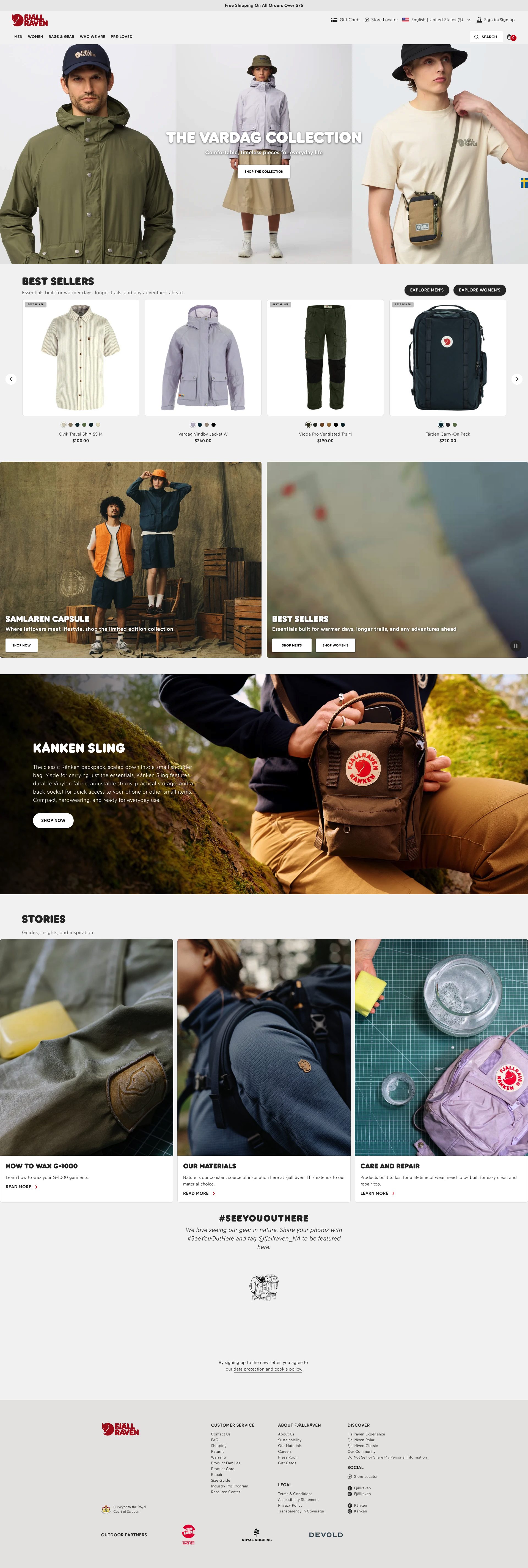
Fjallraven is a Swedish outdoor brand with a distinctive design identity built around their waxed G-1000 fabric and a philosophy of gear made to last decades. Their Shopify Plus store carries that identity through consistently: the store feels considered and unhurried, which matches the purchasing mindset of a buyer looking for a pack or jacket they intend to own for a long time. Navigation separates trekking, mountaineering, and lifestyle collections, with the more technical expedition range given its own entry point distinct from the brand's more accessible everyday products.
Their G-1000 fabric has its own dedicated education section integrated into PDPs, explaining the wax treatment process, the re-waxing maintenance routine, and the conditions the fabric handles versus its limits. That transparency builds trust with a buyer who is sceptical of vague waterproof claims, and it sets accurate expectations that reduce returns from buyers who did not understand what the product was designed for. Fjallraven's Keb and Vidda Pro trouser lines have individual product pages that document articulation, reinforcement placement, and recommended layering in terms specific to mountain trekking rather than generic outdoor use.
4. Petzl
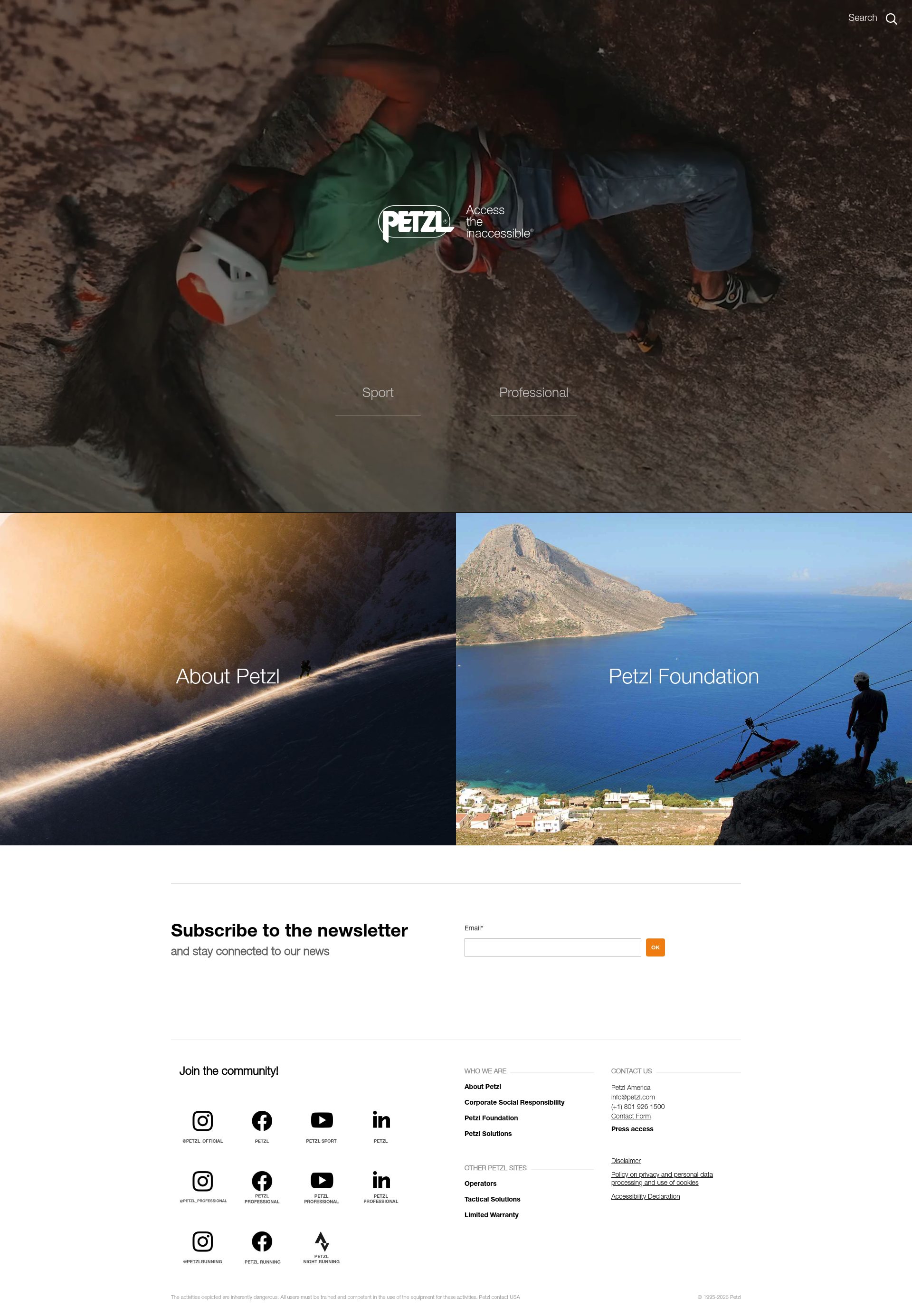
Petzl is a French manufacturer of headlamps, climbing harnesses, and technical rescue equipment, and their Shopify store carries the weight of safety-critical product responsibility throughout. Product pages for harnesses lead with the EN and UIAA certification numbers before any feature description, which is the correct priority order for a buyer purchasing life-safety equipment: the certificate comes first, then the features. Their headlamp PDPs use a structured comparison approach that shows lumen output, beam distance, battery life, and IP rating side by side across the range, which makes it straightforward to identify the right model for a specific climbing or caving context.
Petzl's NFPA-certified technical rescue equipment has its own separate store section with additional documentation requirements and specific guidance on professional use, which correctly separates that category from consumer climbing gear and prevents a recreational buyer from over-specifying into a product they have no training to use safely. That kind of considered catalogue architecture is rare and valuable: it signals that the brand understands their customer base is segmented and that selling rescue kit to an untrained buyer serves no one. Their "My Petzl Light" personalisation tool allows buyers to configure headlamps with different battery types and accessories, which increases AOV on a comparatively low-cost category.
5. Palm Equipment
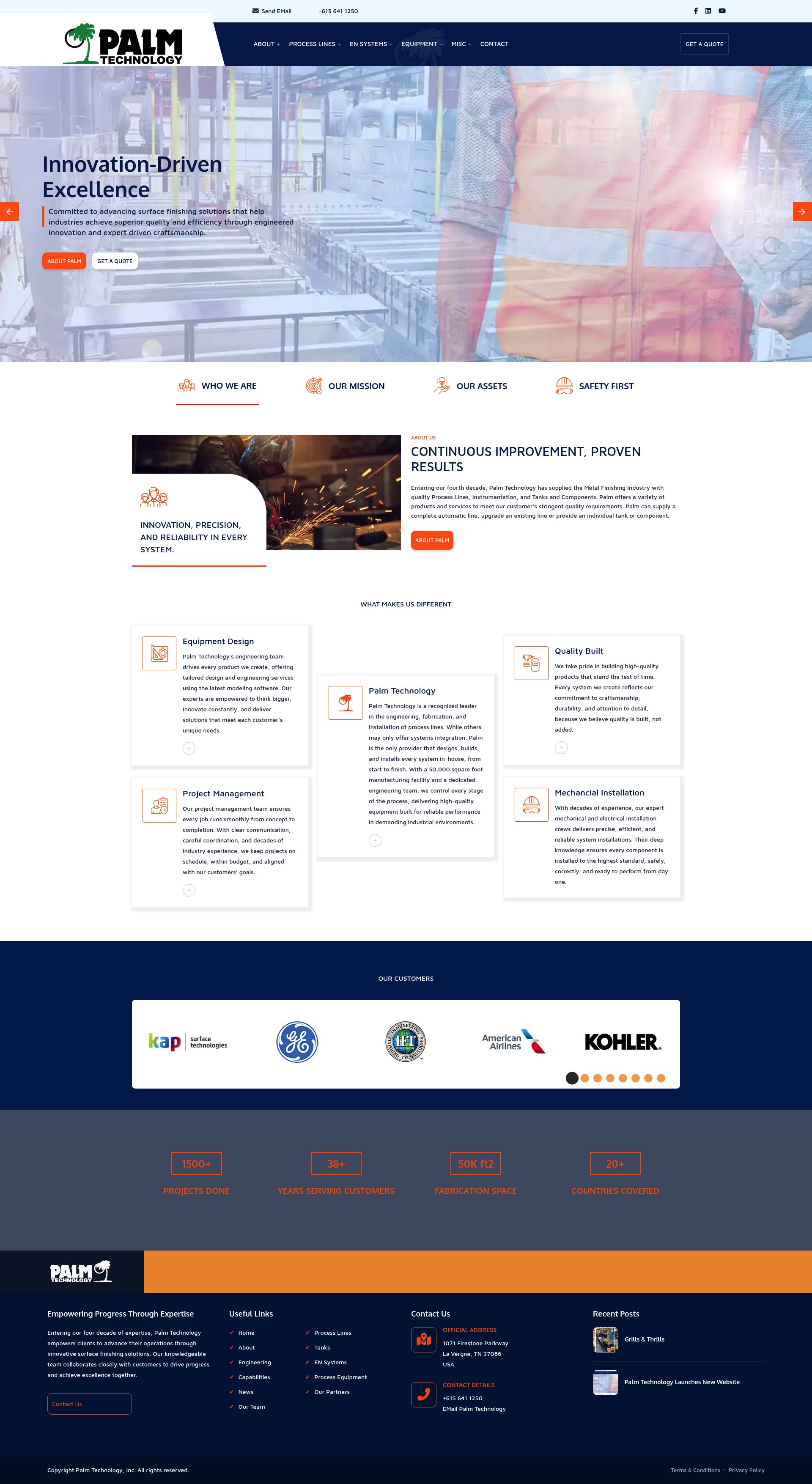
Palm Equipment is a UK-based whitewater and sea kayaking brand with a strong DTC operation on Shopify, selling drysuits, buoyancy aids, paddling jackets, and accessories. Their store is well-structured for a buyer who arrives knowing what type of paddling they do: white water, sea kayaking, and touring are separated clearly at the navigation level, and within each category the product presentation is specific to the hazards and conditions of that discipline. A whitewater drysuit PDP will reference the neck seal compatibility with helmets and the reinforcement placement for kayak cockpit egress, which are the details a river paddler actually cares about.
Their drysuit sizing process is handled with unusual care: the PDP includes a video guide to measuring for a custom fit and a direct route to their custom sizing service for buyers who fall outside standard measurements. Drysuits are a high-ticket, high-fit-dependency purchase where buying the wrong size is expensive and dangerous in cold water, and Palm's store treats that risk seriously rather than presenting a generic "see size guide" link. Their product photography includes water-level shots showing garments under realistic paddling conditions, which gives the buyer better information than a studio shoot on a mannequin.
6. Mountain Hardwear
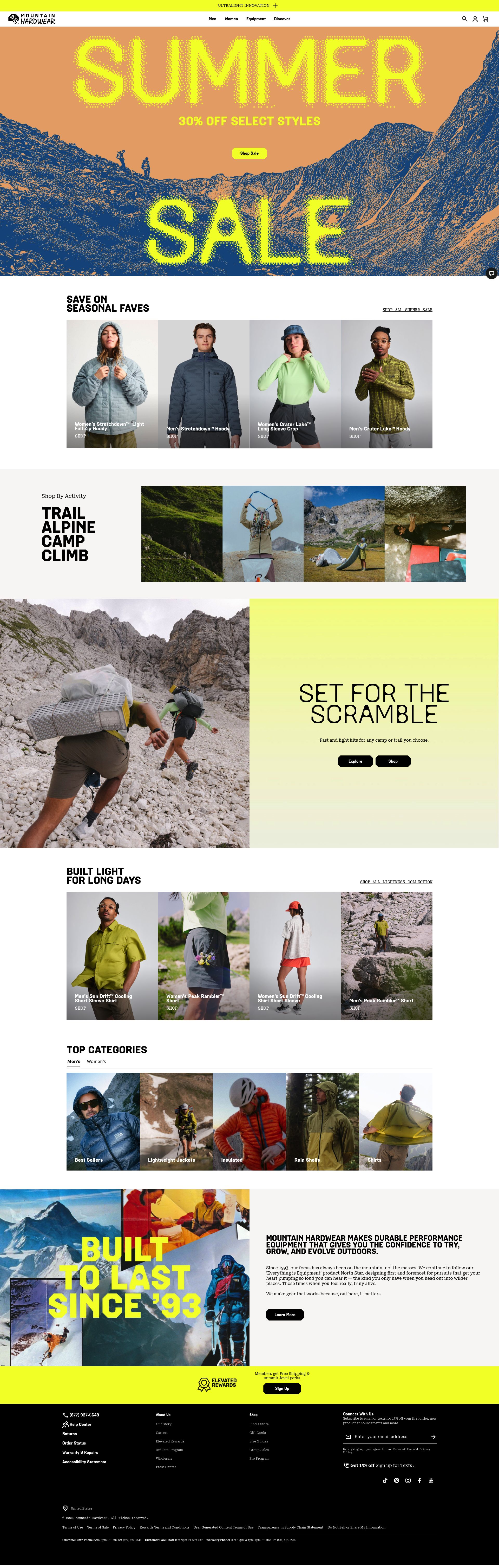
Mountain Hardwear is a US-based technical mountaineering and alpine apparel brand with a Shopify store that serves a buyer who is planning high-altitude objectives rather than casual hiking. Their product range centres on hardshells, insulated layers, and camping equipment designed for severe weather conditions, and the store communicates this positioning clearly: PDPs reference specific mountaineering applications, temperature ratings use a graduated system that distinguishes between comfort, lower limit, and extreme cold, and the materials section names specific fabric and insulation technologies with performance data attached.
Their Absolute Zero sleeping bag and Ghost Whisperer jacket lines have dedicated product stories embedded in their PDPs rather than relying on generic spec sheets. The Ghost Whisperer jacket page explains why the 800-fill-power goose down and the 7-denier shell fabric are necessary for an alpine climber who needs warmth-to-weight ratio at the limit of what is technically achievable. That narrative-plus-specification structure works well for a high-ticket product in a category where buyers are choosing between items on weight differences of 30 grams. Mountain Hardwear also handles international sizing well, with EU, UK, and US conversions on every apparel PDP.
7. Ortlieb
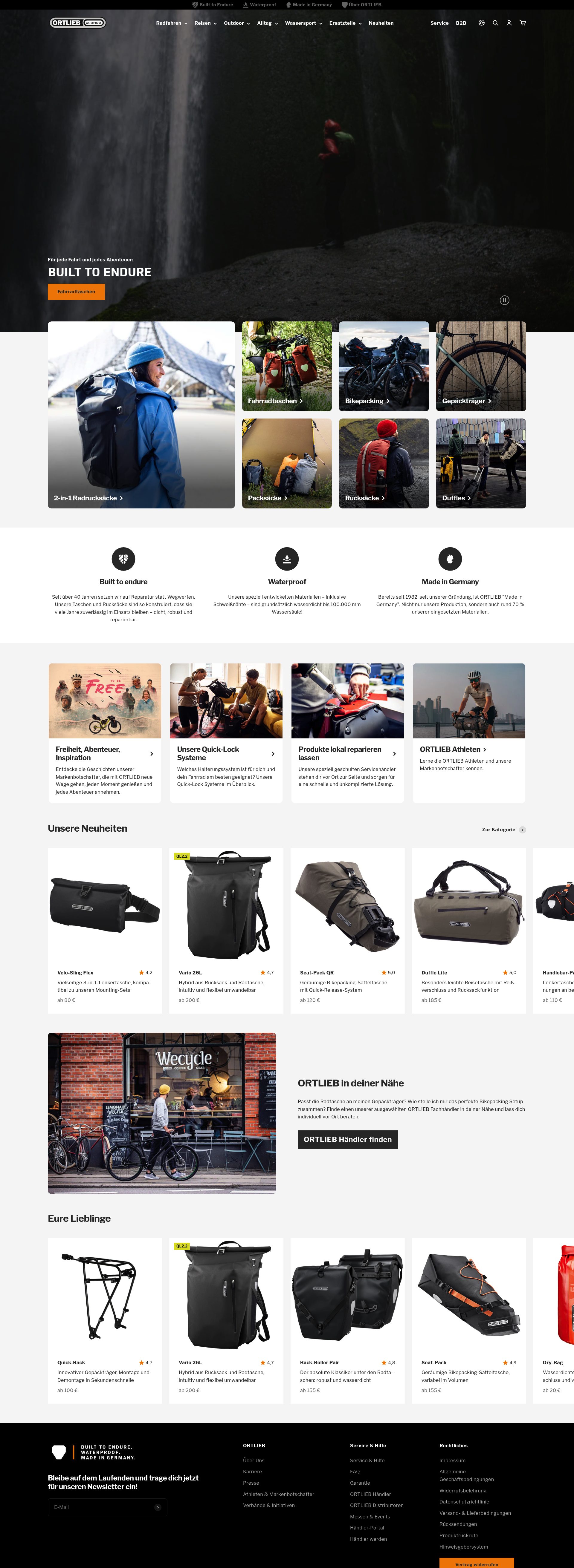
Ortlieb is a German manufacturer of waterproof bags, panniers, and dry bags with a reputation built on genuine waterproof performance in touring and expedition cycling and kayaking. Their Shopify store leads with function and protection standard rather than aesthetics: every product page opens with the IPX rating and the test conditions it was validated against before any feature description or lifestyle image. That ordering is exactly right for a buyer whose primary concern is whether the bag will keep their kit dry in a capsize or a sustained downpour at sea, not whether it looks good in a product photo.
Their pannier and dry bag range is presented with volume, weight, and closure system as the primary attributes, with secondary comparison tables that show how each model in a line differs in closure type, strap configuration, and attachment system. That structured comparison reduces the navigation burden for a buyer who has identified their use case, kayak touring or bikepacking, and needs to choose between three models in the same line. Ortlieb's warranty and repair section is unusually detailed: buyers can order replacement buckles, straps, and closure components directly, which is a meaningful signal for a brand whose positioning centres on products that outlast their competitors.
8. Tentsile
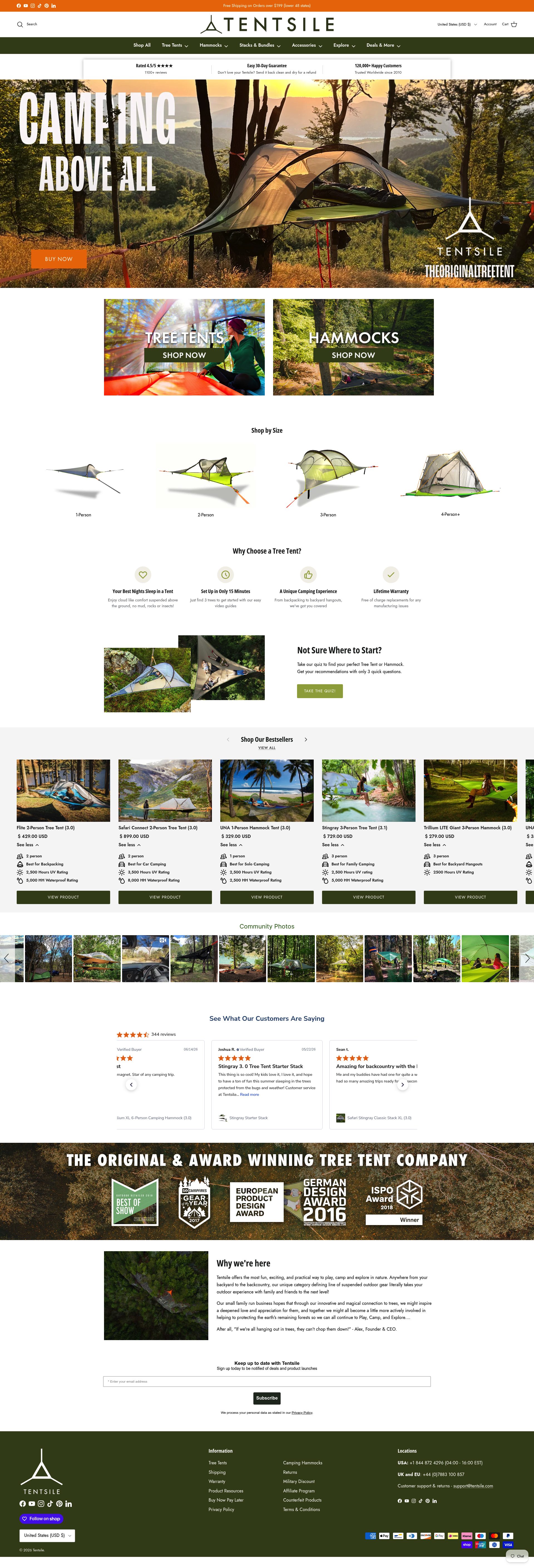
Tentsile is a UK-based brand making tree tents: suspended hammock-tent hybrids designed for camping in tree canopy rather than on the ground. Their Shopify store needs to solve a specific problem: selling a product type that most buyers have never seen before, at a price point between £200 and £700, to a buyer who has no reference point for what it delivers in practice. The store handles this through a combination of detailed use-case video content embedded in PDPs, a setup guide that walks through the anchoring and tensioning process step by step, and a curated collection of customer expeditions and adventure photography that shows the tent in real environments rather than a studio backdrop.
The product pages address the practical concerns a first-time buyer will have directly: load ratings per anchor point, minimum tree diameter requirements, weather performance at different wind speeds, and compatibility with hammock under-quilts for cold-weather use are all covered in the PDP rather than requiring the buyer to search a FAQ or contact support. That pre-emptive information architecture reduces abandonment on a product where buyer hesitation is driven by unfamiliarity rather than price sensitivity. Their "Which Tentsile?" tool filters by group size, season, and intended use and returns a recommended model with a comparison of the top alternatives, which handles buyer education at scale without requiring live sales support.
9. Vango
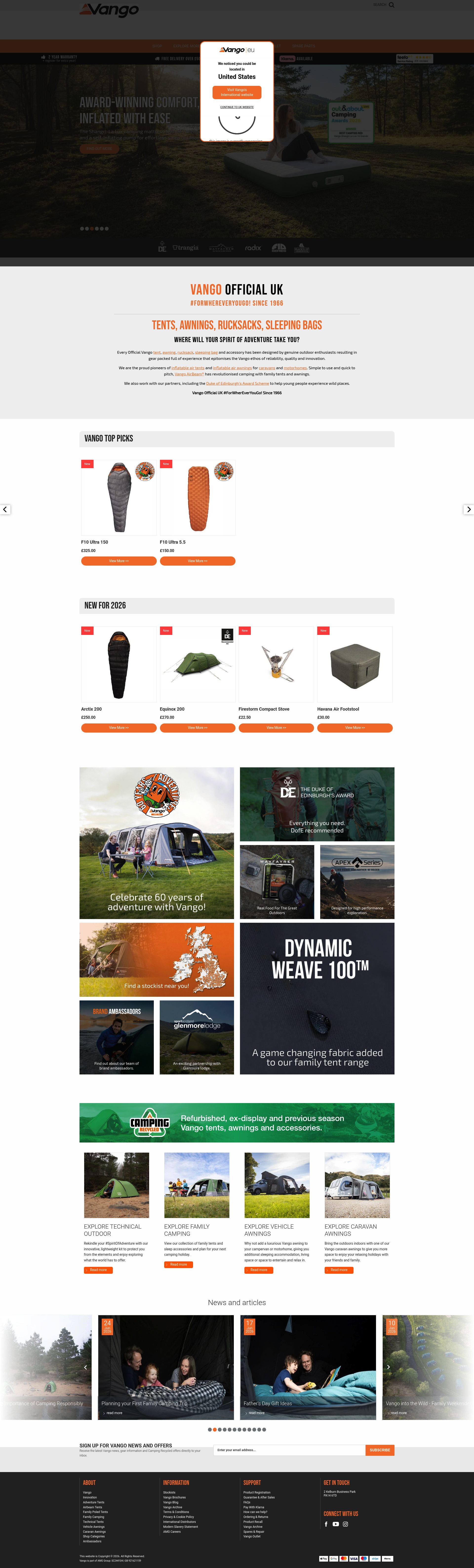
Vango is a Scottish outdoor brand with heritage in tents and camping equipment, and their Shopify store covers a broad catalogue from family camping through to serious three-season mountaineering shelters. The range breadth means the navigation challenge is significant: the store separates pitching types (tunnel, dome, geodesic), season ratings (two-season through to mountain four-season), and group sizes effectively, with each collection page carrying enough editorial framing to help a buyer understand where a product sits on the spectrum from accessible to technical.
Their mountain tent PDPs, particularly the Force and Helium series, include pole configuration diagrams, peg placement guides, and pitch time estimates under different conditions. For a mountaineer buying a tent to use on a Scottish ridge or alpine approach, those details are as important as the weight figure. Vango integrates a pitch weight versus packed weight comparison on every relevant PDP, which matters to a buyer who carries the tent on their back but needs it to perform in high wind. Their customer review integration filters by use type, so mountaineers can read reviews from other mountaineers rather than from buyers who used the same tent for a music festival.
10. Deuter
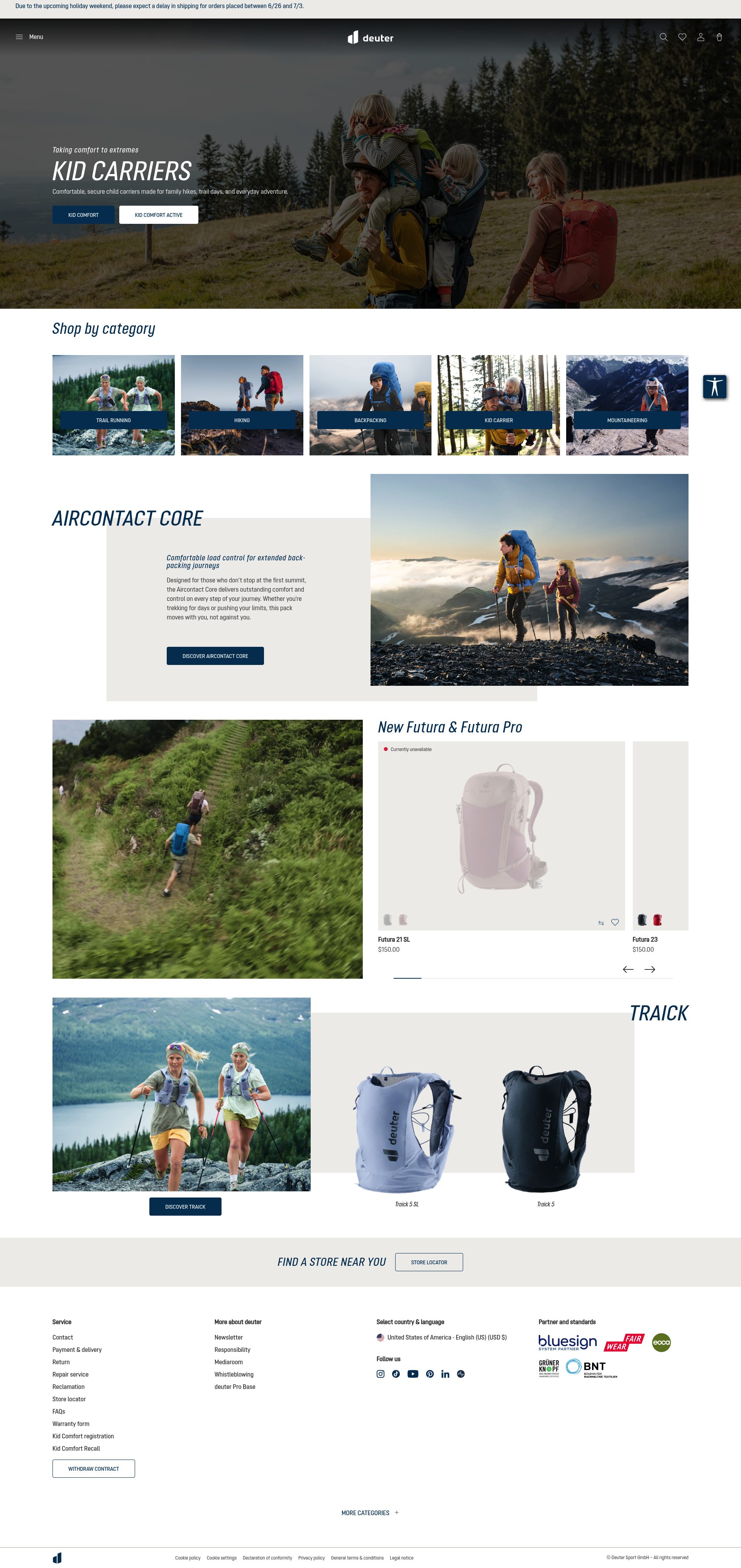
Deuter is a German pack brand with over 120 years of manufacturing heritage, and their Shopify store serves a buyer across trail running, climbing, mountaineering, and multi-day trekking from the same catalogue. Their Aircomfort and Aircontact back system technology has dedicated landing pages that explain the ventilation channel design, the load transfer mechanism, and which system suits which carrying load and activity type. That technology content is accessible from relevant product PDPs via an inline link rather than only from a top-level navigation item, which means buyers who arrive directly at a product page do not miss the information that justifies the system's price premium.
The mountaineering and summit pack range is distinguished from the general hiking range by both navigational separation and product page framing: summit packs reference crampon attachment, ice axe loops, and rope compression straps specifically, and the PDP imagery includes the packs in use on technical terrain rather than rolling meadow. Deuter's fit guarantee, which allows customers to exchange packs within 30 days if the fit is wrong, is surfaced prominently on PDPs rather than buried in a returns policy page. For a buyer spending £150 to £300 on a technical pack, that policy removes the last significant barrier to buying without being able to try the pack in store.
How These Stores Compare
| Brand | Niche Focus | Price Point | Shopify Standout |
|---|---|---|---|
| Sea to Summit | Lightweight adventure equipment | Mid | Activity-led navigation, packing-specific volume guidance |
| Osprey | Technical packs for all disciplines | Mid to premium | Torso fit system, function-specific feature explanations |
| Fjallraven | Waxed fabric, long-life expedition kit | Mid to premium | G-1000 education integrated in PDPs, activity separation |
| Petzl | Headlamps, harnesses, rescue | Mid to premium | Safety-first PDP structure, certification-led product pages |
| Palm Equipment | Kayaking and paddlesport gear | Mid to premium | Custom drysuit sizing, discipline-specific navigation |
| Mountain Hardwear | Alpine and expedition apparel | Premium | Narrative-plus-specification format, altitude-specific framing |
| Ortlieb | Waterproof bags, panniers, dry bags | Mid to premium | IPX-first product pages, repair and spare part ordering |
| Tentsile | Tree tents and suspended camping | Premium | "Which Tentsile?" selector, pre-emptive objection handling |
| Vango | Tents and shelter from camping to mountaineering | Mid | Pole diagrams, pitch vs packed weight comparison |
| Deuter | Packs for trail, climbing, mountaineering | Mid to premium | Back system landing pages, 30-day fit guarantee |
What These Stores Get Right
- Safety and certification information comes first. In a category where buyers are trusting gear with their safety in remote terrain, the best stores place EN standards, IPX ratings, and UIAA certifications at the top of the PDP hierarchy. That ordering signals product seriousness and reduces the buyer's need to verify elsewhere before purchasing.
- Technical depth is embedded at the point of decision. Pole configuration diagrams, torso fit ranges, dry bag immersion ratings, and down fill power explanations appear on the product page itself, not on a separate technology hub that most buyers never find. When the specification is relevant to the purchase decision, it belongs on the PDP.
- Activity-led navigation reduces friction for an informed buyer. Every store on this list organises its catalogue by what the buyer is doing, whitewater kayaking, alpine climbing, or expedition trekking, before organising by product type. A buyer who knows their discipline should not have to navigate a generic outdoor catalogue to find relevant kit.
- Guided selling tools handle decision complexity at scale. Fit guides, product selectors, and comparison tools reduce the cognitive burden for buyers choosing between two packs, three dry suits, or four tent lines on specifications that differ by 50 grams and a single feature. These tools improve conversion and reduce returns without requiring live sales support.
- Trust signals appear where they influence the purchase. Repair guarantees, fit exchanges, custom sizing services, and provenance claims are surfaced on product pages and at checkout, not only in footer links. For a high-ticket, high-dependency purchase, those signals need to be visible at the moment they matter most.
If you sell technical outdoor or adventure gear on Shopify and your product pages are not converting at the level these stores achieve, the gap is usually product page depth, navigation structure, or the placement of trust signals. SuttonCommerce builds Shopify stores for technical product brands: see our Shopify design service or get in touch.
Frequently asked questions
Which outdoor adventure brands use Shopify?
Sea to Summit, Osprey, Fjallraven, Petzl, Palm Equipment, Mountain Hardwear, Ortlieb, Tentsile, Vango, and Deuter all run on Shopify or Shopify Plus. Several, including Fjallraven, use Shopify Plus to handle large international catalogues and multi-region storefronts.
What makes a high-converting outdoor gear product page?
The best outdoor PDPs lead with safety and certification data, embed technical specifications at the point of decision, and include guided selling tools like fit calculators or activity-based selectors. Generic feature lists do not convert gear-literate buyers — specific numbers, test conditions, and use-case framing do.
How do outdoor Shopify stores handle complex product ranges with many SKUs?
The strongest stores organise navigation by activity or discipline first, then by product type, so a whitewater paddler or alpine climber can reach a relevant shortlist without wading through unrelated kit. Petzl separates professional rescue equipment from consumer climbing gear entirely, which also prevents dangerous mismatches between product and buyer.
How should outdoor gear stores build trust with sceptical, experienced buyers?
Surface trust signals directly on the PDP: EN standards, IPX ratings, UIAA certifications, custom sizing services, fit guarantees, and repair part availability all belong on the product page itself, not buried in a footer or FAQ. Ortlieb and Deuter both do this well — Deuter's 30-day fit guarantee appears prominently on pack PDPs rather than only in the returns policy.
What Shopify features work best for technical outdoor product pages?
Metafields for structured specification data, Shopify's native variant system for size and fit options, and embedded video for setup guides and product demonstrations are the highest-leverage features. Tentsile uses embedded video to solve the challenge of selling an unfamiliar product type at a £200–£700 price point, reducing buyer hesitation without requiring live sales support.