

Quick summary
Rains leads the field with weather-contextual product pages and frictionless colour and size switching that removes hesitation at the decision point. Finisterre is the standout for editorial-to-product integration: athlete stories link directly to the gear worn, driving organic conversions without a single paid click. Peak Design sets the bar for information-dense PDPs, with layered technical diagrams and embedded video that answer every buyer objection on the page. Stutterheim shows what brand depth looks like when a store commits entirely to one product category — editorial-first storytelling that makes the price secondary to desirability.
Outerwear is one of the most technically demanding product categories to sell online. Customers need to trust that a £300 jacket will perform in the conditions it claims to handle, and they cannot touch the fabric or test the zip before buying. The stores that convert best in this space have found ways to transfer that physical confidence into digital product pages. Here are ten doing it at the highest level.
1. Rains

Rains is a Danish brand with a global Shopify Plus presence and one of the cleanest category structures in outerwear DTC. Their homepage leads with weather-linked editorial: collections are framed by season and condition rather than just product type, which helps customers self-select immediately. Product pages are structured around waterproof ratings, seam details, and layering compatibility, with photography that shows the product in heavy rain rather than studio lighting. That environmental context removes a key barrier to purchase. The add-to-bag experience is smooth and fast, with size selection and colour switching handled inline without page reloads, reducing friction at the decision point.
Their cross-sell logic is worth studying: accessories (bags, hats, gaiters) are surfaced as "worn with" suggestions rather than generic "you may also like" modules. The suggestions are photographed together in a single outfit, so the upsell feels like styling advice rather than a push to spend more.
2. Finisterre
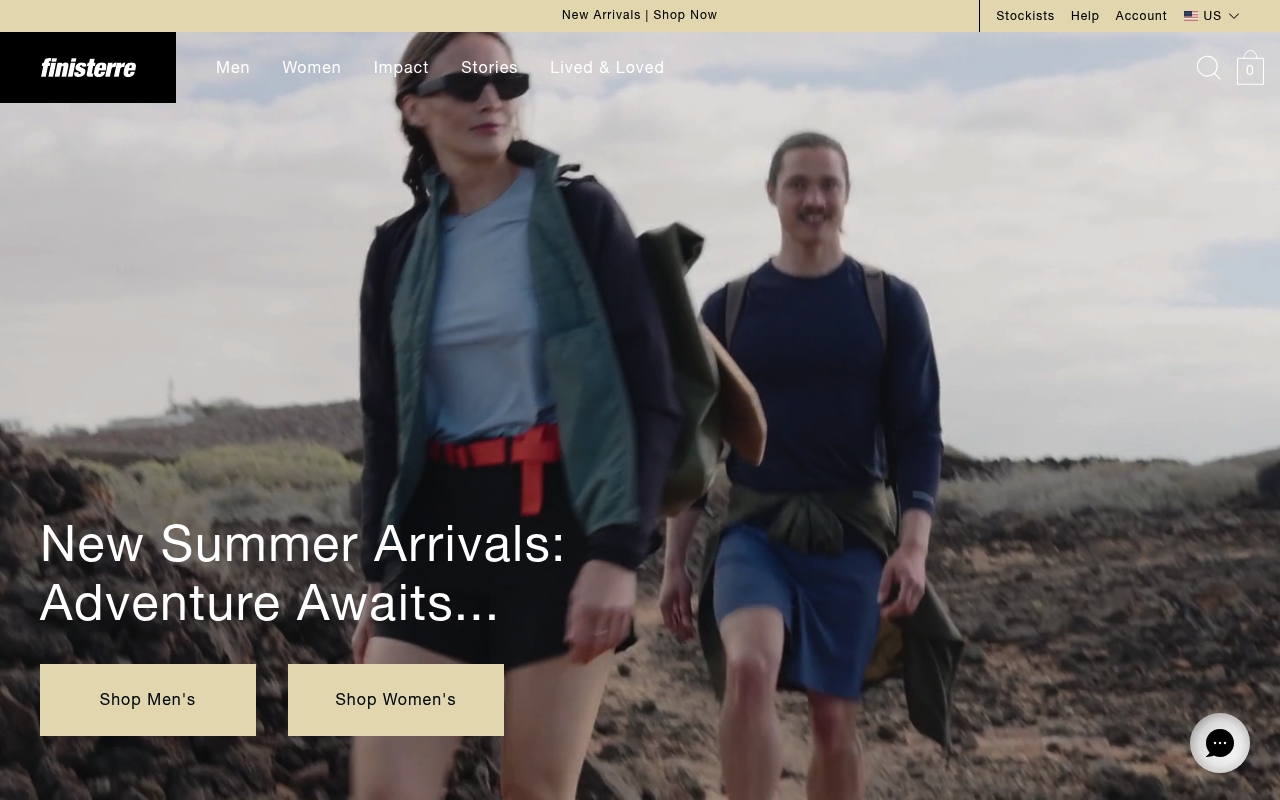
Finisterre is a Cornwall-based brand built around cold-water surfing and coastal life, and their Shopify Plus store carries that identity through every page. The navigation is structured by activity as well as category: you can shop by "Surfing", "Running", or "Everyday" at the top level, which is the right choice for a brand whose customers have specific conditions in mind when they arrive. Product pages for technical pieces include warmth rating diagrams, waterproof column measurements, and fabric certifications (bluesign, recycled content), giving buyers the data they need without requiring them to dig through PDPs.
Their editorial section is genuinely integrated with the shop: athlete stories link back to the gear worn in the field, and those links drop customers onto PDPs with the relevant product in context. That editorial-to-product path is one of the most effective organic conversion routes a DTC brand can build, and Finisterre executes it well. Free returns are prominent throughout, which matters for technical outerwear where fit and weight can only be assessed on arrival.
3. Passenger Clothing
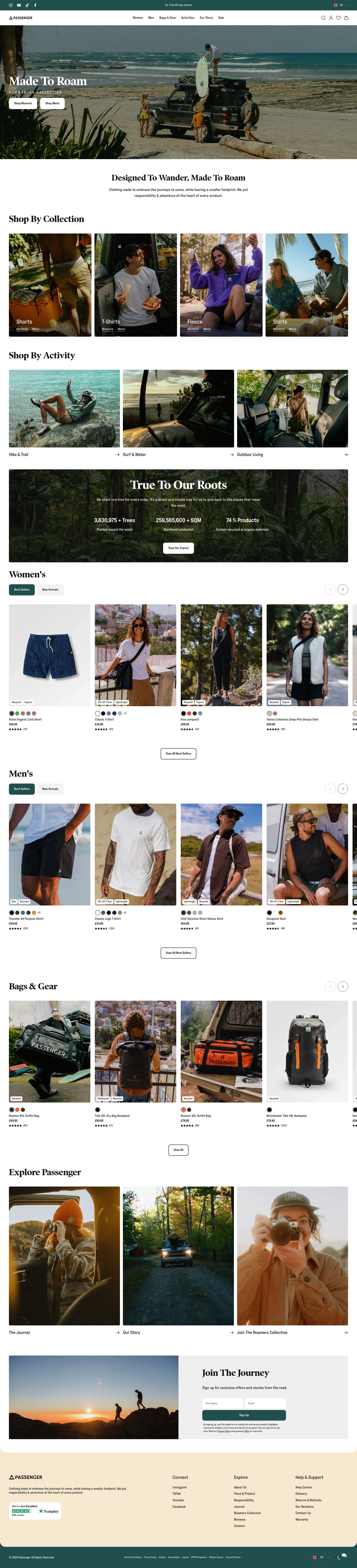
Passenger is a UK outdoor and lifestyle brand with a loyal following built largely through organic social and ambassador content. Their Shopify store reflects that community-first approach: customer photography is integrated into PDPs alongside professional shots, and reviews include specific trip and condition context ("worn on a week of wild camping in the Scottish Highlands") that is far more useful for a buyer than a generic star rating.
Their pricing strategy is straightforward: no complex tiered discounting, and sale items are clearly distinguished from full-price stock. This transparency matters in a category where customers are often comparing across multiple brands. The checkout is lean with minimal upsell friction, which suits their audience of considered buyers who already know what they want.
4. Napapijri
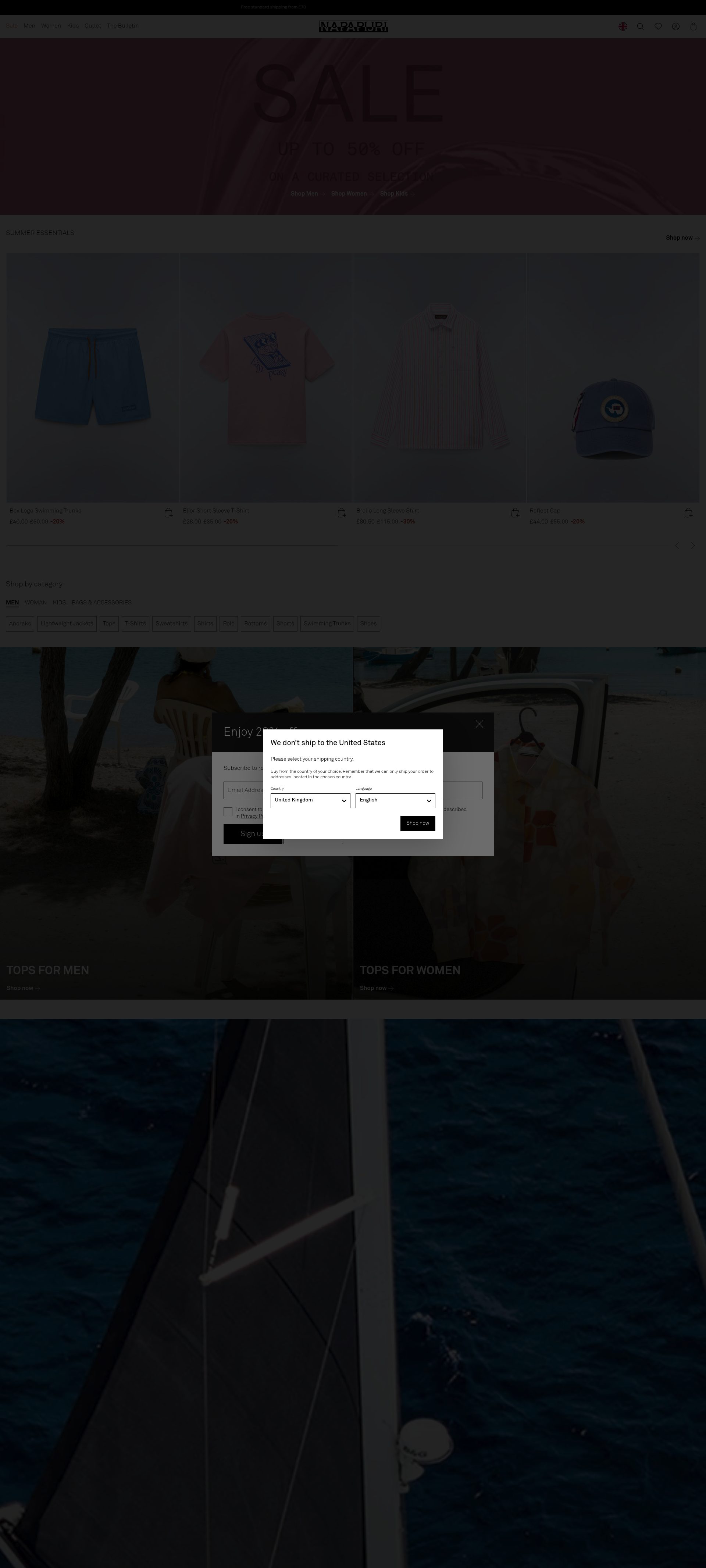
Napapijri's Shopify Plus store handles a broad international product range with a clear hierarchy: their iconic Skidoo jacket and technical Rainforest series anchor the homepage, and the navigation funnels customers toward their most recognisable products before opening up the full catalogue. That top-down approach prevents the disorientation that affects multi-line outerwear stores where everything is given equal weight.
PDPs for their technical pieces include layering guides with clear temperature ranges and activity suitability, which addresses a genuine purchase decision: whether a mid-layer or shell is appropriate for a specific use case. Their sustainability section is detailed and measurable rather than vague, citing specific fabric content percentages and supply chain audit results. That level of specificity builds credibility with a customer who is comparing claims across multiple premium brands.
5. Patagonia
Patagonia is the benchmark for product storytelling in outdoor retail, and their Shopify implementation backs that reputation. Every PDP includes a detailed technical overview covering fabric weight, construction method, and the intended conditions for use, alongside a repair and care guide that reinforces their longevity proposition. The "Worn Wear" section is integrated into the main store navigation, which is a commercial as well as ethical statement: it signals that Patagonia is willing to compete with its own secondhand market, and that confidence is itself a trust signal.
Their environmental commitment is quantified throughout the store: the 1% for the Planet pledge, the Fair Trade certification count, and the Bluesign fabric percentage are surfaced at product level, not just buried on an about page. For a customer weighing a £400 jacket, those specific details carry more weight than generic sustainability messaging.
6. Helly Hansen
Helly Hansen's store is structured around use case more than product type, which is the correct approach for a brand that sells across sailing, skiing, mountain, and workwear verticals. Their guided navigation asks customers to identify their primary activity upfront, reducing catalogue overwhelm and getting buyers to relevant products faster. PDPs for sailing and mountain pieces include technical specifications presented in a scannable format: waterproof rating (mm), breathability (g/m²/24h), and seam type, in a comparison table across the product range.
Their B2B and workwear channels are handled cleanly within the same Shopify Plus instance, with separate navigation paths that do not interfere with the consumer experience. That architecture is worth noting for brands managing both retail and trade customers from a single Shopify store.
7. Peak Design
Peak Design sells camera bags, travel gear, and outerwear, and their Shopify store is one of the most information-dense in the category without feeling cluttered. PDPs for their Passage range include layered technical diagrams, material callouts with annotation, and video demonstrations of key features. The video content is embedded directly in the product page rather than requiring a click to YouTube, which keeps the customer on the PDP and in the buying flow.
Their review system is configured to surface the most detailed reviews first: long-form responses that describe specific trip contexts and weather conditions appear above generic short reviews. For a high-ticket product, that depth of social proof addresses the questions a first-time buyer cannot answer from the product description alone. Lifetime guarantee messaging is persistent throughout, which directly counters the price objection.
8. Colorful Standard
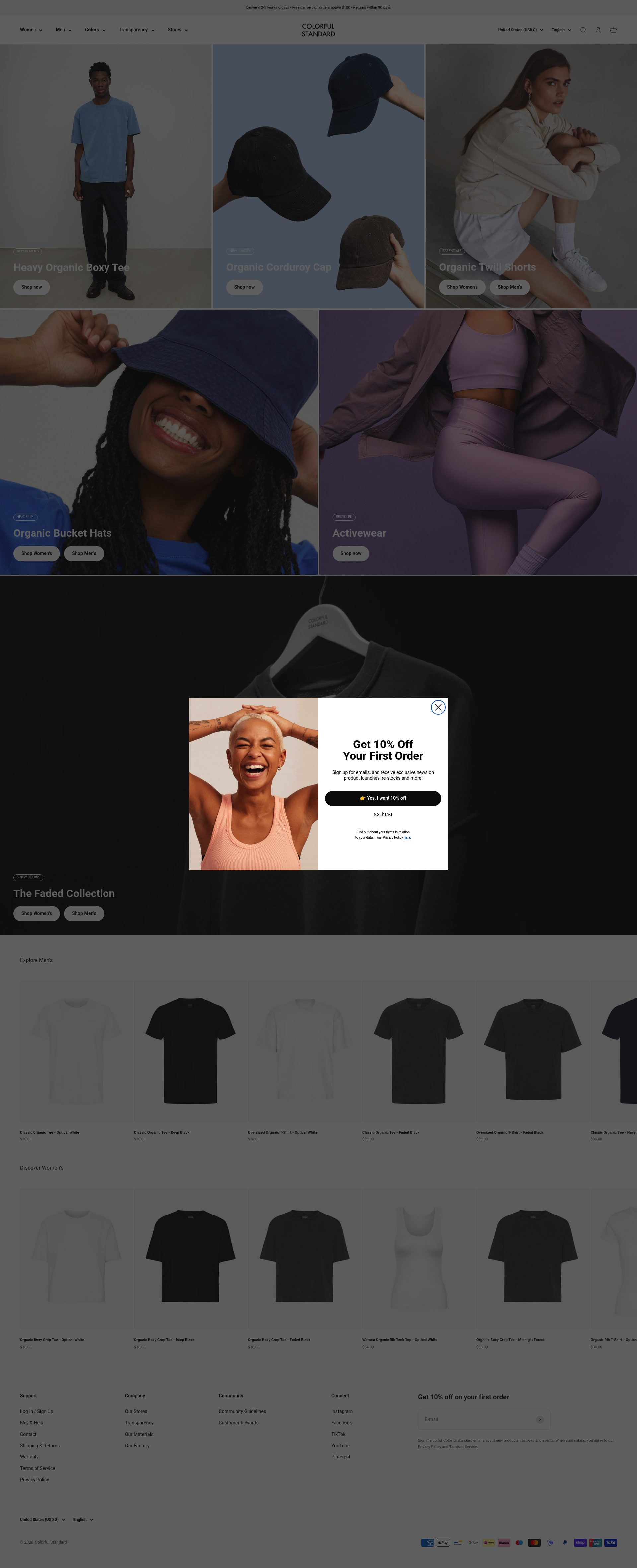
Colorful Standard is a Danish brand known for its wide colour palette and sustainable production, and their Shopify store is built around colour as the primary browsing dimension. The collection grid uses large swatches rather than a single hero image per product, letting customers navigate by colour family before drilling into individual pieces. This is a smart UX decision for a brand whose differentiation is literally colour variety: it gets the most important product attribute into the browsing layer rather than hiding it behind a PDP click.
Their outerwear range sits alongside knitwear and basics, and the cross-category look-building is handled through outfit photography that spans the catalogue. Add to Cart is persistent as customers scroll the PDP, which removes the need to scroll back up to buy, a small but meaningful conversion detail on long technical product pages.
9. Kestin
Kestin is a Scottish menswear brand that has built a strong Shopify DTC presence in the premium outdoor-meets-tailoring space. Their store is compact and deliberate: a small, well-curated catalogue rather than a deep range, and the product photography reflects this considered approach with location shoots that communicate the brand world clearly. PDPs include fabric origin stories, with specific mills named, which is the kind of provenance detail that justifies a premium price point to a customer who is deciding between Kestin and a larger brand with a heavier marketing budget.
Their restock notification system is prominent on sold-out sizes, which turns stock limitations into demand signals rather than lost sales. That mechanic also builds an email list from high-intent buyers, a retention asset with direct commercial value.
10. Stutterheim
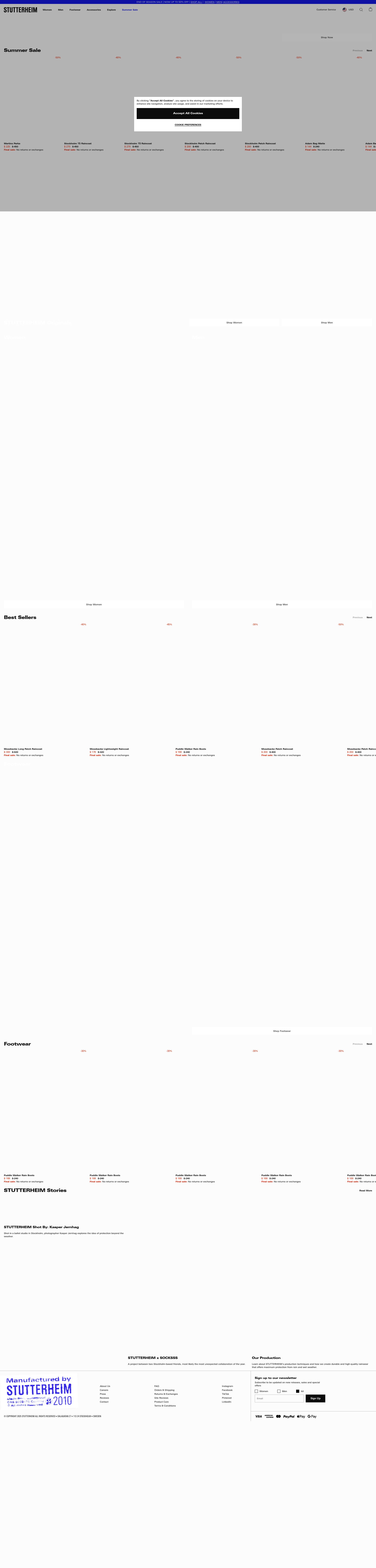
Stutterheim is a Swedish raincoat brand with a product range built around one core category, and their store demonstrates how far you can take brand depth when you are not trying to be everything. Their homepage is editorial-first: the brand's melancholic, Scandinavian design philosophy is communicated through copy and photography before any product is shown, which primes the customer to understand why these raincoats cost more than a standard waterproof. That brand priming is a deliberate conversion tactic: it moves price into second position behind desirability.
PDPs include care and longevity guidance, which reinforces the premium positioning while also reducing returns from customers who damage products through incorrect cleaning. Their gift experience, including monogramming and premium packaging options, is surfaced clearly at cart stage rather than after the purchase, which increases attach rate on a product that is frequently bought as a gift.
If your outerwear or apparel brand is not converting at the level these stores achieve, the gap is usually product page depth and trust signals. Talk to us about your store via our Shopify design service or get in touch.
Frequently asked questions
Do top outerwear brands actually use Shopify?
Yes. Rains, Finisterre, Passenger Clothing, Stutterheim, Colorful Standard, and Kestin all run on Shopify or Shopify Plus. Larger brands like Patagonia and Helly Hansen use Shopify Plus for their DTC channels alongside wholesale and B2B operations on the same instance.
What makes an outerwear product page convert better than average?
The highest-converting outerwear PDPs answer the questions a customer cannot resolve in a physical shop: exact waterproof ratings (mm column), breathability figures (g/m²/24h), seam construction type, and layering compatibility. Brands that include environmental photography — product shot in actual rain or on location — consistently outperform studio-only pages because they reduce the imagination gap between the product and its intended use.
How do premium outerwear stores handle the price objection online?
The most effective approach is repositioning the conversation before price is shown. Stutterheim leads with brand philosophy and editorial before any product appears. Patagonia surfaces lifetime repair data and Fair Trade certification at product level. Peak Design uses a persistent lifetime guarantee message throughout the PDP. All three are moving price into second position behind perceived value and brand trust.
What Shopify apps do outerwear stores use for technical product specs?
Most leading outerwear stores handle technical specs through custom metafields in Shopify, surfaced via their theme rather than a third-party app. Comparison tables are typically built with metafield data. For review systems, Okendo and Judge.me are common, with Okendo preferred by Shopify Plus brands that want to surface detailed review attributes like trip type and weather conditions alongside star ratings.
How important is sustainability messaging for outerwear conversion?
For premium outerwear above £150, sustainability claims are a credibility signal as much as an ethical one. Vague messaging has no measurable impact. Specific, quantified claims do: Napapijri cites exact fabric content percentages and supply chain audit results, Patagonia shows Fair Trade certification counts at product level. Buyers comparing across multiple brands will use the specificity of sustainability data as a proxy for overall brand credibility.