
Quick summary
Vadasz leads the UK fermented foods category with premium cold-chain positioning and gifting merchandising that turns jars into kitchen staples. Cleveland Kitchen is the strongest US example, with a Build Your Box mechanic and food-pairing guidance that converts hesitant first-time buyers. Wildbrine stands out for integrating gut health education directly into the shopping flow, lifting conversions from health-motivated search traffic. Bubbies Fine Foods demonstrates how 40-plus years of heritage and a tight, consistent product range build instant trust with buyers who care about authenticity over novelty.
The pickle and fermented foods category is one of the more interesting niches in UK and US ecommerce right now: it sits at the crossroads of gut health, artisan food culture, and a consumer shift away from ultra-processed alternatives. The stores that perform well in this space share a few common traits: they communicate provenance and process clearly, they reduce the sensory uncertainty of buying a food product online, and they build repeat purchase into the architecture of the store rather than treating it as an afterthought.
1. Vadasz
Vadasz is one of the best-known UK pickle brands and their Shopify store reflects the brand's positioning as a premium, artisan alternative to supermarket pickles. The homepage leads with refrigerated, raw, naturally fermented credentials, which immediately separates them from brands competing on price. Product pages do the hard work of explaining why cold-chain, live-culture pickles taste different and are worth the premium: the fermentation process, the absence of heat pasteurisation, and the visual difference from a jarred supermarket product are all communicated without being preachy. Their category structure is logical: dill pickles, kimchi, sauerkraut, and gift sets each sit in their own lane, making it easy to shop by occasion or dietary preference. The gifting range is well-merchandised with photography that frames the jars as kitchen-worthy products rather than condiments, which expands the buyer demographic significantly. Subscription mechanics are present but not overbearing, positioned as a convenience benefit rather than a commitment trap.
2. Cleveland Kitchen
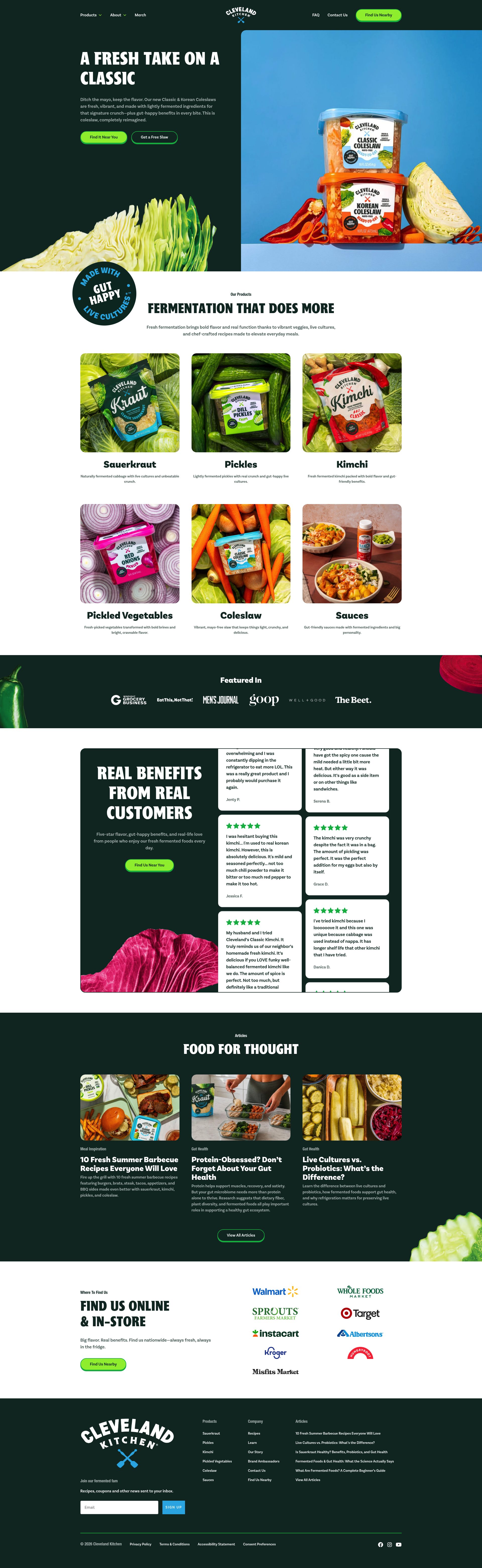
Cleveland Kitchen is a US-based fermented foods brand built on kraut, kimchi, and pickles, and their Shopify Plus store is one of the cleaner examples of how to merchandise a refrigerated DTC range. The hero section leads with flavour and use case rather than fermentation science, which widens the appeal to customers who want to eat better without researching probiotics. Product pages include suggested food pairings, which solves one of the biggest barriers in fermented foods ecommerce: a customer who is not sure how to use kimchi will not buy it. Their "Build Your Box" functionality allows customers to customise a multi-pack, which lifts average order value while giving buyers control over variety. The store uses real customer reviews prominently on category pages, not just PDPs, which provides social validation before the customer has committed to clicking into a specific product. Loyalty is built around a subscription programme that offers free products for referrals, turning existing customers into a low-cost acquisition channel.
3. Wildbrine
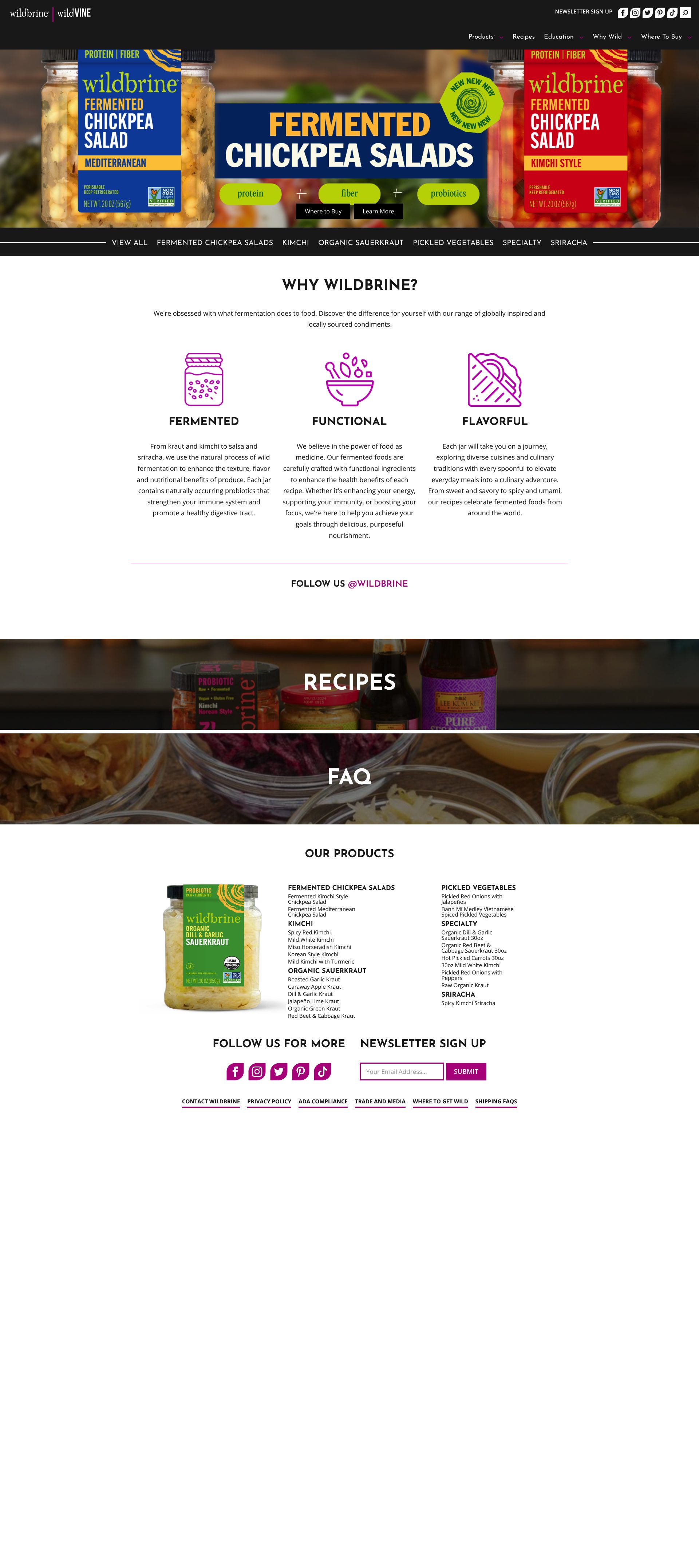
Wildbrine makes fermented and pickled foods across kraut, kimchi, pickles, and dressings, and their Shopify store is organised around health outcomes rather than product categories. The navigation includes a gut health education section alongside the shop, which is a deliberate content strategy: a visitor who lands on the fermented foods page via a search for "gut health foods" is more likely to convert if they find supporting information on the same domain. Product pages include live culture counts and a fibre content breakdown, giving health-conscious buyers the specific data they need to justify the purchase. The recipe library is integrated into the shopping flow, with calls to action linking directly to the relevant product. Wildbrine's subscription model is promoted with a clear saving calculation shown on each product page rather than reserved for a dedicated subscriptions page, which captures the conversion moment when a buyer is already in a purchase mindset.
4. Bubbies Fine Foods
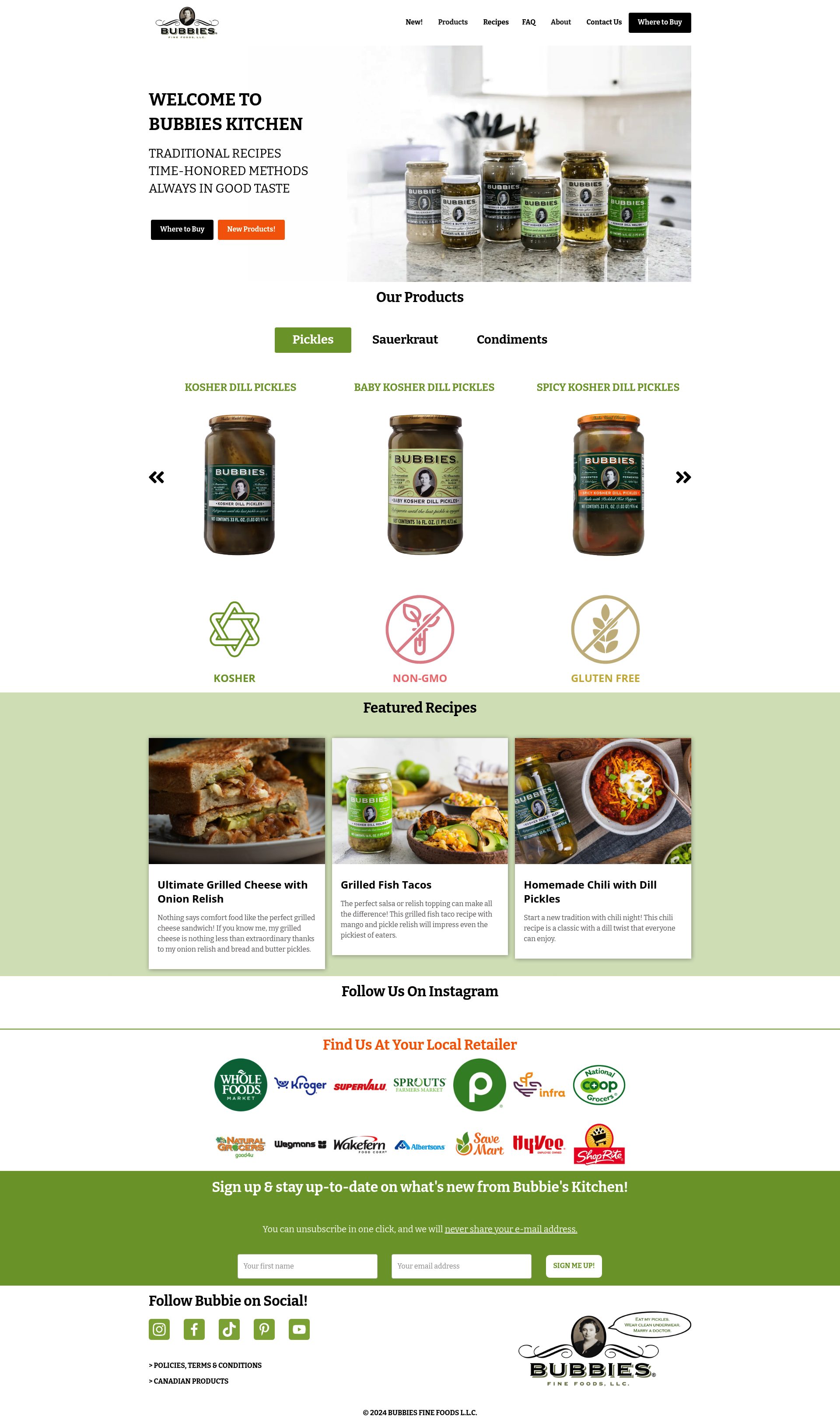
Bubbies Fine Foods has been making naturally fermented pickles, sauerkraut, and condiments since 1982, and their Shopify store leans into that heritage as a trust signal. The product range is tight and well-defined: dill pickles, bread and butter chips, sauerkraut, relishes, and horseradish, each photographed consistently with the label front-facing so brand recognition carries across from retail shelf to online product page. The "Where to Buy" store locator sits alongside the online shop, which is honest positioning for a brand with strong retail distribution. The Shopify store functions primarily as a brand anchor and DTC channel for customers who prefer direct purchase, and the content reflects that: the story of the brand and the difference between naturally fermented and vinegar-brined products is explained clearly without over-complicating the purchase flow. Reviews on product pages include specific mention of flavour profiles, which reduces sensory uncertainty for first-time buyers who cannot sample before purchase.
5. New York Kimchi

New York Kimchi is a Brooklyn-based brand producing small-batch, traditionally made kimchi, and their Shopify store reflects the artisan positioning at every touchpoint. The product range is curated: a small number of kimchi varieties rather than a sprawling catalogue, which makes the decision simple for a first-time buyer. Each product page opens with the flavour profile and heat level prominently, which answers the two questions most kimchi buyers have before anything else. The founder story is integrated into product descriptions rather than isolated to an About page, so every product page carries a sense of provenance. Gifting boxes are well-structured with a clear occasion hierarchy, covering foodie gifts, corporate gifting, and holiday sets. The store uses Instagram-style lifestyle photography throughout, which normalises kimchi as an everyday table ingredient rather than a specialty health food, broadening appeal without diluting the craft credentials. Shipping and cold-pack information is visible at the product level, removing the fulfilment uncertainty that typically causes abandonment in refrigerated DTC.
6. Real Pickles
Real Pickles is a Massachusetts-based worker-owned co-operative producing certified organic fermented vegetables, and their Shopify store demonstrates that a small producer with a clear values proposition can convert effectively without a large marketing budget. The homepage leads with the organic, worker-owned, and local sourcing credentials, which are the three things their core customer cares about most. Product pages are honest about the limited production runs and seasonal availability, which creates genuine scarcity rather than manufactured urgency. The store avoids discount tactics entirely: there are no pop-up codes or countdown timers, which is consistent with the brand's rejection of conventional marketing. The subscribe-and-save offer is positioned as a way to guarantee supply of a limited-production product rather than a loyalty programme, which reframes the value exchange in a way that resonates with their customer base. For Shopify merchants in specialist food categories with a strong values alignment, Real Pickles is a good reference point for building trust without relying on conventional conversion tactics.
7. The Cultured Food Company
The Cultured Food Company is a UK brand selling fermented foods, kefir, and probiotic products, and their Shopify store is structured around the gut health consumer journey rather than the product catalogue. The homepage leads with a health outcome (better digestion, stronger immunity) and then introduces the products as the mechanism, which is a more persuasive architecture for a buyer who is motivated by a health goal rather than a specific product. The blog content is well-integrated into the shopping flow, with articles on kefir benefits linking directly to the relevant product pages. Product pages include dosage guidance and serving suggestions, which reduces the friction for buyers unfamiliar with fermented foods. The Starter Kits section is a strong conversion tool: it removes the paralysis of choosing between a wide range of unfamiliar products by bundling the most approachable options with instructions. Subscription pricing is shown with and without the discount side by side, making the saving visible at the moment of product selection rather than in the checkout.
8. Hawkridge Farms

Hawkridge Farms produces small-batch fermented vegetables and hot sauces from their own farm in the US, and their Shopify store builds the farm provenance into every page. The photography leads with the farm rather than the product, which is a deliberate brand positioning choice: the credibility of the ingredient source does the conversion work before the customer has even read the product description. Product pages include harvest date and batch number information, framing each jar as a seasonal, limited product rather than an evergreen SKU. The scarcity created by seasonal availability is communicated clearly without manufactured urgency tactics, which fits the artisan brand positioning. Cross-sells are handled thoughtfully: a pickled vegetables listing recommends the hot sauce that pairs with it, keeping the logic product-led rather than algorithmic. The store does not use pop-ups or discount overlays, consistent with a premium positioning that treats the customer as a considered buyer rather than an impulse purchaser.
9. Firefly Ferments
Firefly Ferments is a small UK producer making raw, naturally fermented krauts, kimchi, and pickles. Their Shopify store is an example of a micro-producer using the platform effectively to reach a national audience without the overhead of retail distribution. The product range is concise: a handful of core ferments, each with clear flavour and heat level descriptors. The store leads with the fermentation method and the absence of pasteurisation, which is the primary differentiator from supermarket alternatives. Product pages include guidance on how to introduce fermented foods gradually, which addresses a genuine customer concern about digestive adjustment and reduces post-purchase anxiety. The wholesale and stockist enquiry section is integrated into the footer navigation, showing that the Shopify store functions as both a DTC channel and a trade acquisition tool. For a small producer without a large marketing budget, the store converts on the strength of the product story rather than paid traffic infrastructure.
10. Ferm Larder
Ferm Larder is a UK fermented foods brand with a tight, well-curated range of krauts, kimchis, and fermented condiments. Their Shopify store is notable for the quality of the product photography: each jar is shot against a clean background with the contents visible, which gives the customer a realistic expectation of what they are buying. Product descriptions are specific about fermentation time, saltiness level, and best use occasions, reducing the sensory guesswork that puts some buyers off purchasing fermented foods online. The gift edit is handled cleanly, with a dedicated gifting section featuring pre-built sets and the option to build a custom gift box. Stockist information is easy to find, positioning the online store as the primary channel rather than a secondary afterthought. For a small UK producer competing in an increasingly crowded fermented foods category, the store presents a brand that takes its ecommerce presence as seriously as its production process.
If your food or drink brand is ready to improve conversion or build a Shopify store that matches the quality of your product, our Shopify design service is built around exactly these outcomes. Get in touch to talk through what your store needs.
Frequently asked questions
Do pickle and fermented food brands actually sell well on Shopify?
Yes, and the category is growing. The gut health trend has moved fermented foods from health food stores into mainstream DTC ecommerce, with subscription and bundle mechanics working particularly well because customers reorder regularly once they find a brand they trust. Brands like Cleveland Kitchen and Vadasz have built sustainable repeat-purchase models on Shopify by combining subscription pricing with loyalty incentives.
What Shopify features matter most for selling fermented or refrigerated foods online?
Cold-chain fulfilment communication is the single biggest conversion lever: customers need to know their order will arrive safe before they commit. Beyond that, food pairing guides and serving suggestions reduce the uncertainty that stops first-time buyers. Subscription apps, bundle builders, and a strong wholesale/stockist page round out the feature set for most fermented food brands.
How do small fermented food producers compete with larger brands on Shopify?
By leaning into provenance and process. Brands like Firefly Ferments and Hawkridge Farms convert on the strength of their origin story, batch transparency, and the absence of pasteurisation, none of which a larger brand can credibly claim. A clear, concise product range also helps: fewer SKUs with more information per product outperforms a wide catalogue with thin descriptions.
Is Shopify Plus worth it for a fermented foods brand?
At scale, yes. Cleveland Kitchen uses Shopify Plus specifically for its Build Your Box customisation and subscription programme, which require more flexibility than standard Shopify allows. For smaller producers turning over less than a few hundred thousand pounds annually, standard Shopify with best-in-class apps for subscriptions and bundles is more cost-effective and covers most use cases.
What makes a great product page for fermented foods sold online?
The best fermented food product pages answer three questions immediately: what does it taste like, how do I use it, and is it safe to buy online without sampling. Flavour profile and heat level upfront, food pairings in the description, and visible cold-pack and shipping information on the product page rather than buried in an FAQ will do more to lift conversion than any promotional mechanic.