
Quick summary
Ghost Lifestyle leads on brand experience and collaboration drops, with a three-tier subscription programme that consistently outperforms standard subscribe-and-save setups. Bulk is the strongest UK DTC pick for ingredient credibility, surfacing dosage detail and their loyalty programme directly on the product page. Gorilla Mind dominates the high-stimulant segment with product-first design and direct response copy that converts sceptical, informed buyers. Pre Lab Pro shows how a single-product store can justify a premium price point through dosage comparison tables and subscription maths explained in plain terms.
Pre-workout is one of the most competitive niches in supplements: high repeat-purchase rates, strong brand loyalty, and customers who research ingredients obsessively before buying. The Shopify stores that win here combine credible product pages with pricing architecture and retention mechanics that keep subscribers coming back every four weeks. Here is what separates the best from the rest.
1. Bulk
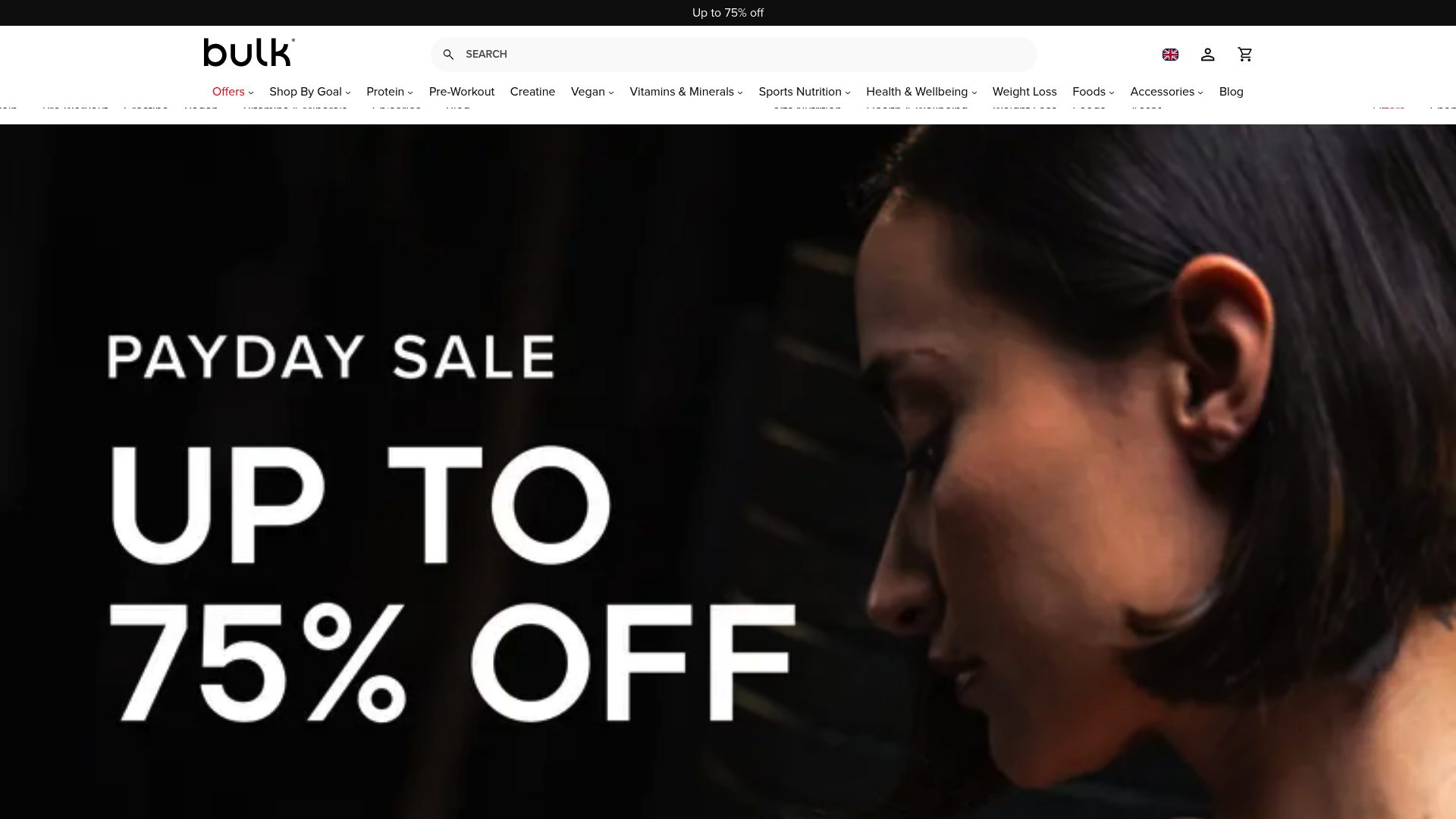
Bulk (formerly Bulk Powders) runs one of the most commercially mature stores in the UK supplement space. The navigation layers products by goal and ingredient type rather than just category name, which means a customer searching for caffeine-free options or beta-alanine-based formulas can self-segment in seconds. That reduces support queries and improves conversion from organic search traffic landing on deep pages.
Their product pages carry a full ingredient breakdown with dosage per serving, not just a generic "what's in it" paragraph. Each ingredient links to a short explainer. That architecture builds confidence with customers who already know their way around a supplement label, and educates those who do not. Both segments convert better than they would on a page that just lists flavours and a buy button.
Bulk runs a tiered loyalty programme (Bulk Club) that is surfaced prominently on the product page, not buried in a footer link. Showing the subscriber price alongside the RRP at point of purchase is one of the highest-leverage conversion tactics in subscription commerce, and Bulk executes it cleanly.
2. Applied Nutrition
Applied Nutrition built its brand around athlete partnerships and then used Shopify to extend that credibility into the buying experience. Pro athlete endorsements are not just on the homepage: they appear on product pages as contextual social proof, tied to specific products each athlete uses. That specificity makes the endorsement feel genuine rather than generic.
Their pre-workout range is structured around use case: energy focus, extreme stimulant, pump and non-stim. The filtering mechanics make that structure navigable for a new customer who does not yet know the product names. Applied also uses urgency cues and stock indicators selectively, not on every product, which preserves their credibility with experienced supplement buyers who dismiss blanket scarcity tactics.
The checkout upsell stack is tight: a shaker or a sample pack, priced to convert at under £5. Small average order value additions like this compound across thousands of monthly transactions into meaningful incremental revenue.
3. Myprotein
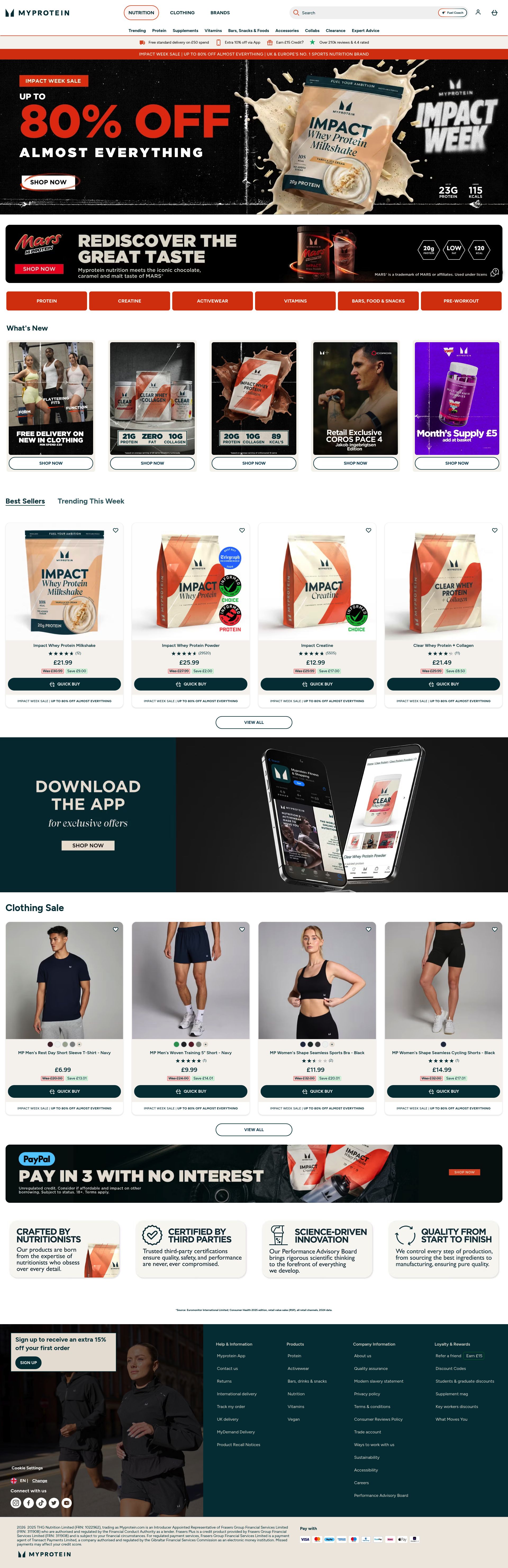
Myprotein is one of the highest-volume supplement stores in Europe and runs on Shopify Plus. Their pre-workout range benefits from a product discovery architecture built for scale: flavour and size variants are handled with dropdown selectors, not separate product listings, which keeps their URL structure clean and avoids internal cannibalisation across dozens of SKU variants.
The homepage merchandises around flash sale events, which are a primary acquisition and retention mechanic for Myprotein. Regular discount windows train customers to return, but Myprotein manages the margin risk through size-tiered pricing: the discount percentage increases with bag size, steering customers toward higher-margin larger units while still feeling like a deal.
Bundle builder functionality lets customers combine pre-workout with a protein powder or creatine at a discounted price. These combination purchases have a higher lifetime value than single-product buyers because they anchor the customer to the brand across multiple daily habits. Myprotein surfaces the bundle builder early in the product page, not just at checkout.
4. Optimum Nutrition
Optimum Nutrition is a global brand running a UK-specific Shopify storefront. The store benefits from inherited brand trust: Gold Standard is the best-known protein name in the world, and that recognition carries into their pre-workout range. The product pages lean into that heritage directly, citing Gold Standard as a quality benchmark in the copy.
What is notable from a Shopify perspective is how ON handles the tension between retailer distribution and DTC. They do not compete aggressively on price with Amazon or Holland and Barrett. Instead, the DTC site adds value through flavour exclusives and subscription availability. That positioning protects retail relationships while giving customers a reason to buy direct.
The auto-replenish subscription is presented at checkout with a clear percentage saving and cancellation-ease messaging. That cancel-anytime framing reduces the psychological friction that stops customers from opting in to subscriptions in the first place.
5. Rule 1 Proteins
Rule 1 positions itself as the no-nonsense, no-proprietary-blend alternative. Their store design reflects that: clean, ingredient-forward, with macros and dosages presented as the primary product feature rather than a supporting detail. Every pre-workout product page opens with the full supplement facts panel at the fold, not below a marketing image block.
That approach is a deliberate conversion strategy targeting the informed buyer who has been burned by underdosed, over-marketed competitors. The product page copy uses specific language ("no proprietary blends, every ingredient shown, exact dosages") that speaks directly to that customer's objection before it surfaces.
Rule 1 also handles international shipping through localised storefronts rather than a single global URL. That keeps checkout currency, shipping estimates, and legal compliance clean without fragmenting SEO equity across multiple domains.
6. Ghost Lifestyle
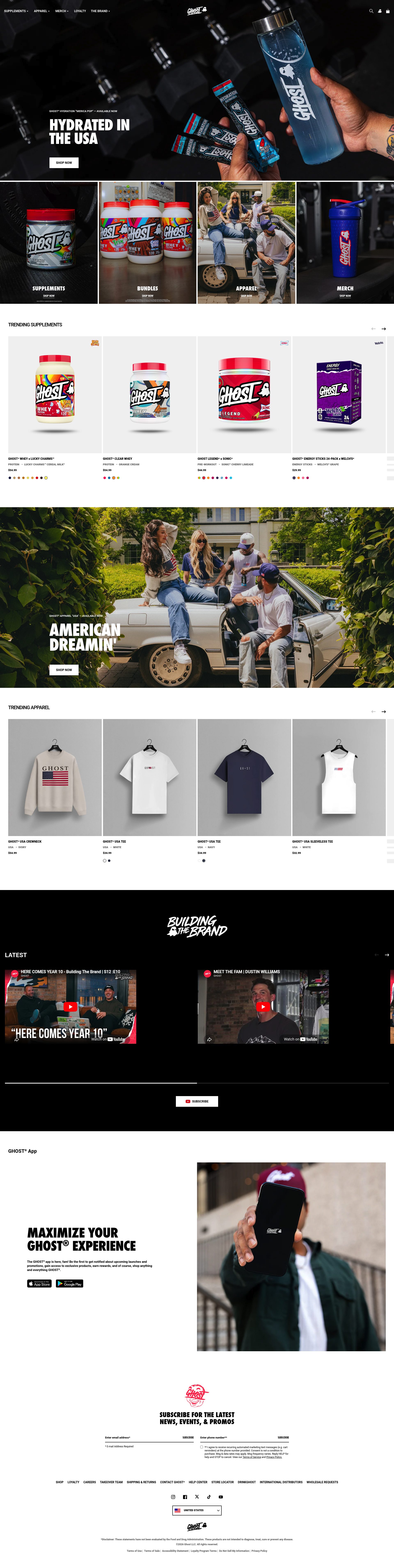
Ghost is the clearest example in this list of a supplement brand that treats its Shopify store as a brand experience, not just a transaction layer. The design is streetwear-influenced, the product photography is editorial rather than clinical, and the limited-edition collaboration drops (Sour Patch Kids, Warheads, Chips Ahoy flavours) are treated like sneaker releases.
From a conversion standpoint, Ghost runs scarcity mechanics around these drops that drive real urgency: countdown timers, waitlist capture, and sold-out states that remain visible on product pages to signal demand. The waitlist flow captures email and SMS in a single step, building a re-engagement list that pays out at every future drop.
Their subscription programme is tiered: one-time, subscribe and save, and a "Ghost Club" tier with exclusive products and early access. Three-tier subscription architecture like this increases average subscription value by letting customers self-select into a higher commitment level at their own pace.
7. Gorilla Mind
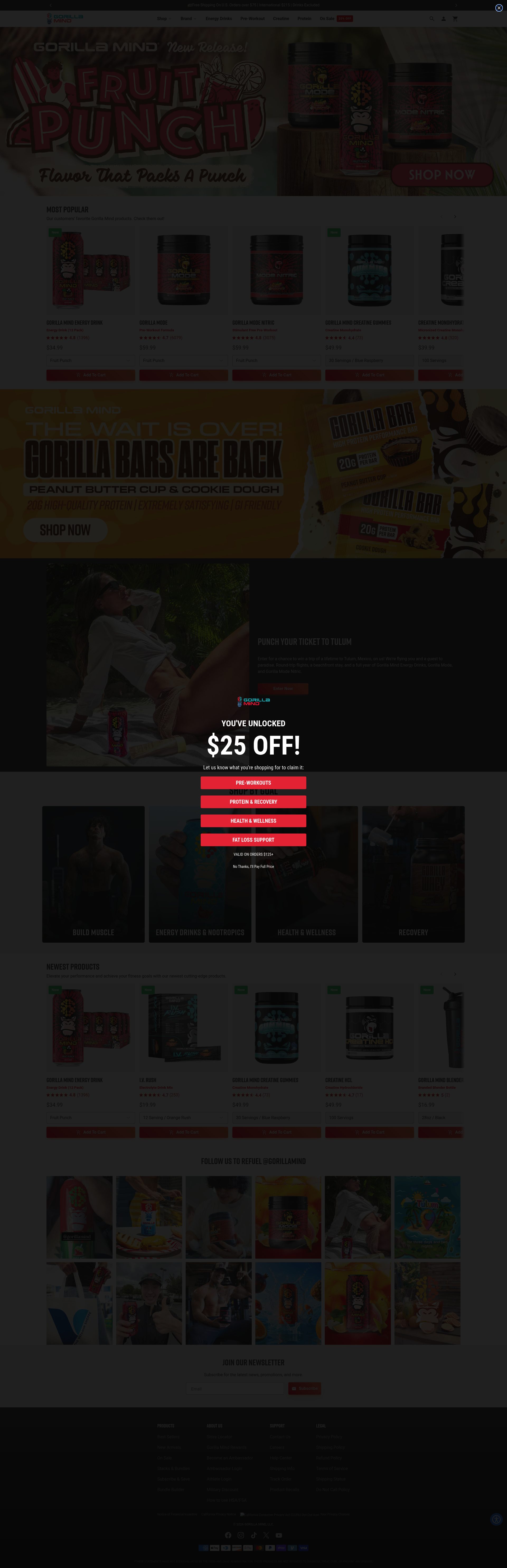
Gorilla Mind targets the hardcore end of the pre-workout market: high-stimulant formulas with transparent labelling and dosages that are significantly higher than mainstream competitors. The store design matches the brand: dark, direct, zero lifestyle photography. It is a product-first store with almost no brand storytelling, which is the correct decision when your customer already knows exactly what they want and just needs the ingredient panel and the buy button.
Product bundles are prominent and discounted clearly, with no vague "save up to X%" language. The discount is calculated and shown per bundle, reducing the cognitive load on the customer and removing a reason to delay purchase.
Gorilla Mind uses direct response copy conventions on product pages: objection handling in bullet format, money-back guarantee surfaced prominently, and a short FAQ block below the fold. These are checkout-confidence levers that work particularly well in the high-stimulant segment where customers are sceptical about formula claims.
8. Grenade
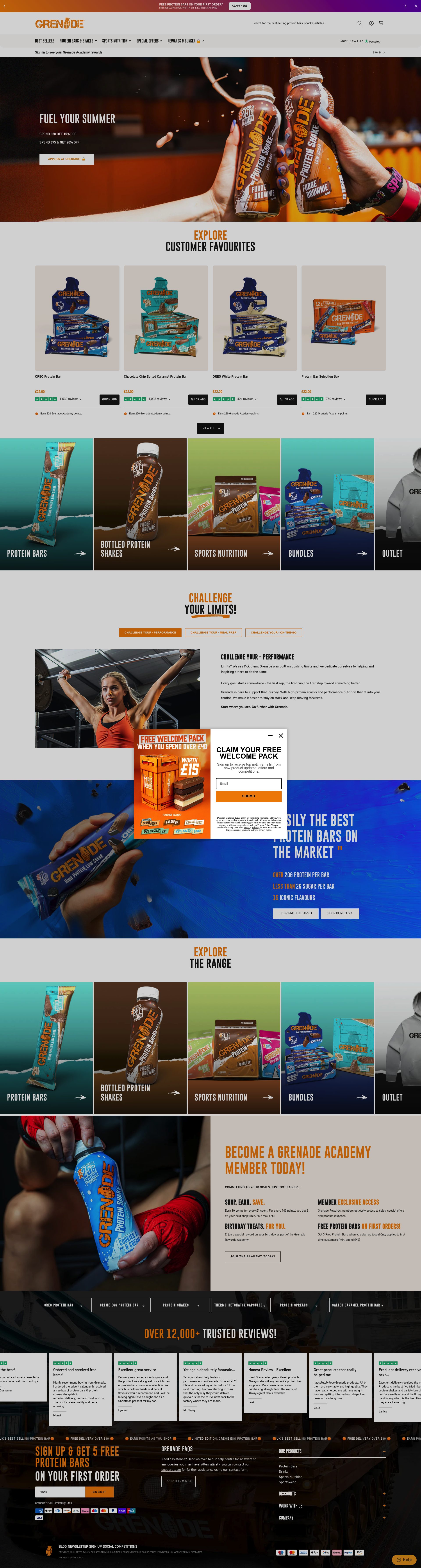
Grenade is a UK brand with strong grocery and sports retail distribution, and their Shopify store has to compete with their own shelf presence at Holland and Barrett and Boots. They solve the direct/retail tension by leading with product bundles and variety packs that are not sold in retail, creating a channel-exclusive reason to buy direct.
The pre-workout pages carry video content embedded above the fold: a 20-30 second product demo that covers flavour, mix quality, and energy onset. That format addresses the primary pre-purchase concern for someone buying a new pre-workout flavour they have not tried before. Video above the fold also increases time on page, which feeds engagement signals back to search.
Grenade also captures post-purchase intent aggressively: a review request at seven days post-delivery, followed by an auto-replenish reminder at 28 days. That two-touch retention flow is simple to implement and meaningfully moves the repeat purchase rate on a 30-serving product with a natural reorder window.
9. ESN
ESN (Excellent Sports Nutrition) is a German DTC supplement brand that operates across European markets via Shopify. Their store is notable for the quality of its product education: each pre-workout has a dedicated "science" tab on the product page with ingredient mechanism explanations backed by study citations. The studies are linked, not just referenced.
That level of ingredient transparency differentiates ESN from competitors who rely on brand marketing over evidence. For the European supplement buyer, who is increasingly sceptical of proprietary blends and marketing claims, a cited ingredient page is a conversion asset, not just a compliance exercise.
ESN runs a loyalty points scheme that integrates with their subscription programme. Points earned on subscriptions are redeemable only on future orders, which creates a lock-in effect without hard contract terms. That mechanic keeps churn low while giving customers a perceived discount that does not directly erode margin.
10. Pre Lab Pro

Pre Lab Pro is a single-product supplement store: one pre-workout, one flavour, sold as the premium category leader. That product focus changes the entire store architecture. Without a catalogue to browse, every page is a product page, and every inch of copy is dedicated to justifying the premium price point.
The store handles that challenge through ingredient dosage comparisons: a table showing Pre Lab Pro's formula versus industry standard doses, presented as a transparency and quality argument. That comparison table is the central conversion mechanism on the product page, and it works because the product genuinely outperforms standard doses on key ingredients.
The subscription economics are explained in detail: cost per serving on a subscription versus single purchase, with a monthly delivery cadence tied to the standard 20-serving usage pattern. Showing the maths on value rather than just a percentage discount is a higher-trust approach that works well with a sophisticated buyer willing to pay a premium.
If you want to build a supplement store that converts at this level, our Shopify design service covers everything from product page architecture to subscription mechanics. Get in touch to talk through your store.
Frequently asked questions
Which pre-workout Shopify stores are best for UK customers?
Bulk and Applied Nutrition are the strongest UK-based DTC options. Both offer free delivery thresholds, loyalty programmes, and product pages with full ingredient transparency. Grenade is also worth checking for variety packs and bundles not available in retail.
Do any of these pre-workout stores offer subscription discounts?
Most do. Ghost Lifestyle runs a three-tier subscription with exclusive products at the top tier. Bulk surfaces their Bulk Club subscriber pricing directly on the product page alongside the RRP. Pre Lab Pro breaks down the cost-per-serving maths on subscription versus single purchase, which is a more useful comparison than a flat percentage.
What makes a high-converting pre-workout product page?
The best-performing pages in this niche show the full ingredient panel with exact dosages above the fold, address the proprietary blend objection directly in copy, and include a short FAQ or objection-handling block below the buy button. Ghost and Gorilla Mind both execute this well, from opposite ends of the brand spectrum.
How do supplement brands handle subscription churn on Shopify?
The most effective mechanic is pairing loyalty points with subscription orders, where points are only redeemable on future purchases. ESN uses this approach, which creates soft lock-in without hard contract terms. The other lever is cancel-anytime messaging at point of subscription opt-in, which Optimum Nutrition uses to reduce the psychological friction of committing.
Can a supplement brand compete on Shopify if they also sell through retailers like Holland and Barrett?
Yes, but the DTC store needs a clear channel differentiation reason. Grenade leads with variety packs and bundles not stocked in retail. Optimum Nutrition offers flavour exclusives and subscription access only on their DTC site. Competing on price against your own retail partners erodes margin and relationships: channel-exclusive products are the cleaner solution.